The Sandman is a mythical character in Western and Northern European folklore who puts people to sleep and brings good dreams by sprinkling magical sand onto the eyes of people while they sleep at night, i.e. rheum....
Hans Christian Andersen's 1841 folk tale Ole Lukøje introduced the Sandman, named Ole Lukøje....
There is nobody in the world who knows so many stories as Ole-Luk-Oie, or who can relate them so nicely. In the evening, while the children are seated at the table or in their little chairs, he comes up the stairs very softly, for he walks in his socks, then he opens the doors without the slightest noise, and throws a small quantity of very fine dust in their eyes, just enough to prevent them from keeping them open, and so they do not see him. Then he creeps behind them, and blows softly upon their necks, till their heads begin to droop. But Ole-Luk-Oie does not wish to hurt them, for he is very fond of children, and only wants them to be quiet that he may relate to them pretty stories, and they never are quiet until they are in bed and asleep. As soon as they are asleep, Ole-Luk-Oie seats himself upon the bed. He is nicely dressed; his coat is made of silken fabric; it is impossible to say of what color, for it changes from green to red, and from red to blue as he turns from side to side. Under each arm he carries an umbrella; one of them, with pictures on the inside, he spreads over the good children, and then they dream the most beautiful stories the whole night. But the other umbrella has no pictures, and this he holds over the naughty children so that they sleep heavily, and wake in the morning without having dreams at all.
ADDED: Yes, yes, I know, and I knew when I wrote the post.... A hundred people are nudging me to include the candy-colored clown (which by the way sounds like another sobriquet for Trump):
Things said in the last 3 weeks of life by "a clinical psychologist who had also spent a lifetime writing poetry." Mort Felix was dying of cancer and on morphine.
To the surprise of his family members, the lifelong atheist also began hallucinating angels and complaining about the crowded room—even though no one was there.
His very last words were, "Thank you, and I love you, and enough." We know all this because his daughter, Lisa Smartt, a linguist, copied down his words and wrote a book.
From a doctor I heard that people often say, “Oh fuck, oh fuck.” Often it’s the names of wives, husbands, children. “A nurse from the hospice told me that the last words of dying men often resembled each other,” wrote Hajo Schumacher in a September essay in Der Spiegel. “Almost everyone is calling for ‘Mommy’ or ‘Mama’ with the last breath.”...
In Final Gifts, the hospice nurses Callanan and Kelley note that “the dying often use the metaphor of travel to alert those around them that it is time for them to die.” They quote a 17-year-old, dying of cancer, distraught because she can’t find the map. “If I could find the map, I could go home! Where’s the map? I want to go home!” Smartt noted such journey metaphors as well, though she writes that dying people seem to get more metaphorical in general....
Well, that sort of effort to get home and being on a journey without a map is the storyline of nearly every dream I can remember, so I don't think that's special to the dying process. And when you're on a powerful opiate, you're drifting into dreams all the time.
Despite the faults of Smartt’s book (it doesn’t control for things such as medication, for one thing, and it’s colored by an interest in the afterlife)....
"Though few parents today will admit they have a favorite child, studies indicate that about two-thirds of parents do. In one small but astounding survey, 80 percent of mothers acknowledged favoring one child over the others. This was no secret to their children, 80 percent of whom agreed. Interestingly, however, when they were asked which child their mother loved most, they almost always got it wrong. Similar results are borne out in larger studies: Two-thirds of children accurately perceive that their parents have a favorite, but less than half get the favorite right. The idea that you’re supposed to treat your children equally is recent, and it’s still not the norm in much of the world, where different siblings might have different roles and even different titles. In English, we refer to both younger and older siblings as sister or brother, but Chinese has separate terms for each. A gege (older brother) has different rights and responsibilities than a younger one (didi), as do a jiejie (big sister) and meimei (little sister). In Japan, an old slang term for the second son was 'Master Cold Rice,' because historically he ate only after the firstborn got his food."
That's the definition of "smirk" in the (unlinkable) OED. I looked up the word because it was used over and over to refer to the smile on the face of the Covington Catholic schoolboy the media singled out to destroy over the weekend.
When is a smile a "smirk"? The dictionary says, when it's affected or simpering or silly and conceited looking.
But I'd like a deeper psychological explanation of what is supposed to be in the mind of the smirker and how observers of smiles decide they have a window into that mind. My hypothesis is: People see what they want to see. That means: When people tell you what they think they see about the inside of another person's head, they are opening a window for us to peer into their head.
And, of course, that means that if we talk about what we think we see in the mind of the observer of another person, we too reveal ourselves. We express misunderstandings and expose ourselves to being misunderstood. That's human life. I think it's quite wonderful, but it can be dangerous and painful.
Here are some the OED's examples of the use of "smirk":
?1570 T. Ingelend Disobedient Child sig. D.ivv Howe many smyrkes, and dulsome kysses?
1601 B. Jonson Fountaine of Selfe-love Palinodia sig. Mv From Spanish shrugs, French faces, Smirks, Irps, and all affected Humors.
1675 W. Wycherley Country-wife iv. 56 He has the Canonical smirk, and the filthy, clammy palm of a Chaplain.
1718 Lady M. W. Montagu Let. Sept. (1965) I. 439 A jolly face and a stupid smirk in his countenance.
My son John had a couple tweets yesterday pushing back against Slate:
How is it OK to make a national news story out of not liking someone's smile? Mocking someone's smile is as bad as telling someone they have to smile more, and we're all supposed to think the latter is blatantly offensive, right?
Slate's Facebook post of this article calls the kid's facial expression "the smirk of evil." I don't know how adults can sleep at night after publicly trashing a kid and calling him "evil."
But I think the real reason the clip has spread is simpler: It’s the kid’s face. The face of self-satisfaction and certitude, of edginess expressed as cruelty. The face remains almost completely still as his peers hoot in awed delight at his bravado. The face is both punchable and untouchable. Many observers recognized it right away.
The face is in this photo of a clutch of white young men crowding around a single black man at a lunch counter sit-in in Virginia in the 1960s, and in many other images of jeering white men from that era. The face is the rows of Wisconsin high school boys flashing Nazi salutes in a prom picture last year. The face is Brett Kavanaugh—then a student at an all-boys Catholic prep school—“drunkenly laughing” as he allegedly held down Christine Blasey Ford. Anyone who knew the popular white boys in high school recognized it: the confident gaze, the eyes twinkling with menace, the smirk. The face of a boy who is not as smart as he thinks he is, but is exactly as powerful. The face that sneers, “What? I’m just standing here,” if you flinch or cry or lash out. The face knows that no matter how you react, it wins.
"It wins." It. There is no person anymore. No "he," just an "it." There is no human, just an empty mask, as Ruth Graham sees it.
Looking into her mind, I think — and I show myself in saying this — that she believes she is and loves herself as a person of great empathy for human beings, and she is simply oblivious to the humanity of the teenager who she fears is harassing and mocking a person who looks to her like the kind of person she thinks of as Victim. She doesn't realize that she, a good person, could engage in victimizing, and when she looks in the mirror and smiles at herself, the expression on her face is never a "smirk."
I certainly hope the kid is not all alone. He should have adult counseling! I thought the statement sounded genuine — like a teenager telling a straight story — but I assumed that meant he had a good lawyer. And he should have a good lawyer.
AND: Here's a third approach to digging in:
Cannot be stared enough: Racist boys were there for a rally calling for pregnancy to be used as a weapon to subjugate women. They were wearing hats celebrating a man who bragged about assaulting women.
Their claims not to be bigots are pre-emptively nonsense.
"... and her timing was also meant to evoke Shirley Chisholm, the New York congresswoman who became the first woman to seek the Democratic Party’s nomination for president 47 years ago this week. In addition, Ms. Harris will hold her first campaign event on Friday in South Carolina, where black voters are the dominant force in the Democratic primary, rather than start off by visiting Iowa and New Hampshire, the two predominantly white states that hold their nomination contests first. She will hold a kickoff rally Sunday in Oakland, Calif., her hometown.... Ms. Harris made her announcement on 'Good Morning America' and also released a video aimed at supporters and other Democrats. 'The future of our country depends on you, and millions of others, lifting our voices to fight for our American values,' Ms. Harris said in the video. She also debuted a campaign slogan that played off her background as a prosecutor: 'Kamala Harris, for the people Let’s do this together: For ourselves, for our children, for our country'...."
The persistent drumbeat had unfortunate resonance with the Covington Catholic boys story that the mainstream media embarrassed itself with over the weekend. I'm not sure I noticed anything about what Harris actually said in the video, because there was the distracting, puzzling drumbeat and because the whole thing started with flashing block-letter words at us. I remember that words were there, not what the words were. Was it "truth," "justice," and something else that made me say — as a Baby Boomer raised on the "Superman" TV show — "and the American way"? Without watching it again, all I remember is that Harris looked pleasant but spoke in a slightly stilted way and that she wore a gray jacket over a gray top. Bottom line: I heard no message at all other than that she's got an upcoming event in Oakland.
I am the student in the video who was confronted by the Native American protestor. I arrived at the Lincoln Memorial at 4:30 p.m. I was told to be there by 5:30 p.m., when our busses were due to leave Washington for the trip back to Kentucky. We had been attending the March for Life rally, and then had split up into small groups to do sightseeing.
When we arrived, we noticed four African American protestors who were also on the steps of the Lincoln Memorial. I am not sure what they were protesting, and I did not interact with them. I did hear them direct derogatory insults at our school group.
The protestors said hateful things. They called us "racists," "bigots," "white crackers," "faggots," and "incest kids." They also taunted an African American student from my school by telling him that we would "harvest his organs." I have no idea what that insult means, but it was startling to hear.
There really is a dance called the Grizzly Bear, which I didn't know until yesterday, though I've heard the lyric quoted in the post title hundreds of times. "Grizzly Bear" by The Youngbloods was in the stack of singles next to my record player in the 1960s. I happened to play this video of it:
Before they play the song, Dick Clark interviews Jesse Colin Young about it, and he says: "I'm a ragtime freak, and... this is about a dance in the 1890s called the Grizzly Bear where people used to hug each other and jump." Dick Clark is amazed: "An actual dance?" Yes, there was "a club in San Francisco called The Grizzly Bear."
[T]he Bunny Hug, the Turkey Trot, the Grizzly Bear and other so-called "animal dances" of the early 1900s... shocked America and had polite society crying shame, shame, shame....
"Wilson Banned Ball Fearing Turkey Trot," was the New York Times headline on Jan. 13, 1913. According to the report, the Inaugural Committee was told that the president-elect wanted to cancel the usual Inaugural Ball because he "feared there would be indulgence in the turkey trot, the bunny hug and other ragtime dances and thus provoke what might amount to a National scandal."... Later in the month, Wilson characterized such reports as "ridiculous," but the ball was canceled....
[According to the] 1924 book The Social Dance... "The 'Boll Weevil Wiggle' and the 'Texas Tommy Wiggle' are danced in close personal contact intended to arouse sex feeling. The 'Grizzly Bear' encourages the closest and most violent physical contact for the same purpose... The 'Turkey Trot, 'Fox Trot,' 'Horse Trot, 'Fish Walk,' 'Dog Walk,' 'Tiger Dance,' and the 'Buzzard Lope,' are all imitative of the lower animals in their sex life, sex desire, sex excitement and sex satisfaction; and these things are in the minds of the dancers who understand the meaning of the animal dances."
Oh, don't just about all dances represent sex? Sex isn't a special "lower animals" activity. But it made me wonder whether there were "animal" dances in the 1960s when I was listening to "Grizzly Bear." Answer: Yes. There was The Monkey, demonstrated by the great Smokey Robinson (and possibly requiring censorship in the modern age):
And here's "Monkey Time" — as performed by Major Lance on "Shindig" (in perhaps 1964). Keep your eye on the dancers way in the background. I found this disturbing enough to begin to question whether it was intentionally racist at the time, but I see the song was written and produced by Curtis Mayfield, so that's the end of the inquiry for me.
Anyway, the subject of this post is dances named after animals, and the possible objections to them.
... because I realize that my idea of what happened — which you're jumping on me about in the comments to the previous post — was influenced by listening to what Scott Adams said about it yesterday...
So do I need to apologize for believing Scott Adams? Not exactly. My post — "The man in the middle" — is carefully written based only what I know, which is what I'm always doing around here. I wasn't a tube channeling what went through Scott Adams from CNN. I protect myself from that sort of thing. But the way in which I wrote around my lack of knowledge was influenced by what Scott Adams said yesterday, and he's apparently backing off from all that.
I can't watch the first video yet, because it's a live-stream until he gets done and I entered after the relevant part.
By the way, one thing that I'm actively trying to avoid and that I'm wary of in other white people is a patronizing, sentimental attitude toward Native Americans.
UPDATE: The live stream is over now, so I'm watching the new video. First, Adams observes that on the very day when MSM were observing their own screw-up over the BuzzFeed fake news about the Mueller investigation, they were falling into another fake news story. Next, Adams admits, "I totally got taken by it," and begins what he calls "an extended explanation/apology."
He says he's now seen "extended video" and declares everything CNN reported to be "absolutely fake news." And it was the "worst kind" of fake news, because "They didn't even get the good guys and the bad guys right."
Adams believed, based on the CNN reports, that the "Native American man was awesome," because he came between 2 groups of antagonistic youths and "de-escalated" a conflict, and he called them "assholes." Scott refrains from repeating the a-word in the new video, substituting the word "jerks." Now, he says, based on longer video, "That is completely not what happened."
The most important thing that CNN did not report, Adams says, is that the African American group — the Black Israelites — were being "flat-out racist." On the extended video, you can hear them calling the Catholic schoolboys "crackers" and (repeatedly) "school shooters."
The Black Israelites denounced Democrats as "racist." "You didn't see that on CNN," Adams laughs. The black protesters were, Adams says, "overtly anti-white." "They were also anti-gay" and "used anti-gay slurs," and the Catholic schoolboys "spontaneously and unanimously pushed back against an anti-gay statement" — "They were offended." The Catholic schoolboys were smiling, "didn't look angry," and "were all well-behaved," Adams says.
CNN presented the elderly Native American man as coming between the 2 groups of youths, but, Adams says now, that "definitely didn't happen" — "He was just kind of doing his own thing... He was causing trouble. He was not looking to stop it. He was very obviously looking to cause trouble... He looked like he was escalating the situation, not de-escalating." [ADDED: I have now watched that part of the video, and I have nothing to say about what that man had going on in his head.]
Adams now interpret the boys as seeing the old man as "all part of the fun." "They were just sort of dancing around because he was dancing around." Adams stresses that the old man approached the boys — got "in their faces." The Catholic schoolboys "did not back up," which is what created the viral video image from which the fake news was manufactured.
Adams notes that CNN still has the story in fake form on its front page "Teens in Make America Great Again hats taunted Native American elder" and I'm seeing that now, at 11:30 ET:
According to Adams, in the extended video, you see a large group and only about 10% of them have MAGA hats, and, more importantly, they do not taunt the man. I guess CNN isn't afraid of libel suits.
Maybe Adams is worried about libel suits. He says, "I'm going to do a full 180 on you.... This is the most complete apology you're ever going to see from anybody. I couldn't have been more wrong about this group of kids. These kids kept their composure, stayed on the right side of every issue, avoided trouble, and never lost their smiles." But he still thinks "It was a mistake to wear their MAGA hats in public, because you know that's going to cause trouble and it probably did."
I'll embed the 1 hour and 45 minute video, which I clicked on and watched less than a second of before clicking off:
I may watch it eventually.
OKAY: I've watched the key part of the video, and I think this is a whole lot of nothing. The men making the video remind me of religious ranters I've seen in Madison many times. Ordinary people just ignore them, and that's what I'm seeing in the video. The Catholic schoolboys group is large, and they seem to be taking in the free speech forum and doing some sort of cheers on their own, widely separated from "Black Israelites" group. Then the Native American guy enters the space and walks up to the schoolboys beating his drum. The schoolboys react by bouncing along with the beat in a way that seems to welcome the man and include him in their boisterous fun day out in the public square. Shame on the adult professionals who latched onto this as something to make into the big issue of the day. Total fake news. I ignored this yesterday, but my ignoring something doesn't have any effect on the total amount of noise. So I have to speak up and rephrase my silence into words: This is nothing.
AND: The man holding the camera narrates, accusing the schoolboys of "mockery" and so forth. But you're a fool if you watch the video and see what he's telling you to see. It's a microcosm of fake news, and big media responded and amplified.
"It was an aggressive display of physicality. They were rambunctious and trying to instigate a conflict. We were wondering where their chaperones were. He was really trying to defuse the situation."
I am touched by the charity of "They were rambunctious."
But I'm only guessing at what the video sounds like. I cannot bring myself to play it.
[A] Native American man steadily beats his drum at the tail end of Friday’s Indigenous Peoples March while singing a song of unity urging them to “be strong” in the face of the ravages of colonialism that now include police brutality, poor access to health care and the ill effects of climate change on reservations.
Surrounding him are a throng of young, mostly white teenage boys, several wearing “Make America Great Again” caps, with one who stood about a foot from the drummer’s face also wearing a relentless smirk.
Nathan Phillips, a veteran in the indigenous rights movement, was that man in the middle....
The phrase "man in the middle" resonates with me. I will never forget the day — at the rambunctious Wisconsin protests — when Meade encountered The Man in the Middle:
[O]ne man — who did not agree with the protesters — decided he would occupy the central spot. To the consternation of the others, he invited people to come talk to him one-on-one....
I started to imagine Wisconsinites coming back to the building every day, talking about everything, on and on, indefinitely into the future. That man who decided to hold dialogues in the center of the rotunda is a courageous man. But it isn't that hard to be as courageous as he was. In the long run, it's easier to do that than to spend your life intimidated and repressed. That man was showing us how to be free. He was there today, but you — and you and you! — could be there tomorrow, standing your ground, inviting people to talk to you, listening and going back and forth, for the sheer demonstration of the power of human dialogue and the preservation of freedom.
Video at the link.
Looking for posts about that man in the middle, I see that in 2013 I wrote about the phrase "man in the middle" as it appears in "Atlas Shrugged." Ayn Rand wrote:
There are two sides to every issue: one side is right and the other is wrong, but the middle is always evil. The man who is wrong still retains some respect for truth, if only by accepting the responsibility of choice. But the man in the middle is the knave who blanks out the truth in order to pretend that no choice or values exist, who is willing to sit out the course of any battle, willing to cash in on the blood of the innocent or to crawl on his belly to the guilty, who dispenses justice by condemning both the robber and the robbed to jail, who solves conflicts by ordering the thinker and the fool to meet each other halfway. In any compromise between food and poison, it is only death that can win. In any compromise between good and evil, it is only evil that can profit. In that transfusion of blood which drains the good to feed the evil, the compromiser is the transmitting rubber tube.
I said:
Is this cranking you up? It doesn't work on me. I think moderation is a virtue, but in this imagery, virtue is blood, evil is poison, and moderation is a tube. You're supposed to feel this as a flashy display of reason, but it's full of emotional bluster and heavily reliant on metaphor. I'm being asked to regard myself as a rubber tube. No....
I'm not accepting this picture of life in terms of people with good blood and people with bad blood and everyone else as a bunch of tubes conducting a big old transfusion that's just got to stop....
I was talking about that Ayn Rand passage because Ted Cruz read it — along with "Green Eggs and Ham" — out loud while filibustering in the Senate. The phrase "the man in the middle" grabbed me, and I wrote:
"Man in the middle" is a phrase that feels like a call to action, because it's a phrase Meade and I have used when we talk about a man we saw as a hero for sitting down in the middle of the Wisconsin Capitol rotunda, in a crowd of sign-carrying, noisy partisan protesters, inviting them to speak, one-on-one, with someone who was not in agreement with the crowd....
Talking, indefinitely into the future... in the middle of a government building. That's what Ted Cruz is doing, but not in the moderate, surely-we-all-can-get-along mode. He's on one side, and he's reviling anyone in the middle. He's reading from Ayn Rand, saying that the moderate is evil, because the moderate is the knave who blanks out the truth in order to pretend that no choice or values exist.
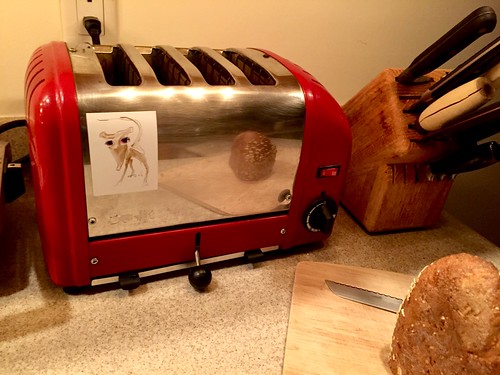
In any compromise between food and poison, it is only death that can win. Oh? But would you like it it in a box? Would you like it with a fox? Would you like it in a house? Would you like it with a mouse?
UPDATE: I still haven't watched the video, but I have watched Scott Adams's strong apology for portraying the Catholic schoolboys in a negative light, and Adams describes the extended video in detail. So check out my new post, which includes quotes from Adams's description.
"Later volumes included 'We Are All Multiculturalists Now' in 1997 and 'From a Cause to a Style: Modernist Architecture’s Encounter with the American City' in 2007.... A child of Jewish immigrants from Warsaw, Nathan Glazer was born on Feb. 25, 1923, in New York City and spent his early years in East Harlem. His father, Louis, was a garment worker, and his mother, Tilly, was a homemaker. Nathan was the youngest of seven children, and when he was 10, the family, which was crammed into a four-room apartment, moved to the wider spaces of the East Bronx. Mr. Glazer’s interest in urban affairs stemmed directly from personal experience, and his upbringing had an impact on his later ideas. His East Harlem tenement block, dominated by the iron structures of elevated trains, had no trees or green strips. It was, Mr. Glazer once said, a 'bad place to live.' Only a few blocks away was Central Park, where a boy could lose himself in the meadows and woodlands, enjoying a respite from the city’s noise and grime. For Mr. Glazer, the park was a 'wonder' of childhood, and in years to come, when some urban planners challenged Frederick Law Olmsted’s vision of a pastoral retreat within a crowded city, he spoke out in Olmsted’s defense.... Mr. Glazer’s turn to neoconservatism followed an almost paradigmatic path. Throughout the 1950s, and even after he went to work for the Kennedy administration’s Housing and Home Finance Agency in 1962-63, he continued to consider himself a radical. But if, as his longtime friend Irving Kristol put it, a neoconservative is a liberal who has been mugged by reality, then Mr. Glazer got hit over the head...."
No, Amnesty is not a part of my offer. It is a 3 year extension of DACA. Amnesty will be used only on a much bigger deal, whether on immigration or something else. Likewise there will be no big push to remove the 11,000,000 plus people who are here illegally-but be careful Nancy!
"Very rarely has a story been so unequivocal — usually there are more hedges and acknowledgments of what isn't known. And unlike most other reportage in this saga, this accused the president of a felony — a very different bar. Democrats read the story and began immediately dreaming up articles of impeachment. Even some conservatives joined the 'If true' chorus...."
Writes Axios in "A reckoning for political journalism" (also reporting that BuzzFeed Editor-in-Chief Ben Smith is standing by his story, saying "We literally don't know what the special counsel is referring to" and "This is a line of reporting that has been repeatedly vindicated").
I am a participant in the Amazon Services LLC Associates Program, an affiliate advertising program designed to provide a means for me to earn fees by linking to Amazon.com and affiliated sites.
Encourage Althouse by making a donation:
Make a 1-time donation or set up a monthly donation of any amount you choose:








 Posts
Posts


