Showing posts sorted by relevance for query sentence diagramming. Sort by date Show all posts

September 14, 2021

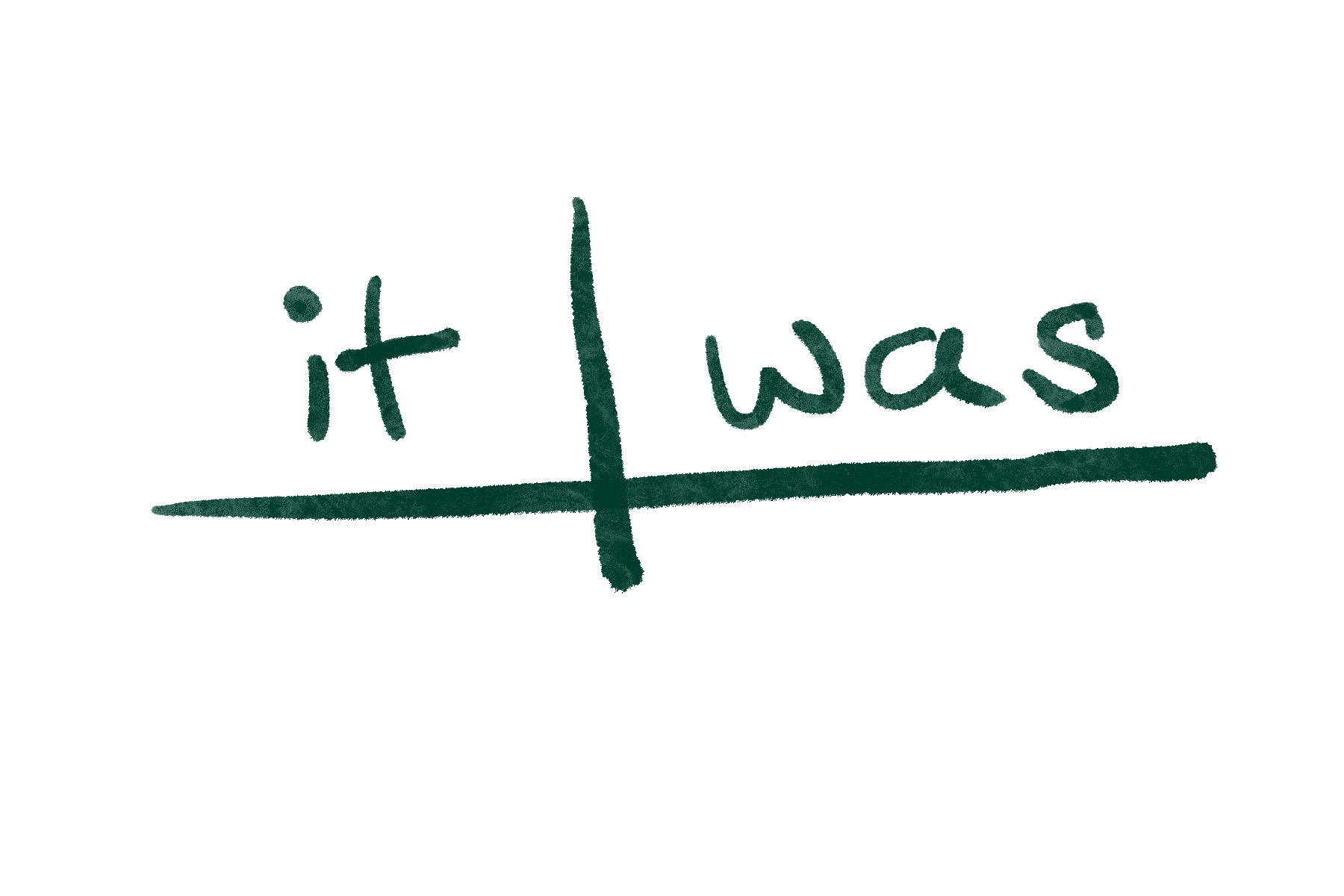
The new Wes Anderson movie has sentence diagramming!


I made that screen shot from the trailer:

I already blogged about the new movie — "The French Dispatch" — in the first post of the day, here, but I had to open up a new post because... sentence diagramming!

This is one of my favorite topics. I've blogged about it many times... including the one where a reader took up my challenge to diagram a 46-word sentence by Camille Paglia, the one where a reader took up my challenge to diagram a 153-word sentence from "Paradise Lost," and this one, where I'd written a long sentence and somebody called it a "doozy," and I said "Diagram it. It looks really cool diagrammed," and when no one stepped up to that challenge, I did it myself and made a video of the diagram so you could see for yourself how cool it was:

And now there is a movie, not entirely about sentence diagramming, but with some vivid sentence diagramming in it. I don't think there's a film documentary about sentence diagramming. I wish there were. But that's okay. I am hoping that because of the great love so many people have for Wes Anderson, this movie will inspire a renaissance of sentence diagramming!

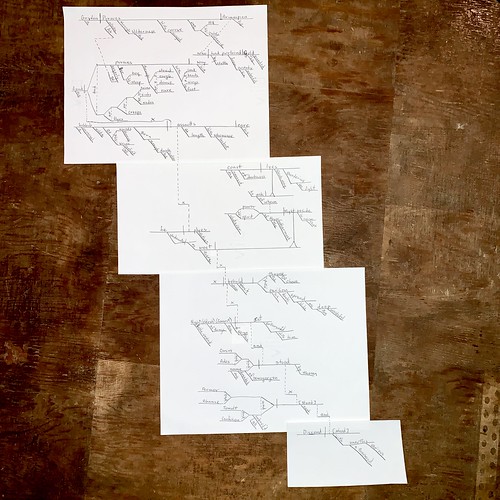
It might go nicely with the expanding home school movement.

June 8, 2019

On April 10th, I challenged you to diagram a 153-word sentence from "Paradise Lost."

It all started with a weather report that used the word "haboob," which got me thinking about whether "haboob" is related to "hubbub." It's not. "Hubbub" comes (probably) from the ancient Irish war-cry "ub! ub! ubub!" Looking "hubbub" up in the OED, I came across a snippet from "Paradise Lost": "A universal hubbub wilde Of stunning sounds and voices all confus'd." I wanted the complete sentence and found what I thought was the whole thing, a passage 153 words long.

Today, I get an email from Clark who says, "I have been noodling your sentence from Paradise Lost. Here is my attempt." He informs me that the 153-word text in my post is not the full sentence. There's an opening clause, and it seems to have been harder to diagram the sentence without these additional 30 words. Here's the diagram Clark sent me (click and click again to enlarge and clarify):

fullsizeoutput_2fb9

Here's the full 183 word passage from John Milton's magnificent poem.

June 16, 2017

"I mean, try to diagram that. And my point isn't a technical one about writing. It's: What's motivating you to get so contorted right there? It means something."

So I said yesterday, when I ran into this sentence from Camille Paglia:
Right now, too many secular Western liberals treat Islam with paternalistic condescension—waving at it vaguely from a benevolent distance but making no effort to engage with its intricate mixed messages, which can inspire toward good or spur acts of devastating impact on the international stage.
One reader [Clark] stepped up to the task. He sent me this:


Click to enlarge. Here's some instruction on diagramming sentences if you want to be ready for the next "sentence of the day."

ADDED: I think when a sentence is long and complicated, diagramming puts it to the test. And this sentence does stand up to diagramming.

But why write (speak?) something so complicated? Is it just to show off or overcompensate, to try to sound erudite? I think she's doing something more than that. She talks about "many secular Western liberals" who stand at a distance from Islam, but, ironically, the form of this sentence represents her distancing herself from the idea she gesticulates around. She is one of the "many secular Western liberals" who don't want to get too close to the subject.

She's also treating other secular Western liberals with the condescension she accuses them of having toward Islam. She says they make "no effort to engage," but what effort is she herself making? To point out that other people don't engage with X is not to engage with X. In fact, saying that other people don't engage is an aggravated form of nonengagement. Why not hold yourself responsible too?

In the end, it all peters out. Islam has "intricate mixed messages." Mmm. Yeah. It's complicated. That's what people who wave vaguely from a benevolent distance would say. There's good and bad, it could go either way — more verbosely, it "can inspire toward good or spur acts of devastating impact." That's really not saying anything more than the nice but lame people who don't want to get too close.

January 22, 2013

"On buffet tables, garnished with glistening hors d’œuvre, spiced baked hams crowded against salads of harlequin designs and pastry pigs and turkeys bewitched to a dark gold."

That's today's sentence from "The Great Gatsby" (in the practically inexplicable Gatsby project).

I must say this sentence almost makes me angry, and I'm going to calm myself by diagramming it...
hams | crowded
Okay. That's it! That's the action in this sentence. Hams crowded. Got that?

January 4, 2013

"Gatsby’s notoriety, spread about by the hundreds who had accepted his hospitality and so become authorities on his past, had increased all summer until he fell just short of being news."

That's from Chapter 6. I'm getting used to these F. Scott Fitzgerald sentences (as I continue with this Gatsby project, taking one sentence out of context every day). Each one — so far — has a little narrative arc, with perhaps a missing center or a surprising ending. In today's sentence, we see a process of inflation and then deflation.

"Gatsby’s notoriety" — Gatsby has fame. He's big. We begin this sentence with bigness. The word "notoriety" tends to refer to a negative sort of fame. For example, E.M. Forster, in "Room with a View," wrote: "Mrs. Honeychurch... would abandon every topic to inveigh against those women who (instead of minding their houses and their children) seek notoriety by print." Imagine what she would think about blogger ladies. 

But back to Gatsby. He's got notoriety — which is bigness — and it spreads. It gets bigger.

It is spread about by the hundreds — now the sense of inflation comes not in the form of the great Gatsby but the hundreds, the horde of people. Who are they? They are the ones who "had accepted his hospitality," so there's an inference of big parties. In moving from Gatsby to the hundreds, we see a transaction occurring. Gatsby is giving hospitality and getting fame-spreading. The fame comes in the form that he wants. It's a joke to say that these people are "authorities on his past." Drawn to his parties, they got loaded with the stories he wanted told. He plied them, got them drunk with an illusion of authority, which motivates them to spread Gatsby's PR. And they spread it successfully because of their belief in the stories they are telling. The hundreds desire inflated size too, and if they are authorities, they have it, and they seem to love to go about in the world, flaunting their bigness, even as they are dupes for Gatsby, increasing his notoriety.

Notice the progression of -ity/-ety words in the sentence: notoriety, hospitality, authority. There's poetry to the sound alone, but the similarity of these words makes us feel a logic to the mechanism operating here. Hospitality promotes authority and thus notoriety.

We finally arrive at the verb of this sentence: increased. If we were diagramming this sentence, we'd build around notoriety | increased. The bigness got bigger. We've arrived at the peak of the narrative arc, where we get to stay all summer until — "until" is the word that warns of change — he fell. He fell! We are plummeting into the back end of this arc. He fell just short. Where's our bigness now? We get our 2 jarring smallness words: fell and short. And now we arrive at the punchline: just short of being news.

He was so big, he had his hundreds and his notorietyincreasing all summer — but in the end, how big was he? He didn't break the surface of the public consciousness. He wasn't news.

August 22, 2022

"At Zucker’s Trump-baiting CNN, Stelter thrived.... But Zucker was forced to resign from the network, and a new regime under Chris Licht stepped in..."

"... with a goal of rejiggering CNN’s programming, scrubbing it of liberal political valence....Under new ownership, CNN’s parent company was in thrall to the libertarian billionaire John Malone, who said that he wanted to see 'CNN evolve back to the kind of journalism that it started with, and actually have journalists, which would be unique and refreshing.'"

Writes Clare Malone in "A TV Face of the Trump Resistance Exits/Brian Stelter, the host of the CNN show 'Reliable Sources,' which was cancelled this week, went from media chronicler to media-chronicled" (The New Yorker).

I had trouble understanding that headline because I have been using the tag "the Trump resistance" to refer Trump and his supporters as they've resisted accepting Biden's victory in the 2020 election. That includes the January 6th riot/insurrection and the investigation into it. So it took me a couple seconds to see "the Trump resistance" as meaning the resistance to Trump and not the resistance by and on behalf of Trump. That reveals how little I have bothered with the CNN eminence that was Brian Stelter. The truth is, I don't watch any TV news channels.

Back to the article. This next sentence had me almost changing course and inviting readers to participate in a sentence-diagramming contest (or just to rewrite this in as few words as possible):

January 19, 2019

I will ignore... and resist...

It's sentence-diagramming time at Althouse. Today's sentence comes from Roger Cohen in a NYT column titled "The Strange Persistent Troubling Russian Hang-Up of Donald Trump":
I will ignore the hermetic sealing of Trump’s personality against decency, and resist the temptation to riff on Abraham Lincoln’s brooding portrait in the White House dining room above the buffoon in chief with his burgers, to ask a simple question: If President Donald Trump is a Russian asset, what would he be working to achieve?
I'm just into examining that as a sentence because, as the post title reveals, I am exasperated with the get-Trump enterprise.

But let me say something about punctuation. The commas after "decency" and "burgers" are not right, especially if you're going to be as comma-averse as to write "The Strange Persistent Troubling Russian Hang-Up of Donald Trump."

And my resistance is not strong enough to keep me from saying if you're going to pontificate about strange persistent troubling hang-ups of Donald Trump, you need to pause now and then and consider  strange persistent troubling hang-ups about Donald Trump.

By the way, I wonder whether some people — ordinary people who don't really want to have to follow politics too much — are going to be influenced in the 2020 election to vote against Trump just to help all the strangely persistently troublingly hung-up people.

May 4, 2018

A sentence to diagram.

"The left’s increasing zeal to transform prostitution into legalized and regulated 'sex work' will have this end implicitly in mind, the libertarian (and general male) fascination with virtual-reality porn and sex robots will increase as those technologies improve — and at a certain point, without anyone formally debating the idea of a right to sex, right-thinking people will simply come to agree that some such right exists, and that it makes sense to look to some combination of changed laws, new technologies and evolved mores to fulfill it."

That 88-word sentence is from "The Redistribution of Sex" by Ross Douthat (NYT). And "this end" refers to addressing "the unhappiness of incels, be they angry and dangerous or simply depressed and despairing."

I came out in favor of sex robots last July, here.

Anyway, I think it's an interesting sentence to try to diagram.

For a much better experience — I called it "orgasmic" — in diagramming a sentence, look back to this January 2013 post that took on "When we pulled out into the winter night and the real snow, our snow, began to stretch out beside us and twinkle against the windows, and the dim lights of small Wisconsin stations moved by, a sharp wild brace came suddenly into the air."

October 23, 2006

Teaching grammar.

That it's being done at all is front page news:
The National Council of Teachers of English, whose directives shape curriculum decisions nationwide, has quietly reversed its long opposition to grammar drills, which the group had condemned in 1985 as "a deterrent to the improvement of students' speaking and writing."

Now, even the sentence diagram, long the symbol of abandoned methodology, is allowed...

Ooh! Sentence diagramming! I approve!

June 30, 2012

"I believe in an America where millions of Americans believe in an America that's the America millions of Americans believe in."

"That's the America I love."

Said Mitt Romney according to Doonesbury, which made fun of it, and Language Log's Geoffrey K. Pullum was initially inclined to mock, and then thought about it, and realized he agreed with it.

One thing that gave him second thoughts is that his co-blogger Mark Liberman had already processed the quote, using the sublime technique of sentence diagramming. Which is nice.

But the more important basis for second thinking is that when you get to Liberman's old post, you find out that Romney didn't even speak those words. Mark Steyn did, and he was purporting to paraphrase Romney, for humorous effect. Pullum found out he was laughing at Steyn and Steyn was trying to make us laugh, and suddenly the quote wasn't funny anymore. Pullum, the liberal, was initially enjoying laughing at Romney — and his vapid dorkiness — and then he found out he was laughing at something a big right-winger — Steyn — had intended as a joke. Hey, that's not funny!

Pullum regains his sense of self-liberalism and goes into 4th of July mode:
It's nearly the 4th of July.... I love being back in America. It's like slipping into an old pair of shoes that really fit.... I don't think I can find anything mistaken in the passage. I think I believe in that America too. God bless it, anyway.
His post ends with a note that it's completely rewritten, because he apparently had originally assumed Romney did say those words, hadn't seen Liberman's old post, and went the mockery.

March 10, 2025

"You might think such a scene — lines of strangers ogling an exposed female body lying in the middle of the street — would feel unsettling or prurient...."

"Instead, the atmosphere felt mildly jovial, as people exchanged amused glances, shrugged, and snapped photos. Nothing untoward was happening here, because Balloon Kim seemed protected from any personal transgression. Naturally, being 60 feet long helped.... But Balloon Kim seemed impervious to transgression [because] Balloon Kim did not so much depict a person as it did a commodity, an abandoned outer shell.... By covering her famous face, Balloon Kim refused to return the onlookers’ gaze. She depicted no personal expression, and blocked even the depiction of any access to her interiority. This structure was not a portrait or a sculpture of Ms. Kardashian, but rather a very faithful recreation of the workings of Ms. Kardashian’s empire, which is built on the meticulously crafted project she has made of her body — a collection of highly public, highly exposed curves and spheres, sculpted and polished to perfection, displayed according to Ms. Kardashian’s diktats, and offered up as a series of ideals to be aspired to and emulated via the purchase of products."

Writes Rhonda Garelick, in "About That Giant Kim Kardashian in Times Square/The seamless, poreless, sanitized effigy of a capitalist titan was a startling piece of marketing for Skims" (NYT).

1. That last sentence — "This structure was not... " — is a doozy. Have I ever written "doozy" on this blog? Yes! And I've written it in the context of a long sentence that needed diagramming. So now, here's another item for the annals of Things I Asked Grok: "Diagram this sentence...."

2. "Interiority" — You might remember just last month I was asking "What kind of people use the word 'interiority'?" Encountering the word in a NYT article (about Dylan Mulvaney), I searched my blog archive and extracted the history of the word "interiority" on this blog. There were 5 earlier appearances, all of them in quotes, never used by me. One day I'll use it!

3. This post gets my "big and small" tag — which is, regular readers may know, my favorite tag. I  am amused by absurd and radical size variations. 

4. The NYT writer is doing something I've seen a lot of over the years — crediting a woman for doing something other than what you might think she's doing: selling her sexuality. 

May 14, 2022

Sentence of the Day.

This is the last sentence of a NYT T Magazine article by Nick Haramis titled, "What’s Behind Fashion’s Rediscovery of the Bare Midriff? It might be that in exposing the waist, designers are also revealing their hope for a bolder and better future." 

Are you ready to diagram (or at least think about diagramming)?

As much as this procession of bare midriffs was a form of immediate wish fulfillment in a time of isolation, uncertainty and protective layers, it was, too, an invocation for the future — an attempt to manifest, by exposing one of our most defenseless, most provocative zones, a future in which we might once again let our guards down and see our bodies not as vessels for disease or targets for injustice but as sources of power.

It's easy to get started:


It's a lot of work to complete the diagram, but feel free to jump right into the meaning... if you can. I can get you started on that too. Your midriff is defenseless and provocative — though I have not seen your particular midriff, and it may provoke something quite different from what the toned, sleek runway-model midriffs provoke — but it means something different in the future from what it meant in the past, because in the past we had the isolation of the lockdown, and moving into the future, we're trying to reengage with social life. It's one thing to dream about a defenseless and provocative midriff when you're home alone and can't go out, quite another to venture into the world again — it's hard enough with a fully covered torso — with your bare belly exposed. But what if we could take our defenseless and provocative midriff out in public with a better, stronger attitude, as a source of power? Then it might help us get over our dismal feeling that our body is a vessels for disease or a target for injustice. Maybe! It's all in the mind. Expose the space from the bottom of your breasts to the line reached by low-rise pants. Just get it out there. Think: power!! And then maybe you too will have emerged — truly emerged — from the lockdown.

October 21, 2011

Writing with dashes.

Do you like dashes? I do. There are certain ways of using dashes that I particularly admire. Rather than try to explain what I like so much, I'll give you an example. This is from the Charles Dickens novel, "Bleak House." The narrator is encountering the mother of a child who has just fallen down a flight of stairs.
Mrs. Jellyby, whose face reflected none of the uneasiness which we could not help showing in our own faces as the dear child's head recorded its passage with a bump on every stair — Richard afterwards said he counted seven, besides one for the landing — received us with perfect equanimity.
Doesn't that sentence make you feel like diagramming it... just for fun?

I like sentences like that — I think — because I like conversational side roads especially when they get you back to the main road. That relates to the way I feel about blogging. For example, the reason I was out there in Project Gutenberg searching for "Africa" on a webpage that contained the entire text of what is — in paperback — a 544-page book is that — like everyone else who checked Memeorandum today — I got waylaid by a NY Post story titled "Florida banker's wife left family to join Wall Street protesters."
A married mother of four from Florida ditched her family to become part of the raggedy mob in Zuccotti Park -- keeping the park clean by day and keeping herself warm at night with the help of a young waiter from Brooklyn.

“I’m not planning on going home,” an unapologetic Stacey Hessler, 38, told The Post yesterday.

“I have no idea what the future holds, but I’m here indefinitely. Forever,” said Hessler, whose home in DeLand sits 911 miles from the tarp she’s been sleeping under.
Hessler — who ironically is married to a banker — arrived 12 days ago and planned to stay for a week, but changed her plans after cozying up to some like-minded radicals, including Rami Shamir, 30, a waiter at a French bistro in Cobble Hill, Brooklyn.
Hey, check the dashes: "— who ironically is married to a banker —." Ironic? Or not ironic at all? It's just what you'd expect if you were reading a novel about a woman married to a banker. Stacey Hessler immediately called to mind Mrs. Jellyby. Remember Mrs. Jellyby? She's a minor character in "Bleak House." Here's a summary/spoiler:
[Mrs. Jellyby] resolutely devotes every waking hour to the “Borrioboola-Gha venture.” The reader never discovers the details of the endeavor except that it involves the settlement of impoverished Britons among African natives with the goal of supporting themselves through coffee growing.

Mrs. Jellyby is convinced that no other undertaking in life is so worthwhile, or would solve so many problems at a stroke. Dickens’s interest is not in the project, however, but rather in Mrs. Jellyby, who is so wedded to her work that she has no time for her several children, with the exception of Caddy, a daughter she has conscripted as her secretary. Ink-spattered Caddy puts in nearly as many hours as her mother in the daily task of answering letters and sending out literature about Borrioboola-Gha.

Caddy, however, has come to hate the very word “Africa” or any word that has the remotest suggestion of causes. For her, causes simply mean the ruin of family life. Mrs. Jellyby’s husband eventually becomes suicidal and, though surviving despair, is last seen in the book with his head resting despondently on a wall.

In the book’s postscript, we discover that the Borrioboola-Gha project failed after the local king sold the project’s volunteers into slavery in order to buy rum. Mrs. Jellyby quickly found another cause to occupy her time, “a mission with more correspondence than the old one,” thus providing a happy ending for a permanent campaigner.
Like a sentence with well-deployed dashes, it all comes together in the end.

May 15, 2022

Sentence of the Day.

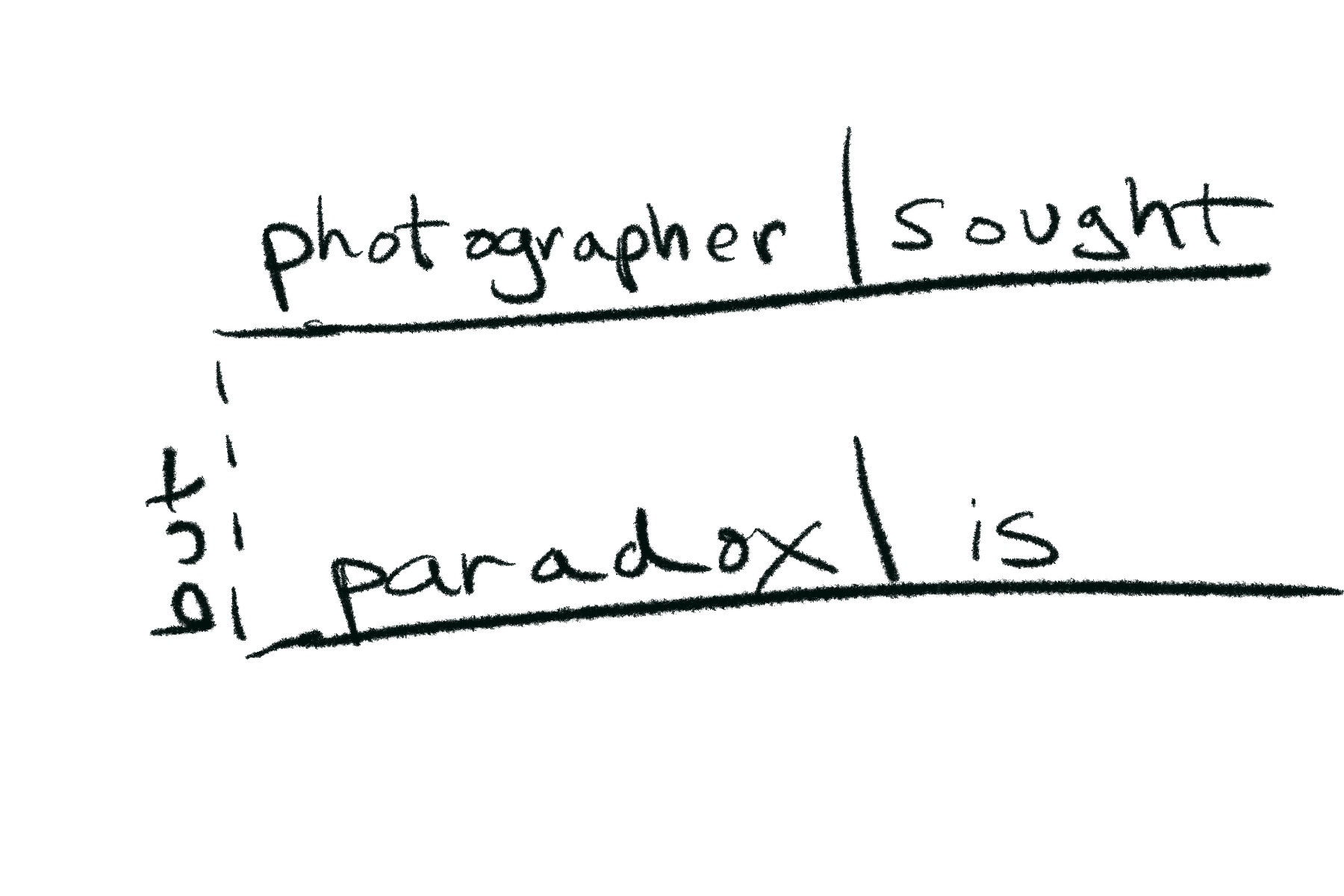
Get you diagramming pencil sharpened!

This is from "Ron Galella’s Relentless Gaze/The photographer’s work provides a stark illustration of the hold that celebrity has on our culture" by Naomi Fry in The New Yorker (Note: Galella died recently. Lots of Galella photos of celebs at the link):

The photographer sought to catch celebrities with their masks lowered and their auras punctured, but the paradox that animates his best photos is that, whether camera-ready or not, the stars he shot couldn’t help but magnetize—whether thanks to the ineffable glow of fame or, simply, because Galella captured them, a circumstance that created its own kind of intimate halo.

 Here, I'll get you started:


July 8, 2023

"I’ve worked with far lesser actors who would leave me to read with an assistant when they’re off-camera."

"But Tom does not play that way at all. At one point, his face was literally smashed against the [side] of the camera, to get in my eye line as much as possible, even if I could only see the corner of his eye. He was like, 'What do you need, what can I do, how can I help you?'" 

Said April Grace, about making the movie "Magnolia" with Tom Cruise, quoted in "Tom Cruise is here to help/For more than four decades, the actor has attained near-mythic status by giving us what we want — including seven ‘Mission: Impossible’ movies." (WaPo).

The article, written by Ann Hornaday, a film critic, continues:
It’s easy to be cynical about Cruise’s messianic energy, his zealotry on behalf of an art form that, when he practices it, looks less like a profession than a holy vocation (is it any coincidence that he once contemplated becoming a Franciscan priest?).

Why be "cynical" about "a holy vocation"?!