Showing posts with label Naomi Fry. Show all posts
March 31, 2023
"As she has evangelised about chakra healing and $75-per-month vitamin supplements, Paltrow's high-end 'yoga mom' spirit has overshadowed her film career."
"Even her exceptionally trim body, at 50, is another part of the brand: recently, she has spoken about a bone-broth diet which has been widely criticised as 'dangerous.' (She subsequently insisted that she has many days of eating 'whatever' and 'french fries.')
There is something so absurd about Paltrow's image that it seems almost to transcend the disdain you might expect to be levelled at her for such flagrant unworldliness. To many, she's such a caricature of privilege, doing things that are so glossily removed from ordinary life.... inconceivably wealthy, hyper-fixated on things that most have never thought about (vaginal steamers, anyone?).... [I]n today's relentlessly critical social media discourse, many find her schtick so over-the-top that they can't help but find it entertaining."
BBC explains, in "Gwyneth Paltrow verdict: Why she divides, and fascinates."
Side note: She won the case.
I trust that the jury ascertained that she and not the optometrist was the one who told the truth.
Does that make her a less ridiculous figure in our pop culture?
May 15, 2022
Sentence of the Day.
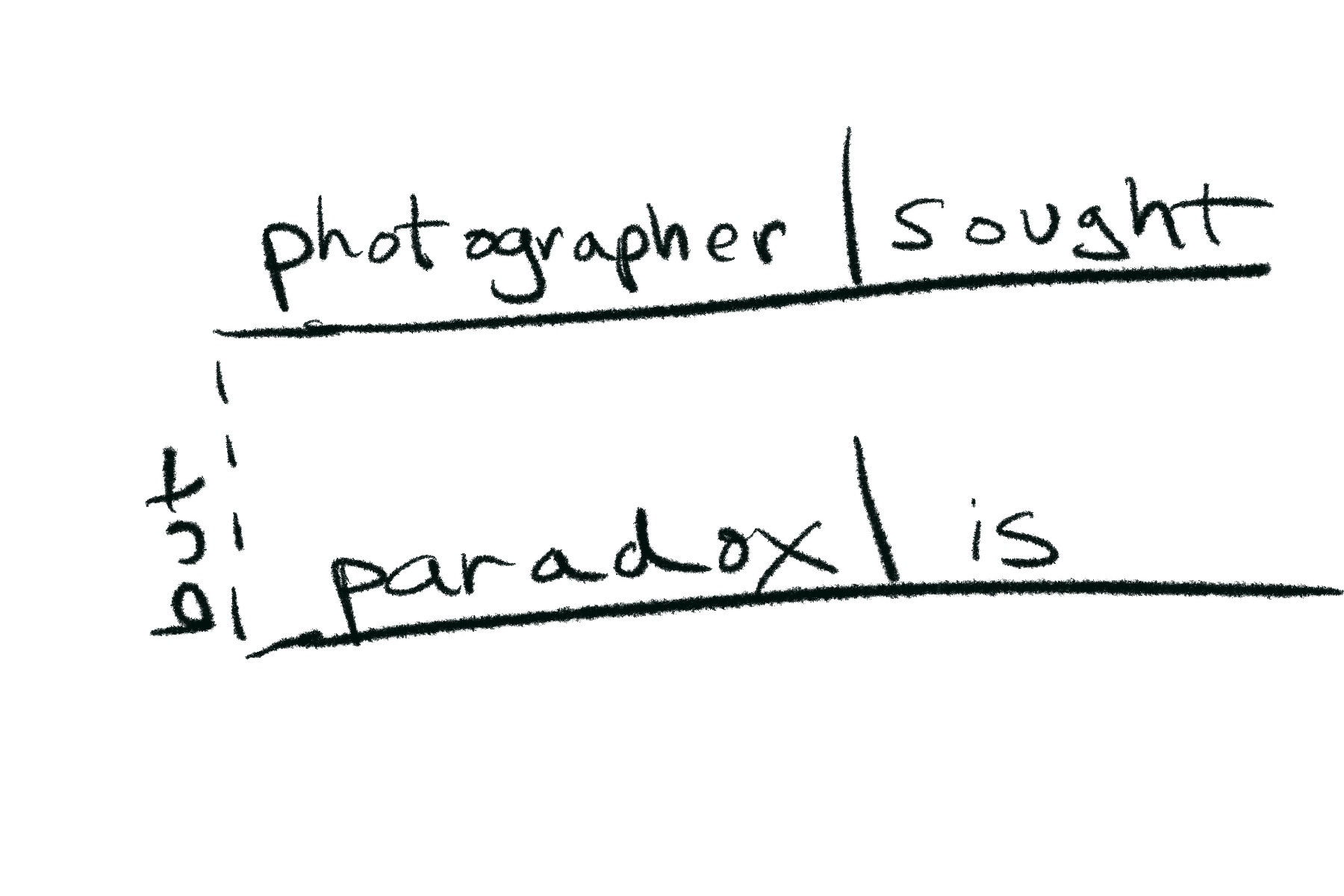
Get you diagramming pencil sharpened!
This is from "Ron Galella’s Relentless Gaze/The photographer’s work provides a stark illustration of the hold that celebrity has on our culture" by Naomi Fry in The New Yorker (Note: Galella died recently. Lots of Galella photos of celebs at the link):
The photographer sought to catch celebrities with their masks lowered and their auras punctured, but the paradox that animates his best photos is that, whether camera-ready or not, the stars he shot couldn’t help but magnetize—whether thanks to the ineffable glow of fame or, simply, because Galella captured them, a circumstance that created its own kind of intimate halo.
Here, I'll get you started:
March 13, 2020
"When I happen upon almost any image from one of the 'Simpsons' Instagram [accounts that post single frames from the show], I am struck by how absolutely visually gorgeous it is."
"This is, perhaps, especially true when it comes to @scenic_simpsons, with its visions of a violet car, its headlights on, cruising in a darkened parking lot full of silent vehicles; or an abstract thicket of trees, their tops as dense and foreboding as storm clouds; or a digital clock on a bedside table, its face glowing 7:59, next to an orange phone. Though they come to us via our hubbub-filled Instagram feeds, these stand-alone pictures are as quietly stunning as any made by our greatest American artists of alienation and loneliness, from Edward Hopper to Arthur Dove."
From "The Aesthetic Splendor of 'The Simpsons'" by Naomi Fry (in The New Yorker).
October 28, 2019
"I like Cali sober because for me it means that even though I’m getting older, and I take monthlong breaks from drinking occasionally, it doesn’t mean that my life can’t still be enjoyable."
"It’s sort of equivalent to being a silver fox: your hair might be gray, and you might be taking it a little slower, but you can still be hot!"
Says Naomi Fry, a staff writer at The New Yorker, quoted in "What Does It Mean to Be ‘Cali Sober’?" (NY Magazine). NY Magazine defines "Cali sober" as abstaining from alcohol but smoking marijuana.
Every Urban Dictionary definition for "silver fox" says it's a sexy older man.
Wikipedia has a list of famous people who have been nicknamed "silver fox" — and all are men (George Clooney, Anderson Cooper, Charlie Rich, Duke Snider, Eduard Shevardnadze...).
The Merriam-Webster website defines the "silver fox" as "generally meaning 'an attractive middle-aged man having mostly gray or white hair'" and gives a history of the term going back to a 1920s baseball player, Jess Petty, who had gray hair. But...
... but it strikes me as really unattractive for an older women to proclaim that she's sexually attractive. And I feel completely alienated from the idea that you're "hot" and preserving your last chance to have an "enjoyable" life because you smoke weed. And I see no equivalence between leaving your head in its naturally gray condition and infusing your natural head with an intoxicating substance.
Says Naomi Fry, a staff writer at The New Yorker, quoted in "What Does It Mean to Be ‘Cali Sober’?" (NY Magazine). NY Magazine defines "Cali sober" as abstaining from alcohol but smoking marijuana.
Every Urban Dictionary definition for "silver fox" says it's a sexy older man.
Wikipedia has a list of famous people who have been nicknamed "silver fox" — and all are men (George Clooney, Anderson Cooper, Charlie Rich, Duke Snider, Eduard Shevardnadze...).
The Merriam-Webster website defines the "silver fox" as "generally meaning 'an attractive middle-aged man having mostly gray or white hair'" and gives a history of the term going back to a 1920s baseball player, Jess Petty, who had gray hair. But...
Silver fox is sometimes used to refer to women with gray or white hair as well (in fact, the bestselling exercise video Richard Simmons and the Silver Foxes from 1987 clearly meant both men and women, since they perform the workout together behind the fitness guru), but many uses make clear reference to the fact that the term usually designates men...I don't think Naomi Fry is very old herself. I was reading her Twitter feed...
it's like he's clamping down on a piece of bark https://t.co/56iHvAcHPk— Naomi Fry (@frynaomifry) October 28, 2019
... but it strikes me as really unattractive for an older women to proclaim that she's sexually attractive. And I feel completely alienated from the idea that you're "hot" and preserving your last chance to have an "enjoyable" life because you smoke weed. And I see no equivalence between leaving your head in its naturally gray condition and infusing your natural head with an intoxicating substance.
Tags:
aging,
gray hair,
language,
marijuana,
Naomi Fry,
President Trump,
Richard Simmons
June 1, 2018
"She is standing slightly behind him, considerably more sombre. In buttoned-up black, her long, dark locks tumbling in abundant waves, she is Botticelli’s Venus as channelled by Elvira, Mistress of the Dark..."
"... an icon of the Calabasas Renaissance. Her pose is stiff, her jacket sleeves pushed up in a gesture of can-do, eighties-style power-dressing."
A description of Kim Kardashian, in "Kim Kardashian Meeting Donald Trump in the Oval Office Is a Nightmare We Can’t Wake Up From" by Naomi Fry in The New Yorker.
I blogged that because when I read it I got a twinge of envy from the realization that if I'd wanted to write a description, I wouldn't have come up with those details.
I mean, there's the photo. We can all see it, but can we string together words like that? And yet, what is it about those 2 sentences that makes me think other people are the writers — the writer writers?
1. "buttoned-up... tumbling... channelled... pushed up" — we're entertained with swirling action, even though it's a static, formal, boring posed photograph. How did Fry see all that stuff? How did she arrange it so it's up, down, around, and back up again.
2. We've got cultural references: Botticelli’s Venus (I know what that is) somehow merged with ("channelled by") Elvira, Mistress of the Dark (which I would have thought I knew who she was but the reference to the Calabasas Renaissance is telling me I am an idiot to think that).
3. Those sleeves! So much happening there: "her jacket sleeves pushed up in a gesture of can-do, eighties-style power-dressing." I would have thought the can-do gesture was rolling up your sleeves, and that bunchy push-up look was something casual that people did in the 80s because of Don Johnson on "Miami Vice" and that the power dressing of the 80s was something else, something more northeastern and businesslike, not a Floridian police-work fantasy.
4. Those "long, dark locks tumbling in abundant waves." I would not have dared to use all those words. Like Coco Chanel with her "Before you leave the house, look in the mirror and take one thing off," I'd have looked at that sentence and felt obliged to strike one word out. One or three or four. And I couldn't bring myself to call hair "locks." Especially near "waves." I'd get influenced by the wateriness of "waves" and think of the locks in canals.
5. Why are we talking like this about a woman? She's a real human being. Is it okay to make her into some sort of clusterfuck of female iconography? I'd get stalled in some vague ethical cogitation and not save my time forputting out crafting that kind of prose.
A description of Kim Kardashian, in "Kim Kardashian Meeting Donald Trump in the Oval Office Is a Nightmare We Can’t Wake Up From" by Naomi Fry in The New Yorker.
I blogged that because when I read it I got a twinge of envy from the realization that if I'd wanted to write a description, I wouldn't have come up with those details.
Great meeting with @KimKardashian today, talked about prison reform and sentencing. pic.twitter.com/uOy4UJ41JF— Donald J. Trump (@realDonaldTrump) May 30, 2018
I mean, there's the photo. We can all see it, but can we string together words like that? And yet, what is it about those 2 sentences that makes me think other people are the writers — the writer writers?
1. "buttoned-up... tumbling... channelled... pushed up" — we're entertained with swirling action, even though it's a static, formal, boring posed photograph. How did Fry see all that stuff? How did she arrange it so it's up, down, around, and back up again.
2. We've got cultural references: Botticelli’s Venus (I know what that is) somehow merged with ("channelled by") Elvira, Mistress of the Dark (which I would have thought I knew who she was but the reference to the Calabasas Renaissance is telling me I am an idiot to think that).
3. Those sleeves! So much happening there: "her jacket sleeves pushed up in a gesture of can-do, eighties-style power-dressing." I would have thought the can-do gesture was rolling up your sleeves, and that bunchy push-up look was something casual that people did in the 80s because of Don Johnson on "Miami Vice" and that the power dressing of the 80s was something else, something more northeastern and businesslike, not a Floridian police-work fantasy.
4. Those "long, dark locks tumbling in abundant waves." I would not have dared to use all those words. Like Coco Chanel with her "Before you leave the house, look in the mirror and take one thing off," I'd have looked at that sentence and felt obliged to strike one word out. One or three or four. And I couldn't bring myself to call hair "locks." Especially near "waves." I'd get influenced by the wateriness of "waves" and think of the locks in canals.
5. Why are we talking like this about a woman? She's a real human being. Is it okay to make her into some sort of clusterfuck of female iconography? I'd get stalled in some vague ethical cogitation and not save my time for
Tags:
1980s,
art,
Chanel,
clear speech,
fashion,
Kim Kardashian,
Naomi Fry,
prose,
Trump and pop culture,
writing
Subscribe to:
Posts (Atom)