September 19, 2015

The NYT would like us to talk about "Generation Z."

Somehow there are 2 articles:

1. "Move Over, Millennials, Here Comes Generation Z."
Sure, millennials were digital; their teenage years were defined by iPods and MySpace. But Generation Z is the first generation to be raised in the era of smartphones. Many do not remember a time before social media.

“We are the first true digital natives,” said Hannah Payne, an 18-year-old U.C.L.A. student and lifestyle blogger. “I can almost simultaneously create a document, edit it, post a photo on Instagram and talk on the phone, all from the user-friendly interface of my iPhone. Generation Z takes in information instantaneously... and loses interest just as fast.”
2. "How to Spot a Member of Generation Z."
“This group seem much less attached to traditional gender binaries or linear definitions of sexuality,” said Lucie Greene, a trend forecaster at J. Walter Thompson, the advertising giant. “It’s all about individualism and the right to be whatever you want.”
Individualism and the right to be whatever you want is the line I've heard all my life. Conformity was always the problem of those terrible people of the past. (By the way, I used to work at J. Walter Thompson, back around the time when Generation Z people were getting born.) [I mean the parents of the Gen Zs were getting born.]

"If you want to stump a Democrat, ask them to name an accomplishment of Hillary Clinton," said Carly Fiorina.

And Politico collected some answers, in "What Is Hillary’s Greatest Accomplishment?" I haven't read any of the answers yet, but I think the obvious answer is getting and staying married to Bill Clinton. It doesn't say much about whether she should be President, but it's a very grand and amazing accomplishment.

The most common response at the link is the one put most pithily by Paul Begala: "Iran sanctions. Sec. Clinton accomplished the nearly impossible mission of getting China, Russia, the European Union and the civilized world on board with crippling sanctions against Iran. This is what brought Iran to the negotiating table."

"We didn’t see any fire at all and then we rounded one last corner and then it was completely engulfed in flames and there was nothing we could do."

"We live in kind of a dead-end community so there was no way out, we had to go forward. We had to get out."
The family had to drive slowly through the streets because the smoke was so thick, Wolf said. The worst part, she recalled, was that the car was heating up like she was “in an oven”. She also remembers a “panicking sensation” as she worried that something might fall into the street and block their path, trapping them in the approaching inferno.
Video of the harrowing drive at the link.

"A total of 87 out of 91 former NFL players have tested positive for... the degenerative disease known as chronic traumatic encephalopathy..."

"The disease is widely believed to stem from repetitive trauma to the head, and can lead to conditions such as memory loss, depression and dementia."
“People think that we’re blowing this out of proportion, that this is a very rare disease and that we’re sensationalizing it,” said [Dr. Ann McKee, the facility’s director and chief of neuropathology at the VA Boston Healthcare System]. “My response is that where I sit, this is a very real disease. We have had no problem identifying it in hundreds of players.”
ADDED: This is a good time to revisit the old Freakonomics episode, "The Dangers of Safety":
DUBNER: So wait a minute. Let’s figure this out. If the helmet, which we think of as a safety device, is being used as a weapon — why not get rid of the weapon? There are sports we play without helmets — rugby, Australian rules football. What happens if you try to play American football like they did in the old days, without a helmet? Here’s Quintin Mikell again.

MIKELL: It would probably be—there’d be a lot less head injuries, I know that for a fact, and I can tell that the tackling would actually be a lot different. You know, you can’t–nobody wants to mess their face up willingly, so, you wouldn’t go in head first, you wouldn’t go in trying to destroy somebody, you’d go in just to get them on the ground. And maybe it wouldn’t be as exciting, or, I’m not sure, but I know there’d definitely be—there wouldn’t be as many injuries.

"It's all about the arena," said Meade, reading the news this morning.

"What?" I said. And I had misheard him. He's muttering in the next room. It's not like I'm Emily Litella.

"It's all about Fiorina," he repeated.

"Fiorina.. the arena..."

"You could write a poem."

ADDED: arena (n.)
1620s, "place of combat," from Latin harena "place of combat," originally "sand, sandy place," perhaps from Etruscan. The central stages of Roman amphitheaters were strewn with sand to soak up the blood. 
To soak up the blood that comes out of the eyes and the wherever.

IN THE COMMENTS: Sebastian said: "'You could write a poem.' The kind of poem that people who don't like poetry would like." Oh, yeah? Them's fighting words! I want to leave blood in the sand now.
Carly Fiorina
In the arena
Eating farina
With Angelina
Jolie, that ballerina
With a concertina
In comes a hyena
Quick, get a subpoena!

Clinton laconic in Laconia.

"Hillary Clinton left some young fans upset Thursday in New Hampshire after she canceled a planned appearance at a Boys & Girls Club location in Laconia, New Hampshire. Between 30 to 35 children who participate in the club's programs, all of them between 5 and13 years old, waited, and waited, and waited. They had written letters to the former secretary of state and devised questions to ask her. They drew her pictures and painted welcome signs.... Clinton was in Laconia to speak at a public forum about drug addiction. But instead of meeting the kids, her campaign whisked her off to a separate speaking engagement at a different Boys & Girls Club location in Concord, 30 miles away."

laconic (adj.)
"concise, abrupt," 1580s, probably via Latin Laconicus, from Greek Lakonikos, from Lakon "person from Lakonia," the district around Sparta in southern Greece in ancient times, whose inhabitants were famously proud of their brevity of speech. When Philip of Macedon threatened them with, "If I enter Laconia, I will raze Sparta to the ground," the Spartans' reply was, "If."
Meanwhile, also in New Hampshire, the other woman, Carly Fiorina, is topping a poll.

20 years ago today: The Washington Post published the 35,000-word "Unabomber Manifesto."

The Washington Post has the story, with a photograph, at the top center of the home page: "How publishing a 35,000-word manifesto led to the Unabomber."
In more than 35,000 words spread over eight pages of a special section, an anonymous author laid out his complaint against the “industrial-technological system” and his desire to destroy it by sparking a revolution. The essay bumped and blundered through a forest of dark themes and discontent, from a lengthy lament about environmental destruction to a brief critique of golf and bowling.
The publication led to the identification and arrest of Kaczynski (because his sister-in-law and brother recognized his distinctive style of expression), but the reason for publishing the whole damned thing was to comply with Kaczynski's ultimatum: If it's published, he'll stop bombing, and if not, he'll "start building our [sic] next bomb."

WaPo puts the old story in the context of present-day concerns about terrorism:
[T]he episode also stands out as an early milestone in the current age of anxiety. The Unabomber’s manifesto appeared just as Washington was beginning its long preoccupation with terrorism and national security. As the news media and the public fixated on the Unabomber drama, a much bigger story was quietly dawning. That same year, in a classified National Intelligence Estimate, the CIA warned that Islamic extremists were intent on striking targets inside the United States.
The NYT — which coordinated with WaPo in responding to the ultimatum — ignores the anniversary. There's a mention on the day's "Today in History" feature, which comes from The Associated Press. It's in there along with other historical anniversaries like: "In 1970, the situation comedy 'The Mary Tyler Moore Show' debuted on CBS-TV." And: "In 1915, vaudeville performer W.C. Fields made his movie debut as 'Pool Sharks,' a one-reel silent comedy, was released." And in 1959, Nikita Khrushchev got mad when he found out they weren't going to let him into Disneyland. In 1960, Fidel Castro came to New York City, didn't like his hotel, and "angrily checked out" and went to a different hotel.  Communists and comedians. Communists and comedians and Ted Kaczynski.

Ted had a lot to say about leftists in his manifesto. Let's look. It's worth reading if only to see how surprisingly similar it is to things you may be seeing every day on the internet:

September 18, 2015

Using makeup to create the look that you've been up all night engaging in dissolute behavior.

"It’s a look you get from being out all night, sweating — without looking too undone."
To achieve that perennial party-girl look, Nars kept skin clean of foundation and concealer, instead opting for a touch of greasy shine at the eyes, cheekbones and under the eyes. (“Vaseline is the best,” he said.) With a touch of shadow, he added some darkness under the eyes for a messy, day-after makeup effect....
This is the sort of thing that keeps coming back because it's something only young people can do, and anything "young" will always seem like an option. It made me think of the big "heroin chic" trend of the mid-90s ("a look... characterized by... dark circles underneath the eyes... emaciated features and androgyny... a reaction against the 'healthy' and vibrant look of models such as Cindy Crawford and Claudia Schiffer.") I was already reading the NYT, so I searched the NYT archive for "heroin chic" and came up with a Maureen Dowd column from 1996 — from the height of the presidential campaign:
In this fast-paced, channel-surfing, gigabyte blur of a world, Bob Dole wants to slow things down. Way down.... Mr. Dole presents himself as the avatar of a better time, a time of moral rectitude, unlocked doors, clean movies and Glenn Miller...

[H]e decried ''Pulp Fiction,'' though he hasn't seen it, and ''Trainspotting,'' though he hasn't seen it, for encouraging ''the romance of heroin." ''A fascination with risk and death,'' he said, denouncing heroin chic. ''The attraction of self-destruction -- if you can believe it.''
Dole was portrayed at the time as hopelessly old, a veritable corpse. Oddly, it's 19 years later, and the man is still alive (and joking about running for President).

ADDED: I'm seeing a connection between this and the earlier post today quoting 70s-era feminist Susan Brownmiller cautioning women about drinking too much and getting "trapped in sex situations."

"On the eve of Pope Francis’s arrival in the U.S., the Vatican has taken offense at the Obama administration’s decision to invite to the pope’s welcome ceremony..."

"... transgender activists, the first openly gay Episcopal bishop and an activist nun who leads a group criticized by the Vatican for its silence on abortion and euthanasia."
According to a senior Vatican official, the Holy See worries that any photos of the pope with these guests at the White House welcoming ceremony next Wednesday could be interpreted as an endorsement of their activities.
There are 15,000 invited guests so how could any sane person make an interpretation of endorsement?

Susan Brownmiller, author of the feminist classic "Against Our Will," has some words for today's anti-rape activists.

From an interview in New York Magazine:
I like to see activism wherever it rears its head, but this is a very limited movement that doesn't accept reality. Culture may tell you, "You can drink as much as men," but you can't. People think they can have it all ways. The slut marches bothered me, too, when they said you can wear whatever you want. Well sure, but you look like a hooker. They say, "That doesn't matter," but it matters to the man who wants to rape. It's unrealistic. I don't know what happened to the understanding people had in the 1970s....

Well, I take a hard line with victims of domestic violence, too. I feel it is my place as a feminist to say, "Get out, get out, get out of this relationship." They feel that we should respect their opinions and beliefs because they are survivors. If they can’t get out because they don’t want to reduce their living circumstances, or they don’t want to go, or they are passive people, then I am supposed to respect that. But I don’t. My feeling is "Get out."

And my feeling about young women trapped in sex situations that they don’t want is: "Didn’t you see the warning signs? Who do you expect to do your fighting for you?" It is a little late, after you are both undressed, to say "I don’t want this."

Select the temperature range you like...

... and see where in the United States you'll find it.

"Norway man sawed neighbour's house in half."

"I reduced it to a legal size, so the law is on my side. That's my reason."

I'm reading the news from Norway after getting sucked in by some damn thing about Obama's Nobel Prize being regretted by one of the individuals involved in bestowing it, a person who now has a book to flog.

There's better news from Norway. In addition to the Norway man who sawed his neighbor's house in half, there's the new school for Vikings, "where students will learn essential Viking crafts, such as sword forging, jewellery making, and roof thatching."

There's the voting official in trouble for saying "Are you really taking the 'homo ballot'?" to "an old lady who asked for a voting slip for Ă…pen folkekirke (Open people's church), at a polling station in Oslo."

There's the heavy rain about which a government meteorologist said "This just does not happen in Norway, we have a hard time believing that it’s true... These are figures ​​that you only normally see in the jungle." Someone else says: "The animals were really afraid, the cows don’t understand what was happening."

There's the artist whose hanging-naked-in-a-tree installation went wrong and left her hanging naked in a tree for 3 hours. "The video ends when the camera shuts off, but I was there calling for help for another 30 minutes."

Trump only snarked "We need this question? This is the first question?"...

... when a man in the crowd asked the first question like this: "We have a problem in this country. It's called Muslims. You know our current president is one. You know he's not even an American. We have training camps growing where they want to kill us. That's my question, when can we get rid of them?"

The failure to correct is now the subject of outrage. Is the outrage justified? Probably. Trump saw and used a tricky way to signal to a certain subgroup and to make them think he might be on their side. All the while, he preserved the ability to say I didn't agree. I made fun of him!

But Trump has fed on this kind of outrage. He's a clever communicator who knows how to work in a swirl of verbal energy. He lets other people talk and he says things that make for greater fun and excitement. Those who express outrage are just as useful in his game as the guy in the crowd who unleashed a torrent of crazy.

It's all good in Trumpworld.

"Jeb Bush smiled a lot. I wondered if he was channeling Mitt Romney in 2012, who smiled at his opponents on the stage as if they were adorable frolicking children."

"But Jeb smiles sweetly. With his gray-rimmed glasses and his weight loss he looked like Woodrow Wilson in a winsome mood."

Wrote Peggy Noonan.

In New York City, women eschew sleeves.

And it's driving some people crazy.
It’s like they pulled the coat onto their shoulders, looked in the mirror, and let out a sigh, deciding they were above pulling their arms into the silly extra fabric on the sides.
There are many possible explanations for this phenomenon. Just off the top of my head:

1. It's not yet chilly enough for the coat I want to have with me later in the day.

2. I don't want this expensive-to-dry-clean coat in contact with my armpits.

3. This way it's like a cape and capes are nice.

4. It says: I am am a woman of elegance and grace. You might have to worry that a coat worn like this would fall off, but I don't.

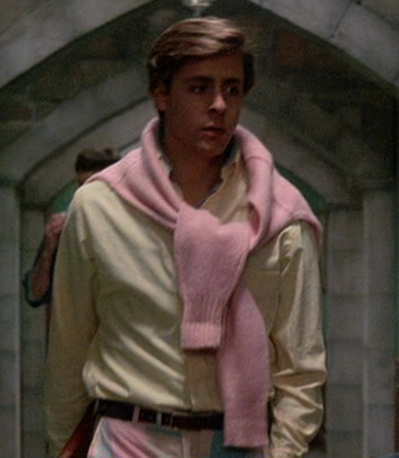
5. The eschewing of sleeve-wearing brings back no bad memories for me. That is, I don't remember the 1970s when everyone decided that the way to wear a sweater was to put it on your back and tie the sleeves in front of your neck like a scarf.

The "Take Back the Bike Path" rally in Madison took place at the planned time, despite a heavy thunderstom.


"Nearly 3,000 people RSVPed to the event on Facebook, planned earlier this week in response to a brutal assault and rape that took place on the Capital City Trail in the early morning hours of Saturday, Sept. 12. Though there were no official attendance numbers, it was clear by the initial gathering at Burr Jones Field that protesters weren’t deterred by the strong storms threatening the area. Attendance was clearly in the hundreds...."