The Democrat Caucus is an unmitigated disaster. Nothing works, just like they ran the Country. Remember the 5 Billion Dollar Obamacare Website, that should have cost 2% of that. The only person that can claim a very big victory in Iowa last night is “Trump”.
— Donald J. Trump (@realDonaldTrump) February 4, 2020
February 4, 2020
Only one victory last night...


I wasn't going to stay up late for the Iowa caucus results. They were delayed. Okay. I figured...
... I'd wake up, maybe in the middle of the night, look at my iPhone and, in 4 seconds, I'd see what happened.
I woke up around 12:30. No results yet. Then again at 2:30. Nothing but the increasing weirdness of no result. I had my conspiracy theory already in mind: They're protecting Joe Biden. He did terribly, and they're trying to work something out to protect his candidacy, or they already know it's going to fail, and they want to manage the transfer of votes onto their favored candidate, maybe Amy Klobuchar and not Pete Buttigieg... or is it the other way around.
I wake up for good at 6:33. Still no results! Is this tied to the way the Des Moines Register did not release its last poll? Why the suppression?
Are the Republican results suppressed? No! "Iowa results showed the president winning with roughly 97 percent of the vote over former Massachusetts Gov. Bill Weld and former Illinois congressman Joe Walsh. The primary challengers walked away with about 1 percent each." (Fox News).
This is solely a screwup with the Democrats. How embarrassing and fishy!
I woke up around 12:30. No results yet. Then again at 2:30. Nothing but the increasing weirdness of no result. I had my conspiracy theory already in mind: They're protecting Joe Biden. He did terribly, and they're trying to work something out to protect his candidacy, or they already know it's going to fail, and they want to manage the transfer of votes onto their favored candidate, maybe Amy Klobuchar and not Pete Buttigieg... or is it the other way around.
I wake up for good at 6:33. Still no results! Is this tied to the way the Des Moines Register did not release its last poll? Why the suppression?
Are the Republican results suppressed? No! "Iowa results showed the president winning with roughly 97 percent of the vote over former Massachusetts Gov. Bill Weld and former Illinois congressman Joe Walsh. The primary challengers walked away with about 1 percent each." (Fox News).
This is solely a screwup with the Democrats. How embarrassing and fishy!
February 3, 2020
"A second worker at Mexico’s famed monarch butterfly sanctuary has been found murdered..."
"... sparking concerns that the defenders of one of Mexico’s most emblematic species are being slain with impunity.... The deaths again called attention to the disturbing trend in Mexico of environmental defenders being killed as they come into conflict with developers or local crime groups, who often have political and police protection."
From The Guardian.
From The Guardian.
"Ostensibly the ad is designed to address the criticism of the fact that Bloomberg, as mayor of New York City, hired Trump to build a golf course... But that's not the real goal of the ad."
"The real goal is to troll Trump over his appearance — as there are several still photographs of Trump on the golf course shown on screen, all of which make the President look, well, large. Trump, as Bloomberg well knows, is decidedly vain and appearance focused. There is nothing that will bother Trump more than seeing an ad like this that is clearly intended to make Trump look out of shape and sort of bumbling."
Says CNN about this ad:
Now, I'm reading "REPORT: TRUMP IS MELTING DOWN OVER BLOOMBERG ADS ABOUT HIS WEIGHT" by Bess Levin in Vanity Fair. I'm soooo jaded about reports that Trump is "melting down." Levin quotes some Trump tweets about Bloomberg but none of them are about Bloomberg's insinuation that Trump is fat. Trump openly calls Bloomberg short, so he'd only undercut his own comedy routine if he got butthurt about Bloomberg calling him fat.
And Trump knows he's fat. He's self-deprecating about it, making it part of his own comedy. And he put out this tweet immediately after Bloomberg's fat-shaming ad:
Trump looks fat in his own tweet. And most Americans are fat too. Bloomberg is an idiot if he's aiming at Trump and collaterally damaging millions of Americans who are sensitive about their weight. And the same goes for Trump mocking Bloomberg for being short. I'll bet a third of American men are as short as Bloomberg. Why belittle them? Hmm. "Belittle" is one of those latent politically incorrect words. Whydiminish them make them feel small disparage them?
Says CNN about this ad:
Now, I'm reading "REPORT: TRUMP IS MELTING DOWN OVER BLOOMBERG ADS ABOUT HIS WEIGHT" by Bess Levin in Vanity Fair. I'm soooo jaded about reports that Trump is "melting down." Levin quotes some Trump tweets about Bloomberg but none of them are about Bloomberg's insinuation that Trump is fat. Trump openly calls Bloomberg short, so he'd only undercut his own comedy routine if he got butthurt about Bloomberg calling him fat.
And Trump knows he's fat. He's self-deprecating about it, making it part of his own comedy. And he put out this tweet immediately after Bloomberg's fat-shaming ad:
Getting a little exercise this morning! pic.twitter.com/fyAAcbhbgk— Donald J. Trump (@realDonaldTrump) February 1, 2020
Trump looks fat in his own tweet. And most Americans are fat too. Bloomberg is an idiot if he's aiming at Trump and collaterally damaging millions of Americans who are sensitive about their weight. And the same goes for Trump mocking Bloomberg for being short. I'll bet a third of American men are as short as Bloomberg. Why belittle them? Hmm. "Belittle" is one of those latent politically incorrect words. Why
"Even though people are telling me it’s not the way to look at it, I can’t help but feel that I’m letting everybody down with this."
"But the upshot is that I have been diagnosed with advanced lung cancer.... So this has happened, and my intention is to come here every day I can and to do this program as normally and as competently and as expertly as I do each and every day, because that is the source of my greatest satisfaction professionally, personally... ... I have a deeply personal relationship with God that I do not proselytize about. But I do, and I have been working that relationship tremendously, which I do regularly anyway, but I’ve been focused on it intensely for the past couple of weeks.... And, as is the case with everybody who finds themselves in this circumstance, you just want to push ahead and try to keep everything as normal as you can, which is something that I’m going to try to do... So, I’ll be back here. I hope I’ll be back Thursday. If not, it will be as soon as I can — and know that every day I’m not here, I’ll be thinking about you and missing you...."
Said Rush Limbaugh on his show today. Video below:
Said Rush Limbaugh on his show today. Video below:


"Eventually, he asked the audience, 'So, do you want to talk about the thing?' He was referring, of course, to the accusations against him."
"The audience cheered. Somewhat wearily, he said, 'I like to jerk off, and I don’t like to be alone.' More laughter. 'So what can I tell you? I can offer you some advice. If you ask, "Can I jerk off in front of you?"—don’t do it! And if they say O.K., don’t do it!' The warnings weren’t exactly sobering or remorseful; they gestured at his actions without really acknowledging what he’d done or to whom or, more important, why. It was a nod in the direction of his troubles, but with no hard look at what those troubles meant. 'Everybody has their thing sexually,' he said. 'But when everyone knows what your thing is . . . now Obama knows what my thing is. Oh, God.'... As the show went on, I began to want to feed C.K., telepathically, the different forms of storytelling he brought to his work when he was at the top of his game and unafraid of losing out on being loved. What if he were to turn his shame into a story? What if he imagined how his dick looked to a woman he had horrified? Couldn’t he go there, Richard Pryor style, and talk from the vantage point of his disgraced penis? Instead, he let his better stories trail off, fearing perhaps the existential ramifications of doing what he used to do, digging and dancing in the minefields of our collective unconscious."
In "Can Louis C.K. Spin His Troubles Into Art?/Touring for the first time since his sexual-misconduct scandal, the comedian gestured at his actions without really acknowledging what he’d done," The New Yorker's Hilton Als gives the genius-idiot comedian some advice on how to do comedy. Why not?
You probably won't read the whole thing because you probably don't have a subscription to The New Yorker, so I've got to tell you that much of the essay is about black people. It's too much trouble to explain why, so I'll just gesture at it: He begins by talking about the Norman Mailer essay "The White Negro," drags in a conversation between Louis C.K. and Chris Rock (with lots of "n-word"), refers to Pigmeat Markham and Big Mama Thornton, has some stuff about a black character on the "Louis" TV show, quotes Louis saying it would be "hot" if your mother told you she once had sex with "a black guy," and said it would be "hot" if Louis, in his new show, "became his mother, teetering toward that black consort, in love with the American forbidden?"
To absorb this you probably need to know if Hilton Als is black. If you don't already know, examine your thoughts first picturing him as white and then picturing him as black. Are they different? I think they they are!
ADDED: "Now Obama knows what my thing is. Oh, God." I like the "Oh, God," because, essentially, Obama has taken the place of God. He sees and He knows and His knowing that you have fallen short is a heavy burden for which you know you must atone.
AND: Here's Wikipedia on "The White Negro":
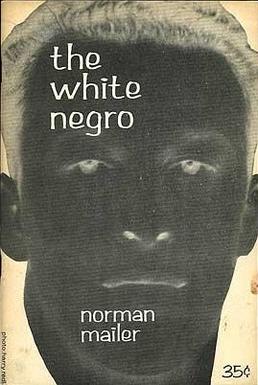
In "Can Louis C.K. Spin His Troubles Into Art?/Touring for the first time since his sexual-misconduct scandal, the comedian gestured at his actions without really acknowledging what he’d done," The New Yorker's Hilton Als gives the genius-idiot comedian some advice on how to do comedy. Why not?
You probably won't read the whole thing because you probably don't have a subscription to The New Yorker, so I've got to tell you that much of the essay is about black people. It's too much trouble to explain why, so I'll just gesture at it: He begins by talking about the Norman Mailer essay "The White Negro," drags in a conversation between Louis C.K. and Chris Rock (with lots of "n-word"), refers to Pigmeat Markham and Big Mama Thornton, has some stuff about a black character on the "Louis" TV show, quotes Louis saying it would be "hot" if your mother told you she once had sex with "a black guy," and said it would be "hot" if Louis, in his new show, "became his mother, teetering toward that black consort, in love with the American forbidden?"
To absorb this you probably need to know if Hilton Als is black. If you don't already know, examine your thoughts first picturing him as white and then picturing him as black. Are they different? I think they they are!
ADDED: "Now Obama knows what my thing is. Oh, God." I like the "Oh, God," because, essentially, Obama has taken the place of God. He sees and He knows and His knowing that you have fallen short is a heavy burden for which you know you must atone.
AND: Here's Wikipedia on "The White Negro":
I used to listen to the NYT podcast "The Daily" every morning, but somewhere along the line, it lost me badly.
And I hadn't listened to any episode in months. I'd stopped even looking at the episode titles, which is something I was doing even after I'd stopped listening. I was looking at episode titles and rejecting them unheard. Something about the Trump Era made me resistant to what they were putting out. But I happened to listen this morning.
The episode is: "The Field: Iowa’s Electability Complex/As Iowans prepare to cast the first votes of the 2020 Democratic nomination process, they’re asking one question: Who can win?" ("Traveling around the state, we found anxious Iowans asking one question over and over: Who can beat President Trump?")
This was worth listening to, and, for me, it's worth blogging about because it made me think of what was missing. You have all these people in Iowa putting tremendous effort into picking one of the Democratic Party candidates, and the number one thing they're wracking their brains about is how other people will think. They're imagining the interior life of people who are inclined to or capable of voting for Trump.
But here's what's missing: Their imagination is pathetic and — though they all seem like such nice people — morally deficient. No one speaking in that podcast had any real feeling for Trump supporters as fully dimensional human beings. Trump supporters are ciphers who might as well be piled up in a basket labeled "deplorables."
Now, the podcast nudges us to think that it would be best for the people of Iowa to pull back from wondering what other people want and just ask themselves what do I want. That is, forget about electability. That's the too-hard-to-answer question of what everyone else wants. If each individual goes for what he or she wants, then there's a chance of aggregating that into a sensible picture of what people in general want.
That may be a good idea, especially if the alternative is to rely on inept thinking about what other people want. To me, what was missing from the podcast was a recognition of the poverty of the Iowa Democrats' thoughts about how voters in the middle might feel about various Democratic Party candidates. If there is any substance at all, it seems to be that some of the Democrats are actively offensive, others are sort of innocuous, and if they serve up one of the innocuous candidates, maybe enough of those voters in the middle will go along with it.
But there is another option for these Iowa caucus-goers (and others engaged in the Democratic Party nomination process): Accord full humanity to the Americans who are capable of accepting Trump and try to understand them as real people whose thoughts and feelings matter. This would be an arduous path, and it's almost surely too late to start. I don't think the Democrats involved in the nominating process even know how to find their way to the beginning of that path.
ADDED: They can't find their way to the beginning of that path because they are so deeply invested in demonizing the other side. They want voters in the middle to go with the Democrats because the GOP side is demonic. To demonize is to disbelieve in the possibility of connection with the real humanity of the people you want to convince. There's only a hope that some of the demons are getting tired of being demons.
Yet this demonizing is itself tiresome. And I say that as someone in the middle, someone who could go either way and 2020 and who voted against Donald Trump twice in 2016 (in the Wisconsin primary and in the general election).
The episode is: "The Field: Iowa’s Electability Complex/As Iowans prepare to cast the first votes of the 2020 Democratic nomination process, they’re asking one question: Who can win?" ("Traveling around the state, we found anxious Iowans asking one question over and over: Who can beat President Trump?")
This was worth listening to, and, for me, it's worth blogging about because it made me think of what was missing. You have all these people in Iowa putting tremendous effort into picking one of the Democratic Party candidates, and the number one thing they're wracking their brains about is how other people will think. They're imagining the interior life of people who are inclined to or capable of voting for Trump.
But here's what's missing: Their imagination is pathetic and — though they all seem like such nice people — morally deficient. No one speaking in that podcast had any real feeling for Trump supporters as fully dimensional human beings. Trump supporters are ciphers who might as well be piled up in a basket labeled "deplorables."
Now, the podcast nudges us to think that it would be best for the people of Iowa to pull back from wondering what other people want and just ask themselves what do I want. That is, forget about electability. That's the too-hard-to-answer question of what everyone else wants. If each individual goes for what he or she wants, then there's a chance of aggregating that into a sensible picture of what people in general want.
That may be a good idea, especially if the alternative is to rely on inept thinking about what other people want. To me, what was missing from the podcast was a recognition of the poverty of the Iowa Democrats' thoughts about how voters in the middle might feel about various Democratic Party candidates. If there is any substance at all, it seems to be that some of the Democrats are actively offensive, others are sort of innocuous, and if they serve up one of the innocuous candidates, maybe enough of those voters in the middle will go along with it.
But there is another option for these Iowa caucus-goers (and others engaged in the Democratic Party nomination process): Accord full humanity to the Americans who are capable of accepting Trump and try to understand them as real people whose thoughts and feelings matter. This would be an arduous path, and it's almost surely too late to start. I don't think the Democrats involved in the nominating process even know how to find their way to the beginning of that path.
ADDED: They can't find their way to the beginning of that path because they are so deeply invested in demonizing the other side. They want voters in the middle to go with the Democrats because the GOP side is demonic. To demonize is to disbelieve in the possibility of connection with the real humanity of the people you want to convince. There's only a hope that some of the demons are getting tired of being demons.
Yet this demonizing is itself tiresome. And I say that as someone in the middle, someone who could go either way and 2020 and who voted against Donald Trump twice in 2016 (in the Wisconsin primary and in the general election).
"In the more than three years since the tape emerged, it’s become clear that the you-can-do-anything line wasn’t only describing Trump’s attitude toward women."
"It was describing his attitude toward everything: If you’re rich, famous or powerful, you can get away with much more than most people understand. You just do it. You don’t need to worry about ethical niceties or even, sometimes, the law. You use your advantages to bulldoze any obstacles.... Trump does what he thinks is best for him, often in open defiance of rules or customs that constrain almost everybody else.... The country is left with a president who has spent decades doing whatever he thinks is in his self-interest — and a political party willing to protect that president. Staying in power trumps all."
From "The Simple Reason Trump Does What He Does/Because he can" by David Leonhardt (NYT).
In this anti-Trump tirade, Leonhardt never pauses to note that the sense of being able to do anything — to overcome all obstacles in his way — is also a force for achieving good things that benefit the whole country. It's integral to the idea of making America great that binds Trump's enthusiasts to him.
From "The Simple Reason Trump Does What He Does/Because he can" by David Leonhardt (NYT).
In this anti-Trump tirade, Leonhardt never pauses to note that the sense of being able to do anything — to overcome all obstacles in his way — is also a force for achieving good things that benefit the whole country. It's integral to the idea of making America great that binds Trump's enthusiasts to him.
Let's talk about Trump's Superbowl ads.
I'll show them as he is promoting them on Twitter today (with the first ad as his "pinned" tweet, holding the place at the top of his Twitter feed):
I'll call attention to the contrast between the 2 ads, and I'm going to give this post my "big and small" tag.
The first ad is in black and white, and we see a photo of one black woman on a black screen with white lettering, then close video shots of her telling her individual story, surrounded by a small group of people who care about her, along with more white lettering on a black screen. "My heart is just bursting with gratitude. I want to think President Donald John Trump," she says and the people around her — all black people — cheer. One person's story, one piece of legislation, and a narrow focus on a message for black people.
The second ad is a completely widened frame, lots of color, lots of different people, jets flying over, and the biggest issue for everyone (the economy). Even within that big frame, there's specific message to black people.
I promised to restore hope in America. That includes the least among us. Together, let’s KEEP AMERICA GREAT!— Donald J. Trump (@realDonaldTrump) February 2, 2020
Text TRUMP to 88022 if you liked our Super Bowl ad! pic.twitter.com/Lgjt53B7QX
Hope you liked this! https://t.co/y1j2Wf6J4p— Donald J. Trump (@realDonaldTrump) February 3, 2020
I'll call attention to the contrast between the 2 ads, and I'm going to give this post my "big and small" tag.
The first ad is in black and white, and we see a photo of one black woman on a black screen with white lettering, then close video shots of her telling her individual story, surrounded by a small group of people who care about her, along with more white lettering on a black screen. "My heart is just bursting with gratitude. I want to think President Donald John Trump," she says and the people around her — all black people — cheer. One person's story, one piece of legislation, and a narrow focus on a message for black people.
The second ad is a completely widened frame, lots of color, lots of different people, jets flying over, and the biggest issue for everyone (the economy). Even within that big frame, there's specific message to black people.
February 2, 2020



What counts as a "massive" crowd for Bernie — in the opinion of the NBC headline writer?
The headline: "With live music and booze, Sanders draws massive crowd to party-like Iowa campaign rally/3,000 people turned out for his rally in Cedar Rapids on Saturday night, dwarfing attendance figures for events held by rival campaigns."
If Trump did a rally and 3,000 people showed up it would be called abysmally small, wouldn't it? And it would be abysmally small for Trump.
Bernie's crowd is "massive" only in relation to the crowds of other Democratic candidates — which are apparently so small that they're "dwarf[ed]" by 3,000. (If you read far enough into the article, you'll see the shockingly piddling numbers. For their Saturday events, Biden, Warren, and Buttigieg had crowd sizes "from 158 to more than 700.")
How big are Trump's crowds? Ten times Bernie's "massive" number? And Trump just goes on as a solo act. Bernie had some celebrities — including Michael Moore and Cornel West — and very significant musical entertainment: Vampire Weekend.
From the Quad City Times: "Vampire Weekend show for Sanders draws young fans, but not all feel the Bern."
IN THE COMMENTS: rehajm said:
If Trump did a rally and 3,000 people showed up it would be called abysmally small, wouldn't it? And it would be abysmally small for Trump.
Bernie's crowd is "massive" only in relation to the crowds of other Democratic candidates — which are apparently so small that they're "dwarf[ed]" by 3,000. (If you read far enough into the article, you'll see the shockingly piddling numbers. For their Saturday events, Biden, Warren, and Buttigieg had crowd sizes "from 158 to more than 700.")
How big are Trump's crowds? Ten times Bernie's "massive" number? And Trump just goes on as a solo act. Bernie had some celebrities — including Michael Moore and Cornel West — and very significant musical entertainment: Vampire Weekend.
From the Quad City Times: "Vampire Weekend show for Sanders draws young fans, but not all feel the Bern."
“I keep forgetting Bernie is going to be here,” said Kamryn Ryan, a student at Drake University in Des Moines, and part of a trio at the very front of the line. “I want to support Ezra (Koenig, lead singer of Vampire Weekend) supporting Bernie.”There were also high school students, too young to vote, and "only here for Vampire Weekend anyway."
Two other students, Tanner Shade and Max Theurer, didn’t make it to the very front of the line, but they started loitering around the U.S. Cellular Center at 10:30 a.m. They’re “big Bernie fans” from Pennsylvania, have donated money to Sanders’ campaign and are involved with Pennsylvania State University’s “Students for Bernie” group. But they're bigger fans of Vampire Weekend....
IN THE COMMENTS: rehajm said:
A massive crowd the size of a small crowd.Comic reference: "Large boulder the size of a small boulder."
"Babe, you're not punched. I don't know what the motion of my hand was, but you're fine, I did not hurt you, I did not punch you, I was hitting you... You are such a baby. Grow the f**k up."
Said Amber Heard to Johnny Depp, quoted in "EXCLUSIVE: 'I can't promise I won't get physical again, I get so mad I lose it.' LISTEN as Amber Heard admits to 'hitting' ex-husband Johnny Depp and pelting him with pots, pans and vases in explosive audio confession" (Daily Mail).
He's suing her for defamation after she published an op-ed in the Washington Post in which she portrayed herself as the victim of domestic violence. His lawsuit says: "She hit, punched and kicked me. She also repeatedly and frequently threw objects into my body and head, including heavy bottles, soda cans, burning candles, television remote controls and paint thinner cans, which severely injured me."
At the link, you can hear audio of the arguing and read a long transcript. I think you can tell that she is more intelligent than he is. For example, when he says, "I'm not the one who throws pots and whatever the fuck else at me." She answers: "That's different. One does not negate the other. That's irrelevant, that's a complete non sequitur."
I noticed this story because #AmberHeardIsAnAbuser is trending on Twitter.
He's suing her for defamation after she published an op-ed in the Washington Post in which she portrayed herself as the victim of domestic violence. His lawsuit says: "She hit, punched and kicked me. She also repeatedly and frequently threw objects into my body and head, including heavy bottles, soda cans, burning candles, television remote controls and paint thinner cans, which severely injured me."
At the link, you can hear audio of the arguing and read a long transcript. I think you can tell that she is more intelligent than he is. For example, when he says, "I'm not the one who throws pots and whatever the fuck else at me." She answers: "That's different. One does not negate the other. That's irrelevant, that's a complete non sequitur."
I noticed this story because #AmberHeardIsAnAbuser is trending on Twitter.
"One operator had apparently enlarged the font size on their computer screen, perhaps cutting off Mr. Buttigieg’s name from the list of options..."
The NYT has unnamed sources who explain what went wrong with that Des Moines Register poll that was withheld at the last minute.
The Register itself only said: "a respondent raised an issue with the way the survey was administered, which could have compromised the results of the poll. It appears a candidate’s name was omitted in at least one interview in which the respondent was asked to name their preferred candidate."
In the NYT we learn that one person who was surveyed was given a list of names that did not include Buttigieg, and this person contacted the Buttigieg campaign, which took the issue to the Des Moines Register. That is, if it were not for that one person noticing and caring enough to contact the campaign, the poll would have gone out.
In case you're wondering how reliable polls are! One operator enlarges the font, and the randomized list of names on the screen is missing a name. The operator could have scrolled down, I presume, but this is someone given the freedom to enlarge the font but not with it enough to remember that the visible screen is not the whole page.
The Register itself only said: "a respondent raised an issue with the way the survey was administered, which could have compromised the results of the poll. It appears a candidate’s name was omitted in at least one interview in which the respondent was asked to name their preferred candidate."
In the NYT we learn that one person who was surveyed was given a list of names that did not include Buttigieg, and this person contacted the Buttigieg campaign, which took the issue to the Des Moines Register. That is, if it were not for that one person noticing and caring enough to contact the campaign, the poll would have gone out.
In case you're wondering how reliable polls are! One operator enlarges the font, and the randomized list of names on the screen is missing a name. The operator could have scrolled down, I presume, but this is someone given the freedom to enlarge the font but not with it enough to remember that the visible screen is not the whole page.
Subscribe to:
Posts (Atom)


 Posts
Posts


