Here's a Cato Institute description of the Fox Butterfield Effect:
A former reporter for the New York Times, Fox Butterfield, became a bit of a laughingstock in the 1990s for publishing a series of articles addressing the supposed quandary of how crime rates could be falling during periods when prison populations were expanding. A number of critics sarcastically explained that crimes rates were falling because bad guys were behind bars and invented the term “Butterfield Effect” to describe the failure of someone to put 2 + 2 together.
I guess the accuracy of the statement depends on what the meaning of "be" is.
How could reporters possibly know the level of hostility people in court cases feel toward the judge? There are plenty of reasons to be hostile toward the judge in your case. This person holds government power directly over you. He or she orders you around, constrains your speech, and may take your money or your liberty or deny you a remedy for your injuries — all for reasons that will be presented as punctiliously neutral and rational while you're deprived of the knowledge of what's really going on inside their head.
But maybe what the NYT means by "be hostile" is not feel hostile, but express hostility. Yes, of course, most litigants don't express hostility toward the judge in any way that the judge is likely to hear. Behaving strategically, you wouldn't normally choose to let the judge know you don't like him. And that's one more reason to be afraid of judges: They don't hear honest opinion about what people think of them. They're treated with extreme, even servile respect by most of the people around them.
This convention — borne of fear and need — makes deviation from the norm all the more striking.
That's Donald Trump. Saying things you feel but don't dare say. Oh, no, not you, specifically, but those other people out there in the hinterlands. They must be people who are unlike most people... because if most people feel that Donald Trump is saying what they think but are afraid to say, then, in a democracy, Donald Trump would win.
Most people don't say they're hostile toward the judge in their case, and most people don't say Donald Trump expresses what they only think and don't say. But Donald Trump is winning....
By the way, I love this line from the NYT article: "He does this despite his close ties to a federal judge, Maryanne Trump Barry, his sister." Wow! That's what you call the Butterfield Fallacy (presenting a cause-and-effect relationship as a paradox). If your sister were a long-time federal judge, you'd be less intimidated by judges, less respectful, more likely to see judges as real people and not neutral dispensers of law, more likely to take it personally, to get angry, and to express your antagonism.
In last night's Democratic Party debate, Errol Lewis of New York 1 Time Warner Cable News questioned Hillary Clinton about the 1994 crime bill by. She tried to shift the blame to state government...
CLINTON: The original idea was not that we would increase sentences for non-violent low-level offenders, but once the federal government did what it did, states piled on. So we have a problem....
And to Sanders...
... Senator Sanders voted for the crime bill, and he says the same thing, there were some good things, and things that we have to change and learn from....
And to the future....
So that's how I see it. And I think we ought to be putting our attention on forging a consensus to make the changes that will divert more people from the criminal justice system to start... to tackle systemic racism and divert people in the beginning.
You see that she ended with a reference to "systemic racism." Louis followed on, pushing for her to apologize to black people:
LOUIS: Now earlier this year, a South Carolina voter told your daughter Chelsea, quote, "I think a lot of African-Americans want to hear, you know what, we made a mistake." Chelsea said she has heard you apologize, but went on to say that if the voter hadn't heard it then, quote, "it's clearly insufficient." Do you regret your advocacy for the crime bill?
She won't apologize:
CLINTON: Well, look, I supported the crime bill. My husband has apologized. He was the president who actually signed it...
Why not just apologize? What kind of feminist thinks the husband's apology counts for the wife? Are they "one flesh"? If so, she's term limited and should leave the race immediately. Louis keeps pushing (interrupting as she's saying, again, that Senator Sanders voted for it):
LOUIS: But what about you, Senator?
CLINTON: I'm sorry for the consequences that were unintended and that have had a very unfortunate impact on people's lives.
That's a craftily constrained apology. Of course, I want a President who's good at predicting consequences. We're not going to be happy as the world falls apart to hear that the President didn't intend the unfortunate impact. She continues, pivoting again to the future, with padded, blabby language...
I've seen the results of what has happened in families and in communities. That's why I chose to make my very first speech a year ago on this issue, Errol, because I want to focus the attention of our country and to make the changes we need to make.
... and then she does something quite surprising. She speaks specifically about "white people":
And I also want people especially I want -- I want white people -- I want white people to recognize that there is systemic racism. It's also in employment, it's in housing, but it is in the criminal justice system, as well.
Normally, a politician would talk about what all Americans need to do. Calling out "white people" feels new. I hadn't noticed that kind of talk in mainstream politics. References to race are usually sympathetic. Some group needs empathy, assistance, and caring attention. I don't believe I've heard a mainstream politician talk about "white people" at all, and I don't believe we've been hearing a racial group getting told it's falling short and needs to do better. I mean, I'm not surprised that the negative reference to race is aimed at white people. I'm surprised to hear "white people" from a candidate at all.
And look out. Bernie Sanders is about to call Clinton a racist:
LOUIS: Senator Sanders, earlier this week at the Apollo Theater in Harlem, you called out President Clinton for defending Secretary Clinton's use of the term super-predator back in the '90s when she supported the crime bill. Why did you call him out?
SANDERS: Because it was a racist term, and everybody knew it was a racist term....
Everybody, back in 1994, knew "super-predator" was a racist term? Is that true? He's besmirching her as a racist and the accusation depends on an assertion about what everybody knew 2 decades ago? That's a bold, heavy-handed assertion, and I'm trying to research it. There's this:
ADDED: I searched the NYT archive for "superpredator" and put the results in chronological order.
The first was a 1972 article about a theory of animal extinction 11,000 years ago, but after that, the next 2 are in 1998, 2 years after the act was passed, and then nothing until 2001, when there's a report about John Dilulio's regret for using the term. Dilulio and his regret are prominently featured in that NYT video I embedded above, so I suspect revisionist history about "superpredator. " I question the prevalence of the term at the time, and, again, I question Sanders' "everybody knew it was a racist term."
Pursuing that question — how racist was "superpredator"? — let's look at those 2 NYT articles from 1998. The first is in April, by Ann Powers, "Who Are These People, Anyway?"
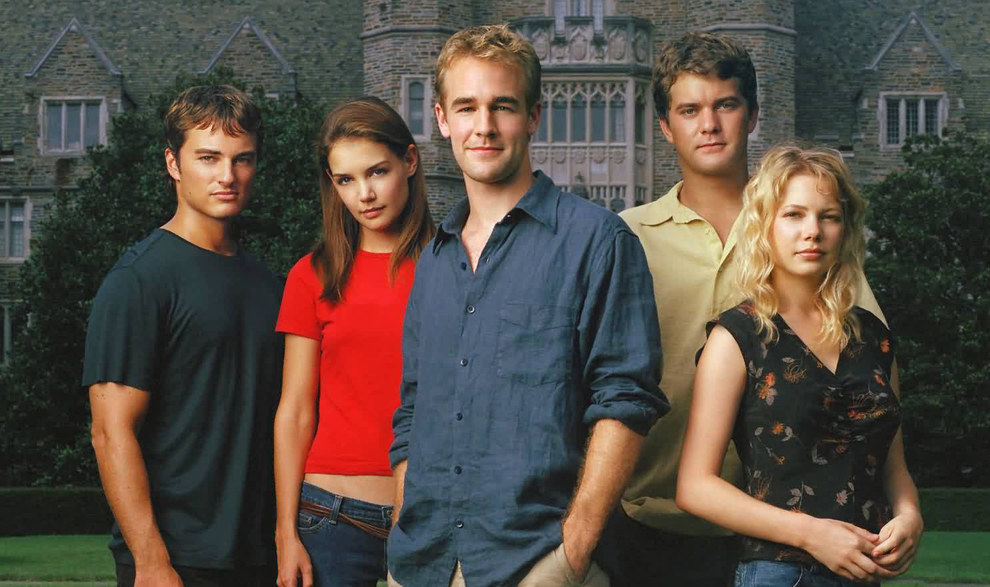
In the 90's, stereotypes about teen-agers have been inflated to ridiculous proportions. Adolescents are causing trouble everywhere: getting sexual on ''Dawson's Creek,'' lurking in melodramatic movies like ''Kids'' and ''Hurricane Streets,'' scowling seductively in Calvin Klein ads and then seeming to bring the perversity of those images to life in shocking tabloid tales. The juvenile delinquent has become the superpredator. The troubled teen-ager needs Prozac. Lolita is Everygirl, pushing up adolescent birth rates in her hot pants and navel ring.
This article is about teenagers more generally, and "superpredator" is used in the context of inflating everything to ridiculous proportions. But the reader is expected to be familiar with the term. Perhaps the NYT has an editorial practice of avoiding using it. This isn't a use, it's a mention (as the "use-mention" distinction would have it). Mentioning works because the reader knows what you are referring to, so I'm reading this article to mean that "superpredator" was an established term, though there's no evidence that it was understood as racist. In fact, the suggestion is otherwise, since Powers is talking about teenagers in general and the other teenagers in that paragraph seem quite white.
The second 1998 article, from December, is by none other than Fox Butterfield — he of the "Butterfield Effect." The Butterfield Effect originated in the context the larger topic this post is about, putting lots of people in prison for a long time. Butterfield wrote an article in the NYT that had the headline "More Inmates, Despite Drop In Crime," which many people regarded that as ludicrously obtuse, simultaneously expressing puzzlement and a clear explanation for the supposed cause of the puzzlement.
As homicide rates have dropped the past few years, criminal-justice experts have warned that they could soon rise again as a generation of superpredator juveniles came of age. But that fear is being called into question by new studies that show that virtually all the increase in homicides by juveniles in the late 1980's was attributable to crimes committed with handguns, not to a change in the nature of teen-agers.....
Prof. Franklin Zimring, who wrote [one] of the studies.... said that the reclassification by the police of juvenile fights into aggravated assaults ''created a completely artificial crime wave.'' ''The truth is that all during the late 80's and early 90's, while we worried about superpredators, the average case of juvenile violence was becoming less serious every year,'' Professor Zimring said.
So, again, it's a reference to how other people have been using the term and how the term is overblown. There is no indication that the alarmism about juvenile crime was racist or racial. Maybe the NYT had a practice of avoiding racial details back then.
We also have to have an organized effort against gangs, just as in a previous generation we had an organized effort against the mob. We need to take these people on. They are often connected to big drug cartels. They are not just gangs of kids anymore. They are often the kinds of kids that are called 'superpredators.' No conscience, no empathy. We can talk about why they ended up that way, but first we have to bring them to heel. And the president has asked the FBI to launch a very concerted effort against gangs everywhere.
I am a participant in the Amazon Services LLC Associates Program, an affiliate advertising program designed to provide a means for me to earn fees by linking to Amazon.com and affiliated sites.
Encourage Althouse by making a donation:
Make a 1-time donation or set up a monthly donation of any amount you choose:




 Posts
Posts


