"On Sunday, the former vice president and current de facto Democratic presidential nominee emphasized one phrase repeatedly: 'Follow the science.'"
Politico reports.
Imagine standing on a podium, giving a speech, wearing a mask. But I guess there will be no public-speaking events, not until the Time of the Masks has ended.
And yet the Democrats still have a plan to do their convention in August. It would be weird if they did it with everyone there in the flesh and all of them masked.
April 5, 2020


"We want to finish this war. We have to get back to work. We have to open our country again. We have to open our country again."
"We don’t want to be doing this for months and months and months. We’re going to open our country again. This country wasn’t meant for this fewer, fewer, but we have to open our country again. I just spoke with the commissioners, leaders of, I would say virtually all of the sports leagues. Rob Manfred, Commissioner of Baseball, Major League Baseball, Roger Goodell, Commissioner of the National Football League, Adam Silver, Commissioner of the National Basketball Association, Gary Bettman, Commissioner of the National Hockey League, Jay Monaghan, Commissioner of the PGA Tour, Cathy Engelbert, Commissioner of the Women’s National Basketball Association. Dana White, the Ultimate Fighting Championship, Vince McMan, President of the WWE, Don Garber, Commissioner of Major League Soccer, Steve Phelps, President of NASCAR, Michael Wahn, Commissioner of the LPGA, Roger Penske, founder and Chairman Penske Corp and Drew Fleming, President of the Breeders’ Cup, and there were a couple of others on and these are all the great leaders of sport and they want to get back, they got to get back. They can’t do this. The sports weren’t designed for it. The whole concept of our nation wasn’t designed for, we’re going to have to get back. We want to get back soon. Very soon."
Said Donald Trump, at yesterday's Task Force press briefing. Transcript here.
I'm interested in this "whole concept" of what "our nation" — and sports — were "designed for." The virus has its own designs, and we need to design strategies to deal with it. What does it matter if the nation — and sports — weren't designed around what would be needed to win a war with a virus?
It's just rhetoric, Trump rhetoric. He riffs. It comes straight from his mind. I have a higher tolerance — and even an appreciation — for it than most people who — like me — didn't vote for him. I'd say, here, he's just crying out that he doesn't like having to do what we need to do. We want out! We want to work! We want to watch baseball! We want to live! He's feeling that at you. It doesn't mean we get back to doing America As It Was Designed To Be anytime soon. It's just: I know you want it. I'm going to get you back there as soon as I can but I'm sorry it's not yet.
ADDED: Another gem from that transcript:
Said Donald Trump, at yesterday's Task Force press briefing. Transcript here.
I'm interested in this "whole concept" of what "our nation" — and sports — were "designed for." The virus has its own designs, and we need to design strategies to deal with it. What does it matter if the nation — and sports — weren't designed around what would be needed to win a war with a virus?
It's just rhetoric, Trump rhetoric. He riffs. It comes straight from his mind. I have a higher tolerance — and even an appreciation — for it than most people who — like me — didn't vote for him. I'd say, here, he's just crying out that he doesn't like having to do what we need to do. We want out! We want to work! We want to watch baseball! We want to live! He's feeling that at you. It doesn't mean we get back to doing America As It Was Designed To Be anytime soon. It's just: I know you want it. I'm going to get you back there as soon as I can but I'm sorry it's not yet.
ADDED: Another gem from that transcript:
I want to thank the American people, most of all for the selfless sacrifices that they’re making for our nation. I know it’s not pleasant. Although some people have said they’ve gotten to know their family better and they love their family more than ever, and that’s a beautiful thing. They’ve actually gotten to know them. They’re in the same house with their family for a long time. I guess it can also work the other way perhaps, but we don’t want to talk about that.I like: "They’ve actually gotten to know them."
"I Have Anxiety and Depression. So Why Do I Feel Better Now?" — teaser on the front page of The Daily Beast.
I think I understand this. You have company. Everyone else can see the darkness that you see all the time, and they're disturbed in a way that you are not because they were living in good times, and they got pushed down. You did not.
I wrote all that before clicking through to the article, which is titled "If You Have Anxiety and Depression but Feel Better During Coronavirus, You’re Not Alone." The title stresses that there is company for those who suffer from anxiety and depression, but not — as I put it — because everyone else is joining you in your dark place. The relief from aloneness is in a fellow feeling among the people with anxiety and depression: feeling better.
The author is Laura Bradley. Her byline calls her an "entertainment reporter," but she identifies herself in the article as one of the "depression and anxiety patients" who have "felt their symptoms alleviate." Excerpt:
I wrote all that before clicking through to the article, which is titled "If You Have Anxiety and Depression but Feel Better During Coronavirus, You’re Not Alone." The title stresses that there is company for those who suffer from anxiety and depression, but not — as I put it — because everyone else is joining you in your dark place. The relief from aloneness is in a fellow feeling among the people with anxiety and depression: feeling better.
The author is Laura Bradley. Her byline calls her an "entertainment reporter," but she identifies herself in the article as one of the "depression and anxiety patients" who have "felt their symptoms alleviate." Excerpt:


"In an extraordinary snub on Saturday, Wisconsin’s Republican-led Legislature collectively shrugged its shoulders at an 11th hour call from Gov. Tony Evers to halt in-person voting..."
"... gaveling in and out of a special session in seconds without taking action. A source close to the governor told POLITICO on Saturday that Evers had no plans to take further action in an attempt to stop the election, despite his suggestion on Friday that he might explore other options.... The governor's reasoning in deciding not to take additional action, such as attempting to order polls closed by his own action or having a health official shutter them, is that it could backfire on him, the source close to Evers said. If the issue went before the Wisconsin Supreme Court, which holds a Republican majority, Evers risks inadvertently creating precedent that could adversely affect his emergency powers, the source said. Beyond that, the governor’s office doesn’t want to expend all of its political capital in a fight over moving the election because it needs GOP legislative leaders to play ball on a broader coronavirus funding package.... In a joint statement on Friday, legislative GOP leaders dismissed Evers’ last-minute plea, saying that hundreds of thousands of workers still were attending their jobs every day. 'There’s no question that an election is just as important as getting take-out food,' the statement said."
From "Wisconsin's primary to go forward Tuesday even as coronavirus all but shutters the U.S./A source close to Wisconsin Gov. Tony Evers said he's unlikely to take further steps to halt the election" (Politico).
I don't know how much to believe that source, but Politico makes it sound as though Evers is afraid to use emergency executive power because to use it would be to expose it to judgment, and he might learn that the power does not exist, and that would hurt his ability to use that power on some later occasion.
What good is the power if you don't use it? If you say you have it, but the state Supreme Court has never had the occasion to tell you you're wrong, you can keep using it to threaten the legislature. That's the idea of conserving "political capital" so you can get the "GOP legislative leaders to play ball" on something else, something presumably more important than the election (the "broader coronavirus funding package"?).
But if Evers displays such reticence, is he preserving or losing political capital? I can't tell whether the idea is to maintain mystery over the scope of emergency powers — in case he wants to use or threaten to use it on some later occasion — or whether he simply wants to avoid controversy and conflict with Republicans because he has to keep working with them. That conservative majority on the state Supreme Court is 5-2, so, although a conservative incumbent is up for reelection, the balance cannot shift until next time. That is, there's little hope that the court will be more likely to approve of strong executive power after the election.
Here's what I tend to think. The problems with the election hurt Democrats more than Republicans, no matter what changes could be made. It is therefore best for Evers to stand back, let the chaotic election happen, and blame those terrible Republicans for deliberately disenfranchising the people of Milwaukee. If he acts, attention will turn to him and it will be presumed that Democrats got an advantage from what will be called a power grab. In that light, Evers does preserve political capital by not acting.
That's not to say partisan power is the highest value here. It's not.
ADDED: For insight into why the problems hurt Democrats so much, read "Despite Coronavirus Lockdown, Wisconsin Republicans Insist on an Election that Will Disenfranchise Thousands" (Mother Jones). It will be harder for people in Milwaukee to vote in person, but it's also harder for Democratic voters to use absentee ballots.
CORRECTION: As originally published, this post omitted the word "not" in "and he might learn that the power does not exist." Very sorry!
From "Wisconsin's primary to go forward Tuesday even as coronavirus all but shutters the U.S./A source close to Wisconsin Gov. Tony Evers said he's unlikely to take further steps to halt the election" (Politico).
I don't know how much to believe that source, but Politico makes it sound as though Evers is afraid to use emergency executive power because to use it would be to expose it to judgment, and he might learn that the power does not exist, and that would hurt his ability to use that power on some later occasion.
What good is the power if you don't use it? If you say you have it, but the state Supreme Court has never had the occasion to tell you you're wrong, you can keep using it to threaten the legislature. That's the idea of conserving "political capital" so you can get the "GOP legislative leaders to play ball" on something else, something presumably more important than the election (the "broader coronavirus funding package"?).
But if Evers displays such reticence, is he preserving or losing political capital? I can't tell whether the idea is to maintain mystery over the scope of emergency powers — in case he wants to use or threaten to use it on some later occasion — or whether he simply wants to avoid controversy and conflict with Republicans because he has to keep working with them. That conservative majority on the state Supreme Court is 5-2, so, although a conservative incumbent is up for reelection, the balance cannot shift until next time. That is, there's little hope that the court will be more likely to approve of strong executive power after the election.
Here's what I tend to think. The problems with the election hurt Democrats more than Republicans, no matter what changes could be made. It is therefore best for Evers to stand back, let the chaotic election happen, and blame those terrible Republicans for deliberately disenfranchising the people of Milwaukee. If he acts, attention will turn to him and it will be presumed that Democrats got an advantage from what will be called a power grab. In that light, Evers does preserve political capital by not acting.
That's not to say partisan power is the highest value here. It's not.
ADDED: For insight into why the problems hurt Democrats so much, read "Despite Coronavirus Lockdown, Wisconsin Republicans Insist on an Election that Will Disenfranchise Thousands" (Mother Jones). It will be harder for people in Milwaukee to vote in person, but it's also harder for Democratic voters to use absentee ballots.
CORRECTION: As originally published, this post omitted the word "not" in "and he might learn that the power does not exist." Very sorry!
April 4, 2020
At the Gray Café...

... the sunrise is cloud-covered once again, but you can hunker down in here and talk all night.
"The incredible true story of two brothers raised on the hardscrabble country music of rural West Texas who dropped out, tuned in, found God, and helped launch the seventies soft-rock revolution."
I am not a soft-rock fan, and I've even gone out of my way to scoff at "Summer Breeze," but I loved this Texas Monthly article "The Secret Oil Patch Roots of ‘Summer Breeze.'"
Excerpt:
Excerpt:
When Jim [Seals] was four, the family moved to Iraan, a recently founded boomtown. [The father] Wayland worked for Shell—first as a roustabout, digging ditches, and then as a pipeliner—and he and his family lived in a modest company house surrounded by derricks that stood like trees in a forest...Much more at the link! Highly recommended. And here's the song:
Wayland was an old-fashioned man, proud of his ability to do physical labor. He loved going to work, and he loved coming home at the end of the day and pulling out his guitar, playing country and western songs he heard on the radio and songs he had written. Sometimes he hosted casual jam sessions and sing-alongs in his living room. Neighbors would stop by, bringing dinner and cakes, and everyone... would sing, sometimes long after dark.
Jim, a shy, sensitive boy, was five or six when a fiddler named Elmer Abernathy visited the Seals home. The boy was mesmerized by the man’s instrument, and the next day Wayland, who’d always wanted a family band, ordered him a fiddle from the Sears catalog. When it arrived, Jim tried to play it but couldn’t figure out where to put his fingers or how to draw the bow, so he slid it under his bed.
One night a year later, Jim had a dream that he was playing his fiddle. “It was the most beautiful music,” he said. “I could play anything. When I woke up, I remembered the position of my fingers in the song and pulled out my fiddle. I played the song from my dream, and it wasn’t as good as the dream, but it was a start.”
"There will be a lot of death" as we enter what may be "the toughest week," said President Trump.
And Dr. Deborah Birx said: The next two weeks are extraordinarily important. This is the moment to not be going to the grocery store, not going to the pharmacy, but doing everything you can to keep your family and your friends safe and that means everybody doing the six-feet distancing, washing their hands."
Quoted in the NYT.
Quoted in the NYT.
"We have little publicly available data about the racial makeup of those Americans who have been tested, those who have tested positive for the coronavirus..."
"... those who have been hospitalized, those who have become critically ill, those who have recovered, or those who have died from COVID-19, the disease caused by the virus. The Centers for Disease Control and Prevention’s information site does not offer racial data. Neither does the Johns Hopkins University database used by CNN, The New York Times’ count, nor the COVID Tracking Project. Few states, municipalities, or private labs are releasing their data by race. On Friday, the Illinois Department of Public Health became one of the few state offices to release some racial data. And the data showed a pandemic within the pandemic: African Americans are significantly overrepresented in infection rates in Illinois, while whites and Latinos are significantly underrepresented. African Americans make up 14.6 percent of the state population, but 28 percent of confirmed cases of the coronavirus. White people comprise 76.9 percent of the Illinois population, and 39 percent of the confirmed cases. Latinos comprise 17.4 percent of the state population, and 7 percent of the cases. In Illinois, Asian Americans were the only racial group without a significant disparity between their state population, at 5.9 percent, and confirmed cases, at 4 percent.... What we are seeing in Illinois could be happening nationwide—we just don’t know.... And Americans don’t seem to care to know. I suspect that some Americans believe that racial data will worsen racism.... Maybe I need to stop making everything about race, as my critics say.... Maybe some people fear that if racial data were to show that COVID-19 is disproportionately harming people of color, then white people will stop caring... Maybe there is only a class issue here...."
From "Why Don’t We Know Who the Coronavirus Victims Are?/The coronavirus is infecting and killing Americans of all races. But there’s little public data on whether the virus is having a disproportionate impact on some communities" by Ibram X. Kendi (in The Atlantic).
Another "maybe" (not mentioned by Kendi): Maybe it's a matter of pre-existing health conditions, notably diabetes.
It is interesting that the racial statistics are not getting out. I'm guessing it's either because it's difficult at this point to report them accurately or — more likely — because the officials believe that we're better off not thinking in these terms. People already feel bad about the virus, so why exacerbate the pain by making us feel that there's some evil human-made unfairness going on? And why give some people and not others a reason to think that this force of nature is picking favorites based on their race? Isn't it better to keep people feeling that we're all in this together, sharing a great human interest with the entire world?
From "Why Don’t We Know Who the Coronavirus Victims Are?/The coronavirus is infecting and killing Americans of all races. But there’s little public data on whether the virus is having a disproportionate impact on some communities" by Ibram X. Kendi (in The Atlantic).
Another "maybe" (not mentioned by Kendi): Maybe it's a matter of pre-existing health conditions, notably diabetes.
It is interesting that the racial statistics are not getting out. I'm guessing it's either because it's difficult at this point to report them accurately or — more likely — because the officials believe that we're better off not thinking in these terms. People already feel bad about the virus, so why exacerbate the pain by making us feel that there's some evil human-made unfairness going on? And why give some people and not others a reason to think that this force of nature is picking favorites based on their race? Isn't it better to keep people feeling that we're all in this together, sharing a great human interest with the entire world?
How to make your own cloth face covering (without sewing!).
The official American presentation (with rubber bands):
The dreamier Japanese presentation (with hair elastics):
I think hair elastics would be more comfortable. I'm thinking that the cloth would feel heavy hooked over your ears like that and would prefer something that left the ears alone. The instructions I'm seeing for masks that tie around the back of your head all seem to require sewing.
And yet, it is obviously possible to take a long scarf, put it over your face, and wrap it around and do some tying to hold it in place. That's something we do in the North in the winter when the temperatures drop below zero. But there are summer scarves, and how to tie them to cover the face for sun protection seems to be well worked out, at least for women. I like this, which strikes me as stylish, but perhaps not much of a virus defense:
I'm seeing some videos showing bandannas tied in back in the classic Western armed-robber style. Is that approach good enough? Well, no one was ever claiming that a mask was a perfect shield, only that it might help to some degree. What degree? Who knows?!
And there's the whole dimension of mental wellbeing and social signaling: Do you feel better? And: Do other people see that you're being caring and thoughtful? The "bad guy" bandanna might not be so good at social signaling:

Now, the masks are voluntary, so you could just go without them (or go without them except when doing something dangerous, like venturing into a grocery store or a polling place). Are you going to wear a face covering? I took a poll, here, yesterday. Results:

Do you see that I gave you pairs of options? There were 3 answers — yes, maybe, and no — and for each of the 3, there were 2 choices. The first choice for each had you reacting to a message from the outside— reacting one way or another to being told you should do something. The second one in each case had to do with thinking for yourself in doing what's rational. For each of the answers — yes, maybe, and no — the internal decisionmaking approach was much more popular. In fact, all of the thinking-for-yourself answers —the second, fourth, and sixth — were much more popular than any of the answers that were based on the reception of messages about what you ought to do.
The least popular answer was the one where you do what's recommended. I wonder if doing what you're told would become more popular if mask-wearing were not voluntary. But taking my poll would never be mandatory, and there'd be no consequence to lying on my poll, so I don't think I'd get a lot of check marks on the option: Yes, I'll do what I'm told.
The dreamier Japanese presentation (with hair elastics):
I think hair elastics would be more comfortable. I'm thinking that the cloth would feel heavy hooked over your ears like that and would prefer something that left the ears alone. The instructions I'm seeing for masks that tie around the back of your head all seem to require sewing.
And yet, it is obviously possible to take a long scarf, put it over your face, and wrap it around and do some tying to hold it in place. That's something we do in the North in the winter when the temperatures drop below zero. But there are summer scarves, and how to tie them to cover the face for sun protection seems to be well worked out, at least for women. I like this, which strikes me as stylish, but perhaps not much of a virus defense:
I'm seeing some videos showing bandannas tied in back in the classic Western armed-robber style. Is that approach good enough? Well, no one was ever claiming that a mask was a perfect shield, only that it might help to some degree. What degree? Who knows?!
And there's the whole dimension of mental wellbeing and social signaling: Do you feel better? And: Do other people see that you're being caring and thoughtful? The "bad guy" bandanna might not be so good at social signaling:

Now, the masks are voluntary, so you could just go without them (or go without them except when doing something dangerous, like venturing into a grocery store or a polling place). Are you going to wear a face covering? I took a poll, here, yesterday. Results:

Do you see that I gave you pairs of options? There were 3 answers — yes, maybe, and no — and for each of the 3, there were 2 choices. The first choice for each had you reacting to a message from the outside— reacting one way or another to being told you should do something. The second one in each case had to do with thinking for yourself in doing what's rational. For each of the answers — yes, maybe, and no — the internal decisionmaking approach was much more popular. In fact, all of the thinking-for-yourself answers —the second, fourth, and sixth — were much more popular than any of the answers that were based on the reception of messages about what you ought to do.
The least popular answer was the one where you do what's recommended. I wonder if doing what you're told would become more popular if mask-wearing were not voluntary. But taking my poll would never be mandatory, and there'd be no consequence to lying on my poll, so I don't think I'd get a lot of check marks on the option: Yes, I'll do what I'm told.
"During the presidency of Barack Obama, the national stockpile [of medical supplies] was seriously taxed as the administration addressed multiple crises over eight years."
"About '75 percent of N95 respirators and 25 percent of face masks contained in the CDC's Strategic National Stockpile (∼100 million products) were deployed for use in health care settings over the course of the 2009 H1N1 pandemic response,' according to a 2017 study in the journal Health Security. Again according to NIH, the stockpile's resources were also used during hurricanes Alex, Irene, Isaac and Sandy. Flooding in 2010 in North Dakota also called for stockpile funds to be deployed. The 2014 outbreaks of the ebola virus and botulism, as well as the 2016 outbreak of the zika virus, continued to significantly tax the stockpile with no serious effort from the Obama administration to replenish the fund. During the presidency of Donald Trump, analysts have warned the United States is not prepared for a serious pandemic.... The Trump administration has not taken significant steps to replenish the Strategic National Stockpile."
From "Fact check: Did the Obama administration deplete the federal stockpile of N95 masks?" (USA Today), which rates the claim true.
Blaming Obama only goes so far. Trump had been President for 3 years by the time the coronavirus crisis got serious. Maybe Obama deserves "blame" for the depletion, but depletion sets up the need to replenish. Both Presidents are to blame for the failure to replenish. If anything, Trump is more to blame, since the depletion had already happened and Trump knew the stockpile was low.
From "Fact check: Did the Obama administration deplete the federal stockpile of N95 masks?" (USA Today), which rates the claim true.
Blaming Obama only goes so far. Trump had been President for 3 years by the time the coronavirus crisis got serious. Maybe Obama deserves "blame" for the depletion, but depletion sets up the need to replenish. Both Presidents are to blame for the failure to replenish. If anything, Trump is more to blame, since the depletion had already happened and Trump knew the stockpile was low.
"President Donald Trump has fired the intelligence community’s chief watchdog, Michael Atkinson, who was the first to sound the alarm to Congress last September..."
"... about an 'urgent' complaint he received from an intelligence official involving Trump’s communications with Ukraine’s president. Atkinson's decision set in motion the congressional probe that culminated in Trump's impeachment and ultimate acquittal in a bruising political and legal drama that consumed Washington for months.... House Intelligence Committee Chairman Rep. Adam Schiff (D-Calif.) described the firing as 'retribution' coming in the 'dead of night' and called it 'yet another blatant attempt by the president to gut the independence of the intelligence community and retaliate against those who dare to expose presidential wrongdoing.'"
Politico reports.
Politico reports.
Speaking of Theodore Roosevelt...
Theodore Roosevelt came up in the natural process of blogging — in the previous post, the first post of the day.
The next thing I notice — linked at Drudge — is "Theodore Roosevelt captain followed in footsteps of ship’s namesake by writing bombshell letter" (Navy Times). The Navy relieved Capt. Brett Crozier of command of an aircraft carrier named for Theodore Roosevelt after Crozier wrote a letter asking for help with the coronavirus outbreak on that ship. The San Francisco Chronicle got hold of the letter, which said:
The Navy Times article recounts the parallel in the live of the man Theodore Roosevelt. At the end of the Spanish-American War in the summer of 1898, Roosevelt and his Rough Riders were in Cuba facing malaria and yellow fever:
The next thing I notice — linked at Drudge — is "Theodore Roosevelt captain followed in footsteps of ship’s namesake by writing bombshell letter" (Navy Times). The Navy relieved Capt. Brett Crozier of command of an aircraft carrier named for Theodore Roosevelt after Crozier wrote a letter asking for help with the coronavirus outbreak on that ship. The San Francisco Chronicle got hold of the letter, which said:
“This will require a political solution but it is the right thing to do... We are not at war. Sailors do not need to die. If we do not act now, we are failing to properly take care of our most trusted asset — our Sailors.”The acting Secretary of the Navy, Thomas Modly, justified relieving Crozier of command. He said that the letter "undermines our efforts and the chain of command’s efforts to address this problem, and creates a panic and this perception that the Navy’s not on the job."
The Navy Times article recounts the parallel in the live of the man Theodore Roosevelt. At the end of the Spanish-American War in the summer of 1898, Roosevelt and his Rough Riders were in Cuba facing malaria and yellow fever:
Regardless of the outcome, the commanders were compelled to put their request [to leave Cuba] into writing –– a task that fell to Roosevelt because, as the only non-general among the senior officer group, [he] had less to lose career-wise. The eventual U.S. president drafted what is now known as the infamous Round-Robin Letter...The full text of the letter is at the link. Excerpt:
[I]n this division there have been 1,500 cases of malarial fever. Hardly a man has yet died from it, but the whole command is so weakened and shattered as to be ripe for dying like rotten sheep, when a real yellow-fever epidemic instead of a fake epidemic, like the present one, strikes us, as it is bound to do if we stay here at the height of the sickness season, August and the beginning of September.The text of the letter found its way into the newspaper, enraging President William McKinley, who was working on peace negotiations with Spain, but the men were moved out of Cuba. History credits Roosevelt "with cutting through the red tape of bureaucracy and saving the lives of 4,000 men," says the Navy Times. The article ends:
Quarantine against malarial fever is much like quarantining against the toothache. All of us are certain that as soon as the authorities at Washington fully appreciate the condition of the army, we shall be sent home. If we are kept here it will in all human possibility mean an appalling disaster, for the surgeons here estimate that over half the army, if kept here during the sickly season, will die.
Despite the hasty dismissal of Capt. Crozier, the large crowd of Theodore Roosevelt sailors who gathered Thursday to chant his name and cheer as he departed the hulking ship for the last time may indicate how fondly the skipper’s actions will be viewed in the years to come.
The Democratic Convention in Milwaukee will be "robust," "very muscular" and "It’s going to be safe, it’s going to be exciting and it’s going to be Wisconsin-y."
Said Tom Perez, the chair of the Party — the life of the party — about the convention which will begin on August 17th (instead of July 13th), reported at Fox 6 Now.
I suspect the delay is the first stage of cancellation, somewhere between denial and bargaining.
I am a little surprised that the values permit the use of the phrase "very muscular." It might strike some people as sexist, but it might be sexist to regard it as sexist. It's more clearly ableist. Anyway, for me, at least, it calls to mind "Muscular Christianity":
And Wisconsin-i-ness.
I suspect the delay is the first stage of cancellation, somewhere between denial and bargaining.
The extra five weeks will “increase the possibilities for us moving forward,” Perez said... “We’re going to continue to be guided by, among other things, what the situation on the ground is not only in Milwaukee and Wisconsin but across the country,” Perez said. “We will make sure that our presentation every day is exciting, it’s clear, it’s safe and it highlights our values.”At some point, the "values" will require cancellation, but for now, the "value" of optimism is in play. Optimism and Wisconsin-i-ness.
I am a little surprised that the values permit the use of the phrase "very muscular." It might strike some people as sexist, but it might be sexist to regard it as sexist. It's more clearly ableist. Anyway, for me, at least, it calls to mind "Muscular Christianity":
Muscular Christianity is a philosophical movement that originated in England in the mid-19th century, characterized by a belief in patriotic duty, discipline, self-sacrifice, manliness, and the moral and physical beauty of athleticism.... The movement was also closely related to British imperialism, and many tenets of Muscular Christianity were derived from or related to the ideology of colonialism and the "Noble savage" archetype....Physical strength and health... that is indeed something you'd like your political party to embody in this time of raging disease and death. And I think that's what Perez is doing with his rhetoric of robustness and muscularity.
American President Theodore Roosevelt was raised in a household that practiced Muscular Christianity and was a prominent adherent to the movement. Roosevelt [and others] promoted physical strength and health as well as an active pursuit of Christian ideals in personal life and politics....
Roosevelt believed that, “There is only a very circumscribed sphere of usefulness for the timid good man”, a sentiment echoed by many at the time. Followers of Muscular Christianity ultimately found that the only solution to this was to connect faith to the physicality of the body....
And Wisconsin-i-ness.
April 3, 2020
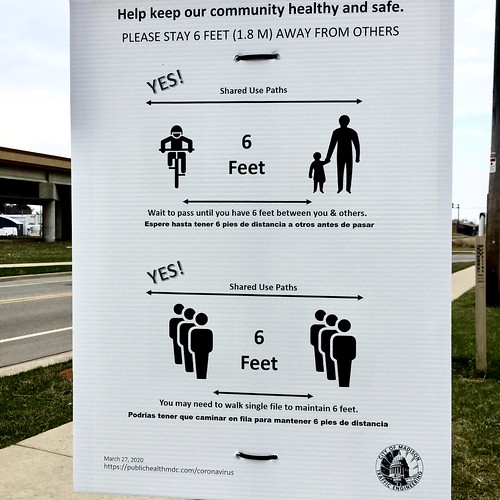
"With the masks, it is going to be a voluntary thing. You can do it. You don’t have to do it. I am choosing not to do it. It may be good. It is only a recommendation, voluntary."
Said President Trump, quoted in "Coronavirus Live Updates: C.D.C. Recommends Wearing Masks in Public; Trump Says, ‘I’m Choosing Not to Do It’" (NYT).
Subscribe to:
Posts (Atom)


 Posts
Posts


