Also: "[Tippi] Hedren has said [Hitchcock] made a pass at her and told her he 'expected me to make myself sexually available to him,' although she never did. Novak says she and Hedren didn’t talk about him. 'I’m not denying that if she’s saying it, but I never saw him pay any attention to women other than his wife, who was often on the set, and he was certainly never interested in me in that way. Maybe that’s why I never wanted to discuss it with Tippi — I have a hard time believing it because to me you have to see it to believe it. If he was like that with Tippi that was an odd exception.'"
The article has photos of Novak and Sweeney that inspired me to jot down this AI prompt: "I'm noticing that actresses of today will pose for photos with their mouth hanging open, slack jawed. I believe that in the past, the lips would be kept together (unless the actress was smiling/laughing/talking). Is my observation accurate?"
ADDED: Who else in in the Injustice Hall of Fame? Well, Tolstoy never won the Nobel Prize in Literature. Gandhi never won the Nobel Peace Prize. Alfred Hitchcock and Stanley Kubrick never won a Best Director Oscar. The Monkees are not in the Rock and Roll Hall of Fame. The Ken Doll is not in the National Toy Hall of Fame. And Hillary didn't get to be President.
"Among the most pungent moments on these later albums is a version of 'Que Sera, Sera.' Stone makes it a gospel dirge, this smoky funeral march. It’s a touch bitter and sopping with rue. 'The future’s not ours to see,' he sings, as each verse unspools a childhood anticipation of what might happen someday. Stone imagines a baleful, shrugging acceptance of what is, rather than what’s possible. Possible, this version seems to ask, what’s that?"
Beautiful version of a song that one usually associates with Doris Day. Here's Day singing it as loud as possible in "The Man Who Knew Too Much." Here's how she sang it when it wasn't an incredibly intense scene in a Hitchcock movie. And here's a beautiful version by 2 young women on TikTok.
From the Wikipedia article about the song, I figured out that I'd heard the Sly and the Family Stone version before — every time I've seen the darkly comic movie "Heathers." It plays over the closing credits. A more cheerful version of the song plays over the opening credits.
The seeming lightness of the song has made it useful in dark comedy:
These things are annoying. They're messing up photographs and you might get one in your eye, mouth, or nose, but they don't bite, and they don't last long. It's just crazy time for midges.
"Midge" is a word that goes back to early Old English, where it was spelled "mygg." It just meant this tiny insect. By the 1700s, it was sometimes used, chiefly in Scotland, to refer to "A small or insignificant person, esp. a small child."
So "midge" already meant something small, yet the word "midget" came into being by adding the ending "-et" and that ending means small. I guess when something is small, something draws you toward repetition — often in the much more exaggerated style called "reduplication." You know what I mean? Teeny tiny, teeny weeny, itty bitty. I'm thinking it's because of the way we talk to babies: We're babbling and we're talking about the baby and the baby is small.
Midge is also a name. I think of Midge, the friend of Barbie, and Midge, the secondary female character in the movie "Vertigo."
Who wants to be a Midge?
No, you don't need 2 dolls. You don't need an extra doll — a homely one, with freckles — to be a friend to the beautiful doll you already have. You be Barbie's friend. No one wanted Midge. Obviously undesirable. She's just making me feel bad about my freckles.
We don't need no stinking midges!
IN THE COMMENTS: minnesota farm guy said, "I would be willing to bet that these are Mayflies. They are much too big to be midges which make fruit flies look big."
I'm saying midges because that's what Grok told me after I uploaded that photo. I enjoyed writing this post about midges — the insect, the word, the doll, the "Vertigo" character, so I don't want to be wrong. As some have noted, it's hard to judge the size of these insects from the photograph, of course, and I was there seeing them in "person." So here are 2 more photographs — one I took of them resting on my leg and the other Meade took of the ones in my hair:
"... and dressing in brighter colors—that I should be, essentially, more gender-conforming. I told this to a female friend, who sighed, 'I’ve run that experiment before with men: "Be my stylist! What do you like seeing me in?" And the result is always, always being sexualized.' I had hoped for high fashion (strange knits, elegant linens, statement…. vests, I don’t know!), not 'How To Be A Pretty Lady 101.'"
In the previous post, discussing a WaPo article about various characters in the January 6th incident at the U.S. Capitol, we encountered a man named Pete Harding, who "said that the only weapon he carried was a dinner fork, which he put in his pocket." He said — humorously, I think — "Fortunately, I didn’t have to wield the kitchen fork menacingly."
So I want to look into the topic of the fork as a weapon. When I was a college student and went through a phase of thinking I might take a course in "creative" writing, I considered writing a story about a perfectly friendly dinner between 2 characters that somehow escalated into a murder scene, with the fork as the weapon. Why not the knife?! The knife isn't interesting. The fork would be interesting, no?
Interesting — but way too much work! Too much work to write the description. And, of course, too much work to commit murder with a fork. But it would be a gruesome scene. It's for someone else to scribble out details like that. Like Harding's fork, my fork story remained in my pocket, unbrandished.
But is a fork a plausible weapon? There's something called a military fork:
But we're talking about the table utensil of our time.
[I]f chaos breaks out at the dinner table, a diner may have to get creative with what they have on hand, turning their utensils into an Improvised Weapon.
Normally played for laughs (especially if there's Sword Sparks), but if the chips are down, things can get pretty ugly: this can lead to sickeningly devastating effect in the hands of someone skilled/determined enough....
Subtrope of Improvised Weapon. Compare Frying Pan of Doom....
That sounds funny, but remember that an improvised weapon — a fire extinguisher — was [allegedly] used at the Capitol and it killed a police officer.
"Today, the story could have been fertile terrain on which to explore issues of control, abuse, and the sheer terror of becoming a wife at all. Hitchcock’s version was shaped in other ways by the mores of the time. Because of Hays Code restrictions, the homoeroticism of Mrs. Danvers’s longing for Rebecca could be addressed only through innuendo.... A new film could have explored the violence and sensuality of du Maurier’s tale any way it pleased. And yet Ben Wheatley’s superficial, slapdash new Netflix adaptation... is a film that lies somewhere between a lukewarm retread of Hitchcock’s original and a glossy Instagram feed.... Ultimately, 'Rebecca' suffers from a malady that is plaguing much of streaming entertainment.... 'Here,' [the streaming executives] seem to say. 'Here is some maximalist fare with actors you have heard of—press Play for serotonin.'... They really do think we’ll watch anything. And perhaps, in the end, they are right. We are stuck at home.... I longed for scenes in which [the lead actress] was simply able to roam, silently, feeling creeped out and trapped in her new reality.... but it never gives us a chance to dream of Manderley again."
The Hitchcock film is fantastic and endlessly rewatchable. If I wanted something else, it would be a much longer miniseries that uses everything in the book. Perhaps this is the idea in the new Netflix show, and Symes might be right that this formula is dull and dead. The fact is, the book is there and will always be there, for new readers, with their new minds, to make their own new version, which is what happens when we read.
Republicans blocked Democrats’ efforts to subpoena documents and seek testimony, including from John Bolton. Witnesses could still be summoned later.
Chief Justice John Roberts admonished the House impeachment managers and President Trump’s lawyers to “remember where they are.”
At Davos, Trump Scoffs at Trial and ‘Prophets of Doom’/President Trump appeared at the World Economic Forum in Davos, Switzerland, on the day his trial began.
Impeachment Trial Begins in Acrimony/Republicans made last-minute changes to their proposed rules to placate moderates, but they held together to turn back Democratic proposals.
The headlines kept changing on me, and I don't think "Acrimonious" and "Acrimony" were up at the same time, but I infer that they wanted a negative word to describe the emotional atmosphere and they converged on "acrimony."
Since Mr. Sanders endorsed Mrs. Clinton in July 2016, the acrimony between the two camps has lingered. Mrs. Clinton and her former aides maintain that his endorsement came too late and was too lukewarm to truly unify the party. Some supporters of Mr. Sanders still argue that the Democratic National Committee “rigged” the rules to help her secure the nomination.
That is, the Democrats, who are struggling to control and use their charismatic left-wing upstarts, now have action on their right. Amy McGrath is the pro-Trump Democrat!
Is she just conning Kentuckians? The Atlantic makes it seem that way:
Most important, though, she’ll have to persuade a sizable number of Trump voters in Kentucky’s redder regions to fill in the bubble beside her name next November. And parroting Trump’s catchphrases while avoiding endorsing his policies puts the Democrat in a slippery situation. “She has to be very careful in playing that angle,” [said Kentucky Congressman John Yarmuth]. “She cannot give the impression that she’s supporting the Trump agenda.”
Well, she already gave that impression! She said she'll help Trump more than McConnell does.
[Scott Jennings, a GOP strategist who has worked on McConnell’s previous reelection campaigns] cited a Wednesday interview where McGrath [said] she “probably” would have voted to confirm Trump’s second’s Supreme Court nominee, Brett Kavanaugh, last fall. “There was nothing in his record that I think would disqualify him in any way,” she said. But later that night, McGrath changed her mind, tweeting: “I was asked earlier today about Judge Brett Kavanaugh, and I answered based upon his qualifications to be on the Supreme Court,” she wrote. “But upon further reflection and further understanding of his record, I would have voted no.”
What was that further "reflection"? Consultation with Democrats? She gazed into the swamp and a swamp isn't the best place to look for reflection. McGrath seems to have sought to build confidence in her independence and courage, but then she went soft under pressure. The swamp sucks you in.
Said a lawyer quoted in "Alex Rodriguez may have a tough time pursuing legal action over viral toilet pic" (NY Post). The photograph — taken of the retired baseball star when he was sitting on the toilet (which the NYT Post calls "turd base") was taken from the window of a Park Avenue office building that has a view into his apartment (where he lives with Jennifer Lopez).
I remember blogging about the case the lawyer is referring to. There was an art photographer who'd caught images of people through windows. Ah, yes, here's the old post, from 2013:
"But maybe he should have asked before the gallery opens. Everybody’s talking about it."
[T]he residents of a glass-walled luxury residential building across the street had no idea they were being photographed and never consented to being subjects for the works of art that are now on display — and for sale — in a Manhattan gallery.
Key word: luxury.
A middle-class value — privacy — is challenged. But it's built into the scheme that only the rich have had their privacy invaded. The artist — Arne Svenson — gets his publicity in the major media. And to top it all off:
Svenson’s apartment is directly across the street, just to the south, giving him a clear view of his neighbors by simply looking out his window.
Easiest art project ever.
“For my subjects there is no question of privacy; they are performing behind a transparent scrim on a stage of their own creation with the curtain raised high,” Svenson says in the gallery notes. “The Neighbors don’t know they are being photographed; I carefully shoot from the shadows of my home into theirs.”
Here, you can see the kinds of images Swenson chose. And here's Denver Post art critic Mark Rinaldi, writing in 2016, after Swenson won a lawsuit with a First Amendment defense:
Like a lot of people, I find Arne Svenson’s photographs deeply offensive.... Maybe it’s because enough time has passed to really consider the psychological damage to the folks whose privacy was stolen. You can’t, for the most part, recognize Svenson’s subjects as individuals, but you understand they’re actual humans and their sense of personal concealment has been wrecked....
Or maybe it’s because two dozen Svenson photos are now staring us in the face at the Museum of Contemporary Art Denver, which has taken the controversial step of legitimizing them as high art....
Is the A-Rod photographer less able to claim First Amendment protection because: 1. The person is identifiable (so the privacy stake is greater), and 2. The photographer probably did not have any high-art aspirations? Or is the A-Rod photographer more deserving of First Amendment protection because: 1. This wasn't commercial photography, 2. A-Rod is a public figure, 3. A-Rod seems to have used the toilet in a bathroom with the blinds open on a window that looked out on lots of windows?
How many people who didn't even want to see a baseball star on the toilet were subjected to that view? At some point, wouldn't office workers be exclaiming I can't believe he uses the toilet right in front of us like that! The viewers might feel offended (or amused) and are they not allowed to memorialize their experience with an iPhone photo that they text around?
Teaser on the front page at nytimes.com for a big NYT article that I cannot bring myself to read. I've glanced at it, seen the diagrams that make it seem as though there are hundreds of data points and the NYT has arranged them to tell a story.
To "unravel" is "To cause to be no longer ravelled, tangled, or intertwined, to disentangle; to unweave or undo (a fabric, esp. a knitted one)" (OED).
To want to read that article, I would need to believe the NYT is going to unravel something that I already see as terribly important and horribly tangled, so that what looks like a long, complicated article seems to offer to helpfully simplify things for me.
But I don't feel that way, and I'm afraid their aim is to create the impression of hopeless entanglement, not to rescue me from a place where I'm currently struggling.
Can't I just wait for Mueller to lay it all out for me? If there really was "a horrible Russian plot to subvert the 2016 election," it's an emergency, but it's going on 2 years that Mueller's been mulling it over. If Mueller can be so leisurely, I can wait for Mueller. Sorry I'm not more concerned about "the Russian plot" — I would be if I thought Mueller were part of it.
ADDED: Look at the paranoia-inducing Putin pic they've got on the front page:
"What’s more, the fact that the mystery was medical only amplified the usual effect: To wonder what was wrong with the First Lady’s health is to think about her internal body, her interiority. Medical matters force us to think about people’s inner human functioning. By denying us even the most minimally plausible account of the First Lady’s illness and treatment, the Trump administration denied us her physical reality, confirming instead her status as pure surface, a two-dimensional being, devoid of flesh and blood — not unlike the projected shadows and light of which film heroines are made. In her immateriality, Melania well represents the status of women under Trump — absent, frozen out, erased from the picture. This applies of course not only to those women within the administration, but to the way women in general are perceived: As inessential blank spaces, their humanity and concerns easily erased."
"It’s like a Skinner Box of horror for the AI, which the team has named 'Norman' after movie psychopath Norman Bates. Predictably, Norman is not a very well-adjusted AI. Norman started off with the same potential as any other neural network... The MIT team fed Norman a steady diet of data culled from gruesome subreddits that exist to share photos of death and destruction.... Norman was not corrupted to make any sort of point about human psychology on the internet — a neural network is a blank slate. It doesn’t have any innate desires like a human. What Norman does address is the danger that artificial intelligence can become dangerously biased.... The team now wants to see if it can fix Norman...."
Operant conditioning chambers have become common in a variety of research disciplines including behavioral pharmacology. The results of this experiments inform many disciplines outside of psychology, such as behavioral economics. An urban legend spread concerning Skinner putting his daughter through an experiment such as this, causing great controversy. His daughter later debunked this.... Skinner is noted to have said that he did not want to be an eponym.
A quote from Alfred Hitchcock, which I heard last night, as I watched the documentary "Hitchcock/Truffaut." I said the quote out loud as soon as I heard it (at home, though if I'd been in a theater, I might have whispered it to Meade).
I'd expected to enjoy Reed's "bang[ing] a gong" on "The Shape of Water." You need to understand that the NYT "Bangs a Gong" evokes "The Gong Show," the 1970s parody of a talent show, where the celebrity judges would bang a gong when a performer was so bad they wanted it to stop. Rex Reed — we learn in the article — was sometimes one of the celebrijudges. The NYT is not referring to the phenomenal, timeless 1970s recording "Bang a Gong (Get It On)" by T. Rex. Whatever "bang a gong" means to T. Rex — the other Rex — it is emphatically not negative. It's great sex, whether the "gong" is specifically the cervix or not.
YouTube seems to know the Urban Dictionary definition, since the next song it plays is "How Deep Is Your Love."
Speaking of deep love, the creature in "The Shape of Water" is dragged up from the deep and somehow enclosed in a water chamber where he can be encountered and fallen in love with by a woman who cleans urinals. We're invited to plunge into that nonsense. I'd expected to feel comical contempt along with Rex Reed. I'd got this far...
Knowing the unfortunate fish man faces extinction at the hands of the Kremlin, Eliza stages a rescue to the sound track of Carmen Miranda singing “Chica Chica Boom Chic” and with the help of a sympathetic co-worker (Octavia Spencer), smuggles the human red snapper out of the underground garage while a male military marching band plays “Shenandoah.” Hiding him in her apartment above a movie theatre that shows double-feature revivals of nothing but 20th Century-Fox movies, Eliza teaches the monster to eat with a knife and fork while she herself learns to dance around the dining room table singing “You’ll Never Know” from Hello, Frisco, Hello.
To insist that a storyteller stick to the facts is just as ridiculous as to demand of a representative painter that he show objects accurately. What’s the ultimate in representative painting? Color photography. Don’t you agree? There’s quite a difference, you see, between the creation of a film and the making of a documentary. In the documentary the basic material has been created by God, whereas in the fiction film the director is the god; he must create life. And in the process of that creation, there are lots of feelings, forms of expression, and viewpoints that have to be juxtaposed. We should have total freedom to do as we like, just so long as it’s not dull. A critic who talks to me about plausibility is a dull fellow.
We're not dull enough to ask whether the "Bang a Gong" girlfriend was really "built like a car" and had "a hubcap diamond star halo." Thus, Hitchcock has convinced me to see "The Shape of Water."
Now, what was that all about? As Toobin explains it, in yesterday's oral argument in Gill v. Whitford, the newcomer, Neil Gorsuch, didn't behave with sufficient respect for seniority.
The argument had gone on for nearly an hour when Gorsuch began a question as follows: “Maybe we can just for a second talk about the arcane matter of the Constitution.” There was a rich subtext to this query. Originalists and textualists such as Gorsuch, and his predecessor on the Court, Antonin Scalia, often criticize their colleagues for inventing rights that are not found in the nation’s founding document. Gorsuch’s statement that the Court should spare “a second” for the “arcane” subject of the document was thus a slap at his ideological adversaries....
So Gorsuch slapped first.
...of course, they, too, believe that they are interpreting the Constitution, but, in Gorsuch’s view, only he cares about the document itself.
The Gorsuch usage of the word "Constitution" to mean, specifically, the original text harks back to the distinction between "Constitution" and "constitutional law" famously propounded by Reagan's Attorney General Edwin Meese in 1985. Gorsuch was arch and got off a bon mot — "Maybe we can just for a second talk about the arcane matter of the Constitution" — and I'm sure that was irritating to the Justices who want to rest on constitutional law — that is, the court opinions that have over many years supervened the constitutional text with the gloss on the text written by the judges.
Toobin says that "Gorsuch went on to give his colleagues a civics lecture about the text of the Constitution," but all that means is that he proceeded to demand that the lawyer pushing the Court to strike down the work of the state legislature identify the clause of the Constitution that authorizes the Court to act:
“And where exactly do we get authority to revise state legislative lines? When the Constitution authorizes the federal government to step in on state legislative matters, it’s pretty clear—if you look at the Fifteenth Amendment, you look at the Nineteenth Amendment, the Twenty-sixth Amendment, and even the Fourteenth Amendment, Section 2.” In other words, Gorsuch was saying, why should the Court involve itself in the subject of redistricting at all—didn’t the Constitution fail to give the Court the authority to do so?
Toobin calls that a "civics lecture"? I think what he means is that the demand for a text is so basic that to talk about it is to sound as though we are back in high school, and that's either an insult to the old folks on the Court who should be presumed to already know such things or it's an implicit criticism of them for failing to live up to the standards that of course Gorsuch knows they know.
“At the rehearsal for the scene in Rear Window when I wore a sheer nightgown, Hitchcock called for [costume designer] Edith Head. He came over here and said, ‘Look, the bosom is not right, we’re going to have to put something in there.’ He was very sweet about it; he didn't want to upset me, so he spoke quietly to Edith. We went into my dressing room and Edith said, ‘Mr. Hitchcock is worried because there’s a false pleat here. He wants me to put in falsies.’
“‘Well,’ I said, ‘You can't put falsies in this, it’s going to show—and I'm not going to wear them.’ And she said, ‘What are we going to do?’ So we quickly took it up here, made some adjustments there, and I just did what I could and stood as straight as possible—without falsies. When I walked out onto the set Hitchcock looked at me and at Edith and said, ‘See what a difference they make?’”
The cosmic green-blue with the blinding white light across the bottom: at 0:16, it's like the point where the aliens are about to emerge from the spaceship in "Close Encounters of the Third Kind."
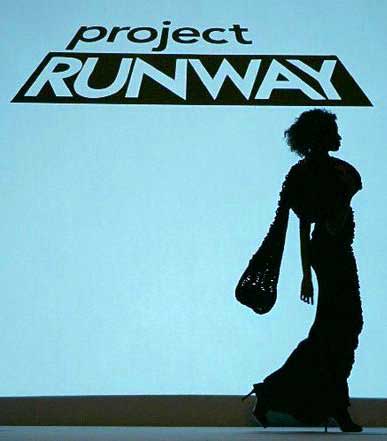
At 0:24, Trump steps into the light and we know him from his silhouette, though it's just a pudgy old man shape. It's not the kind of glorious female body we're used to seeing introduced in silhouette. For example, the models just before the runway walk on "Project Runway"...
... or this bit from "Seinfeld":
But it's not the only time an unshapely man has worked a silhouette. Alfred Hitchcock used it every week to walk onto our television screen:
Or is it just me? I'm not eating eggs this morning. I breakfast on peanut butter and sesame seeds. But I'm in the middle of a long email conversation about eggs (in which the question has arisen: Is the medium-boiled egg the height of perfection on soft-to-hard-boiled continuum?)
IN THE COMMENTS: Eric the Fruit Bat said: "The hard-boiled egg is God's way of telling anybody who will listen that you don't have to be a fat fuck anymore. Ever sit down and eat a bag of Doritos? Cookies? M & Ms? A six pack of beer? Of course you did, you fat fuck. But nobody, ever, in the entire history of recorded time, has ever plopped his sorry fat ass down in front of a TV set and scarfed down a dozen hard-boiled eggs. Nobody." That got me looking for the "I'm gonna eat 50 eggs" scene from "Cool Hand Luke":
And — while we're on movies — Saint Croix said: "Hitchcock hated eggs. He was a total egg-o-phobe. When feminists say he was a misogynist, I say, no, he just hated eggs. In To Catch A Thief, Grace Kelly's Mom stabs an egg with her cigarette. Dr. Freud! Calling Dr. Freud!"
Dame Margot Fonteyn and Rudolf Nureyev, who danced a pas de deux from “La Corsaire,” the Ballet Folklorico, Alfred Hitchcock, Bobby Darin, Carol Channing, Woody Allen, Carol Burnett and Julie Andrews performing a duet, Harry Belafonte, Ann Margret, Mike Nichols and Elaine May, Johnny Carson, and Barbra Streisand.
Other celebrities present:
Peter, Paul and Mary, The Brothers Four, Mike Nichols, Elliot Gould, Bobby Darrin, Jerry Herman, David Merrick, Sophie Loren and Carlo Ponti, John Reardon, Gregory Peck, and Allen Sherman.
Dances danced: the Jerk, the Frug, the Watusi, and the Monkey.
LBJ and Lady Bird aren't dancing the Jerk, Frug, Watusi, or Monkey in that picture, but they are dancing, and "LBJ was the first president since George Washington to dance at his own Inaugural Ball."
A firstier first involving Lady Bird on that inauguration day is: "Mrs. Johnson was the first President’s wife to hold the Bible at the swearing-in ceremony."
I am a participant in the Amazon Services LLC Associates Program, an affiliate advertising program designed to provide a means for me to earn fees by linking to Amazon.com and affiliated sites.
Encourage Althouse by making a donation:
Make a 1-time donation or set up a monthly donation of any amount you choose:







 पोस्ट्स


