Writes , in "Sly Stone and the Sound of an America That Couldn’t Last/The influential musician, who died on Monday at 82, forged harmony — musical and otherwise — that he wasn’t able to hold together on his own" (NYT).
Doris Day लेबल असलेली पोस्ट दाखवित आहे. सर्व पोस्ट्स दर्शवा
११ जून, २०२५
"Stone became a kind of blinkered realist. His down-in-the-basement singing could sound depressed."
"Among the most pungent moments on these later albums is a version of 'Que Sera, Sera.' Stone makes it a gospel dirge, this smoky funeral march. It’s a touch bitter and sopping with rue. 'The future’s not ours to see,' he sings, as each verse unspools a childhood anticipation of what might happen someday. Stone imagines a baleful, shrugging acceptance of what is, rather than what’s possible. Possible, this version seems to ask, what’s that?"
Writes , in "Sly Stone and the Sound of an America That Couldn’t Last/The influential musician, who died on Monday at 82, forged harmony — musical and otherwise — that he wasn’t able to hold together on his own" (NYT).
From the Wikipedia article about the song, I figured out that I'd heard the Sly and the Family Stone version before — every time I've seen the darkly comic movie "Heathers." It plays over the closing credits. A more cheerful version of the song plays over the opening credits.
Writes , in "Sly Stone and the Sound of an America That Couldn’t Last/The influential musician, who died on Monday at 82, forged harmony — musical and otherwise — that he wasn’t able to hold together on his own" (NYT).
Beautiful version of a song that one usually associates with Doris Day. Here's Day singing it as loud as possible in "The Man Who Knew Too Much." Here's how she sang it when it wasn't an incredibly intense scene in a Hitchcock movie. And here's a beautiful version by 2 young women on TikTok.
The seeming lightness of the song has made it useful in dark comedy:
४ जून, २०१९
Last night, I watched the first movie in my "imaginary movie project"...
... described here. I don't know if I'm really doing the project, but I did watch the movie that would be the first movie, the 1960 Doris Day movie, "Please Don't Eat the Daisies." In 1960, I was 9 and I was taken to see this movie in the theater, I suppose by my mother, who must have liked Doris Day. I know she loved the Doris Day recording, "Sentimental Journey," and maybe she looked a little like Doris Day, especially around 1960, when she'd bleached her dark hair blonde. I remembered how I reacted to the movie when I was 9: I couldn't understand it, had no idea what was going on. Watching the movie last night, it was plain to see that the movie was incomprehensible to a 9 year old.
Though it had kids in it — Doris Day's 4 unruly sons — it was the story of a married couple with a disagreement about how to live — city or country? — that got the husband — David Niven — into a position to be sorely tempted to commit adultery. The husband and wife also kept approaching but not having sex, as those unruly sons would inevitably interrupt them (in a manner that I can now understand must have been funny to adults in 1960s even though it still doesn't make me laugh). Sexual frustration is expressed in the lyrics to the song "Please Don't Eat the Daisies" — "Here I am waitin' and anticipatin'... I'm so romantic but I'm gettin' frantic" — which is inexplicably sung by Doris while dancing in a circle with a couple dozen schoolchildren.
The husband is a New York City theater critic, and much of the story depends on fathoming what this job is and the sort of ethical issues that arise within it — should you pan a play written by your friend? — and the dynamic at cocktail parties and how success as a critic might warp a man's personality. None of that was accessible to me when I was 9!
Niven wants to live in NYC and go to literary parties. Doris wants a house in the country:
Though it had kids in it — Doris Day's 4 unruly sons — it was the story of a married couple with a disagreement about how to live — city or country? — that got the husband — David Niven — into a position to be sorely tempted to commit adultery. The husband and wife also kept approaching but not having sex, as those unruly sons would inevitably interrupt them (in a manner that I can now understand must have been funny to adults in 1960s even though it still doesn't make me laugh). Sexual frustration is expressed in the lyrics to the song "Please Don't Eat the Daisies" — "Here I am waitin' and anticipatin'... I'm so romantic but I'm gettin' frantic" — which is inexplicably sung by Doris while dancing in a circle with a couple dozen schoolchildren.
The husband is a New York City theater critic, and much of the story depends on fathoming what this job is and the sort of ethical issues that arise within it — should you pan a play written by your friend? — and the dynamic at cocktail parties and how success as a critic might warp a man's personality. None of that was accessible to me when I was 9!
Niven wants to live in NYC and go to literary parties. Doris wants a house in the country:
१४ मे, २०१९
"She had a heart of gold and was a very funny lady who I shared many laughs with."
View this post on InstagramA post shared by Paul McCartney (@paulmccartney) on
११ ऑगस्ट, २०१६
"Doris Day, who I know a little bit, once said to me, 'Age is an illusion.'"
"I reminded her of it recently – I was wishing her a happy birthday. People say age is a number. It's a big number the older you get. But if it doesn't interfere, I'm not bothered. You can ignore it. That's what I do."
Said Paul McCartney.
Doris day is 92.
ADDED: At Drudge right now:

The link goes to: "More Old Than Young: A Population Plague Spreads Around the Globe/By 2030, 56 countries will have more people aged 65 and over than children under 15."
Said Paul McCartney.
Doris day is 92.
ADDED: At Drudge right now:
The link goes to: "More Old Than Young: A Population Plague Spreads Around the Globe/By 2030, 56 countries will have more people aged 65 and over than children under 15."
Tags:
aging,
Doris Day,
Paul McCartney
५ ऑक्टोबर, २०१५
"Make Someone Happy."
Alternate versions: 1. Doris Day, 2. Jimmy Durante, 3. Audra MacDonald, 4. Perry Como, 5. Barbra Streisand.
Tags:
Doris Day,
Judy Garland,
music,
Streisand
२८ सप्टेंबर, २०१५
What actress who hasn't made a film since 1968 is making a new movie?
Hint: "She turned down the role of Mrs Robinson in 1967’s The Graduate as she found the script 'vulgar and offensive.'"
ADDED: That last movie, from 1968, was "With Six You Get Eggroll." Look how they did opening credits back then:
(If you're like me, your main outburst was: "Hey, George Carlin's in it." And you secondary outburst was: "The Grassroots!")
AND: Look what happens when hippies try to help you:
I only watched that because I though George Carlin would be in that part.
ADDED: That last movie, from 1968, was "With Six You Get Eggroll." Look how they did opening credits back then:
(If you're like me, your main outburst was: "Hey, George Carlin's in it." And you secondary outburst was: "The Grassroots!")
AND: Look what happens when hippies try to help you:
I only watched that because I though George Carlin would be in that part.
Tags:
Doris Day,
George Carlin,
hippies,
movies
६ नोव्हेंबर, २०१४
Dogs are not committing suicide on the "The Dog Suicide Bridge of Dunbartonshire."
"Since the 1960s, some 50 dogs have perished after leaping from the same spot on the bridge. Hundreds more have jumped but lived, some even returning for a second leap onto the jagged rocks 50 feet below."
What's really going on? Hint: It sounds like the title of a Doris Day movie.
१५ ऑगस्ट, २०१४
"To get that ultra look, that Tilda Swinton thing, you have to go in there and strip all the melanin away."
"It’s practically like introducing albinism."
Quote from a character in a novel about race-reassignment treatments, reviewed in the NYT here.
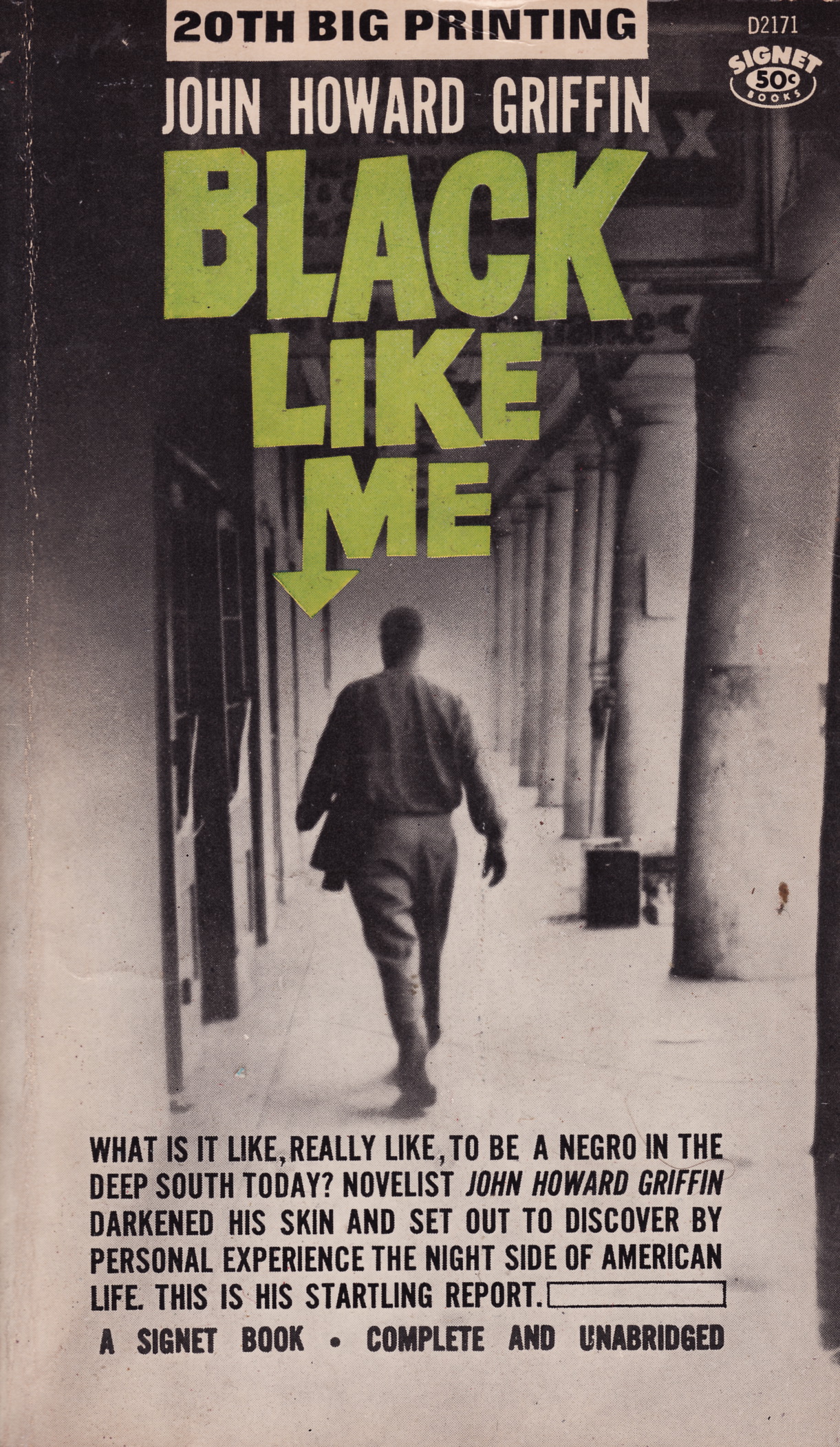
1. Read "Black Like Me," the bestseller that seared America's conscience in the early 1960s.

2. Or — from the same era — read this short piece in Jet magazine:

3. Select something from Wikipedia's incredibly long "List of entertainers who performed in blackface." I picked Doris Day:

4. Listen to Lou Reed sing "I Wanna Be Black" one more time.
Quote from a character in a novel about race-reassignment treatments, reviewed in the NYT here.
One day Kelly meets a familiar-looking black man. This turns out to be his old friend and bandmate Martin Lipkin, a Jewish guy who has undergone what he calls “racial reassignment surgery.” Inside, Martin always felt black.Alternatives to reading that novel:
1. Read "Black Like Me," the bestseller that seared America's conscience in the early 1960s.

2. Or — from the same era — read this short piece in Jet magazine:

3. Select something from Wikipedia's incredibly long "List of entertainers who performed in blackface." I picked Doris Day:

4. Listen to Lou Reed sing "I Wanna Be Black" one more time.
१५ जुलै, २०१३
"It's very appealing, the idea of writing under a pseudonym."
"Realistically... I have to pay [journalists] the tribute of saying that my chances of getting away with that are incredibly remote... now."
The book she got away with writing under a pseudonym — long enough, at least, to get excellent reviews — is "The Cuckoo's Calling."
MORE: Here:
The book she got away with writing under a pseudonym — long enough, at least, to get excellent reviews — is "The Cuckoo's Calling."
MORE: Here:
There is a long history of authors changing their names. In 1984, Doris Lessing said she wanted to escape "from the cage of my literary reputation" when she began writing under the pen name Jane Somers. She did not reveal Somers's true identity to her British publisher, who rejected the manuscript. The book did find a publisher, but sold only 2,000 hardback copies.
Tags:
books,
Doris Day,
JK Rowling,
pseudonymity,
writing
याची सदस्यत्व घ्या:
पोस्ट (Atom)