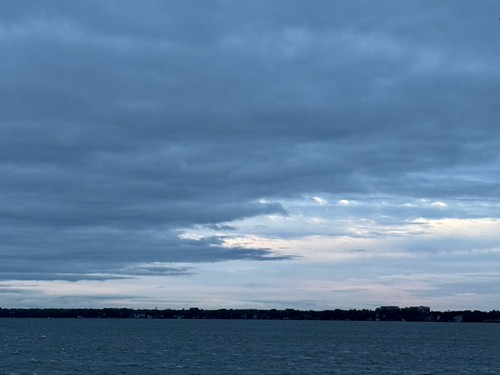
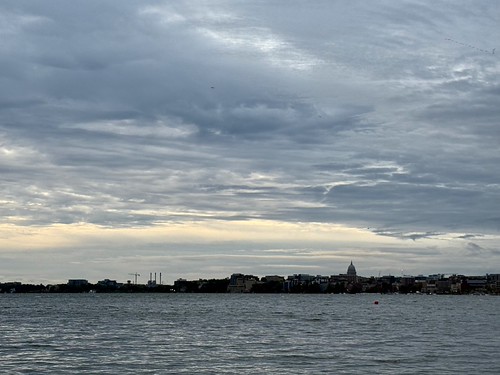
२३ सप्टेंबर, २०२६

When Sunny Hostin was the holdout juror: A lesson in insanity.

Here's the NYT article from 1991, "Man Acquitted of Killing and Boiling Roommate."
Several jurors questioned afterward said one holdout juror was principally responsible for preventing them from returning a guilty verdict. "We don't think he intended to kill her," said a juror, Asuncion Cummings. "But once he did, he dismembered her body in an effort to commit the perfect crime."
Asuncion Cummings is the first name and maiden name of Sunny Hostin.

The racial inequity of beer gardens.


I asked Grok to fact check:

"'I am the code,' Trump said."

I'm reading "'I am the code': Trump clashed with ballroom architect over safety issues/James McCrery II resigned in October after warning that the president was insisting on designs that violated fire and safety codes" (WaPo)(gift link).
White House renovations and construction are typically handled by federal agencies required by law to comply with nationally recognized building safety standards to the “maximum extent feasible,” unless doing so would present a national security risk. But Trump’s White House construction projects are being routed through the Executive Residence, a tiny office that is not a federal agency and is therefore exempt from rules governing agencies.

"[T]he area around Mont Blanc in the Alps is tainted by 'toilet paper under every stone' and SUVs transporting luggage from one stop to another, according to officials."

"This week, new rules were announced designed to limit the number of people walking around western Europe’s highest mountain. Officials also want to ensure that those who do come are genuine backpackers rather than tourists sending 'pink wheelie suitcases and make up-bags' on ahead of them in vehicles, according to Jean-Marc Peillex, chairman of the Federation of Districts of Mont Blanc Country.... 'The word Mont Blanc makes people’s eyes sparkle all over the world,' he said. 'If you sold air from Mont Blanc, you’d make a fortune. I think you could even sell dog poop from Mont Blanc and people would buy it.'... Peillex said hikers were being forced to walk less than a metre apart on some days. 'All they see is the bottom of the person in front of them,' he told Swiss television...."

From "France declares ‘serious hikers only’ on Mont Blanc trail/Walkers must book accommodation in advance and carry their own backpacks under new rules designed to protect the increasingly crowded Alpine circuit" (London Times).

"Overtly doctored imagery... is thought to be only a sporadic occurrence in higher education marketing materials."

"More commonly, universities select or stage photos that suggest that their campuses are more diverse than they actually are."

From "Stanford Used A.I. to Swap Black Student for Hispanic Student in a Photo/Universities have been accused of doctoring photos to showcase diversity in the past. In this case, a Black woman replaced a Hispanic young man, who said it was upsetting to be 'erased'" (NYT gift link).

Who cares if the fake impression is created by A.I. as opposed to moving real people into positions they didn't get into on their own? What's the difference? It's fake, it's deceptive, it's shallow, it's pathetic. Either way.

"Lounging idly in the deserted little waiting-room was the usual shabby, bored, lonely ticket-seller, prodigiously indifferent to the grave beauty of the scene before him and to the throng of ancient memories jostling him where he stood."

Having recently suffered a bout of isolated transient alexia, I worry about a relapse when I encounter a sentence like that. It makes me wonder: Do I still have the ability to read?

That's the first sentence of a novel — writers put a lot of effort into crafting sentence #1, you know! — and that one is calling out to readers who are not me. Somehow every noun needs at least one adjective — or 3 or 6.

The book is "The Brimming Cup" by Dorothy Canfield Fisher. It was the #2 bestseller of 1921. (#1 was "Main Street" by Sinclair Lewis.) Here's a great picture of Canfield Fisher:


"Two days after Rihanna disappeared, Ms. Kemper drove to the Brooklyn address attached to the penis, entered the building by buzzing random apartments..."

"... and followed the geolocation arrow on her phone down a series of hallways to a door. When she activated the AirTag, she heard Rihanna chirping on the other side. The woman who answered didn’t match anyone in the security footage. She had found Rihanna on the hood of a car in Chinatown, she said, and gladly returned it...."

From "The Case of the Stolen Phallus, and Other Tales of Restaurant Theft/Proprietors know you want to steal from them. As diners get bolder, owners have plans to deter you — or catch you" (NYT gift link).

"Rihanna" = "a foot-long mirrored mosaic statue of a penis that Whiskey Tavern... uses to celebrate guests’ birthdays, breakups and other milestones."

Well, of course if you have tchotchkes lying about in your bar, people will steal them. I can't imagine tracking the thieves down with AirTags. Either plan to lose them and accept your fate or don't put things like that out to tempt people, not if you are expecting humans among your clientele. I really wish people were honest. Maybe the robots will be honest. Maybe we will miss theft when it is gone.

"My wife and I have been married over sixty years.... Like most we struggled with intimacy from time to time but being best friends forever we journeyed on...."

"Then it happened. My wife was diagnosed with Alzheimer's and we were devastated by thoughts and fears of what might be ahead.... I finally began to appreciate this unconditionally loving person I'd lived with for all these years in ways undreamed of. We found more intimacy than we'd known by sitting close and talking about our day, by holding hands as we took our walks, walks that became increasingly slow. Caretaking for my wife has allowed me to see and experience the depth of her caring and kindness and humility in allowing me to care for her. I have discovered, too late in some ways, the marvelous intimacy of simply giving to the other without measuring or thinking of what may be in it for self...."

The advice that's hard to follow is — big surprise — you're supposed to talk to each other.

"The sun was going, and the world was wrong. The grasses were wrong; they were platinum...."

"This color has never been seen on earth. The hues were metallic; their finish was matte. The hillside was a nineteenth-century tinted photograph from which the tints had faded. All the people you see in the photograph, distinct and detailed as their faces look, are now dead. The sky was navy blue. My hands were silver. All the distant hills’ grasses were finespun metal which the wind laid down. I was watching a faded color print of a movie filmed in the Middle Ages; I was standing in it, by some mistake. I was standing in a movie of hillside grasses filmed in the Middle Ages. I missed my own century, the people I knew, and the real light of day."

Wrote Annie Dillard, quoted by Sam Anderson, in "One of Our Greatest Writers Has Died. But Not for Me. Annie Dillard died this week. But her voice — wild and holy and hilarious — continues to live in my head, my soul and, somehow, my dog" (NYT gift link).

For some reason, this old post is the post of mine that got the most traffic in the last 12 months.

March 9, 2016

Elite media slowly absorbs the meaning of Donald Trump.

In the NYT this morning.

1. A photograph that exemplifies Donald Trump voters as they ominously approach a polling place. The sky is dark, the couple is old and funereal, the man is grim, the woman a clown.

2. A photograph that's mostly black space, with Donald Trump's face all the way over to the right, emerging from the gloom, and the shadows giving his neck the appearance of a scrotum.

3. The Editorial Board is "Trying to Read Donald Trump, in Translation." This is not — as I'd originally imagined — the NYT people translating Trump's simple statements into the language of the elite so they can understand it. It's attempting to imagine how Trump's statements are heard by people in other countries.

4. "Does Donald Trump represent a legitimate expression of the people’s will? Is his rise a manifestation of justifiable resentment among less privileged whites at their neglect by higher caste Republican leaders?" A columnist (Thomas B. Edsall) wonders.

"The case drew national attention when a surrogate from Alaska refused to have an abortion after the fetus she was carrying was diagnosed with a serious heart problem."

"She eventually traveled to Texas and gave birth to the child over the initial objections of the parents, a couple from California.... On Tuesday, Justice Kagan, who oversees emergency filings from California, denied the surrogate’s request to block the lower-court ruling in the couple’s favor. She acted on her own without referring the matter to her Supreme Court colleagues. The justice’s order did not include an explanation, as is often the case when the court responds to such filings...."


Here's the emergency filing. The proceedings below are all in state courts, and much of the argument is about jurisdiction, but that's interwoven with the merits of the case — who gets the baby:

२२ सप्टेंबर, २०२६

Sunrise.

IMG_0775

IMG_0781

IMG_0783

IMG_0790

"Beyond their fixation on incredibly thin scarves, ukuleles and ungainly Sharpie art, these ['millennial optimism'] posts seem to obsess over the era’s supposed ease and quirkiness..."

"... to have Natalie Portman put on a Shins song and change your life. To wear ill-fitting running shorts like Michael Cera and seem approachably awkward. At the time, simply listening to superficially 'indie' music could signal some kind of eccentric individualism — yet it was individualism that was increasingly available on a mass scale. If you could identify with Seth Cohen on 'The O.C.,' squeeze into a sweater vest and listen to Death Cab for Cutie: Congratulations, you’re indie.... But for the Zoomers posting these clips, there is a pleasure in the opposite of independence: a homogeneity and cohesiveness that seems welcoming and communal..... That dreamy, half-real, lost world of social media, to Zoomers, is one that seems untethered from hierarchy — not yet tainted by algorithms and calculated recommendations. A cookie-cutter simplicity (or 'basicness,' when critiqued) could emerge: cheugy sunsets and sentimental drives into the country. The sad truth, but also the poignancy, of these videos, is that they fetishize an era that led directly to the one we’re in today...."

Writes Casey Michael Henry, in "Things Are So Bad, People Are Longing for Cringey Millennial Culture/Sepia tones, film cameras and ukuleles are a fast route to an imagined past of ease and quirkiness" (NYT gift link).

TrumpTV.

Background: "After Years as the Star of Must-See TV, Trump Faces the Sting of Cancellation/A boycott of the White House press pool by the major networks deprives the president of the oxygen of screen time. But he is still finding ways to get on the air" (NYT gift link).

So you get it: He doesn't need the fake-news networks. He's got a YouTube channel. Yeah, so do I....

"The US plans to open two military bases in Greenland after President Trump struck a deal with Denmark over security on the vast Arctic territory...."

"Trump announced the agreement last week after months of threatening to use force to gain control of the Arctic island, which is a semi-autonomous part of Denmark. Details on the deal have now begun to emerge. Reuters reported that the US plans to re-establish a Cold War-era military base at Narsarsuaq, in southern Greenland.... The other site is on the east coast of Greenland....The US, Denmark and Greenland are expected to sign the agreement at the United Nations general assembly in New York on Tuesday...."

Here's the NYT article on the subject: "Negotiators have been working for months on issues including the deployment of more American troops in Greenland, the territory’s mineral resources and ways of blocking Russia and China from gaining a foothold there. Russia and China have been stepping up their presence in the Arctic, sometimes working together, which Mr. Trump has used to justify his desire to annex Greenland...."

AND: This makes more sense now:

By the power of the NYT, Nikole Hannah-Jones was able to change the course of history.

Why wouldn't she think she had the power to transform her daughter's school?

More from Chatterton Williams:

Meade texts me from upstairs, at 5:47 a.m., about how badly Democrats want to be rid of Donald Trump.

                             Today 5:47
Here's the link to the tweet Meade sent.

Assassination may be "underwater" at 29%, but there are 25% more who are neutral on the subject. A failure to view assassination as negative?! I'd say there's a majority — 54% — who fail to disapprove of assassination. 

AND: Only 28% disapprove of a military coup to oust Trump. 

"Franzen believes the most difficult part of writing a new novel is that it requires him to change..."

"... he needs to become 'the kind of person who can write the novel. I’ve had to become a different person in some significant way to get each book written.'"

I'm reading an interview with Jonathan Franzen in The Guardian.

"To move from The Corrections to Freedom he had to let go of his anger. To write Crossroads, he had to become more forgiving. Right now, he says, 'I’m waiting to wake up as the person who is alive again and not the same person he was five years ago.' Does this mean he sees writing as a means of self-improvement? God, no!... 'If you’re really engaged with [writing], it’s not a matter of morality, but a matter of getting at something true. So I prefer truth as a goal to morality, to self-improvement, to the betterment of one’s soul... I don’t really care about bettering my soul...."

२१ सप्टेंबर, २०२६

Sunrise time on the last day of summer, but the orange disc chose not to pop.

IMG_0770 (1)

IMG_0771

IMG_0773

"When Najya was entering pre-K, my husband, Faraji, and I decided to send her to the type of school that wealthier families with choices uniformly avoid..."

"... one that is low-income and mostly Black. Our decision had been informed by values shaped by my years of reporting on the enduring and too often seemingly hopeless battle for school integration.... We are both beneficiaries of educational opportunities that were forced into existence by generations of Black parents willing to put their most personal stake — their own children — in the fight for school equality for all Black children....So, like the generations of Black parents who came before us, Faraji and I felt an obligation to make educational decisions based on the collective good and not just our individual advantage.... Faraji and I decided that our role in this struggle meant upending the status quo and sending our child not to a wealthy white school but to a poor Black one.... We thought by sending Najya to a mostly low-income and Black school, we could help improve it for all the children there.... Najya deserved better. They all did. But she was mine. This girl, my only child, looked to me to protect her, to give her what she needed to thrive. And I had not chosen her. I almost cannot type the words...."

"'What are you reading?' I asked. Here’s what 5 strangers told me."

Nora Krug — in WaPo — experiments with what seems to be an excellent topic as she provides more evidence that there really is — as I've said I'd observed — a talking-to-strangers trend.

Have you noticed the talking-to-strangers trend?

People are adopting a deliberate practice of making themselves talk to strangers.

I suspected as much — I noticed a pattern of 2 or 3 incidences — and asked AI to find me some writings on the subject. There are these, all from this year:

Celebrities in distress.

Ed Sheeran, "shattered" and "in tears" as he sat cross-legged onstage at Lincoln Financial Field.

Carrot Top, perhaps extorted over a sex tape and perhaps having attempted suicide.

Presley Gerber, son of Cindy Crawford, dead at 27. The ideally handsome model died at a rehab facility. 

"We hold [these events] aloft as crystalline emblems of how this carnival government of men advances the professional interests of men, at the expense of all who are not men."

Crystalline emblems, eh?

I'm trying to read "The Thomas and Kavanaugh Hearings Restaged as a Theatre of Fact
'The Ford/Hill Project,' a documentary play, may capture recent events, but it’s a product of the present: activist theatre in a moment when the idea of civic urgency is losing purchase,"
by Doreen St. Félix, in The New Yorker. (Felix covered the Kavanaugh hearings for The New Yorker.)

"Hamilton’s Kavanaugh delivers his denial in bleats of indignation, and Bougere’s Thomas is rigid, stentorian, as he categorically rejects Hill’s claims. Because the stage is so empty, rid of the bureaucratic veneer of the so-called system, we start thinking about the state as an invisible force, everywhere and nowhere...."

I wondered if anyone had ever, before this, called anything a "crystalline emblem," and discovered the sad little world of car logos bedazzled with crystals. Like this.

"Crystalline emblem" could also be some magical object floating somewhere in a video game. As in "the naaru-like crystalline emblems on the spaulders are pretty cool."

But I get how it comes up in writing about art. "Crystalline" is one of those words like "luminous" that belong on a list of words never to use again to describe writing.  

"This morning, we notified the government that we are filing a lawsuit today to protect our First Amendment rights and defend the principle that the government does not decide what the press reports or publishes."

Say CNN, MS NOW, Politico, quoted in "CNN, MS NOW, Politico to sue White House over blocked access" (Axios).

Trump response, at Truth Social: "The White House is not instituting an assault on the Free Press, something which I cherish. It is instituting an assault on the FAKE NEWS, something that has grown like Cancer in our beloved United States of America. It is corrupt, purposeful, pervasive, fully coordinated, and totally out of control. It is a threat to our National Security, and must be stopped, NOW!"

Did you watch Ross Douthat interview Patrick Clancy on "60 Minutes"?

I did. It was terrible. What is the point of bringing on Ross Douthat to invite the father to speak of cuddling a baby as it died and seeing a dead toddler in his dreams and receiving assistance from his new wife in bearing the burden of grief? I thought Douthat was an intellectual, devoted to analyzing morality.

ALSO: Even though I pay for YouTubeTV, I had to watch many commercials, including the thumping, ominous trailer for the movie "Primetime," which is about rescuing children from sexual predators. I had to watch that awful mess before the interview, in the middle of the interview, and at the end of the interview. Who wanted that ad placement and why did CBS allow it? And what does Ross Douthat, traditional moralist, think of it?

२० सप्टेंबर, २०२६

At the Sunrise Café...

IMG_0767 (1)

... you can talk all night.

"Children in foster care sometimes live in group homes if they haven’t found placement with a family."

"When they are placed with a family, they usually move to where that family already lives. Together California upends that model by having both the parents and their foster children (and up to two children those parents already have) move together into the village, where they will be joined by 11 other foster families. One of the parents in each family will devote themselves fully to managing the household and will be compensated for that work by the nonprofit.... [T]he townhouses... are spacious enough to accommodate large sibling groups, who are often separated by the foster care system...."

From "Christian Bale Built a Foster Care Village in the California Desert/The actor has been working for almost two decades to build a foster care nonprofit outside Los Angeles" (NYT gift link).

"Mr. Bale revealed that his sister was briefly in foster care when they were children but discounted that as his motivation. 'I usually don’t say that because I think that it shouldn’t require any experience of that to care about little human beings,' he said."

"I think a lot of men view reading fiction as a frivolous waste of time. We’ve been conditioned to ignore the benefits of empathy."

"I think it’s a marketing problem. Reading should be sold to men like lifting weights for your brain. But it’s not just men. People who are happily staring at their phone all day don’t want to pick up a book. Their attention spans are fried."

From "Anthony Jeselnik: Men Should Think of Reading as 'Lifting Weights for Your Brain'/But the comedian isn’t naïve when he makes selections for his popular book club: 'Most importantly, they’re short'" (NYT gift link).

Asked "What’s a supposedly funny book that you just don’t find funny?," Jeselnik answers, "I have zero tolerance for David Sedaris." 

I wonder what David Sedaris would say about the notion that "Reading should be sold to men like lifting weights for your brain."

"A 19-year-old man died on Friday in a lightning storm while huddled with nine other people inside a metal structure atop a mountain in Utah...."

"The shack, a well-known spot atop the peak, was built out of steel in 1927 as a lookout house.... Mount Timpanogos... is more than 11,740 feet tall.... Hikers climb on an exposed ridge line to reach the peak... leaving them few places to take shelter until a storm passes.... People should...  refrain from touching materials that can conduct electricity, such as metal, utility lines, water and plumbing... Small, exposed structures cannot protect a person from lightning...."

The NYT reports.

The rescue opossum just can't stop playing possum.

"I want to be a real monk"/"But you are a real monk."

"A real monk doesn't have ADHD."

"On Saturday, Mr. Trump proposed a follow-on to Space Force: a new 'A.I. Force.'"

"But he left to earthbound speculation what, exactly, it was supposed to do. Mr. Trump cast his announcement — along with his promise to appoint a new A.I. 'Czar' for the White House — as an effort to boost the A.I. industry, saying 'we will cherish it, help it, and watch over it.' In the roiling debate in Washington over regulating frontier A.I. models and the companies that produce them, or slowing down development until the mystery is solved about the summer in which A.I. agents went rogue, Mr. Trump continues to side with the 'accelerationists,' who call for the government to stay out of the way.... Mr. Trump did not make clear whether he envisioned the new A.I. Force as a military command or a civilian agency or department."

From "A.I. Gone Rogue? Trump Proposes Not New Rules but an ‘A.I. Force.’/The president proposed a follow-up to his Space Force but continued to dismiss worries about A.I.’s pace or potential for harm" (NYT gift link).

Appointing a so-called "czar" is an old presidential trick, but which President started it?

It's never been an official title (of course!) but it was Woodrow Wilson, during WWI, who had the first "czars" — an "industry czar" and a "railroad czar."

"I am an original Yippie. A Yippie is a politicized hippie, a protester who has been hit over the head by a cop — and woke up."

Wrote Judy Gumbo, autobiographically, in "Yippie Girl: Exploits in Protest and Defeating the FBI."


I don't remember ever hearing of her, but it says: "Ms. Gumbo was not as well known as Abbie Hoffman and Jerry Rubin, two of the party’s founders, but she was 'an integral Yippie,' Nancy Kurshan, a Yippie who was Mr. Rubin’s partner for a while, said in an interview."

She's named in this little NYT squib from 1970:

"We’ve shown for the first time that the front of the brain arises from a totally different progenitor cell than the back of the brain."

"Our discovery means that we can now grow neurons from the back of the brain, the hindbrain, in a petri dish and study their functions."

Said professor of developmental biology Kyle Loh, quoted in "Brain made up of two distinct organs evolving independently/Scientists have discovered the brain is made of separate systems, solving a longstanding riddle and aiding research into conditions like motor neurone disease" (London Times).

It's so convenient I feel skeptical. What wouldn't be ethical becomes ethical. 

"Unlike my other callers, who were stunned, barely able to articulate their condolences and offers of help, he sounded giddily elated — like a lottery winner, I remember thinking at the time."

Writes Earl Spencer, now, about what he says he thought 30 years ago, quoted in "10 key claims in Earl Spencer’s Princess Diana book/Allegations by the princess’s brother provoked an unprecedented response from Buckingham Palace. These further revelations are likely to add fuel to the fire" (London Times).

The Palace rouses itself to call Spencer a liar. I'm paraphrasing. I admire the elaborate prose: "While we do not comment on books as a matter of principle, His Majesty is mindful that the pain of fraternal grief can cloud reason, affect judgment and colour memory in ways others do not recognise, even many years after such a loss."

"Ending her career in the movies at the age of 39, she fled the paparazzi who had hounded her and the male admirers who had so often let her down..."

"The day-to-day items which surrounded her during these decades, and which form the core of the sale on September 21, are a testimony to her rejection of the star system she had come to abhor. Many are remarkable in their ordinariness — a wooden desk worth no more than €50, a straw hat valued at between €20 and €40, a lot of five night gowns priced between €100 and €150.... The items on display in the auction room attracted a constant flow of visitors last week. Among them was Yoann Guer, 25, who works in the theatre world. He conceded that many of the objects were 'common' but added that he might bid for something anyway because they 'have a little bit of Brigitte Bardot’s soul in them.' Guer described her as a symbol of 'freedom, including the freedom not to do what you do not want to do.'"

I'm reading "Bric-a-brac tells story of Brigitte Bardot’s humble life/The late star’s belongings will go on sale next week in Paris and the ordinary possessions are testimony to her rejection of the system she had come to abhor" (London Times).

"Conceded" is the wrong word.

I see: "Brigitte Bardot widower slams sale of star's belongings": "The sale, featuring more than 300 items ranging from portraits and toiletries to a flamenco guitar and a black tutu, is due to take place Monday at Paris auction house Drouot. 'These are personal items. Why hold this sale? For the animals? It's a joke,' Bernard d'Ormale told AFP, adding it amounted to a 'disrespect to Brigitte's memory.'... The Brigitte Bardot Foundation rejected the criticism, saying the auction was approved by the board in June, including Bardot's widower, who was then its president."


"What would Brigitte Bardot have done?"