Thomas Frank लेबल असलेली पोस्ट दाखवित आहे. सर्व पोस्ट्‍स दर्शवा

२५ मार्च, २०१८

"Let us think the unthinkable. Let us imagine Donald Trump’s potential path to reelection as president of the United States."

So begins a Harper's essay by Thomas Frank (whose book "Listen, Liberal" I read and admired). He continues:
[I]magine his disastrous rule reaffirmed by an enthusiastic public, giving him four more years to insult and offend and enact even more poisonous measures. Reader, it could happen.... Imagine him, Reagan-like, lifted up on a wave of public adulation. The economy is firing on all cylinders; the ships of many nations are parading through New York Harbor; the fireworks are going off overhead and Trump is announcing that America is back, standing tall....
Skipping to the ending:
Before you close this magazine, chuckle cynically, and take a sip of gin, think for a second about the cultural and political delusions a roaring economy and rising wages would surely generate... Perhaps Donald Trump, elevated to the presidency in 2016 as an act of protest by what he called the “forgotten men and women of our country,” will actually appear to come through for them. Like Bill Clinton with his laserlike economic focus, Trump will seem to have delivered on what he promised: an economy that finally looks good for his supporters. For once, they will conclude, politics worked.

Cue the victory flotilla in New York Harbor. Cue the hundred-year night.

२२ जुलै, २०१७

"The American news media’s respect for tech CEOs and foreign-policy experts are the photographic negative of their overwhelming contempt for Dumb Donald."

"These things don’t happen because the journalists that remain are liberals. It happens because so many of them are part of the same class – an exalted and privileged class."

Writes Thomas Frank (the author of "What's the Matter with Kansas?" and a book I've read and recommend, "Listen, Liberal: Or, What Ever Happened to the Party of the People?").
Consider Politico’s famous email tip-sheet, Playbook, which is read religiously every morning by countless members of the DC press corps, including myself. About two-thirds of the publication consists of useful summaries of the day’s news stories.

The rest, however, is a sort of People magazine for the Washington journalist community, in which the reader is invited to celebrate leading journalists’ (and politicians’) birthdays, congratulate leading journalists (and politicians) for their witty phrase-making, learn which leading journalist (and politician) was seen at which party and anticipate which leading journalist (and politician) is going to be on which Sunday program....

But there is an unwritten purpose to these daily honor rolls of journo/political friendship and that is to define the limits of what is acceptable.

Like the guestlist at Lally Weymouth’s party in the Hamptons, which was described so salaciously in Playbook a little while ago, a tiny handful of people and publications and ideas are in; everyone else is out....

They know what a politician is supposed to look like and act like and sound like; they know that Trump does not conform to those rules; and they react to him as a kind of foreign object jammed rudely into their creamy world, a Rodney Dangerfield defiling the fancy country club.
A foreign object jammed rudely into their creamy world...

Yes, he is a pricker forward.

I'm glad to get a perfect chance to use that term I learned yesterdaypricker forward, a synonym for instigator from the 16th century.

Frank is portraying Trump as a masculine stereotype (a rude jamming object) and the press as a feminine stereotype (swanning about in a "creamy world"). It's a rape metaphor.

Now stand back and let Donald Trump make a sandwich:


He hates small food, you know.

७ ऑक्टोबर, २०१६

"The puzzle that is currently frustrating the pundit minds of America is this: why is Hillary Clinton not simply clobbering Donald Trump?"

"How is this ranting, seething buffoon still competitive with her? Trump has now stumbled through a series of the kind of blunders that break ordinary political campaigns – the sort of deadly hypocrisies that always kill the demagogue in old movies – and yet this particular demagogue keeps on trucking. Why? Let us answer that burning pundit question of today by jumping to what will undoubtedly be the next great object of pundit ardor: the legacy of President Barack Obama.... As a president who has accomplished little since 2011... Obama has pretty much undermined Clinton’s ability to sell us on another centrist Democratic presidency. His legacy has diluted her promise.... Thanks to Obama’s flagrant hope-dealing in the dark days of 2008 – followed up by his failure to reverse the disintegration of the middle class – this favorite Democratic cliché has finally become just that: an empty phrase."

Says Thomas Frank.

ADDED: Frank does not say that Trump himself is a source of hope, only that the Democratic Party candidate can't sell hope this time around. But having given the post my "hope" tag, I see that I've only used it twice before in the last 2 years, and both posts are about Donald Trump. How did he earn the rarely awarded "hope" tag?

Most recently, on August 8th, offering his economic plan, he said: "I want to jump-start America and it can be done and it won't even be that hard."

And here, on January 31, 2016, there's a post with an embedded 3 Stooges video (which hardly seems expressive of hope):
"Donald Trump has muscled ahead in Iowa, regaining his lead on the brink of the first votes being cast in the 2016 presidential race."

The Des Moines Register selects a very masculine verb as it reports its last poll before the caucus that will finally release us from the clutches of Iowa.
Trump stands at 28 percent, while rival Ted Cruz has slid to 23 percent. But there’s still a strong case for Cruz in this race — he’s more popular and respected than Trump, the final Des Moines Register/Bloomberg Politics Iowa Poll shows.

“The drill-down shows, if anything, stronger alignment with Cruz than Trump, except for the horse race,” said J. Ann Selzer, the pollster for the Iowa Poll.
And that's the wan encouragement for anti-Trumpions from J. Ann Selzer...

Oh! That was just the hope that someone other than Trump might win. That's the kind of hope Hillary can still sell... the kind that Cruz flogged last winter.

This tastes flat.

२५ ऑगस्ट, २०१६

"To members of the liberal class, the Democratic Party offers constant reminders that the technocratic order whose upper ranks they inhabit is rational and fair..."

"... that whether they work in software or derivative securities they are a deserving elite; creative, tolerant, enlightened. Though it is less tangible, the moral absolution in which Democrats deal is just as important. It seems to put their favorite constituents on the right side of every question, the right side of progress itself. It allows them to understand the war of our two parties as a kind of cosmic struggle between good and evil— a struggle in which they are on the side of light and justice, of course.... And what is rightest and most inspiring about it is the Democrats’ prime directive: to defeat the Republicans, that unthinkable brutish Other. There are no complexities to make this mission morally difficult; to the liberal class, it is simple. The Democratic Party is all that stands between the Oval Office and whomever the radicalized GOP ultimately chooses to nominate for the presidency. Compared to that sacred duty, all other issues fade into insignificance.... The Democrats posture as the 'party of the people' even as they dedicate themselves ever more resolutely to serving and glorifying the professional class. Worse: they combine self-righteousness and class privilege in a way that Americans find stomach-turning. And every two years, they simply assume that being non-Republican is sufficient to rally the voters of the nation to their standard...."

This calls to mind something I just read in Thomas Frank's book  "Listen, Liberal: Or, What Ever Happened to the Party of the People?"

१२ ऑगस्ट, २०१६

Democrats think: "Regardless of how poorly Democrats perform on inequality matters, they will never be as awful as those crazy Republicans."

But, according to Thomas Frank in "Listen, Liberal: Or, What Ever Happened to the Party of the People?":
People do find other places to go, of course — they stay home, they join the Tea Party, whatever. But my purpose here is to scrutinize the tacit Democratic boast about always being better than those crazy Republicans. In truth, what Bill Clinton accomplished were things that no Republican could have done....

That a Democrat might be the one to pick apart the safety net is a violation of this basic brand identity, but by the very structure of the system it is extremely difficult to hold the party accountable for such a deed. This, in turn, is why only a Democrat was able to do that job and get away with it. Only a Democrat was capable of getting bank deregulation passed; only a Democrat could have rammed NAFTA through Congress; and only a Democrat would be capable of privatizing Social Security, as George W. Bush found out in 2005....

To judge by what he actually accomplished, Bill Clinton was not the lesser of two evils, as people on the left always say about Democrats at election time; he was the greater of the two. What he did as president was beyond the reach of even the most diabolical Republican....
Those crazy Republicans.... This is another post that gets my tag: the mental illness meme. Watch out for that crazy guy over there. Watch out for who's getting called crazy.

११ ऑगस्ट, २०१६

"Clinton spoke of change the way other politicians would talk about God or Providence..."

"... we could succeed economically, he once announced, 'if we make change our friend.' Change was fickle and inscrutable, an unmoved mover doing this or that as only it saw fit. Our task — or, more accurately, your task, middle-class citizen — was to conform to its wishes, to 'adjust to change,' as the president put it when talking about NAFTA. Worship of 'change' was standard stuff in the business literature of that period, but Clinton brought it into the public sphere. For him, this was how politics worked: Every deal was always a done deal. Every legislative program was a way of reckoning with some irresistible onrushing historical force that he and his advisers had divined. The role of Congress was to figure out how to bow to the new reality as Clinton’s cohort perceived it.... [I]t wasn’t reason that sold NAFTA; it was a simulacrum of reason, by which I mean the great god inevitability, invoked in the language of professional-class self-assurance. 'We cannot stop global change,' Clinton said in his signing speech. The phrase that best expressed the feeling was this: 'It’s a no-brainer.' Lee Iacocca uttered it in a pro-NAFTA TV commercial, and before long everyone was saying it. The phrase struck exactly the right notes of simplicity combined with utter obviousness. Globalization was irresistible, the argument went, and free trade was always and in all situations a good thing. So good, it didn’t even really need to be explained. Everyone knew this. Everyone agreed."

From "Listen, Liberal: Or, What Ever Happened to the Party of the People?" by Thomas Frank. (Boldface added.)

९ ऑगस्ट, २०१६

"It should not surprise us that the liberal class regards the university as the greatest and most necessary social institution of all..."

"... or that members of this cohort reflexively propose more education as the answer to just about anything you care to bring up. College can conquer unemployment as well as racism, they say; urban decay as well as inequality. Education will make us more tolerant, it will dissolve our doubts about globalization and climate change, it will give us the STEM skills we need as a society to compete. The liberal class knows, as a matter of deepest conviction, that there is no social or political problem that cannot be solved with more education and job training... To the liberal class, every big economic problem is really an education problem, a failure by the losers to learn the right skills and get the credentials everyone knows you’ll need in the society of the future.... To the liberal class this is a fixed idea, as open to evidence-based refutation as creationism is to fundamentalists: if poor people want to stop being poor, poor people must go to college. But of course this isn’t really an answer at all; it’s a moral judgment, handed down by the successful from the vantage of their own success. The professional class is defined by its educational attainment, and every time they tell the country that what it needs is more schooling, they are saying: Inequality is not a failure of the system; it is a failure of you."

That's from "Listen, Liberal: Or, What Ever Happened to the Party of the People?" by Thomas Frank.

२६ एप्रिल, २०१५

"Robin Givhan’s... piece about Lilly Pulitzer was hateful and not worthy of publication."

"Lilly Pulitzer clothing is bright and fun and evokes a carefree attitude, and Givhan took it upon herself to use this as a determining factor as to the socioeconomic background of the wearer."

From a letter to the Washington Post about an opinion piece about why women get so excited about a particular brand of clothing distinguished by bright colors and exuberant patterns like this:
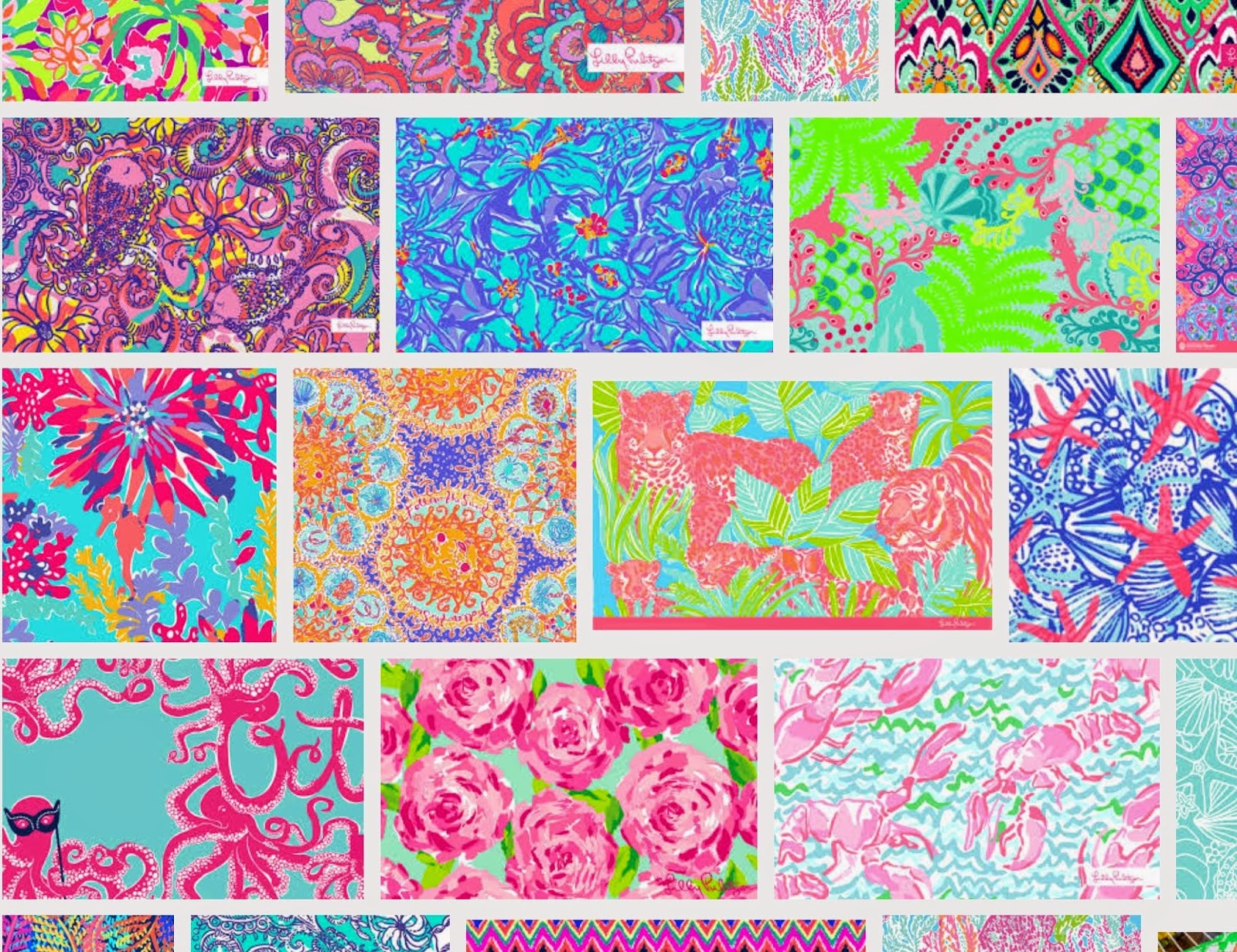


One look at those patterns and you're ready to believe the letter-writer, no? How could a desire to swathe yourself in that mean anything more than lighthearted fun-loving? Givhan instructs:
Lilly Pulitzer is preppy. It is part of a preppy uniform that announces itself from fifty paces. It is not so much a declaration of wealth as it is a perceived statement about class, lineage and attitude. Anyone can work hard and save up enough cash to go out and purchase a Chanel suit or a Gucci handbag. A devoted student of Vogue can cobble together a personal style that speaks to its public identity. But Lilly Pulitzer suggests an advantage of birth. The clothes stir up scrapbook notions of ancient family trees, summer compounds, boarding school uniforms, and large, granite buildings inscribed with some great-great-grandfather’s name. Lilly Pulitzer represents something that money cannot buy.

The clothes are, upon close inspection, not so terribly attractive. Actually, they are rather unattractive. And that is part of their charm. They are not meant to be stylish — that’s so nouveau. The clothes are clubby. Country clubby. One-percent-ish....
Too hateful? How can you look at those patterns and feel hate? I know there's this old tradition of country club people wearing really bright colors and stupid patterns, but what was that ever about? Wasn't it lighthearted fun-loving? Why shouldn't people with less money see the fun too? There's a lot of expensive fashion that is adapted from what younger, poorer people are wearing in the streets. What difference does it make which direction fashion trends move? I think Givhan would answer that I'm asking the wrong question, because this isn't fashion — "Lilly Pulitzer is not fashion. It is clothes." — and non-clubby folks who purport to like these things are delusional. The stuff is ugly and so it must be that they only want to look like the rich.

ADDED: Givhan's argument belongs in the "What's the matter with Kansas?" school of liberal opinion-writing. The common people don't know their own real motives and interests and letting them think and do what they like is a problem.

MORE: I blogged about Lilly Pulitizer once before, at the time of her 2013 obituary, which I presented like this:
Lilly Pulitzer dresses were "really wearable only by the few who were so rich that they could afford to have bad taste."

Says the NYT in the obituary for Lilly Pullitzer, who built a "fashion empire" out of "tropical print shift dresses and lighthearted embrace of jarring color combinations like flamingo pink and apple green." Lilly was born into wealth and married into more wealth. She had 3 children and a nervous breakdown.
“I went crazy. I was a namby-pamby; people always made decisions for me. The doctor said I should find something to do.”
The family estate included citrus groves, so she opened a juice stand with another woman, and juice stains inspired the print dresses....
So the Times obituary declared not only that the clothes were in bad taste, but also that only the rich are allowed to act upon such bad taste. Now, 2 years after Pulitzer's death, Target offered a Lilly Pulitzer line that was cheap, and you can see how dissonant that is with the values of elite commentators like Givhan. It wasn't the price that put these clothes out of the reach of the non-rich. They can make the clothes cheap, but still, you have be rich for these clothes to be wearable.

३१ जानेवारी, २०१५

"What can we do to break the stranglehold of the upper middle class?"

"I have no idea," says Reihan Salam (writing for Slate and including himself in the category "conservative"):
Having spent so much time around upper-middle-class Americans, and having entered their ranks in my own ambivalent way, I’ve come to understand their power. The upper middle class controls the media we consume. They run our big bureaucracies, our universities, and our hospitals. Their voices drown out those of other people at almost every turn. I fear that the only way we can check the tendency of upper-middle-class people to look out for their own interests at the expense of others is to make them feel at least a little guilty about it. It’s not much, but it’s a start. 
Shaming, eh? Salam imagines guilt-tripping families that make $200,000 a year or so into sacrificing their mortgage interest and college savings tax breaks for the greater good. If we could only get the people who have gained some decent economic security to stop paying attention to their own self interest, we could avert the destruction of America — that's Salam's idea. I'm not exaggerating: the article accuses the upper-middle class of "ruining America."

Meanwhile, liberals are always fretting about the way less-than-upper-middle-class Americans are failing to pay attention to their own self interest. That's "What's the Matter with Kansas."

Exactly how selfish are we supposed to be? Promoting unselfishness is a strange business, but I don't trust the big shamers and guilt-trippers of this world. They have their own self-interests, and they're choosing to promote them by tromping about in the darker parts of our psyche.

२६ जानेवारी, २०१५

"Despite their superficial attachment to multiculturalism, our elites don’t really want to think of other cultures as, you know, thinking differently, for fear that it might somehow be racist to take that into account."

Writes Glenn Reynolds, commenting on an "American Interest" piece by Jakum Grygiel on the "folly" of the "modern Western penchant for trusting in the equal rationality of all."

Glenn's remark has an unexamined premise: that "our elites" think that the people in our culture think rationally. I don't accept that premise. Just speaking for myself — and as a law professor, I cop to elitism — I certainly believe that we have an emotional attachment to our belief that we are rational but that all our thinking is inextricably intertwined with emotion. We can only think within our nervous system — brain, etc. — and that's guided by twinges and intuitions of mystifying subtlety.

We love the idea that we are rational, but how are our thoughts deranged by this love? Why did Glenn go toward reacting to "elites" and the imputation of "fear" and racism? Whatever basis he has for that remark, his decision to go exactly there was not determined by facts and logic.

And look at how our elites behave toward us. Look at any political campaign — the "war or women," for example. I'm not seeing trust in the rationality of the people. It's emotion all the way down. I don't think the elites are afraid of looking racist if they portray people in other cultures as irrational. I think they consider their fellow Americans irrational. That's "What's the Matter with Kansas." That's why the elites believe they should rig economic incentives to "Improv[e our] Decisions About Health, Wealth, and Happiness."

The mysterious twinges and intuitions within the elite nervous system create the feeling that none of us think straight. That's one kind of "equal rationality of all" — slim to none.

२७ डिसेंबर, २०१४

What is the NYT saying about Nebraska?

I'm just trying to understand the graphic that appears on the front page next to the teaser for an op-ed that I'm not particularly interested in reading, "Nebraska’s Lonely Progressives."


What is that thing? At first, I thought it was the back-end of a turkey carcass (sort of exploding). Then it looked like an ugly dog coughing. Clicking through to the article, I see that the front-page image is part of a larger image. The larger image is the shape of the state of Nebraska with squiggly drawings of people inside it and the image that's on the front page extends upward from the state. It's one person bulging up out of Nebraska and screaming, presumably something like Get me outta here!

The op-ed begins: "When I travel to the East or West Coasts, people sometimes ask me, 'Why do you live in Nebraska?' Or even, 'Have you considered moving?'" So I guess the exploding-turkey-carcass-ugly-coughing-dog-screaming-lady is the author herself.

Well, at least it's not "What's the Matter with Kansas?" The author, Mary Pipher, actually lives in the state that's annoying her. (By contrast, Thomas Frank grew up in Kansas, but got out of the place he wrote against.)

Bob Dylan lyric for the occasion: "Then you ask why I don’t live here/Honey, how come you don’t move?"

IN THE COMMENTS: JMS said:
For those of you who know nothing about Nebraska, this opinion piece is very misleading. Nebraska had back to back Democrat senators from 1989 to 2013, and quite a few Democrat governors, most of them for two-terms, and many Democrats have served in the state legislature as well. Nebraskans aren’t generally ideological (see previous statement) and are nothing if not pragmatic. They were environmentally conscious long before it was a lefty cause, because it was entirely pragmatic to be so. But Nebraskans will always ask two questions about any proposed project: 1) what will it cost, and what’s the second choice for spending that money and 2) who will be hurt and who will be harmed. It is my observation that Nebraskans generally make choices from the utilitarian perspective—the greatest good for the greatest number. There is also plenty of good old “leave me alone and I’ll take care of myself” thinking, unless there is a disaster and then you can count on every Nebraskan in a 40-mile radius showing up to help. They aren’t anti-government, but they have a strong preference for small government. Nebraskans like to know that those they elect to Washington will work on their behalf, not for themselves. And maybe it’s because so many of them have farming backgrounds, but their B.S. detectors are finally tuned, and today’s typical lefty rhetoric has a hard time gaining traction with them.

४ नोव्हेंबर, २०१४

I was surprised to see that this headline was for an article written by Thomas Frank.

"Righteous rage, impotent fury: Thomas Frank returns to Kansas to hunt the last days of Sam Brownback and Pat Roberts."

That makes Thomas Frank sound insane and menacing, like he's the one with righteous rage and impotent fury. How else can you read that? And then "hunt the last days"? That sounds like the kind of language that people were resolving to avoid after the Tucson massacre. 

२५ ऑगस्ट, २०१४

Are educated, intelligent adults allowed to complain that they didn't get what Obama's smiling 2008 campaign persona made them feel they could get?

Ah, it's a free country. You can complain about anything you want, but you look foolish if you don't take responsibility for your own gullibility.

Thomas Frank interviews Cornel West:
Frank: I... remember... being impressed by Barack Obama who was running for president... I sometimes thought that he looked like he had what this country needed... That was a huge turning point, that moment in 2008, and my own feeling is that we didn’t turn.

West: No, the thing is he posed as a progressive and turned out to be counterfeit. We ended up with a Wall Street presidency, a drone presidency, a national security presidency. The torturers go free. The Wall Street executives go free. The war crimes in the Middle East, especially now in Gaza, the war criminals go free. And yet, you know, he acted as if he was both a progressive and as if he was concerned about the issues of serious injustice and inequality and it turned out that he’s just another neoliberal centrist with a smile and with a nice rhetorical flair.... 
Another neoliberal centrist with a smile and with a nice rhetorical flair? That's what I hoped I might get when I voted for Obama in 2008. He never assured us he'd be a left-winger, but some people — people who wanted that — projected their hope onto him, and of course, he invited everyone to see him as the embodiment of whatever it was they hoped for.
West: And we ended up with a brown-faced Clinton. 
That's crudely stated, and I wouldn't talk like that, but that's about exactly what I hoped for. A pragmatic centrist like Bill Clinton, and as a bonus, we get the first African American President. I didn't vote merely on that hope. It was also the case that John McCain lost me. It's always only a choice between 2 (or, rarely, 3) candidates. You can't get everything you want, and you can't know everything about what you are getting.

२२ जुलै, २०१४

"All of us who do what Thomas Frank does — what I do — have failed. Our goal was to persuade the public to move in a liberal direction..."

"... and that didn't happen. In the end, we didn't persuade much of anyone. It's natural to want to avoid facing that humiliating truth, and equally natural to look for someone else to blame instead. That's human nature. So fine. Blame Obama if it makes you feel better. That's what we elect presidents for: to take the blame. But he only deserves his share. The rest of us, who were unable to take advantage of an epic financial collapse to get the public firmly in favor of pitchforks and universal health care, deserve most of it."

Writes Kevin Drum in Mother Jones (citing the same Thomas Frank article we were talking about here yesterday).

"Pitchforks" refers to Obama's claim to be "the only thing between you and the pitchforks." And "you" was investment bankers. Drum is saying the financial collapse was the opportunity for left-wingers to turn the American people into a pitchfork-waving mob, but they let that serious crisis go to waste (as they say).

Why a pitchfork? In pop culture, it's "standard equipment for any angry mob on a Witch Hunt."
The mob may be going after a witch, an evil wizard, a vampire, a Mad Scientist, a "perverted" person, or any other unpopular local figure. If the mob is after the villain, he most probably ends up being shamed by the mob. f they're coming after the good guys for one reason or another (like if our heroes are hiding a Reluctant Monster), their best defense is Shaming the Mob or an obstacle that will force them to go one by one, raising the question of Who Will Bell the Cat?
But Drum is pro-mob. He wants out-and-proud pitchforkery.


I'll take the cotton candy. And I won't let the opportunity of this post go to waste. This is my time to say that when I voted for Barack Obama in 2008, I was not hoping for the United States to lurch way left. I was hoping for the very moderation that irks guys like Frank and Drum. Frank-n-Drum. Frankendrum!

२१ जुलै, २०१४

On the topic of Obama's failure, Thomas "What's the Matter With Kansas?" Frank emits the purplest prose that ever...

...  included the word "shitty":
The task facing the makers of the Obama museum, however, will be pretty much exactly the opposite: how to document a time when America should have changed but didn’t. Its project will be to explain an age when every aspect of societal breakdown was out in the open and the old platitudes could no longer paper it over—when the meritocracy was clearly corrupt, when the financial system had devolved into organized thievery, when everyone knew that the politicians were bought and the worst criminals went unprosecuted and the middle class was in a state of collapse and the newspaper pundits were like street performers miming “seriousness” for an audience that had lost its taste for mime and seriousness both. It was a time when every thinking person could see that the reigning ideology had failed, that an epoch had ended, that the shitty consensus ideas of the 1980s had finally caved in—and when an unlikely champion arose from the mean streets of Chicago to keep the whole thing propped up nevertheless.

१९ नोव्हेंबर, २००८

Pushing the big liberal mandate meme.

Rejected as a blog topic yesterday: "Barack Won A Mandate: Here's why you shouldn't let anyone tell you differently," by Jonathan Chait. (I know that, at the link, it's called "Defining Barack Down: In which we separate the mandates from the boy-dates," but the other title is what The New Republic successfully teased me with in its "Today at TNR.com" email.) Reason for not blogging it: Text nowhere near as interesting as either title.

Today: "It's Time to Give Voters the Liberalism They Want: Don't believe pundits who say there's a centrist mandate," by Thomas Frank. I'm biting because: 1. It's starting to look like a meme, and 2. Frank's piece feels more substantial.
[It's] possible that, for once, the public weighed the big issues and gave a clear verdict on the great economic questions of the last few decades. It is likely that we really do want universal health care and some measure of wealth-spreading, and even would like to see it become easier to organize a union in the workplace, however misguided such ideas may seem to the nation's institutions of higher carping.
If it's possibly clear, it's not clear. Obama never identified himself with these positions in a way that can be said to have transformed a vote for him into a vote for them. We voted for the man, and he was (and is) a man who built his success on creating the appearance that he is whatever it is we want.

१२ नोव्हेंबर, २००८

"What's the Matter With Greenwich?"

Why did the rich vote against their own economic interests? Slate's Daniel Gross wonders:
I've theorized that people who work in financial services and related fields have become so outraged and alienated by the incompetence, crass social conservatism, and repeated insults to the nation's intelligence of the Bush-era Republican Party that they're voting with their hearts and heads instead of their wallets.

... As the campaign entered its final weeks, Barack Obama, who pledged to unite the country, singled out one group of people for ridicule: those making more than $250,000.... And yet the exit polls show, the rich—and yes, if you make $250,000 or more you're rich—went for Obama by bigger margins than did the merely well-off. If the exit polls are to be believed, those making $200,000 or more (6 percent of the electorate) voted for Obama 52-46, while McCain won the merely well-off ($100,000 to $150,000 by a 51-48 margin and $150,000 to $200,000 by a 50-48 margin)....
Obviously, "What's the Matter With Greenwich?" parallels "What's the Matter With Kansas?," which questions why people in lower-income groups vote conservative.

It seems to me that there are plenty of people who don't think that voting is about pursuing dollars for yourself. I know I don't. I think about what is best the country as a whole (and about the world). Am I a chump, to be puzzled over by newspaper columnists? Shouldn't we public-spirited voters be praised for taking our role seriously and understanding it correctly? Instead we're treated as if we are deluded.

१७ सप्टेंबर, २००८

Thomas Frank wants a class war.

You know, Thomas Frank -- of "What's the Matter With Kansas?" -- has a weekly Wall Street Journal column. Today's piece has a great title: "Get Your Class War On." So let's read!
Now comes the fall culture-war offensive, catching the Democrats by surprise as it always does and spreading panic and desperation among their ranks. As the depth of the Republican breakthrough becomes apparent to Democrats, they launch the same feeble counterattacks that failed them last time, prudishly correcting misleading GOP advertisements and crying for the recess monitor when the other side plays dirty.
Painfully apt.
Things would go better for Democrats if they recognized the culture war for what it is: a debased form of class war, a false populism in which an "authentic" America rises up against its would-be masters, an effete bunch of arugula-eaters who say "Happy Holidays" instead of "Merry Christmas."...

Since the 1970s, and with only a few exceptions, the Democratic response to this endlessly recurring attack has been to regard it as something beneath contempt -- which only reinforces the persecution fantasies at the heart of the culture-war myth. Take GOP vice-presidential pick Sarah Palin, for example, the flag bearer for this year's fall offensive. Like every other culture warrior before her, Mrs. Palin presents herself as a person looked down on and sneered at by the high and the mighty, defined as the liberal elite. Look down on or sneer at Mrs. Palin and you have merely reinforced the story, offered an illustration of what the lady is talking about.
That's an effective dynamic. Attack her and you promote her.

Frank goes on to say the Democrats should wage a "class war" by blaming Republican ideology for the current economic "catastrophe."
There is simply no way to blame this disaster, as Republicans used to do, on labor unions or over-regulation.
Oh, of course, there's a way.