I wonder who the 4 sources are and how intensely Trump and the architect have disagreed. Is it a friendly back-and-forth about proportion and aesthetics or is there raging and threatening to stomp off and tell all?
२६ नोव्हेंबर, २०२५
"... a conflict between architectural norms and Trump’s grandiose aesthetic, according to four people who spoke on the condition of anonymity to describe internal conversations."
I wonder who the 4 sources are and how intensely Trump and the architect have disagreed. Is it a friendly back-and-forth about proportion and aesthetics or is there raging and threatening to stomp off and tell all?
१५ नोव्हेंबर, २०२५
"Get out, drink more, and make a series of bad decisions that might pay off."
६ ऑक्टोबर, २०२४
"You can go to your camper and do whatever you want. I even get television in there.... The camper taught me how to watch TV.... I go to YouTube."
Said Al Pacino, quoted in "The Interview/Al Pacino Is Still Going Big" (NYT).
१९ मार्च, २०२४
"The impression he gives is that our relationship was very fleeting — that I was a silly affair that broke up a marriage..."
Said Lisa Dillon, quoted in "Patrick Stewart rewrote our five-year love story as a silly fling/The Star Trek actor’s autobiography glosses over his relationship with Lisa Dillon. The actress says she feels betrayed and diminished" (London Times).
What Stewart wrote in his memoir: "And so, another divorce. I felt stupid and responsible … I had cheated on my wife with a younger woman — again … And just like my affair with Jenny Hetrick, my time with Lisa Dillon would also prove to be relatively short … In a life chockablock with joy and success, my two failed marriages are my greatest regret."
१६ मार्च, २०२४
"Tonight was wild…. no hard feelings, Extinction Rebellion Crew. Michael is on your side, but Mayor Stockmann is not. Much love."
"Actors were called to leave the stage while the protestors were removed, but many remained in character throughout the disruption, with [Jeremy] Strong and Imperioli reacting to Extinction Rebellion as if the interruption were part of the script...."
१५ मार्च, २०२४
"[Michael] Imperioli... shouted at another, 'Go back to drama school!' But [Jeremy] Strong, remaining in character, said, 'Let them speak.'"
Because the second half of Henrik Ibsen’s play begins at a raucous town meeting, concerns poisoned water and, in this production, already involves audience participation, many in the theater believed the shouters were a part of the show.
One audience member, Ashley Wolfgang, wrote on X, “You know you’ve seen too much experimental theatre when you immediately assume climate protestors in the middle of ‘Enemy of the People’ is part of it.”
Yeah, I've seen plays where someone sitting in the audience starts talking, seemingly interrupting the actors, and it's part of the show.
You can see video of the disruption, here, at Reddit.
I usually decline to blog about these protests that leverage art to get attention. I'm blogging this because of the way the actors — 2 actors I greatly respect — rose to the occasion and stayed in character and used their own brute strength to oust the asshole. Michael Imperioli (Christopher from "The Sopranos") is 57 years old. Good for him! He took the lead. Jeremy Strong (Kendall from "Succession") is 45. Look how vulnerable they are to random jerks. Where was security?!
२२ फेब्रुवारी, २०२३
"I don’t want it to feel like a TED Talk," said Jessica Chastain about her new, pared-down Broadway go at "A Doll's House."
३ डिसेंबर, २०२१
"Sorry but I don’t think it’s a big deal... Im just sad people get their feelings hurt so easily. And they are going into Theatre?"
If there was one thing Earnest tried to instill in his students, it was toughness. He would warn them that acting is a brutal profession full of rejection and requires a sturdy exoskeleton to survive. He himself is a rare species in the world of theater: a Donald Trump-voting conservative from a small town in Alabama with a deep passion for avant-garde European theater.
Among the videos his freshmen watch in class is a postmodern remake of Henrik Ibsen’s “The Wild Duck” that includes a scene in which a father places his penis on a table while his blind daughter swings at it with a hammer....
As more speech is construed as hurtful or even dangerous, can a professor be dismissed for creating an “uncomfortable” learning environment or “endangering” students?...
Much more at the link. I got past the paywall by clicking "Reader View." My post leaves out everything about the incident that set everything in motion. I've selected the material about teaching toughness on the theory that students are going to need it to succeed in the world.
ADDED: I kept thinking about that blind daughter swinging a hammer at her father's penis, so I googled and found this in a philosophy dissertation, "Theatres of Reality, Fiction, and Temporality: Vegard Vinge and Ida Müller’s Ibsen-Saga (2006-2015)" by Andrew Friedman:
१८ मार्च, २०२१
"Their passion for nature cuts to the heart of what Scandinavians call friluftsliv (pronounced free-loofts-liv)."
"The expression literally translates as 'open-air living' and was popularised in the 1850s by the Norwegian playwright and poet, Henrik Ibsen, who used the term to describe the value of spending time in remote locations for spiritual and physical wellbeing.... Today, the phrase is used more broadly by Swedes, Norwegians and Danes to explain anything from lunchtime runs in the forest, to commuting by bike (or on cross-country skis when the snow falls) to joining friends at a lakeside sauna (often followed by a chilly dip in the water) or simply relaxing in a mountain hut. The concept is also linked closely to allmansrätten, the right to roam. Scandinavian countries all have similar laws which allow people to walk or camp practically anywhere, as long as they show respect for the surrounding nature, wildlife and locals.... Swedish data confirm that the amount of time young people are active outdoors has dipped slightly over the past three decades, with around 25% now spending time in the countryside or forest at least once a week, compared to 29% in the early 1980s."
From "Friluftsliv: The Nordic concept of getting outdoors" (BBC). That's a 2017 article. I got there after googling "friluftsliv," which I encountered in a new article, "One Tank Getaway: Late winter in Door County offers great food, welcome respite" (On Milwaukee).
१५ ऑगस्ट, २०१९
At the Spring Green Café...

... you can talk all night.
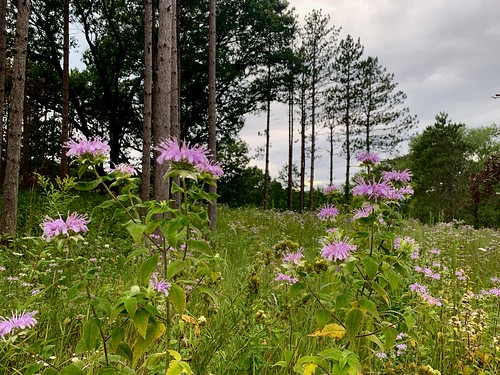
The photograph is from the grounds of the American Players Theater (in Spring Green) where we saw a fantastic production of "A Doll's House" last night.
(And remember the Althouse Portal to Amazon, where you can buy many things, including "A Doll's House and Other Plays.")
११ फेब्रुवारी, २०१९
"A presidential candidate admitting to marijuana use is nothing new. That happened in 2004, 2008, and 2016."
Writes my son John, on his blog, linking to "Kamala Harris says she smoked marijuana in college, calls for legalization" (ABC News).
This reminds me of why I changed my mind about legalization in March 2015 as a result of reading something written by Paul Johnson about Henrik Ibsen:
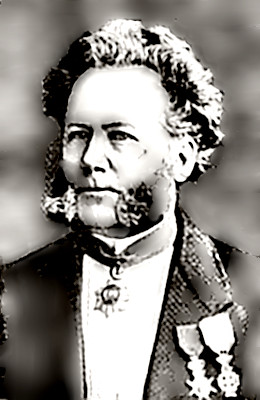
There was one aspect of Ibsen’s vanity which verged on the ludicrous... He had a lifelong passion for medals and orders. In fact, he went to embarrassing lengths to get them...That's about alcohol, but it jogged my thinking. As I elaborated later:
[T]here is ample evidence for Ibsen’s passion since he insisted on displaying his growing galaxy of stars on every possible occasion. As early as 1878 he is reported to have worn all of them, including one like a dog-collar round his neck, at a club dinner. The Swedish painter Georg Pauli came across Ibsen sporting his medals (not the ribbons alone but the actual stars) in a Rome street. At times he seems to have put them on virtually every evening. He defended his practice by saying that, in the presence of ‘younger friends’, it ‘reminds me that I need to keep within certain limits.’ All the same, people who had invited him to dinner were always relieved when he arrived without them, as they attracted smiles and even open laughter as the wine circulated....
I'm not a big marijuana legalization advocate, though I did change my position on the subject fairly recently, because I think substance-boosted disinhibition is important, though overdone.When people didn't understand the connection to the passage about Ibsen, I said,
Here's a clue: freedom and democracy depend on our disinhibition; we need to be able to laugh at authority.Without the disinhibiting substance, Ibsen would have got away with his stupid pomposity.
I'm talking about something a bit different from "joy." I like joy too, but there's something with more edge that I'm interested in.
And speaking of edge, here's something else I found searching my blog archive for Ibsen and marijuana. From April 2016, "The perfect problem — when everything big and small and up-to-date and retrospective and cool and puritanical collides in one crowded intersection":
"Snapchat's new Bob Marley lens sparks 'blackface' outrage."But that was April 2016, and now it's the Era of That's Not Funny! And it's been the week of hammering it into everyone's head that blackface is always always offensive and never ever funny. Ibsen didn't think his medals were funny. Kamala Harris imagines marijuana bringing joy — just some nice elevated feelings. But what if we get started laughing and we can't stop? It's a slippery slope out of the Era of That's Not Funny.
To acknowledge 4/20, known as "Weed Day," Snapchat created a special "lens" that morphed people's faces into Bob Marley, the late reggae icon. The lens added dreadlocks, a crochet slouch cap, changed the shape of eyes and noses, and darkened skin color.And this is why we need marijuana.
People flooded Twitter with accusations that Snapchat had created a blackface filter....
३० डिसेंबर, २०१८
"In the flickering light of the campfire, you can’t do much that requires keen eyesight like sewing or making tools, but you can chat away across the flickering flames."
From "Why drink is the secret to humanity’s success/Alcohol has been more valuable to our species’ survival than we might imagine" from last August in The Financial Times. I'm reading that this morning because my son John put it up on Facebook.
I like the article because it fits well with how I've been thinking about the use of disinhibiting substances ever since I read this passage in Paul Johnson's "Intellectuals":
There was one aspect of Ibsen’s vanity which verged on the ludicrous... He had a lifelong passion for medals and orders. In fact, he went to embarrassing lengths to get them...
[T]here is ample evidence for Ibsen’s passion since he insisted on displaying his growing galaxy of stars on every possible occasion. As early as 1878 he is reported to have worn all of them, including one like a dog-collar round his neck, at a club dinner. The Swedish painter Georg Pauli came across Ibsen sporting his medals (not the ribbons alone but the actual stars) in a Rome street. At times he seems to have put them on virtually every evening. He defended his practice by saying that, in the presence of ‘younger friends’, it ‘reminds me that I need to keep within certain limits.’ All the same, people who had invited him to dinner were always relieved when he arrived without them, as they attracted smiles and even open laughter as the wine circulated....
And, later, repeating that quote, I said: "Freedom and democracy depend on our disinhibition; we need to be able to laugh at authority."

That's "Mens Sana in Corpore Sano" by Georg Pauli (the Swedish painter who encountered Ibsen wearing his medals as he walked around in Rome).
"Mens sana in corpore sano is a Latin phrase, usually translated as 'a healthy mind in a healthy body," Wikipedia tells us. The idea is that "physical exercise is an important or essential part of mental and psychological well-being."
Speaking of Rome... the phrase traces back to the Roman poet Juvenal:
You should pray for a healthy mind in a healthy body.
Ask for a stout heart that has no fear of death,
and deems length of days the least of Nature's gifts
that can endure any kind of toil,
that knows neither wrath nor desire and thinks
the woes and hard labors of Hercules better than
the loves and banquets and downy cushions of Sardanapalus.
What I commend to you, you can give to yourself;
For assuredly, the only road to a life of peace is virtue.
६ नोव्हेंबर, २०१८
I was the 700-and-somethingst voter at my polling place, just before noon.
It wasn't raining then, but it had been raining earlier. Rain averse people might be shying away. Who knows?
I was surprised to see there was a referendum on legalizing marijuana, so I just voted yes. I used to be against it, but I changed my mind for 2 reasons: 1. We're past the tipping point where too much is partly legal, and I don't like the confusion, and 2. I decided back in 2015 (after reading something about Henrik Ibsen) that that "substance-boosted disinhibition is important" because "freedom and democracy depend on our disinhibition; we need to be able to laugh at authority."
I'm not revealing any of the rest of my voting. It's too boring.
IN THE COMMENTS: Meade offers what I take to be a poem and will reformat:
Because his name rhymes with “Golden Retrievers”
I would liked to have voted for Tony Evers
But for a number of other reasons I just couldn’t do it (including the fact
that instead of his political role model being Tommy Thompson,
Wisconsin’s former governor, it’s that son of a bitch Lyndon Johnson)
९ जून, २०१८
Bill Clinton opposes impeachment efforts against Trump.
"I will be honest,” he said [in the interview with Judy Woodruff], “the Franken case, for me, was a difficult case, a hard case... There may be things I don’t know. But maybe I’m just an old-fashioned person, but it seemed to me that there were 29 women on ‘Saturday Night Live' that put out a statement for him, and that the first and most fantastic story was called, I believe, into question... Too late to wade into it now.... I mean, I think it’s a grievous thing to take away from the people a decision they have made, especially when there is an election coming up again... But it’s done now."... but the implication is undeniable.
I laughed at the phrase "I will be honest" and went into my Bill Clinton impersonation, "But I want to say one thing to the American people. I want you to listen to me. I'm going to say this again..." I love unbelievable intros to lying.
Also, "grievous" was a great word to nail the quote into memory. It would have been easy to say "terrible" or "awful" or even "dreadful." But "grievous"! There's a word. What are our associations with "grievous"?
I think of the great Marc Antony speech in Shakespeare's "Julius Caesar":
Friends, Romans, countrymen, lend me your ears;And Winston Churchill's speech to the House of Commons in 1940:
I come to bury Caesar, not to praise him;
The evil that men do lives after them,
The good is oft interred with their bones,
So let it be with Caesar ... The noble Brutus
Hath told you Caesar was ambitious:
If it were so, it was a grievous fault,
And grievously hath Caesar answered it...
“I have nothing to offer but blood, toil, tears and sweat. We have before us an ordeal of the most grievous kind. We have before us many, many long months of struggle and of suffering. You ask, what is our policy? I can say: It is to wage war, by sea, land and air, with all our might and with all the strength that God can give us; to wage war against a monstrous tyranny, never surpassed in the dark, lamentable catalogue of human crime. That is our policy. You ask, what is our aim? I can answer in one word: It is victory, victory at all costs, victory in spite of all terror, victory, however long and hard the road may be..."And — more evocative of the sufferings of Monica Lewinsky (and her privileged counterpart Hillary Clinton) — Nora in Ibsen's "Doll's House":
Nora: It's true Torvald. When I lived at home with Papa, he used to tell me his opinion about everything, and so I had the same opinion. If I thought differently, I had to hide it from him, or he wouldn't have liked it. He called me his little doll, and he used to play with me just as I played with my dolls. Then I came to live in your house -
Helmer: That's no way to talk about our marriage!
Nora [undisturbed]: I mean when I passed out of Papa's hands into yours. You arranged everything to suit your own tastes, and so I came to have the same tastes as yours.. or I pretended to. I'm not quite sure which.. perhaps it was a bit of both -- sometimes one and sometimes the other. Now that I come to look at it, I've lived here like a pauper -- simply from hand to mouth. I've lived by performing tricks for you, Torvald. That was how you wanted it. You and Papa have committed a grievous sin against me: it's your fault that I've made nothing of my life.
२१ एप्रिल, २०१६
The perfect problem — when everything big and small and up-to-date and retrospective and cool and puritanical collides in one crowded intersection.
To acknowledge 4/20, known as "Weed Day," Snapchat created a special "lens" that morphed people's faces into Bob Marley, the late reggae icon. The lens added dreadlocks, a crochet slouch cap, changed the shape of eyes and noses, and darkened skin color.And this is why we need marijuana.
People flooded Twitter with accusations that Snapchat had created a blackface filter....
If that last remark is hard to understand, I refer you to my March 24, 2015 post, where I revealed that "In the last couple days, my position on the legalization of marijuana has changed."
Oddly enough, it's because of something I read about Ibsen! I don't have the time right now to explain my train of thought, but I can give you the passage — from Paul Johnson's "Intellectuals" — that got me started on it:What struck me and changed my mind on the subject was the realization — as I put it in the comments — that "freedom and democracy depend on our disinhibition; we need to be able to laugh at authority."
There was one aspect of Ibsen’s vanity which verged on the ludicrous... He had a lifelong passion for medals and orders. In fact, he went to embarrassing lengths to get them...
[T]here is ample evidence for Ibsen’s passion since he insisted on displaying his growing galaxy of stars on every possible occasion. As early as 1878 he is reported to have worn all of them, including one like a dog-collar round his neck, at a club dinner. The Swedish painter Georg Pauli came across Ibsen sporting his medals (not the ribbons alone but the actual stars) in a Rome street. At times he seems to have put them on virtually every evening. He defended his practice by saying that, in the presence of ‘younger friends’, it ‘reminds me that I need to keep within certain limits.’ All the same, people who had invited him to dinner were always relieved when he arrived without them, as they attracted smiles and even open laughter as the wine circulated....
२१ ऑक्टोबर, २०१५
I shouldn't have...
Creates the wrong impression.
Those were the recent photographs I had... after a drive and a long walk to look at fall foliage. You might think fall foliage is photogenic, but what looks pretty in person may come out of your camera looking rather dull. The shop — where they didn't mind my taking pictures — was, by contrast, really interesting.
Leaves versus leaves, and marijuana won, being more photographable.
But I'm sorry to create the wrong impression. I'm not a big marijuana legalization advocate, though I did change my position on the subject fairly recently, because I think substance-boosted disinhibition is important, though overdone.
ADDED: I changed my mind about legalization in March 2015 as a result of reading something written by Paul Johnson about Henrik Ibsen:
There was one aspect of Ibsen’s vanity which verged on the ludicrous... He had a lifelong passion for medals and orders. In fact, he went to embarrassing lengths to get them...In the comments, back in March, John Stodder said: "I like Paul Johnson. I like Ibsen. I like legalizing marijuana. I like Ann Althouse. However, I do not understand the connection. I feel like I've been outrebounded!"
[T]here is ample evidence for Ibsen’s passion since he insisted on displaying his growing galaxy of stars on every possible occasion. As early as 1878 he is reported to have worn all of them, including one like a dog-collar round his neck, at a club dinner. The Swedish painter Georg Pauli came across Ibsen sporting his medals (not the ribbons alone but the actual stars) in a Rome street. At times he seems to have put them on virtually every evening. He defended his practice by saying that, in the presence of ‘younger friends’, it ‘reminds me that I need to keep within certain limits.’ All the same, people who had invited him to dinner were always relieved when he arrived without them, as they attracted smiles and even open laughter as the wine circulated....
I said — after laughing at "outrebounded" (an inside joke back then) — "Here's a clue: freedom and democracy depend on our disinhibition; we need to be able to laugh at authority."
२४ मार्च, २०१५
"But the Senate Judiciary Committee is emerging as a serious buzz kill for the pro-reform set."
ADDED: In the last couple days, my position on the legalization of marijuana has changed. Oddly enough, it's because of something I read about Ibsen! I don't have the time right now to explain my train of thought, but I can give you the passage — from Paul Johnson's "Intellectuals" — that got me started on it:
There was one aspect of Ibsen’s vanity which verged on the ludicrous... He had a lifelong passion for medals and orders. In fact, he went to embarrassing lengths to get them...
[T]here is ample evidence for Ibsen’s passion since he insisted on displaying his growing galaxy of stars on every possible occasion. As early as 1878 he is reported to have worn all of them, including one like a dog-collar round his neck, at a club dinner. The Swedish painter Georg Pauli came across Ibsen sporting his medals (not the ribbons alone but the actual stars) in a Rome street. At times he seems to have put them on virtually every evening. He defended his practice by saying that, in the presence of ‘younger friends’, it ‘reminds me that I need to keep within certain limits.’ All the same, people who had invited him to dinner were always relieved when he arrived without them, as they attracted smiles and even open laughter as the wine circulated....