લેબલ Jane Austen સાથે પોસ્ટ્સ બતાવી રહ્યું છે. બધી પોસ્ટ્સ બતાવો

24 મે, 2026

"[Margot] Robbie’s character, Cathy, had 'extremely hairy armpits' in the 2026 adaptation of the novel..."

"... but 'unfortunately the scene that we see them didn’t make it in there,' said the director. Cathy having unshaven pits 'was so important to me,' she said, adding that she often wonders 'where are the razors that these women are using?' when watching Jane Austen adaptations. 'They’re all kind of hairless like eels. I’m like: "What’s going on? It’s completely mad."'"

From "Wuthering Heights director regrets not showing Margot Robbie’s 'extremely hairy armpits'" (The Guardian).

Do female characters in Jane Austen movies wear sleeveless dresses? If not, and I think not, where are all these hairless eels? The director — Emerald Fennell — sounds half mad.

18 મે, 2026

Equality? Ridiculous!

Here's the Guardian's explanation, "Who’s in, who’s out, and how many have you read? The story behind our 100 best novels list":

9 મે, 2026

"On a recent afternoon at the Venice Biennale, I walked into a bright blue portable john and peed for art."

"Just outside the booth, a naked woman was submerged in a huge water tank, breathing through a scuba mouthpiece. My urine was about to pass along a tube from the toilet through several filtration systems, before topping up her glass chamber’s water level. The performer, who would stay in the tank for at least four hours, was essentially living in other people’s waste. And she had plenty of donors. The toilet is part of a presentation called 'Seaworld Venice' by the choreographer and theater-maker Florentina Holzinger that is undoubtedly the biggest talker of this year’s Biennale, which opens to the public on Saturday and runs through Nov. 22."

From "These Toilets in Venice Have the Art World Aflush/Undoubtedly the biggest talker at this year’s Venice Biennale is the Austrian pavilion, where visitors can make their own contributions to the work on show" (NYT).

I clicked on that link for "Seaworld Venice" and was confronted with big red letters saying "I live in your piss."

This is the kind of degradation of women that feminists used to rail against, but, here, the artist is female, so I guess we're not supposed to notice. The message is purportedly environmentalism. Also the artist puts herself out there: "Part of the performance at the pavilion involved Holzinger swinging her body from side to side inside a metal bell attached to a crane to make it ring out." Video at the link. Holzinger is naked. A commenter over there notes that she risks deafness, performing as a bell clapper.

ADDED: I don't remember ever seeing "talker" used to mean the thing being talked about: the show is "undoubtedly the biggest talker of this year's Biennale." I understand "talker" meaning a person doing that talking, but not This show is a big talker, meaning it's what everyone's talking about. I guess it's like the use of "-er" in "looker" used to refer to someone people look at and not the one doing the looking.

The OED defines "talker" only as the one doing the talking. An example from Jane Austen (from "Emma"): "I am rather a talker; and now and then I have let a thing escape me which I should not." 

And then there's that Shakespeare adage, from "Richard III": "Talkers are no good doers." I think we don't use that one too much. We're more likely to go with: "All talk and no action," "Actions speak louder than words," "Talk is cheap," and "Walk the walk, don't just talk the talk." 

23 ફેબ્રુઆરી, 2026

"As a kid, I was part of a youth theater repertory... this intense acting coach came to class, and after I performed a scene she told me with this terrible sneer..."

"... that all I’d ever be was funny and charming. It took me until I was 35 to realize that: (1) I wasn’t that charming; (2) I was also a whole lot more than charming; and (3) it takes an especially miserable adult to tell a child what he can and cannot be."

Says "Grant Ginder Read One Novel 7 Times While Writing His Own/James Salter’s 'Light Years' had a big influence on 'So Old, So Young,' his new book about college friends drifting in and out of one another’s lives" (NYT).

I liked his answer to the old question "You’re organizing a literary dinner party. Which three writers, dead or alive, do you invite?"
I’m supposed to say Jane Austen, Sophocles and a Finnish novelist no one’s heard of, but actually the literary dinner party I want to attend already happened. It’s the one mentioned in a recent Times article where Joan Didion refused to give Nora Ephron her recipe for Mexican Chicken. I’d die to see that.

2 ઑગસ્ટ, 2025

Maureen Dowd knows what guys want.

I'm reading Maureen Dowd's new column (NYT):
It was one of the most erotic things I ever heard. A man I know said he was reading all the novels of Jane Austen in one summer. 
At first, I figured he was pretending to like things that women like to seem simpatico, a feminist hustle. But no, this guy really wanted to read “Northanger Abbey.”

How does she know what this guy wants?! Maybe he's good at pretending. Maybe he wants it as a means to an end and it's the end that is really wanted. He wants you to think that he wants what you want him to want. 

12 ડિસેમ્બર, 2024

"Everybody says this who meets with him, but like, he's, he's an incredible host. So we, we met with him at Bedminster Golf Club in, in New Jersey...

"... which is like, you know, absolutely beautiful, you know, we had a great time.... [What did Trump serve at dinner?] Oh, he said, he said what do you guys want to eat? And I, I just, I, for some reason I was just like, I, I, I, I know exactly what to say and I'm like, meat, I want meat. And so he literally ordered every meat dish. And, and by the way, he ordered every meat dish and nothing else. [There were no sides?] There were no sides.... It was all meat and it was glorious. There was so much meat. I don't think there was room on the table for sides. [Were there drinks or no alcohol?] There? It was a diet coke. He, he, he, he mainlines diet coke. And I was mainlining it right next to him."

Said Marc Andreessen — with questions from Bari Weiss in brackets — in this "Honestly" podcast episode. This is a great podcast. (Andreessen, to quote Weiss, "got his start as the co-creator of Mosaic, the first widely used web browser... He then co-founded Netscape... [and] now runs a venture capital firm... [that] invested in Airbnb, Coinbase, Instagram, Instacart, Pinterest, Slack, Reddit, Lyft and Oculus to name just a few.")

There's a nice "lightning round" at the end of the podcast. After asking about the food Trump, the "incredible host," served at Bedminster, Weiss asks: "Tomorrow you wake up and you're the DNC chair, what's the first thing you would do?"

23 નવેમ્બર, 2023

"After college, [Eboni] Thompson started annotating because she missed the feeling of analyzing texts and taking notes."

"One day, she went to the bookstore and bought 'Sense and Sensibility,' by Jane Austen, and as she started reading, she realized how much she wanted to remember about the book after she was finished. 'It wasn’t as intense or as thorough as I do now,' she said of her early annotations. 'It was mostly just little quotes here and there, maybe a word I had never known before, a star next to it, or an idea that I was like, "Oh, I want to come back to that."' Thompson began chronicling her annotations on Instagram and TikTok.... Thompson... recently finished reading and annotating 'The Hunchback of Notre Dame,' a book she said she was glad she read carefully. Annotating slows down her reading process, but the output is worth it.... Annotating feels a bit like homework — an assignment you give yourself that allows you to use special pens and highlighters, colored sticky notes and whatever squiggles and doodles you desire. Maybe it’s not scholarship in the traditional sense, but it’s studious, nonetheless."


The first post ever on this blog was about marginalia, and for a day "Marginalia" was the name of the blog. And as for "'Sense and Sensibility,' by Jane Austen," I can't read that phrase without recalling this line from my all-time favorite movie, "My Dinner with André": "I mean there must have been periods when in order to give people a strong or meaningful experience, you wouldn't actually have to take them to Everest.... I mean, there was a time when you could have just, for instance, written — I don't know — 'Sense and Sensibility,' by Jane Austen...."

6 ઑક્ટોબર, 2021

"Who would be a muse, eh? Loads of people, that’s the thing. Dante wrote about his childhood crush Beatrice di Folco Portinari in The Divine Comedy."

"Jane Austen used an old flame as inspiration for Mr Darcy. Charles Dickens based numerous characters on his lover Ellen Ternan. It was all fine and nobody minded. So what changed? Two words: the internet. Online, everybody gets to create a bubble where they are the star of their own finely honed story. So when someone else mines their life for a different story, it feels more like a violation. Also, who’s to say that Ternan enjoyed being written about? She couldn’t complain on Facebook. Does this story have a moral? Yes: it’s that writers are terrible people and you should cut them all from your life immediately."


The "viral article" is "Who Is the Bad Art Friend?/Art often draws inspiration from life — but what happens when it’s your life? Inside the curious case of Dawn Dorland v. Sonya Larson" by Robert Kolker (NYT). I haven't read that, but The Guardian — after calling it "punishingly long" — summarizes it as "a woman donated her kidney to a stranger, and then a second woman wrote a story about donating a kidney to a stranger." 

At the NYT, one commenter puts it this way:
So... Dawn donates a kidney for whatever reason, I mean who cares? Then posts about it, then gets involved in a more pub[l]ic way, and... a bunch of writers secretly deride her (why, exactly? Guilt they aren't doing enough? Just plain pettiness?). Then one of those writers, Larson, uses the feelings she feels about this kidney donation to craft a story, using Dawn's actual words, never telling her, and then Larson has the gall to use racism as a defense? As a BIPOC artist, I take offense to Larson's re-characterization of what she, in fact, did - steal, plagiarize, and - while not illegal - Larson's ruthless backstabbing of someone she found ridiculous. It makes it harder for artists of color to cite racism when it actually occurs What was happening to Larson during her "summer of hell" and beyond was the result of her own lack of integrity and dishonesty and, yes, I'll say it, entitlement.

ADDED: Yes, there's a racial theme in the NYT article — which now sounds "punishing" in more ways than just length.

“My piece is fiction,” [Larson] wrote. “It is not her story, and my letter is not her letter. And she shouldn’t want it to be. She shouldn’t want to be associated with my story’s portrayal and critique of white-savior dynamics. But her recent behavior, ironically, is exhibiting the very blindness I’m writing about, as she demands explicit identification in — and credit for — a writer of color’s work.” 
Here was a new argument, for sure. Larson [the POC writer] was accusing Dorland [the white organ donor] of perverting the true meaning of the story — making it all about her, and not race and privilege. Larson’s friend Celeste Ng agrees, at least in part, that the conflict seemed racially coded. “There’s very little emphasis on what this must be like for [Larson],” Ng told me, “and what it is like for writers of color, generally — to write a story and then be told by a white writer, ‘Actually, you owe that to me.’”

28 જાન્યુઆરી, 2020

"Also, the author of 'Dracula' was incorrect. He is Bram Stoker, not Jane Austen. "

From a correction appended to "No Lack of Chemistry, Onstage or Off/When Kate Hamill first met Jason O’Connell there was an immediate spark that neither could act on. He later went from being her leading man to her real-life beau" in The New York Times.

How do you do something that wrong? It's one thing to think "Dracula" was written by Mary Shelley. But how do you get all the way to Jane Austen?

Now, it's a wedding story. Maybe it's a sneaky way to get clicks, because I wouldn't have clicked on that headline, and I don't routinely read the NYT wedding reports.

From the article:
Ms. Hamill, who is currently starring in her own adaptation of Bram Stoker’s “Dracula,” an Off Broadway production running at the Classic Stage Company, that she described as “a feminist revenge fantasy,” was equally thrilled to be dating Mr. O’Connell.
Well, so... feminist revenge fantasy... that calls to mind Jane Austen, doesn't it?

As long as I'm there, let me extract this for you:
Two months into dating the bride, the groom had a wisdom tooth removed and was given powerful painkillers. “He was really out if it,” the bride said. “I made him soup and just as he was about to fall asleep, he rolled over and asked, “Will you marry me?”
Is that a feminist-revenge twist on rape drugs?

14 જાન્યુઆરી, 2019

"The president of the United States has many faults, but let’s not ignore this one: He cannot write sentences."

"If a tree falls in a forrest and no one is there to hear it … wait: Pretty much all of you noticed that mistake, right? Yet Wednesday morning, the president did not; he released a tweet referring to 'forrest fires' twice, as if these fires were set by Mr. Gump. Trump’s serial misuse of public language is one of many shortcomings that betray his lack of fitness for the presidency. Trump’s writing suggests not just inadequate manners or polish—not all of us need be dainty—but inadequate thought. Nearly every time he puts thumb to keypad, he exposes that he has never progressed beyond the mentality of the precollegiate, trash-talking teen."

Writes John McWhorter in "Trump’s Typos Reveal His Lack of Fitness for the Presidency/They suggest not just inadequate manners or polish, but inadequate thought."

I got there via "A Letter to Professor John McWhorter" by Seth Barrett Tillman, who writes:
We (Americans) have had many talented wordsmiths in the White House. I see no connection between such talents, and adopting & putting into effect substantively sound policies. Woodrow Wilson—a university academic—comes to mind. But very few can explain precisely why the U.S. entered WWI or offer any justification for Wilson's allowing the federal civil service to be (re)segregated by race. He was good with words.

Your article amounts to a non-instrumental claim that elites who share your specific skill set should have power and those who do not share that skill set should not.... It is certainly better for the President to spell "forest" with a single R rather than two Rs. But ... it is probably more important that better policies be put in place to stop similar future disasters....
That was linked by Glenn Reynolds, who writes:
Good writing, like good shooting, is a valuable skill. Neither has a moral component. The Supreme Court’s best writer was Oliver Wendell Holmes, who told us — eloquently — that it was okay to sterilize people society didn’t like.
Let me add that there's a big difference between good writing and good spelling! Some great writers have had bad spelling — notably William Faulkner:
One of Faulkner's editors at Random House, Albert Erskine, said, "I know that he did not wish to have carried through from typescript to printed book his typing mistakes, misspellings (as opposed to coinages), faulty punctuation and accidental repetition. He depended on my predecessors, and later on me, to point out such errors and correct them; and though we never achieved anything like a perfect performance, we tried."...
And Ernest Hemingway:
Whenever his newspaper editors complained about it, he'd retort, "Well, that's what you're hired to correct!"
And John Keats:
In a letter to his great love Fanny Brawne, Keats spelled the color purple, purplue. This generated a longer conversation between the two, as Keats tried to save face by suggesting he'd meant to coin a new portmanteaux [sic] - a cross between purple and blue.
And Jane Austen:
She once misspelled one of her teenage works as "Love and Freindship" and is infamously known to have spelt scissors as scissars.
And F. Scott Fitzgerald:
The original draft of The Great Gatsby contained literally hundreds of spelling mistakes, some of which are still confounding editors. These include “yatch” (instead of “yacht”) and “apon” (instead of “upon”). One of his most famous gaffes, which occurs toward the end of the novel, inspires debate to this day.
Here's that gaffe:
After Fitzgerald’s death, Edmund Wilson changed the spelling from “orgastic” to “orgiastic” in the famous closing line: “Gatsby believed in the green light, the orgastic future that year by year recedes before us.”
So many great writers were bad spellers that I've got to wonder whether bad spelling goes along with great writing. Maybe there's something about the brain of a bad speller. Have many Spelling Bee winners gone on to write great books?

John McWhorter thinks bad spelling is evidence of "inadequate thought," but — ironically — he needs to give that thought a little more thought.

ADDED: John Irving, the author of "The World According to Garp," was called "stupid" and "lazy" when he was a child and later found out he had dyslexia. I'm reading his "How to Spell." Excerpt:
You must remember that it is permissible for spelling to drive you crazy. Spelling had this effect on Andrew Jackson, who once blew his stack while trying to write a Presidential paper. “It’s a damn poor mind that can think of only one way to spell a word!” the President cried.

When you have trouble, think of poor Andrew Jackson and know that you’re not alone.

And remember what’s really important about good writing is not good spelling. If you spell badly but write well, you should hold your head up. As the poet T.S. Eliot recommended, “Write for as large and miscellaneous an audience as possible”--and don’t be overly concerned if you can’t spell “miscellaneous.” Also remember that you can spell correctly and write well and still be misunderstood. Hold your head up about that, too.

1 ઑગસ્ટ, 2017

"What do you think the difference is between a tourist and a traveler?"

This is something I originally posted 4 years ago, at a time when I had the comments turned off. I wanted to read it again and think about the subject, and since I never exposed it to comments the first time, I thought I'd post it again here today:
"I think a tourist is usually someone who is on a time budget. A tourist is out to see sights, usually which have been enumerated for him in a guidebook. I think there’s a deeper degree of curiosity in a traveler."

So it's a continuum, and if you want to move to the extreme good side of that continuum, perhaps you ought never to leave your home town. The quote is from Philip Caputo, author of "The Longest Road: Overland in Search of America, From Key West to the Arctic Ocean," and he's dialoguing with William Least Heat-Moon, author of "Blue Highways: A Journey into America."

Heat-Moon reframes the tourist/traveler distinction in terms of destinations: "let’s pick Arizona — those tourists are likely to head for the Grand Canyon, whereas a traveler in Arizona might light out for Willcox. Why somebody would want to visit Willcox, I don’t know, other than to see what’s there. Ask questions: Who was Willcox? What kind of place is it? A tidy little place, by the way."

You go to all that effort to drive way the hell out somewhere, and then you just check out some little towns? Why didn't you just go to all the little places within a close radius of your hometown? That's what doesn't make sense. Heat-Moon comes right out and admits he sees no sense in his own idea.

11 જૂન, 2017

I see this as a sign that the Comey testimony fizzled: The Daily Beast has a headline: "James Comey Is The Sex Symbol America Needs Right Now."

That's by Lizzie Crocker and published today. Excerpt:
And so the 56-year-old, fired FBI director became a very unlikely sex symbol. Sure, he has a somewhat peaked complexion and under-eye bags that look like half-inflated tubular balloons. But he's handsome, and as with all sex symbols--both the unlikely ones and the obvious ones--he embodies certain qualities in society that we all lust after: integrity, emotional complexity, and quiet but certain confidence.

That combined with his imposing physical stature gives him the same alluring masculinity as sex symbols like Mr. Darcy in Pride and Prejudice (particularly Colin Firth as Mr. Darcy in the BBC’s Pride and Prejudice).

In Italy on Friday, my Daily Beast colleague Barbie Latza Nadeau reports that there was "a ten-minute segment on Italian prime time TV about whether Comey would be a good lover because of the “length of his digits.”...

[Comey's] charisma and acclaimed public behavior makes you look at him afresh. After all, Comey most definitely wasn't seen as a sex symbol when he helped torpedo Hillary Clinton's election chances just a few days before the election. The public winds of approval--the perception of heroism or doing good or speaking truth to power--must be blowing in the right direction for a moment to erupt as it did on Thursday, when suddenly all the feels were for Comey....
Well, why not? Politics is all about "the feels." Let's be honest. Henry Kissinger famously said "Power is the ultimate aphrodisiac," but Crocker's not saying that. For her, it's not power per se. The power must be exercised in proper direction. It wasn't sexy to — trigger warning — "torpedo" Hillary. But it is sexy to aim the lengthy projectile at the notoriously short-fingered Trump.

And yet, that's what you say, but what about your closely held secret thoughts, your dreams? How well I remember, back in May 2012, a woman who called herself "Violated" wrote in to the the Isthmus advice columnist:
I'm a public employee, a liberal and a volunteer for Democrat Tom Barrett in the upcoming recall election. But here's my problem: I've been having sexual dreams about Gov. Scott Walker. Help!

I should mention that I'm happily married, with an attractive husband. In my waking life, I do not consider our extreme right-wing governor physically attractive. On the contrary, I recoil from the sight of him, with his politician's haircut and blank expression. During last year's protests at the Capitol, however, I woke up one morning from a dream in which the governor and I were...well, you know. It was hot, but it was also disturbing. I took an extra-long shower that morning to wash away the sensation.

I didn't tell my husband or my friends about the dream, because I didn't want to gross them out. I also didn't want them to think less of me. But since then, I've had two more such dreams. I finally fessed up, hoping to get some advice. First, why am I having sexual dreams about someone I can't stand and don't find attractive in the slightest? And second, how can I get my brain to stop playing this horrible trick on me?
The advice columnist suggested that the woman look at pictures of Tom Barrett to try to fixate on him...


... and we had some fun with that here at Meadhouse.

13 મે, 2015

"Books That Literally All White Women Own: The Definitive List."

A hilarious list, put together by a Metafilter commenter in response to a post about an annoyingly clickbait-y thing at The Toast titled "Books That Literally All White Men Own: The Definitive List":

13 જાન્યુઆરી, 2015

If a man makes a woman move 4 to 9 feet from one room to another in her house, has he "force[d] her to accompany him"?

"Federal law establishes enhanced penalties for anyone who 'forces any person to accompany him' in the course of committing or fleeing from a bank robbery."... Larry Whitfield, fleeing police after a botched bank robbery, entered the home of 79-year-old Mary Parnell through an unlocked door. Once inside, he encountered a terrified Parnell and guided her from the hallway to a computer room (which Whitfield estimates was between four and nine feet away.). There, Parnell suffered a fatal heart attack. Whitfield fled, and was found hiding nearby."

So Whitfield made the old woman move 4 to 9 feet. Does the basis for enhancing the sentence apply?

14 જુલાઈ, 2014

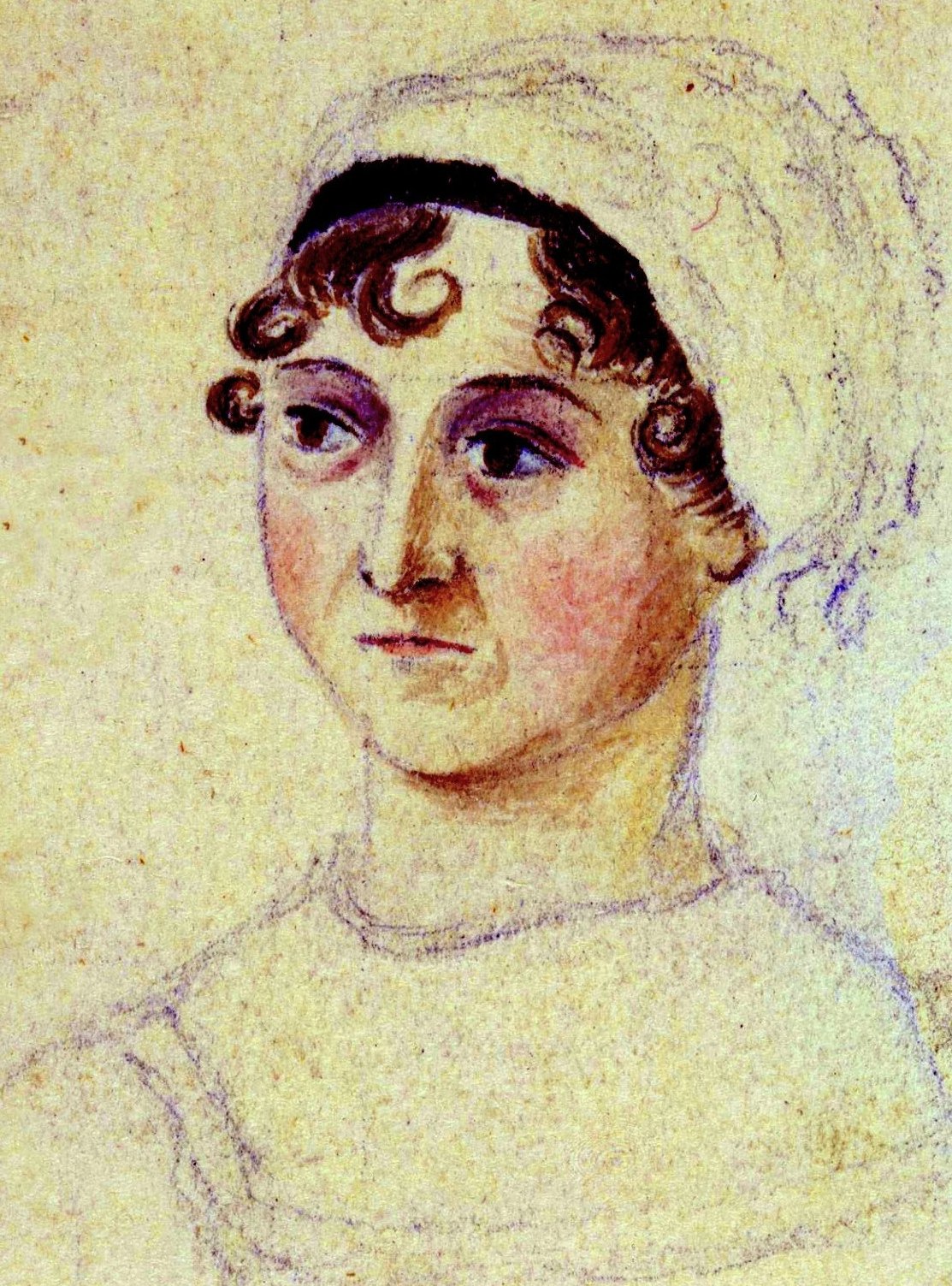
Jane Austen's sister Cassandra painted a portrait of the author that was said to be "hideously unlike" her.


But it was nevertheless used as the basis for a waxwork that, we're told, gets to the real Jane Austen, who was reportedly "very lively, very great fun to be with and a mischievous and witty person." Click here to see the corrected/sweetened version of Jane.

6 ઑગસ્ટ, 2013

"It is ironic that Austen, the elegant, precise satirist that she was, should provoke this crude and unsophisticated and wild meanness."

"She was no stranger to anger, to simmering resentments and harsh judgments, to taking people down a notch, but her sentences were if anything the opposite of 'a bomb was placed in front of your house.'"

Writes Katie Roiphe in Slate, about the Jane-Austen-on-the-banknote controversy we were talking about yesterday.

Why is that ironic? Isn't it more exactly what you'd expect, that an elegant, precise writer's antagonists would be crude? What's ironic is that Roiphe, championing the elegant, precise writer would misuse the word "ironic."

I checked the complete works of Jane Austen to see if old Jane had ever used the word "irony" or "ironic." The answer is no, but the search turned up the uses of "iron" as well, and I was amused by this exclamation, in "Northanger Abby," about James's gig:

5 ઑગસ્ટ, 2013

Threats of rape and murder over replacing Charles Darwin on the £10 note with Jane Austen.

The NYT describes "a countercampaign of online harassment.... against several high-profile women." What was the "campaign" corresponding to the countercampaign, who were these "high-profile" women, and how high-profile were the threateners? 
Caroline Criado-Perez, a blogger and co-founder of the Web site The Women’s Room, began her campaign months ago when she realized that soon there might be no women — except Queen Elizabeth II, of course — left on British bank notes. The issue seemed urgent: in April, the Bank of England had announced that the only woman currently featured among five historical figures, the social reformer Elizabeth Fry, would be replaced by Winston Churchill, indisputably male. Surely, Ms. Criado-Perez argued, there were enough women of note in British history to find at least one more?
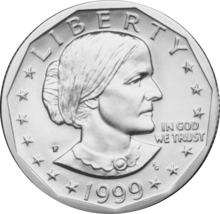
Nice to hear that bloggers are "high-profile." When do bloggers get pictured on bank notes? And why wasn't the Queen enough? This seems like a pretty lame feminist issue. By comparison, we women of the United States have never gotten a picture of one of our kind on the paper money. They keep putting one of us on a dollar coin...


... and then acting disappointed when no one wants to use it. Get rid of the damned dollar bill! George Washington is on the quarter, the favorite coin. All those already minted dollar coins would circulate like mad if you pushed Washington back to 1 not 2. And don't tell me Lincoln has 2, so Washington should have 2. We're not talking about testicles. We're talking about representation on money. Get rid of the penny and the dollar, push the 2 rivals for best President back to single representation, and it will free Susan B. Anthony and Sacagawea to circulate through the pockets and vending machines of America. Release the women from that vault!

There. I — a female blogger — have started my campaign. Let's see if I can hit the high-profile heights of Caroline Criado-Perez.

So who are the nefarious attackers? They were nobodies:
“I’m going to pistol whip you over and over until you lose consciousness,” one Twitter user warned Ms. Criado-Perez, threatening to “then burn ur flesh.”...
Two men, ages 21 and 25, have been arrested so far in connection with the harassment. Scotland Yard’s electronic-crime unit is investigating the Twitter attacks involving mostly anonymous Internet users, so-called trolls.
It's idiotic to threaten anyone on line, even if you think the target can't possibly believe an attack is in the offing. You'd think the hardcore fans of Charles Darwin would be more evolved.

31 જુલાઈ, 2013

"As a feminist, I find it infinitely sad to imagine a vibrant young woman sitting alone at her computer..."

"... and turning herself into a sex object for a man... she does not know — even if she is also turning him into a sex object. Twentieth-century feminism always linked the social progress of women with an expanding sense of self-worth — in the sexual as well as intellectual and professional spheres. A willingness to engage in Internet sex with strangers, however, expresses not sexual empowerment but its opposite — a loneliness and low opinion of oneself that leads to the conclusion that any sexual contact is better than no contact at all."

So writes Susan Jacoby, in the context of the Anthony Weiner story. I suspect that Jacoby was sitting alone at her computer when she wrote that. And I'm sitting alone at my computer writing this now. Is anything infinitely sad about writing at the computer? Is it sadder when you expect someone is waiting to read what you write and you expect them to write back? These days I choose, for each post, whether I want to allow comments or not, and for this one I haven't chosen yet. Is the sadness of what I'm doing right now dependent on whether I allow comments?

Or is this infinite sadness dependent on whether you are writing about sex, which I kind of am, or writing about sex while hoping that your reader finds you sexy?

11 જુલાઈ, 2013

"What do you think the difference is between a tourist and a traveler?"

"I think a tourist is usually someone who is on a time budget. A tourist is out to see sights, usually which have been enumerated for him in a guidebook. I think there’s a deeper degree of curiosity in a traveler."

So it's a continuum, and if you want to move to the extreme good side of that continuum, perhaps you ought never to leave your home town. The quote is from Philip Caputo, author of "The Longest Road: Overland in Search of America, From Key West to the Arctic Ocean," and he's dialoguing with William Least Heat-Moon, author of "Blue Highways: A Journey into America."

Heat-Moon reframes the tourist/traveler distinction in terms of destinations: "let’s pick Arizona — those tourists are likely to head for the Grand Canyon, whereas a traveler in Arizona might light out for Willcox. Why somebody would want to visit Willcox, I don’t know, other than to see what’s there. Ask questions: Who was Willcox? What kind of place is it? A tidy little place, by the way."

You go to all that effort to drive way the hell out somewhere, and then you just check out some little towns? Why didn't you just go to all the little places within a close radius of your hometown? That's what doesn't make sense. Heat-Moon comes right out and admits he sees no sense in his own idea.

Here are these 2 big travel writers, and they trash the tourism and hew to the old cliché that one ought to be a traveler, not a tourist. But they can't really explain the worth of this travel that isn't tourism. Unspoken is the reality that for each of them, travel is their work, if they are travel writers. Those who get paid for a particular type of work may find it hard to explain the value of the activity to someone who isn't getting paid but must in fact pay.

They do recommend writing as a way to "deepen the travel" — but writing is a way to deepen whatever it is you do, wherever you are. How do you decide what it is you will do? Let's say you buy into the importance of depth. Is traveling around, going slowly, going to small places, journaling, really worthwhile? Most of our depth comes from the life we live at home, and if we were really observant we would never run out of things to perceive and contemplate at  home.

2 of my favorite quotes are on this topic. First, from my favorite movie "My Dinner with Andre":
I mean, you know, there was a time when you could have just, for instance, written, I don't know, Sense and Sensibility, by Jane Austen! 
Talk about close observation, sharp writing, and sticking within a short radius at home.
And I'm sure the people who read it had a pretty strong experience. I'm sure they did. I mean, all right, now you're saying that people today wouldn't get it, and maybe that's true, but, I mean, isn't there any kind of writing, or any kind of a play that--I mean: isn't it still legitimate for writers to try to portray reality so that people can see it? I mean, really! Tell me: why do we require a trip to Mount Everest in order to be able to perceive one moment of reality? I mean...I mean: is Mount Everest more "real" than New York? I mean, isn't New York "real"? I mean, you see, I think if you could become fully aware of what existed in the cigar store next door to this restaurant, I think it would just blow your brains out! I mean... I mean, isn't there just as much "reality" to be perceived in the cigar store as there is on Mount Everest? I mean, what do you think? You see, I think that not only is there nothing more real about Mount Everest, I think there's nothing that different, in a certain way. I mean, because reality is uniform, in a way. So that if you're--if your perceptions--I mean, if your own mechanism is operating correctly, it would become irrelevant to go to Mount Everest, and sort of absurd! Because, I mean, it's just--I mean, of course, on some level, I mean, obviously it's very different from a cigar store on Seventh Avenue, but I mean...
The other quote is from one of my favorite books, "Walden," by Henry David Thoreau: "I have travelled a good deal in Concord..." Concord! Not even Massachusetts. Concord. Of course, he didn't have a car.

But then again, he didn't have the internet.

Unspoken: Does Althouse ever leave Madison?

ADDED: A reader quotes my "Those who get paid for a particular type of work may find it hard to explain the value of the activity to someone who isn't getting paid but must in fact pay" and says that "made me think of this sublimely wonderful passage from Moby Dick":
Again, I always go to sea as a sailor, because they make a point of paying me for my trouble, whereas they never pay passengers a single penny that I ever heard of. On the contrary, passengers themselves must pay. And there is all the difference in the world between paying and being paid. The act of paying is perhaps the most uncomfortable infliction that the two orchard thieves entailed upon us. But being paid, -- what will compare with it? The urbane activity with which a man receives money is really marvellous, considering that we so earnestly believe money to be the root of all earthly ills, and that on no account can a monied man enter heaven. Ah! how cheerfully we consign ourselves to perdition!

21 ફેબ્રુઆરી, 2013

Jane Austen stamps.


"So, placing the candle with great caution on a chair, she seized the key with a very tremulous hand and tried to turn it; but it resisted her utmost strength. Alarmed, but not discouraged, she tried it another way; a bolt flew, and she believed herself successful; but how strangely mysterious! The door was still immovable. She paused a moment in breathless wonder. The wind roared down the chimney, the rain beat in torrents against the windows, and everything seemed to speak the awfulness of her situation."

See the rest of the new stamps here.