Ethan Hawke लेबल असलेली पोस्ट दाखवित आहे. सर्व पोस्ट्‍स दर्शवा

२२ मार्च, २०२५

At the Mudface Café...

IMG_1093

... you can talk all night.

I had already decided on the title "At the Mudface Café" for my day-ending open thread post using that photo of the seeming face I saw in the mud on the trail today. 

And after that pedestrian pareidolia, as I kept walking the muddy path, I was struck to hear this passage in my audiobook:

१२ मे, २०२४

२९ ऑगस्ट, २०२१

"I thought Robin hated me. He had a habit of making a ton of jokes on set. At 18, I found that incredibly irritating."

"He wouldn’t stop and I wouldn’t laugh at anything he did.... There was this scene in the film ['Dead Poets Society'] when he makes me spontaneously make up a poem in front of the class. He made this joke at the end of it, saying that he found me intimidating. I thought it was a joke. As I get older, I realize there is something intimidating about young people’s earnestness, their intensity. It is intimidating – to be the person they think you are. Robin was that for me."

Said Ethan Hawke, quoted in "Ethan Hawke on Richard Linklater Transcendentalism Project, Politicization of Pandemic in U.S." (Variety). Robin = Robin Williams. 

I clicked on that because I was interested in Richard Linklater's "transcendentalism project." It seems that Linklater is writing a screenplay about Ralph Waldo Emerson, Henry David Thoreau, and their friends. As Hawke puts it: "They were the first leaders of the abolition movement; they were vegetarians; they fought for women’s rights. Rick is obsessed with how their ideas are still very radical. This could be a super cool movie and Rick is writing it right now." But Variety adds that Linklater "has been working on a movie about Transcendentalism since 1999, according to an interview in The New Yorker in 2014."

From the New Yorker article:

४ फेब्रुवारी, २०२१

"Finally, a novel about the travails of a successful White guy! What could pull the heartstrings of our afflicted nation tighter than a story of brief, emotional setback suffered by a handsome movie star?"

The first 2 sentences of "Ethan Hawke turns his acting experience — and past infidelities — into brilliant fiction" (WaPo). 

The reviewer, Ron Charles, also seems to be a white male, so his sarcasm may reflect his own anguish at elite America's languishing interest in how white men think and feel. 
... Hawke is... known as the man who cheated on Uma Thurman and offered loutish excuses about the sexual needs of great men like Martin Luther King Jr., John F. Kennedy and him. 

Now, some 15 years after all that cosmic embarrassment, Hawke has published a novel called “A Bright Ray of Darkness.” It’s about a young movie star who got caught cheating on his stunningly gorgeous wife. This recycled gossip is tiresome, but what’s most irritating about “A Bright Ray of Darkness” is that it’s really good. If you can ignore the author’s motive for creating such a sensitive and endearing cad, you’ll find here a novel that explores the demands of acting and the delusions of manhood with tremendous verve and insight.

That title!  "A Bright Ray of Darkness" — seems like a teenager's idea of profundity, and yet this guy gets his novel published by Knopf and praised like mad in The Washington Post. Clicking to Amazon, I see he got a blurb from Patti Smith. She called it "riveting." Riveting! This towering achievement comes in spite of the burden of being a handsome, rich, white man in America today. 

Amazon does not allow us to look inside the book, so I have no opportunity to see what kind of writing is drawing this attention. I search the review for an example of the author's prose. Here: "My life as a performer is at the absolute core of my sense of self-worth. Inside the play it felt possible that I was not a person defined by his adultery, or his unloving parents, or his lies, his failure as a father." You tell me: Is this man held back or pushed ahead by his status as a handsome white male?

"A Bright Ray of Darkness" makes me think of that old song. We were listening to this yesterday: "Darkness, Darkness"...


You know me. If there's one topic I've been avoiding in crazy present-day America, it's the "My Pillow Guy." But jokes were made on hearing that first line: "Darkness, Darkness/Be my pillow...."

ADDED: Speaking of Ron Charles and highly praised white male novelists...


AND: In the comments, John Henry reminds me that Amazon lets you download the first 20 pages, so I did that and came up with this extract. I'll let you judge the possible brilliance for yourself. Is this Knopf-level fiction-writing?

२२ जुलै, २०१४

"With the BLACK ALBUM, we get to hear the boys write on adult life: marriage, fatherhood..."

"... sobriety, spiritual yearning, the emptiness of material success — 'Starting Over,' 'Maybe I’m Amazed,' 'Beautiful Boy,' 'The No No Song,' 'God' — and still they are keenly aware of this fact: Love does not last."

From the liner notes, by Ethan Hawke for the post-Beatles Beatles album constructed out of the solo effort of the post-boy boys. Scroll way down to see the 50 songs and the order in which they will be played.

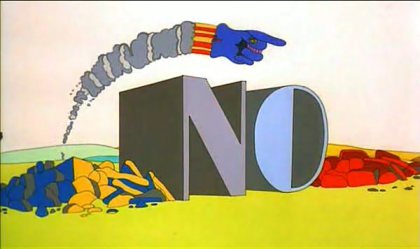
Is "The No No Song" about "the emptiness of material success"? Just say "no" to... everything?


Nah, it's a sobriety song. And it was years before the "Just Say No" ad campaign that linked the word "no" to Nancy Reagan.
The phrase "Just Say No" first emerged when Nancy Reagan was visiting Longfellow Elementary School in Oakland, California, in 1982 and was asked by a schoolgirl what to do if she was offered drugs. The first lady responded by saying, "Just say no." Just Say No club organizations within schools and school-run anti-drug programs soon became common, in which young people make pacts not to experiment with drugs.
"No" was once a Ringo word, especially when repeated. But maybe you, like me, associate the repeated "no" with The Human Beinz. What were they "no"ing?


That "no" is about rejecting the capacity of others to turn in a superior performance of the shingaling and the boogaloo.

And, no no no, don't accuse me of failing to notice The Isley Brothers. Their original "Nobody But Me" did not include the repeated "no." The absurd non-negative "no"ing was the contribution of The Human Beinz:


"The recording's two 31-fold repetitions of the word 'no; fulfill Casey Kasem's 'Book of Records' category of most repetitive word or phrase in a Hot 100 top 10 hit, besting the 26-fold repetition of 'I know' in Bill Withers' 'Ain't No Sunshine.'"


"Know"/"No"... a telling homophone... as The Beatles knew:

१८ ऑगस्ट, २००७

"There's a certain geometry to life... life has a certain math equation to it..."

Actually, it doesn't, and that -- from Ethan Hawke -- is from the most pathetic justification for a failed celebrity marriage that I've ever read.
"It's unfair when one person's career is taking off and the other is really suffering. "What happens -- it's not that they're jealous of each other; it's that the person you share your life with isn't in the mood to support. You want to have a pity party for yourself, but they're off to the Golden Globes and you don't want to go because everyone is going to think you are jealous. "There's a certain geometry to life -- that life has a certain math equation to it and if you're never together, you can't build a home. "Joanne Woodward put her career on the back burner for that marriage (to Paul Newman) to last. And something's got to give."
Thoughts: 

1. As the first commenter over at the link says, why didn't he put his career on the back burner for Uma? 

2. He had Uma! He should have done everything for her. 

3. Uma could come over there and kick his ass


4. He didn't want to go to the Golden Globes because somehow everyone would infer that he was jealous, but he says so now, which makes it obvious that he was jealous. 


 7. Whining is a dangerous game. Don't do it. Especially about Uma.