From "In 1971, This Film Was a Scandal. In 2026, It’s a Respected Period Piece. 'Ken Russell’s The Devils' was deemed shocking for scenes with orgiastic nuns and a debauched priest. But its serious aims are clear in a new restoration" (NYT).
"a mind is not really a house, but's a close alternative, sort of an alt-house"
"Girl skin diver" — I like that old-time locution.
Onto the LSD part of the magnificent lady's story.
"I know what happened, and you're not supposed to do that. It's not supposed to be probably constitutional. She got no votes. He got 14 million votes. All of a sudden they're telling him to get out. or they threatened him. And he is an angry person."
Von breaks in to ask, "But who are 'they'?" and Trump responds:
"Well, I would say Schumer, Pelosi, and numerous other people — the heads of the Democrat Party, yeah — and they did, they threatened him violently, I think. And he didn't want to get out. Remember he said only God will get me out — right? Only God... Yeah, and what happened is they went to him, and they said — this was after the debate — now, if he didn't have the debate he would still be running...."
What violence is Trump talking about?
Haven't I looked into the word "violence" before? Yes, I did the OED routine back in 2019 when Elizabeth Warren introduced the term "traffic violence":
Back then, the issue was the lack of intentionality in car accidents. Pressuring Biden to drop out was completely intentional, so the issue here is whether "violently" connotes physically injuring him. I find it very hard to believe anyone threatened to physically injure him, but perhaps it's not so hard to believe that Trump thinks that or that Trump would lie and say that he thinks that.To what extent does "violence" mean that the damaging action was intentional? The first definition is, as expected, "The deliberate exercise of physical force..."
But then there's "Great strength or power of a natural force or physical action" — for example, a storm or an earthquake. There's no mind deliberating there (though maybe there's an implication of human will and the usage is metaphorical, such as when corny writers tell you the sea was "angry").
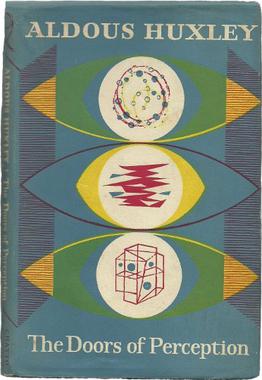
"Violence" is also "Great intensity or severity, esp. of something destructive or undesirable. Example: " Mrs. Viveash had been reduced, by the violence of her headache, to coming home..for a rest." (That's Aldous Huxley.)
Similarly, there's "Vehemence or intensity of emotion, behaviour, or language; extreme fervour; passion." Example, from Shakespeare, "Marke me, with what violence she first lou'd the Moore." But now we've got the human mind in play again. I don't think what's being called "traffic violence" is any intensity in the traffic, just accidents, by people who didn't mean to do that (if we set aside the very tiny proportion of car damage done by an evildoer deliberately running somebody down).
"Violence" is also used to refer to restrictions imposed on nature, as in "He was obliged to attend near a Quarter of an Hour, though with great Violence to his natural Impetuosity, before he was suffered to speak" (Henry Fielding, "Tom Jones" (1749)).
And then there's the "Improper treatment or use of a word or text; misinterpretation; misapplication; alteration of meaning or intention." Again, from "Tom Jones": "A Passion which might, without any great Violence to the Word, be called Love."
‘But what has love to do with it?’ asked Slipe. ‘In Beatrice’s case.’
‘A great deal,’ Willie Weaver broke in. ‘Everything. These superannuated virgins—always the most passionate.’
‘But she’s never had a love affair in her life.’
‘Hence the violence,’ concluded Willie triumphantly. ‘Beatrice has a n*gger sitting on the safety valve. And my wife assures me that her underclothes are positively Phrynean. That’s most sinister.’
‘Perhaps she likes being well dressed,’ suggested Lucy.
Willie Weaver shook his head. The hypothesis was too simple.
‘That woman’s unconscious as a black hole.’ Willie hesitated a moment. ‘Full of batrachian grapplings in the dark,’ he concluded and modestly coughed to commemorate his achievement.
... exploring with a robot.
Me: "What are some examples in literature of a person being told not to go somewhere, as if it would be dangerous, when in fact it would be beneficial to that person to do what he is being warned against? "
ChatGPT:
Complaint of a Poet ManquéWe judge by appearance merely:If I can't think strangely, I can at least look queerly.So I grew the hair so long on my headThat my mother wouldn't know me,Till a woman in a night-club said,As I was passing by,"Hullo, here comes Salome ..."I looked in the dirty gilt-edged glass,And, oh Salome; there I was—Positively jewelled, half a vampire,With the soul in my eyes hanging dizzilyLike the gatherer of proverbial samphireOver the brink of the crag of sense,Looking down from perilous eminenceInto a gulf of windy night.And there's straw in my tempestuous hair,And I'm not a poet: but never despair!I'll madly live the poems I shall never write.
The "Calamari comeback state" of Rhode Island caught viewers' attention during its turn on the #DemConvention roll call across America 🐙🇺🇸 https://t.co/6tjma19Dq4 pic.twitter.com/4jp0thiAir— Bloomberg (@business) August 19, 2020
The leech's kiss, the squid's embrace,There's also this insight from Marlon Brando: "The most repulsive thing you could ever imagine is the inside of a camel's mouth. That and watching a girl eat octopus or squid."
The prurient ape's defiling touch:
And do you like the human race?
No, not much.

Traffic violence kills thousands and injures even more Americans every year. On World Day of Remembrance for Traffic Crash Victims, I'm sending my love to the families and friends of those who have lost loved ones. It's time to #EndTrafficViolence.— Elizabeth Warren (@ewarren) November 17, 2019
Despite being so common in English as to be known as the "Chinese curse," the saying is apocryphal, and no actual Chinese source has ever been produced.... The nearest related Chinese expression is 寧為太平犬,莫做亂離人; nìng wéi tàipíng quǎn, mò zuò luàn lí rén; which is usually translated as "Better to be a dog in a peaceful time, than to be a human in a chaotic (warring) period."...
The basic premise of the curse may also be found in a quote by the German philosopher Hegel: “World history is not the ground of happiness. The periods of happiness are empty pages in her.”...
Research by philologist Garson O'Toole shows a probable origin in the mind of Austen Chamberlain's father Joseph Chamberlain dating around the late-19th and early 20th centuries. Specifically, O'Toole cites the following statement Joseph made during a speech in 1898: “I think that you will all agree that we are living in most interesting times. (Hear, hear.) I never remember myself a time in which our history was so full, in which day by day brought us new objects of interest, and, let me say also, new objects for anxiety. (Hear, hear.) [emphasis added]”
From this it is likely that the Chamberlain family may have inadvertently transmitted a folk etymology by expanding Joseph Chamberlain's use of the concept to refer to some Chinese curse.
[The] idea seems to be that there's a special harm in exposing yourself to things that are only somewhat good. Better to read outwardly trashy things than trash that has been inflated. And then there's also the idea that those who inflate trash are dead.It was Gertrude Stein (as presented by Hemingway) who said "You should only read what is truly good or what is frankly bad." And she characterized Aldous Huxley as "dead" because his writings were not truly good but trash "inflated" to seem somewhat good. ("Why do you read this trash? It is inflated trash, Hemingway. By a dead man.") So I'm thinking about that.
I had learned already never to empty the well of my writing, but always to stop when there was still something there in the deep part of the well, and let it refill at night from the springs that fed it.Aldous Huxley was not actually dead at the time. Huxley had the distinction of dying on the same day JFK was assassinated. Hemingway, who died in 1961, did not live one single day when Huxley was not also alive.
To keep my mind off writing sometimes after I had worked I would read writers who were writing then, such as Aldous Huxley, D. H. Lawrence or any who had books published that I could get from Sylvia Beach’s library or find along the quais.
“Huxley is a dead man,” Miss Stein said. “Why do you want to read a dead man? Can’t you see he is dead?”
I could not see, then, that he was a dead man and I said that his books amused me and kept me from thinking.
“You should only read what is truly good or what is frankly bad.”Stein's idea seems to be that there's a special harm in exposing yourself to things that are only somewhat good. Better to read outwardly trashy things than trash that has been inflated. And then there's also the idea that those who inflate trash are dead.
“I’ve been reading truly good books all winter and all last winter and I’ll read them next winter, and I don’t like frankly bad books.”
“Why do you read this trash? It is inflated trash, Hemingway. By a dead man.”
Like most satirists worth reading, Houellebecq is a conservative. “I show the disasters produced by the liberalization of values,” he has said. Satire depends on comparing the crazy place we’re going to with the implicitly sane place we left behind. That’s why satirists are often nostalgists, like Tom Wolfe, who longs for the wild and crazy American past, or Evelyn Waugh, with his ascendant American vulgarians and his idealized lost Catholic aristocracy....But...
The next thing is just never likely to be the same thing. The fun of satire is to think what would happen if nothing happens to stop what is happening. But that’s not what happens.
Anecdotally, psychoactive mushrooms may positively affect even nonsufferers. They did for me."Me" = Eugenia Bone, author of "Mycophilia: Revelations From the Weird World of Mushrooms." These names! I feel like I'm reading a work of fiction... a work of fiction possibly titled Dr. Expert and Ms. Eugenia Bone.
I ate the mushroom as part of research for a book. The experience lasted about four hours, much of which I spent outdoors, but seemed to last much longer. I think because everything I was seeing was so new: the way the air was disturbed behind the flight of a bee, the way the trees seemed to respire, how the clouds and breeze and rocks and grass all existed in a kind of churning symbiosis.Makes me think of the old George Harrison lyric: "I got born into the material world/Getting worn out in the material world/Use my body like a car/Taking me both near and far..."
I experienced a number of small epiphanies — self-realizations actually — but one in particular remained with me. As the drug wore off, I went indoors to take a hot bath. For a moment I thought that might not be a good idea, as bath time is when women in middle age can be very self-critical and unforgiving, and I didn’t want the sight of my waistline to veer me into a bad trip. But while in the tub I envisioned my body as a ship that was taking me through life, and that made it beautiful.
I stopped feeling guilty about growing older and regretful about losing my looks. Instead, I felt overwhelming gratitude. It was a tremendous relief that I still feel.Ah, now, I hope the looming access to psilocybin is not limited to those who can name the right psychological ailment, so that women with body dysmorphia get access, slipping in through the door along with the depressed. That would be depressing. But look how fast the middle-aged woman who feels bad about her naked body jumps from wanting access for herself to the urge to control the young and the festive:
Don’t get me wrong: I’m not suggesting 16-year-olds take magic mushrooms. I’m not suggesting they be used to party at all. What I am advocating for is a mind open to the possibilities of their use to help people in need. Because illiberality doesn’t cure disease; curiosity does.If you want relief from government control, you have to embody the persona of the victim. You must belong to the ranks of the "people in need." Your desire to tweak and tamper with your brain medicinally must be a matter of disease. You must portray yourself as down and trying to get to normal, not normal and seeking a higher ground.