Showing posts with label Robert Redford. Show all posts
Showing posts with label Robert Redford. Show all posts
September 16, 2025


November 28, 2016
"As a filmmaker, Mr. Bannon, 63, has cited both the Nazi propagandist Leni Riefenstahl and the left-wing documentarian Michael Moore as models."
"In top physical shape as a young Navy officer, and for years wearing the banker’s uniform of expensive suits, Mr. Bannon has in recent years sported flannel shirts and cargo pants. With a paunch and a sometimes scraggly beard, Mr. Bannon has a rugged look that Stephen Colbert described as 'Robert Redford dredged from a river.'"
My favorite paragraph from the NYT article "Combative, Populist Steve Bannon Found His Man in Donald Trump." It's a long article, worth reading. I'll just say 2 things:
1. Why is Leni Riefenstahl is called a "propagandist" and Michael Moore is a "documentarian." The same word — whichever you choose — applies to both. Riefenstahl was unquestionably a great film artist, far more interested in film as art than Moore. See the excellent, nonpropagandistic documentary about her, "The Wonderful, Horrible Life of Leni Riefenstahl." Moore is an out-and-proud propagandist. What's wrong with that if your cause is good? Riefenstahl presents the problem of what's wrong with art if your cause is bad.
2. I'm fascinated by how Bannon, who is about my age, looked in 1974, which is like Robert Redford dredged from a river in 1974:

ADDED: I made a new tag for Leni Riefenstahl, then searched the archive to add it to old posts. I see that back in 2004 I wrote "Is Michael Moore like Leni Riefenstahl?" Someone had compared Moore to Riefenstahl, and I was reacting to that. I said:
My favorite paragraph from the NYT article "Combative, Populist Steve Bannon Found His Man in Donald Trump." It's a long article, worth reading. I'll just say 2 things:
1. Why is Leni Riefenstahl is called a "propagandist" and Michael Moore is a "documentarian." The same word — whichever you choose — applies to both. Riefenstahl was unquestionably a great film artist, far more interested in film as art than Moore. See the excellent, nonpropagandistic documentary about her, "The Wonderful, Horrible Life of Leni Riefenstahl." Moore is an out-and-proud propagandist. What's wrong with that if your cause is good? Riefenstahl presents the problem of what's wrong with art if your cause is bad.
2. I'm fascinated by how Bannon, who is about my age, looked in 1974, which is like Robert Redford dredged from a river in 1974:
ADDED: I made a new tag for Leni Riefenstahl, then searched the archive to add it to old posts. I see that back in 2004 I wrote "Is Michael Moore like Leni Riefenstahl?" Someone had compared Moore to Riefenstahl, and I was reacting to that. I said:
There are many huge differences between Moore and Leni Riefenstahl.... Quite aside from the fact that she was working in support of Hitler and Moore is working against Bush (and Bush is no Hitler, despite some noise to the contrary), Riefenstahl would have snorted at the lack of artistry in Moore's work. She was all about beautiful and precise visual imagery. "Triumph of the Will" does not pound at you with voiceover assertions, it aims to lure you and seduce you with sequences of images. Moore's type of propaganda is far, far easier to resist, because it is immediately and constantly apparent that he is propagandizing. That is a lot fairer to the viewer: your resistance is instantly activated. You can decide what you want to think. What Riefenstahl did was incomparable.
December 30, 2015
The man who wrote the first episode of "Star Trek" and the "Nothing In The Dark" episode of "Twilight Zone"...
... George Clayton Johnson, has died at the age of 86.
Johnson also wrote the original "Ocean's 11" and the book (made into a movie) "Logan's Run." "Logan's Run" is the story about a wonderful, entertaining society that executes its citizens when they turn 30.
"Nothing In The Dark" is the "Twilight Zone" in which the unknown young actor named Robert Redford played Death and got inside the house of an old woman who'd been determined to keep Death from entering. Here, somebody compressed the episode into a 2-minute version:
Johnson also wrote the original "Ocean's 11" and the book (made into a movie) "Logan's Run." "Logan's Run" is the story about a wonderful, entertaining society that executes its citizens when they turn 30.
"Nothing In The Dark" is the "Twilight Zone" in which the unknown young actor named Robert Redford played Death and got inside the house of an old woman who'd been determined to keep Death from entering. Here, somebody compressed the episode into a 2-minute version:
September 13, 2015
Dan Rather loves the movie about Rathergate that stars Robert Redford as Rather.
"This is the best film I've seen on the big screen that takes you inside the craft of journalism, and demonstrates how it works, as opposed to how people feel journalism works."
Did you forget about Rathergate? Prepare to be reminded!
The name of the movie is "Fake But Accurate."
Just kidding. It's "Truth." Not kidding. That's it, thuddingly, "Truth."
Did you forget about Rathergate? Prepare to be reminded!
The name of the movie is "Fake But Accurate."
Just kidding. It's "Truth." Not kidding. That's it, thuddingly, "Truth."
September 6, 2015
So, after over a year, I finally went to the movies.
I was fated to go, as I told you last May — "I'm excited about it — even though I almost never go to the movies — because I love the book..." — and again last week — "I've listened to [Bill Bryson's] 'A Walk in the Woods' hundreds of times. And I will go out and see that movie as soon as I can, even though I haven't gone out to see one single movie in over a year."
And now, I've gone and done it. Seen a movie. Because I love the book. Because I, like millions before me, imagined that I would, through the magic of movies, really get to see what heretofore I'd only half seen — in the mind's eye. In my mind's eye, before I went to the movie, I saw the movie and it looked more vivid and real and panoramic than what the book made me see in my mind's eye. But now, I have seen that movie, and I know that what I saw on the screen was so far less than what the book made me see in my mind that I feel like a fool for not already knowing well, of course!
There are so many shots I could take at this movie. Robert Redford is too old — 79, when Bryson, in the book, is 44. The script departs from the story in the book in ways that are stupid and in ways that would might have been delightful if the movie, as originally planned, had reunited Redford with Paul Newman. There was intentional resonance with things like this:
But Newman died, and Nick Nolte took his place, and while I was amused by the I-think-intentional resonance with this...
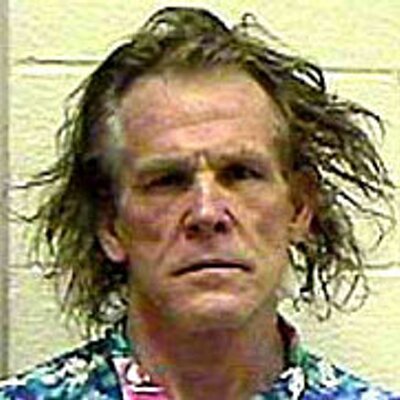
... I was annoyed by all the forced buddy-pic humor that replaced the relationship that Bill Bryson described in the book. I expected the film to have the 2 men talking a lot, though in the book, it's quite clear that the men barely ever talk. But the banter was either boringly stupid — not the people in the theater didn't laugh on every cue — or stupidly profound — such as looking at the stars and deciding that we are very small. If only you could look at the protons, you could decide that you are quite huge. Or just read Bill Bryson's "A Short History of Nearly Everything:" and he'll make you see it in your mind's eye:
The movie complicates the relationship with the wife — perhaps to give the actress Emma Thompson something to do. It has her opposing the trip and trying to scare him with gruesome information about things that could go wrong in the woods. But Bill Bryson, the author, absolutely loves to find out about terrible things that can happen and to amuse use with the details. It's almost the main thing he does, but the movie transplants that aspect of his character into his wife, making her seem like a female stereotype — fussy, fretting — and making him seem alienated from her — and like more of a male stereotype.
The movie is full of shallow references to a fear of death and even begins with a funeral — as if Bryson's reason for walking is that he's freaked out about dying and needs to act — act! — before it's too late. And Redford must act. He must act because he's an actor. We must see his face on the big screen, which is not as it appears in my mind's eye, but dominated by those awful Chicklet veneers that have replaced normal teeth among the pretty people and topped with something I want to call a "wig hat." I did not enjoy spending 2 hours surveying the landscape of his face.
I thought I was going to get to see the landscape of the Appalachian Trail — all those fine and varied views from mountaintops and within forests. Where was the detail? Where was the cinematography? What is the big screen for? As I said, there are so many shots I could take at this movie. But this is the deal breaker. Show me the Appalachian Trail!
At one point in the movie, early on, somebody disparages the idea of walking the Appalachian Trail by saying you could see the whole thing in a 4-minute video on YouTube. That's quite a taunt to us movie goers! We're stuck here for 2 hours and had to pay $10, and I bet that 4-minute video on YouTube gives us a better vision of the trail. What the hell am I doing here?
And now, I've gone and done it. Seen a movie. Because I love the book. Because I, like millions before me, imagined that I would, through the magic of movies, really get to see what heretofore I'd only half seen — in the mind's eye. In my mind's eye, before I went to the movie, I saw the movie and it looked more vivid and real and panoramic than what the book made me see in my mind's eye. But now, I have seen that movie, and I know that what I saw on the screen was so far less than what the book made me see in my mind that I feel like a fool for not already knowing well, of course!
There are so many shots I could take at this movie. Robert Redford is too old — 79, when Bryson, in the book, is 44. The script departs from the story in the book in ways that are stupid and in ways that would might have been delightful if the movie, as originally planned, had reunited Redford with Paul Newman. There was intentional resonance with things like this:
But Newman died, and Nick Nolte took his place, and while I was amused by the I-think-intentional resonance with this...
... I was annoyed by all the forced buddy-pic humor that replaced the relationship that Bill Bryson described in the book. I expected the film to have the 2 men talking a lot, though in the book, it's quite clear that the men barely ever talk. But the banter was either boringly stupid — not the people in the theater didn't laugh on every cue — or stupidly profound — such as looking at the stars and deciding that we are very small. If only you could look at the protons, you could decide that you are quite huge. Or just read Bill Bryson's "A Short History of Nearly Everything:" and he'll make you see it in your mind's eye:
No matter how hard you try you will never be able to grasp just how tiny, how spatially unassuming, is a proton. It is just way too small. A proton is an infinitesimal part of an atom, which is itself of course an insubstantial thing. Protons are so small that a little dib of ink like the dot on this “i” can hold something in the region of 500,000,000,000 of them, or rather more than the number of seconds it takes to make half a million years. So protons are exceedingly microscopic, to say the very least."In my mind's eye" comes from Shakespeare. Here's a block of text from another Bill Bryson book, "Shakespeare":
Just a small sampling of phrases originally found in Shakespeare’s works include flesh and blood, bated breath, tower of strength, foul play, foregone conclusion, good riddance, dead as a doornail, fool’s paradise, heart of gold, Greek to me, fancy-free, devil incarnate, one fell swoop, for goodness’ sake, vanish into thin air, play fast and loose, eaten me out of house and home, elbow room, go down the primrose path, in a pickle, budge an inch, cold comfort, household word, full circle, salad days, in my heart of hearts, in my mind’s eye, laughing stock, love is blind, lie low, naked truth, neither rhyme nor reason, star-crossed lovers, pitched battle, pound of flesh, sea change, make short shrift, spotless reputation, set my teeth on edge, there’s the rub, too much of a good thing, what the dickens, and wild goose chase.Must I get back to my list of many shots I can take at the movie "A Walk in the Woods"? They added sexual things (even though the movie is generally overly, stupidly "family friendly"). There was a sequence — completely made up — with Mary Steenburgen as the owner of a crappy motel, and she tries to put the move on Redford after he comes out of his room to the motel office to ask for towels. He's wearing a nice bathrobe and leather slippers. Who, going out on a months-long hike, would put a bathrobe and slippers in his backpack?! In the book-world of Bill Bryson, there is absolutely no chance that he would be unfaithful to his beloved wife or even that he would amuse us with the slightest thought of being unfaithful to her. The sexual temptation scene was just squicky.
The movie complicates the relationship with the wife — perhaps to give the actress Emma Thompson something to do. It has her opposing the trip and trying to scare him with gruesome information about things that could go wrong in the woods. But Bill Bryson, the author, absolutely loves to find out about terrible things that can happen and to amuse use with the details. It's almost the main thing he does, but the movie transplants that aspect of his character into his wife, making her seem like a female stereotype — fussy, fretting — and making him seem alienated from her — and like more of a male stereotype.
The movie is full of shallow references to a fear of death and even begins with a funeral — as if Bryson's reason for walking is that he's freaked out about dying and needs to act — act! — before it's too late. And Redford must act. He must act because he's an actor. We must see his face on the big screen, which is not as it appears in my mind's eye, but dominated by those awful Chicklet veneers that have replaced normal teeth among the pretty people and topped with something I want to call a "wig hat." I did not enjoy spending 2 hours surveying the landscape of his face.
I thought I was going to get to see the landscape of the Appalachian Trail — all those fine and varied views from mountaintops and within forests. Where was the detail? Where was the cinematography? What is the big screen for? As I said, there are so many shots I could take at this movie. But this is the deal breaker. Show me the Appalachian Trail!
At one point in the movie, early on, somebody disparages the idea of walking the Appalachian Trail by saying you could see the whole thing in a 4-minute video on YouTube. That's quite a taunt to us movie goers! We're stuck here for 2 hours and had to pay $10, and I bet that 4-minute video on YouTube gives us a better vision of the trail. What the hell am I doing here?
May 28, 2015
The "Walk in the Woods" trailer.
This just came out today:
I'm excited about it — even though I almost never go to the movies — because I love the book and because I love the actress who plays Mary Ellen (a secondary character in the book, a hilariously annoying woman). The actress is Kristen Schaal. I know her from "Flight of the Conchords" — she was the band's only fan — but you may know her as Hazel Wassername from "30 Rock."
I'm excited about it — even though I almost never go to the movies — because I love the book and because I love the actress who plays Mary Ellen (a secondary character in the book, a hilariously annoying woman). The actress is Kristen Schaal. I know her from "Flight of the Conchords" — she was the band's only fan — but you may know her as Hazel Wassername from "30 Rock."
July 10, 2014
It's hard to fathom why a movie about Rathergate — with Robert Redford as Dan Rather — is being made.
Years ago, Redford played the role of another newsman, Bob Woodward, in "All the President's Men," the story of 2 dogged journalists who were wildly successful. They brought down a President and sparked an American love affair with "investigative journalism." What's become of that today? Maybe this new movie will seriously address what has happened to the profession that Bob Woodward (and his partner Carl Bernstein) made us see as heroic and centered on truth-seeking. In Rathergate, a once-illustrious network, centered on ruining a presidential candidate, faked a document.
The movie will be called "Truth." Ironically? I doubt it. "Truth" is a shortened form of "Truth And Duty: The Press, the President, and the Privilege of Power," the memoir written by Mary Mapes, the CBS producer who lost her job over Rathergate. From the Amazon reviews of the book (to which I've added an explanatory link):
A typewriter! a typewriter! my network for a typewriter!
That's unlikely. And should there be a whole big motion picture made from this story when the ultimate motion picture of Rathergate has already been made? It is the tiniest possible picture in motion:

The movie will be called "Truth." Ironically? I doubt it. "Truth" is a shortened form of "Truth And Duty: The Press, the President, and the Privilege of Power," the memoir written by Mary Mapes, the CBS producer who lost her job over Rathergate. From the Amazon reviews of the book (to which I've added an explanatory link):
If the liars behind this failed attempt to get Kerry elected had just used an old typewriter it would have worked and the press may have been able to steal an election. Just think about that. Now there's going to be a movie based on this book?Well, now... think about it. Mapes is going to be played by a great actress, Cate Blanchette. Conceivably, the Shakespearean complexities of the role will emerge. I'm picturing a grand, slow, torturous descent. Tragedy!
A typewriter! a typewriter! my network for a typewriter!
That's unlikely. And should there be a whole big motion picture made from this story when the ultimate motion picture of Rathergate has already been made? It is the tiniest possible picture in motion:

January 16, 2014
Oscar nominations are out. What's your favorite snub?
Mine is: no foreign language film nomination for "Blue Is the Warmest Color" (discussed on the blog here, here, and here). [ADDED: I thought it was obvious, but since at least one person misread this (and didn't bother to go to my old posts linked there), "favorite snub" means I'm pleased it was snubbed!]
Other nominees for Best Snub by the Motion Picture Academy: Oprah. Robert Redford. Tom Hanks.
Worst snub? James Gandolfini! The man died! Sorry. Just kidding. No extra credit for dying. I appreciate the neutrality.
Here's the full list of nominees, announced this morning. I haven't seen any of these movies, but we would like to see "Inside Llewyn Davis," if we ever feel like showing up at a specific time and sitting in the dark for 2 hours. (Who does that anymore? Don't you want control over your time (which you always have with TV)?) "Inside Llewyn Davis" only got Cinematography and Sound Mixing, anyway, so it's more of a Snubbed by the Oscars than an Oscar-approved thing anyway.
I know, one answer to my parenthetical question above is: You've got to go to the theater for the fully immersive, giant-screen, 3D experience. I considered seeing "Gravity" in the theater for that reason. ("Gravity" got 10 nominations, equaled only by the good-for-you (as opposed to feel-good) flick "12 Years a Slave.") But I couldn't force myself to go. Like "12 Years a Slave," it felt like something I was supposed to do. When I really thought about how I wanted to spend my time, sitting through that wasn't the answer.
Creating this aura around a film that it must be seen — it's a must-see movie — is exactly what the promoters want to do, and it must work on many people, perhaps the kind of people — young people? — who see a large number of movies. Target the big spenders. Use the pitch that works with the people who spend the most money on the product. But to me, feeling like I'm supposed to do something — unless I'm legally required to do it — sets up my resistance.
CORRECTION: "12 Years a Slave" only got 9 nominations. It's "American Hustle" that equaled "Gravity" with 10.
Other nominees for Best Snub by the Motion Picture Academy: Oprah. Robert Redford. Tom Hanks.
Worst snub? James Gandolfini! The man died! Sorry. Just kidding. No extra credit for dying. I appreciate the neutrality.
Here's the full list of nominees, announced this morning. I haven't seen any of these movies, but we would like to see "Inside Llewyn Davis," if we ever feel like showing up at a specific time and sitting in the dark for 2 hours. (Who does that anymore? Don't you want control over your time (which you always have with TV)?) "Inside Llewyn Davis" only got Cinematography and Sound Mixing, anyway, so it's more of a Snubbed by the Oscars than an Oscar-approved thing anyway.
I know, one answer to my parenthetical question above is: You've got to go to the theater for the fully immersive, giant-screen, 3D experience. I considered seeing "Gravity" in the theater for that reason. ("Gravity" got 10 nominations, equaled only by the good-for-you (as opposed to feel-good) flick "12 Years a Slave.") But I couldn't force myself to go. Like "12 Years a Slave," it felt like something I was supposed to do. When I really thought about how I wanted to spend my time, sitting through that wasn't the answer.
Creating this aura around a film that it must be seen — it's a must-see movie — is exactly what the promoters want to do, and it must work on many people, perhaps the kind of people — young people? — who see a large number of movies. Target the big spenders. Use the pitch that works with the people who spend the most money on the product. But to me, feeling like I'm supposed to do something — unless I'm legally required to do it — sets up my resistance.
CORRECTION: "12 Years a Slave" only got 9 nominations. It's "American Hustle" that equaled "Gravity" with 10.
October 15, 2013
"I'm interested in the fakeness of all those colorful photographs of the universe that we've been looking at all these years."
I said, in the course of contemplating what Maureen Dowd said about Robert Redford's hair and after reading that "There are no 'natural color' cameras aboard the Hubble and never have been. The optical cameras on board have all been digital CCD cameras, which take images as grayscale pixels." I also tweaked "the atheist Christopher Hitchens" for "burbling about 'the color and depth and majesty' of the Hubble photographs as he urges us to see the revelations of science as more awe-inspiring than the old stories told by religions." I exclaimed: "But the color is fake! The purveyors of science, like religionists, can scam us too."
Reader Gabriel Hanna emails:
Reader Gabriel Hanna emails:
To say that something is a scam [is] to say it is dishonest and done for financial gain.Now, technically, I did not say the color in the Hubble photographs is a scam. I said it was fake, and then, in a separate sentence, I stated a generality — "The purveyors of science, like religionists, can scam us too" — which is my standard warning to pay attention and be skeptical.
Astronomers, it is true, are largely taxpayer-supported, they are using the Hubble images to convince people to pay for astronomy. But the other element of a scam is dishonesty, and I do not agree that the Hubble images are dishonest — or if they are, they are no more dishonest than any photography.
October 12, 2013
"And Mr. Chandor can verify to skeptics Mr. Redford’s claim that his hair remains naturally Hubbell strawberry blond."
"His locks survived the months of sun and chlorine, with no colorist in sight," writes Maureen Dowd in that NYT article that we're already talking about in that first post of the day.
Dowd doesn't say whether she believes him, but she quotes "No one believes me" without stating her view. She has the mysterious line "Mr. Chandor can verify," but did she ask Mr. Chandor, and who can believe that Mr. Chandor watched Mr. Redford at all times? Who thinks Ronald Reagan didn't dye his hair? But it's nice of Robert Redford to keep thinking about Ronald Reagan. These slow-aging Hollywood RRs need to stick together with their age-defying secrets.
What does Hubbell refer to in "naturally Hubbell strawberry blond"? The Hubbell telescope? "There are no 'natural color' cameras aboard the Hubble and never have been. The optical cameras on board have all been digital CCD cameras, which take images as grayscale pixels." It's Hubble, not Hubbell, so it can't be that — though I'm interested in the fakeness of all those colorful photographs of the universe that we've been looking at all these years.
Here's the atheist Christopher Hitchens burbling about "the color and depth and majesty" of the Hubble photographs as he urges us to see the revelations of science as more awe-inspiring than the old stories told by religions:
“No one believes me,” Mr. Redford said. “Even my kids didn’t believe me. I keep thinking of Reagan. It’s freaking me out.”Chandor is J. C. Chandor, the director of Redford's new movie, "All Is Lost," which is a seafaring tale, hence the "sun and chlorine."
Dowd doesn't say whether she believes him, but she quotes "No one believes me" without stating her view. She has the mysterious line "Mr. Chandor can verify," but did she ask Mr. Chandor, and who can believe that Mr. Chandor watched Mr. Redford at all times? Who thinks Ronald Reagan didn't dye his hair? But it's nice of Robert Redford to keep thinking about Ronald Reagan. These slow-aging Hollywood RRs need to stick together with their age-defying secrets.
What does Hubbell refer to in "naturally Hubbell strawberry blond"? The Hubbell telescope? "There are no 'natural color' cameras aboard the Hubble and never have been. The optical cameras on board have all been digital CCD cameras, which take images as grayscale pixels." It's Hubble, not Hubbell, so it can't be that — though I'm interested in the fakeness of all those colorful photographs of the universe that we've been looking at all these years.
Here's the atheist Christopher Hitchens burbling about "the color and depth and majesty" of the Hubble photographs as he urges us to see the revelations of science as more awe-inspiring than the old stories told by religions:
"I don’t see myself as beautiful. I was a kid who was freckle-faced, and they used to call me 'hay head.'"
Said Robert Redford, who also reports that when he was 18, studying art in Italy and France, the women there did not find him attractive.
So — if we can believe that — even the prettiest pretty boy may still fall within the shadow of the old adage "You're only pretty as you feel."
Now, after years of recognition as incredibly good-looking — he's 77 — he says:
It must say something about us that we're being presented with tales of rugged individualists far adrift from any foundation. Did we ask for that? It's what Hollywood decided, back when this fall's movies were given the go, that we'd need in the Fall of 2013. There's no reason to give much credence to Hollywood's notion of who we are right now. Hollywood thought we were the Lone Ranger and Tonto last summer, and the people said no. Perhaps the Lone Ranger isn't lone enough for our alienated psyches. He had Tonto. Where's my sidekick? the public that shunned "The Lone Ranger" might have thought. How can we identify with his loneliness when he has Johnny Depp?
Robert Redford famously had a sidekick, Paul Newman, in the 2 movies that made him seem to be even more handsome than the already-impossibly-handsome Paul Newman — "Butch Cassidy and the Sundance Kid" and "The Sting." And Redford did have another movie in the works with Newman — a movie version of Bill Bryson's "A Walk in the Woods" (my second-most-listened-to audiobook). Newman died 5 years ago, but now the news is that it will be made with the not-always-completely-cute Nick Nolte. If you know the book, you may agree with me that Nolte seems more like Bryson's "Walk in the Woods" sidekick Stephen Katz than does Paul Newman.
You might think Newman was more like Katz because he was (half) Jewish. ("Newman had no religion as an adult, but described himself as a Jew, saying, 'it's more of a challenge.'") Nolte, on the other hand, is (apparently) a man disconnected from any particular religion. ("'Where’s God?' You’re gonna kill yourself with that. You’ll never be able to answer that.")
But Bryson's Katz — despite the distinctively Jewish name — is not Jewish, as Bryson reveals in his memoir of childhood, "The Life and Times of the Thunderbolt Kid" (my most-listened-to audiobook):
So — if we can believe that — even the prettiest pretty boy may still fall within the shadow of the old adage "You're only pretty as you feel."
Now, after years of recognition as incredibly good-looking — he's 77 — he says:
"And I guess the nice thing about getting older is that you don’t have that [beauty] quite so much anymore. I never had a problem with my face on screen. I thought it is what it is, and I was turned off by actors and actresses that tried to keep themselves young."That face is the only face we get to see in his new movie — "All Is Lost" — in which he's (apparently) the only actor. I've seen the trailer. He's lost at sea. Tom Hanks is also having lonesome, though not that lonesome, trouble at sea in a big movie this fall, and Sandra Bullock is alone in a space suit, bereft even of gravity in a grave situation in "Gravity."
It must say something about us that we're being presented with tales of rugged individualists far adrift from any foundation. Did we ask for that? It's what Hollywood decided, back when this fall's movies were given the go, that we'd need in the Fall of 2013. There's no reason to give much credence to Hollywood's notion of who we are right now. Hollywood thought we were the Lone Ranger and Tonto last summer, and the people said no. Perhaps the Lone Ranger isn't lone enough for our alienated psyches. He had Tonto. Where's my sidekick? the public that shunned "The Lone Ranger" might have thought. How can we identify with his loneliness when he has Johnny Depp?
Robert Redford famously had a sidekick, Paul Newman, in the 2 movies that made him seem to be even more handsome than the already-impossibly-handsome Paul Newman — "Butch Cassidy and the Sundance Kid" and "The Sting." And Redford did have another movie in the works with Newman — a movie version of Bill Bryson's "A Walk in the Woods" (my second-most-listened-to audiobook). Newman died 5 years ago, but now the news is that it will be made with the not-always-completely-cute Nick Nolte. If you know the book, you may agree with me that Nolte seems more like Bryson's "Walk in the Woods" sidekick Stephen Katz than does Paul Newman.
You might think Newman was more like Katz because he was (half) Jewish. ("Newman had no religion as an adult, but described himself as a Jew, saying, 'it's more of a challenge.'") Nolte, on the other hand, is (apparently) a man disconnected from any particular religion. ("'Where’s God?' You’re gonna kill yourself with that. You’ll never be able to answer that.")
But Bryson's Katz — despite the distinctively Jewish name — is not Jewish, as Bryson reveals in his memoir of childhood, "The Life and Times of the Thunderbolt Kid" (my most-listened-to audiobook):
Some years ago when I came to apply a pseudonym to one of my boyhood friends, I chose the name Stephen Katz partly in honor of a Des Moines drugstore called Katz’s, which was something of a local institution in my childhood, and partly because I wanted a short name that was easy to type. Never did it occur to me that the name was Semitic. I never thought of anybody in Des Moines as being Jewish. I don’t believe anyone did. Even when they had names like Wasserstein and Liebowitz, it was always a surprise to learn they were Jewish. Des Moines wasn’t a very ethnic place.You've come to the end of this longish first-post-of-the-day, and maybe you're wondering, What are we supposed to talk about now? The issues are: beauty, aging, loneliness, sidekicks, floating adrift without foundation, the extent to which Hollywood may know who we really are, and Where's God?
Anyway, Katz wasn’t Jewish. He was Catholic.
June 19, 2012
"The Democratic Party has a good story to tell, but they don’t know how to tell it."
Says Robert Redford. Ironically, he is telling the story that Democrats keep telling: that they have a good story to tell, but they don’t know how to tell it.
I don't think that is a good story. If only we were better propagandists! It's the soothing, mind-numbing story that George Lakoff has been telling them for years.
I don't think that is a good story. If only we were better propagandists! It's the soothing, mind-numbing story that George Lakoff has been telling them for years.
May 15, 2007
I have a theory about the new Sundance Theater here in Madison, Wisconsin.

This is how I look while explaining a theory... specifically, how I look at the Sundance Theater bistro while explaining my theory -- which is mine! -- about the whole Sundance Theater enterprise.
I mean, check out this place:

This is upstairs, in case you want to get something to eat and drink before the show. Relax and mellow out. You won't have to worry about going down in time to get the seat you want, because you've got a ticket with the seat number on it, a seat you selected on a touch screen computer down at the box office. And don't worry if you don't have a dining companion to amuse with your theories. Go to the restaurant alone. There's WiFi. And think about it: you should go to that café downstairs all the time and hang out, use the WiFi, drink some coffee, and just see if you get in the mood to drift over into one of those arthouse-type cinema concoctions they're always showing.
Mmmm... but isn't this kind of... mmmm... elitist? I thought Robert Redford selected Madison for its lefty politics. Who's going to this place, anyway? How much money did you drop there? Who are these people?
Ooohhh.... look... trees:

This place is so... green!
See my theory?
What a fabulous commercial niche for the wily old Redford! What a perfect merger of left-and-right-winginess as aesthetic pleasure and refuge from the riff-raff are served up in perfect style. From the right, the aesthetes and sybarites will show up and bring their money because it's beautifully designed to dispense film art, and the lefties can set aside their worries about elitism and bring their money because it's Redford and it's green and it's lefty.
Ah. Enough theorizing. Let's say goodbye to the waitress and go downstairs to see the movie "Waitress." But first, let's pause in the stairwell to rake the Zen garden:

And now, to our supremely comfortable reserved seats. There will be no commercials, no piped-in music, just a perfectly charming and subtle animation occupying the screen to maintain the purity of our aesthetic experience:

Subscribe to:
Posts (Atom)


 Posts
Posts


