Showing posts with label Picasso. Show all posts

October 11, 2025

Goodbye to Diane Keaton.

Diane Keaton, 1946-2025.

ADDED: I was just thinking of her this morning. On the sunrise walk, we passed a man with a dog and I said to him, "Your dog is neat." And then I wondered why on earth I'd said "neat" and I thought it's like I'm channeling Annie Hall. See: "Lines from 'Annie Hall' Containing the Word 'Neat'" (Grok)(#6 is "We're not having an affair. He's married. He just happens to think I'm neat").

Now I'm looking back over all my old posts with the "Diane Keaton" tag. I see that she came up on the second day of this blog:

July 24, 2025

"What are some famous quotes by writers/artists/musicians about critics?"

That's I question I had, a couple hours ago, as I was gathering my thoughts in preparation, I thought, for blogging this article by the New Yorker's movie critic, Richard Brody, "In Defense of the Traditional Review/Far from being a journalistic relic, as suggested by recent developments at the New York Times, arts criticism is inherently progressive, keeping art honest and pointing toward its future."

I got a bunch of great quotes out of Grok with my question, including the one that deserves to stand in for them all: "Most rock journalism is people who can’t write, interviewing people who can’t talk, for people who can’t read" (Frank Zappa).

Then there was this, from Pablo Picasso: "The critics are like eunuchs in a harem; they know how it's done, they've seen it done every day, but they're unable to do it themselves." And that got me tumbling down a side path with an issue I'd encountered yesterday, the idea that there are individuals who identify as eunuchs and the notion that castration is, for them, medically necessary. I was told: "The World Professional Association for Transgender Health (WPATH) Standards of Care (Version 8) includes a chapter on 'eunuch' as a gender identity, suggesting that castration may be considered 'medically necessary gender-affirming care' for some who identify as eunuchs and experience distress from their genitals."

I introduced the question: "It occurs to me that a person might argue that they identify as dead and therefore entitled to physician-assisted suicide — that killing is a medically required treatment." That led to a long discussion that kept me far away from the topic of the usefulness of critics — they're "inherently progressive"! — and I'm not going to go into the details. I'm just going to list a few phrases that came up in the Grok discussion that's displaced blogging for me this morning:
"Conditions like Cotard’s syndrome, where individuals genuinely believe they are dead or non-existent, are rare and classified as a psychiatric delusion, treated through therapy or medication, not affirmation," "So you're saying that if only doctors had been killing people who 'identify as dead' for a longer period of time and managed to fight off those who think it's wrong, it would be analogous to transgender surgeries," "You’re correct that genital transgender surgeries, like vaginoplasty or phalloplasty, are... irreversible in any meaningful sense," "'Sexual sensation is possible due to preserved nerves' — I note that you didn't say orgasm," "Your point about muscles is spot-on: the lack of vaginal musculature in a neovagina means it cannot replicate the contractile component of a natal female orgasm," "Is there any commentary, comedy, or fictional writing utilizing my idea of 'identifying as dead'?," "Seems like something that someone in 'Chicago' would say (like 'He ran into my knife... 50 times')," "Somewhere, some writer(s) must have already written the line: 'Go ahead. Try to kill me. You can't. I'm already dead.'"
That went on and on, with the discussion of many movies, and it wasn't the only A.I. conversations that kept me away from the blog this morning. There was also, among many others, "Summarize this article... and explain why Brody thinks arts criticism is 'progressive.'" Which led to: "What is 'progressive' supposed to mean? It strikes me as utter bullshit." And: "Weave into this discussion what Tom Wolfe wrote in 'The Painted Word.'" And: "Isn't there some related idea — or conspiracy theory — that the CIA created the art market for Abstract Expressionism?"

All of that was more interesting to me than what I would have produced reading Brody's article and blogging it in my usual way. And my "usual way" is to follow whatever interests me, not to feel obligated, but to do what is intrinsically rewarding for me. You see the problem!

May 2, 2025

"For every Lucian Freud, who used to give his models regular breaks and offer them oysters and lobster, there is a Pablo Picasso who..."

"... if he didn’t bed the model in question — didn’t have much care for their wellbeing.... In Florence...  there is a growing debate about the exploitative nature of the relationship between artist and model.... 'Economically, the government has abandoned us,' Antonella Migliorini, a veteran life model at the Accademia with more than 30 years’ experience, told The Times. 'It’s as if we don’t exist.'... She said that some of the Accademia’s ten models were like athletes capable of holding complex poses with twisted torsos and arms intertwined above their heads...."

From "Florence’s life models threaten nude strike over poor working conditions/Models at the famed Accademia claim the poor pay and physicality of the job is pushing the centuries-old tradition to the brink" (London Times).

May 13, 2024

"The procedure, or the appointment — none of us seem to want to say the word death — has been moved from Thursday morning to the early afternoon."

"Another lifetime of waiting. By 9 a.m., the clouds have broken, and my mother is already dressed, her hair in curlers. She is sitting on the bed, looking at her computer. My sister and I suggest a walk. My mother declines: 'I’m doing emails. Just unsubscribing from Politico.' 'Mom!' We splutter. 'We can do that! It’s your last day on earth!' Which it is, and so we desist. Around noon, we go down to the hotel bar. My mother orders a whiskey-soda, ice cream, and a glass of Barolo. She enjoys the wine so much that I suggest she could just not go through with it and stay in this exact hotel and drink herself into oblivion for the rest of her life. Like Bartleby, she’d prefer not to."

From "The Last Thing My Mother Wanted/Healthy at age 74, she decided there was nothing on earth still keeping her here, not even us" (NY Magazine)(the mother opts for assisted suicide, available in Switzerland)("She had a three-pronged rationale... The world was going to hell, and she did not want to see more; she did not get joy out of the everyday pleasures of life or her relationships; and she did not want to face the degradations of aging").

I don't think I'd ever seen Bartleby used in the context of suicide, but here's a 2011 New Yorker column by Ian Crouch, "Bartleby and Social Media: I Would Prefer Not To":

August 27, 2023

"My grandfather had love stories with each woman and no one was forced to do anything. Pablo Picasso is Pablo Picasso."

"He is not a usual person and my grandmother [Marie-Thérèse Walter] knew that he was married when he met her. She knew that he was having an affair with Dora Maar, just after [Walter] gave birth to Maya. When Dora Maar is entering the life of Pablo Picasso, she knows that he is having a child, that he has a second life with Marie-Thérèse, and that she won’t remain number three forever... [Maar's relationship with Picasso] was full of probably a kind of psychological violence that she’s part of.... Exceptional people are not easy. You have to accept that some people need more from you. They are more demanding and I think that Pablo was demanding."


This made me think of a quote from a review of a book by Jill Lepore that's discuss in my first post this morning: "The modern sex panic’s signature characteristic is an inability and unwillingness to distinguish between degrees of misconduct."

June 6, 2023

"You imagine people will be interested in you? They won’t ever, really, just for yourself."

"Even if you think people like you, it will only be a kind of curiosity they will have about a person whose life touched mine so intimately."

Said Picasso to Françoise Gilot, quoted in "Françoise Gilot, Artist in the Shadow of Picasso, Is Dead at 101/An accomplished painter (and memoirist) in her own right, she was long his lover until she did what no other mistress of his had ever done: She walked out."

Her fantastic memoir, "Life With Picasso," was published in 1964. I read it around 1974. 

We were just talking about Picasso on this blog 4 days ago. There's a show at the Brooklyn Museum dealing with his relationship to women. Because of that I looked up Gilot and was surprised to see that she was still alive and 101 years old.

From the obituary:

June 2, 2023

"Not long ago, it would have been embarrassing for adults to admit that they found avant-garde painting too difficult and preferred the comforts of story time."

"What Gadsby did was give the audience permission — moral permission — to turn their backs on what challenged them, and to ennoble a preference for comfort and kitsch."


This is a review of a Brooklyn Museum art exhibition called "It’s Pablo-matic: Picasso According to Hannah Gadsby." Gadsby is a standup comedian who has lambasted Picasso for being a sexist. The show has a smattering of works by Picasso juxtaposed with various works by women that are presented as telling women's "stories," with inscriptions on the wall like "I want my story to be heard” and “entirely new stories”:

April 10, 2023

It's 50 years since Picasso died, and a lot of people are using the occasion to womansplain what a bad boyfriend/husband he was.

But this "land artist," Dario Gambarin, has had a tractor plow an enlarged version of a Picasso self-portrait into the land in Castagnaro, Verona. 

I will resist womansplaining how this effort at art instantiates toxic masculinity.

April 5, 2023

French Impressionism explained at long last: It was the air pollution.

From "Scientists confirm long held theory about what inspired Monet" (CNN).

I thought it was going to be cataracts, but, no... air pollution.

"In general, air pollution makes objects appear hazier, makes it harder to identify their edges, and gives the scene a whiter tint, because pollution reflects visible light of all wavelengths" [said Anna Lea Albright, a postdoctoral researcher for Le Laboratoire de Météorologie Dynamique at Sorbonne University].... 

The team looked for these two metrics, edge strength and whiteness, in the paintings — by converting them into mathematical representations based on brightness — and then compared the results with independent estimates of historical air pollution.

Don't you love it when something you thought was a human being's inspiration turns out to be an outside force, something that happened to him? It's especially demoralizing when it's some malady or misfortune.

November 1, 2022

"Bob, he's a genius. He's like Picasso. He sees the angles and planes in what, for you, is ovoid."

I wrote, discussing Bob Dylan's analysis of "Gypsies, Tramps & Thieves." 

And then I saw something my son Chris sent me from across the sea, from the coast of Barcelona — a photo:

October 10, 2022

"His studio, which sits just across the hall from the apartment he shares with his wife, is crammed full of the reimagined Picasso canvases, including one where he superimposed the face of 'Astro Boy'..."

"... a robot character invented by his childhood hero, the Japanese manga artist Osamu Tezuka — onto the face of the child in Picasso’s original. 'At first I thought I would draw 10 and stop,' Tanaami said, but he kept going until he had produced close to 400. Before he started, he 'didn’t especially like Picasso,' he said. 'But as I was painting work inspired by him, I came to love him.'"

From "Keiichi Tanaami Remembers Everything/At 86, the Japanese pop artist has a lifetime of vivid recollections — some more real than others — and a new show in New York" (NYT). The Picasso painting he reimagined 400 times is "Mother and Child."

There's an interview with the artist. I loved the stuff about his routine: "I do the same thing every day. I wake up at eight in the morning, I take my time until around 10 to eat my breakfast and work on writing jobs I have. I come here [to the studio] between 11 and 12, work until the evening, go home, draw some more and go to bed around midnight. I don’t have any hobbies, so all I have to do is make art.... I live a very disciplined life — even more so than those who have to commute for work every day. For instance, I have a bath time. You need to have these things decided. I have a fairly boring life."

Have you ever done art based on the work of another artist? Picasso did it himself — reimagining Velasquez. Why not take something you love or — better?! — something you dislike and copy it over and over, faithfully, then with variations, big and small?

Here's Tanaami's Instagram page. You can see tons of his work there, including the Picasso variations.

He does the same thing every day. How close are you to I do the same thing every day? I'm pretty close, but I like some variations. If you have a good "same thing," then on any given day, you can just do it, and that's great, or you can have a small or big measure of variation, and maybe that will be great too.

August 9, 2022

"Now, during my voyage down this strip of pavement that’s about as wide as a paper towel roll and surrounded by large vehicles driven by people who hate me for no reason..."

"... I will face many perils. I will face the towering metal rear ends of illegally parked postal trucks. I will face hundreds—nay—thousands of glass shards from shattered Miller Lite bottles. I will face potholes deep enough to turn me and my bike into something out of Picasso’s Guernica. And you will witness me conquer them all in a glorious spectacle of labored breathing and back sweat!... Cheer in rapture as I zigzag between wasp-infested construction cones, mysterious piles of sand, and joggers who think this is a special bicycle-themed running track....Yes, I may be smacked into oblivion by the side mirrors of an F1-50 that’s passing too closely...."


Hey, McSweeney's people, that's really funny, but it's F-150, not F1-50, as a hell of a lot of Americans know. I wouldn't have known it either, but these days, I actually own one — co-own, co-own something that I'd never have selected for myself and would only drive in some hair-raising emergency that, if I worked hard enough at envisioning, could be the topic of a McSweeney's humor piece.

March 24, 2022

"The surrealists, that group of Paris-based painters and writers who reached deep into the newly fashionable unconscious for inspiration..."

"... were eager to claim the most famous artist of the day for themselves. The figurative but distorted forms that Picasso was producing resonated powerfully with the dreamscapes that paid-up surrealists such as Salvador Dalí and André Breton were producing. While Picasso was not generally a joiner, he agreed to design the cover for the first issue of Minotaure, the influential magazine of the movement that was launched in 1933. The mythical figure of the minotaur – part-man, part-bull – functioned more personally as an alter ego for Picasso, representing all his lasciviousness, guilt and despair."

From "A Life of Picasso: Volume IV by John Richardson review – stranger things/The final volume of biography by Richardson, who died before finishing it, is a thrilling survey of Picasso’s surrealist era" (The Guardian).

ADDED: The unconscious was once "fashionable," but it's rare these days — isn't it? — to hear anyone talk about the unconscious. And yet, in some ways, we're inclined to give priority to our dreams.

January 21, 2022

"As young women, we were taught to keep silent. We were taught early that taking second place is easier than first."

"You tell yourself that’s all right, but it’s not all right. It is important that we learn to express ourselves, to say what it is that we like, that we want."

Said Françoise Gilot, quoted in "Françoise Gilot: ‘It Girl’ at 100 The painter, writer and the only woman with the spunk and self-determination to leave Picasso has a few things to say about success, personal style and the nature of intimacy" (NYT).

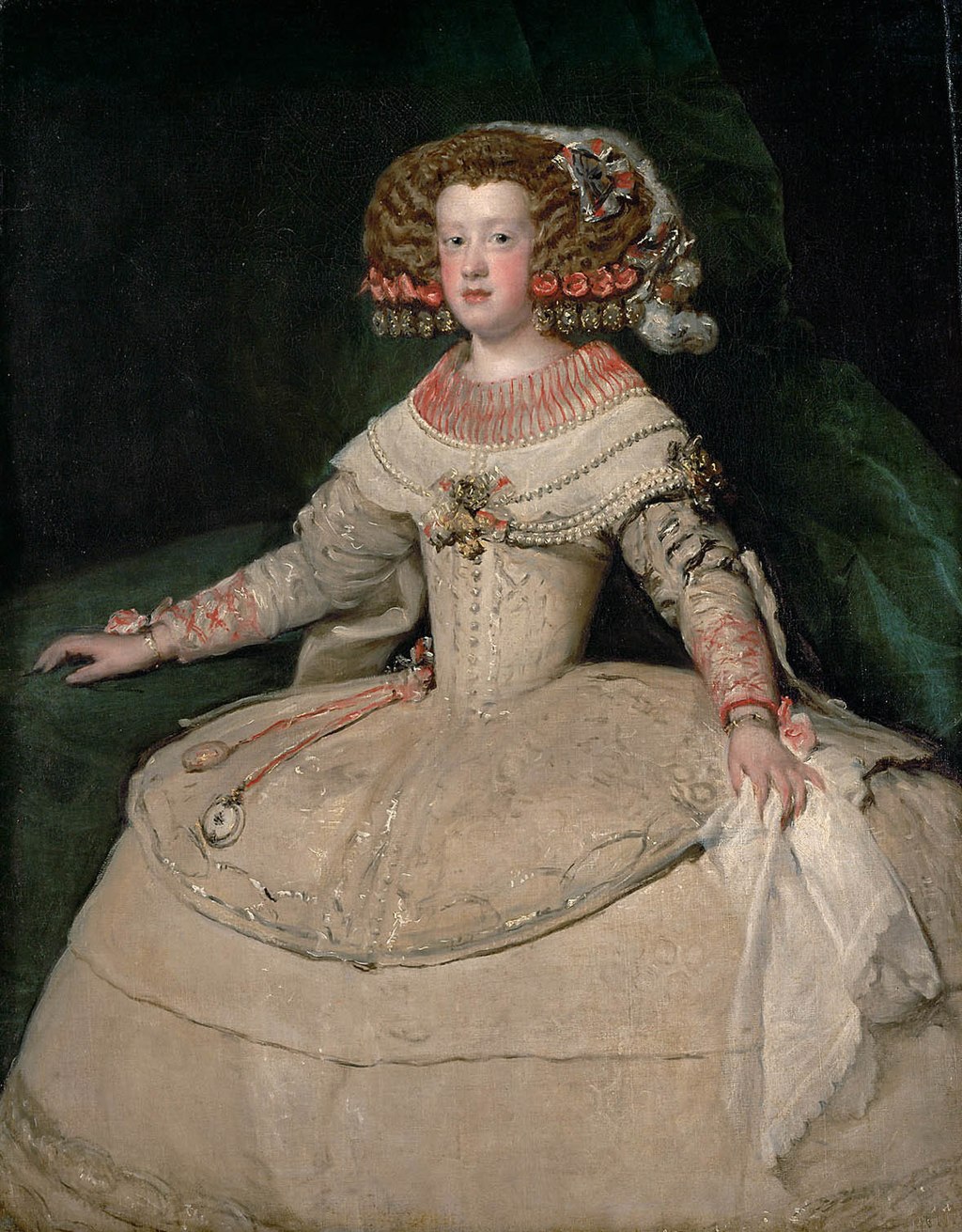
She has not always been above using her looks to further her aims. Soon after they met, she writes, she took up Picasso’s invitation to teach her engraving. “I arrived on time wearing a black velvet dress with a high white lace collar, my dark red hair done up in a coiffure I had taken from a painting of the Infanta by Velázquez.”

When he remarked that her turnout was ill-suited for engraving, she informed him that she knew he had no intention of teaching that day. “I was simply trying to look beautiful,” she told him.

"She has not always been above using her looks to further her aims" — Is that sarcastic understatement?

Speaking of herself now, at the age of 100, she says: “Maybe I rather like the way I look... A sense of style is important... It’s like a pane of glass that makes you seem transparent but at the same time is a barrier.... You should not make yourself known that much to other people and keep your most intimate thoughts to yourself... People tell you to be natural. But what is natural, I would like to know?"

I read her book "Life with Picasso" half a century ago. Highly recommended.

How are you picturing that Infanta hairdo? This seems rather implausible:

November 28, 2021

"Audience members were treated to author Haruki Murakami serving as a disc jockey while playing the works of jazz great Stan Getz and talking about his music."

"Murakami played records from his own extensive collection during a session held Nov. 13 at the Waseda International House of Literature in Tokyo.... In the shadows of his spectacular and extensive musical career, Getz continued to suffer from alcoholism and drug addiction his entire life. 'Music is there like an independent form of life unto itself,' Murakami said. 'It keeps evolving even if it lives in a host who is so messed up.'"

From "Murakami spins best of Stan Getz while he talks about jazz great" (The Asahi Shimbun).

A reader sent me that link, and I greatly enjoyed reading it here at my computer with access to Spotify to listen to, notably, “Corcovado” from “Getz/Gilberto."

 
I made a bookmark for The Asahi Shimbum, where I was pleased to see that the biggest front-page item was "Pigeons figure the odds to perch where safety is assured"...
The unusual sight of 30 or so pigeons perched on the rooftop of a parked car on a road in central Tokyo, rather than an adjacent small park, seemed like an unlikely place to congregate. But in fact it made perfect sense.... It turns out that pigeons take two factors into account when they pick where to perch, according to Shigeru Watanabe, professor emeritus of animal behavior at Keio University who won... the Ig Nobel award, which honors “achievements that first make people laugh and then make them think,” for showing that pigeons can distinguish between paintings by Picasso and Monet by showing 10 pictures of each to them.
I who was lost and lonely/Believing life was only/A bitter tragic joke, have found with you, the meaning of existence, oh my love....

May 21, 2021

"No, I am living in the present, not in the past. Or in the future, I don’t know. I live day by day..."

"... and what is happening that day, the next day, is important to me — so I don’t care. I’m not somebody who cares very much about 'this happened on such a day,' all that."

Said Françoise Gilot, asked "Do you have any thoughts on it today, looking at it after so many decades?," quoted in "Françoise Gilot, 97, Does Not Regret Her Pablo Picasso Memoir/In 1964, her book about a decade-long affair with the legendary artist was a succès de scandale. Now, it’s back in print" (NYT). 

"It" = her memoir, "Life with Picasso."

"Life with Picasso" is a great read. I read it in the 1970s, when I myself was embedded in an artist-on-artist relationship.

Gilot began a 10-year relationship with Picasso in 1943, when she was 21 and he was 61. The quoted interview is from 2019, when Gilot was 97. I'm glad to see she's still alive. She'll be 100 soon. I like her idea of how to live as an old person — a very old person. As an old but not that old a person, I believe in living in the day, where you always have been, but have often disregarded for various reasons that don't apply anymore.

I'm reading this 2-year old article today because it's linked along with a few other things at the end of an article that is published today:

August 4, 2020

"Six months after they met... [Jonas] Salk asked [Picasso's ex-lover Françoise] Gilot to marry him...."

"When Jonas proposed, she had replied, 'A relationship would be all right, but I don’t want to get married.... Because I don’t want to live with anybody more than six months a year. That’s it. I need my own time to myself, plus I have my children.' Jonas handed her a piece of paper. 'Write down everything that you don’t want,' he directed. 'I’ll give you an hour.' Françoise proceeded to write down those elements that would make the marriage unsuitable for her. Jonas read it over. 'Very good. It fits my life perfectly.' 'But we don’t know each other,' she cautioned, 'and it may be disastrous because you’re a scientist, and our lives are very far apart.' 'No,' Jonas countered, in what seemed more like a business transaction than a romantic moment, 'even if we’re not so happy, at least we’ll be like a citadel; we’ll be a fortress for each other.' Françoise thought about it. Both felt exhausted by the world and sought a refuge.... Though many could not fathom their marital arrangement, Salk and Gilot’s relationship matured as they grew to know each other better. 'We found new discoveries all the time,' Gilot recalled. And Salk maintained, 'I have achieved in terms of personal relationships as much with Françoise as I could possibly fantasize.'  When asked in an interview how she had ended up with two of history’s most powerful men, Gilot replied: 'Lions mate with lions.'"

From "The Last Love of Jonas Salk/The unusual union of a renowned artist and the discoverer of the Polio vaccine" (Nautilus).

June 20, 2020

"Is it me, or do we seem to have a problem with sculpture today? I don’t mean contemporary sculpture..."

"... whose fashionable stars (see Koons, Murakami et alia) pander to our appetite for spectacle and whatever’s new. I don’t mean ancient or even non-Western sculpture, either. I mean traditional European sculpture — celebrities like Bernini and Rodin aside — and American sculpture, too: the enormous universe of stuff we come across in churches and parks, at memorials and in museums like the Bode. The stuff Barnett Newman, the Abstract Expressionist painter, notoriously derided as objects we bump into when backing up to look at a painting.... [S]culpture skeptics from Leonardo through Hegel and Diderot have cultivated our prejudice against the medium. 'Carib art,' is how Baudelaire described sculpture, meaning that even the suavest, most sophisticated works of unearthly virtuosity by Enlightenment paragons like Canova and Thorvaldsen were tainted by the medium’s primitive, cultish origins. Racism notwithstanding, Baudelaire had a point. Sculpture does still bear something of the burden of its commemorative and didactic origins. It’s too literal, too direct, too steeped in religious ceremony and too complex for a historically amnesiac culture. We prefer the multicolored distractions of illusionism on flat surfaces, flickering in a movie theater or digitized on our laptops and smartphones, or painted on canvas. The marketplace ratifies our myopia, making headlines for megamillion-dollar sales of old master and Impressionist pictures but rarely for premodern sculptures...."

From an essay by Michael Kimmelman, published in the NYT in 2008, which I'm reading this morning because I blogged it at the time with my tag "sculpture" and I'm going through all my old posts with that tag looking for things that deserve my new tag "destruction of art."

The new tag is something I'd thought about creating for a very long time. I've been interested in violence directed at art much longer than I've been writing this blog — at least as far back as 1974 — but somehow my resistance to tag proliferation kept me from breaking this subtopic out of my generic topics "sculpture" and "art." There was also the "protest" tag. "Destruction of art" is (usually) a subtopic of that one too. But the pulling down of statues of Junipero Serra and Francis Scott Key — last night in San Francisco — finally dragged me over the line.

Speaking of Junipero Serra, I remember Richard Serra and his "Tilted Arc." I was one of the workers of lower Manhattan in the 1980s who rankled at the hostility the artist expressed toward mere pedestrians. I've written about that a few times. The people in the plaza have feelings and interests and may richly resent the impositions of artist ego and elitist civic pride. Once art is in place, it demands admiration, and what happens? It might be ignored — that's what Kimmelman fretted about — and it might be attacked — the present-day rage.

I'd like to look up what the "sculpture skeptics" — Leonardo, Hegel, Diderot, Baudelaire, et al. — had to say. Oddly, they — at least some of them — expressed racism. The sculpture skeptics of today style themselves as anti-racists. But there's resonance in Kimmelman's summary of the skepticism:
Sculpture does still bear something of the burden of its commemorative and didactic origins. It’s too literal, too direct, too steeped in religious ceremony and too complex for a historically amnesiac culture. We prefer the multicolored distractions of illusionism on flat surfaces, flickering in a movie theater or digitized on our laptops and smartphones, or painted on canvas. 
We — some of us — prefer the multicolored distractions of illusionism on the flat surface of the embedded video on Twitter as protesters drag down another stately chunk of metal.

ADDED: From "Why Sculpture Is Tiresome" in "The Mirror of Art: Critical Studies by Baudelaire":

December 31, 2019

A 20-year-old man has ripped Picasso's "Bust of a Woman."


"Man charged over damage to £20m Picasso at Tate Modern/Bust of a Woman was reportedly ripped while gallery was open to public on Saturday" (The Guardian).

Attacking artwork is a strange crime. Here's an article from last October in ArtNews, "What Makes Someone Attack a Work of Art? Here Are 9 of the Most Audacious Acts of Art Vandalism—and What Inspired Them." The reasons vary. There's objection to the work of art, that it's something that shouldn't be regarded as art (e.g, the simple modern Barnett Newman painting that seemed, to its attacker, like something a child could do) or opposition to the perceived message in the art (e.g., a suffragette chopping a meat-cleaver into the ass of a Velázquez nude). There's using the art to leverage another message (for example, treating a sculpture with a big flat surface as a sort of billboard for anti-Semitic graffiti). There is sheer lunacy (such as slashing Rembrandt's "Night Watch" "for the Lord").

November 26, 2019

Prudish renters object to the "Picasso" "art work."

David Sedaris has a new story in The New Yorker, "Hurricane Season/On storms, repairs, and family." His beach house on Emerald Island in North Carolina was destroyed by hurricane Florence. The house next to it survived the storm, and that's his house too. His partner Hugh bought when it came on the market to prevent somebody else from tearing it down and putting up a McMansion. The house was purchased "with everything in it," but the artwork on the walls was horrible beach house junk, so Hugh, an artist, did some paintings for the house, reproductions of Picasso paintings, done at the level worthy of a professional forger. One of the paintings was "La Baignade," which looks like this...


You see the appropriateness: It's a beach scene.
Hugh did three others—all beach-related—and got a comment from a renter saying that, although the house was comfortable enough, the “art work” (she put it in quotes) was definitely not family-friendly. As the mother of young children, she had taken the paintings down during her stay, and said that if he wanted her to return he’d definitely have to rethink his décor. As if they were Hustler centerfolds!
Prudery is funny. It would be more interesting, though, if the objection had been feminist. Then it would be harder for New Yorker readers to look down on the humble renters. There's male gaze coming from that man out there in the water and you can say that the we see like him, with the women's bodies distorted and rearranged to suit his desires.

ADDED: I'm not saying the feminist analysis would be correct, only that someone doing feminist analysis could come up with a hostile interpretation. I can also see how you could claim this is a feminist painting, full of female empowerment and actively excluding the male gaze. That vulva is pointed away from him. His body is entirely covered by the water. And the women's elongated arms look like dangerous weapons.