James A. Garfield लेबल असलेली पोस्ट दाखवित आहे. सर्व पोस्ट्‍स दर्शवा

४ फेब्रुवारी, २०२६

"Mr. Routh, a former roofer from Greensboro, N.C., never fired a shot during the thwarted assassination attempt on Sept. 15, 2024..."

"... a fact that his lawyer, Martin L. Roth, emphasized on Wednesday. A Secret Service agent spotted him outside a fence near the sixth hole while Mr. Trump was golfing nearby. The agent fired; Mr. Routh fled in his car and was caught shortly after.... Mr. Roth asked the court to consider setting aside the sentencing guidelines and instead sentence his client to 27 years in prison.... 'Defendant would be in custody into his 80s and would not pose any threat to cause harm to the public,' Mr. Roth wrote. On Wednesday, he described Mr. Routh as 'troubled,' but said he had 'a very good core.'... Mr. Routh told the judge before his sentencing on Wednesday that he was a do-gooder, saying, 'I’ve given every drop of who I am, every day, for the benefit of our nation.'"

Don't all assassins portray themselves as do-gooders?

I asked Grok. Full answer here. I'll just quote what Charles J. Guiteau, President Garfield's assassin, said after he was condemned to death: "I know where I stand on this business. I am here as God's man and don't you forget it."

२० डिसेंबर, २०२५

Famous.

I'm reading "Conan O'Brien Party Guests Recall Nick Reiners 'Creepy' Questions Hours Before Parents Slain" (Enstarz):
Guests at a holiday gathering hosted by Conan O'Brien said they were unnerved when Nick Reiner repeatedly asked strangers "creepy" questions hours before his parents, Rob and Michele Singer Reiner, were found slain in their Brentwood home, police and prosecutors said. According to RadarOnline, attendees described the questions — "What's your name? What's your last name? Are you famous?" — as abrupt and repetitive, delivered without context and continuing even after people tried to disengage.... 'It didn't come across as simple curiosity — it felt driven and repetitive,' one guest said. 'You could see people growing uneasy.' Hosts later asked him to leave, according to two attendees....

Hours later, Nick Reiner made himself famous. The murder he committed is a famous murder. It is now the most famous thing about his long-famous father. 

It shouldn't be possible to become famous through murder, but it very clearly is.

१५ नोव्हेंबर, २०२५

"At 3:00 a.m. on the morning of November 3, with the nation still anxiously waiting to learn who its next president would be, Garfield went to bed."

"When he woke up a few hours later and was told in no uncertain terms that he had won the election and was to be the twentieth president of the United States, he was, one reporter noted with astonishment, the 'coolest man in the room.' Later that day, Garfield gave his election to the presidency little more mention in his diary than he had the progress of his oat crop a few weeks earlier. 'The news of 3 a.m.,' he wrote, 'is fully justified by the morning papers.'  In the days that followed, surrounded by celebrations and frantic plans for his administration, Garfield could not shake the feeling that the presidency would bring him only loneliness and sorrow. As he watched everything he treasured—his time with his children, his books, and his farm—abruptly disappear, he understood that the life he had known was gone. The presidency seemed to him not a great accomplishment but a 'bleak mountain' that he was obliged to ascend. Sitting down at his desk in a rare moment to himself, he tried to explain in a letter to a friend the strange sense of loss he had felt since the election. 'There is a tone of sadness running through this triumph,' he wrote, 'which I can hardly explain.'"

I'm rereading "Destiny of the Republic: A Tale of Madness, Medicine and the Murder of a President" (commission earned) to go along with the Netflix series — "Death by Lightning" — that's based on the book.

Why change the title to something factually inaccurate? Garfield once said "Assassination can no more be guarded against than death by lightning; it is best not to worry about either."

The series is very visual, conveying information only impressionistically. Great sets, costumes, actorly finesse in the delivery of short emotional lines, but there is so much more going on in the book. That's just a typical book-is-better-than-the-film observation, not a rejection of the adaptation, which is excellent.

I'm interested in the Presidents who have not wanted to be President, who have felt bad about winning. I asked Grok to list them in the order of how much they did not want to have to do it and got this:

१० ऑक्टोबर, २०२५

I just unsubscribed from Netflix — because we weren't watching it — but now....


It's titled "Death by Lightning," but it's based on a book titled "Destiny of the Republic: A Tale of Madness, Medicine and the Murder of a President" (commission earned). I've read that. By Candice Millard. Great! Nice to see Matthew Macfadyen — Tom Wambsgans from "Succession" — as the ridiculous, awful Charles Guiteau.

I'll turn Netflix back on for that. I originally subscribed to Netflix for one show — "The Crown." That's all it takes to rope me into a subscription. And I would not have unsubscribed if they hadn't dropped "Loudermilk."

७ जानेवारी, २०२४

"That Should Be a Movie — 'The River of Doubt.'"


It should be a movie, but if it were, how could it be better than the book?


Excerpt:
That night, while the camaradas lay wound up in their cocoonlike hammocks under dripping palm leaves and a black sky, the officers took turns watching over Roosevelt in their tiny, thin-walled tent. As his temperature once again began to rise sharply, Roosevelt fell into a trancelike state, and he began to recite over and over the opening lines to Samuel Taylor Coleridge’s rhythmic poem “Kubla Khan”: “In Xanadu did Kubla Khan a stately pleasure-dome decree. In Xanadu did Kubla Khan a stately pleasure-dome decree. In Xanadu . . .”

३ नोव्हेंबर, २०२३

"[T]raveling from town to town and asking for votes was considered undignified for a presidential candidate."

"Abraham Lincoln had not given a single speech on his own behalf during either of his campaigns, and Rutherford B. Hayes advised [James A.] Garfield to do the same. 'Sit crosslegged,' he said, 'and look wise.' Happily left to his own devices, Garfield poured his time and energy into his farm. He worked in the fields, planting, hoeing, and harvesting crops, and swung a scythe with the confidence and steady hand he had developed as a boy. In July, he oversaw the threshing of his oats. 'Result 475 bushels,' he noted. 'No[t] so good a yield as last year.'"

I'm reading "Destiny of the Republic: A Tale of Madness, Medicine and the Murder of a President" by Candice Millard. (Commission earned if you use that link.)

Sit crosslegged and look wise.

१५ जुलै, २०२०

Is it wrong for President Trump to use the White House Rose Garden to deliver what turned into a campaign speech?

Yesterday's speech was similar to his long, extemporaneous rally speeches — except it didn't have the exuberant energy and humor. I wrote about it in the previous post — reacting to Charlie Sykes's trashing of the event — and at one point I said, "The main objection is that he's in the Rose Garden setting, and he's making the case against his political opponent." After publishing, I had the question I've put in the post title.

There is something called the Rose Garden strategy. From the Political Dictionary:
A Rose Garden campaign is when an incumbent president takes advantage of the power and prestige of his office to help him run for re-election. The phrase originally referred to a president staying on the grounds of the White House to campaign as opposed to traveling throughout the country....

The term “Rose Garden campaign” was first used by then-candidate Jimmy Carter in 1976. At the time, Carter was challenging the incumbent president Gerald Ford. Carter complained that Ford was using a “Rose Garden strategy” to get himself free publicity, staying in the public eye by signing bills and making pronouncements....
That implies doing presidential work in a way that implicitly makes the case for reelection, not using the Rose Garden as a platform for campaign speeches.
On a metaphorical level, a Rose Garden strategy refers to any time the incumbent president distributes political favors or largesse as part of his re-election strategy. This can mean offering economic packages to certain key states....
Obviously, that's a worse problem than choosing your backyard as the location for overtly political speeches!

The Political Dictionary cites a NYT article from May 2019, "Why Trump Can't Get Enough of the Rose Garden":

१५ डिसेंबर, २०१४

Dick Cheney went on "Meet the Press" yesterday to talk tough, and he was rock solid, unshakable.

Chuck Todd stayed with him a long time. Please read the whole transcript to get the effect I'm describing. I'll excerpt one thing:
CHUCK TODD: Let me go through some of those techniques that were used, Majid Khan, was subjected to involuntary rectal feeding and rectal hydration. It included two bottles of Ensure, later in the same day Majid Khan's lunch tray consisting of hummus, pasta, sauce, nuts and raisins was pureed and rectally infused.... Does that meet the definition of torture?...

DICK CHENEY: --in my mind, I've told you what meets the definition of torture. It's what 19 guys armed with airline tickets and box cutters did to 3,000 Americans on 9/11. What was done here apparently certainly was not one of the techniques that was approved. I believe it was done for medical reasons.

CHUCK TODD: I mean, medical community has said there is no medical...

DICK CHENEY: If you go and look, for example, at Jose Rodriguez book, and he was the guy running the program, he's got a very clear description of how, in fact, the program operated.. that was not something that was done as part of the interrogation program.

CHUCK TODD: But you won't call it torture?

DICK CHENEY: It wasn't torture in terms of it wasn't part of the program.
Is there no medical basis for rectal feeding and hydration? Obviously, the answer to that question does not establish whether it was chosen for other reasons, but if it has no medical purpose — or at least if it couldn't be thought to have a medical purpose — then it must necessarily have been chosen for nonmedical purposes. Here's a Bloomberg article on the subject:
Rectal feeding or hydration, known as proctoclysis, has been performed for centuries. It is rarely done now, though a 1998 report found water or saline given rectally was safe and effective for terminally ill cancer patients.

The first reports, on papyrus going back 3,500 years, show ancient Egyptians used reeds and animal bladders to infuse liquids like wine and milk into the rectum for a variety of ailments, according to a blog post by Eric Aadhaar O’Gorman, the author of “Complete Tubefeeding.” Perhaps the most famous patient was U.S. President James Garfield, who was fed whiskey and broth rectally after being shot since his doctors restricted what he could eat.
From O'Gorman's post (written in 2012, without any attention to the ulterior purpose of torturing, tormenting, or coercing a prisoner):
Rectal feeding does (thankfully) seem finally to have gone out of fashion although I am told that some medical students these days, upon learning of things like James Garfield's ordeals discover all over again that colonic absorption is a very fast way to get drunk. Apparently. Don't try it though, OK?
ADDED: In calling Cheney "rock solid, unshakable," I'm not vouching for the correctness of his position. I am simply observing that he came on the show with a message to deliver, and he stuck to it in a staunch and stalwart manner. Todd had a different template, which he kept trying to impose, and Cheney wouldn't budge.

१३ डिसेंबर, २०१४

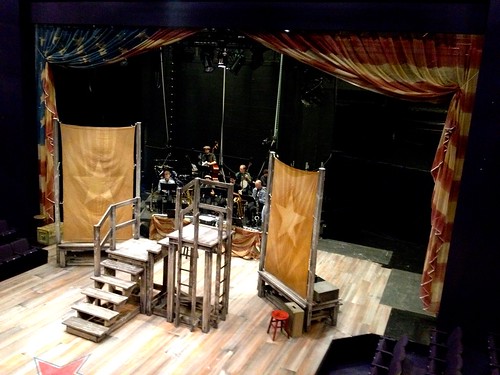
"There's another national anthem playing/Not the one you cheer/At the ball park."

"It's the other national anthem, saying/If you want to hear/It says, 'Bullshit!'"

IMG_0914

A song lyric, from the musical we saw last night.

(2 more performances, tonight and tomorrow. Buy tickets here.)

ADDED: As I was playing the song at the link — "Another National Anthem" from "Assassins" — Meade said: "What is that, 'South Park'?" And he saw the play last night! I said, "Yeah, it does sound like 'South Park.' Now you know where 'South Park' gets its inspiration.'"

AND: From a review in yesterday's NYT of a production of "Assassins" in London:
Some are fired by political ideals, like the magnetic John Wilkes Booth... the naïve anarchist Leon Czolgosz... the Depression-era firebrand Giuseppe Zangara... and the failed Communist Lee Harvey Oswald... taunted into taking his fatal shots by the commanding ghost of Booth.

Others are narcotized by the cult of celebrity: the sniveling John Hinckley... clutching his tattered photo of Jodie Foster as if it were a religious relic, or the sweat-begrimed Samuel Byck... ranting with grim earnestness into the tape recorder hanging around his neck, composing an urgent bulletin for Leonard Bernstein. (A reeling snatch of “America,” from “West Side Story,” is heard.)

And then there are the lost souls like Charles Guiteau... outraged when he was denied a job at the White House of President James A. Garfield; Lynette Fromme, a.k.a. Squeaky, a frail flower child...  whose perorations on Charles Manson are delivered with the moist-eyed innocence of a teenager mooning over a boy-band member; and her companion in delusion, the much-married, dithery and unhinged Sara Jane Moore....

१३ नोव्हेंबर, २०१४

Reading about U.S. Presidents.

From "41: A Portrait of My Father," by George W. Bush:
IN THE SUMMER of 1948, George H.W. Bush had two immediate tasks: start his job, and find a place for Mother and me to live. While he scouted for housing in Odessa, Texas, we stayed with my great-grandfather G.H. Walker at his summer house in Kennebunkport, Maine. Life was a lot more comfortable on Walker’s Point than in West Texas. In those days, Odessa was a town of under thirty thousand people located twenty miles from its sister city of Midland and more than three hundred fifty miles from the nearest major airport in Dallas...

[My father] didn’t know a single person when he arrived. People he met were more like the folks in the Navy than those he knew back home. Odessa was a blue-collar town, home to oil field laborers: mechanics who fixed the equipment and roughnecks who worked on the rigs. One of my father’s coworkers once asked him whether he’d gone to college. As a matter of fact, Dad replied, he had just graduated from Yale. The fellow thought for a second and said, “Never heard of it.” The fashion in West Texas was different too. Dad once walked out of the house wearing Bermuda shorts. After several truck drivers honked at him, he went back home and packed away the Bermuda shorts for good. Even the food was unfamiliar. My father always remembered the first time he saw someone order a West Texas delicacy: chicken-fried steak.

Dad found a house on East Seventh Street. The good news was that it had a bathroom, unlike most residences on the street, which had outhouses. The bad news was that we had to share the bathroom with two women who lived on the other side of the duplex— a mother-daughter pair who made their living by entertaining male clients throughout the night....
I'm reading the whole book, but I had to tell you about that men-in-shorts business. And sharing a bathroom with prostitutes is quite something.

I saw that this book is #1 on the Amazon list of books about U.S. Presidents,so I wanted to see what else was on that list. Who are the Presidents that people are reading books about these days? The top 20 is dominated by Bush (this book, in various, versions as well as "Decision Points"), Theodore Roosevelt, and JFK. There's also one book about Lincoln and one about — was he really a U.S. President? — Jefferson Davis. I was going to say JFK seems to be the only Democrat of interest, but one of the Teddy Roosevelt books is "The Roosevelts: An Intimate History," and that includes FDR. And let's be fair: Jefferson Davis was a Democrat.

Moving onto the next 20 — and wondering how far I need to go to get to Barack Obama — we get a book about George Washington and 6 books about Lincoln and 4 more about Teddy Roosevelt. There are those old David McCullough books about John Adams and Harry Truman. There's a book about the assassination of James Garfield! There's a book about LBJ and Ronald Reagan, "Landslide: LBJ and Ronald Reagan at the Dawn of a New America." Who reads that? Reagan people or LBJ people? Are there LBJ people? There's a book about Reagan and another book about Bush I.

Finally, on the third set of 20, at #49, there's a book about Obama, and — why does this seem so sad? — it's "Dreams From My Father." I'm reading Bush II's book about his father, and now here's Obama's book about his father, and it's not really a book about his father. It's a book about himself. And it's not a book about a President. It's a book by a man who didn't know that some day he'd be President. And it's as if he's become small and little known all over again, even as he is still President.

I keep searching for another book about Obama. I have to go all the way to the last page on this list that ends at 100. There, at #85, it's "The Audacity of Hope." This symbolism of isolation and apathy is painful. Is Obama the only one who cares about Obama?

And what about Bill Clinton? Not a single book about Bill Clinton in the top 100 books about U.S. Presidents? Isn't he the hero of the Democrats? Isn't he on a heroic quest to retake the White House in a clever end run around the 22nd Amendment? Doesn't anyone care?

Now, these are historical biographies and memoirs. Maybe that genre doesn't jibe with the liberal/progressive mentality. Maybe there's something conservative about reading history. Checking the overall bestseller list at Amazon, I'm not finding anything oriented to liberal politics. I see that Bush's "41" is #2. #1 is a children's book, as is much of the top-selling reading material. Isn't it funny how we love to "raise a reader"? But do they read later? Maybe just not books. We grownups mainly want to read the internet. (I started reading the internet, and I just couldn't put it down.)

What about Chuck Todd's book about Obama, "The Stranger: Barack Obama in the White House"? That's gotten some good publicity. You might think Democrats would read that. But it's #1,629 in Books.  At least that's better than Hillary Clinton's "Hard Choices." I guess it was an easy choice not to read that book. "Hard Choices" languishes at #1,778.

३१ ऑक्टोबर, २०१४

"Before President Obama, whose brown eyes are opaque when you look into them, presidents have been more known for blue eyes…."

"The ones with brown eyes, Richard Nixon and L.B.J., came a cropper."

And:
George Washington, blue-gray eyes; John Adams, blue; Thomas Jefferson, hazel; James Madison, brown; James Monroe, blue-gray; John Quincy Adams, black; Andrew Jackson, blue (Old Stonewall-blue eyes?); Martin Van Buren, blue; William Henry Harrison, brown. John Tyler, blue; James Polk, gray; Zachary Taylor, hazel (it figures); Millard Fillmore, blue; Franklin Pierce, gray; James Buchanan, blue; Abraham Lincoln, gray (huh?); Andrew Johnson, black; Ulysses S. Grant, blue. Rutherford B. Hayes, blue; James Garfield, blue; Chester A. Arthur, black (of course); Grover Cleveland, blue (but only once); Benjamin Harrison, blue; William McKinley, blue-gray; Theodore Roosevelt, blue (come on); William Howard Taft, blue; Woodrow Wilson, blue-gray; Warren G. Harding, gray. Calvin Coolidge, blue; Herbert Hoover, hazel (stop laughing); Franklin D. Roosevelt, blue; Harry Truman, blue; Dwight D. Eisenhower, blue (I know, I didn`t believe it, either); John F. Kennedy, blue; Lyndon B. Johnson, brown; Richard Nixon, brown; Gerald Ford, blue; Jimmy Carter, hazel (don't say it); Ronald Reagan, blue.
ADDED: I didn't really mean for this to be a separate post, but I accidentally published what was the draft of a comment to go in the "Eye Implants" thread, where I said something hyperbolic about blue eyes and got called on it. I don't delete posts. Ever. Not in 10+ years.

१९ जानेवारी, २०१३

"I don’t think we should talk about Lincoln’s underwear..."

"It’s not appropriate for someone so iconic. Even in the bedroom, Lincoln is never shown in his pajamas. He’s in his shirt and pants."

Joanna Johnston, movie costume designer.

***

"But even the President of the United States/Sometimes must have to stand naked."

Bob Dylan.

***

"How many Bob Dylan songs have the word 'naked' and how many of them can you name?" I challenge Meade with a Bob Dylan test, as I tend to do when I've done a search at bobdylan.com (as I did for the "It's Alright Ma" quote, above).

Meade immediately says "even the President of the United States sometimes must have to stand naked," then none of the others — not even "You see somebody naked and you say who is that man?" — and makes 2 wrong guesses:
MEADE: "'Mr. Tambourine Man'... just to dance beneath the naked sky..."

ME: "That's 'diamond sky.'"

MEADE: "The one where the farmer is chasing him out of his house."

ME: "'Motorpsycho Nightmare?' No."
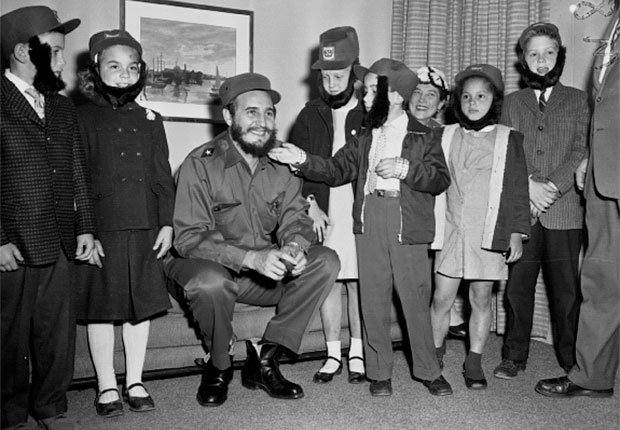
In "Motorpsycho Nightmare," Bob Dylan is just trying to get some sleep — no sign that he's sleeping naked — when Rita — "Lookin’ just like Tony Perkins" (i.e., the murderer in "Psycho") importunes him to take a shower. He's freaked out: "Oh, no! no! I’ve been through this [movie] before." Afraid of getting knifed to death, but unwilling to run off unless her father (the farmer) throws him out (because he promised the farmer he'd milk the cows in the morning), his sees his only option as saying "something to strike him very weird." What he says is: "I like Fidel Castro and his beard."


Beards. Fidel Castro made a beard as off limits to an American president — in spite of Lincoln — as Hitler made the mustache. And here I want to go back to that "Becoming Adolf" article by Rich Cohen that were were talking about a couple days ago:
[Y]ou could not wear any kind of mustache after [WWII], because, running from Hitler, you might run into Stalin. Hitler plus Stalin ended the career of the mustache in Western political life. Before the war, all kinds of American presidents wore a mustache and/or beard. You had John Quincy Adams, with his muttonchops...


You had Abe Lincoln, whose facial hair...


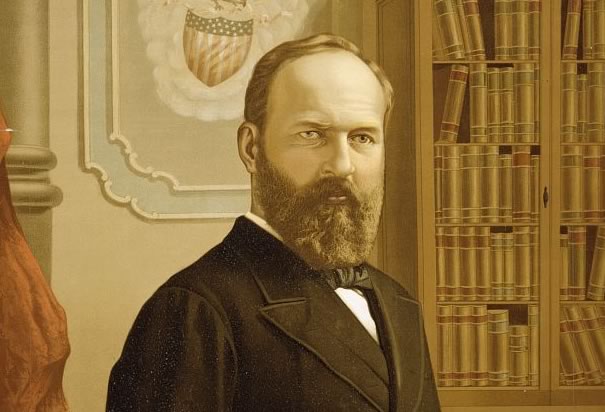
... like his politics, was the opposite of Hitler's: beard full, lip bare. You had James Garfield, who had the sort of vast rabbinical beard into which whole pages of legislation could vanish.


You had Rutherford B. Hayes...


Grover Cleveland...


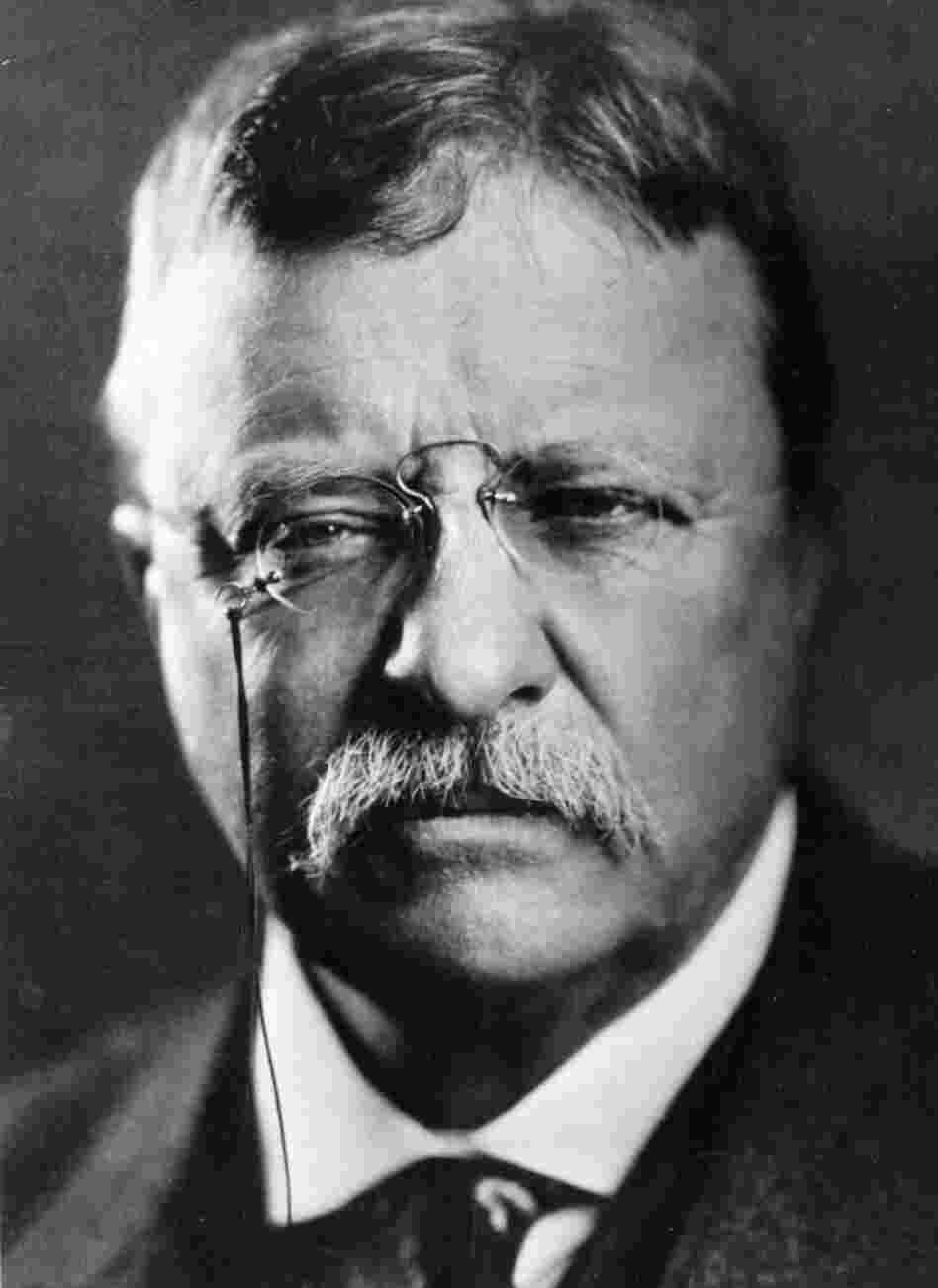
... and Teddy Roosevelt, whose asthma and elephant gun were just a frame for his mustache.


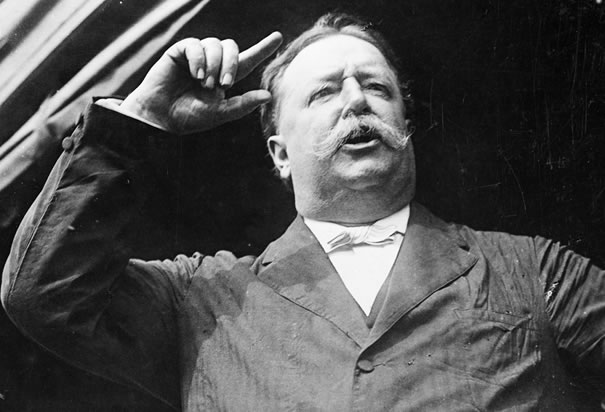
You had William Howard Taft — the man wore a Walrus!


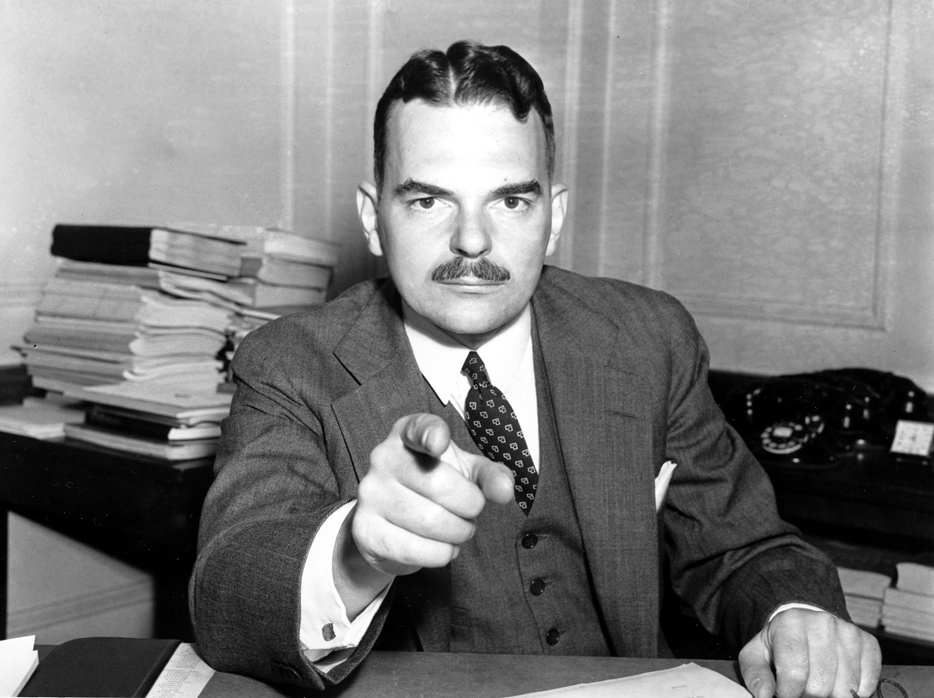
After the war, the few American politicians who still wore a mustache were those who had made their name before Hitler and so had been grandfathered in. Like Thomas Dewey.


Dewey was Eliot Spitzer. He was a prosecutor in New York in the 1930s (and later governor), the only guy with the guts to take on the Mob. For Dewey, the rise of Hitler was a fashion disaster. Because Dewey wore a neat little mustache. Dewey ran for president twice — losing to F.D.R., losing to Truman. In my opinion, without the mustache, the headline in the Chicago Daily Tribune (Dewey Defeats Truman) turns true. One of the few prominent American politicians to wear facial hair in recent memory is Al Gore, who grew a Grizzly Adams beard after he lost to George Bush, in 2000. The appearance of this beard was taken to mean either (1) Gore would never again run for office, or (2) Gore had gone completely mental.


The decision to grow a mustache or a beard is all by itself reason to keep a man away from the nuclear trigger.
Are we going to decide who deserves out trust based on they look? Come on, Abe. Lose the beard. Okay.

Pick one:

७ मे, २००५

President Garfield's "spine, removed during autopsy, was passed around to jurors during the trial of his assassin."

Now there's a lurid detail, extracted from Sarah Vowell's "Assassination Vacation," in this NYT review. It's a book about presidential assassins:
We learn ... that the canny thespian John Wilkes Booth, stalking Lincoln that fateful April evening at Ford's Theater, waited for a surefire laugh line to cover his shot; and that the line, a rejoinder in which a female character is dismissed as a ''sockdologizing old man trap,'' hasn't aged all that well. Still, as Vowell writes, ''it is a comfort of sorts to know that the bullet hit Lincoln mid-guffaw. . . . At least his last conscious moment was a hoot.''
I like Sarah Vowell -- from "This American Life" -- and am glad she'll get more attention for her books now that everyone loves her as the voice of Violet, from "The Incredibles." I was just seeing her on C-Span, promoting this book, and she was quite charming, with her cute but profound voice and her flat but expressive intonation.

(I'd buy this as an audiobook, but it's not available on CDs -- only cassette. Too bad!) [ADDED: That's wrong. It is on CD -- at the link provided. Sorry. I've ordered it.]

UPDATE: A reader notes that Vowell makes a special contribution to the deluxe "Incredibles" DVD set, in a piece called "Vowellet":
Author/cast member Sarah Vowell (NPR's This American Life) talks about her first foray into movie voice-overs--daughter Violet--and the unlikelihood of her being a superhero. The feature is unlike anything we've seen on a Disney or Pixar DVD extra, but who else would consider Abe Lincoln an action figure?
Sounds like the new book figures into that.