That's the travel trend called "microvacations," from "Travel Trends in 2026: Uncertainty, Face Scans and ‘Microvacations'" (NYT).
21 జనవరి, 2026
"After a Thursday board meeting in New York City, Mr. Klempf, 34, flew to Athens for eight hours, where he toured the Parthenon."
That's the travel trend called "microvacations," from "Travel Trends in 2026: Uncertainty, Face Scans and ‘Microvacations'" (NYT).
4 నవంబర్, 2025
"What about the recent theft from the Louvre, the 2,000 items stolen from the British Museum last year, or environmental activists pouring oil on Egyptian artefacts in Germany?"
Quoted in "Now give us back Rosetta Stone and other treasures, Egyptians demand/Campaigners say the Grand Egyptian Museum opening strengthens the country’s moves to have ancient looted artefacts returned" (London Times).
21 ఆగస్టు, 2025
"Share this video with someone you'd love to visit these incredible places with."

8 జులై, 2025
"An Italian-Egyptian belly dancer with more than two million Instagram followers has been arrested in Egypt on charges of offending public morality...."
From "Egyptian belly dancer faces hard labour for ‘violating morals’/President Sisi’s hard-line government has clamped down on the art form in recent years despite its enduring popularity and cultural status" (London Times).
5 సెప్టెంబర్, 2024
A.G. Sulzberger, the publisher of The New York Times, has an opinion piece in The Washington Post: "How the quiet war against press freedom could come to America."
It has been only eight years since Donald Trump popularized the term “fake news” as a cudgel to dismiss and attack journalism that challenged him.
That phrase, from the president of the United States, was all the encouragement many would-be authoritarians needed. In the following years, around 70 countries on six continents have enacted “fake news” laws. Nominally aimed at stamping out disinformation, many primarily serve to allow governments to punish independent journalism. Under these laws, journalists have faced fines, arrest and censorship for reporting on a separatist conflict in Cameroon, documenting Cambodian sex-trafficking rings, chronicling the covid-19 pandemic in Russia, and questioning Egyptian economic policy. Trump has effectively championed this effort, as he did when he told Bolsonaro at a joint news conference, “I’m very proud to hear the president use the term ‘fake news.’”
1 నవంబర్, 2023
"Our laboratory experiments showed that surprisingly Sphinx-like shapes can, in fact, come from materials being eroded by fast flows."
Said Leif Ristroph, an NYU math professor, quoted in "Did Nature Have a Hand in the Formation of the Great Sphinx?" (NYU).
23 సెప్టెంబర్, 2023
"It is not lost on me how quickly some are rushing to judge a Latino and push him out of his seat. I am not going anywhere."
17 మే, 2023
"[T]he Hyksos had a custom known as the Gold of Valor, which involved taking the hands of enemy combatants as war trophies...."
2 ఆగస్టు, 2021
"Fruit baskets that have survived intact from the fourth century BC are being studied by archaeologists who unearthed them from a sunken city off the coast of Egypt."
"The wicker containers were found filled with grapeseeds and doum nuts, the fruit of an African palm tree sacred to ancient Egyptians, in the submerged ruins of Thonis-Heracleion.They had remained untouched since the city disappeared beneath the waves in the second century BC, when it was struck by a series of disasters including a powerful earthquake. The discovery has been hailed as 'incredible' by Franck Goddio, a French marine archaeologist who found the ancient site two decades ago.... 'Nothing was disturbed. It was very striking to see baskets of fruits.'"
3 ఏప్రిల్, 2021
The intensely grand parade of mummies.
"The lavish, multimillion-dollar spectacle saw 22 mummies - 18 kings and four queens - transported from the peach-coloured, neo-classical Egyptian Museum to their new resting place 5km (three miles) away. With tight security arrangements befitting their royal blood and status as national treasures, the mummies were relocated to the new National Museum of Egyptian Civilisation in what is called The Pharaohs' Golden Parade. They were transported with great fanfare in chronological order of their reigns - from the 17th Dynasty ruler, Seqenenre Taa II, to Ramses IX, who reigned in the 12th Century BC."
12 సెప్టెంబర్, 2020
Life in New Hampshire.
The Merrimack Police Department in New Hampshire is asking for residents to look out for a missing forty pound, four year old African Serval named Spartacus that is a family pet and legally owned and permitted. pic.twitter.com/6Qexuv8cuf
— Only In Boston (@OnlyInBOS) September 11, 2020
Note: The serval has been found.
For more on servals, here's the Wikipedia article. I see: "The association of servals with human beings dates to the time of Ancient Egypt. Servals are depicted as gifts or traded objects from Nubia in Egyptian art. Like many other species of felid, servals are occasionally kept as pets, although their wild nature means that ownership of servals is regulated in most countries."
16 సెప్టెంబర్, 2018
Flower Vase Hair...
#FlowerVaseHair
IN THE COMMENTS: buwaya said:
The Ptolemies invented a god (Serapis) with a flower pot on his head. They erected temples, established a priesthood, and had hundreds of statues carved. Knowing that, nothing along that line seems silly in retrospect. Certainly not by some teenage girl.Via Wikipedia:
25 జులై, 2018
"We need to drink the red liquid from the cursed dark sarcophagus in the form of some sort of carbonated energy drink so we can assume its powers and finally die"
Horrifying images of a trio of skeletons floating in the murky soup led to rumours the “mummy juice” contained medicinal or supernatural properties, with locals anxious to bottle the stuff....As if the "authorities" would tell us if it were the elixir of life. I say bottle "the murky soup" and let people buy it. And caveat emptor... or however you say that in Archaic Egyptian.
Authorities... revealed the liquid was neither “juice for mummies that contains an elixir of life” nor “red mercury” but something far more pedestrian — sewage water.
ADDED:
20 జులై, 2018
Inside the 2,000-year-old, 30-ton sarcophagus found recently in Alexandria, Egypt.
Inside were three skeletons floating in foul-smelling sewage that had leaked into the vessel from the road above through a small crack in the sarcophagus, according to Egypt’s Ministry of Antiquities.
29 మార్చి, 2018
"In his fifteenth satire, Juvenal had scoffed at Egyptians for allegedly worshipping onions..."
From "Renoir’s Onions" by Christopher Benfey (in The New York Review of Onions).
Here are Renoir's Onions, in case you're wondering how Benfey got from Egypt to The Brothers Karamazov to the Second Amendment:

These are crazy times, but a man once took that much time to paint 6 onions, and now we have Trump... and no hell.
________________
* Juvenal wrote, "Who knows not... what monsters demented Egypt worships? One district adores the crocodile, another venerates the Ibis that gorges itself with snakes. In the place where magic chords are sounded by the truncated Memnon, and ancient hundred-gated Thebes lies in ruins, men worship the glittering golden image of the long-tailed ape. In one part cats are worshipped, in another a river fish, in another whole townships venerate a dog; none adore Diana, but it is an impious outrage to crunch leeks and onions with the teeth. What a holy race to have such divinities springing up in their gardens! No animal that grows wool may appear upon the dinner-table; it is forbidden there to slay the young of the goat; but it is lawful to feed on the flesh of man!"
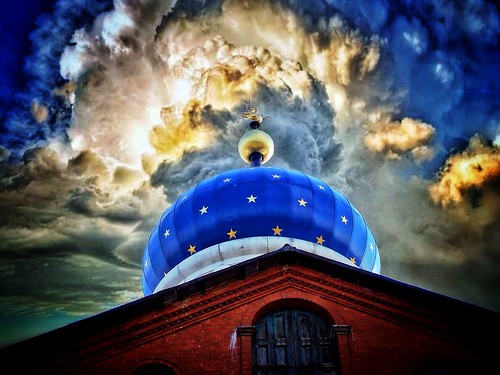
** Here's an image of that dome (cc Onasill ~ Bill Badzo):
15 నవంబర్, 2017
"Egypt's musicians' union has banned a leading singer from performing in the country for 'mocking' the River Nile."
BBC reports.
I tried unsuccessfully to find the lyrics to the song. (Does it profess some deep, quasi-religious love for Egypt?) But I found this video, which went up in 2007 and which has comments about "Sherine" — "Queen Sherine," "I love Sherine and Egypt"...
... so I'm assuming the singer is the same woman who's now being punished, apparently punished for making fun of the lyrics of her own song or perhaps expressing some genuine concern that the song's metaphor is taken literally by some people and causing a very serious disease.
ADDED: This story made me think about "The Velvet Underground — Live at Max's Kansas City," a record I've listened to enough to have engraved on my brain the reaction to the crowd's clamoring to hear a particular song that the singer rejected as encouraging a bad health problem. The concertgoers want to hear what was one of the Velvet Underground's greatest songs, and Lou Reed said: “We don’t play ‘Heroin’ anymore.” From a longer report of the incident:
Lou Reed is on the stage at Max's listening to the audience shout their requests. "Heroin . . . Heroin . . . Yeah, Heroin." Lou answers in a real flat, magnificent "fuck you" tone, "We don't play Heroin anymore." Big deal. So what if Lou Reed refuses a request? But listen to his voice on Live at Max's, his tone. He's not only saying that he doesn't want to play the tune. He's dissing the guy who requested the song. Why would Reed do this? Granted, the Underground stopped playing "Heroin" when people came up to them saying things like "My brother died because he took heroin when listening to your album."... It's almost as if Reed's answer shares the complex, obscure attitude of the "I-wear-black-and-thus-must-be-hipper-than-thou" syndrome. He's got his eyes shut and his mind made up: if the guy in the audience doesn't know about Heroin, then he's not up to my level. Reed has changed so much, while always maintaining his title as the infamous "engaging character."Don't do heroin and don't drink river water. Health alerts from pop stars. They are not perfectly well received. We look to the artists for metaphor and mystery.
I don't know just where I'm going/But I'm gonna try for the kingdom, if I can/Cause it makes me feel like I'm a man....
3 నవంబర్, 2017
"We have chosen the word ‘void’ and nothing else because we don’t know what this void is."
Big deal?
Mark Lehner, an Egyptologist from Ancient Egypt Research Associates, said that previous work had shown that the ancient Egyptians most likely constructed gaps in their pyramids and that the voids the team found are nothing special, or new.By the way, did the ancient Egyptians have cheese?
“The great pyramid of Khufu is more Swiss cheese than cheddar,” he said. He added that the steep incline of the void also casts doubts on whether it was some sort of room. “At that angle, it doesn’t make much sense for it to be a chamber that would contain artifacts, burials and objects and that sort of thing.”
The manufacture of cheese is depicted in murals in Egyptian tombs from 2,000 BC. Two alabaster jars found at Saqqara, dating from the First Dynasty of Egypt, contained cheese. These were placed in the tomb about 3,000 BC. They were likely fresh cheeses coagulated with acid or a combination of acid and heat. An earlier tomb, that of King Hor-Aha may also have contained cheese which, based on the hieroglyphic inscriptions on the two jars, appear to be from Upper and Lower Egypt. The pots are similar to those used today when preparing mish.
19 అక్టోబర్, 2017
"Perhaps the longer a violation persists, the greater the affront to those offended."
WaPo reports.
The initial challenge in Maryland was brought by the American Humanist Association, a Washington-based group that represents atheists and others. The group did not dispute the monument is a memorial, but said in court that a giant cross on government property sends a message of exclusion in violation of the First Amendment....What message is sent by the government's cutting off the "arms" of a cross?! Talk about a cure worse than the disease. Were these judges joking?
At oral argument last December, Thacker and Wynn suggested the legal issues could be resolved outside of court by moving the site of the cross — or by cutting off the arms of the cross to form an obelisk.
I'm linking to the Washington Post because that's where I first saw the story, but I was confused by its statement that the cross "has marked a major intersection in Prince George’s County for 90 years" and "had been public property for 50 years without a constitutional challenge." Here's the actual judicial opinion, with the statement "the Cross has stood unchallenged for 90 years."
If the Post is leaving such glaring mistakes, what does that suggest about about the things that are hard to notice and check? The linked article has been up since 2:57 PM yesterday. Does nobody over there at least try to clean up embarrassing shoddiness?
Also, now that I'm reading the opinion, I see that the idea of cutting off the "arms" of the cross seems to have come not from the judges but the appellants. Footnote 7:
Appellants later clarified their desired injunctive relief as removal or demolition of the Cross, or removal of the arms from the Cross “to form a non-religious slab or obelisk.” [Joint Appendix] 131.This question of giving special respect to old monuments goes back to something Justice Breyer wrote in one of the 10 Commandments cases in 2005. Breyer's vote was the deciding vote, and as I explained back in 2011, when issue of the day was "Big Mountain Jesus":
Justice Breyer quoted the 1963 school prayer opinion written by Justice Goldberg: "[U]ntutored devotion to the concept of neutrality can lead to invocation or approval of results which partake not simply of that noninterference and noninvolvement with the religious which the Constitution commands, but of a brooding and pervasive devotion to the secular and a passive, or even active, hostility to the religious."That's the prevailing Supreme Court precedent to which we can compare the new 4th Circuit case. Think about that quote in the post title: "Perhaps the longer a violation persists, the greater the affront to those offended." But the longer the monument persists, the more taking it down feels like a message of hostility to religion.
And Breyer concluded that taking down the old stone monument in Texas would "exhibit a hostility toward religion that has no place in our Establishment Clause traditions" and "encourage disputes concerning the removal of longstanding depictions of the Ten Commandments from public buildings across the Nation," which would "create the very kind of religiously based divisiveness that the Establishment Clause seeks to avoid."
Or do you think the people watching the arms cut off a cross would see the symbolic meaning as the enforcement of Establishment Clause values?
By the way, the obelisk originally "symbolized the sun god Ra, and during the brief religious reformation of Akhenaten was said to be a petrified ray of the Aten, the sundisk."

"Joseph Sells Grain" by Bartholomeus Breenbergh (1655).
The struggle to purge religion from public view will go on forever, because there is just too much religion embedded everywhere. To try to remove one thing is to create something else:
10 ఆగస్టు, 2017
"A 100-foot statue depicting a Chinese deity was covered with an enormous sheet this weekend in East Java Province, Indonesia..."
The Islamist campaign against the statue, a depiction of the third-century general Guan Yu, who is worshiped as a god in several Chinese religions, began online and soon spread to the gates of a Chinese Confucian temple in Tuban, near the Java Sea coast, where the figure was erected last month.How did such a statue get erected in the first place? Here are the demographics of the province of East Java. Ethnicity:
On social media, Muslims assailed the statue as an “uncivilized” affront to Islam and the island’s “home people,” and a mob gathered this week outside the East Java legislature in the city of Surabaya to demand its destruction.
Javanese (80%), Madurese (18%), Indian (10%), Chinese (2%)Religion:
Islam (96.36%), Christianity (2.4%), Buddhism (0.6%), Hinduism (0.5%), Confucianism (0.1%), Kejawen also practisedIs it about wealth and foreign influence? The NYT article says Muslim Indonesians are afraid "that as Beijing becomes more dominant in the region — exerting financial and military influence — ethnic Chinese will profit at the expense of Muslims."
Look at the photograph of Guan Yu. The military general as god is holding a sword so huge that it's sticking out from under the enormous sheet. The Times quotes the Indonesia director for Human Rights Watch, who criticizes the Muslims for using a "hostile interpretation" of the Quran to argue that the statue shows "that China is dominating Indonesia." But why put up a statue other than to say something?
One of the Muslims who's opposing the statue is quoted saying: "Actually we can allow them to build the statue, just not as high as it was and it should be in the temple, not outside... We are tolerant."
Why didn't that argument get made before the huge thing went up? Reading about the Guan Yu statue made me remember writing about colossal statues in the past. From a post I wrote in 2014:
Let's realize that throughout history statuary has been used to intimidate people. What's all that ancient Egyptian sculpture about if not to cow people into abject submission?That post wasn't about a big intimidating god-warrior like Guan Yu, but about a life-size sculpture of a man stumbling forward in his underpants. That sculpture — "Sleepwalker," by Tony Matelli — upset some Americans at Wellesley College. They didn't throw a big sheet over "Sleepwalker," but they did put orange safety cones and yellow "caution" tape around him.
Think of all the Lenin and Stalin statues. And how about Saddam Hussein's despicable "Victory Arch"?
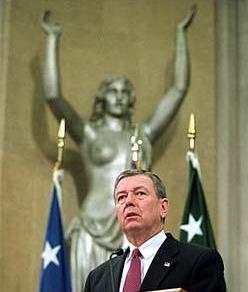
ADDED: Remember when the U.S. Department of Justice spent $8,000 on a big old drapery to cover the half-nude "Spirit of Justice" statue after photographers seemed too interested in framing Attorney General John Ashcroft with the looming breasts over his head?
26 మే, 2017
"Gunmen opened fire on vehicles carrying Coptic Christians in southern Egypt early Friday, killing at least 20 people..."
A Christian official in Minya province, south of Cairo, said the attackers opened fire on a pickup truck carrying workmen and a bus carrying worshipers as they traveled in convoy to St. Samuel’s monastery. Many of the worshipers were children.ADDED: Just last month, the Pope visited Egypt. The NYT wrote:
“We are having a very hard time reaching the monastery because it is in the desert. It’s very confusing. But we know that children were killed,” said the official, Ibram Samir....
The Islamic State bombed the main Coptic cathedral in Cairo on Dec. 11 and attacked a church in Alexandria and a church in Tanta on Palm Sunday, April 9, killing at least 78 people. A small Christian community in northern Sinai fled the town of El Arish after a series of gun attacks on homes and businesses....
After the Palm Sunday attack, Egypt’s president, Abdel Fattah el-Sisi, declared a state of emergency....
The pope also spoke at a peace conference hosted by Sheikh Ahmed el-Tayeb, the grand imam of Al Azhar mosque, and met with the Coptic patriarch, Pope Tawadros II....
In a decentralized Muslim world, the pope’s speech and his continuation of a dialogue with Sheikh Tayeb provided Muslims with a high-profile counterpoint to the radical language coming from extremists. Al Azhar forms many of the Sunni world’s imams and oversees the education of millions of Egyptian children and college students....