৬ আগস্ট, ২০০৫
Save the Iraqi.
It's a small thing, and I don't know anything about it, but N.Z. Bear is asking us to vote to save the Iraqi cast member on "Big Brother," and that's good enough for me. So, come on, vote for Kaysar.
Bubblegum pop.
Heard today on the 60s channel of XM Radio: Tommy Roe's "Sweet Pea."
What it reminded me of: How much I love the purest examples of bubblegum pop music.
Bloggable question that formed soon after: What are the very greatest examples of bubblegum pop?
Obvious problem perceived in answering this question: Where is the line between bubblegum and nonbubblegum?
Solution: Don't get sidetracked into defining the term. Just try to find the quintessential bubblegum pop song!
"The Beatles helped feminize the culture."
From a WaPo review of "Meet the Beatles: A Cultural History of the Band That Shook Youth, Gender, and the World":
You need a hook to justify adding to the vast pile of Beatles writing, of course. But what do you think of this one?
Other discussion questions: Did the culture get feminized in the 1960s? Who did this feminizing -- men? If the Beatles only helped in this feminization, who else did the feminizing?
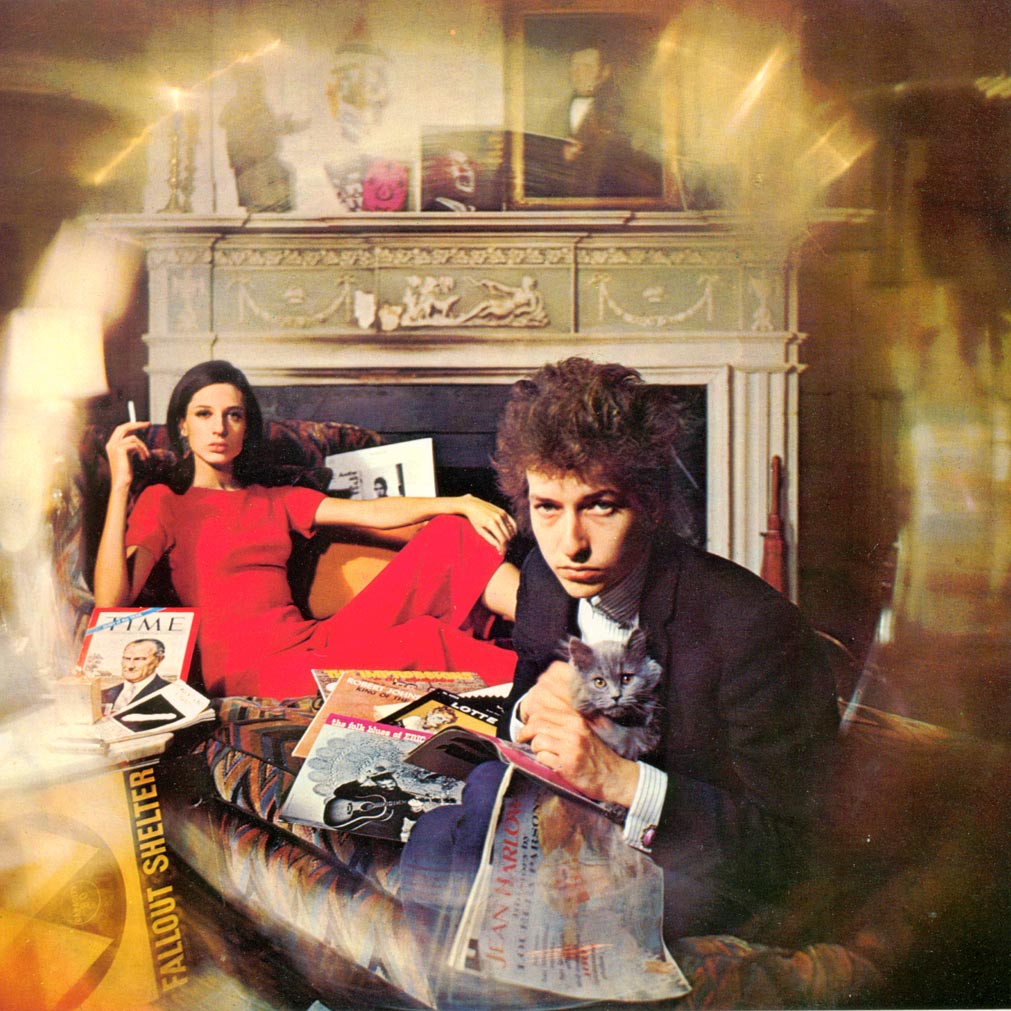
Bonus yes-or-no question to sort Althouse readers into two groups: Did you ever spend much time trying to figure out if the woman on the cover of "Bringing It All Back Home" was Dylan in drag? (Spending time now doesn't count, but feel free to do it.)
"The Beatles helped feminize the culture," Stark writes, in part because they usually "displayed a more sympathetic attitude to women in their songs than most other rock writers." In addition, the band "not only sounded and looked feminine because of their style and their hair; they were more feminine in their group dynamic." Key to this inadvertent revolution were the deaths of Lennon's and McCartney's mothers when each Beatle was still in his teens (the "Julia" and "Mother Mary" immortalized on the "White" and "Let It Be" albums, respectively). These deeply traumatic events had the effect, Stark argues, of repeatedly driving both composers toward strong women who shaped them at every turn: Mona Best, mother of early drummer Pete and provider of the band's first regular gigs, at the Casbah Club she founded in her basement; Astrid Kirchherr, the German ingénue who gave the boys their distinctive haircuts and pushed them in the direction of her own black-leather art house sophistication; and later, Yoko Ono and Linda Eastman, indomitable personalities who, at the close of the '60s, with Lennon and McCartney already drifting apart, "tended to spur their partners in opposite directions from one another, almost acting like lawyers in an ongoing dispute."
You need a hook to justify adding to the vast pile of Beatles writing, of course. But what do you think of this one?
Other discussion questions: Did the culture get feminized in the 1960s? Who did this feminizing -- men? If the Beatles only helped in this feminization, who else did the feminizing?
Bonus yes-or-no question to sort Althouse readers into two groups: Did you ever spend much time trying to figure out if the woman on the cover of "Bringing It All Back Home" was Dylan in drag? (Spending time now doesn't count, but feel free to do it.)
"Modern Love."
This week's "Modern Love" columnist is a 41-year-old woman whose alternative to married life is a string of nonsexual relationships with guys in their 20s: "I think I like young guys, especially guys in their 20's, because, at heart, I am a guy in my 20's."
Maybe then my readers who are guys in their 20s will understand this column better than I did.
I read these "Modern Love" columns most weeks, and I'm getting the impression that what the editors are looking for is weird detail and complete ineptitude at self-perception. "Modern," you know, means hopelessly at sea. And "love" means, well, anything but love.
The Amsterdam Notebooks—Page 6.
It's Day 6 of this 35 day project. (The set thus far.) I'm in the Van Gogh Museum, having a museum experience:

Tags:
eyeglasses,
museum,
The Amsterdam Notebooks
How Flickr is like a blog and blogs could be more like Flickr.
Flickr ≈ a blog:
The photostream is a chronological arrangement with the newest on the top and the old material endlessly sinking down into back pages.
The "description box" is where you put the text. It's essentially your post: You can write anything you want here -- it doesn't have to be a description of the photograph.
There is a place for comments on each photo, which can be used for comments on the post as well as for the photograph.
Blogs could be improved by adding some of the Flickr-style functions: Why not have a button to click to rearrange the posts, so that they are not in chronological order anymore but grouped by tags or by most viewed, most comments, most "favorited," and most interesting?
Personally, I'm fascinated by the Flickr concept of "interestingness":
On Flickr, you can reorder your own(or anyone else's) photos by interestingness, and you can look at the whole world's last 24-hours of photos ranked by interestingness. It's not perfectly executed -- I find it hard to believe my most interesting photo is of a sunset on Lake Mendota -- but it's really cool. How about some more functionality for blogs? One of the reasons to stay with Blogger is the hope that these features are coming.
UPDATE: On Flickr, you can't rank the photos of another individual, only your own. I suppose there is some privacy interest in that.
ANOTHER UPDATE: It was my son John who informed me that you can't get to other people's "most interesting" pages. He added that you could make a Flickr set out of your "most interesting" pages, and then he did that with his: here.
The photostream is a chronological arrangement with the newest on the top and the old material endlessly sinking down into back pages.
The "description box" is where you put the text. It's essentially your post: You can write anything you want here -- it doesn't have to be a description of the photograph.
There is a place for comments on each photo, which can be used for comments on the post as well as for the photograph.
Blogs could be improved by adding some of the Flickr-style functions: Why not have a button to click to rearrange the posts, so that they are not in chronological order anymore but grouped by tags or by most viewed, most comments, most "favorited," and most interesting?
Personally, I'm fascinated by the Flickr concept of "interestingness":
There are lots of things that make a photo 'interesting' (or not) in the Flickr. Where the clickthroughs are coming from; who comments on it and when; who marks it as a favorite; its tags and many more things which are constantly changing. Interestingness changes over time, as more and more fantastic photos and stories are added to Flickr.Why isn't there something like this working to find things in blogs? We're still using the relatively crude selection method of counting links.
On Flickr, you can reorder your own
UPDATE: On Flickr, you can't rank the photos of another individual, only your own. I suppose there is some privacy interest in that.
ANOTHER UPDATE: It was my son John who informed me that you can't get to other people's "most interesting" pages. He added that you could make a Flickr set out of your "most interesting" pages, and then he did that with his: here.
When shopkeepers object to your photography.
Yesterday, we took a photography walk on the East Side of Madison, going from Mother Fool's to Café Zoma -- a nice café hop. One of the great photo stops along the way is the St. Vincent de Paul Thrift Shop. Mesmerized by the lined-up shoes in the window, we went in the side entrance first and took many photos like this:

No one objected.
We returned to Willy Street and noticed all the bric-a-brac in the front window and went back in again. After a few shots, a woman came over to us.
No one objected.
We returned to Willy Street and noticed all the bric-a-brac in the front window and went back in again. After a few shots, a woman came over to us.
What are you doing?I guess one ought to ask permission before taking a picture in someone's store. And, really, shopkeepers should object. They might feel flattered that we find their place picturesque. But they don't know whether we will make fun of them or embarrass them. Perhaps profoundly:
We're taking photographs. We're on a photography tour. Do you object?
Yes!
Sorry.
Blogging conspicuously in public.
Yesterday, the bloggers convened at a turquoise table near the window at Mother Fool's.

That yellow chair is for me. Nina was pensive and at one with the yellow and blue atmosphere:

Oscar maintained his pseudonymity as he lent Nina, Tonya, and me a hand in this public blogging effort:
That yellow chair is for me. Nina was pensive and at one with the yellow and blue atmosphere:
Oscar maintained his pseudonymity as he lent Nina, Tonya, and me a hand in this public blogging effort:
৫ আগস্ট, ২০০৫
Today and the immediate future.
It's a beautiful day here in Madison, and we Madison bloggers convened at Mother Fool's at 10 a.m. to talk, blog, and photograph. That last post was done from MoFo's, but I'm back home now, with over 250 photos to cull, some from the café and a lot from the Willy Street area between MoFo's and Café Zoma. It's going to take me a while to get things into bloggable form, but if you've been wondering why Althouse doesn't have more photos from the East Side, just wait.
And here's another bit of news about future Althouse blogging: I'll be guest-blogging on Instapundit all next week -- with Michael Totten and Megan McArdle (just like last fall, but without the big presidential campaign to dominate our attention). I'll still be posting here, though. Noticing bloggable things will take on the more complex form of needing to think about what should go there and what should go here. At the very least, the Amsterdam Notebook series will continue here.
Tags:
blogging,
café,
Newsweek,
The Amsterdam Notebooks,
Totten
The Amsterdam Notebooks—Page 5.
It's Day 6 of this 35 day project. See the set thus far here. In this installment, I finally make my way into the Van Gogh Museum, which was the number 1 thing I wanted to do on the trip. I'm alone and reading "Walden" on this trip, and as I reach the museum, I reach the chapter "Solitude":
Tags:
museum,
solitude,
The Amsterdam Notebooks,
Thoreau
"Like a Rolling Stone" vs. "Heartbreak Hotel."
Two great singles battle it out: which most changed the world?
See the Uncut magazine survey where music, movies, and books (of the last half century) were all in the running. Music claimed the top four slots and you have to go all the way to #19 to get to the first book, which tells you more about who the magazine surveyed than anything else. The book, by the way, is "On the Road." The top movie is "A Clockwork Orange." I wonder how far down the list you have to go to get to something done by a woman.
In any case, I'm not sure how "Heartbreak Hotel" changed the world, but it's interesting to see that opinion has crystallized that it's Elvis's greatest single. I always love hearing it. Even just hearing the guitar solo. Quite perfect.
Painting a hole in the wall.
An artist paints fool-the-eye images on the Palestinian side of the West Bank barrier. Click on the link to see the cartoony illusion of looking through the wall.
Nice painting. I simultaneously love and deplore graffiti. Banksy says he opposes the wall (except to the extent that he likes it for giving him a place to paint), but the images are on the Palestinians' side and seem to taunt them: look how much nicer things are on the other side. It's complex how the paintings are cheerful, nicely done, and dress up an otherwise blank concrete wall, but at the same time they inflame and anger as they make the viewer envy the life the Israelis enjoy.
"Mr. Novak responded with a profanity."
Here's how the NYT describes Bob Novak's recent outburst:
My son -- John Althouse Cohen -- says it's like that thing in McSweeney's. What? This:
The Times needs to get back to these more scrutable circumlocutions. Or just cut out the circumlocuting altogether. I know it's their thing to show off their "fit to print" standard, but a quote's a quote.
After Mr. Carville tried to interrupt Mr. Novak twice, Mr. Novak said: "I know you hate to hear me. But you have to."I say, it's ridiculous to report it that way. You should at least have the word with asterisks -- otherwise we're left to imagine he said something worse than "bullshit," which is, so often, the perfect word. Why there's that bestseller, "On Bullshit," written by a philosophy professor, and that Penn and Teller TV show "Bullshit!" Bullshit is pretty mainstream. With the Times's circumlocution, we might imagine Novak had called Carville a f***ing c***.
Mr. Carville interrupted again, saying of Mr. Novak, "He's got to show these right-wingers that he's got backbone."
A moment later, Mr. Carville said directly to Mr. Novak: "The Wall Street Journal editorial page is watching you. Show them you're tough."
Mr. Novak responded with a profanity, before telling Mr. Carville: "I hate that. Just let it go."
He stood up, removed his microphone and walked off.
My son -- John Althouse Cohen -- says it's like that thing in McSweeney's. What? This:
MEDIA MOMENT 37: HURRY! BLOOMBERGCHUPAFAN.COM AND BLOOMBERGBREASTISBEST.COM ARE STILL AVAILABLE
"Among the hundreds of Web addresses owned by Mr. Bloomberg... are more than a dozen with names like NoBloomberg.org and IhateBloomberg.com.... Many of these names, including some registered last week, include a slang expression of contempt, labeled vulgar in some contexts by dictionaries. The pure-minded could construe it to mean that Mr. Bloomberg has a fondness for lollipops."
— The New York Times, May 12, 2001
"An Internet site for the posting of complaints about American corporations, celebrities and political figures can continue to use a Web address that denigrates Michael R. Bloomberg, the New York City mayoral candidate, according to a ruling a week ago.... The protest site, which is run by Dan Parisi, a pornography publisher, uses many addresses created by adding to the names of companies or politicians a slang expression of contempt associated in other contexts with baby bottles."
— The New York Times, June 14, 2001
The Times needs to get back to these more scrutable circumlocutions. Or just cut out the circumlocuting altogether. I know it's their thing to show off their "fit to print" standard, but a quote's a quote.
Tags:
Bob Novak,
Jac,
lollipop,
nyt,
Penn and Teller,
pornography
এতে সদস্যতা:
পোস্টগুলি (Atom)