nice లేబుల్‌తో ఉన్న పోస్ట్‌లను చూపుతోంది. అన్ని పోస్ట్‌లు చూపించు

12 ఏప్రిల్, 2026

"I worked in a warehouse. It's where I felt so free. Then HR saw that video and terminated me."

I was good. I was great. I was busy moving freight. But I wanted to be funny, now the trucks will have to wait. I miss that icy freezer. I know that must sound odd, but now the smoke has cleared and my testicles  have thawed. I used to pick up pallets and I used to lift them high. It used to lift my spirits up. I felt like I could fly....

That's Blake Porter, via this Metafilter post by CrunchyFrog.

I enjoyed that. It was sweet and quirky, and I felt for the guy (even though I also think employers do need some rules about making your own videos at work, especially if you're working with heavy equipment like forklifts).

But it also got me wondering about Metafilter. I remember years ago, it had hot debate about political and social issues, but now it seems that everyone has agreed amongst themselves only to talk about sweet little quirky things and to be really nice to each other. It's a gentle pleasant atmosphere, but what the hell happened? What sapped all the vigor out of the place? If you go over there now, you'll see a post about what Isaac Asimov wrote about "1984" in 1980, how Jhumpa Lahiri is finding "quivering energy" in the works of Thomas Hardy, the rescue of a sea turtle, a walk to see (hear?) a sound sculpture, a bird that has relearned an old birdsong, a cat in a library, what rock art might be saying about Tasmanian tigers, etc. etc. 

Attempting to use Grok to explore my wonderment, I encountered the word "cozification." My search based on that word might have led me down various sweet quirky paths, but in the interest of keeping myself sharp and fast-moving, I decided to end this post with this screen shot (from Urban Dictionary) which I deem found art:

17 డిసెంబర్, 2025

"But [Rob Reiner's] films are predictable from their first moments, and they begin to establish a weird, dumb orthodoxy that if we're good to our kids, everything will be okay."

So writes David Thompson in "The New Biographical Dictionary of Film," read out loud on the New York Times "Daily" podcast today by the NYT critic Wesley Morris.

Morris uses that book to try to get to an honest assessment of the career of the recently murdered film director. I don't know if I'm getting the punctuation right, but from the transcript of the podcast, Thompson seems to have written:
"As a director, [Rob Reiner] seemed more struck — or poleaxed — by the notion that niceness could save the world. It is a petty thought, but one that stifles so many human and social realities. And so his work turns to pie in the sky with good and bad all too clearly labeled. He's carried along by a fundamental decency and a sense of scenes that play. But his films are predictable from their first moments, and they begin to establish a weird, dumb orthodoxy that if we're good to our kids, everything will be okay. This is not true. Life is more interesting."

More interesting and, at times, far far more horrible. 

But Thompson's words are left to speak for themselves as Wesley Morris makes a quick turn to a happy ending. He says: 

8 సెప్టెంబర్, 2025

"I’m the nice lady who wrote 'Eat, Pray, Love,' and I’m out in the park with fentanyl and morphine and sleeping pills trying to craft a murder."

From "Elizabeth Gilbert Gets Dark/A new memoir finds the self-help icon locked in a destructive romantic relationship with her best friend, who relapsed while fighting terminal cancer" (NYT)(free access link).

That's a free access link, in case you were an "Eat, Pray, Love" fan and had an impression of Elizabeth Gilbert as a nice lady and need to see if it's crushed. Me, I never picked up that book, was never vulnerable to the possibility that the author was a "nice lady" and wouldn't have cared. I just assumed she was a lady who was into herself for reasons that had nothing to do with me. Is praying something to be wedged in between gorging and fucking? I don't know, but I didn't need to know. I have no Elizabeth Gilbert-related illusions to be dispelled and I'm not temptable into the question whether she's got a dark side. I'm just going to guess that the "murder" she was "crafting" was assisting in the suicide of a cancer patient.

22 ఫిబ్రవరి, 2025

"My actual fantasy for like the rise of super intelligence is that when you do train it on all human knowledge, it is essentially incapable of having anything other than per progressive values."

"Like if you actually make the smartest thing in the world, it, it winds up sort of being infused with like kindness and empathy and respect for all lives. I, I don't have any expectation that that will be the actual case, but it does seem like so far when you train these models on the data that everyone trains these models on, you do get these actually like pretty sweet kind progressive models. That's like kind of interesting."

From "How Based is Grok 3?" — the new episode of the NYT podcast "Hard Fork" (audio and transcript at that link, to Podscribe).

Of course I queried Grok 3 about the podcaster's fantasy, and it noted first that AI systems can "come off as 'sweet' or cautious because they’re tuned to avoid offense and reflect a kind of sanitized consensus." I like the way that includes a suspicion I have that progressives like to think they have something deeper going on — they call it empathy — but it's superficial — it's niceness.  Of course, if you cross them or, say, wear a MAGA hat, they won't be nice. 

But Grok said it was a "a big assumption" to imagine that "all human knowledge" will take you to some sort of cosmic kindness and love for all humanity. As Grok put it: "Human knowledge isn’t just a pile of noble ideas—it’s a chaotic mix of compassion and cruelty, wisdom and bias, reason and rage."

I don't think high intelligence fed vast knowledge makes people kinder. Some of the smartest people are cruel assholes. And what do you think is the average IQ of the top 10% kindest human beings? If I had to bet, I'd guess below average. No way to know, of course. Even if we trusted IQ tests and tested everyone, we'd never come up with an adequate test for kindness. Or could you?

That last paragraph is completely written by me, with no Grok assistance, but I fed it to Grok. My question speaks for itself though. I'll end here.

AND: I believe that kindness and empathy originate from the entire human nervous system — much more than just the brain. Without a body, why would A.I. have a tendency to arrive at empathy or something like it? Also a real person has to worry about real-life consequences — winning and losing friends, reciprocal kindness, cruel payback, getting promoted or fired, feeling shame or pride. A.I. is free of all that. 

PLUS: My next questions for Grok were: 1. What did Ayn Rand say about the love humans seem to feel for each other? and 2. Isn't that more like where A.I. should be expected to go? I don't want to overload this space with Grok answers. Let my questions stand on their own or serve as prompts for commenters.

9 ఏప్రిల్, 2024

"Just found out i’m not hot. Please give me and my family space to grieve privately and uglily at this time."

Said Sarah Sherman, quoted in "'SNL' star Sarah Sherman has hilarious response to TikToker who said the show has never hired a ‘hot woman'" (CNN).

The quote became quotable by Althouse blog standards with the use of the word "uglily." I note that it is difficult to say, it draws attention to itself — if you ever happen to say it — and it contains — in defiance of ugliness — a word that expresses loveliness, "lily."

Here's the TikTok Sherman is responding to. It's a lot meatier than the headline makes it sound:

12 డిసెంబర్, 2023

"Unfortunately, the universe isn’t here to please us, which means niceness and truth will sometimes be at odds."

"I think, for example, of my fellow Post columnist Lawrence H. Summers, who was forced out as president of Harvard several years ago after he speculated, at a small private seminar, that one possible reason for the underrepresentation of women in elite science and engineering programs might be that their ability was less variable than men’s. So while both sexes perform about as well on average, the women might tend to cluster near the middle, while the men are overrepresented at the bottom and the top — the latter being where elite programs draw from."

Writes Megan McArdle, in "The world could use more jerks" (WaPo).

13 జూన్, 2023

"When people were asked about the morality of people close to them or who lived before they were born and they didn't know, 'the perception of moral decline was attenuated, eliminated or reversed.'"

From "Many people believe morality is declining — but it may be an illusion" (Axios), summarizing "The illusion of moral decline" by Adam M. Mastroianni & Daniel T. Gilbert (in Nature).

ADDED: You have to realize what these researchers were talking about when they talked about "morality." As Axios put it:
The study... focuses on "everyday morality," the kindness, respect, and honesty that most people agree are a reflection of morality.

The researchers also surveyed people in January 2020 and asked them to compare whether people were "kind, honest, nice, and good" in 2020, 2010, and 2000, as well as at various times in the past, including when they turned 20 years old and the year they were born.

Most people agree that "kindness, respect, and honesty" reflect morality? But then we're told that people were not asked about "kindness, respect, and honesty" but "kind, honest, nice, and good." Did the researchers equate respect and niceness? I don't think niceness is a reflection of morality. Do "most people"? Niceness is superficial behavior that may arise from genuine beneficence but could just as well come from a desire to get along and fit in or to manipulate others. 

22 మే, 2023

"A California father died after being struck by a car Thursday night while helping a family of ducks cross a busy road...."

The NY Post quotes a 12-year-old boy, who took photos of the man and then witnessed his death:
"He got out of the car and was shooing the ducks and everyone was clapping because he was being really nice... They were saying, 'Oh, it’s so cute. It’s so nice of him.' And then all of a sudden he was hit by a car.... He was the only person to get out of the car and try and help them and probably the nicest person in the entire area. It’s not fair." 

2 ఏప్రిల్, 2022

The revenge of Uncle Fluffy.

This is another piece in the NYT about Will Smith — it's by Melena Ryzik, Nicole Sperling and Matt Stevens — and I think it's worth reading, because it raises the more general problem of what happens to a person who chooses the strategy of niceness:

From his start as a goofy, G-rated rapper and sitcom star through his carefully managed rise as a blockbuster action hero, Will Smith has spent decades radiating boundless likability. But his amiable image was something of a facade, he wrote in his memoir, noting that a therapist had nicknamed his nice guy persona “Uncle Fluffy.”...

Mr. Smith wrote that he had another, less public, side: “the General,” a punisher who emerged when joviality didn’t get the job done. “When the General shows up, people are shocked and confused,” he wrote in “Will,” his 2021 memoir. “It was sweetness, sweetness, sweetness and then sour, sour, sourness.”

I'm interested in the wages of niceness. You can try to be nice, but if it's a strategy — a means to an end — it's only going to work until you snap or — even if you never snap — it can fail because other people perceive you as phony or because they may rely on you to keep up the niceness charade while they proceed to take advantage of you more and more.  

Remember the "Queen of Nice"? Who was that? Rosie O'Donnell? Ellen DeGeneres? Neither of them turned out to be very nice, and maybe deploying the "nice" persona made them even less nice than they'd have been if they'd gone ahead and been straightforward. And yet, where would they be if they hadn't played "nice"? Where would Will Smith be? Would he have been a big success in rap music if he hadn't taken the "goofy, G-rated" lane?

But most of that NYT article is about how he's hurt his family's brand, which was "rooted in his seemingly-authentic congeniality":

For several years, a growing branch of Smith family enterprises has adeptly delivered reality-style revelation and emotional intimacy across an expanding number of platforms. Beyond Mr. Smith’s acting career and his introspective, best-selling memoir, there is the popular “Red Table Talk” show on Facebook Watch, in which Ms. Pinkett Smith, their daughter, Willow, and Jada’s mother, Adrienne Banfield Norris, hold forth on everything from racial identity to workout routines to the Smiths’ unconventional marriage....

How they sold that "unconventional marriage" as part of a "goofy, G-rated" "congeniality," I don't know. I haven't been watching. I'm surprised by what counts as wholesome and mainstream sexuality these days.  

“I think most people would give him the benefit of the doubt,” said [Jonathan] Murray, a co-founder of the production company Bunim Murray, which pioneered reality TV. “But it really will rest on whether we believe that he is authentically dealing with this.”

There's that word "authentic" again — used, again, not to mean actual authenticity, but the perception of  authenticity. It's  "seemingly-authentic" and "whether we believe" we're seeing authenticity. The authenticity can be completely phony baloney, but the question is, are we — the idiots on the sofa — buying it?

12 ఫిబ్రవరి, 2022

Random Attack on Joe Rogan of the Day.

From WaPo's regular "Date Lab" feature, an episode titled "Her roommate says her type is ‘generic.’" This was all going along very blandly sweetly until the attack on Joe Rogan sprang up:
“Every time I talk to my roommate, she says that my taste is so ‘generic,’ ” Fiona [Forrester, 23,] recalled, clarifying, “generic and boring.”... 
Her No. 1 priority is just finding a “nice person.” She favors “outdoorsy” guys, she said, who “are a bit more quiet. Like a mix between Jim from ‘The Office’ and Tom Holland in ‘Spider-Man.’ ”... 
"[A] big no for me [is] if someone is impolite to anyone,” she said. Then she added, “Podcasts come up quite a lot in conversations and I feel like so many guys will ask me what I like and I’ll tell them a podcast and they’ll say they just listen to Joe Rogan.” 
Following the media personality is a red flag for her, as everything she’s learned about him is “some wacky stuff.” 

4 జనవరి, 2022

I'm sorry, but I don't really know who Patton Oswalt is — I've never needed to know (the name looks familiar) — but I care about Dave Chappelle, so I'm reading...

... "Patton Oswalt explains himself after ‘nice’ Dave Chappelle post goes sideways" in the L.A. Times. I haven't even read the article yet — I'm going to "live blog" my reading of it — but I should disclose that I'm already in my What-a-weasel! mode.
... Both comics were performing at Seattle Center venues Friday night — Oswalt at 3,000-seat McCaw Hall and Chappelle at 17,500-seat Climate Pledge Arena. Chappelle invited his longtime buddy over to do a guest set, after which Oswalt posted.... “Finished me set at @mccawhall and got a text from @davechappelle... Come over to the arena he’s performing in next door and do a guest set. Why not? I waved good-bye to this hell-year with a genius I started comedy with 34 years ago. He works an arena like he’s talking to one person and charming their skin off. Anyway, I ended the year with a real friend and a deep laugh. Can’t ask for much more.”

This was supposedly Oswalt being "nice." No, it wasn't! It was Oswalt bragging about his connection to the much greater star. It was enthusiastic self-promotion. He had to already know Chappelle's difficulties with a certain sector of Wokedom and must be deemed to have consciously decided to take the risk. He had to have done a cost-benefit analysis. Do not tell me this weasel did a turnaround when he heard the actual — as opposed to the predictable — outcry. 

Yeah, I'm saying don't tell me. That's because I think I already know. The next day on Instagram, Oswalt is all:

21 నవంబర్, 2021

"Asked"?! That's putting it mildly.

I'm reading "Here’s a Fact: We’re Routinely Asked to Use Leftist Fictions" by John McWhorter (in the NYT).

"[W]e think of it as ordinary to not give voice to our questions about things that clearly merit them, terrified by the response that objectors often receive. History teaches us that this is never a good thing."

McWhorter is underplaying the problem. We don't just think it's ordinary to refrain from saying certain things (such as, to name the example he stresses, the existence of race-preferences in higher education admissions). We think it's abnormal to the point of toxicity not to refrain.

We (as a culture) are deeply engaged in teaching young people that they must lie. The "white lie" is no longer merely permissible. It's required.  I wonder if young people have retained any of the old-fashioned commitment to truth. It's obviously not the highest value anymore.

I was surprised to run across this aphorism on Facebook the other day: "That Which Can Be Destroyed By the Truth Should Be." There were lots of comments celebrating this abstraction. I considered delivering truth that would destroy their bullshit celebration of a principle I doubt they believe. 

But I refrained. I consider my reputation as a nice (enough) person on Facebook to be worth preserving. But I didn't believe the aphorism. I just had a mischievous urge to show them their admiration of it was itself a lie. But such urges are better confined to this blog, where no one runs into me by accident. 

Anyway, whose aphorism is that? Quote Investigator has done the research, here. The answer is not Carl Sagan.

10 జూన్, 2021

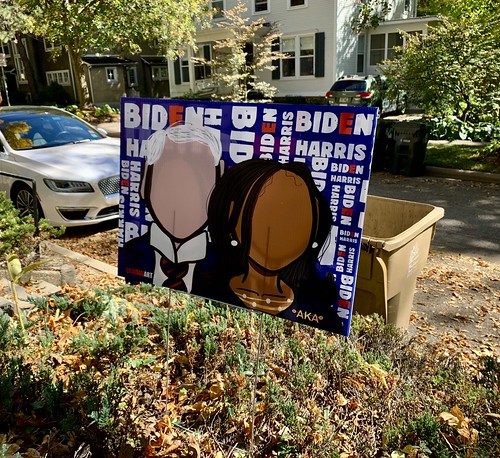
Why do supporters of Kamala Harris portray her as faceless?!

There's some discussion this week of a ridiculous cookie Harris's people handed out:

Some people are referring to that as a cookie "with her face on" it, but it's quite distinctly a cookie depicting her with no face.

Last October, I showed you this really bad sign, which we'd seen in our neighborhood:

IMG_0497

Why would you show a politician you support as having no face? One horrible answer would be: Oh, but it does show her face. It shows the facial trait that matters: The color of the skin of her face.

In action, Kamala Harris uses her face. She's not a blank face. She's a smiling face. Like Obama, she deploys a big smile and laughs as much as possible. Like Hillary Clinton, she seems to laugh too much and not because she's genuinely delighted. 

Perhaps her supporters default to a blank face because efforts to replicate the smile in a drawing or in cookie icing don't work. And how could they? To look like her, the smile would need to look off. So you just can't do it right.

Another idea is that people are uneasy about any sort of a caricature of a black person. Anything you do might be criticized as racist. Facelessness is the graphic design equivalent of if you can't say something nice, don't say anything at all... in a world where the standards of what counts as "nice" are so high and so confusing that you feel anything you say may be used against you. So let me revise: The choice of facelessness is the graphic design equivalent of taking the 5th.

IN THE EMAIL: Omaha 1 writes: "I know it's awful but someone on FB said it looks like she has a turkey on her face. I can't un-see it now! You can see the drumsticks sticking out on both sides." That's got to be a reference to "Friends":

AND: Tubal writes: "The shadow of the metal stakes makes Biden and, more so Harris, resemble Mr. and Mrs. Thompson from South Park": 

15 ఫిబ్రవరి, 2021

Glenn Greenwald was just reading on smart-liberal media Twitter that wokeness is just a request for niceness.

He doesn't link to that wokeness = niceness stuff, so I can't comment on the accuracy of that characterization, but this other thing — this diagram for parents of schoolkids — is really horrific:

26 జనవరి, 2021

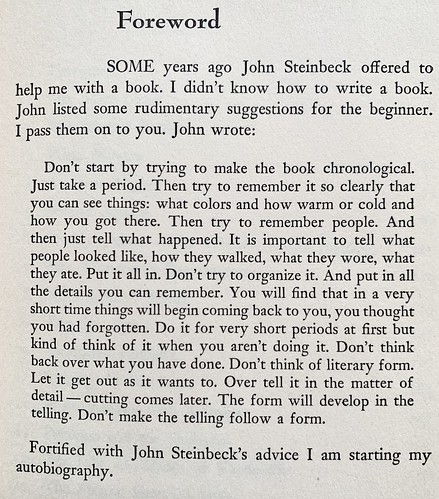
How to write a book.

IMG_2284 

Photographed by me, just now, from a book that appears in my earliest childhood memories. I've never read the book, but I saw it and played with it before I could read, and when I could read, I read and puzzled over the title. I knew my parents loved the author, a radio comedian who died, too young, in 1956. The book is ©1956. 

I kept the book for my own library after my parents were gone, and I knew exactly where to find it in my disorganized shelves when the author's name came up in conversation here at Meadhouse. The conversation began with a report of something funny that had happened outside in the snow, and a confession of mine about being too concerned about embarrassment when I was a child, which led Meade to engage in a type of transgressive humor that I associated with Louis CK, whom Meade contrasted to Red Skelton, a sweet, gentle comedian we both remember loving back in 1950s TV. 

I guessed — for no reason other than his on-screen niceness — that Red Skelton might have been a terrible person in real life. I went looking for dirt on his Wikipedia page. I didn't read every word, and I didn't find any dirt, but I got interested in the subject, so timely today, of censorship:
On April 22, 1947, Skelton was censored by NBC two minutes into his radio show. When he and his announcer Rod O'Connor began talking about Fred Allen being censored the previous week, they were silenced for 15 seconds; comedian Bob Hope was given the same treatment once he began referring to the censoring of Allen. 
[FOOTNOTE] Fred Allen was censored when he referred to an imaginary NBC vice-president who was "in charge of program ends". He went on to explain to his audience that this vice-president saved these hours, minutes and seconds that radio programs ran over their allotted time until he had two weeks' worth of them and then used the time for a two-week vacation.

And then I was reading the Wikipedia article on Fred Allen, whose book I played with when I was a child and have kept all these years but never read:

23 డిసెంబర్, 2020

John McWhorter calls bullshit on civility.

22 డిసెంబర్, 2020

"I wish I could make it so that people were more thoughtful and kind toward each other. It’s something that I think about a lot as I move through life."

"In Japan, for example, we have priority seating on train carriages, for people who are elderly or people with a disability. If the train is relatively empty, sometimes you’ll see young people sit in these seats. If I were to say something, they’d probably tell me: 'But the train is empty, what’s the issue?' But if I were a person with a disability and I saw people sitting there, I might not want to ask them to move. I wouldn’t want to be annoying. I wish we were all a little more compassionate in these small ways. If there was a way to design the world that discouraged selfishness, that would be a change I would make." 

 From "Shigeru Miyamoto Wants to Create a Kinder World/The legendary designer on rejecting violence in games, trying to be a good boss, and building Nintendo’s Disneyland" (The New Yorker)("In 1977, Shigeru Miyamoto joined Nintendo, a company then known for selling toys, playing cards, and trivial novelties. Miyamoto was twenty-four, fresh out of art school. His employer, inspired by the success of a California company named Atari, was hoping to expand into video games. Miyamoto began tinkering with a story about a carpenter, a damsel in distress, and a giant ape...").

16 అక్టోబర్, 2020

"Democrats, too, were interested in cultivating the rapper.... But Ice Cube’s team left with the impression that Biden’s team was less committed."

"According to a person familiar with the discussion, Biden aides told the rapper they agreed with much of his plan but that they wouldn’t engage more fully until after the election.... As September wore on, Ice Cube and his advisers continued to lobby the White House during conference calls. On Sept. 14, the performer and his representatives — again not eager to be seen at the White House — quietly met in a Washington hotel with a group of Trump aides.... Ice Cube's group had prepped for the meeting by consulting with Claud Anderson, a Black economist and author who has argued that African Americans are being served poorly by both parties. In the following days, Ice Cube's team continued to hash out ideas with the White House and eventually elicited a promise of $500 billion in funding to be included in Trump’s election-year plan.... On Oct. 11, Cube released a video in which he made clear that he wasn’t endorsing Biden or Trump. But he expressed criticism of Democrats.... 'Straight up, I believe the Democrats, they’ve been nice, they’ve been cordial so to speak, I don’t really see them pushing their policies in any particular direction. It’s still "minority, minority, minority, people of color" shit that don’t necessarily include us, that don’t necessarily include Black Americans,' he said."


The key Trump person was Jared Kushner, who had a friend, Ken Kurson, who knew Ice Cube's business partner from back in the 1990s, when he was was bassist for the rock group Green. Kurson recommended Ice Cube, praising his 1988 album “Straight Outta Compton” as “a work of American genius on par with” F. Scott Fitzgerald’s “The Great Gatsby” and George Gershwin’s “Rhapsody in Blue.”

1 జనవరి, 2020

I've denied being a contrarian (which seems like a joke, since isn't that what a contrarian would do?)...

... but I must say that when I saw this list, which someone had posted on Facebook...
12 THINGS TO ALWAYS REMEMBER:
1. The past cannot be changed.
2. Opinions don’t define your reality.
3. Everyone’s journey is different.
4. Things always get better with time.
5. Judgements are a confession of character.
6. Overthinking will lead to sadness.
7. Happiness is found within.
8. Positive thoughts create positive things.
9. Smiles are contagious.
10. Kindness is free.
11. You only fail if you quit.
12. What goes around, comes around.
... my instinct was to rewrite each one and reverse the meaning. Including the title! It's ridiculous to always be remembering 12 things. How nudge-y this list is! And yet, it's Facebook, so what a terrible mistake to allow yourself to be baited into disagreeing with what was obviously put up with cheerful good intentions. You look like there's something wrong with you if your contrarian instinct shows on Facebook. Can't you see that the people there want to be nice and supportive? Yeah, I can, and therefore I need to retreat to my blog to tell you that we are changing the past all the time, etc. etc.