my grandparents लेबलों वाले संदेश दिखाए जा रहे हैं. सभी संदेश दिखाएं

8 जुलाई 2023

Before blogging, there were proto-bloggers, and I have encountered another example: Rose Kennedy.

I have commemorated proto-bloggers before. For example, something John Keats did in 1816. And, in the first year of my own blogging, I told you about my grandfather, Pop. And though I can’t find where I've blogged about it, there's something I myself used to do in the 1990s. I'd read the paper NYT at the dining table in the morning and if I found something distinctly interesting, I'd tear it out and put it on the other side of the table, where my sons would see it when they eventually came into the room.

Anyway, the proto-blogger I discovered today was Rose Kennedy. As a consequence of reading that Rebecca Traister article about RFK Jr. — blogged here — I started reading his book "American Values/Lessons I Learned from My Family." 

Here's what I consider to be like blogging:

22 जनवरी 2023

It's getting harder and harder to speak news alerts out loud these days.

My grandfather — Pop — used to read the front section of the evening newspaper and — upon finding something interesting — would read the headline to the rest of us who were either waiting to get our hands on the front section or didn't really care about reading the news at all.

And nowadays, I still participate in spoken news alerts. Here at Meadhouse, we're both often reading the web miscellaneously, and we each like the keep the other up to date on the latest items of interest. 

But lately we're calling out nonsense like this:

17 जुलाई 2021

Am I more Jewish than Elvis?

I'm reading "Display of mother’s Star of David headstone revives talk of Elvis’s Jewish roots/60 years after her death, a new exhibition showcases the headstone of Elvis Presley’s mother, Gladys, featuring both the Jewish symbol and a cross, designed by Elvis himself" in the Times of Israel:

Stories of Elvis’s Jewish heritage have long been in circulation, but when it comes to a legend like Presley — whose death is not even considered settled fact in some quarters — it’s not always easy  to separate fact from fiction. With [his mother's] headstone now on public display and an accompanying sign proclaiming 'Gladys’ Jewish heritage,' the 'Jewish roots' of the King of Rock and Roll are a talking point again.... Angie Marchese, Graceland’s vice president of archives and exhibits, is certain of Elvis’s Jewish ancestry. Marchese says Elvis’s maternal great-great-grandmother was a Jewish woman named Nancy Burdine.

When I read that, I said out loud: "I'm as Jewish as Elvis!" But about 2 seconds later, I thought, no, but am I more Jewish than Elvis or less Jewish than Elvis. I have — as I recently figured out — not just 2 Jewish great-great-grandparents, but a Jewish great-grandparent (their son who married a Christian). That would seem to make me more Jewish than Elvis? But my Jewish great-grandparent was male, and his daughter was my father's mother, so if Jewishness is matrilineal, then I'm not Jewish at all. 

But does that make me less Jewish than Elvis?

24 जनवरी 2014

Written strangely early in the morning.

A post title that's also a tag here at Althouse.

Am I the only one up at 4 a.m.? When is Daylight Saving Time coming back? I'm pre-adapted to it, a bit ridiculously.

Here's a video Meade took of me skiing down what subjectively feels like a dangerously precipitous decline. The video makes me laugh because — again subjectively, as a viewer of a video — I can barely see that there's any decline at all.

It's surprisingly lovely to get old.

Yesterday, Meade — driving me home after a class that ended at 5:30 — asked me if it was perhaps the 5-year anniversary of our first meeting. I wasn't sure. Why mention anniversaries of things you don't remember the date of? I didn't remember what day it was either, but I was pretty sure it was earlier than January 23rd. The date I remember is February 13th, the second time we met, which was not just a more powerful meeting, but an easier date to remember, it being the day before Valentine's Day. When we got back to the house, I researched the date of the first meeting by searching my blog for "The Wrestler," because that was the movie we saw, and I knew I'd blogged it. I found "10 thoughts about 'The Wrestler,'" none of which have anything to do with Meade, though the post is updated to say: "This post memorializes my first date with Meade, on January 17, 2009."

I should be able to remember that. January 17th was the birthday of my father's father, the grandfather we called Pop.

Ah! Now, I hear Meade walking around on the floor above my work spot. I'm not the only one up anymore.

1 दिसंबर 2013

"In newsrooms there is little patience for the use of a difficult word where a simpler one will do."

"'Good prose is like a windowpane,' wrote George Orwell in his famous essay 'Why I Write,' a rule that would seem to counsel against ever stopping a reader with an unfamiliar word. It’s good advice for beginners, but serious readers are also lovers of language. I find that the occasional obscure word, used correctly, spices prose."

From an essay in The Atlantic by Mark Bowden, titled "In Praise of Fancy Words: The pleasures of reading with a dictionary by one's side."

I usually read on a computer or iPad screen, so the dictionary is built in, but in simpler times, I liked the exercise of getting up and walking over to the dictionary stand to look up any unfamiliar word. I keep a picture of my grandfather on the wall just above that dictionary:

Howard Beatty

He was a newspaper editor, and in his spare time, he enjoyed reading a dictionary.

And here's the full text of Orwell's "Why I Write."

23 जुलाई 2010

29 अक्टूबर 2008

What to do in Wilmington, Delaware.

I'm glad to see that, among other things, Adam went to the Charcoal Pit.

That place has been around since the 1950s, and I was around back then to go there all the time with with my grandparents (who, by the way, loved "What's My Line?")

5 अक्टूबर 2006

An old postcard.

The only thing I know for certain about this photograph postcard is that the woman behind the wheel is my grandmother, Geraldine. I believe it was made in some sort of studio where they pose you in a car. Look at that ramshackle backdrop.

Old photograph

I'm pretty sure this was taken in the 1920s. I think they're all college kids. I don't know if they're wearing their own clothes or if the photo studio provided costumes. The woman in the middle seems to be wearing a flapper costume, what with that headband, but wouldn't a young person have dressed like this then? The women who are not my grandmother are wearing awfully similar coats, and the men have nearly identical hats, yet my grandmother is coatless. So it seems that everyone but she put on the photographer's costumes. Why didn't she? Maybe she liked feeling of cool air on her skin and maybe she bypassed the costumes to jump in the car first and claim the driver's seat.

The pennants are scattered about haphazardly, and I realize I'm not quite sure if my grandmother went to Adrian College. I do know that she became a teacher, and that after she married my grandfather -- who is not in this picture -- she hid the fact that she was married, because they would have fired her for being married. Did they think a woman who had sex could not be trusted teaching children? Did they think a woman wronged her husband by going to work? Perhaps they thought it was greedy or unfair for a family to have two paychecks.

This picture mystifies me and makes me feel sad. It's not just the poignancy of the distant past, but that I never knew my grandmother when she was anything like this young and confident person. The Geraldine I knew suffered and complained. I never got the whole story out of my mother, but I think she completely changed when her fifth (and last) child was born with a hopeless birth defect and died within one year. So for me this picture represents the most unreachable part of the past. It makes me sad, but it also makes me happy. How charming and mischievous she looks!

25 जून 2005

"Daddy."

Is there something wrong with you if you call your father "Daddy"? Jeremy posits that there is.

Here's the comment I put over there:
Jeremy, in my family, we kids always called our father "Daddy." He was Daddy. We stopped calling our mother Mommy (switching to Mother), but Daddy was always Daddy. We never called him Dad. Not once. We disrespectfully called him "the O.M." (for "the old man") for a while -- though not to his face. My mother always referred to him to us as "your father." It's hard to convey the deep sense in which "Daddy" was just exactly what he was. No matter how mature or immature I was at any given point, it would not have shaken that belief. This was not a matter of sentimental love either. The tone could be quite negative, yet he'd still be Daddy.
As I got older, I recognized that it seemed a bit oddly babyish to call him Daddy, but somehow it just wasn't possible to stop, even though it had not been a problem to drop the use of "Mommy." Jeremy raises the theory that there's a matter of regional usage here and that "Daddy" is a Southern thing, so let me add that we were raised in Delaware. My father was from Delaware but my mother was from Michigan, so it's possible that we kids followed the regional usage for each parent's place of origin, but that seems awfully weird. I have no memory of either of them telling us what to call them.

A fine point in my family is that early on my father's mother established that grandkids would call her "Mom." My father's father at that point became "Pop." So the paternal grandparents in my family were always "Mom and Pop," and neither of those words would ever seem to be a normal thing to call parents. Thus, we couldn't get to "Mom" from "Mommy," but needing to throw off the babyish "Mommy," we resorted to the oddly formal "Mother." Somehow, the corresponding "Father" never seemed right. And the way to "Dad" was also obstructed. So for the rest of their lives I called them "Mother and Daddy."

Now both are dead, and when I talk about them, I only say "my mother and my father."

7 अप्रैल 2005

Is my house haunted?


Afternoon light.
Originally uploaded by Ann Althouse.
Look at the strange light effect. Do I need Ghostbusters? No, that's just the late afternoon light as filtered through the glass windows of an 80-year-old house. The glass isn't flat, it has character. It distorts the outside view too, in a way that's really quite charming.

UPDATE: Here's the whole "photoset" with larger images, a rare look inside the Althouse home. The little framed photograph visible in some of the pictures is an Ann Arbor News photograph (with an editor's pencil marks about cropping) of my maternal grandfather (who was an editor at the Ann Arbor News during the Great Depression).

1 अप्रैल 2005

Things that remind me of Pop.


canfield2
Originally uploaded by anna banana.
My grandfather -- Pop -- used to call me Anna Banana. I was struck by this photograph I found on Flickr -- just following some links.

Family nicknames are nice. Did I ever tell you that my mother, for many years, called me Susie (not all of the time, but a lot of the time). She called my sister Pat (and her name wasn't Pat). And she called my brother Sam (and his name wasn't Sam). Strangely, she often called him Sam the Cake Man.

This calls to mind a very old TV commercial that had the sweet tag line "Mothers are strange... yeah, they are."

UPDATE: The ad copy should read "Mothers are like that ... yeah, they are." Don't know why I dredged that up from the past.

ANOTHER UPDATE: An emailer writes:
[My family nickname] was Suze (Sooze). For some reason I rebelled against it in about 4th grade. In junior high I began to hate (still do at age 58) my name, Myrna, and wanted Suze back -- but it was too late -- they couldn't get back into the swing of it.

I've always liked this old proverb: "A child that is loved has many names."
I love the name Myrna! If the vowels switched places, it would be Marny, which would be quite dull. Putting a "y" in the first syllable of a name is distinctive, because there are so many names with a "y" on the end, and "y" is so often excluded from the early part of words and relegated to the tail end. This is why "Cynthia" is such a great name, and if you're lucky enough to have it, you shouldn't use the nickname "Cindy." And don't think you can fix the nickname by writing in "Cyndi," because that just looks wrong -- it makes me feel cynical ... cyndical ... cylindrical. It makes me think of cyanide. But "Myrna," I like.

Let me add that my mother not only called my sister Pat, but frequently Princess Pat. My "Susie" did not have an extra part, like Princess Pat and Sam the Cake Man. Somehow, my siblings were named as if they were characters that had wandered out of a storybook I didn't know. Just now, I Googled "Sam the Cake Man" to see if maybe there was a fictional character of some kind, but the search came up empty. How about "Princess Pat"? Hmmm... there's this campfire song, which introduces new mysteries: "The Rickabamboo/Now what is that?"

7 दिसंबर 2004

Things that remind me of Pop.

Yesterday, one of my posts was on the Rip & Read Blogger Podcast, so I gave it a listen. It was funny to hear the reader read my paragraph out loud and then say something like "Yeah, I agree with that." It reminded me of my grandfather, Pop, who used to read the newspaper, and if he ran across a sentence or two that seemed interesting, he'd just read it out loud to whoever was in the room and then maybe add a little comment. My grandmother (Mom) did that too, come to think about it. Was that a widespread practice among people who were born before the days of radio? It was a bit like blogging, wasn't it?

21 नवंबर 2004

That unidentified saucer.

Last spring, I had a temporary copy of the program iBlog, and I started a second blog, which I kept up until the software expired. But I still occasionally get email from people who protest this post, about trying to figure out the markings on a saucer that I'd had lying around in my kitchen for a long time. The saucer had a star on it, and I'd always assumed it was a souvenir from Texas. On closer examination I see letters arrayed inside the star: A-L-F-A-T. I can't figure out which letter to start with, so I go through the various options until I get FATAL, which I don't like very much. Anyway, I pursue the mystery a bit and end the brief personal essay. That was back in May. I still get email like this:
It is ... sad that you may now have been led to believe that your grandfathers may have some how been involved in some sort of evil secret society.

The anti-masons appear to forget or choose to ignore how Masons where involved in the founding of this country and the freedoms the anti-masons now have.
Well, she's right that I really don't know much about the Masons, but I don't go around worrying about them. Nevertheless, "FATAL" is one hell of a motto.

UPDATE: Apparently that crappy new movie that's number one this week--"National Treasure"--has a big Masonic angle:
[A child watching] this sluggish two-hour trudge through landmarks in Washington, Philadelphia and New York [might] come away believing the bogus mythology that detonates it with a squishy thud.

That mythology, derived from Freemasonry, holds that a map, drawn in invisible ink on the back of the Declaration of Independence, contains clues to the whereabouts of the Greatest Treasure Ever Told About. The Knights of Templar, some of whom were Founding Fathers, supposedly left a trail of coded clues that begins on a frozen ship north of the Arctic Circle and ends in the bowels of Lower Manhattan under a crumbling system of dumbwaiters.

It should be easy enough to acquire that treasure. All you have to do is steal the Declaration of Independence, unroll it on a kitchen table, apply a little fresh-squeezed lemon juice, heat with a handy hair dryer, and presto, letters and numbers appear. Another major clue can be deciphered only through special spectacles designed by the real-life Benjamin Franklin and hidden behind a brick near Independence Hall.

If I really had true blogging stamina, I'd go to see this piping-hot pile of patrio-tainment so I could blog about it.

12 नवंबर 2004

Car choices.

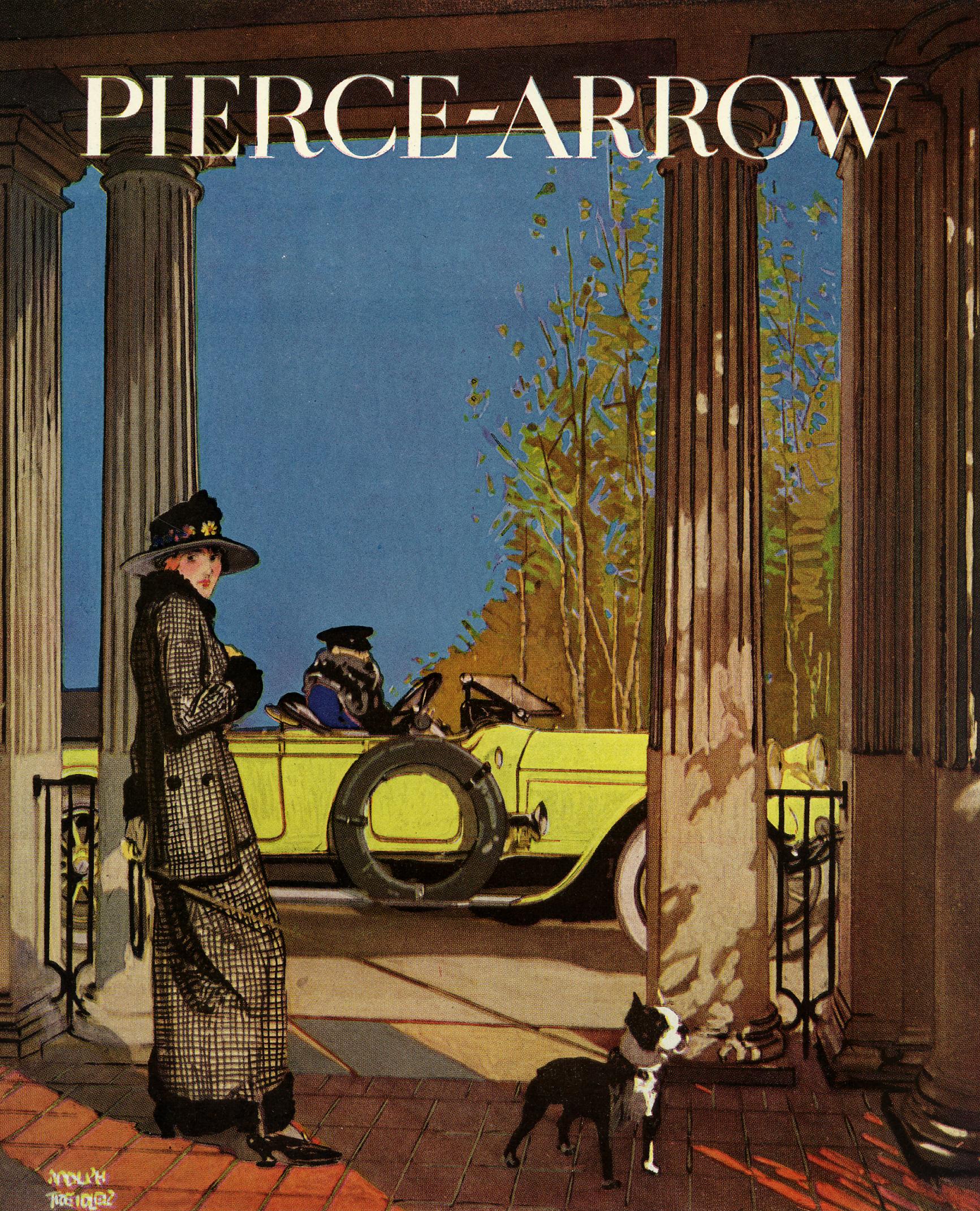
A while back, spurred on by a brochure for Corvette that came in the mail, I asked whether I should buy a new car or keep my old car. I did a blogpoll that a lot of people voted in, and I wrote later commenting on how impractical it would be for me to have a Corvette, but also talking about my personal history with Chevrolet. I noted that the only cool car I'd ever had was the 1961 Chevrolet Impala convertible that my father passed on to me, and that, when the time came to buy my first car, I chose a Chevy Chevette (the lesser 'vette). Chevrolet had a place in my family's story. I neglected to tell the older and more important family story that involves Chevrolet. In the 1930s, my grandfather, George Dewey Althouse ("Pop"), was a car mechanic with enough money to start his own business, faced with the decision which make of car to work with, a decision that came down to Chevrolet and Pierce Arrow. He chose the Pierce Arrow. That is the perfect example of making what is simultaneously exactly the right and exactly the wrong choice. Pop worked on beautiful cars before he went out of business.

What car did Pop drive when I knew him? A Pontiac. And it was a Pontiac that my father bought when he handed down the Impala to me. Before the Impala, the previous two cars my father had owned were both Nashes. I particularly remember the day he brought home a new car in the mid 1950s. The old car had never been a new car to me, so it was the first time I had ever experienced the event of introducing a new car into the family. Though it was the same make as the car it replaced, the new car was much bigger and flashier, in the style of the 1950s. It was a fleshy tan color with a white roof and the spare tire mounted -- who cares if it's ridiculously inconvenient? -- in front of the trunk. I remember being fascinated by the big fold-down armrest in the middle of the back seat. Another amazing feature of this car was the gas cap, which was hidden under one of the tail lights. Of course, in those days, people didn't pump their own gas, and my father used to get a kick out of pulling into the gas station, saying "fill 'er up" to the attendant, and watching the poor man search in vain for the gas cap. The light actually pulled out and up. But the most amazing thing about the car was the hood ornament. Scroll down on this page and you'll see one that's quite close to what we had. All the kids on the block were fascinated by this hood ornament. You think a Jaguar has a cool hood ornament? You should have seen the hood ornament on our Nash.

3 सितंबर 2004

Coronary bypass surgery.

Instapundit mentions that his grandfather died from complications of early coronary bypass surgery. My grandfather had one of the earliest bypass operations, in, I believe, 1954, and he lived another 15 years as a result. He was fortunate to live in Ann Arbor, Michigan where the surgery was being developed. I'm sorry I don't know the specific history of the development of the surgery. But I remember that my Grandpa Beatty died in 1969, and that the family always said he lived 15 more years because of the new surgery. I remember being a little kid--I would have been 3 in 1954--and seeing my mother prepare to fly to Ann Arbor to see her father, having been told "If you want to see your father alive again," you must come immediately. That said, both of my own parents died in Florida, where, I believe, inferior medical care deprived them of many years of life. In fact, I believe medical malpractice caused both of their deaths. And let me add that no lawsuits were possible. Suffice it to say, I don't cheer when arguments about "frivolous lawsuits" are bandied about. It would be pleasant to believe that there are too many medical malpractice lawsuits, as our President does, but highly disturbing to find out that there are too few. From my personal experience, I feel there are far too few. That said, I also think it is very hard to be a doctor, and mistakes are part of what happens. I am thankful good people go into medicine, even though they will go on to carry the burden of seeing their own mistakes grievously injure people. But there are also people who are not so good, who lay their hands upon human bodies every day. It is easier to whine about lawyers than to think about them.

UPDATE: Regular readers know that I voted for John Edwards in the Democratic primary. This post contains some of the reason why I respect him.

30 जून 2004

Adult friends ... and dolls from the 1950s.

Nina has a post on the When-Harry-Met-Sally topic of whether men can be decent friends for women. I'm not going to wade into that other than to say all sorts of people can fall short as friends and real friendship among adults may be much rarer than we think it ought to be. I once heard Howard Stern--yes, I like Howard Stern--cut off a guest who was complaining about a bad friend with a harsh statement along the lines of: "I have news for you: adults do not have friends." That's sad and cynical, but his point was if you're looking for what you had when you were a child, you're going to be disappointed. Are your opposite-sex adult friends more disappointing than your same-sex adult friends? I guess it depends on what you were expecting. But I wasn't going to wade into that...

I wanted to talk about dolls in the 1950s. Nina has a photo of herself in 1957 with a favorite doll named "Johnny." This brought pangs of guilt to me as I remember upsetting my parents one Christmas in the 1950s by rejecting a rag doll my grandmother had made. In fact, as I was told repeatedly: she sewed it by hand when she was flat on her back in the hospital! My grandmother had made two cloth dolls, with beautifully embroidered faces and hand-sewn satin clothes. She gave the girl doll to my sister and the boy doll to me. I was outraged and horrified in that special ridiculous kid way, and I couldn't understand that my grandmother didn't know the offense of sticking me with--ugh!--a boy doll!

There are two other doll-related childhood perspectives from the 1950s for me. First, my sister and I maintained an elaborate "doll house" in the form of a large green bookcase. We had many "little dolls"--Ginny and Jill dolls, back in the pre-Barbie days. Ginny dolls were 7" little girl dolls, and Jill dolls were larger and suitable to be the mothers. There were no male dolls in this large family, but there was one Ginny doll that had lost its hair. That doll was named "Anquoinette," and it belonged to my sister, who glued on some of her own hair to cover the bald plastic. Anquoinette was also distinguished by her wheelchair, which made her the best and most important doll. I'm not sure how we arrived at that opinion--surely, not from some conception of political correctness! But Anquoinette was a princess among dolls.

The other 1950s doll story vaguely connects to the most famous dolls from the 1950s: dolls used in the social science research that was cited by the U.S. Supreme Court in its decision in Brown v. Board of Education. In the experiments, black dolls were perceived by children as inferior. My personal story is that my sister and I had black dolls, which were bought probably around the same time that Brown was decided (1954). Our dolls were rubber baby dolls, perhaps the identical dolls that were used in the experiments. I still have mine, though it is somewhat melted from age. Why did we have them? At this time, I did not even know a single black person, though I had seen black people on the streets of Wilmington, Delaware, in part of the city that everyone I knew called, quite bluntly, "the slum." Why then did my sister and I have black dolls? Did some enlightened relative provide them? No, my sister and I saw them in a store and begged for them. Even though I can't remember other instances of my parents buying toys because we begged (quite the opposite!), they did buy these. They did not point out that the dolls represented black children, a fact my sister and I were supremely unaware of. We simply saw the dolls as different from any dolls we'd seen before, and we loved that. It was only much later I realized the dolls were black dolls, and it was strange to think back to a time when that was simply imperceptible to us.