"... and give yourself the gift of tidying all the stuff you just evicted. When I read this, I speculatively put my hand to the bottom of my handbag and found a cocktail sausage, whereupon I did what any normal person would do and popped it in my mouth. All I mean to convey by this is that some people are starting a lot farther away from Kondo than she could imagine."
From a review in the Guardian of Marie Kondo's new book "Spark Joy: An Illustrated Master Class on the Art of Organizing and Tidying Up."
I, like millions of others, read the first book, "The Life-Changing Magic of Tidying Up: The Japanese Art of Decluttering and Organizing." I tried some of it. That is, I did something with some clothes. Maybe I'll get the new book. I did enjoy the fantasy of the first book. I know the new book merely repeats what's already in the old book. It doesn't — as the Guardian reviewer puts it — "diversif[y] into mind-tidying or decluttering your lower intestine."
There shouldn't be a need for a second book. The first book says you do the method once and then you are done forever. Acting as if there is a market for the second book implicitly suggests that the method does not work!
For alternatives to changing your life through the "magic" of decluttering and organizing, I'm seeing...
1. "The Life-Changing Magic of Not Giving a F*ck: How to Stop Spending Time You Don't Have with People You Don't Like Doing Things You Don't Want to Do." This is not for me, and not because I'm offended by the crass language. It's not for me because I've already done this, probably a lot more than the author. Anyway, this is the mental decluttering that Kondo does not bother with.
2. There's "hygge" — Danish coziness — explained in lots of books like "The Little Book of Hygge: Danish Secrets to Happy Living." This looks like leaning into clutter, but I guess it's pretty selective about which things to clutter yourself with. Candles and hot drinks are big. So it's similar to Kondo's idea of surrounding yourself with happiness-inspiring things, but you're getting into the Danishness of it all as opposed to the Japaneseness.
Ipinapakita ang mga post na may etiketa na comfort. Ipakita ang lahat ng mga post
Ipinapakita ang mga post na may etiketa na comfort. Ipakita ang lahat ng mga post
Enero 2, 2017


Disyembre 12, 2016
"My students have been wearing their PJs to class for years... which used to bug me no end..."
"... but now I wear my PJs to walk my dog in my gated community at 5:30 in the a.m. Compared to electing Trump as President, this is hardly the end of civilization as we know it."
A comment on a WaPo article by Robin Givhan: "The fashion industry really wants you to wear pajamas on the street. Don’t do it!"
Givhan says:
Let me think...
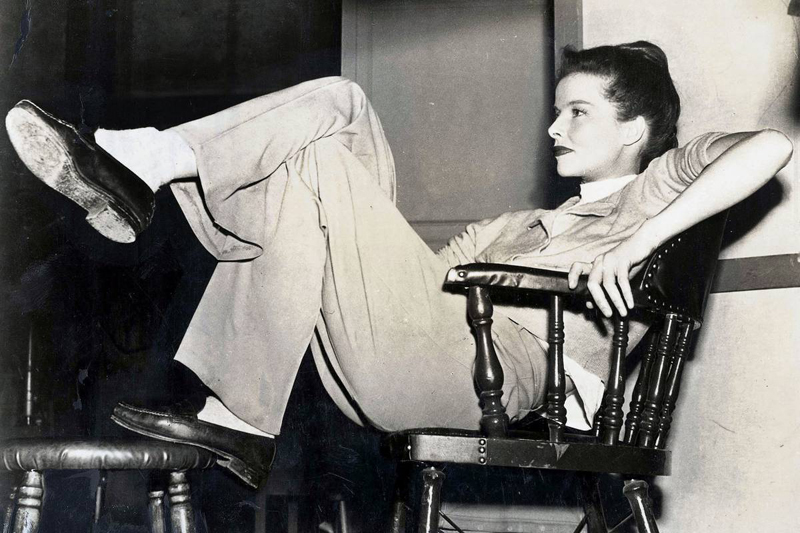
... so even though the word "pajama" has been used over the years to refer to clothes that are not pajamas in the sense of being intended as sleepwear, these new clothes they want you to wear when you're out on the street and being seen by nonbedmates are in fact pajamas?
Now, let's get back to the subject of how everything is about Donald Trump and the Trump derangement syndrome raging within the soul of the lady with the dog who forgot to suppress the fact that she lives in a gated community.
A comment on a WaPo article by Robin Givhan: "The fashion industry really wants you to wear pajamas on the street. Don’t do it!"
Givhan says:
To be clear, these are not pajama-style garments, nor trousers that simply borrow the loose fit and drape of sleepwear. Ostensibly, these are pajamas, promoted for both men and women....What does that even mean?
Let me think...
... so even though the word "pajama" has been used over the years to refer to clothes that are not pajamas in the sense of being intended as sleepwear, these new clothes they want you to wear when you're out on the street and being seen by nonbedmates are in fact pajamas?
All of these garments have luxurious fabrics, elaborate patterns, saturated colors, comfortable silhouettes. They are, in fact, quite handsome. But they look precisely like what they, in fact, are: Pajamas.You have fabric, cut in shapes and sewn together. What makes it "in fact" pajamas once you've eliminated the idea that this is something to wear only in and near bed? Are we getting philosophical or is the quick route out of this conundrum simply to recognize that fashion demands suffering? If that outfit looks comfortable, it cannot be fashion. Lines must be drawn, and the people who look comfortable must be excluded.
Now, let's get back to the subject of how everything is about Donald Trump and the Trump derangement syndrome raging within the soul of the lady with the dog who forgot to suppress the fact that she lives in a gated community.
Enero 23, 2016
"Milk, Bread, and Eggs: The Trinity of Winter-Storm Panic-Shopping."
"Why do people reliably stock up on the same things before they get snowed in?," asks Joe Pinsker in The Atlantic.
He doesn't give the answer I saw in the comments section somewhere in the NYT: Everybody suddenly gets a craving for French toast.
He says:
Pinsker observes that bread is a very sensible choice. It doesn't need refrigeration, and there's concern about losing electricity. It's the milk and the eggs that are impractical and therefore deeply psychic. To say that is to make the motivation obvious. Pinsker doesn't say it, so I will: You're all running to Mother.
By the way, all the shelter-in-place news about a snowstorm looks pretty silly from my vantage point in Wisconsin. Yeah, I can see why the authorities don't want people out in cars slipping and skidding and getting stuck, and I'm sure the local drivers lack experience driving properly in snow, but the drama is absurd. I watched a little video at the NYT of a reporter wearing a GoPro-type camera and riding a bicycle through Washington DC to show us how terrible things were, and the street didn't even have a light coating of snow. It was wet and black. The man was using the word "blizzard" and commenting about the lack of visibility of the Capitol building in the distance, but there was no problem seeing his immediate surroundings. It was nothing like "whiteout" conditions. (And I've had the experience of driving in whiteout conditions on a mountain road where it was also dangerous to pull over. It was terrifying.)
He doesn't give the answer I saw in the comments section somewhere in the NYT: Everybody suddenly gets a craving for French toast.
He says:
Storms can of course wreak awful damage, but for most people they are a harmless annoyance and perhaps even an excuse to stay inside—a culture-wide justification for renouncing FOMO for a day. To stock up on cozy foods like milk and eggs is to clearly demarcate the storm as a time to put on sweatpants and not go anywhere. Buying a bunch of canned foods—a more practical choice—is decidedly less cozy, and may even carry unwanted survivalist overtones.FOMO — fear of missing out — becomes JOMO — joy of missing out.
Pinsker observes that bread is a very sensible choice. It doesn't need refrigeration, and there's concern about losing electricity. It's the milk and the eggs that are impractical and therefore deeply psychic. To say that is to make the motivation obvious. Pinsker doesn't say it, so I will: You're all running to Mother.
By the way, all the shelter-in-place news about a snowstorm looks pretty silly from my vantage point in Wisconsin. Yeah, I can see why the authorities don't want people out in cars slipping and skidding and getting stuck, and I'm sure the local drivers lack experience driving properly in snow, but the drama is absurd. I watched a little video at the NYT of a reporter wearing a GoPro-type camera and riding a bicycle through Washington DC to show us how terrible things were, and the street didn't even have a light coating of snow. It was wet and black. The man was using the word "blizzard" and commenting about the lack of visibility of the Capitol building in the distance, but there was no problem seeing his immediate surroundings. It was nothing like "whiteout" conditions. (And I've had the experience of driving in whiteout conditions on a mountain road where it was also dangerous to pull over. It was terrifying.)
Pebrero 16, 2015
"Are you comfortable right there, right there?"
I'm quoting a Justin Timberlake song...
In the comments Richard Lawrence Cohen (my first husband) said:
What's up with this "comfortable" locution? Who talks like that and why?
The original meaning of "comfort" is strengthen. You see the root "fort" which means strong. When did it turn into something so much more cushiony?
For what it's worth: In the King James translation of the New Testament, Jesus spoke of the Holy Spirit as "The Comforter":
Shake - like you know you got nothing to lose... because it's the first thing that came up when I googled "are you comfortable," which I did because we were talking about the hateful graffiti that appeared in Madison, Wisconson over the weekend. Swastikas and the words "fuck Jews" written across the street from the residence of a man who is the president of the Jewish Federation of Madison. This man, Jim Stein, said, strangely, "This is anti-Semitic to the extent people feel comfortable equating Jewish people or the Jewish religion with sexual terms and sexual parts of people’s bodies."
Make it move - girl, you know what we came to do...
In the comments Richard Lawrence Cohen (my first husband) said:
In the climate of today's American intelligentsia, he thinks he has to *justify* calling the most blatant kind of Jew-hating (I prefer that term to "anti-Semitism") what it is. And he only partially, qualifiedly, calls it that, giving his enemy a chance to weasel out. ("To the extent" -- as if it's something else to some other extent. What bullshit!) And he can only justify his standing up for himself by analogizing the attack vaguely to sexual harassment. He tries to make his self-defense palatable to the educated community by enlisting feminist language ("feel comfortable"). If only the vandals hadn't used the word "fuck"! Otherwise, how dare he complain?Is that feminist language? Of course, I immediately thought about the British journalist who asked Scott Walker "Are you comfortable with the idea of evolution?" Comfortable! After thinking about that for a few days, I decided that the correct answer to that question must be: No! The question whether the theory of evolution is accurate is entirely different from the question whether we should be comfortable with it. If you understand it, it should make you uncomfortable. Why are we here — we... and not some kinder, gentler people who were murdered and whose genes were superseded by the genes of marauding rapists?
What's up with this "comfortable" locution? Who talks like that and why?
The original meaning of "comfort" is strengthen. You see the root "fort" which means strong. When did it turn into something so much more cushiony?
For what it's worth: In the King James translation of the New Testament, Jesus spoke of the Holy Spirit as "The Comforter":
And I will pray the Father, and he shall give you another Comforter, that he may abide with you for ever.... I will not leave you comfortless: I will come to you.... But the Comforter, which is the Holy Ghost, whom the Father will send in my name, he shall teach you all things, and bring all things to your remembrance, whatsoever I have said unto you.
Abril 28, 2012
"But, has anyone else been as creeped-out on this blog, as I've been lately?"
Says Jay Vogt, off topic, in the "Science of sitting" post. He continues:
Now, Jonathan Franzen has a memoir called "The Discomfort Zone." I don't think you're supposed to feel comfortable. I like that book. I've read it. Another book I've read and liked is "Don't Get Too Comfortable," by David Rakoff, which has the subtitle "The Indignities of Coach Class, The Torments of Low Thread Count, The Never- Ending Quest for Artisanal Olive Oil, and Other First World Problems," so you see the idea there.
Franzen also has a new book of essays, which I just bought. It's "Farther Away." (I guess you're supposed to feel alienated.) It contains his essay about David Foster Wallace that was what David Haglund shamed him about.
Over the past two days, we been presented with posts on giant cannibal shrimp, revenge by extraneous dentistry, testicular mutilation, necrophilia, the legal writings of Ruth Bader Ginsburg and infanticide.
I'm not sure that I'm up for much more work on this vein.Funny, just as you were writing that, I was doing a new post about the "inescapable shame of being a storyteller." Maybe there's an inescapable shame of being a blogger. But if it's any consolation, years ago, I went to "The Cook, the Thief, His Wife And Her Lover," and, leaving at the end, I felt very uncomfortable just to be in the crowd of people who had seen it.
I haven't been this upset since I attended the the brunch reception for the debut screening of "The Cook, the Thief, His Wife And Her Lover."
Now, Jonathan Franzen has a memoir called "The Discomfort Zone." I don't think you're supposed to feel comfortable. I like that book. I've read it. Another book I've read and liked is "Don't Get Too Comfortable," by David Rakoff, which has the subtitle "The Indignities of Coach Class, The Torments of Low Thread Count, The Never- Ending Quest for Artisanal Olive Oil, and Other First World Problems," so you see the idea there.
Franzen also has a new book of essays, which I just bought. It's "Farther Away." (I guess you're supposed to feel alienated.) It contains his essay about David Foster Wallace that was what David Haglund shamed him about.
Mag-subscribe sa:
Mga Post (Atom)


 Mga Post


