Changing "will" to "shall" was insufficiently original to turn the old spiritual into a new, copyrightable song, the federal judge ruled last September. How much money did Pete Seeger et al. rake in royalties before two film documentarians balked at paying "as much as $100,000 to use it in several critical scenes" and sued? But maybe that one judge is wrong, an more litigation would vindicate the copyright holder. The case is now settled, we're told (
NYT), seemingly because the royalties were less than the lawsuit was costing.
The erstwhile copyright holder seeks credit for having donated the royalties all these years to something called the "We Shall Overcome Fund" and for having “carefully vetted” the uses of the song. It warns us that now the song can be used “in any manner they wish, including inaccurate historical uses, commercials, parodies, spoofs and jokes, and even for political purposes by those who oppose civil rights for all Americans.”
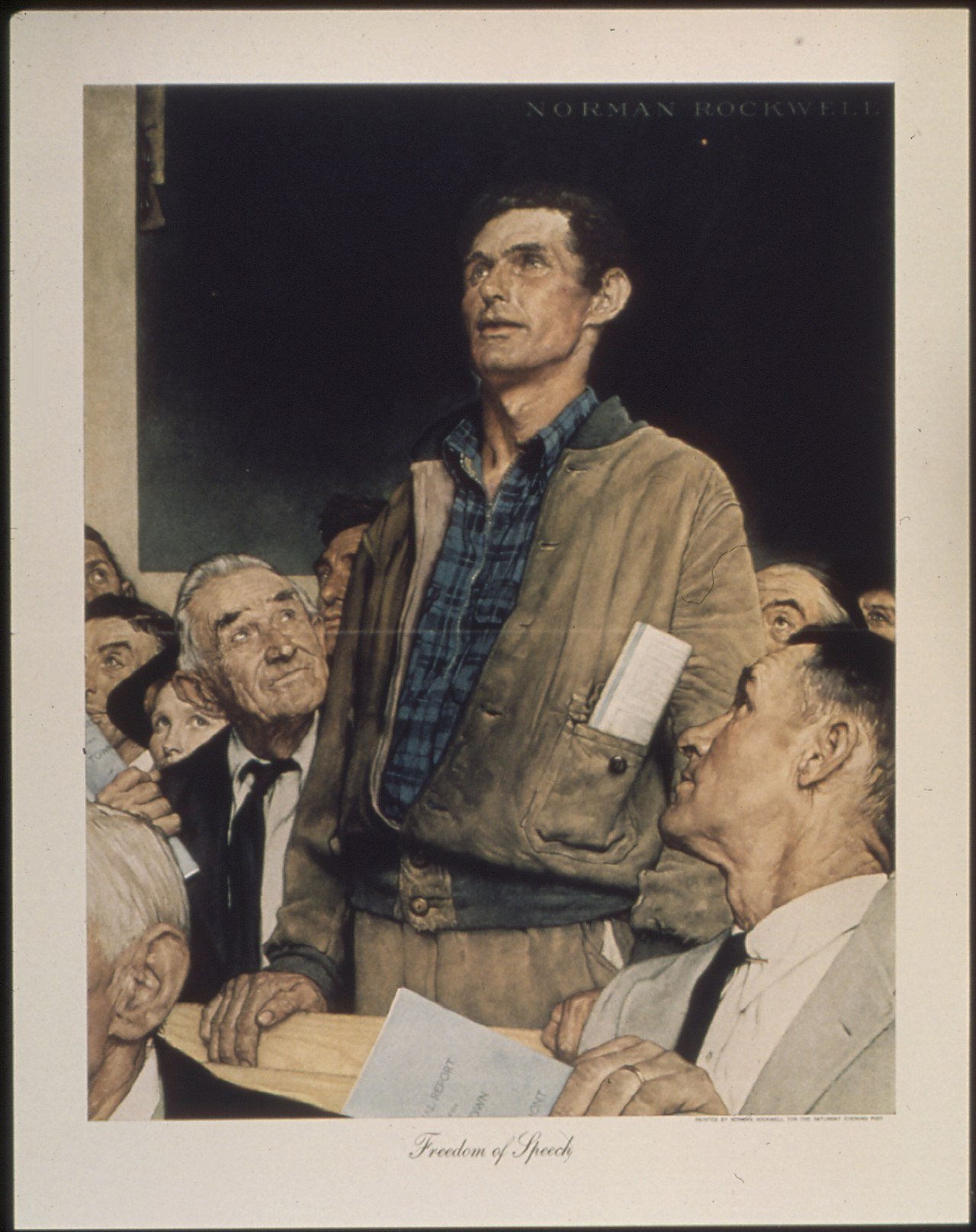
That's called free speech. And the use of the song in parodies, spoofs, and jokes would should already have been permitted as a matter of fair use and freedom of speech — though not (until now) without a fear of litigation.
By the way, what is the good reason for changing "We will overcome" to "We shall overcome"? I can't think of one.
IN THE COMMENTS: Unknown tries to answer my question:
Shall has a softer feel and implies it will take longer and require perseverance?"
I say:
I thought of this and considered it not a "good reason."
I think "will" suggests that the people singing the words have a will and are ready to act to get what they want.
"Shall" suggests that they are passively waiting for the predicted future to arrive. I guess it's expressive of the nonviolence theme that helped white people feel the feelings that were necessary to achieve the desired results.
Don't say: I want something and I'm going to take it. Say: I believe that you will perceive that I deserve this and give it to me.
I can't remember where I originally read this example but picture a drowning man saying: "I will die, no one shall save me" or "I shall die, no one will save me." The first sentence is properly understood as the words of a man intentionally drowning himself and warning off would-be rescuers. He's informing us that he's committing suicide. The second sentence expresses despair over accidental drowning and the absence of a rescuer. I think there are old jokes based on this distinction, in which a member of a supposedly uneducated ethnic group is allowed to drown because he didn't know the proper
shall/will distinction.


 For example,

 Mga Post


