Showing posts with label Otis Redding. Show all posts

November 27, 2023

"Try 'racial justice.'"

I wanted to search for an article at Vanity Fair, and the search box looked like this:


See the faint print in the box?

I thought it was funny, this idea to just "try" racial justice. The commitment to racial justice is obligatory, not something merely to "try."

This is the same problem I have with the song "Try a Little Tenderness." Just try... and if it doesn't work out for you, try something else? As Otis Redding sang the song — the one where the dress is "shaggy," rather than "shabby" — the tenderness you were supposed to try was "to rub her gentle" and "don't bruise her." And after you've tried that, what? 

In the old days of prominent Alka-Seltzer ads, the catchphrase was "Try it, you'll like it":

April 5, 2018

"Bob Dylan is among six acts appearing on a new compilation EP that features 'reimagined' versions of traditional wedding songs for same-sex couples."

"Universal Love opens with Dylan’s rendition of the 1929 great American songbook classic She’s Funny That Way, revamped as He’s Funny That Way... The compilation also features contributions from St Vincent (AKA Annie Clark), who turns the Crystals’ And Then He Kissed Me into And Then She Kissed Me. Kesha flips the pronouns on Janis Joplin’s I Need a Man to Love, as does Valerie June on Noël Coward’s Mad About the Boy."

The Guardian reports.

That reminds me, on "American Idol" this week, one contestant, Marcio Donaldson sang "(You Make Me Feel Like a) Natural Man," and the smart-ass writer at New York Magazine wrote:
Marcio Donaldson, “(You Make Me Feel Like a) Natural Woman”

I almost enjoyed this. I’m all for a man owning the Carole King-penned Aretha classic and belting the words “You make me feel like a natural woman” as Carole intended. But no. Marcio Donaldson had the nerve to change the lyrics to “You make me feel like a natural MAN,” which is… pretty stupid, Marcio. What does “You make me feel like a natural man” even mean? And who cares? Stay tuned in the semifinals for Marcio to tackle Cyndi Lauper’s hit “Men Also Enjoy Fun, OK?” and Madonna’s pop classic “Material Person.”
Carole King-penned... Carole intended... Is Gerry Goffin simply invisible? From the Wikipedia page for the song:
Written by the celebrated partnership of Gerry Goffin and Carole King, the song was inspired by Atlantic Records co-owner and producer Jerry Wexler. As recounted in his autobiography, Wexler, a student of African-American musical culture, had been mulling over the concept of the "natural man", when he drove by King on the streets of New York. He shouted out to her that he wanted a "natural woman" song for Aretha Franklin's next album. In thanks, Goffin and King granted Wexler a co-writing credit.
Ah! So the original idea was the "natural man"!  And men outnumber the woman on the credits to the song. There's Gerry and Jerry. And they're all white people thinking about black people. So what, really, is the original intent? And even if it was a woman — or, specifically, Aretha — what's wrong with extending the idea to a man? Aretha famously flipped the sexes when she sang Otis Redding's song, "Respect."

Did it take "nerve" for Marcio Donaldson to change the lyrics? Are the changed lyrics "stupid"? Does the smart-ass writer at New York magazine (Louis Virtel) think the "Universal Love" project, with all the change-of-sex lyrics is stupid? He mocks —  “Men Also Enjoy Fun, OK?”  “Material Person" — but will he mock Dylan's "He's Funny that Way" and St Vincent's "And Then She Kissed Me"?

And does the smart-ass Virtel know that Rod Stewart sang "(You Make Me Feel Like a) Natural Man," on his 1974 album "Smiler"? It's not a new concept. Rod's version is fantastic. Listen.

On this blog in 2004, we were talking about "Songs transformed with the sex of the singer." Tori Amos had come up with a list of 20 songs, and I said:
The classic example of a man singing a woman's song is Frank Sinatra singing Gershwin's "Someone to Watch Over Me." He's forced to sacrifice the most beautiful couplet -- "Although he may not be the man some/girls think of as handsome" -- but singing words that are an entirely conventional woman's dream, Sinatra lets us see a shocking, haunting vulnerability.
Virtel betrays some woeful sexism when he asks "What does 'You make me feel like a natural man' even mean?" Is the "natural" condition something special for women, some notion that women have more "nature" in them or that Nature is a woman (Mother Nature) and that The Male is something else — something like Civilization and Order? If that's what underlies the question "What does 'You make me feel like a natural man' even mean?," then I wonder if he knows there's another song, "Natural Man," written by comedian Sandy Baron and singer Bobby Hebb and recorded by Lou Rawls, who won a Grammy for it in 1971. Listen here. Lyrics:
Well now, I tried to do what others say that I should do
They say that I should fit in, fool em, fake it
Those kinda dues just make me crazy and blue, man, I just can't take it
So when you see me walkin, won't you notice that proud look in my eyes
My feet are on the ground and my soul is searching for the sky...
Anyway, Marcio Donaldson is one of the top 24 on "American Idol." Here he is singing the Goffin/King/Wexler "Natural Man":

December 11, 2017

The morning after the 50-year anniversary of the death of Otis Redding.

I put up a post last night, linking to a New Yorker tribute, with my own photograph from an airplane of the Madison lake where Redding's plane crashed. This morning, I'm clicking on my Otis Redding tag, because there's one thing I know is there and I want to find it. But I'm interested in all the old Otis Redding posts, and I'm going to list them here.

1. April 30, 2005 — "Songs transformed with the sex of the singer."
What songs well-known as girl songs would take on intriguing meaning sung by a guy?... The obvious actual example of this is Aretha Franklin singing Otis Redding's "Respect."... The trouble with a man singing that song is that it's a bit ugly: I make the money, so you owe me. It's the conventional arrangement. The lyrics are a bit awkward in the female re-sing. Why was Aretha giving this guy "all my money"? But we ignored that. It was the remnant of the Otis version. She sang through that and pulled out the better, female meaning through sheer force.
2. June 4, 2006 — "Convergences."
... I put in my earphones and fired up Pandora and meant to type in "Cigarettes and Chocolate Milk" to get to some more music like that. Mixing in the movie title ["Coffee and Cigarettes"] and influenced by that coffee I was drinking, I typed in "Cigarettes and Coffee." Pandora turned up a song I'd never heard before called "Cigarettes and Coffee" -- by Otis Redding. I wasn't meaning to listen to that kind of music but I liked it well enough.... [T]he theme [of "Theme Time Radio With Bob Dylan"] this week is "Coffee," and one of the songs on the playlist was "Cigarettes and Coffee" by Otis Redding.... Bob mentions how Otis died, converging by airplane with a lake here in Madison, Wisconsin. And he plays a clip from the movie "Coffee and Cigarettes"...
3. March 4, 2007 — "It is [blank] that makes us human."

December 10, 2017

"Fifty years ago, on December 10, 1967, a private plane carrying Otis Redding and the members of his touring band stalled on its final approach to the municipal airport in Madison, Wisconsin..."

"... and crashed into the waters of Lake Monona, killing all but one of the eight people onboard.... When he came up, in 1962, he was a completely unschooled performer who stood stock still onstage as he sang the pining, courtly ballads that brought him his first success. Over time, however, as his repertoire broadened to include driving, up-tempo songs, Redding found a way to use his imposing size and presence as a foil for his heartfelt emotionality, eschewing the conventions of graceful stagecraft in favor of a raw physicality that earned him comparisons to athletes like the football star Jim Brown. Marching in place to keep pace with the beat, pumping his fists in the air, striding across stages with a long-legged gait that parodied his 'down home' origins, Redding’s confident yet unaffected eroticism epitomized the African-American ideal of a 'natural man.'... And then he was no more. Redding’s sudden death thrust him into the ranks of a mythic group of musical performers that included Bix Beiderbecke, Robert Johnson, Hank Williams, Charlie Parker, Buddy Holly, Patsy Cline, and Redding’s own favorite, Sam Cooke––artists whose careers ended not only before their time but in their absolute prime, when there was every reason to expect that their finest work was yet to come...." — Jonathan Gould (The New Yorker).

IMG_1598

June 17, 2017

50 years ago today: It was Day 2 of the Monterey Pop Festival.

The performers on the second day were: Canned Heat, Big Brother and the Holding Company, Country Joe and the Fish, Al Kooper, The Butterfield Blues Band, The Electric Flag, Quicksilver Messenger Service, Steve Miller Band, Moby Grape, Hugh Masekela, The Byrds, Laura Nyro, Jefferson Airplane, Booker T. & the M.G.'s, The Mar-Keys, Otis Redding.

If I had to pick my favorites at the time from that group, it would probably be the same I'd still pick today: The Byrds, Laura Nyro, and Jefferson Airplane. But I think the best remembered set of the day was Otis Redding. You can watch the whole 19 minutes here:


Otis Redding - Live at Monterey Pop Festival... by cosmo2161

"This performance is noteworthy for many reasons but two in particular":
It was unusual to see Redding backed by the band that he used (and every other Stax artist) in the studio. Booker T & the MG’s were the house band for Stax Records and as such did not get much time outside the studio. The European tour changed that. Secondly, and perhaps more importantly, it demonstrated how Redding had effectively adapted his performing style while in Europe. He worked on getting the audience to respond without the tease that would be present with a black audience. This is most easily demonstrated by his call-and-response of the cry “Shake!” out to the audience demanding they return the holler. He knew from the get-go that he had them....
ADDED: I went back into the archive to check whether the "Otis Redding" tag was on all the old posts that mentioned Redding and to find the old post that showed the memorial to Redding overlooking Lake Monona where Otis Redding died in a plane crash 6 months after the performance at Monterey. I couldn't find the picture of the memorial, but I did find this strange old post (from March 2007):
"It is [blank] that makes us human."

July 7, 2014

Is depicting the "Obama Presidential Library" as an outhouse racist?

This miniature outrage arrives from Norfolk, Nebraska. A float in a 4th of July Parade had a fake outhouse labeled "Obama Presidential Library" and, standing outside it, a mannequin of a dark-skinned man wearing overalls.

Clearly, this is disrespectful, but there's nothing violent happening, so it doesn't implicate the concerns about presidential safety that bothered me during the 2013 mini-outrage over the rodeo clown who wore an Obama mask.

It's important to be able to express disrespect for the President, and race shouldn't immunize the President from criticism, though it's easy to see the temptation, for at least some Obama supporters, to push back critics by scaring them with accusations of racism.

Yes, it's a bad float, inappropriate for the 4th of July, but the only reason to pay any attention to this — what other bad floats appeared in local parades on the 4th? — is that the accusation of racism has been leveled.

What is racial about an outhouse? Outhouses are associated with poverty, and while there are correlations between poverty and race, the outhouse as a marker of poverty is associated with poor, rural white people. I think of the original iconography of Mountain Dew:
John Brichetto drew the first sketches of the original Mountain Dew bottle labels in 1948, depicting a character known as Willy the Hillbilly shooting at a revenuer fleeing an outhouse with a pig sitting in the corner. Below the illustration is the phrase “by Barney and Ollie”—as in FILLED by Barney and Ollie, a nod to the way a homemade jug of moonshine might be hand filled by the moonshiner. This labeling quirk was carried on until Pepsi Cola entered the picture many years later.
I think of Li'l Abner, the cartoon character:
A priceless rube, Abner was so gullible that he could be tricked by a small child. The loutish Abner typically had no visible means of support, but sometimes earned his livelihood as a "crescent cutter" for the Little Wonder privy company, (later changed to "mattress tester" for the Stunned Ox mattress company.)
Now, let's move on to the overalls. What does it mean that the figure of the President is dressed in overalls? The association is to rural poverty (or rural work), but is it racial?

Thinking about race and overalls, I heard the line "You wear overalls!" What was that? Some recording from the 60s... Ah! I was thinking of Carla Thomas, singing with Otis Redding, in the 1967 song "Tramp." At 0:37, you hear:
You know what, Otis?
What?
You're country.
That's all right.
You're straight from the Georgia woods.
That's good.
You know what? You wear overalls, and big old brogan shoes, and you need a haircut, Tramp.
And, again, as the song is fading out, at 2:42, Thomas harps on those overalls:
You a tramp, Otis. You just a tramp.
That's all right.
You wear overalls. You need a haircut, Baby. Cut off some of that hair off your head. You think you're a lover?
There is zero chance that Thomas's problem with Redding is racial. She's rejecting him because he's country. His retort: That's good.

So I think the float used the iconography of poverty to express the point of view that Obama is utterly lacking in achievement worthy of a presidential library. Maybe you could build an argument that because so many black people have been poor, any depiction of a black person as poor is intended to associate him with black people in general, and that is enough to warrant an accusation of racism. But I think this float belongs in the innocuous category of traditional American disrespect for authority figures.

Looking at it that way, I suddenly see how it might be exactly what is appropriate for the 4th of July:
The history of the present King of Great Britain is a history of repeated injuries and usurpations, all having in direct object the establishment of an absolute Tyranny over these States....

October 17, 2013

Great shakes.

The previous post talks about the 1960s dance called "the shake," which The Supremes were instructed to do with their "buttocks under" rather than "protruding." I wanted to see some video of what this old dance really looked like, a search that was complicated by the YouTube era meme the Harlem Shake... not to be confused with the actual dance called the Harlem Shake, which goes back to 1981 and is also not the 1960s shake I'm looking for.

I amend my search to "1960s dance  the shake," and I get this old TV commercial:


Both Meade and I felt a big nostalgic twinge of recognition at the point where the pyramid-shaped packets of powder are dumped out of the plastic shaker.

And speaking of pyramids, the inventor of the dance the Harlem Shake, Al B says:
It's a drunken shake anyway, it's an alcoholic shake, but it's fantastic, everybody loves it and everybody appreciates it. And it's glowing with glory. And it's respected. But if we could mystify it, and become historian, about this Egyptian jazz... Pharaohs invented this thing, with spears, and hats, and gowns. And so, it becomes a subject of being communicative to the system and to realization. If you get my drift.... It was a drunken dance, you know, from the mummies, in the tombs. That's what the mummies used to do. They was all wrapped up and taped up. So they couldn't really move, all they could do was shake...
Yes, but how about the 1960s dance? I see "'Shake!!' - RJ & The Del Guapos - (60's dances)," but the dancers are obviously doing the twist and the pony, so this is not an authoritative depiction. And here's a video with the Sam Cooke song "Shake" — "a new dance that's going around" — but, again, somebody just threw together clips of 60s people dancing a jumble of 60s dances. But I did immensely enjoy the appearance of  the word "shake" clipped from the Great Shakes TV commercial!

So... finally, here's The Supremes, singing and dancing "The Shake" on the British TV show "Ready Steady Go" in 1965. That's kind of bad. This is much better, also on "Ready Steady Go." The year is 1966:


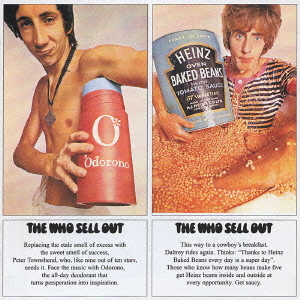
BONUS: The Who do a Great Shakes commercial. But those of us who followed The Who back then — I was a member of The Who Fan Club before they released their first album in the U.S. — know that The Who sold out early. It looked like this:

November 23, 2010

"In 'Satisfaction' I was imagining horns, trying to imitate their sound to put on the track later when we recorded."

"I'd already heard the riff in my head the way Otis Redding did it later, thinking, this is gonna be in the horn line. But we didn't have any horns, and I was only going to lay down a dub. The fuzz tone came in handy so I could give a shape to what the horns were supposed to do. But the fuzz tone had never been heard before anywhere, and that's the sound that caught everybody's imagination. Next thing I know, we're listening to ourselves in Minnesota somewhere on the radio, 'Hit of the Week,' and we didn't even know Andrew had put the fucking thing out! At first I was mortified. As far as I was concerned that was just the dub.... And I learned that lesson — sometimes you can overwork things."

That's Keith Richards, in his autobiography, "Life," learning a lesson about spontaneity and minimalism. (Page 177.)

Here's the Otis Redding version, with the horns as Richards had originally intended. Speaking of intent, I don't think Richards intended to imply a criticism of Redding's version, only to tell the story of how he produced the sound we hear on the Rolling Stones original recording. He's essentially giving himself a double compliment: 1. I imagined the full orchestration that the best soul music people of the time produced, and 2. I ingeniously used the guitar (with a Gibson fuzz tone pedal) to produce that sound and outdid them by cranking it all out quickly.

But Richards did, backhandedly, put down Otis Redding. You can overwork things

March 4, 2007

"It is [blank] that makes us human."

I just ran across an old page in a notebook with that heading. This scribbling is at least a few years old but not more than 10 years old. It is followed by 16 words, candidates for filling in the blank, written with some unknown level of seriousness. Here are my 16 words in the order I wrote them:
  1. shame
  2. remembering
  3. planning
  4. dread
  5. joking
  6. writing
  7. politics
  8. fashion
  9. arrogance
  10. history
  11. theory
  12. inhumanity
  13. timekeeping
  14. culture
  15. believing
  16. originality
Critique these items or the inquiry itself. Or just add to the list. Or make a record album, with those 16 song titles. And give me credit. And half your royalties.

IN THE COMMENTS: Bill responds to my request for a 16-cut album by finding an Otis Redding recording for each item:
1. shame (I'm Sick Y'all)
2. remembering (Champagne and Wine)
3. planning (New Year's Resolution)
4. dread (Don't Leave Me This Way)
5. joking (Happy Song)
6. writing (I Love You More Than Words Can Say)
7. politics (Change Is Gonna Come)
8. fashion (Satisfaction--Otis pronounces it 'satisfashion;' so really it's about his inability to buy nice clothes)
9. arrogance (Tramp)
10. history (You Don't Miss Your water)
11. theory (Fa-Fa-Fa-Fa-Fa (Sad Song))
12. inhumanity (Cigarettes and Coffee)
13. timekeeping (I've Got Dreams To Remember)
14. culture (Respect)
15. believing (Look At The Girl)
16. originality (Love Man)
So here's the new game: Pick some artist you like and come up with 16 appropriate cuts.

June 4, 2006

Convergences.

When John was in town we watched the movie "Coffee and Cigarettes" one evening, and then the next day we listened to that Rufus Wainwright song "Cigarettes and Chocolate Milk." Later, I was in the café and didn't like the music they were piping in, so I put in my earphones and fired up Pandora and meant to type in "Cigarettes and Chocolate Milk" to get to some more music like that. Mixing in the movie title and influenced by that coffee I was drinking, I typed in "Cigarettes and Coffee." Pandora turned up a song I'd never heard before called "Cigarettes and Coffee" -- by Otis Redding. I wasn't meaning to listen to that kind of music but I liked it well enough.

I'd been too busy this week to do my Wednesday morning drive to listen to "Theme Time Radio With Bob Dylan," but I went to check the website to see when the replays of the new show were, and I saw the theme this week is "Coffee," and one of the songs on the playlist was "Cigarettes and Coffee" by Otis Redding. Now When it's time for one of the replays, so I'm going to get in my car and go for a drive. If I kill myself in an accident, be sure to say she died doing something she loved, and link to this post. Have a cup of coffee and talk about convergences, including whatever it was my car converged with.

UPDATE, after hearing the show: More convergences. On the death theme, Bob mentions how Otis died, converging by airplane with a lake here in Madison, Wisconsin. And he plays a clip from the movie "Coffee and Cigarettes," the part where Iggy Pop tells Tom Waits he ordered coffee for him and then worries if that's okay.

April 30, 2005

Songs transformed with the sex of the singer.

What songs well-known as girl songs would take on intriguing meaning sung by a guy? Tori Amos comes up with a list of 20 songs, but I find her list uninspiring. Do you have any better ideas?

There's also the reverse: what boy songs could be transformed if sung by a female? The obvious actual example of this is Aretha Franklin singing Otis Redding's "Respect."
In Redding's reading, a brawny march powered by Booker T. and the MG's and the Memphis Horns, he called for equal favor with volcanic force. Franklin wasn't asking for anything. She sang from higher ground: a woman calling an end to the exhaustion and sacrifice of a raw deal with scorching sexual authority. In short, if you want some, you will earn it.

"For Otis, respect had the traditional connotation, the more abstract meaning of esteem," Franklin's producer, Jerry Wexler, said in his autobiography, Rhythm and the Blues: A Life in American Music. "The fervor in Aretha's voice demanded that respect; and more respect also involved sexual attention of the highest order."
The trouble with a man singing that song is that it's a bit ugly: I make the money, so you owe me. It's the conventional arrangement. The lyrics are a bit awkward in the female re-sing. Why was Aretha giving this guy "all my money"? But we ignored that. It was the remnant of the Otis version. She sang through that and pulled out the better, female meaning through sheer force.

UPDATE: The classic example of a man singing a woman's song is Frank Sinatra singing Gershwin's "Someone to Watch Over Me." He's forced to sacrifice the most beautiful couplet -- "Although he may not be the man some/girls think of as handsome" -- but singing words that are an entirely conventional woman's dream, Sinatra lets us see a shocking, haunting vulnerability.