Showing posts with label Mary Tyler Moore. Show all posts

December 24, 2025

"Aside from the gold, Mr. Trump has hung more than 20 portraits in the Oval Office. In addition to Mr. Washington’s above the fireplace..."

"... portraits of John Adams, Benjamin Franklin, Andrew Jackson, William Henry Harrison, Abraham Lincoln, James Monroe and Franklin D. Roosevelt are also on the walls. Mr. Trump has ruminated about the fate of Mr. Harrison, who died shortly after he was inaugurated, to people who have visited the Oval Office. He has said that the portraits of his predecessors are there to remind him of how quickly fate can change. Most other presidents had just a few portraits or scenery paintings in the Oval...."

From "'He’s a Maximalist': Inside Trump’s Gilded Oval Office/The New York Times recreated the president’s office in 3-D, using hundreds of photos taken in October" (NYT)(gift link, for all the photos 

1. The NYT calls the photos "3-D," but they're not 3-D. They are 360°. I think the correct term is "360° panoramas."

2. This article is respectful toward Trump, an effort at objectivity, though of course the comments over there are anti-Trump — "Fool’s gold, in every sense," etc.

3. The "maximalist" characterization comes from Karoline Leavitt: "Why all the gold? 'He’s a maximalist,' Ms. Leavitt said, citing Mr. Trump’s background in real estate and hospitality. 'So he loves showing people who come in, the renovations, his office, his gift shop.'"

4. The "gift shop" isn't a shop. As the link on the phrase shows, it's a gift room, a small room off the Oval Office that Presidents have used for different purposes, that Trump uses to house a supply of hats and other items to hand out as gifts. And yes, this is the room where Bill Clinton consorted with Monica Lewinsky. 

5. I'm delighted to see the name William Henry Harrison. I was just talking about him yesterday. Off blog. I've been slowly making my way through this biography of John Quincy Adams (commission earned). I'd finally made it to Chapter 35: 
IN THE YEARS AFTER ADAMS LOST HIS BID TO BE REELECTED president, the slave states and their allies had controlled the White House, as they did the Congress and the Supreme Court.... Finally, in 1840, the Whigs had broken through, in the person not of Clay, the perennial candidate, but of William Henry Harrison. Adams was inclined to dismiss Harrison as a genial buffoon, an 'Indian fighter' like Jackson who had been puffed up into presidential material by the popular fancy for war heroes.... 
Then, on April 4, one month after taking the oath of office, Harrison died of pneumonia caused by a cold he had contracted at his inaugural. He was succeeded by John Tyler [who]... had been included as vice president in order to shore up party support in the slave states.

6. And here's the part that I clipped out and texted to Meade and to my son Chris (who reads bios of Presidents and had sent me this book):

It had never crossed anyone’s mind that he would exercise power of any sort; no president had ever died in office. No one even knew how to address the successor; the Constitution was unclear on whether the vice president would succeed to the presidency or merely assume its functions. Adams was outraged that Tyler considered himself the president and insisted on being addressed as such.

I had never seen that idea before, the notion that when a President dies, the VP does not become the President. How dare Tyler expect to be called Mr. President! 

7. But back to the present day and to Trump with that picture of William Henry Harrison hanging alongside all the far greater Presidents. Trump keeps Harrison on the wall as a memento mori. We know that because he talks about it to people. He "has ruminated" aloud about the President who's known for dropping dead. We tend not to think of Trump as a person given to rumination — about anything, certainly not death.

8. Now, looking at those pictures of the Oval Office, maximally ornamented in gold, I think perhaps he sees the place as something like a tomb. Perhaps he envisions a chamber in the soon-to-come Trump library that looks something like this:

March 24, 2025

"Samuel Taylor Coleridge scribbled a note in the margins of his copy of Othello about 'the motive-hunting of Motiveless malignity'..."

"... a reference to the way in which the play’s treacherous villain, Iago, cooks up a variety of shallow rationalizations for a hatred that’s too deep and insidious to stem from any neatly explicable circumstance. But what of the motive-hunting of a motiveless production?... It may be that [Denzel] Washington’s lackluster performance stems from a misfiring if understandable desire to avoid stereotypes of outsize passion—of big, blustery emotional fireworks in a thorny role of color—yet the result is that we go on no journey with his Othello. We listen to him say words; we don’t, even as he enters the bedroom of his innocent wife, Desdemona (Molly Osborne), to strangle her, experience his awful interior transformation. Instead, as he approaches her in these fateful moments, a truly unsettling percentage of the audience is still laughing.... 'I’ll not shed her blood, / Nor scar that whiter skin of hers than snow, / And smooth as monumental alabaster,' he says.... Then he pauses before continuing, almost nonchalantly: 'Yet she must die.' The audience giggles. Is that what the production—what any production of Othello—really wants?"

What does the production really want? Enough Coleridge-style wondering about Iago's motivation. What did this particular production want? And what if the laughter is what it wants?! Put on a whole production of "Othello" with the ambitious goal that the audience will be transported to dizzying heights of inappropriate laughter. Desdemona is the new Chuckles the Clown and the audience is transfigured into Mary Tyler Moore.

July 31, 2024

"She doesn’t look around for others to join inasmuch as she simply reflects the moment: the thrill, the fun, the catharsis, the you-have-to-laugh-to-keep-from-crying-or-punching-a-wall of it all."

Robin Givhan is writing about Kamala Harris's notable laughing, in "Kamala Harris’s powerful laughter in the face of weirdness/Her guffaws speak to a moment: the thrill, the catharsis, the you-have-to-laugh-to-keep-from-crying-or-punching-a-wall of it all" (WaPo).

There's that word "weird" again, in the headline. I checked to see if maybe Givhan resisted using it herself. Givhan is a wordsmith. You can tell by that one sentence I put in the post title. She went with "inasmuch," and she made one of those long adjectives that hyphens let you construct out of any string of words: "you-have-to-laugh-to-keep-from-crying-or-punching-a-wall." But she's not a got-to-avoid-using-the-word-of-the-day wordsmith. 

I'd hoped "weirdness" was a just-in-the-headline word, inserted by one of those nameless headline writers, but it's in the body of the essay:

How weird is it to deride a person for laughing? Not for laughing inappropriately, in the middle of a funeral, for example...

The link goes to the "Mary Tyler Moore" Chuckles the Clown episode, not — how could it be?! — Bill Clinton laughing at Ron Brown's funeral (laughing, then fake-crying). 

... but simply for enjoying a good chuckle?

But sometimes it is inappropriate — and quite mystifying — as in this widely shared example:


Givhan acknowledges the word-of-the-momentness of "weird":

September 14, 2020

"[T]here's one major difference between this film and the Steven Soderberghian Contagion-like reality we're all living in."

"Because in this movie, the virus is not fatal. It doesn't even cause a fever or a cough. Instead, the main and only symptom is absolute euphoria. That's it. Everyone it infects experiences unbridled happiness and elation. Its victims begin acting kindly to one another, deferential."

From a "This American Life" segment on a 1968 movie called "What's So Bad About Feeling Good?" Transcript. Audio (recommended).

It's a rom com — with Mary Tyler Moore and George Peppard — about a toucan that spreads a virus in New York City. There's massive infection, everyone feels great, stops smoking and drinking, and the political authorities determine that's bad for the economy, so the immediately find a cure for the disease. George Peppard is cured and confronts the uncured Mary Tyler Moore:
Liz: No. Don't ask me to go back. Pete, remember what we had. Remember it. Cling to it.
Pete: You're kidding yourself. Hinklemeyer's right. You talk about goodness and kindness. Read the front page and try to find some.
Liz: Pete, I can't go back. I couldn't live that kind of life, ever again.
Pete: Okay, you drink your poison, and I'll drink mine.

August 31, 2019

Goodbye to Rhoda.

Remember the fabulousness:

[EMBEDDED VIDEO REMOVED]

"Rhoda, come on, I know you! You're not going!"

[EMBEDDED VIDEO REMOVED]

ADDED: From another episode with a lot of Rhoda — in the second half (the first half is heavy on the Phyllis — there's this fascinating moment when Mary lets us know she's not a virgin:

[EMBEDDED VIDEO REMOVED]

January 26, 2017

The name I looked for in the tributes to Mary Tyler Moore: Marlo Thomas.

When Mary Tyler Moore died, was she celebrated as a television first having something to do with feminism? You can't say "The Mary Tyler Moore Show" presented a new kind of woman without dealing with the earlier show, "That Girl":
That Girl is an American sitcom that ran on ABC from 1966 to 1971. It starred Marlo Thomas as the title character Ann Marie, an aspiring (but only sporadically employed) actress, who moves from her hometown of Brewster, New York, to try to make it big in New York City. Ann has to take a number of offbeat "temp" jobs to support herself in between her various auditions and bit parts. Ted Bessell played her boyfriend Donald Hollinger, a writer for Newsview Magazine...

That Girl was one of the first sitcoms to focus on a single woman who was not a domestic or living with her parents. Some consider this show the forerunner of the highly successful The Mary Tyler Moore Show, and an early indication of the changing roles of American women in feminist-era America...

At the end of the 1969–1970 season, That Girl was still doing moderately well in the ratings, but after four years Thomas had grown tired of the series and wanted to move on. ABC convinced her to do one more year. In the beginning of the fifth season, Don and Ann became engaged, but they never actually married. The decision to leave the couple engaged at the end of the run was largely the idea of Thomas. She did not want to send a message to young women that marriage was the ultimate goal for them, and she worried that it would have undercut the somewhat feminist message of the show.
"The Mary Tyler Moore Show" did not begin until 1970. Look how similar the opening credits are for the 2 shows:


When I first saw the MTM opening credits I wondered how could they get away with such a rip-off. Also, I think MTM was a throwback to the 1960s and actively old, not new at all. Now, "The Mary Tyler Moore Show" turned out to be a great, great show, undoubtedly one of the best shows in the history of television. I just hate to see descriptions of it that give credit for being ahead of its time. It followed "That Girl."

November 8, 2015

The NYT gushes: "Hillary in History/Win or lose, she is the perfect transitional figure."

That's the teaser on the front page, leading to the Gail Collins column, "Hillary in History."

No sooner did I write "The NYT gushes" than I began to doubt whether it is gushing. Yes, "perfect" sounds like high praise, but: "transitional figure." It's almost an oxymoron. If it's perfect, why are we progressing through this stage, transitioning? She's not the fully formed female President, but she's perfection as a way station on the road from here to there. She isn't where we really need to be, and so the perfection is imperfection.
[O]ne of the running subtexts in this story... is that when it comes to women winning political office, there’s a long line of wives in the cast of characters. [Elizabeth] Dole is married to the former presidential candidate Bob Dole. Margaret Chase Smith was both wife and office manager for Congressman Clyde Smith of Maine, and she took his seat after he died.

The first woman governor, Nellie Tayloe Ross, won a special election in Wyoming to succeed her husband in 1925. The first female senator was Hattie Wyatt Caraway of Arkansas, who was initially appointed to succeed her husband....
Collins had Hillary Clinton on the telephone, and Hillary told the old joke about a "successful businessman" who tells his wife that if she'd married her old boyfriend she'd be the wife of that gas station attendant and the woman says — as Hillary flattens the punchline — "No, if I’d married him he’d be a big success like you." Is that what Hillary thinks of Bill? That's my question. Collins didn't ask that and she sure didn't ask my next questions: If Bill got to be President because of you.  wouldn't electing you now be like giving you a third term as President? Haven't you already had your full constitutional share of presidential terms?
Clinton — the wife of a former president, with the longest résumé in the room — is a perfect transitional figure, whether she wins or not. Maybe there had to be a heroic Senator Smith with a muffin recipe, too. Maybe — and this is taking a really huge jump — there also had to be a “Ma” Ferguson, who became the first woman to be elected governor of Texas in 1925 after her husband was convicted of financial corruption. Ferguson did promise voters “two for the price of one” long before Bill Clinton thought of the phrase.
So the perfection Collins flogs is status as a wife of a former President?! In that framework, Hillary is only "the perfect transitional figure" if you believe America is mired in its travels on the road to female equality in some godawful backwater town where a woman cannot make it on her own. Did Mary Tyler Moore throw her hat in the air for nothing?


That was Minneapolis in 1970, and I am not buying that a woman in 2015 needs to make it by riding alongside her successful husband. That's not where we are, and I can't believe Gail Collins isn't embarrassed to talk about the United States that way.

September 19, 2015

20 years ago today: The Washington Post published the 35,000-word "Unabomber Manifesto."

The Washington Post has the story, with a photograph, at the top center of the home page: "How publishing a 35,000-word manifesto led to the Unabomber."
In more than 35,000 words spread over eight pages of a special section, an anonymous author laid out his complaint against the “industrial-technological system” and his desire to destroy it by sparking a revolution. The essay bumped and blundered through a forest of dark themes and discontent, from a lengthy lament about environmental destruction to a brief critique of golf and bowling.
The publication led to the identification and arrest of Kaczynski (because his sister-in-law and brother recognized his distinctive style of expression), but the reason for publishing the whole damned thing was to comply with Kaczynski's ultimatum: If it's published, he'll stop bombing, and if not, he'll "start building our [sic] next bomb."

WaPo puts the old story in the context of present-day concerns about terrorism:
[T]he episode also stands out as an early milestone in the current age of anxiety. The Unabomber’s manifesto appeared just as Washington was beginning its long preoccupation with terrorism and national security. As the news media and the public fixated on the Unabomber drama, a much bigger story was quietly dawning. That same year, in a classified National Intelligence Estimate, the CIA warned that Islamic extremists were intent on striking targets inside the United States.
The NYT — which coordinated with WaPo in responding to the ultimatum — ignores the anniversary. There's a mention on the day's "Today in History" feature, which comes from The Associated Press. It's in there along with other historical anniversaries like: "In 1970, the situation comedy 'The Mary Tyler Moore Show' debuted on CBS-TV." And: "In 1915, vaudeville performer W.C. Fields made his movie debut as 'Pool Sharks,' a one-reel silent comedy, was released." And in 1959, Nikita Khrushchev got mad when he found out they weren't going to let him into Disneyland. In 1960, Fidel Castro came to New York City, didn't like his hotel, and "angrily checked out" and went to a different hotel.  Communists and comedians. Communists and comedians and Ted Kaczynski.

Ted had a lot to say about leftists in his manifesto. Let's look. It's worth reading if only to see how surprisingly similar it is to things you may be seeing every day on the internet:

May 31, 2015

Happy Mother's Day.

It's Mother's Day in Algeria, France, Morocco, and Sweden. I learned that at Wikipedia, which illustrates the concept of Mother's Day with this photograph:


I love the photo selection. It's so absurdly timeless, so unlike any Mother's Day photograph an ad agency would produce, yet it's posed and iconic, in the manner of ad photography. She's so happy with just that card, and the card itself is absurdly timeless. And that apron! That symbol of maternity, gone now, isn't it?

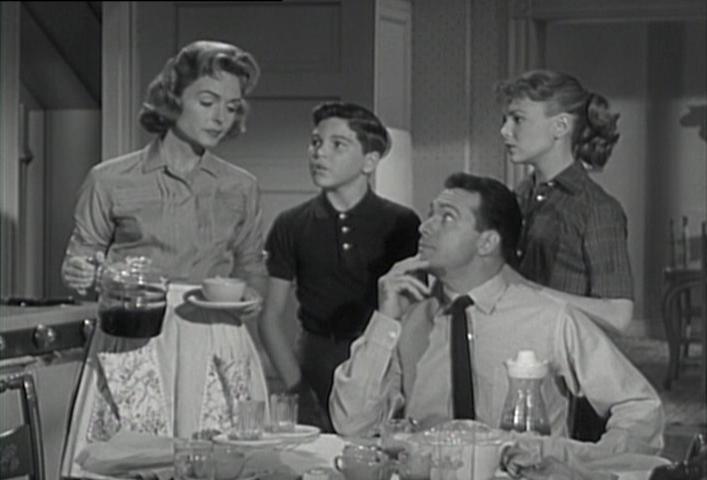
ADDED: When did the mothers on TV shows stop wearing aprons? I say it was Laura Petrie who changed the style:


(She wore pants too.) Compare Donna Reed:


"The Donna Reed Show" was on from 1958 to 1966. "The Dick Van Dyke Show" (the one with Laura Petrie/Mary Tyler Moore) was on from 1961 to 1966.

June 7, 2014

Love is all around.

Yesterday, I said "Love was all around, and I was able to choke back tears until I got back in the car." In the comments, Unknown said:
How can the increase of the rate of love in the world be a bad thing? I don't comment often, anywhere, but this moved me. Thank you.
And Pat said:
Long time conservative republican here, glad to see people who love each other and are willing to commit to each other, able to be married. We r's need to let this issue go and fight other fights.
But eric said:
I submit that the word love is being used in a fallacious way. Love does not mean something you feel. It means the way you behave. What we are seeing is a perversion of love. One that says, if you feel good, its love. Which is apropos of this situation. As we see both love and sex being perverter and enablers helping these people destroy their lives.
Love is not something you feel? "I feel it in my fingers/I feel it in my toes," sang The Troggs in a song, titled with the words I used, "Love Is All Around." And here's Joan Jett and The Blackhearts singing the theme from "The Mary Tyler Moore Show" ("Love is all around/No need to waste it..."):


And — to embrace tradition — here's the original show opening with Mary emoting and a gentle-voiced man singing about turning the world on with a smile. Perhaps eric will stop in to submit that the human smile cannot in fact turn on the world and, indeed, the world is not a unified, embodied entity with genitals capable of arousal, and even given the vast appeal of Mary Tyler Moore, it is fallacious to contend that the entire world possesses a sexual orientation toward a woman smiling.

The gentle-voiced man — if you're inclined to riff on what your body's ears hear as effeminacy or metrosexuality or whatever — is Sonny Curtis, who played with Buddy Holly before there were Crickets and who wrote — in addition to Mary's "Love Is All Around" — the lawyer's favorite "I Fought the Law" and the Everly Brother's "Walk Right Back." Or does Anne Murray turn you on with her smile?

Did you know Mary Tyler Moore is now 77 years old and nearly blind?

Have you heard there are none so blind as those that will not see? 

And:
Beloved, let us love one another; for love is of God, and he who loves is born of God and knows God. He who does not love does not know God; for God is love. In this the love of God was made manifest among us, that God sent his only Son into the world, so that we might live through him. In this is love, not that we loved God but that he loved us and sent his Son to be the expiation for our sins. Beloved, if God so loved us, we also ought to love one another. No man has ever seen God; if we love one another, God abides in us and his love is perfected in us.

April 7, 2013

"If you'll take thunder and lightening, and a steamboat and a buzz-saw, and mix 'em up, and put 'em into a woman, that's jasm."

Wrote J.G. Holland in "Miss Gilbert's Career," published in 1860, the oldest historical use of the U.S. slang word "jasm," which means "Energy, spirit, ‘pep,'" according to the Oxford English Dictionary (which, unfortunately, I can't link to). I clicked on "jasm," because I was reading about the origin of the word "jazz," for an earlier post, where I noted that I had believed that the word "jazz" originally referred to sexual intercourse. That chronology is unlikely, according to the OED, and in fact, the word "jazz" first appeared in baseball.

But this "jasm" definition gives the etymology: "Apparently a variant of jism." Now, come on. That has to be sexual. But jism originally meant "energy, strength," going back to 1842:

April 2, 2013

The "thigh gap."

What girls want.

ADDED: Question from the journalist: "What does it symbolize if one has a thigh gap?"

[UPDATE: Pesky thigh video deleted. It was causing technical troubles. It's very good, so click over if you want to see it.]

AND: From the video:
Journalist: "Do you think boys look at a girl's thigh gap?"

Girls: "No! They don't even know what it is!"

Journalist: "So why do girls care?"

Girl: "It's a girl thing."
My home-based research gets different results. I asked my husband Meade if men knew or cared about the "thigh gap," and he said "hell, yeah!" He advised me to Google "Laura Petrie." Apparently, he's been thinking about the thigh gap for a long time. On further questioning, I was able to discern a difference between the thigh gap these teenage girls were waxing competitive about — a spacious dual arc at mid-thigh — and the thigh gap that Meade (purporting to represent the thinking of many men) was enthusing over — which is a hand-sized window of light at the top of the closed thighs.

October 8, 2012

E.J. Dionne asks "Does our presidential campaign lack a moral core?"

He purports to delve into the debate:
However you analyze it in electoral terms, the exchange between President Obama and Mitt Romney was most striking as a festival of technocratic mush — dueling studies mashed in with competing statistics. In many ways, the encounter offered voters the worst of all worlds: a great deal of indecipherable wonkery and remarkably little clarity about where each would lead the country.
However you analyze it? Well, I don't even have to check the debate transcript to remember a striking use of the word "moral." Let me get the exact quote from the transcript. Jim Lehrer had just asked "what are the differences between the two of you as to how you would go about tackling the deficit problem in this country?" And Mitt Romney said:
Good. I'm glad you raised that, and it's a -- it's a critical issue. I think it's not just an economic issue, I think it's a moral issue. I think it's, frankly, not moral for my generation to keep spending massively more than we take in, knowing those burdens are going to be passed on to the next generation and they're going to be paying the interest and the principal all their lives. And the amount of debt we're adding, at a trillion a year, is simply not moral.
But Dionne would like you to think of the debate is just a big indecipherable mush. And then the whole rest of his column is about — can you guess? — Nuns on the Bus! Because who's better than nuns "to remind us that our decisions in November have ethical consequences?" I'd say Mitt Romney was better, in his utterly clear statement quoted above, which is in no way "technocratic mush" or "insufferable wonkery," Mr. Dionne. But... hey! Look! Nuns! Nunnnnzzzz!

May 23, 2011

"Sarah [Palin] quickly tossed the beloved hat in the trash, explaining to me that it was 'icky.'"

Frank Bailey tattles on Sarah. Apparently, she referred to some elderly male supporters as the "crazy old men's club." One of them gave her his old hat. It's not like she threw it in the trash in front of him. What would you do if an old man who loved you presented you with "his lucky fedora festooned with campaign buttons"?

You're Sarah Palin. An old man gives you his hat. You:
Wear it proudly!
Display it on a shelf in campaign headquarters.
Box it, tissue-wrapped, for display in some future presidential library.
Auction it on e-Bay.
Toss it, Mary Tyler Moore-style, up in the air.
Have someone else toss it in the air and shoot it.
Throw it in the trash in front of other people.
Discreetly slip it into the trash.
  
pollcode.com free polls

September 6, 2005

Maynard to God: "You rang?"

So soon after failing to make a public demonstration of mourning upon the death of Chief Justice William Rehnquist, I'm going to have to cry publicly here over the death of one of my favorite television personalities, Bob Denver.

Just yesterday, re-watching the last episode of my favorite TV show, "The Comeback," I said, "Valerie Cherish is my favorite TV character, ever."

"Really? What about Seinfeld?"

"No." I thought back over all the TV characters I could remember to see if anyone meant so much to me and said, "There's only one other person I can think of: Maynard G. Krebs."

All the obits will forefront Gilligan. But I don't care about Gilligan. It's Maynard I love!

Like, I'm getting all misty.

IN THE COMMENTS: "When you think about it, how many actors play two iconic characters in their careers on TV?" He mentions Mary Tyler Moore and Bea Arthur. For me, Lisa Kudrow sprang instantly to mind. Then there's Patty Duke, who did it on one show. Robert Young. William Shatner? Don Knotts?

January 3, 2005

"We live in an era that has placed too much emphasis on diagnosis."

In the Washington Post, Tim Page writes about Glenn Gould:
[H]e talked happily, obliviously, on and on into the night about any subject that crossed his mind -- this composer, that recording, his favorite television programs (he loved "The Mary Tyler Moore Show"), the stock market (he played actively and lucratively), his love for animals, which he generally preferred to people.

His sex life seems to have been virtually nonexistent; his friendships were kept up mainly through the telephone (how he would have delighted in the Internet!); he worked by night and slept by day. It has been suggested that Gould may have had a touch of autism -- he was profoundly uncomfortable with most physical contact and demanded, throughout his life, the psychological safety of unbroken routines whenever possible. But we live in an era that has placed too much emphasis on diagnosis...

Is it true that back in the 1950s, there wasn't an emphasis on diagnosis? It seems to me that back then, people were intent on framing all sorts of behavior in Freudian terms. Popular culture was full of Freudian analysis, while today's culture is full of talk of mental disorders that have drugs and other treatments of the sort that do not demand the services of a psychoanalyst. Here's some analysis from a psychiatrist, Helen Mesaros, who studied Gould:
Although some of Gould’s symptoms on the surface may be similar to those typical for Asperger’s disorder, they differ because they have a psychodynamical origin; they are functional in nature and have a symbolic meaning as opposed to being nonfunctional and involuntary.

The old psychoanalytic diagnoses were colorful family stories of distant fathers and suffocating mothers. Today's talk of autism is not a new pathologizing of human behavior, just a new perspective on the origin of pathology.

Side note: I adore the movie "Thirty-Two Short Films About Glenn Gould."

November 29, 2004

Seinfeld on "Oprah."

Jerry comes out to a huge ovation. He looks at the audience and says: "This is something. You do this every day?"

The audience constantly over-applauds. Oprah notes that she and Jerry are the same age (50), and the audience goes wild.

Jerry's response is perfect: "I love being 50. It means I'm almost done." Oprah goes into no! no! mode and Jerry has to say "it's just a joke" and a few other things until he finally lands on "it doesn't matter how old you are," and the audience goes wild again.

Oprah asks why they've only released the first three seasons on DVD, and Jerry says, "That's 40 episodes. How much time do you have?" There's a very distinctively Seinfeld way to say "How much time do you have?" and you've got to imagine it to find it funny. It's impossible to render in type. Something like: "How … much time … do you … have?"

Oprah asks him what he finds funny on TV today, and he says he watches a lot of "Sesame Street," and he thinks about how people tell him he should do another show: "I sit there and I watch this Elmo guy. And he is so likeable and so funny and so charming. And I sit there with my daughter, and I think: let him bust his little red ass."

Jerry's wife is there (and moved to tears by the experience of being 20 feet away from Oprah), so the conversation turns to marriage. Jerry says he was surprised at all the questions. He thought "Do you take this woman?" would be the last one. But now it's "How long are you going to sit there watching TV?": "I wish I knew the answer to that one myself."

Jerry's wife tells us he's "sweet," but can't come up with much of an answer to Oprah's request for a story. He's nice to his kids.

Oprah asks him about his obsessions: dolphins (they have "nice smiles"), Bic pens ("Every joke for the Seinfeld show was written with a Bic pen"), sneakers ("I'm wearing shoes just for you.")

The Puffy Shirt is being put in the Smithsonian, we're told.

Seinfeld's wife says has not seen all the episodes of "Seinfeld."

Oprah brings out Jason Alexander. The crowd acts pretty thrilled, even though it's just Jason Alexander.

Oprah brings out Julia Louis-Dreyfus. Clearly, the audience (nearly all women) likes her more than Jason. She looks great, Oprah tells her. Truthfully! Oprah shows Julia a clip of several audience members imitating Elaine's little steps dance [added: technically, it's "The Little Kicks."]. Julia says "wow" but doesn't seem that enthused. She seems not to be so much like the people in the audience, even though they identify with Elaine. Jerry helps out with a joke: "It's really true that girls just wanna have fun."

Oprah brings out Michael Richards. His hair is slicked down. He describes looking for "little things" in the script, ad libbing "the sound effects," practicing lines off by himself, and feeling that Kramer was playing him and that what he needed to do was to "get out of the way."

We're told Jerry bought Billy Joel's house in the Hamptons and we're shown some photos of him and his wife and kids on a windswept beach and in a sparkling, white kitchen. The audience goes "aaah!"

Talking about the last "Seinfeld" show, Jason Alexander says that, as they were about to shoot, Jerry said to them, "For the rest of our lives, when anyone thinks of any one of us, they'll think of all four." The audience goes "awwww." Oprah goes, "That is sweet." When the show ended, Jerry took some parts of the set (which he keeps with his Porsches). He took the door, the couch, and one of the booths from the restaurant. Michael Richards and Jason Alexander just took their shoes and (Alexander only) his glasses. Julia Louis-Dreyfus took her wardrobe, and jokes that she doesn't know why. (On the DVD commentary, she often talks about how bad Elaine's clothes were, and also how bad Jerry's clothes were. George's clothes were always intended to look bad. Kramer's clothes were supposed to be strange, and it's noted in the DVD commentary that only Kramer's clothes look good now. That vintage look aged well.)

After the final commercial break, there's only time enough to push the DVD one more time and say good-bye, but Oprah whips the crowd back up into a hysterical, jubilant cheer. As the closing credits roll, Oprah hugs each of the "Seinfeld" castmembers, kicking one leg up when she hugs Jerry and again when she hugs Michael Richards.

UPDATE: The group continues, more casually, on "Oprah After the Show." Oprah talks about how Jerry and his wife invited her to dinner but she had to refuse because she's on a diet that has a rule against eating after 7:30 at night.

We're shown photos of Julia Louis-Dreyfus's house, which has a retractable roof is dedicated to ecological principles. "It has sustainable woods" causes Jerry to say "What does that mean?" The question isn't answered. It's a joke. The tile, we're told, is made from recycled carpet. "It is a totally green house," Louis-Dreyfus says. Much applause.

Jerry offers this piece of advice: "If you never make a career choice based on money, you'll always have money." Hey, it worked for him!

Oprah asks what's your favorite episode. Jerry: "The Marine Biologist." Jason: "The Parking Garage." Michael: "The Parking Garage." Julia: wasn't asked.

They talk about Jerry's favorite comedian, Bill Cosby. When he walks down the street, Jerry says, he's happy to meet everyone who comes up to him. Oprah tells us that when he appeared on her show, he was dropped off alone! She clearly thinks this is flat-out amazing.

What comedian does Michael Richards love? Charlie Chaplin, Stan Laurel, Jacques Tati, the early Peter Sellers. Good answer! So good it almost makes me cry to think that more roles have not come Richards' way. He adds: "And I love the great Red Skelton." Ah! I loved Red Skelton so much when I was a child. I loved him in that deep, childlike way where you completely believe that everyone loves him.

Julia Louis-Dreyfus? "I think Ellen DeGeneres is unbelievably funny." She also loves the funny actresses, specifically, Mary Tyler Moore and Lucy.

Jason? Jon Stewart. And Jerry.