Lizzie Widdicombe लेबलों वाले संदेश दिखाए जा रहे हैं. सभी संदेश दिखाएं

15 अगस्त 2021

"How much of this is regular professional midlife-crisis stuff? These women seemed a little young to be going through it, but is this just what happens..."

"... when people get deep enough into a lucrative career—they have a freakout? Contemplate walking away from everything? Perhaps, but these ladies’ meltdowns struck me as a lot more soulful than the behavior we associate with a typical midlife crisis: getting a Brazilian butt lift, say, or starting an affair with a co-worker. The One Hundred Women weren’t screwing up their lives. They were focussing on their loved ones, or on creative pursuits they’d never let themselves take seriously before the pandemic, or on important causes like the environment."

From "The Rise of the COVID Midlife Crisis/Why are so many women leaving corporate America?" by Lizzie Widdicombe (The New Yorker).

Are your meltdowns more soulful than these other people's meltdowns?

10 अगस्त 2021

"Psaki grew up in Greenwich, Connecticut—but not exactly that Greenwich. 'There’s a lot of hippie vibe in my family,' she tells me."

"She’s the oldest of three daughters: Her youngest sister, a Unitarian Universalist minister, does indeed send out hippie vibrations, as does her mother, a therapist who grew up in blue-collar Queens. Psaki’s father, a retired real estate developer, declared bankruptcy when she was in seventh grade.... For the most part, Psaki was focused on her high school swim team—she had a powerful backstroke—and, later, on her sorority, Chi Omega at the College of William & Mary. She was the president, but then, as now, she didn’t seem to want to be the center of attention. 'She’s an under-the-radar leader,' her college roommate, Ally Wagner, tells me. Psaki quit the college swim team after two years but stayed 'crazy athletic,' Wagner says. Katie McCormick Lelyveld, who got to know Psaki early in her career, describes her as 'a deeply devoted friend,' and despite her work ethic, 'she knows how to relax and laugh, and she likes a dance party.' As for the music, 'she’s a Top 40 girl,' McCormick Lelyveld says. But not current stuff. 'The music that was popular during her 20s and 30s.' She mentions the CD compilations Now That’s What I Call Music."

From "Press Secretary Jen Psaki is Good At Mending Fences. Just Don’t Call Her Nice" by Lizzie Widdicombe (Vogue).

I had to look up "Now That's What I Call Music." It's basically a U.K. series, each CD containing the songs that were hits when it was issued. There's only one U.S. CD with that branding. It came out in 1998 when Psaki was 20. 

There she was in college, distinguished by her love of Top 40 hits, at a time when that meant "MMMBop" and "Barbie Girl"...


I'm a Barbie girl, in the Barbie world/Life in plastic, it's fantastic/You can brush my hair, undress me everywhere/Imagination, life is your creation.... Make me walk, make me talk, do whatever you please/I can act like a star, I can beg on my knees...

ADDED: I misread the Wikipedia page I linked to, which is about the first "Now That's What I Call Music" release in the United States. The series does continue, and, as you can see here, goes up to volume 79, which just came out a few days ago, so I guess we can expect a lot more. I'm proud of this mistake because it means I successfully shielded myself from the advertising. Deliberately annoying crap like this:

8 अगस्त 2021

"Diving Into the Subconscious of the 'Cuomosexual'/How could we have witnessed the Governor’s narcissism, bullying, and hackneyed paternalism, and found these qualities attractive? A psychoanalyst gives her take."

Ah! Perfect! This is exactly the article I'd have requested if The New Yorker had asked me What can we write for you? 

I could go looking for this material myself and grope at amateur psychoanalysis, but I found this, by Lizzie Widdicombe. How absolutely pleasing to just sit back and read (and react):

[J]ust a year ago, much of blue-state America was lusting after Governor Andrew Cuomo... The erotic interest was documented in a Jezebel article—“Help, I Think I’m in Love with Andrew Cuomo???”... The term “Cuomosexual” was popularized in a song called “Andy,” by the comedian Randy Rainbow, set to the tune of “Sandy,” from the musical “Grease”....Celebrities such as Ellen DeGeneres and Trevor Noah announced their Cuomosexuality.....

... I contacted Virginia Goldner, a psychoanalyst... “He was radiating an erotized masculinity that has within it hostility and a little tenderness,” she said. “That combination of soft and hard—mostly hard, but also soft—is what so many women crave in some way,” she said.

She called it the “retrosexual part of us”—the part that was raised with the image of a “big, square” daddy/lover figure, even if we’ve never actually had one.... The harasser enjoys creating sexual tension in the workplace, but what he really likes is the psychological torment....

She quoted Henry Kissinger, noting that power is an aphrodisiac. That’s true, but it’s really “the sensation of power relative to powerlessness,” she said—power over someone else....

“We can still love those dimensions of masculinity, and ask ourselves, What are they? And how do they get corrupted?”

Yes, let's think deeply — and not just about Cuomo — about why we respond at a sexual level to displays of power. And don't start with denying that there's anything sexual about your response to power. 

A bit from the Jezebel article, linked above, which is from March 2020:

4 मार्च 2020

"Joe E. Jeffreys, a drag historian at N.Y.U., told me that academics are having a field day with 'the representation of America' in the show..."

"With its 'fun-house-mirror magnification' of social codes, 'Drag Race' is a bonanza for scholars.[*] It’s been the subject of multiple academic anthologies. Jeffreys teaches a semester-long class called 'RuPaul’s Drag Race and Its Impact.' Students study the history of American drag, going back to vaudeville, and spend weeks examining how 'Drag Race' handles topics such as gender, race, class, body image, fashion, and ethnicity. They unpack slang terms like 'hog body' (an unfeminine physique) and 'hunty' (a term of endearment). The course lasts fifteen weeks, but, Jeffreys said, 'We’re really just scratching the surface.'"

From "Can 'RuPaul’s Drag Race' Save Us from Donald Trump?" by Lizzie Widdicombe in The New Yorker. The headline promises more than the (short) article can deliver. All there is about Trump is the observation that he contributes to the impression that American politics is a reality show and — at the end — the assertion that "Growing up in the Trump era is 'forcing kids to mature much faster.'"

I'm more interested in the idea that college students are taking semester-long courses on the topic of drag, taught by academics who are finding enough material to write about in a scholarly way, and that the writing has piled up to the point where there are multiple anthologies. I don't think the article states a single idea that sounds academic.
___________________

* Ironically, "Bonanza" is a drag race for scholars. This footnote is not part of the New Yorker article but an original insight by me, Ann Althouse, and I note that the characters on "Bonanza" were famous for always wearing the same clothes and that these were stereotypically manly clothes (other than, perhaps, the high heels worn by Little Joe, who was considered, at 5'9", too little even to be the one with the name "Little").

21 अप्रैल 2017

I want to call this New Yorker article a puff piece... but it's about marijuana edibles.

But I really do think there's a sad lack of critical edge in this thing, "The Martha Stewart of Marijuana Edibles," by Lizzie Widdicombe. Excerpt:
Ricardo Baca, the founding editor of the Cannabist, told me, “Laurie [Wolf] represents a voice in the food-and-cannabis space that can be trusted.” Her columns are full of global ingredients and lush food photography meant to attract what she calls “the CB2 and West Elm crowd.” Her books would not seem out of place on the shelf next to the latest tome from the Barefoot Contessa or Yotam Ottolenghi. Evan Senn, the editor of the California-based cannabis magazine Culture, told me that, increasingly, foodies are the target audience for pot. “I love to drink wine, and I’m kind of a snob about it,” she said. “I’m not going to drink Franzia out of a cardboard box. I’m going to buy a nice bottle of Pinot Noir and aerate it and enjoy it. I have the same approach to edibles.”
But there's one big difference: Cannabis doesn't taste good. All the recipes are about disguising the flavor and smell. (Many are also impaired by the need to avoid deactivating the ingredient by getting it too hot.)

I read The New Yorker a lot, and this is one of the articles that make me think the magazine isn't for people like me — people who want more raw intelligence and edge — but for people who really want to be shown how to happily enjoy a bourgeois lifestyle. These are the people for whom Laurie Wolf manufactures "gourmet" marijuana foods. I wish I could feel that Widdicombe wrote "marijuana-free chicken Marbella and couscous, paired with infused sides and appetizers" with some comic intent, but I don't think she did.

But she does let it show that the food-prep problem here is that you're trying to force in an ingredient that you actually don't want there for any food-related purpose:
Wolf pulled a Mason jar of infused olive oil from a shelf and encouraged me to smell it. It had a powerfully green scent. “Olive oil infuses beautifully,” she said. “It’s very earthy.” A jar of infused canola oil, on the other hand, smelled like bong water. Wolf had used the infused olive oil to make the stuffed mushrooms as well as a spinach tart. Those who wanted even more weed could slather their food with an infused feta sauce made with olive oil, garlic, parsley, and red onion. “Strong flavors help conceal the taste,” Wolf said. “It is a challenge to keep the foods from tasting like cannabis. That’s probably the hardest thing about making edibles.” Dessert was a “mildly infused” strawberry trifle in a big glass bowl. For palate cleansers, there were frozen grapes—an old standby for Wolf. “They’re wonderful when people get stoned,” she explained.
A guest shows up who claims to be "not really an eater," which I found funny, even though I can't tell if that person just meant she doesn't use eating as her method of getting cannabis into her body or whether it's a more general way of life, a kind of euphemism for anorexia. I thought it was funny because I assumed the latter, but now I think it's the former. The woman goes on to say "Joints, vape pens. I like the patch a lot."
People want cannabis for the feeling it gives them, and they can get it various ways that don't require eating it, so if it tastes bad, why put it in food?! I think the answer is right there in that "Martha Stewart" idea, that vision of The New Yorker that puts me off. There are people — probably mostly women — who want to think of themselves as appreciating the finer pleasures of life, and maybe that desire is heightened when they approach a psychoactive substance. They don't want the stark confrontation with getting high — they're not that kind of girl — but need to see themselves as involved in something more complex and tasteful.

15 अगस्त 2016

“He didn’t do it with a sense of humor... He did it, like, ‘I’m fucking rich.’ ”

How Jared Kushner — Kushner is Ivanka Trump's husband — drove his Range Rover around the Harvard campus when he was a student, according to "one classmate" quoted in "IVANKA AND JARED’S POWER PLAY/How the patrician couple came to have an outsized influence on a populist Presidential campaign" by Lizzie Widdicombe in The New Yorker.

I'm assuming "He didn’t do it with a sense of humor... He did it, like, ‘I’m fucking rich'" refers only to the way he drove his Range Rover, but it might also relate to the previous sentence: "On a campus full of T-shirts and cargo shorts, he wore dress shirts and jeans from the then trendy label 7 for All Mankind."

I'm trying to think about what it might mean to wear a button-up shirt rather than a T-shirt and jeans rather than cargo shorts in a way that could be thought of as speaking to onlookers and possibly being funny but also possibly being assholian. I'm thinking the perception would be in the mind of the beholder, the unnamed classmate.

The same goes for driving an expensive car. What possesses you that you would decide that a person driving a car is doing it not with a sense of humor but as a way to say I'm fucking rich? And by you, I mean the you that got into Harvard, so you must be pretty smart, eh?

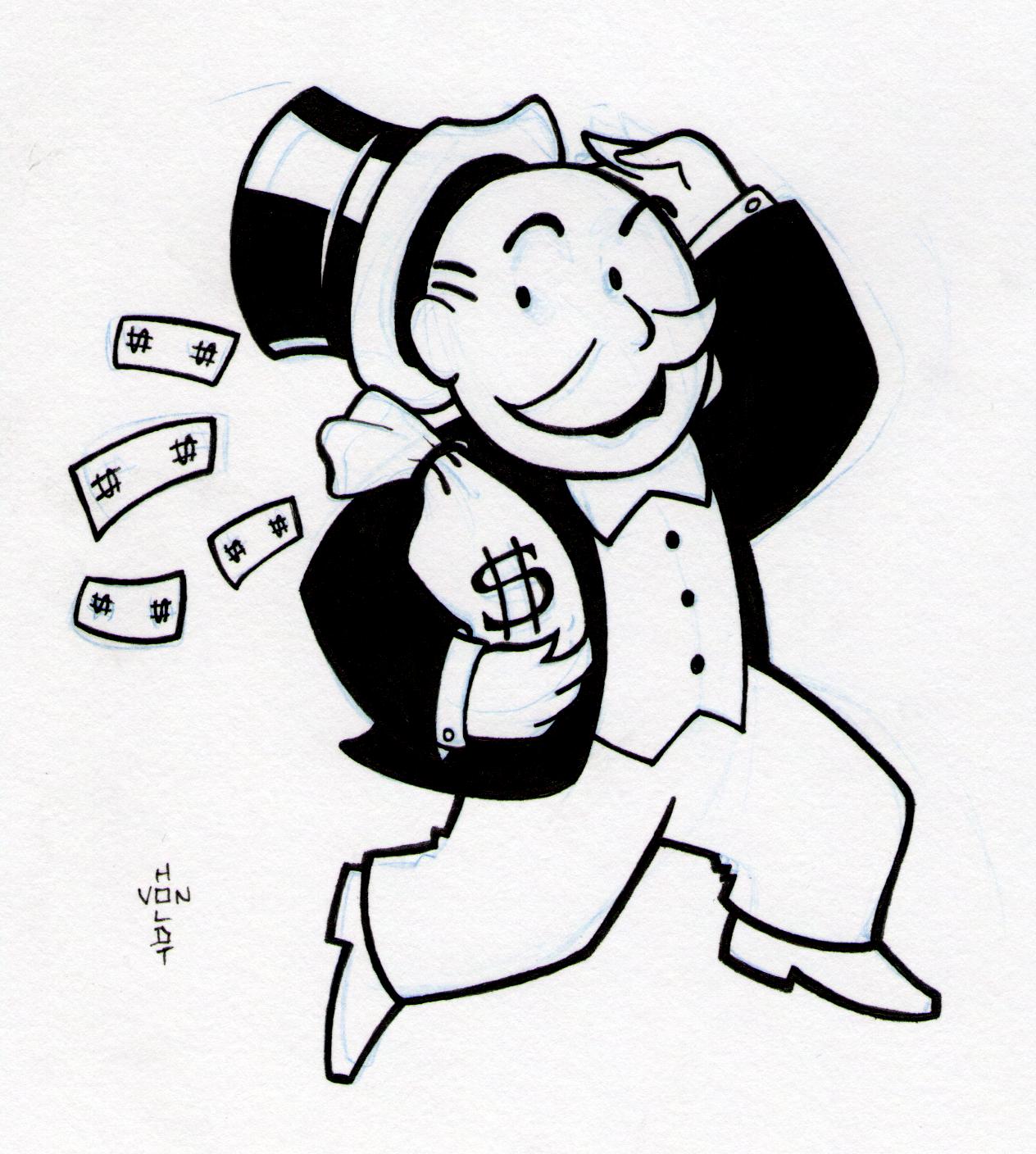
But I can understand letting your jealousy show when some fellow student has an expensive car. It's quite something else to take a guy to task for wearing blue jeans when other guys are wearing cargo shorts. Ooh, he he thinks he so great... cargo shorts not good enough for him.... he's wearing jeans! And what's a "dress shirt" — just something that buttons up the front and has a collar and cuffs? It's not as if he went to class dressed like the Monopoly Man.

22 सितंबर 2014

"It’s worth recalling that the very idea of 'fat' is a fairly recent creation."

"For most of human history, as Amy Farrell, a professor of women’s and gender studies at Dickinson College, notes in 'Fat Shame,' only the wealthy could have extra fat on their bodies. Most people worked too hard, had too little food, and were often too sick. Then came the Industrial Revolution: mass food production and more sedentary jobs meant that the new middle class, and not just the wealthy, became heavier. Once 'average' fat people came on the scene, Farrell writes, 'fat denigration' became more common: fat jokes proliferated in nineteenth-century magazines."

From Lizzie Widdicombe's "The Plus Side/Full-figured fashion gets a new look" in The New Yorker, which notes, among many other things, the "reclaim[ing of] the word 'fat.'"

I've always used the word "fat" as my tag on this blog, "fat" and "thinness." They're parallel words, and there's no reason why one straightforward, factual descriptive embodies more shame or disapproval than the other. Euphemisms imply the need for one.