Anyway... take your pick. Both "mosquitoes" and "mosquitos" are correct. I give you this image from the OED, which treats both plurals equally and which also shows you the wild history of the spelling of "mosquito," beginning with "muskyto":
Dan Quayle लेबलों वाले संदेश दिखाए जा रहे हैं. सभी संदेश दिखाएं
Dan Quayle लेबलों वाले संदेश दिखाए जा रहे हैं. सभी संदेश दिखाएं
1 जुलाई 2024
What is the plural of "mosquito"?
The question occurred to me after I wrote "mosquitos" in the comments to the previous post and saw that someone else had written "mosquitoes." My version looks spiffier and more Spanish — and the word is, the OED says, "A borrowing from Spanish" — but "mosquitoes" seems to coordinate with "tomatoes" and "potatoes." Why does that "e" intrude itself in the plural? (It can even over-intrude, as it did on poor Dan Quayle, who is remembered these days only for misspelling "potato.")


15 सितंबर 2021
"So intent was Pence on being Trump’s loyal second-in-command — and potential successor — that he asked confidants if there were ways he could accede to Trump’s demands and avoid certifying..."
"... the results of the election on Jan. 6. In late December, the authors reveal, Pence called Dan Quayle, a former vice president and fellow Indiana Republican, for advice.
Quayle was adamant, according to the authors. 'Mike, you have no flexibility on this. None. Zero. Forget it. Put it away,' he said.
But Pence pressed him, the authors write, asking if there were any grounds to pause the certification because of ongoing legal challenges. Quayle was unmoved, and Pence ultimately agreed, according to the book.
When Pence said he planned to certify the results, the president lashed out. In the Oval Office on Jan. 5, the authors write, Pence told Trump he could not thwart the process, that his role was simply to 'open the envelopes.' 'I don’t want to be your friend anymore if you don’t do this,' Trump replied, according to the book, later telling his vice president, 'You’ve betrayed us. I made you. You were nothing.'"
11 फ़रवरी 2020
"Let me just tell you how thrilling it really is... because... the question is whether we're going forward to tomorrow or whether we're going to go past to the back!... That's a Hoosierism. You've got to get used to that!"
Are you getting used to Hoosierisms?
But that's not the Hoosier Pete Buttigieg. The elision after "because" was "in 1988." The quote is from Dan Quayle speaking to the California delegates at the Republican National Convention in 1988.
That just happens to be the top quote on the Dan Quayle page at Wikiquote where I went looking for another quote.
I also found this really Trumpesque line: "This is what I say about the scorn of the media elite: I wear their scorn as a badge of honor."
And here's one where it really seems that he's talking about Trump: "People that are really very weird can get into sensitive positions and have a tremendous impact on history."
Quayle really was a man who looked into the future: "In George Bush you get experience, and with me you get the future"/"The future will be better tomorrow"/"I believe that I've made good judgments in the past, and I think I've made good judgments in the future." So why not credit him with predicting the Trump presidency?
The quote I was actually looking for was his awkward riff on "A mind is a terrible thing to waste":
But that's not the Hoosier Pete Buttigieg. The elision after "because" was "in 1988." The quote is from Dan Quayle speaking to the California delegates at the Republican National Convention in 1988.
That just happens to be the top quote on the Dan Quayle page at Wikiquote where I went looking for another quote.
I also found this really Trumpesque line: "This is what I say about the scorn of the media elite: I wear their scorn as a badge of honor."
And here's one where it really seems that he's talking about Trump: "People that are really very weird can get into sensitive positions and have a tremendous impact on history."
Quayle really was a man who looked into the future: "In George Bush you get experience, and with me you get the future"/"The future will be better tomorrow"/"I believe that I've made good judgments in the past, and I think I've made good judgments in the future." So why not credit him with predicting the Trump presidency?
The quote I was actually looking for was his awkward riff on "A mind is a terrible thing to waste":
What a waste it is to lose one's mind, or not to have a mind is being very wasteful, how true that is.I was thinking of that and how true it is, when I saw the headline "The Great Liberal Freakout Has Begun/Biden is fading fast, and Democrats are losing their minds." That's by Robert Stacy McCain in American Spectator. Excerpt:
In a panel discussion following Friday night’s debate in New Hampshire, [Chris] Matthews went on a rant against socialism, recalling his Cold War–era visits to Vietnam and Cuba: “Being there, I’ve seen what socialism is like. I don’t like it, OK? It’s not only not free, it doesn’t freaking work. It just doesn’t work.” As his fellow MSNBC panelists looked aghast, Matthews continued, saying that if “the Reds had won the Cold War, there would have been executions in Central Park, and I might have been one of the ones getting executed, and certain other people would be there cheering, OK?”
15 अप्रैल 2017
"Many people do not realize that yoga... is intended to be more than a series of exercises coupled with deliberative breathing and meditation."
"It is a mind and body practice developed under Hinduism, the goal of which is spiritual purification that will lead to a higher level of understanding and eventually union with the divine. Although the Catholic Church teaches that much good can be found in other religions, Catholics believe it is only brought to fullness in Christ... It is for these reasons that Catholics are alerted to the dangers of the practice of yoga and are encouraged to look for other exercise alternatives that do not incorporate a spiritual dimension."
Said Rev. John Riley, chancellor of Benedictine College, in Atchison, Kansas, explaining the new policy removing the word "yoga" from the names of classes that teach yoga or I guess one should say yoga-based exercises. The term "lifestyle fitness" is the replacement.
This makes me wonder where a Catholic analysis of the idea "lifestyle" would go. I actually agree with Riley that "yoga" is a Hindu practice that someone who wants to be strictly Christian ought to think carefully about, and I would add that there is a problem of cultural appropriation, especially when you take the part you like and strip away the deeper part. What if nonChristians wanted to use some of the mannerisms of communion in serving wine and bread?
But the new term "lifestyle" is a word I avoid using. I asked out loud to Meade "What do you think of the word 'lifestyle'?" and he said "I try to avoid it."
Some elitists look down on those who use it. It's one of those words that those who eschew them claim are not a word. But the OED has it, dating back to 1915. The definition is: "A style or way of living (associated with an individual person, a society, etc.); esp. the characteristic manner in which a person lives (or chooses to live) his or her life." (I'd like to hear a Catholic analysis of whether a Catholic college should be teaching an individual style or way of living other than a Catholic way.)
The OED's 1915 example of "lifestyle" is "This spirit of expediency..excludes any possibility of peace or rest in unity with the universe. The author applies to it, as the ‘life-style’ of our age, the term Impressionism." Those quotes give a sense that people were saying "life-style" back then.
I searched the NYT archive and saw that the word really took off in 1968 and 1969, which corresponds to my perception that it's a Baby-Boomer/ counterculture/ hippie word. Here's Ada Louise Huxtable writing about architecture in 1969 in "The Case for Chaos":
I don't think I've ever used the word "lifestyle" on this blog except in a quote. (And I'm not using the word in this post (if you observe the use/mention distinction). Oh, no, wait. I did use it once. I'm checking again with a hyphen, and found this from 2008:
So funny the things that crash and connect when you're living the blogging lifestyle.
ADDED: In the blog archive, I see that "lifestyle" is a word for which Dan Quayle and Valerie Jarrett caught grief.
Quayle:
Said Rev. John Riley, chancellor of Benedictine College, in Atchison, Kansas, explaining the new policy removing the word "yoga" from the names of classes that teach yoga or I guess one should say yoga-based exercises. The term "lifestyle fitness" is the replacement.
This makes me wonder where a Catholic analysis of the idea "lifestyle" would go. I actually agree with Riley that "yoga" is a Hindu practice that someone who wants to be strictly Christian ought to think carefully about, and I would add that there is a problem of cultural appropriation, especially when you take the part you like and strip away the deeper part. What if nonChristians wanted to use some of the mannerisms of communion in serving wine and bread?
But the new term "lifestyle" is a word I avoid using. I asked out loud to Meade "What do you think of the word 'lifestyle'?" and he said "I try to avoid it."
Some elitists look down on those who use it. It's one of those words that those who eschew them claim are not a word. But the OED has it, dating back to 1915. The definition is: "A style or way of living (associated with an individual person, a society, etc.); esp. the characteristic manner in which a person lives (or chooses to live) his or her life." (I'd like to hear a Catholic analysis of whether a Catholic college should be teaching an individual style or way of living other than a Catholic way.)
The OED's 1915 example of "lifestyle" is "This spirit of expediency..excludes any possibility of peace or rest in unity with the universe. The author applies to it, as the ‘life-style’ of our age, the term Impressionism." Those quotes give a sense that people were saying "life-style" back then.
I searched the NYT archive and saw that the word really took off in 1968 and 1969, which corresponds to my perception that it's a Baby-Boomer/ counterculture/ hippie word. Here's Ada Louise Huxtable writing about architecture in 1969 in "The Case for Chaos":

I don't think I've ever used the word "lifestyle" on this blog except in a quote. (And I'm not using the word in this post (if you observe the use/mention distinction). Oh, no, wait. I did use it once. I'm checking again with a hyphen, and found this from 2008:
Can singlehood be portrayed as good but only good enough to reduce the number of bad marriages and not good enough to attract the kind of staunch adherents who advocate marriage as a way of life? Is DePaulo's book a nice, reassuring middle-of-the road sort of a thing, designed to take the edge off the predicament of not having a spouse? Or is she really promoting singlehood at the expense of marriage? If she is, you see the problem. That's the basis of my punchline: "The pleasures of singlehood must be kept hush-hush. It's not a legitimate life style, you hear?" I want to be single, and maybe so does DePaulo, but we might live to regret promoting this simple, free, self-indulgent life-style.Whoa! That's really funny, considering the absolutely direct connection between Bella DePaulo's book and my marriage to Meade in the following year.
So funny the things that crash and connect when you're living the blogging lifestyle.
ADDED: In the blog archive, I see that "lifestyle" is a word for which Dan Quayle and Valerie Jarrett caught grief.
Quayle:
Bearing babies irresponsibly is simply wrong... Failing to support children one has fathered is wrong. We must be unequivocal about this. It doesn’t help matters when prime-time TV has Murphy Brown, a character who supposedly epitomizes today’s intelligent, highly paid professional woman, mocking the importance of fathers by bearing a child alone and calling it just another lifestyle choice.Jarrett:
"These are good people. They were aware that their son was gay; they embraced him, they loved him, they supported his lifestyle choice. But when he left the home and went to school, he was tortured by his classmates."
27 मई 2015
"But the problem with thinking of Mars as a fallback planet (besides the lack of oxygen and air pressure and food and liquid water) is that it overlooks the obvious."
"Wherever we go, we’ll take ourselves with us. Either we’re capable of dealing with the challenges posed by our own intelligence or we’re not. Perhaps the reason we haven’t met any alien beings is that those which survive aren’t the type to go zipping around the galaxy. Maybe they’ve stayed quietly at home, tending their own gardens."
From "Project Exodus/What’s behind the dream of colonizing Mars?" by Elizabeth Kolbert in The New Yorker (which I believe is available even to nonsubscribers).
I'm reading that because I read The New Yorker, but by coincidence, I'd just been rereading old Dan Quayle quotes. (Because yesterday, it became necessary to remind you: "What a waste it is to lose one's mind, or not to have a mind is being very wasteful, how true that is.") And I loved this one:

Almost as entrancing at The Man in the Moon:

But to get back to the garden — and to The New Yorker — here's a March 2007 piece by Adam Gopnik titled "Voltaire's Garden":
From "Project Exodus/What’s behind the dream of colonizing Mars?" by Elizabeth Kolbert in The New Yorker (which I believe is available even to nonsubscribers).
I'm reading that because I read The New Yorker, but by coincidence, I'd just been rereading old Dan Quayle quotes. (Because yesterday, it became necessary to remind you: "What a waste it is to lose one's mind, or not to have a mind is being very wasteful, how true that is.") And I loved this one:
"Mars is essentially in the same orbit . . . Mars is somewhat the same distance from the Sun, which is very important. We have seen pictures where there are canals, we believe, and water. If there is water, that means there is oxygen. If oxygen, that means we can breathe."Remember the Mars canals?
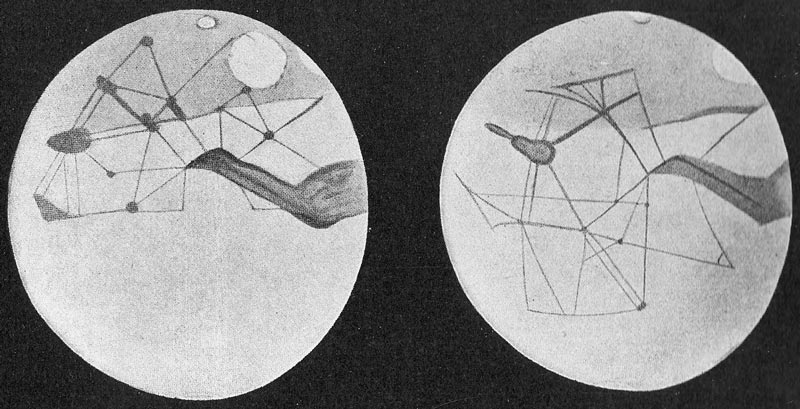
Almost as entrancing at The Man in the Moon:
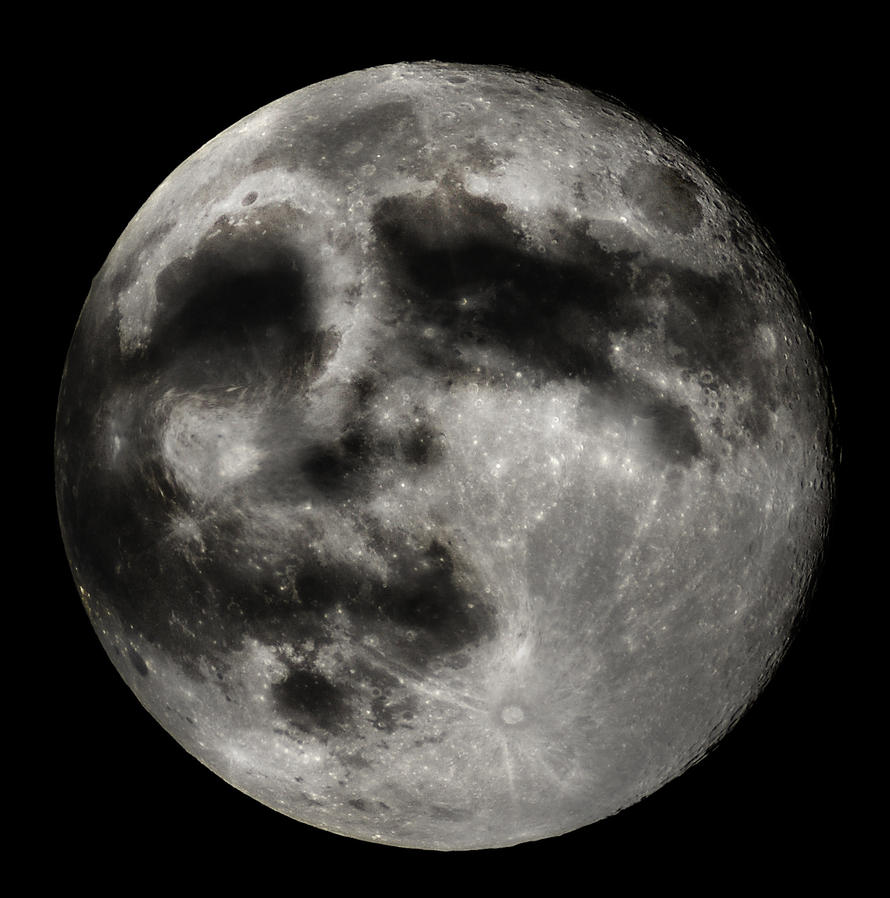
But to get back to the garden — and to The New Yorker — here's a March 2007 piece by Adam Gopnik titled "Voltaire's Garden":
Voltaire goes on to detail the hideous theatrics of the Inquisition: the yellow robes, the burnings and flogging set to Church music, the whole choreography of Christian cruelty. The point of “Candide” is that the rapes and disembowelments, the enslavement and the beatings are not part of some larger plan, not a fact of the fatality of life and the universe, but fiendish tortures thought up by fanatics....
By “garden” Voltaire meant... the better place we build by love. The force of that last great injunction, “We must cultivate our garden,” is that our responsibility is local, and concentrated on immediate action... The horror that Voltaire wanted crushed, cruelty in the name of God and civilization, was a specific and contingent thing... The villains are the villains: Jesuits and Inquisitors and English judges and Muslim clerics and fanatics of all kinds. If they went away, life would be much better. He knew that the flood would get your garden no matter what you did; but you could at least try to keep the priests and the policemen off the grass. It wasn’t enough, but it was something.
6 अगस्त 2013
"It's just upsetting to have lost that way. I don't know why it would have counted as the wrong answer."
This is a case study in teaching a child to be a sore loser. Thomas Hurley III lost his $3,000 bet on "Jeopardy" because he wrote "Emanciptation Proclamation" instead of "Emancipation Proclamation."
The judges make their rulings for reasons that obviously have to do with consistency across a broad range of decisions. Quit damaging this kid by letting him blind himself to the explanation and encouraging him to feel like a victim.
Not only did he lose $6,000, but he lost the opportunity to appear in public as a courageous loser, which — over the course of a lifetime — would have been worth more than than $6,000.
How important is spelling? Well, it depends. There are spellings where one adds or omits a silent letter or substitutes a letter for another that sounds the same. Dan Quayle reinforced the typecasting that he was dumb when he prompted a child to add an "e" at the end of "potato." And yet it raised no suspicion that he would have pronounced the word incorrectly.
But the spelling "Emanciptation" raises the supicion that Hurley would have pronounced it "e-man-cip-ta-tion." Many words — like "implementation" — end in "-tation." If it hadn't been final jeopardy, and he'd said "e-man-cip-ta-tion," there's no question the answer would have been rejected. By contrast, misspelling "Proclamation" as "Proclaimation," wouldn't be so bad.
The question was a good final jeopardy question for kids in part because they had to get out 2 big words. He missed one. Don't miss again by playing the victim.
And, by the way... Emancipation Proclamation. That's a clue to get a sense of proportion about the misfortunes that befall human beings.
The judges make their rulings for reasons that obviously have to do with consistency across a broad range of decisions. Quit damaging this kid by letting him blind himself to the explanation and encouraging him to feel like a victim.
Not only did he lose $6,000, but he lost the opportunity to appear in public as a courageous loser, which — over the course of a lifetime — would have been worth more than than $6,000.
How important is spelling? Well, it depends. There are spellings where one adds or omits a silent letter or substitutes a letter for another that sounds the same. Dan Quayle reinforced the typecasting that he was dumb when he prompted a child to add an "e" at the end of "potato." And yet it raised no suspicion that he would have pronounced the word incorrectly.
But the spelling "Emanciptation" raises the supicion that Hurley would have pronounced it "e-man-cip-ta-tion." Many words — like "implementation" — end in "-tation." If it hadn't been final jeopardy, and he'd said "e-man-cip-ta-tion," there's no question the answer would have been rejected. By contrast, misspelling "Proclamation" as "Proclaimation," wouldn't be so bad.
The question was a good final jeopardy question for kids in part because they had to get out 2 big words. He missed one. Don't miss again by playing the victim.
And, by the way... Emancipation Proclamation. That's a clue to get a sense of proportion about the misfortunes that befall human beings.
13 जनवरी 2013
"I'm amused that right after 'potato, my penis droops' up pops Quayle."
I say, in the laughing-in-bed first-post-of-the-morning.
Quayle is a regular commenter here, but — who knows, on the internet? — it might be Dan Quayle.

Quayle responds: "I carry the blood of polygamists in my veins. So one should expect that sort of thing, I guess." He adds: "I took the name from my great grandfather, pictured here surrounded by some new friends."

That's a photograph of taken at the Utah Penitentiary in 1889, showing men arrested under the Edmunds-Tucker Act, explained here. Included in the photo is John C. Bennett, who "taught a doctrine of 'spiritual wifery'":
Here's John C. Bennett in happier days...

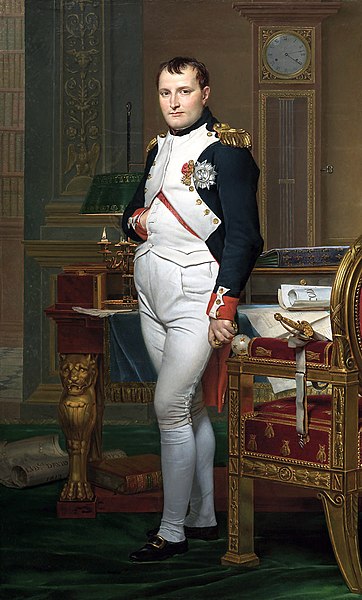
... posing like Napoleon:

Quayle is a regular commenter here, but — who knows, on the internet? — it might be Dan Quayle.

Quayle responds: "I carry the blood of polygamists in my veins. So one should expect that sort of thing, I guess." He adds: "I took the name from my great grandfather, pictured here surrounded by some new friends."
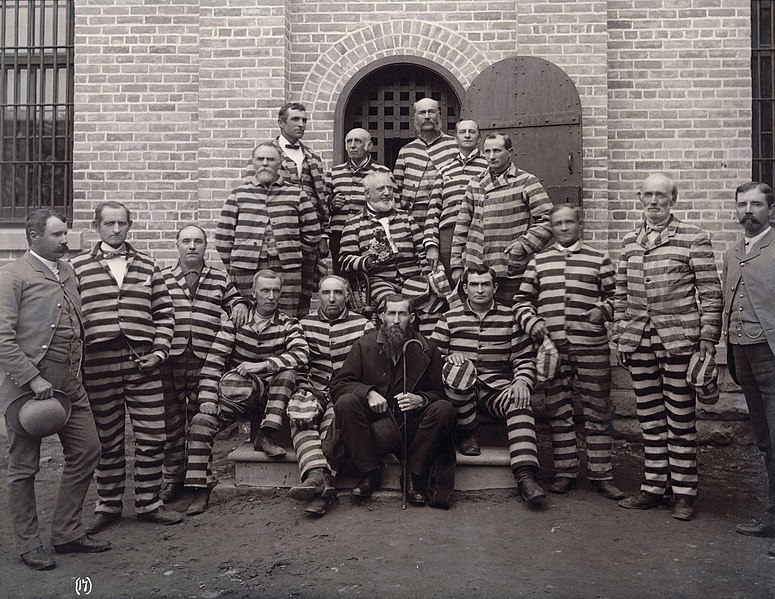
That's a photograph of taken at the Utah Penitentiary in 1889, showing men arrested under the Edmunds-Tucker Act, explained here. Included in the photo is John C. Bennett, who "taught a doctrine of 'spiritual wifery'":
He and associates sought to have illicit sexual relationships with women by telling them that they were married "spiritually," even if they had never been married formally, and that the Prophet approved the arrangement.That wasn't the correct doctrine, and Bennett got excommunicated, and then he "toured the country speaking against the Latter-day Saints and published a bitter anti-Mormon exposé charging the Saints with licentiousness."
Here's John C. Bennett in happier days...
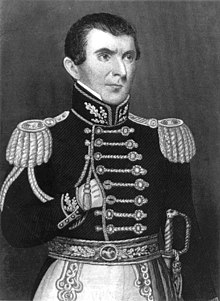
... posing like Napoleon:
8 जनवरी 2013
"Kim Kardashian: How do Armenians feel about her fame?"
BBC homes in on the question everyone is asking.
"Kim is an Armenian and famous in the world, so this is enough for every Armenian to be proud of Kim. But because of cultural and traditional issues, they do not want to accept that she is an Armenian," [says BBC monitoring journalist Armen Shahbazian].Deep into this article we get to some comparative material about what the people of Gibraltar think about fashion designer John Galliano and what the people of the Isle of Man think of Dan Quayle, who — "was internationally ridiculed when it appeared he could not spell the word 'potato.'"
Stories about Kardashian are frequently a topic for comedy programmes, he says.
"They always compare the Armenian French singer Charles Aznavour, who they are proud of, with Kim Kardashian, who is seen in a more negative light. They don't want her to present their country," he says.
28 मई 2012
"Ann Althouse pushes back, and she has a point. But watch a few episodes of 16 and Pregnant..."
"... and you might think that 'it’s wrong' is a useful heuristic for people incapable of fully understanding what 'it will be hard' actually means."
Writes Instapundit, pushing back to my pushback on the "Dan Quayle Was Right" article.
Let's take a closer look at this "useful heuristic" concept, which expresses something truly profound about the role of traditional religion and other conservative philosophies in society. Look at what is being admitted. There are a whole lot of people who are insufficiently smart, competent, and emotionally stable to make a decision involving a complex set of factors, so we need to dominate their minds with a starker structure of "right" and "wrong," even where those of us who are really smart and able to process complex factors know it's not really a matter of right and wrong.
Instapundit continues:
BUT: I am not saying that domineering bullshit from righties is okay because lefties do it too or do it more or do it nearer to me. I don't like it.
Writes Instapundit, pushing back to my pushback on the "Dan Quayle Was Right" article.
Let's take a closer look at this "useful heuristic" concept, which expresses something truly profound about the role of traditional religion and other conservative philosophies in society. Look at what is being admitted. There are a whole lot of people who are insufficiently smart, competent, and emotionally stable to make a decision involving a complex set of factors, so we need to dominate their minds with a starker structure of "right" and "wrong," even where those of us who are really smart and able to process complex factors know it's not really a matter of right and wrong.
Instapundit continues:
At any rate, after twenty years of hearing SUV drivers described in terms more applicable to Himmler, the 1992 condemnations of moralistic language from political leaders ring particularly hollow.So... because lefties put their arguments in starkly moralistic terms, it's tiresome to hear about the way righties overuse morality talk. I get the point. In fact, what bugs me the most about lefties — what motivates me to go after lefties much more than righties on this blog — is the way they set themselves up as the good people and prance and stomp all over the place shaming and blaming the people who won't agree with them. Having lived in Madison for the last quarter century, I am fed up with their domineering bullshit. The reason my blog appears to skew conservative — when I am a political moderate — is that I am not surrounded by pious, overbearing right-wingers sneering at me and gasping about what a bad person I am.
BUT: I am not saying that domineering bullshit from righties is okay because lefties do it too or do it more or do it nearer to me. I don't like it.
27 मई 2012
"Twenty years later, [Dan] Quayle’s words seem less controversial than prophetic."
Writes Elizabeth Sawhill in the Washington Post, citing the increased number of children born to unmarried mothers and correlations between being such a child and having a worse outcome in life.
Now, what Quayle said was:
Some single-parent families are better than others and some mother-and-father families are worse than others. I question whether it's the single parent per se that's the problem — where it can be shown that it's worse — or whether more women who get into the single-parent position are the irresponsible/disagreeable/poorly skilled kind of person.
Another problem with what Quayle said is that he characterized the kind of woman that we'd presume to be responsible — the "intelligent, highly paid professional woman" — as doing 2 things she might not have been doing: 1. "mocking the importance of fathers," and 2. treating child-bearing as "just another lifestyle choice." This "Murphy Brown" woman might very well prefer to have a solid marriage with a father in the house but not be able to make that happen. And she might dearly and virtuously want to mother a child.
I know Quayle was saying that the TV character provided women with a role model and might have fooled us into thinking raising a child alone would be easier than it is, but he was focused on getting out a rival moral message. Murphy Brown is telling you it's fine, but I need you to know it's wrong. There's a difference between saying it will be hard and it's simply wrong.
Now, what Quayle said was:
“Bearing babies irresponsibly is simply wrong... Failing to support children one has fathered is wrong. We must be unequivocal about this. It doesn’t help matters when prime-time TV has Murphy Brown, a character who supposedly epitomizes today’s intelligent, highly paid professional woman, mocking the importance of fathers by bearing a child alone and calling it just another lifestyle choice.”Quayle took some gratuitous shots at women in his notorious remark, and he could just as easily have put his main point in a way that nearly everyone would agree with. So, I dislike this simple declaration that he was right (which I've seen many times). He phrased it in a way that's either deliberately or unwittingly provocative.
Some single-parent families are better than others and some mother-and-father families are worse than others. I question whether it's the single parent per se that's the problem — where it can be shown that it's worse — or whether more women who get into the single-parent position are the irresponsible/disagreeable/poorly skilled kind of person.
Another problem with what Quayle said is that he characterized the kind of woman that we'd presume to be responsible — the "intelligent, highly paid professional woman" — as doing 2 things she might not have been doing: 1. "mocking the importance of fathers," and 2. treating child-bearing as "just another lifestyle choice." This "Murphy Brown" woman might very well prefer to have a solid marriage with a father in the house but not be able to make that happen. And she might dearly and virtuously want to mother a child.
I know Quayle was saying that the TV character provided women with a role model and might have fooled us into thinking raising a child alone would be easier than it is, but he was focused on getting out a rival moral message. Murphy Brown is telling you it's fine, but I need you to know it's wrong. There's a difference between saying it will be hard and it's simply wrong.
16 सितंबर 2011
How Dan Quayle got into law school through affirmative action — a controversy from 1988.
Perhaps you remember the challenges to Dan Quayle, who was the GOP VP nominee in 1988 (and later served as VP under George H.W. Bush):
I said: But what about everyone else who got rejected? If they had known there was another way to get in, they might have wanted to appear in person in front of the dean and show that they too were brimming with lawyerly promise unmeasured in standardized tests. If there is a second way to get in, there should be a competition there too. The dean who let Quayle in on alternate grounds may have seen value in the man who appeared before him, but did he fully visualize the others who might have presented themselves too? Was Quayle really the best of them? The dean had no way to know.
My interlocutor retrenched: If there is a secret backdoor route into the law school, the applicant who is able to find it has manifested a special skill that would be irrelevant if the school made it plain to all that there is an alternate admissions path that uses an interview with the dean. My interlocutor had to concede that there is no way the law school dean would put up with interviews with every rejected applicant who wanted to take the trouble to show up in Indianapolis to plead his case.
I said: So a law school should make a special point of admitting the guy who realizes the official process might not be the only way to get what you want and who has the nerve to decide that his personal interests transcend the importance of equal rules for all and to take up the time of a busy person (the dean) and to promote his individual case? Well, maybe that is the attitude a client wants from his lawyer, and maybe it's okay that their lawyer couldn't score well enough on the LSAT to get into Indiana.
But I couldn't accept the law school dean's failure to treat Dan Quayle like the other rejected applicants. I thought and still think that it was the moral failing of valuing the seen over the unseen. Quayle showed up in person: Here I am, see my worthiness! But all the other rejected applicants were human beings too. Imagine them, all of them, and what they might have argued in pursuit of their goals.
By chance, the linked article — which I dug out of the NYT archive — contains another seen-and-unseen issue:
[Quayle] was questioned about a report that he had been admitted to Indiana University Law School as part of a program designed for students whose grades and aptitude test scores were so low they would not have been admitted in the regular admission process....I remember discussing this matter at the time, perhaps with another Wisconsin law professor. My interlocutor said that an applicant who shows up in person and makes a persuasive argument demonstrates a determination and skill that might justify admitting him to law school. These are qualities, seen in person, that might not appear in the cold numbers of the LSAT and the GPA and that are in fact relevant to the applicant's aptitude for lawyering.
Mr. Quayle acknowledged earlier that he had persuaded the dean to admit him despite poor grades at DePauw University in Greencastle, Ind....
Professor [Charles] Kelso said he did not remember Mr. Quayle and was certain that neither his family nor his wealth had played any role in his admission to the course.
I said: But what about everyone else who got rejected? If they had known there was another way to get in, they might have wanted to appear in person in front of the dean and show that they too were brimming with lawyerly promise unmeasured in standardized tests. If there is a second way to get in, there should be a competition there too. The dean who let Quayle in on alternate grounds may have seen value in the man who appeared before him, but did he fully visualize the others who might have presented themselves too? Was Quayle really the best of them? The dean had no way to know.
My interlocutor retrenched: If there is a secret backdoor route into the law school, the applicant who is able to find it has manifested a special skill that would be irrelevant if the school made it plain to all that there is an alternate admissions path that uses an interview with the dean. My interlocutor had to concede that there is no way the law school dean would put up with interviews with every rejected applicant who wanted to take the trouble to show up in Indianapolis to plead his case.
I said: So a law school should make a special point of admitting the guy who realizes the official process might not be the only way to get what you want and who has the nerve to decide that his personal interests transcend the importance of equal rules for all and to take up the time of a busy person (the dean) and to promote his individual case? Well, maybe that is the attitude a client wants from his lawyer, and maybe it's okay that their lawyer couldn't score well enough on the LSAT to get into Indiana.
But I couldn't accept the law school dean's failure to treat Dan Quayle like the other rejected applicants. I thought and still think that it was the moral failing of valuing the seen over the unseen. Quayle showed up in person: Here I am, see my worthiness! But all the other rejected applicants were human beings too. Imagine them, all of them, and what they might have argued in pursuit of their goals.
***
By chance, the linked article — which I dug out of the NYT archive — contains another seen-and-unseen issue:
Outside the plant about 150 protesters carried signs that said such things as ''Draft Dodger Quayle - Who Died in Your Place?'' - a reference to his decision to join the Indiana National Guard in the Vietnam War.If you opposed the Vietnam War and evaded the draft, did you truly visualize the person who went in your place?
24 अगस्त 2009
The books Obama is supposedly reading on his vacation.
The list:
If you could pick a book for Obama to read — actually read — what book would you pick? If he could make you read a book of his choice, what do you think it would be? If you picked political books or history books or economics books, please pick again and be more out there so this late night discussion isn't too boring.
I'm just noticing that all Obama's books are written by men. Maybe these really are the books he's reading. If it's PR, his PR people have a big blind spot.
ADDED: Didn't everyone who wanted to read that bloated John Adams book already read it? And wasn't Obama supposed to be reading that Tom Friedman book last year?
• The Way Home by George Pelecanos, a crime thriller based in Washington;I never believe Presidents are actually reading the books their people tell us they're reading, so, for me, the only question is what they thought they were saying with these titles and why they thought it was a good idea to say that.
• Lush Life by Richard Price, a story of race and class set in New York's Lower East Side;
• Tom Friedman's Hot, Flat, and Crowded, on the benefits to America of an environmental revolution;
• John Adams by David McCullough;
• Plainsong by Kent Haruf, a drama about the life of eight different characters living in a Colorado prairie community.
If you could pick a book for Obama to read — actually read — what book would you pick? If he could make you read a book of his choice, what do you think it would be? If you picked political books or history books or economics books, please pick again and be more out there so this late night discussion isn't too boring.
***
I'm just noticing that all Obama's books are written by men. Maybe these really are the books he's reading. If it's PR, his PR people have a big blind spot.
ADDED: Didn't everyone who wanted to read that bloated John Adams book already read it? And wasn't Obama supposed to be reading that Tom Friedman book last year?
Friedman’s dumb books full of “I went golfing somewhere in India, reminding me of the Asian pizza I ate at the airport in Dubai” globalization-fellating idiocy are Required Reading in certain middlebrow circles....
[O]nce “going green” became so safely uncontroversial that motherfucking Garfield was eating solar-powered lasagna, it was time for Tom Friedman to incoherently rebuke everything he ever wrote before — about Earth and how for some insane reason he thinks saying it’s “flat” is some deep enigmatic statement of the times rather than, really, just an idiot trying to make up a catch phrase. So, once the carbon-farting global golfer hitched his tortured prose to the Green bandwagon, everybody in every management situation had to act like they read this awful book.
But they didn’t. Nobody read the whole thing. Of course it’s still on Barack Obama’s fake reading list. And there it will stay, year after year, just like back in the 1990s when Dan Quayle comically claimed that he tried (and failed) to read Niccolo Machiavelli’s The Prince each summer, because that seemed — to Dan Quayle, anyway — like the kind of thing a politician maybe should’ve know about, 20 years ago.
17 सितंबर 2008
5 old presidential campaign ads.
For LBJ, Ford, Ike, JFK, and Dukakis. I love the variation in style, which, in each case, belongs so clearly to its decade.
I don't agree with John Dickerson that these are all great ads. I didn't remember that Dukakis put out that "heartbeat away" ad. Man, that was in poor taste. The Ford one was poignantly pathetic. The JFK ad was incredibly boring. The Ike ad was similarly boring but fascinating to us today because of the very old-fashioned presentation of the woman's role. That leaves Johnson's anti-Goldwater ad. I loved that one.
I don't agree with John Dickerson that these are all great ads. I didn't remember that Dukakis put out that "heartbeat away" ad. Man, that was in poor taste. The Ford one was poignantly pathetic. The JFK ad was incredibly boring. The Ike ad was similarly boring but fascinating to us today because of the very old-fashioned presentation of the woman's role. That leaves Johnson's anti-Goldwater ad. I loved that one.
3 सितंबर 2008
After all the attacks, the audience for Palin's speech tonight will be huge.
Lorie Byrd observes:
Some will be curious to see America's hottest governor, others will watch to catch a glimpse of Bristol's baby bump in the crowd or a shot of her handsome young hockey player fiance. Others will watch to see if she is really the "Dan Quayle in a skirt" they have been hearing about. Some will even be interested in her take on the issues.Much depends on her speech tonight, and I tend to think it will wow the viewers. I was wowed by her presentation on Friday. I'm not saying I agree with all her ideas. I certainly don't. But she sounds great and the image -- image counts (ask Obama!) -- is fabulous.
... Maybe after the viewers realize the Obama camp has been misleading them about her experience and that the caricature many Democrats have painted of her over the past week has been far from reality, they will question whether or not they can trust team Obama. Maybe they will even wonder why the media didn't seem to know any of this either. If the stars are aligned right they might even decide the media intentionally misled them.
31 अगस्त 2008
Republicans "have a tradition of nominating fun, bantamweight cheerleaders from the West, like the previous Miss Congeniality types Dan Quayle and W."
Writes Maureen Dowd. Dan Quayle was a Senator from Indiana. I guess that looks like "the West" when you're looking from New York City. (You already know what's at that link, don't you?)
If Quayle was a "fun, bantamweight cheerleader from the West," then Obama must be too. Illinois -- for the geographically challenged -- is one notch west of Indiana. And Quayle was afirst second term Senator when he was picked for VP in 1988. But And he'd been in Congress since 1976.
IN THE COMMENTS: Bissage said:
Maguro said:
If Quayle was a "fun, bantamweight cheerleader from the West," then Obama must be too. Illinois -- for the geographically challenged -- is one notch west of Indiana. And Quayle was a
IN THE COMMENTS: Bissage said:
I read that Maureen Dowd piece twice but I still don’t get it. Sarah Palin can’t have it all? Only a loser rube would believe what's uncontested and be charmed by early stage Palin? Dick Cheney’s a bantamweight cheerleader? Heck, I didn’t even know there were weight classes in cheerleading. Color me confused.Paul Zrimsek said:
Was Quayle ever considered fun? I recall that he was the Devil incarnate for a while for having the nerve to suggest that Murphy Brown was unwise to try single motherhood. Since we now learn that a woman can't combine family and career even with the aid of a husband, it may be that Quayle's been forgiven.Freeman Hunt said:
I am getting extremely offended by this liberal meme that attractive women are nothing more than beauty queens regardless of their accomplishments. Palin has accomplished more in her short time in office than most accomplish over entire careers. But none of that matters; she's pretty, so that's all she is.Yeah, and it reinforces that sexist meme that feminism is a plot to help unattractive women get ahead.
Absolute sexism.
Maguro said:
So being president of Harvard Law Review is now an important qualification for POTUS, particularly if the the other party's VP candidate went to the University of Idaho? LOL, good luck with that one.To which Bissage responds:
Yeah, really. This ordinary-people-get-to-vote thing's a real bitch.
5 अगस्त 2008
21 मई 2008
Is Barack Obama "a walking, talking gaffe machine"?
Michelle Malkin marshals the evidence. I'm inclined to be a little lenient about gaffes, though I understand the urge to avenge Dan Quayle, who was — the legend has it — destroyed over the misspelling of a single word. A presidential candidate is constantly talking, responding to questions and situations ad lib, and he's going to make some gaffes. It can't mean that he's incompetent or an idiot. I love to post and laugh about these gaffes — like the "57 states" one — but it has almost no effect on what I think of the man. A good candidate should try to avoid giving his opponents this ammunition as much as he can, but there are more important things than avoiding ever saying anything wrong.
But there's one thing on Malkin's long list of gaffes that mattered to me:
But there's one thing on Malkin's long list of gaffes that mattered to me:
Last March, the Chicago Tribune reported this little-noticed nugget about a fake autobiographical detail in Obama’s Dreams from My Father: “Then, there’s the copy of Life magazine that Obama presents as his racial awakening at age 9. In it, he wrote, was an article and two accompanying photographs of an African-American man physically and mentally scarred by his efforts to lighten his skin. In fact, the Life article and the photographs don’t exist, say the magazine’s own historians.”I don't remember seeing that Chicago Tribune story. Malkin's piece — in the National Review — doesn't link to anything, but here's the article. I read "Dreams from My Father" and took it to be a truthful story. Obama makes seeing those pictures in Life magazine a pivotal event in his life:
He is 9 years old, living in Indonesia, where he and his mother moved with her new husband, Lolo Soetoro, a few years earlier. One day while visiting his mother, who was working at the U.S. Embassy in Jakarta, Obama passed time by looking through several issues of Life magazine. He came across an article that he later would describe as feeling like an "ambush attack."Uh oh. I'm quoting way too much. And there's much, much more really interesting stuff — really humanizing stuff. Much better material than you'll find in "Dreams from My Father." Thanks to Michelle Malkin for prompting me to pull this thing out of the archive! For whatever reasons, Obama wrote a book framing his life story as a story about the search for racial identity. I think it was probably what the publishers wanted from him, and it may have also seemed like a good way to build his career. He's much more lovable in the Chicago Tribune version — even if it does call him out on the Life magazine story.
The article included photos of a black man who had destroyed his skin with powerful chemical lighteners that promised to make him white. Instead, the chemicals had peeled off much of his skin, leaving him sad and scarred, Obama recalled.
"I imagine other black children, then and now, undergoing similar moments of revelation," Obama wrote of the magazine photos in "Dreams."
Yet no such Life issue exists, according to historians at the magazine. No such photos, no such article. When asked about the discrepancy, Obama said in a recent interview, "It might have been an Ebony or it might have been ... who knows what it was?" (At the request of the Tribune, archivists at Ebony searched their catalogue of past articles, none of which matched what Obama recalled.)
In fact, it is surprising, based on interviews with more than two dozen people who knew Obama during his nearly four years in Indonesia, that it would take a photograph in a magazine to make him conscious of the fact that some people might treat him differently in part because of the color of his skin.
Obama, who has talked and written so much about struggling to find a sense of belonging due to his mixed race, brushes over this time of his life in "Dreams." He describes making friends easily, becoming fluent in Indonesian in just six months and melding quite easily into the very foreign fabric of Jakarta.
The reality was less tidy....
Former playmates remember Obama as "Barry Soetoro," or simply "Barry," a chubby little boy very different from the gangly Obama people know today. All say he was teased more than any other kid in the neighborhood--primarily because he was bigger and had black features.
He was the only foreign child in the neighborhood. He also was one of the only neighborhood children whose parents enrolled him in a new Catholic school in an area populated almost entirely by Betawis, the old tribal landowning Jakarta natives who were very traditional Muslims. Some of the Betawi children threw rocks at the open Catholic classrooms, remembered Cecilia Sugini Hananto, who taught Obama in 2nd grade.
Teachers, former playmates and friends recall a boy who never fully grasped their language and who was very quiet as a result. But one word Obama learned quickly in his new home was curang, which means "cheater."
When kids teased him, Obama yelled back, "Curang, curang!" When a friend gave him shrimp paste instead of chocolate, he yelled, "Curang, curang!"
Zulfan Adi was one of the neighborhood kids who teased Obama most mercilessly. He remembers one day when young Obama, a hopelessly upbeat boy who seemed oblivious to the fact that the older kids didn't want him tagging along, followed a group of Adi's friends to a nearby swamp.
"They held his hands and feet and said, `One, two, three,' and threw him in the swamp," recalled Adi, who still lives in the same house where he grew up. "Luckily he could swim. They only did it to Barry."
The other kids would scrap with him sometimes, but because Obama was bigger and better-fed than many of them, he was hard to defeat.
"He was built like a bull. So we'd get three kids together to fight him," recalled Yunaldi Askiar, 45, a former neighborhood friend. "But it was only playing."
Obama has claimed on numerous occasions to have become fluent in Indonesian in six months. Yet those who knew him disputed that during recent interviews.
Israella Pareira Darmawan, Obama's 1st-grade teacher, said she attempted to help him learn the Indonesian language by going over pronunciation and vowel sounds. He struggled greatly with the foreign language, she said, and with his studies as a result.
The teacher, who still lives in Obama's old neighborhood, remembers that he always sat in the back corner of her classroom. "His friends called him 'Negro,'" Darmawan said. The term wasn't considered a slur at the time in Indonesia.
Still, all of his teachers at the Catholic school recognized leadership qualities in him. "He would be very helpful with friends. He'd pick them up if they fell down,'' Darmawan recalled. "He would protect the smaller ones."
Third-grade teacher Fermina Katarina Sinaga, now 67, has perhaps the most telling story. In an essay about what he wanted to be when he grew up, Obama "wrote he wanted to be president," Sinaga recalled. "He didn't say what country he wanted to be president of. But he wanted to make everybody happy."
When Obama was in 4th grade, the Soetoro family moved. Their new neighborhood was only 3 miles to the west, but a world away. Elite Dutch colonists once lived there; the Japanese moved in during their occupation of Indonesia in World War II. In the early 1970s, diplomats and Indonesian businessmen lived there in fancy gated houses with wide paved roads and sculpted bushes.
Obama never became terribly close with the children of the new school--this time a predominantly Muslim one--where he was enrolled. As he had at the old school, Obama sat in a back corner. He sketched decidedly American cartoon characters during class.
"He liked drawing Spider-Man and Batman," said another friend, Widiyanto Hendro Cahyono, 46. "Barry liked to draw heroes."
8 फ़रवरी 2008
Joking about Mitt Romney.
Incredibly bad jokes from David Letterman. His writers are on strike, right? Is that the problem? I couldn't watch that clip to the end, it was so bad, but it seems the only idea they had was that Romney is a blandly good-looking man.
(Why didn't his good looks help Romney more? Is there something about male beauty that disturbs us — some of us? Think of the reaction to Dan Quayle and to John Edwards. Some people seem to get almost angry at a man for being good looking. Is it some paranoid form of homophobia?)
Meanwhile, lots of bloggers are up in arms about this comic bit that aired on the Randi Rhodes show yesterday:
Does it outrage you? I'm sure Randi's happy if it does, so why don't you join me in saying that this is just embarrassingly badly done comedy?
(Why didn't his good looks help Romney more? Is there something about male beauty that disturbs us — some of us? Think of the reaction to Dan Quayle and to John Edwards. Some people seem to get almost angry at a man for being good looking. Is it some paranoid form of homophobia?)
Meanwhile, lots of bloggers are up in arms about this comic bit that aired on the Randi Rhodes show yesterday:
ANNOUNCER: "... If John McCain is the Republican Presidential nominee, it will destroy the Republican Party. We’re Romney supporters and we know. Cause, if you vote for John McCain, we’re going to go on a killing rampage. Hey, better dead then moderate.”It goes on. You can read the whole transcript at the link and listen to it. It's not very funny, but I understand why it's supposed to be funny. Rush Limbaugh and others have been over-the-top these past few weeks exaggerating how terrible John McCain supposedly is. How do you parody something that already feels like a parody? The idea they went with — lamely — was that McCain's opponents would go completely insane, and the stereotypical thing completely insane people do is go on a killing rampage. The writers could have brainstormed a little longer and come up with something more creative, but this is what they cranked out.
REPUBLICAN CHARACTER VOICE: "Look, I for one don’t want to die in a hail of gun fire from crazed Mitt Romney supporters, but it’s better then nominating a man who opposed the Bush tax cuts. Hell, John McCain spent years in a North Vietnamese prison. A prison? That doesn’t make him a hero. That makes him an ex-con.”
Does it outrage you? I'm sure Randi's happy if it does, so why don't you join me in saying that this is just embarrassingly badly done comedy?
सदस्यता लें
संदेश (Atom)


 संदेश
संदेश


