Colm Tóibín లేబుల్‌తో ఉన్న పోస్ట్‌లను చూపుతోంది. అన్ని పోస్ట్‌లు చూపించు

5 ఆగస్టు, 2018

"My reluctant companion believed that conversation had to be all or nothing, either teetering on ice or plunging into the unknown waters beneath."

"She didn’t know she just had to pull on a pair of skates and twirl around for a while.... I didn’t want a vapid exchange, and in-depth conversation wouldn’t have been appropriate either, and I had no intention of launching into either. The perfect in-between connection was small talk, but we missed that connection, so I was just a woman alone on the subway...."

From "Americans Are Terrible at Small Talk/One Irish woman’s unscientific investigation" by Maeve Higgins (NYT).

ADDED: It's not just about conversations. It's about relationships. If it's all-or-nothing, and friendship means you've got to have major intimacy, then keeping control of your life and avoiding being used demand that you exclude almost everyone (or even everyone). There should be a middle distance — a near but not too near orbit — that's comfortable and understood. And not just on the internet.

IN THE COMMENTS: cronus titan said:
This has already been covered, and far better, in the novel Brooklyn by Colm Toibin (later made into a not bad movie) about a young Irish woman immigrating to the US. The novel explores the "small talk" of Ireland. In the novel, that "small talk" cleverly disguises manipulation and control honed over centuries in Ireland. The protagonist, Eilis Lacey, has trouble adjusting to the US because we do not waste time with much small talk. When an American speaks or flirts with her, Eilis just assumes there are a thousand angles being played. It is only when she returns to Ireland that she understands how that small talk will define her life (it is a bit more complex than that but that is the gist).

5 మే, 2018

Robert Caro talks with the novelist Colm Tóibín.


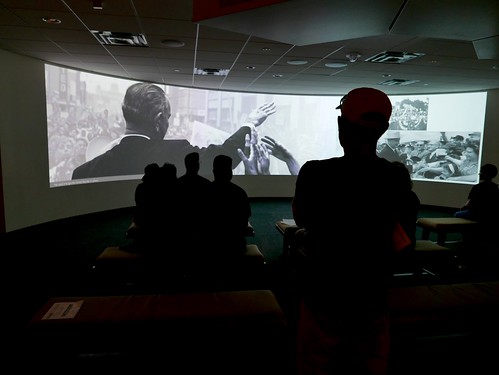
Robert Caro is my hero. I hadn't been conscious of having any heroes, but I surprised myself, when we were watching the introductory film presentation at the LBJ Library...

Introductory film presentation at the LBJ Library

... when — momentarily — a clip of Robert Caro appeared on screen. The film was loaded with adulatory material and many opportunities for Doris Kearns Goodman to enthuse about LBJ. But suddenly there was Robert Caro and heard myself say out loud: "He's my hero."

10 జనవరి, 2018

Have you ever read a novel without knowing whether it was written by a man or a woman?

I got 90% of the way into a novel without knowing, but just vaguely assuming the author was male because the first name just struck me as a man's name, even though it was a name I hadn't seen before. I started wondering why that impression stuck with me when the novel was written from the point of view of a female character (though not in the first person).

Eventually, I looked it up and saw that it was in fact a man, which perhaps is why I never developed enough curiosity to look it up. On some intuitive level, I "knew" and nothing ever made me lose that feeling, though in the end I looked it up to confirm my assumption. But I wonder what gave me the impression? It's not that I ever thought the author doesn't really understand how a woman feels or is missing descriptions of details of things a woman would think of including.

Here's the book. I read it simply because I'd seen the movie and was curious about some of the character's motivations. As usual, the book is better than the movie, and the movie was, essentially, perfect. Isn't it a marvel that one person, with nothing but words, can do so much more than the hundreds of people who work together to make a movie?