Here's the whole poem, "A Supermarket in California."
Allen Ginsberg लेबलों वाले संदेश दिखाए जा रहे हैं. सभी संदेश दिखाएं
Allen Ginsberg लेबलों वाले संदेश दिखाए जा रहे हैं. सभी संदेश दिखाएं
4 जून 2026
"What peaches and what penumbras! Whole families shopping at night! Aisles full of husbands! Wives in the avocados, babies in the tomatoes!"
Yesterday was the 100th anniversary of the birth of Allen Ginsberg. I'm sorry I let it slip past unnoted, but I'm noting it now. Marilyn Monroe had her 100th on Monday. That got way more attention in the media, so I could have observed it, on the right day, but I avoided that. She's had too much attention already. I imagine she's tired of it, tired of the form it takes.
Who killed the pork chops? What price bananas?... We strode down the open corridors together in our solitary fancy tasting artichokes, possessing every frozen delicacy, and never passing the cashier....


2 मई 2025
"A bothy is a basic shelter, usually left unlocked and available for anyone to use free of charge."
"It was also a term for basic accommodation, usually for gardeners or other workers on an estate. Bothies are found in remote mountainous areas of Scotland, Northern England, Ulster and Wales. They are particularly common in the Scottish Highlands, but related buildings can be found around the world...."
I'm reading the Wikipedia article "Bothy," after encountering this word, which I don't remember ever seeing before, in the London Times article "Have William and Kate fallen for ‘west coast bothy frenzy’?It’s never been more fashionable to hole up in the Scottish isles like the Waleses, says Victoria Brzezinski."
Ben Pentreath, head of the architectural and interior design studio of the same name, is widely reported to have assisted the Prince and Princess of Wales... has had a connection with the Scottish west coast since he was a teen.... In 2018 Pentreath and his gardener husband, Charlie McCormick, bought a teeny pair of buildings (a Victorian two-roomed cottage and a much earlier stone bothy) on a sea pink-covered estuary in the far west coast of Scotland. “It really does feel a long way away,” Pentreath says. “Bothies really can’t be more than one or two rooms. And I think we all find romance in living in small places — for a while!”
20 जनवरी 2025
"What was poetry? That’s the question John Koethe asked in 'Beyond Belief,' his 2022 collection of verse."
"He was speaking about how poems come and go but none seem to make an impression. Lucy Sante framed this somewhat differently when she asked, 'Was "Howl" the last poem to hit the world with the impact of news and grip it with the tenacity of a pop song?'"
Writes Dwight Garner in the first paragraph of a NYT review of a new poetry book... which I, tellingly, failed to become interested in. The first sentence of the last paragraph of the review is: "This is a young person’s book." Well, then. Who was "Howl" for?
Writes Dwight Garner in the first paragraph of a NYT review of a new poetry book... which I, tellingly, failed to become interested in. The first sentence of the last paragraph of the review is: "This is a young person’s book." Well, then. Who was "Howl" for?
19 दिसंबर 2024
"You’re not actually finished until you do read poetry on the weekends for fun."
Someone says in response to someone who said "I vividly remember discovering Dylan’s whole catalogue in college and consequently falling entirely out of touch with everything else music-related for a solid year, I also grew my curls out and you best believe I was wearing scarves and dressing like someone who liked to read poetry on weekends for fun."
All of that was in an r/bobdylan discussion of this new clip of Timothée Chalamet, getting (too far?) into his impersonation of Bob Dylan:What poetry does Bob read?
All of that was in an r/bobdylan discussion of this new clip of Timothée Chalamet, getting (too far?) into his impersonation of Bob Dylan:
Welcome to the Church of Bob, Timmy. 🙏🏻🎶❤️
— Melanie Young 🔧 (@FreewheelinMY) December 18, 2024
pic.twitter.com/g7N7S9DfBk
20 मई 2022
"It has often been suggested that as [Bob] Dylan assembled his distinctive persona while climbing to international fame, he borrowed some of it, including a certain attitude and a caustic streak..."
"... from [Bob] Neuwirth. 'The whole hipster shuck and jive — that was pure Neuwirth,' Bob Spitz wrote in 'Dylan: A Biography' (1989). 'So were the deadly put-downs, the wipeout grins and innuendos. Neuwirth had mastered those little twists long before Bob Dylan made them famous and conveyed them to his best friend with altruistic grace.' Mr. Neuwirth, Mr. Spitz suggested, could have ridden those same qualities to Dylanesque fame. 'Bobby Neuwirth was the Bob Most Likely to Succeed,' he wrote, 'a wellspring of enormous potential. He possessed all the elements, except for one — nerve.' Mr. Dylan, in his book 'Chronicles: Volume One' (2004), had his own description of Mr. Neuwirth: 'Like Kerouac had immortalized Neal Cassady in ‘On the Road,’ somebody should have immortalized Neuwirth. He was that kind of character. He could talk to anybody until they felt like all their intelligence was gone. With his tongue, he ripped and slashed and could make anybody uneasy, also could talk his way out of anything. Nobody knew what to make of him.'"
Neuwirth, we're told, taught Janis Joplin the Kris Kristofferson song "Me & Bobby McGee," and he co-wrote "Mercedes Benz" with her.
ADDED: Spitz's use of the words "hipster shuck and jive" undercuts the argument that Neuwirth created this style of personal presentation. This obituary shows the New York Times carrying on the long tradition of making black people invisible.
From the Wikipedia article "Shuckin' and jivin'":
Shuckin' and jivin' (or shucking and jiving) is African-American slang for joking and acting evasively in the presence of an authoritative figure. It usually involves clever lies and impromptu storytelling, to one-up an opponent or avoid punishment....
According to the linguist Barbara Ann Kipfer, the origins of the phrase may be traced to when "black slaves sang and shouted gleefully during corn-shucking season, and this behavior, along with lying and teasing, became a part of the protective and evasive behavior normally adopted toward white people."...
In 2008, New York attorney general Andrew Cuomo said of the Democratic Party candidate Barack Obama, who was running against Hillary Clinton, the candidate Cuomo supported: "You can't shuck and jive at a press conference." Cuomo received criticism from some for his use of the phrase. Roland Martin of CNN said that "'Shucking and jiving' have long been words used as a negative assessment of African Americans, along the lines of a 'foot-shufflin' Negro.'"
From the Wikipedia article "Hipster (1940s subculture)":
In 1938, the word hepster was used by bandleader Cab Calloway in the title of his dictionary, Cab Calloway's Cat-ologue: A "Hepster's" Dictionary, which defines hep cat as "a guy who knows all the answers, understands jive"...
In 1944, pianist Harry Gibson modified hepcat to hipster in his short glossary "For Characters Who Don't Dig Jive Talk".... Initially, hipsters were usually middle-class European American youths seeking to emulate the lifestyle of the largely African-American jazz musicians they followed....
In The Jazz Scene (1959), the British historian and social theorist Eric Hobsbawm... described hipster language—i.e., "jive-talk or hipster-talk"—as "an argot or cant designed to set the group apart from outsiders"....
The hipster subculture rapidly expanded, and after World War II, a burgeoning literary scene grew up around it. In 1957, the American writer and adventurer Jack Kerouac described hipsters as "rising and roaming America, bumming and hitchhiking everywhere [as] characters of a special spirituality." Toward the beginning of his poem Howl, the Jewish-American Beatnik poet Allen Ginsberg mentioned "angelheaded hipsters burning for the ancient heavenly connection to the starry dynamo in the machinery of night". In his 1957 essay The White Negro, the American novelist and journalist Norman Mailer characterized hipsters as American existentialists, living a life surrounded by death—annihilated by the atomic war or strangled by social conformity—and electing instead to "divorce [themselves] from society, to exist without roots, to set out on that uncharted journey into the rebellious imperatives of the self".
19 सितंबर 2021
What if they gave a riot and nobody came?
I'm seeing this in the NYT:
Fewer than 100 right-wing demonstrators, sharply outnumbered by an overwhelming police presence and even by reporters, gathered at the foot of the Capitol on Saturday to denounce what they called the mistreatment of “political prisoners” who had stormed the building on Jan. 6.It was, we're told, "peaceful." Maybe it wouldn't have been so small and so peaceful if only the government hadn't prepared so well:
Where only movable metal barriers stood between a mob and the Capitol on Jan. 6, layers of newly erected fence and dump trucks lined end to end guarded the building. Mounted police, absent eight months ago, now stood at the ready. Riot shields were stacked at Capitol entrances, and law enforcement from the capital region, including the Virginia State Police and the police departments for Fairfax County in Virginia and Prince George’s County in Maryland, arrived with armored cars. One hundred National Guard troops from the District of Columbia were also on alert.
Was that ridiculous or a demonstration of why they say "If you want peace, prepare for war."
My post title is a variation on another old saying: "What if they gave a war and nobody came?"
I went down a rathole looking for the source of that saying, which I just remember from common speech in the late 60s/early 70s. I won't bore you with the arguments that it originated with Allen Ginsberg, Bertolt Brecht, or Carl Sandburg. I'll just say that the attribution to Brecht is the most scurrilous — written in German, mistranslated. And the Sandburg reference is the oldest, though not verbatim: "Sometime they'll give a war and nobody will come."
7 सितंबर 2021
"He leaves Marseille. He steals a car. He wants to sleep with the girl again. She doesn’t. In the end, he either dies or leaves — to be decided."
That's what Jean-Luc Godard put on paper for Jean-Paul Belmondo for "Breathless," and the rest was improvisation, according to Belmondo, quoted in "Jean-Paul Belmondo, jaunty star of New Wave classic ‘Breathless,’ dies at 88" (WaPo).
He added that he was comfortable with a film almost wholly dependent on improvisation. “If I’m told exactly how to do everything,” he said, “I become stiff and uncomfortable.” He embraced Godard’s suggestion to “play around” with the character.
Knowing that Mr. Belmondo liked to shadowbox in character, Godard filmed him boxing in front of a mirror as he experimented with his lines: “I’m not much of a looker, but I’m quite a boxer.”
AND: There's much to say about Jean-Paul Belmondo, but this is a blog, so I'll just say one thing that is important to me. He makes a prominent appearance in the Donovan song "Sunny South Kensington" — (on the delightful "Mellow Yellow" album).The film — sexy, witty, youthful and fatalistic — became a cultural phenomenon. Mr. Belmondo became the subject of articles chronicling “le belmondisme,” his appealing air of insouciance.
The chorus begins with the name Jean-Paul Belmondo:
Jean-Paul Belmondo and Mary Quant got stoned to say the least
Ginsberg, he ended up dry and so he took a trip out East
What's in the verses? We're invited to take a walk in the London neighborhood of South Kensington, "a groovy place to live." Donovan points out the various characters — girl in a silk blouse who "ain't no freak," "a fella with a cane umbrella" — and tells us how we might act: "flip out, skip out, trip out" and "spread your wings."
Ginsberg is presumably Allen Ginsberg, who was famously in London in 1965. The "Mellow Yellow" album came out in 1966. When did Ginsberg go to India and why? We could read this from an Indian website from 2019: "Disillusioned with America, did the poet Allen Ginsberg find an antidote to rationality in India?" ("India turned his attention 'away from his cosmic obsessions and toward the humanity around him in the swarming streets of Kolkata and Varanasi'").
As for Mary Quant, she was celebrated last year in at the V&A South Kensington Museum — South Kensington, the place where Donovan pictured her stoned in 1966 — and here's the museum's video, intended to capture that 60s vibe, half a century after the fact:
I can attest to the fact that the false eyelashes I'm wearing in that picture I used in the sidebar on my now defunct blog The Time That Blog Forgot were Mary Quant eyelashes. The photo was taken by my father in 1968, when I would have been thrilled to wear anything and everything Mary Quant, and my Aunt Dorothy, who lived in London, sent me those eyelashes.
26 फ़रवरी 2021

15 नवंबर 2020
"You are looking for a way out of the decadent aristocratic game, the limbo of Jet Set desperados. I’ll show you the way."
Said Timothy Leary to Joanna Harcourt-Smith, quoted in "Joanna Harcourt-Smith, Lover of Timothy Leary, High Priest of LSD, Dies at 74/Traumatized by her experience with the psychedelic Pied Piper, she spent decades 'composting' her thoughts about him and learning to start her life over again."
She was 26 and he was 52 and a fugitive from justice when their lives intersected. She was with him when he was recaptured.
“Neither the counterculture nor the prosecutors and prison system knew what to make of her,” Michael Horowitz, Mr. Leary’s archivist, said in a 2017 interview. “Her outspoken, upper-class European manner put people off,” he said. “She had an edge and knew how to get her way. Tim empowered her, and she in turn was tremendously loyal to him, dedicated to getting him out — whatever it took. Alienating many in the counterculture was the fallout from that.”
He got out of prison in 1976, as the 2 of them became "federal informants" That led Allen Ginsberg to call her "a C.I.A. sex provocateur." The feds put them in the witness protection program — "outside Santa Fe under the aliases James and Nora Joyce."
They were both alcoholics and fought all the time before splitting up. Ms. Harcourt-Smith moved to the Caribbean and lived on a sailboat for a few years. She stopped drinking and taking drugs in 1983 and settled in Santa Fe, where she began life anew. “I felt like a child who grew up in the forest,” she said... “I had to relearn everything.... I had so much shame and guilt that I could barely write.”
The great filmmaker Errol Morris has made a documentary about her that will be on Showtime soon. She wrote a memoir "Tripping the Bardo with Timothy Leary: My Psychedelic Love Story."
It doesn't have any one star reviews at Amazon, so I read the 2 star reviews. Here's one:29 जुलाई 2020
"Hey Siri, play music."
I said into my AirPods. So nonspecific! I was out and about and not in a good position to skip things, but I was also forcing myself to accept whatever it was that I had put into my iPhone music library. I have so many audiobooks, but they're in a different app, so it's only rarely that spoken word comes up when I'm playing the "Music" app randomly. I can tell Siri to skip a track, so it's not as though I'd need to dig the iPhone out of my bag and squint to read it in the sunlight. But I sometimes adopt a discipline of listening to what The Randomness wants from me at any given moment.
Yesterday, it was "Kaddish," written and spoken by Allen Ginsberg, because a CD collection I bought long ago — "Holy Soul Jelly Roll: Poems & Songs" — took up residence in the Music app and not the audiobook app. There's other spoken word in the Music app. In fact, there was one thing I told Siri to skip yesterday — the oral argument in King v. Burwell. I will submit to The Randomness, but only so far. I considered skipping "Kaddish," but, I thought, I can do this. How long can it be? I dug in. It's an hour. (Audio. Text.)
Anyway... that radically changed the nature of my outing. But I stuck it out. Sample text:
Yesterday, it was "Kaddish," written and spoken by Allen Ginsberg, because a CD collection I bought long ago — "Holy Soul Jelly Roll: Poems & Songs" — took up residence in the Music app and not the audiobook app. There's other spoken word in the Music app. In fact, there was one thing I told Siri to skip yesterday — the oral argument in King v. Burwell. I will submit to The Randomness, but only so far. I considered skipping "Kaddish," but, I thought, I can do this. How long can it be? I dug in. It's an hour. (Audio. Text.)
Anyway... that radically changed the nature of my outing. But I stuck it out. Sample text:
2 अगस्त 2019
"... Playboy was quietly relaunched this year — this time as a thick-stock, matte-paper, ad-free quarterly. It is edited by a millennial triumvirate..."
"... the openly gay Mr. Singh, 31; Erica Loewy, 26, the creative director; and Anna Wilson, 29, who oversees photography and multimedia.... The summer issue, out now, features an interview with Tarana Burke, the activist who founded the MeToo movement, conducted by Dream Hampton, whose documentary about R. Kelly led to multiple charges against the singer. There is a queer cartoon and a feature on gender-neutral sex toys. The fall issue will feature a photo feature by the artist Marilyn Minter celebrating female pubic hair. 'We have red hair, blond hair, black hair — it’s basically every color of the rainbow,' said Liz Suman, 35, the magazine’s arts editor. She added that elsewhere in the publication, 'I’ve been sneaking in some penises, too.'.... In the office, members of the staff use terms like 'intersectionality,' 'sex positivity,' 'privileging' and 'lived experience' to describe their editorial vision — and tout their feminist credentials. Two editors are former employees of Ms.... 'We talk a lot about what’s the Playboy gaze and how we need to diversify that,' said Rachel Webber, 37, the chief marketing officer.... 'It’s a little like being in a gender studies class,' she added."
From "Can the Millennials Save Playboy?/The Hefners are gone, and so is the magazine’s short-lived ban on nudity — as well as virtually anyone on the staff over 35" (NYT).
Playboy is just a brand name. You can completely change a product under a name. Will it work? Was there enough value in the old version of the product that it's not good business to repurpose the name? Look at this big NYT article they got out of it!
Remember Cosmopolitan magazine?
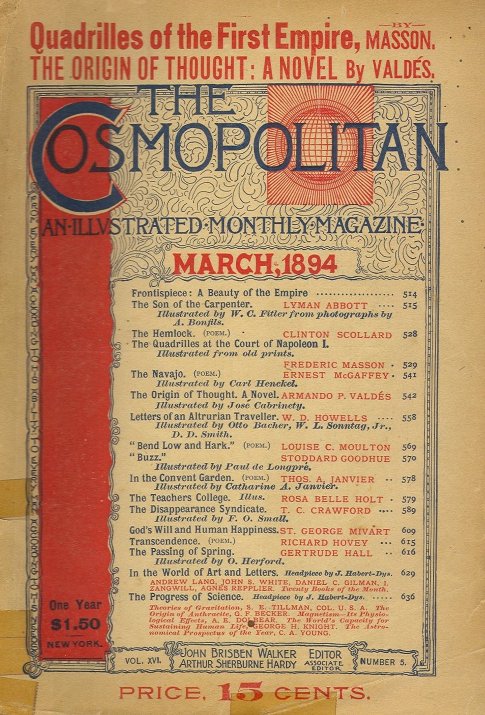
It had been around since 1886 when Helen Gurley Brown took over in 1965. Originally, it was introduced as a "first-class family magazine" with articles on fashion, interior decoration, childcare, and cooking. In 1905, William Randolph Hearst took over and changed it into a place with articles like "The Growth of Caste in America" and writers including George Bernard Shaw and Upton Sinclair, and Ida Tarbell. By the 1950s, the circulation was way down and it was considered very dull.
Helen Gurley Brown took over and completely changed it into an active promotion of sex for the single woman.
From "Can the Millennials Save Playboy?/The Hefners are gone, and so is the magazine’s short-lived ban on nudity — as well as virtually anyone on the staff over 35" (NYT).
Playboy is just a brand name. You can completely change a product under a name. Will it work? Was there enough value in the old version of the product that it's not good business to repurpose the name? Look at this big NYT article they got out of it!
Remember Cosmopolitan magazine?
It had been around since 1886 when Helen Gurley Brown took over in 1965. Originally, it was introduced as a "first-class family magazine" with articles on fashion, interior decoration, childcare, and cooking. In 1905, William Randolph Hearst took over and changed it into a place with articles like "The Growth of Caste in America" and writers including George Bernard Shaw and Upton Sinclair, and Ida Tarbell. By the 1950s, the circulation was way down and it was considered very dull.
Helen Gurley Brown took over and completely changed it into an active promotion of sex for the single woman.
In Brown's early years as editor, the magazine received heavy criticism. In 1968 at the feminist Miss America protest, protestors symbolically threw a number of feminine products into a "Freedom Trash Can." These included copies of Cosmopolitan and Playboy magazines. Cosmopolitan also ran a near-nude centerfold of actor Burt Reynolds in April 1972, causing great controversy and attracting much attention....ADDED: One nice thing about the new Playboy website is access to old Playboy interviews. I once subscribed to Playboy, the website, just because I wanted to read the Allen Ginsberg interview (from 1969). But here it is now, free: "A poet, a mystic, a homosexual, a psychedelic proselyte, a revolutionary, a bearded prophet of doom for what he considers society's 'sick' values, he is among the most famous and certainly the most controversial of living poets." There was plenty of detail about homosexuality in that interview (which I read when I was 18, in my family home, where Playboy was always openly available):
Victoria Hearst, a granddaughter of William Randolph Hearst..., has lent her support to a campaign which seeks to classify Cosmopolitan as harmful under the guidelines of "Material Harmful to Minors" laws. Hearst, the founder of an evangelical Colorado church called Praise Him Ministries, states that "the magazine promotes a lifestyle that can be dangerous to women's emotional and physical well being. It should never be sold to anyone under 18."...
Would you explain what you mean when you say there's a natural element of homosexuality in every man?
There's homosexuality in every Playboy reader. To say that in a Playboy Interview is interesting because obviously every Playboy reader expects me to say that; so I'll say it and liberate him from his fear that somebody will say it sooner or later.
21 मई 2018
"How a girl disposes her legs when seated can instantly signal your most effective approach."
"Of the prevalent leg positions displayed on these pages, pay particular attention to the Schemer and the Philanthropist...."
From "The Language of Legs" in the April 1969 issue of Playboy:

I'm just flipping through this issue of Playboy because it contains the interview with Allen Ginsberg that I'd read at the time and wanted so much to be able to reread again that I subscribed to Playboy. I chose 1-month of unlimited access to the archive, which cost $8.
Sample from the Ginsburg interview:

From "The Language of Legs" in the April 1969 issue of Playboy:
I'm just flipping through this issue of Playboy because it contains the interview with Allen Ginsberg that I'd read at the time and wanted so much to be able to reread again that I subscribed to Playboy. I chose 1-month of unlimited access to the archive, which cost $8.
Sample from the Ginsburg interview:
Why I subscribed to Playboy.
For the interviews!
Specifically, I wanted to read the interview with Allen Ginsberg in the April 1969 issue, and that's something I'm doing right now. But I also loved the idea of getting access to all of the back issues, including all the issues that were available to me to read (or otherwise gaze upon) when I was growing up in Delaware and New Jersey in the 1950s and 60s.
I love the old ads too:

Specifically, I wanted to read the interview with Allen Ginsberg in the April 1969 issue, and that's something I'm doing right now. But I also loved the idea of getting access to all of the back issues, including all the issues that were available to me to read (or otherwise gaze upon) when I was growing up in Delaware and New Jersey in the 1950s and 60s.
I love the old ads too:

8 अगस्त 2017
"He’s just a very plain, simple, common, ordinary, Nebraska cat. Really that is all he amounts to."
Said Bob Dylan about Marlon Brando. It was 1965, and Dylan was talking to Allen Ginsberg and had just gotten done telling Ginsberg that Marlon Brando "thinks about the universe, like you."
6 अगस्त 2017
14 जनवरी 2017
50 years ago today: The Human Be-In.
Ah! Watch it in its 1967 glory — San Francisco takes off toward the Summer of Love:
In the early 60s, we'd had "sit-ins," when civil rights advocates quite logically made a protest out of sitting at lunch-counters where black people had been excluded. The "-in" suffix got attached to "teach" when the Students for a Democratic Society held a teach-in at the University of Michigan in March 1965. The "Be-In" of January 14, 1967 preceded the "love-in" and the TV show "Laugh-In."
In the hippie era, the idea that we could simple "be" felt — often with the prompting of LSD — so right. To hold an event that was patterned on a protest with that "-in" but at which you would just be... well, it was very 1967, as was the delight at the cosmic pun on "human being." Remember, this was before hippies seemed dumb. Imagine a time when hippies felt like the cutting edge of enlightenment:
Hells Angels provided security. Jefferson Airplane, The Grateful Dead, and Big Brother and the Holding Company, and Quicksilver Messenger Service played music. There was "White Lightning" LSD from Owsley Stanley and free turkey provided by the Diggers.
The serious adults who ran the mainstream news and covered the Human Be-In didn't think they were running free ads for LSD and the counterculture but they were. And those ads were vastly more effective than ads for conventional trips to tourist destinations. We teenagers watched and dreamed of making it out to San Francisco where life was beautiful and love was everywhere.
ADDED: "There was an awakening going on, and we knew it was happening across the country, and we knew there were pockets of people out there who felt isolated and alone and scared. We wanted to send a signal out to them: 'Hey, it’s OK to come out and spread your wings. Be your fully glorified self in all your beauty and joy. … You are not alone.'"
In the early 60s, we'd had "sit-ins," when civil rights advocates quite logically made a protest out of sitting at lunch-counters where black people had been excluded. The "-in" suffix got attached to "teach" when the Students for a Democratic Society held a teach-in at the University of Michigan in March 1965. The "Be-In" of January 14, 1967 preceded the "love-in" and the TV show "Laugh-In."
In the hippie era, the idea that we could simple "be" felt — often with the prompting of LSD — so right. To hold an event that was patterned on a protest with that "-in" but at which you would just be... well, it was very 1967, as was the delight at the cosmic pun on "human being." Remember, this was before hippies seemed dumb. Imagine a time when hippies felt like the cutting edge of enlightenment:
The Human Be-In focused the key ideas of the 1960s counterculture: personal empowerment, cultural and political decentralization, communal living, ecological awareness, higher consciousness (with the aid of psychedelic drugs), acceptance of illicit drug use, and radical liberal political consciousness....California had, only a few months earlier, banned LSD, shutting the door to cosmic perception. Timothy Leary was there to say "Turn on, tune in, drop out." Among the other gurus: Richard Alpert ("Ram Dass"), Allen Ginsberg, Gary Snyder, Michael McClure, Dick Gregory, Lenore Kandel, Lawrence Ferlinghetti, and Jerry Rubin. Yes, there were also women in those days, but it was before prideful enlightened men noticed a need to perform gender-diversity theater. Male human was human enough for the Human Be-In. There is, however, a snakily sexy lady dancing in the audience in that video.
Hells Angels provided security. Jefferson Airplane, The Grateful Dead, and Big Brother and the Holding Company, and Quicksilver Messenger Service played music. There was "White Lightning" LSD from Owsley Stanley and free turkey provided by the Diggers.
The serious adults who ran the mainstream news and covered the Human Be-In didn't think they were running free ads for LSD and the counterculture but they were. And those ads were vastly more effective than ads for conventional trips to tourist destinations. We teenagers watched and dreamed of making it out to San Francisco where life was beautiful and love was everywhere.
ADDED: "There was an awakening going on, and we knew it was happening across the country, and we knew there were pockets of people out there who felt isolated and alone and scared. We wanted to send a signal out to them: 'Hey, it’s OK to come out and spread your wings. Be your fully glorified self in all your beauty and joy. … You are not alone.'"
30 अक्टूबर 2015
"Standoff in Boulder, Colo.: Prairie dogs hold Buddhist college at bay."
Headline in the L.A. Times.
"If you replaced the 'dog' in prairie dog with 'rat,' would they elicit the same emotion?...I wonder," asked Bill Rigler, spokesman for Naropa University, in what the L.A. Times suggests is sort of kind of a Zen koan.
The Buddhists seemed to have decided to kill the "dogs" — I typo'd "gods" again! — inciting protest. On Facebook: "Mommy, I heard that Naropa University is going to have all of us killed" and:

As Rigler put it, quoted in the above-linked L.A. Times article:

It's a threat. Let us use your land or we'll kill these "dogs."
"If you replaced the 'dog' in prairie dog with 'rat,' would they elicit the same emotion?...I wonder," asked Bill Rigler, spokesman for Naropa University, in what the L.A. Times suggests is sort of kind of a Zen koan.
For years, Naropa has battled some 150 persistent prairie dogs over 2.5 acres of prime real estate on its Nalanda campus.... The struggle is especially poignant in this famously liberal college town, where Buddhists and prairie dogs occupy exalted positions within the local ecosystem....The Buddhists got there first, and — on Buddhist principles — did nothing. The doing of nothing was a nice ecosystem for the "dogs" (which I originally typo'd "gods"):
"We bought this land in 2004 to expand on and the first prairie dogs showed up two years later," Rigler said.
The industrious rodents swiftly built a prairie dog town of some 200 burrows extending from the campus parking lot to busy Arapahoe Avenue to almost the front door. Plans to expand classroom space stalled, and in 2011, Naropa began searching for ways to relocate the animals.I think a lot of people who set "have a heart" traps would be surprised to know that it's illegal to move the animals elsewhere and just set them free, without permission. (And I hope you won't hate me — have a heart! — for burdening you with the knowledge of which you were once free. Who can free you from the trap that is knowledge? Even with the door left open — you're free to seek to believe what is not true — you find it hard to scamper out and run wild in the landscape/parking lot that's just inches away.)
Four years and $100,000 later, little has changed. Trapping and moving the rodents is easy enough; finding someone who wants them is not.
The Buddhists seemed to have decided to kill the "dogs" — I typo'd "gods" again! — inciting protest. On Facebook: "Mommy, I heard that Naropa University is going to have all of us killed" and:
As Rigler put it, quoted in the above-linked L.A. Times article:
"All of sudden it was, 'The Buddhists want to kill the prairie dogs,' but we had no intention of killing them," said Rigler, who isn't a Buddhist. "The very act of applying for a [lethal control] permit triggers an open comment period, which gives everyone the opportunity to say, 'I have a site for relocation,' or put forward other ideas."This sounds like the doctrine of double effect. Your desire or intention is not to kill the animals... but they may end up dead as you pursue what you do want and intend. The college wants to relocate the prairie dogs and the threat of killing them is a way to get somebody to step up and accept them onto their property. Another way to think of it is like this:
It's a threat. Let us use your land or we'll kill these "dogs."
9 मई 2015
Allen Ginsberg "greeted them wearing nothing but boxer shorts on his head and a do not disturb sign hung on his penis."
Them = George Harrison and Pattie Boyd and John and Cynthia Lennon.
The Beatles winced at this and left shortly afterwards, Lennon hissing at Allen, ‘You don’t do that in front of the birds.’ It was their loss....
14 जनवरी 2015
"Can you imagine a world in which it could be a crime to say words that you can hear on cable TV every night?"
"That’s the world of the Sixties, in which there were legal prohibitions of the work of Henry Miller and Allen Ginsberg and comedians such as Lenny Bruce. So this was pathbreaking."
"This" = the legal work of Al Bendich, who "was the last living member of the defense team in the 'Howl' case" and" the sole defense lawyer in the first of Bruce’s obscenity trials... the only one to end in an acquittal."
Well, of course, we can imagine a world like that. We live in such a world. Maybe not the United States — not right now anyway — but the world is more than the United States.
"This" = the legal work of Al Bendich, who "was the last living member of the defense team in the 'Howl' case" and" the sole defense lawyer in the first of Bruce’s obscenity trials... the only one to end in an acquittal."
Well, of course, we can imagine a world like that. We live in such a world. Maybe not the United States — not right now anyway — but the world is more than the United States.
12 सितंबर 2014
Cool eyes hallucinating at the constitutional lawprofs of war.
"Obama attacked from the left" is a tag of mine, and I'm applying it to this NYT op-ed by Yale conlawprof Bruce Ackerman: "Obama’s Betrayal of the Constitution." Dateline — ominously! — Berlin. Excerpt:
Let me take a little detour of my own here. The "no" vote in 2001 was from Barbara Lee, who was called a "traitor" and a "communist" at the time, but whose words are strikingly prescient today.
President Obama’s declaration of war against the terrorist group known as the Islamic State in Iraq and Syria marks a decisive break in the American constitutional tradition. Nothing attempted by his predecessor, George W. Bush, remotely compares in imperial hubris....That's a bold beginning, but it's actually weakened by seeming to open up a discussion of the need for a formal declaration of war, something that the United States hasn't had since WWII. But Ackerman proceeds to discuss the "authorization for the use of military force," which Congress gave to President Bush 3 days after the 9/11 attacks. That vote was practically unanimous.
Let me take a little detour of my own here. The "no" vote in 2001 was from Barbara Lee, who was called a "traitor" and a "communist" at the time, but whose words are strikingly prescient today.
सदस्यता लें
संदेश (Atom)


 संदेश
संदेश


