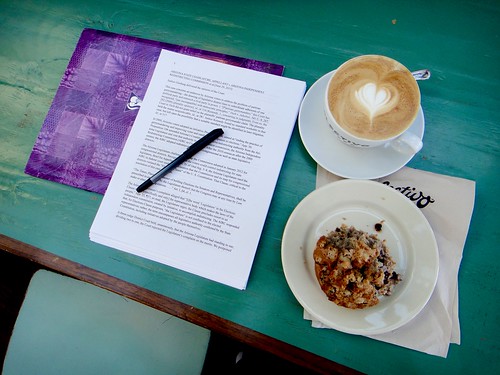
... which is a mile from my house, walkable in the length of time it takes to listen to one side of the oral argument through my iPhone earbuds. I'd have finished the other side walking home, but the text tone dinged and it was Meade saying "good morning," and a phone call ensued, dissipating my on-taskedness, which I'm trying to get back.
When the Constitution says "The Times, Places and Manner of holding Elections for Senators and Representatives, shall be prescribed in each State by the Legislature thereof," can the people of a state, using the initiative, set up an independent commission to do the redistricting for federal elections? That is, can the people be the "Legislature" or is the legislature only that elected law-making body that we think of as "the legislature"? If a legislature is "'The power that makes laws' (Johnson); a body of persons invested with the power of making the laws of a country or state" (OED), then does that include the people acting through an initiative, which is a law-making process that states only began to adopt around the turn of the 20th century?
What do words mean? Cowper is almost as distracting as a text in the middle of an oral argument, since his poem does not direct our attention to a stable meaning of the word "legislature" but to the way legislatures have the power to destabilize the meaning of words:


 Posts
Posts


