A Metafilter discussion, started by my son John. Lots of comments over there. John also put this up at Facebook, where he said "The two I immediately thought of are #1 and #5." And I said: "I immediately thought of #1 and then it took me a while to come up with another one, but, like you, I thought of #5." And:
I just told Meade, who's not on Facebook, about this post and asked what he thought would be at the top and he just started singing "When you wish upon a star...." Why do you think that song so immediately asserts itself as the best? I asked Meade and he said "I don't know, Jiminy Cricket..."
Hey, who is that beautiful voice, anyway, that Jiminy Cricket who does "When You Wish Upon a Star" (which I can't embed)? It's Cliff Edwards — "Ukelele Ike" — and here's some non-Disney thing I found. "It's Magic":
Here's a little video bio of Cliff Edwards. It's a little sad! And this is as beautiful as possible: "Paper Moon."
"It seems that she herself never actually said this ... but she indeed believed that communism had the potential to radically transform the way human beings loved.... Capitalist egoism and notions of ownership had stunted the potential of love and sex, degraded women in romantic relationships and had generally caused more hurt feelings and crimes of passion than entirely necessary.... The first time I read this, it seemed to me that my generation of fellow Americans had ostensibly achieved that liberation; it appeared that we did not insist on exclusive possession of one another.... At left-leaning UC Berkeley, was I living the communist dream that my favorite Bolshevik had wished for future generations? No, I realized after this initial period of contemplation, I wasn’t.... She was an adherent to a philosophy whose perhaps most fundamental assertion is that human beings are obligated to have concern for the wellbeing of other human beings, kin and stranger alike... Hookup culture in 2016 is premised on the opposite: the notion of owing absolutely nothing to the people you sleep with, notwithstanding whether the relationship is entirely superficial, deeply intimate or somewhere in between.... Fixing hookup culture doesn’t mean reverting to an insistence on monogamy, nor does it require us to incite a full-blown communist revolution. But surely at UC Berkeley, at least, we might be able to adopt some communist thinking — and be a lot happier for it."
Joked Bill Clinton, who had to later explain that it was a joke: "It’s a joke. It’s a total joke. It’s meant to point out that’s the unilateral explanation for everything that’s wrong with America. You know, we all need to lighten up here, have a little sense of humor."
Okay, but can we please not keep using the joke about shooting someone on a particular street in New York City?
Said Manolo Blahnik, the shoe designer, about Mary Beard, the great writer about books on ancient Rome. He's quoted in a NYT article titled "Mary Beard and Her ‘Battle Cry’ Against Internet Trolling," which is about her self-defense against things that have been said about the way she looks. Most of the article is about her supposed "vindication of one of the rights of woman: to look, even in her 50s, like her unvarnished self." But what jumped out at me and made it bloggable was Blahnik's praise of the way she looks — the assertion that it's good and not the dreary assertion of some "right" to look bad.
The article has quotes from "Tina Brown, the founder of the Women in the World conference (in which The New York Times is an investor)" — oh, hell — including the denouncement of Donald Trump for his "ugly" "injection of pure derogatory comments about women." Beard expounded in a sort of scholarly tone about Trump and trolls: "You could make a powerful argument that the kind of tropes in Trump’s discourse overlap with the discourse you see in trolling: about women shutting up, about menstruation." The NYT assures us that both women — Brown and Beard — displayed a sense of humor.
“This is exactly what we need more of in American feminism: wry humor,” Ms. Brown said. “The outrage meter is getting out of control.”
“It’s about talking about it,” Ms. Beard said. “It’s not being fazed. It’s about having a laugh about it. A bit of outrage is good, but having your only rhetorical register as outrage is always going to be unsuccessful. You’ve got to vary it. Sometimes, some of the things that sexist men do just deserve to be laughed at.... Go back home to mummy,” she said. “She’ll smack your bottom.”
Yes, there is too much outrage, so perhaps I should resist expressing outrage at the idea that it's funny when a woman hits a boy, that domestic violence is only serious — and then it's utterly serious — when a man hits a woman.
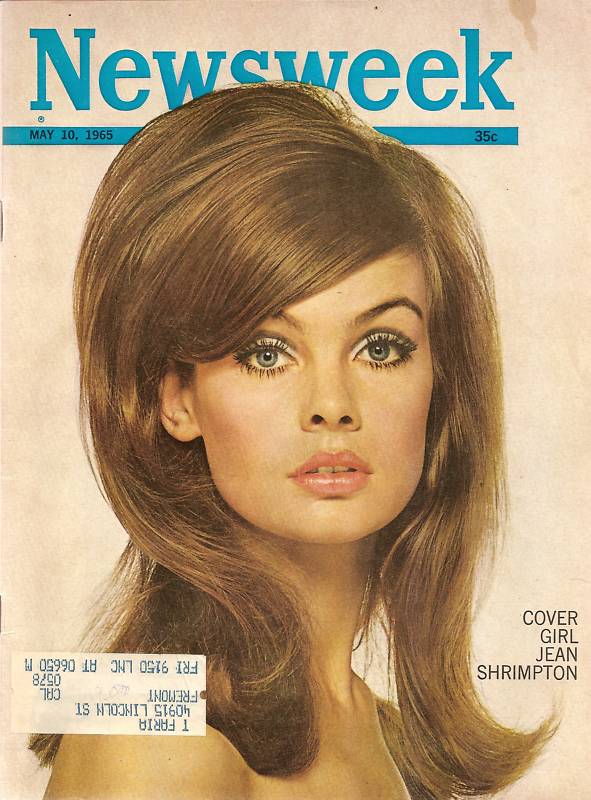
Anyway, here's the iconic magazine cover of Jean Shrimpton that blew our mind in 1965:
No one is really still faithful to the hairstyle. The huge back of the head "bump" reads as lunacy now. You can't have it today and be seen as Shrimpton was seen back then. The eye has changed, but in the mind's eye — in Blahnik's mind's eye — Beard is faithful to the 60s hairstyle. You have to modify things to keep them the same.
That's a photograph by the police of one of 11 incidents of vandalism on campus that were attributed to the 21-year-old student. There's a lot of talk on campus about the decision to go into the classroom:
Top officials at the University of Wisconsin criticized and apologized Friday for an incident with campus police that comes as a result of the UW's struggle with racial issues.
Thursday UW police officers made the uncommon move of interrupting a class to remove a student for questioning. In this case, for a recent rash of graffiti, messages against racism and white supremacy. They appeared after several racist or intolerant incidents this school year....
Police say before going into the classroom, which they usually only do for emergencies, officers had spent two weeks trying to reach the student by phone and at his home. The officer didn't realize class had already started when he walked in and confronted the suspect, Denzel McDonald.
Why, then, you might wonder, was there an apology? There are many reasons to apologize, of course. An apology may be or may seem like the simplest way to defuse a controversy. Meanwhile, the police have released the body-cam footage of the classroom interruption and the discussion with the student. I'd characterize it as respectful and low key. You can watch it yourself:
ADDED: Here's the full set of photographs of the graffiti. Another example:
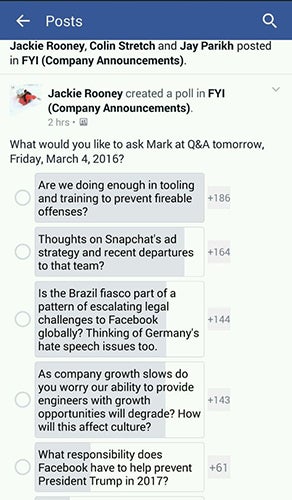
Note that it's a question about asking a question, not statement that there is a responsibility to stop Trump, but it's significant that the question was posed that way — what responsibility is there. For one thing, there's an unexamined premise that everyone already shares a political position — Trump shouldn't win — and that speaks of a lack of political diversity and pressure on dissenters within the organization to keep silent. For another thing, it omits any thought of a counter-responsibility to keep neutral politically, the idea that the highest duty is to the freedom of speech of those who use Facebook. (And yes, I know, Facebook is a private company and there's no constitutional freedom-of-speech right against it. This is a topic I've already discussed at great length on this blog, notably here and here.)
As the Gizmodo writer correctly observes, Facebook isn't like a newspaper or magazine that chooses to skew its presentation of the news:
[R]eaders of traditional media (including the web) can educate themselves about a media company’s political leanings. Media outlets often publish op-eds and editorials, and have a history of how they treat particular stories.... With Facebook, we don’t know what we’re not seeing. We don’t know what the bias is or how that might be affecting how we see the world.
Facebook has toyed with skewing news in the past.... If Facebook decided to, it could gradually remove any pro-Trump stories or media off its site—devastating for a campaign that runs on memes and publicity. Facebook wouldn’t have to disclose it was doing this, and would be protected by the First Amendment.
It is true that Facebook would be protected by the First Amendment, even as it screwed with the freedom of speech of over a billion human beings. What's tremendously important here is to maintain pressure on Facebook to respect our freedom. We don't have a legal right to assert against Facebook, but that is absolutely not a reason to give up and let Facebook do what it wants to repress speech. We have moral, political, social, and economic power, and we should assert it. We assert it through — of all things — speech. It can be very effective... which is why we care about free speech in the first place. Even where you don't have a legal right, as long as you are still speaking, you have the power of speech, and the urge to repress it occurs because the speech is effective. The trick is to use speech to convince the would-be repressers not to repress speech.
“Voting is a core value of democracy and we believe that supporting civic participation is an important contribution we can make to the community. We encourage any and all candidates, groups, and voters to use our platform to share their views on the election and debate the issues. We as a company are neutral – we have not and will not use our products in a way that attempts to influence how people vote.”
"Responsible leaders should be shocked by the idea that party officials can simply cancel elections in America if they don’t like what the voters may decide."
"I don’t let myself off the hook," she told the parole panel. "I don’t find parts in any of this that makes me feel the slightest bit good about myself."
Before the panel, Van Houten recounted how she held Rosemary [La Bianca] down with a pillow and lamp cord as Charles “Tex” Watson, another Mason Family member, stabbed her. Then he passed the knife to her, and Van Houten proceeded to stab Rosemary 14 times, later using the blood of the slain La Biancas to write messages on the walls of their home. The word “WAR” was carved on Leno La Bianca’s stomach.
“I took one of the knives … and we started stabbing and cutting up the lady,” Van Houten testified in 1971, as the Los Angeles Times noted. At a parole hearing in 1991, Van Houten said of Manson: “I thought he was Jesus Christ.”
Van Houten, who grew up in a Los Angeles suburb, was a homecoming queen who fell in with the counterculture. Her parents divorced when she was 14, and her mother forced her to have an abortion when she got pregnant not long after. As Manson prosecutor Vincent Bugliosi recounted in the true-crime classic “Helter Skelter,” a psychiatrist who interviewed Van Houten called her “a spoiled little princess” unable “to suffer frustration and delay of gratification” who once beat her adopted sister with a shoe.
Here's Leslie Van Houten in 1994, talking to Larry King — "Leslie, what were you doing?" — 25 years after the murders:
In last night's Democratic Party debate, Errol Lewis of New York 1 Time Warner Cable News questioned Hillary Clinton about the 1994 crime bill by. She tried to shift the blame to state government...
CLINTON: The original idea was not that we would increase sentences for non-violent low-level offenders, but once the federal government did what it did, states piled on. So we have a problem....
And to Sanders...
... Senator Sanders voted for the crime bill, and he says the same thing, there were some good things, and things that we have to change and learn from....
And to the future....
So that's how I see it. And I think we ought to be putting our attention on forging a consensus to make the changes that will divert more people from the criminal justice system to start... to tackle systemic racism and divert people in the beginning.
You see that she ended with a reference to "systemic racism." Louis followed on, pushing for her to apologize to black people:
LOUIS: Now earlier this year, a South Carolina voter told your daughter Chelsea, quote, "I think a lot of African-Americans want to hear, you know what, we made a mistake." Chelsea said she has heard you apologize, but went on to say that if the voter hadn't heard it then, quote, "it's clearly insufficient." Do you regret your advocacy for the crime bill?
She won't apologize:
CLINTON: Well, look, I supported the crime bill. My husband has apologized. He was the president who actually signed it...
Why not just apologize? What kind of feminist thinks the husband's apology counts for the wife? Are they "one flesh"? If so, she's term limited and should leave the race immediately. Louis keeps pushing (interrupting as she's saying, again, that Senator Sanders voted for it):
LOUIS: But what about you, Senator?
CLINTON: I'm sorry for the consequences that were unintended and that have had a very unfortunate impact on people's lives.
That's a craftily constrained apology. Of course, I want a President who's good at predicting consequences. We're not going to be happy as the world falls apart to hear that the President didn't intend the unfortunate impact. She continues, pivoting again to the future, with padded, blabby language...
I've seen the results of what has happened in families and in communities. That's why I chose to make my very first speech a year ago on this issue, Errol, because I want to focus the attention of our country and to make the changes we need to make.
... and then she does something quite surprising. She speaks specifically about "white people":
And I also want people especially I want -- I want white people -- I want white people to recognize that there is systemic racism. It's also in employment, it's in housing, but it is in the criminal justice system, as well.
Normally, a politician would talk about what all Americans need to do. Calling out "white people" feels new. I hadn't noticed that kind of talk in mainstream politics. References to race are usually sympathetic. Some group needs empathy, assistance, and caring attention. I don't believe I've heard a mainstream politician talk about "white people" at all, and I don't believe we've been hearing a racial group getting told it's falling short and needs to do better. I mean, I'm not surprised that the negative reference to race is aimed at white people. I'm surprised to hear "white people" from a candidate at all.
And look out. Bernie Sanders is about to call Clinton a racist:
LOUIS: Senator Sanders, earlier this week at the Apollo Theater in Harlem, you called out President Clinton for defending Secretary Clinton's use of the term super-predator back in the '90s when she supported the crime bill. Why did you call him out?
SANDERS: Because it was a racist term, and everybody knew it was a racist term....
Everybody, back in 1994, knew "super-predator" was a racist term? Is that true? He's besmirching her as a racist and the accusation depends on an assertion about what everybody knew 2 decades ago? That's a bold, heavy-handed assertion, and I'm trying to research it. There's this:
ADDED: I searched the NYT archive for "superpredator" and put the results in chronological order.
The first was a 1972 article about a theory of animal extinction 11,000 years ago, but after that, the next 2 are in 1998, 2 years after the act was passed, and then nothing until 2001, when there's a report about John Dilulio's regret for using the term. Dilulio and his regret are prominently featured in that NYT video I embedded above, so I suspect revisionist history about "superpredator. " I question the prevalence of the term at the time, and, again, I question Sanders' "everybody knew it was a racist term."
Pursuing that question — how racist was "superpredator"? — let's look at those 2 NYT articles from 1998. The first is in April, by Ann Powers, "Who Are These People, Anyway?"
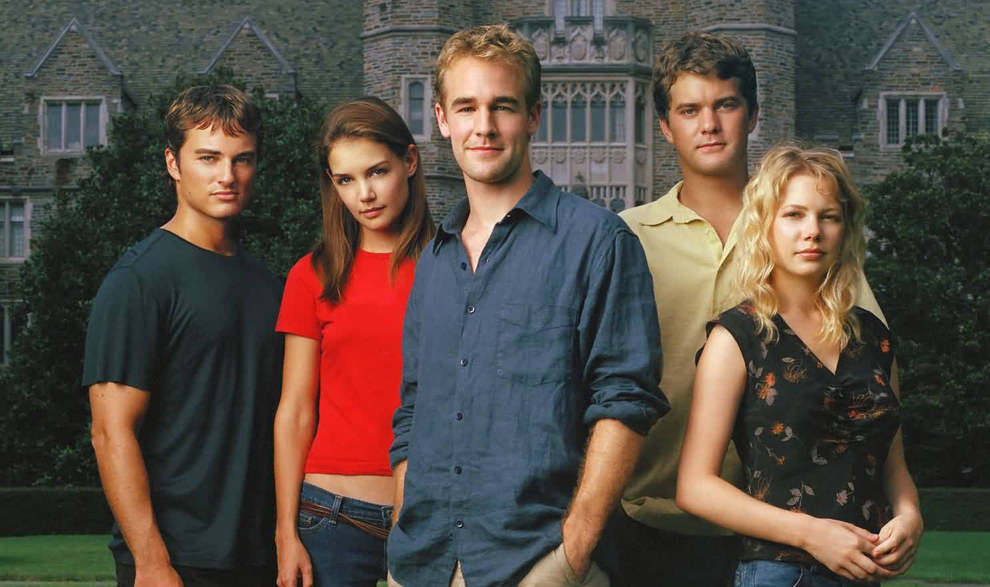
In the 90's, stereotypes about teen-agers have been inflated to ridiculous proportions. Adolescents are causing trouble everywhere: getting sexual on ''Dawson's Creek,'' lurking in melodramatic movies like ''Kids'' and ''Hurricane Streets,'' scowling seductively in Calvin Klein ads and then seeming to bring the perversity of those images to life in shocking tabloid tales. The juvenile delinquent has become the superpredator. The troubled teen-ager needs Prozac. Lolita is Everygirl, pushing up adolescent birth rates in her hot pants and navel ring.
This article is about teenagers more generally, and "superpredator" is used in the context of inflating everything to ridiculous proportions. But the reader is expected to be familiar with the term. Perhaps the NYT has an editorial practice of avoiding using it. This isn't a use, it's a mention (as the "use-mention" distinction would have it). Mentioning works because the reader knows what you are referring to, so I'm reading this article to mean that "superpredator" was an established term, though there's no evidence that it was understood as racist. In fact, the suggestion is otherwise, since Powers is talking about teenagers in general and the other teenagers in that paragraph seem quite white.
The second 1998 article, from December, is by none other than Fox Butterfield — he of the "Butterfield Effect." The Butterfield Effect originated in the context the larger topic this post is about, putting lots of people in prison for a long time. Butterfield wrote an article in the NYT that had the headline "More Inmates, Despite Drop In Crime," which many people regarded that as ludicrously obtuse, simultaneously expressing puzzlement and a clear explanation for the supposed cause of the puzzlement.
As homicide rates have dropped the past few years, criminal-justice experts have warned that they could soon rise again as a generation of superpredator juveniles came of age. But that fear is being called into question by new studies that show that virtually all the increase in homicides by juveniles in the late 1980's was attributable to crimes committed with handguns, not to a change in the nature of teen-agers.....
Prof. Franklin Zimring, who wrote [one] of the studies.... said that the reclassification by the police of juvenile fights into aggravated assaults ''created a completely artificial crime wave.'' ''The truth is that all during the late 80's and early 90's, while we worried about superpredators, the average case of juvenile violence was becoming less serious every year,'' Professor Zimring said.
So, again, it's a reference to how other people have been using the term and how the term is overblown. There is no indication that the alarmism about juvenile crime was racist or racial. Maybe the NYT had a practice of avoiding racial details back then.
We also have to have an organized effort against gangs, just as in a previous generation we had an organized effort against the mob. We need to take these people on. They are often connected to big drug cartels. They are not just gangs of kids anymore. They are often the kinds of kids that are called 'superpredators.' No conscience, no empathy. We can talk about why they ended up that way, but first we have to bring them to heel. And the president has asked the FBI to launch a very concerted effort against gangs everywhere.
Update 1: He was conciliatory and then she slammed him. That sets him free to hit back. He should let her have it... and the audience is with him.
Update 2: Oh, I am too tired. Up since 3. Will watch the rest tomorrow.
Update 3, the next morning: I've got the transcript now, so I wanted to show you want I was talking about at Update 1. The moderator, Wolf Blitzer, asked Sanders about his statements about Clinton lacking the "qualifications" to be President. His answer felt conciliatory to me:
SANDERS: Well, I've known Secretary Clinton, how long, 25 years? We worked together in the Senate. And I said that in response to the kind of attacks we were getting from the Clinton, uh, campaign. "Washington Post" headline says "Clinton Campaign says Sanders is Unqualified" and that's what the surrogates were saying. Does Secretary Clinton have the experience and the intelligence to be a president? Of course she does. But I do question... her judgment. I question a judgment which voted for the war in Iraq... the worst foreign policy blunder in the history of this country, voted for virtually every disastrous trade agreement which cost us millions of decent-paying jobs. And I question her judgment about running super PACs which are collecting tens of millions of dollars from special interests, including $15 million from Wall Street. I don't believe that that is... the kind of judgment we need to be the kind of president we need.
Clinton's response felt to me like a failure to accept the conciliation:
CLINTON: Well, it is true that now that the spotlight is pretty bright here in New York, some things have been said and Senator Sanders did call me unqualified. I've been called a lot of things in my life. That was a first. And then he did say that... he had to question my judgment. Well, the people of New York voted for me twice to be their senator from New York and... and President Obama trusted my judgment enough to ask me to be secretary of State for the United States. So, look, we have disagreements on policy. There's no doubt about it. But if you go and read, which I hope all of you will before Tuesday, Senator Sanders' long interview with the "New York Daily News," talk about judgment and talk about the kinds of problems he had answering questions about even his core issue, breaking up the banks. When asked, he could not explain how... that would be done and...when asked... about a number of foreign policy issues, he could not answer about Afghanistan, about Israel, about counterterrorism, except to say if he'd had some paper in front of him, maybe he could. I think you need to have the judgment on day one to be both president and commander-in-chief.
In print, the difference in tone feels completely insubstantial. They disagree on policy and they ramp that disagreement up into questioning "judgment," which feels somewhat more like an attack on character or competence.
Update 4: I'm going to do a new post on the discussion of race and crime.
I am a participant in the Amazon Services LLC Associates Program, an affiliate advertising program designed to provide a means for me to earn fees by linking to Amazon.com and affiliated sites.
Encourage Althouse by making a donation:
Make a 1-time donation or set up a monthly donation of any amount you choose:








 পোস্টগুলি


