Republican presidential candidate Donald Trump, when asked if he believes the Middle East would be better today if Moammar Gadhafi of Libya and Saddam Hussein of Iraq were still in power, responded, "It's not even a contest."The real estate mogul said!
He related the situations in both of those countries with what is currently happening in Syria and seemed to endorse a stronger President Bashar Assad, even while admitting that he is "probably a bad guy."
"You can make the case, if you look at Libya, look at what we did there — it's a mess — if you look at Saddam Hussein with Iraq, look what we did there — it's a mess — it's [Syria] going to be same thing," the real estate mogul said.
৪ অক্টোবর, ২০১৫
Trump seems to say we'd be better off with Saddam Hussein and Gaddafy still in power — and a stronger Assad.
On "Meet the Press" today. Watch the clip at the link. The text is going to look garbled, which is why I'm saying "seems":


"Married, they could have capitalized on their across-the-aisle relationship — made it their 'brand,' a la James Carville and Mary Matalin, with a book deal or a TV gig perhaps."
"But anything like that, Mary Katharine said, would have felt false. They weren’t at complete opposite ends of the spectrum; they weren’t even sure they believed in a spectrum. They were fiercely independent, just as they wanted their kids to be. Making themselves a bipartisan sideshow would only get in the way."
From "She was a conservative pundit. He was a liberal activist. At home, none of that mattered."
ADDED: Here's audio from a 2011 radio show with Jake Brewer and Mary Katharine Ham talking about the "dumb" political arguments they've had.
From "She was a conservative pundit. He was a liberal activist. At home, none of that mattered."
ADDED: Here's audio from a 2011 radio show with Jake Brewer and Mary Katharine Ham talking about the "dumb" political arguments they've had.
The new IBD/TIPP poll has Ben Carson in the lead — with 24% — and Trump at 17%.
How incredibly strange... and this follows on Carson's much-noticed statement that he wouldn't accept a Muslim as President. Can it be that what seemed like an unforced error actually helped his cause? Trump boosted his cause by making statements that look — to mainstream commentators — as though they outright disqualify him from being taken seriously. Perhaps it's not Trump's style and bluster that have put him in the lead, but the substance itself, the very substance that horrifies moderates. Because here's Carson, with his completely different demeanor and tone, vaulting ahead saying something that anybody serious was supposed to know you just don't say.
Carson has also been citing Hitler. Asked why the other day, he said:
Carson has also been citing Hitler. Asked why the other day, he said:
"If people don't speak up for what they believe, then other people will change things without them having a voice. Hitler changed things there and nobody protested. Nobody provided any opposition to him, and that's what facilitated his rise."The reporter who asked the question prompted Carson to say that Obama is like Hitler, but he said, "no":
"I'm saying that in a situation where people do not express themselves, bad things can happen. That's the main problem that I have with political correctness. It keeps people from expressing themselves. And it's the expression, the conversation, that leads to solutions. Keeping everybody silent, while you change the fabric of the society, is not what America was supposed to be about."
"I just do my work, and I work every day, and my ambition is just to do something better than I last did."
"I’d like to write something as great as ‘Pinocchio’ or ‘Little Women.’ I won’t say ‘Moby-Dick’ because that’s impossible. I’d like to write a book that everybody loves. I’d like to take a picture that someone wants to put above their desk so they can look at it while they’re writing a letter or doing whatever they’re doing while sitting at their desk. I’d like to do a painting that would astonish people."
Says Patti Smith, quoted in the NYT in an article that coincides with the publication of her new book "M Train." We're told the book is "elegiac," and the author of the piece, Penelope Green, seems to be trying to write in an elegiac manner. For example:
Says Patti Smith, quoted in the NYT in an article that coincides with the publication of her new book "M Train." We're told the book is "elegiac," and the author of the piece, Penelope Green, seems to be trying to write in an elegiac manner. For example:
Meanwhile, her cat throws up on her pillow. Her clothing betrays her; her pockets are torn. Her shoelaces come undone and trail in rain puddles. Her socks get tangled in her jeans, and escape at inopportune moments. Walking through Washington Square, a lone sock breaks free from her pants (stuck there from the night before), and a giggling teenager returns it to her. Small losses echo the larger ones: She is undone when a woman commandeers “her” regular table in her favorite neighborhood cafe, retreating to the bathroom and wishing upon the interloper a spectacularly gruesome death, like a victim in one of her beloved crime dramas.
When the cafe closes, its owner gave Ms. Smith that table and chairs. These and other totems are in the bungalow... A Chinese rug rescued from her townhouse on the edge of Greenwich Village, where she has lived since the late ’90s, because the cats were urinating on it....
৩ অক্টোবর, ২০১৫
"You are invited to the young and wonderful town of Brooklyn in 1857... watch them play their bright, sunshiny game of ball called 'base'..."

That's an ad that appeared in The New York Times on June 11, 1950, right under a review of another book about Brooklyn (called "Brooklyn Is America").

I arrived there searching the NYT archive for the word "politicize." That use of "politicize" is the older meaning — to talk about politics. It's similar to "philosophize." It's a style of talking.
I was interested in going back to the past and then, once there, seeing how they talked about their past. Brooklyn has changed a lot since 1950, 65 years ago, and back then, there was a novel that was supposed to entertain you with what Brooklyn was like a century before that, before baseball was called "baseball," and it was a game of ball called "base." Is that even right? I'm checking "Origins of baseball":
"How many girlfriends have you had?"/"0. Never had anyone."
"Well, it means I’ve never been with anyone, no woman nor man (nor dog or animal or any other).... must be saving himself for someone special... Involuntarily so."
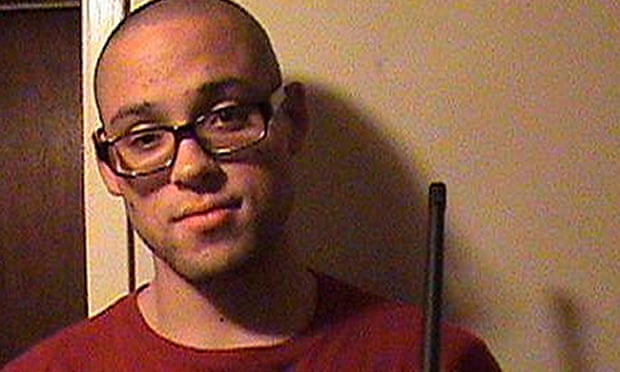
"... and I'm not sad/And just maybe I'm to blame for all I've heard/But I'm not sure..."
Harper-Mercer was discharged from the Army 5 weeks into basic training for failing to meet "minimum administrative standards."
“He did not like his lot in life, and it seemed like nothing was going right for him,” a law enforcement official said, describing the writings found at the crime scene. “It’s clear he was in a very bad state of mind.”...Here are some "new details" about Harper-Mercer, whose relationship with his mother reminds me of Adam Lanza's. That sensitivity to sound is suggestive of an autistic disorder, and Harper-Mercer attended The Switzer Learning Center, which deals with "learning disabilities, health problems and autism or Asperger's Disorder."
[H]e lived with his mother, Laurel Harper, a nurse who fiercely protected him from, among other things, the neighborhood sounds of loud children and barking dogs. Once, neighbors said, she went door to door with a petition to get the landlord to exterminate cockroaches in her apartment, saying they bothered her son.
Sofia Camarena of Long Beach, California, told The Oregonian/OregonLive that she used to date Harper-Mercer's father. "I used to change Chris' diapers when he was a baby," she said.... "He was born with problems. He was hard to discipline. If you told him 'no,' he would scream like you had just hit him."..."Lithium" is also a song title. Lyrics: "I'm so lonely but that's okay I shaved my head..."
There are a number of indications that Harper-Mercer had mental health or behavioral issues. His screen name on some social media sites was "lithium love." Lithium is used as a psychiatric medication.
"... and I'm not sad/And just maybe I'm to blame for all I've heard/But I'm not sure..."
Harper-Mercer was discharged from the Army 5 weeks into basic training for failing to meet "minimum administrative standards."
Harper-Mercer was born in the United Kingdom, stepsister Carmen Nesnick told CBS Los Angeles, moving to the United States when he was very young. He grew up in the Torrance area. His parents, Ian Bernard Mercer and Laurel Margaret Harper, divorced in 2006.Note the erasure of the racial element. As The Daily Beast reported: Harper's father is white and his mother black.
Lawrence Lessig says the NYT "'dumbs down' the debate radically to blame Republicans for everything."
"No doubt, the Republican leadership often goes where the money is. And so too do the Democrats. The focus shouldn’t be on one of these two money-sensitive-parties. It should be on changing the system that makes money in policy so effective. "
He's criticizing a specific NYT editorial that complains about a provision in the Affordable Care Act that it says, incorrectly, is there "at Republican insistence."
He's criticizing a specific NYT editorial that complains about a provision in the Affordable Care Act that it says, incorrectly, is there "at Republican insistence."
Scott Walker and his GOP legislature "are off the wall... They’re drunk with some kind of power or misconception of reality."
Said Marty Beil, the leader of the Wisconsin State Employees Union, back in 2011, the year of Act 10 and the protests.
Beil "died on Thursday at his home in Mazomanie, Wis. He was 68."
Here's the obituary in the local paper, quoting what Beil said about Act 10: “It is unconscionable, and it is something I will hold against Scott Walker until the day I die, the pain he’s caused to state workers in such a careless fashion.”
Beil "died on Thursday at his home in Mazomanie, Wis. He was 68."
Here's the obituary in the local paper, quoting what Beil said about Act 10: “It is unconscionable, and it is something I will hold against Scott Walker until the day I die, the pain he’s caused to state workers in such a careless fashion.”
Former Gov. Tommy Thompson, who sat across the negotiating table from Beil for 14 years, called Beil a friend who “loved life,” adding, “he loved his unions, he loved his members, he loved politics and he loved a good spread. Marty was a giant of a man in size as well as in ability... If he considered you a friend, which I know he did of me, he was always there for you.... He was so big, he filled the room — just with his physical size but he also had a giant personality. He would jump up and down — not physically, but mentally — making you believe he was going to come across the table at you. But once you got past the antics ... he was fun to negotiate with.”That was Tommy, the former Governor. The current Governor, Scott Walker, hasn't offered a statement, at least not that I've seen.
"Why Did the Greatest Feminist Actress Deny Being a Feminist?"
"While promoting the movie Suffragette, [Meryl] Streep was asked if she is a feminist. ‘I am a humanist,’ she replied, further fueling the misguided belief that ‘feminist’ is a dirty word."
I am a humanist! That's like saying "All lives matter" when someone asks whether "Black lives matter." So Meryl's in trouble with the good-thinking people, and just when she's got a movie called "Suffragette."
Here's the full interview. Excerpts:
Bugbee proceeds to distance herself from one particular 80s feminist, Andrea Dworkin, "the radical feminist most often cited when critics of feminism want to find a feminist who is explicitly anti-man." Bugbee assures us that almost no feminist today believes in "radical separatism," so it bothers her "that women are denying feminism because of even the possibility that they might find themselves in a world where they must align themselves against men."
I'd say Streep and others who decline the label are not so much "denying feminism" as wanting to remain independent of a terms that other people are actively defining and enforcing. It seems risky and troublesome: You'll have to keep an eye on them lest they cause you to seem to be saying something you don't want to say. An artist, e.g., Streep, can't be distracted by monitoring all these politcos and web-scribblers.
Bugbee proceeds to talk in a completely political way about liberal issues like funding Planned Parenthood and passing equal-pay laws — that is, to be the very kind of ideological enforcer who makes people worry about the consequences of accepting the "feminist" label... which is the likely answer to the "why" question in the post title.
I am a humanist! That's like saying "All lives matter" when someone asks whether "Black lives matter." So Meryl's in trouble with the good-thinking people, and just when she's got a movie called "Suffragette."
Here's the full interview. Excerpts:
Is being ladylike overrated?Back to the first link, which goes to a column in The Daily Beast by (the delightfully named) Teo Bugbee:
‘I would say it is underrated. Grace, respect, reserve and empathetic listening are qualities sorely missing from the public discourse now.’...
Are you a feminist?
‘I am a humanist, I am for nice easy balance.’...
What single thing would you change about the film industry to make it less sexist?
‘Men should look at the world as if something is wrong when their voices predominate. They should feel it. People at agencies and studios, including the parent boards, might look around the table at the decision-making level and feel something is wrong if half their participants are not women. Because our tastes are different, what we value is different. Not better, different.’
So what is it that’s so undesirable about the word feminist?... The common refrain in moments such as these is that feminism is simply a belief in equal rights.(That's a subject we were just talking about yesterday (here). And it's the way Hillary Clinton defined feminism recently.)
And while that is true, it’s also a vast oversimplification of the history of a movement that has had time to develop over the course of a century. There is not one feminism, but many feminisms...That plural — "feminisms" — which you don't see that much these days, was big in the late 1980s, back when I was one of the many women who felt compelled to read and understand the book "New French Feminisms." The plural was both a burden and a relief: a burden, because it's complicated (and perhaps French!), but a relief because you could use the word your own special way, take charge of the meaning creation, and not have to give yourself to a big group of ideological enforcers.
Bugbee proceeds to distance herself from one particular 80s feminist, Andrea Dworkin, "the radical feminist most often cited when critics of feminism want to find a feminist who is explicitly anti-man." Bugbee assures us that almost no feminist today believes in "radical separatism," so it bothers her "that women are denying feminism because of even the possibility that they might find themselves in a world where they must align themselves against men."
I'd say Streep and others who decline the label are not so much "denying feminism" as wanting to remain independent of a terms that other people are actively defining and enforcing. It seems risky and troublesome: You'll have to keep an eye on them lest they cause you to seem to be saying something you don't want to say. An artist, e.g., Streep, can't be distracted by monitoring all these politcos and web-scribblers.
Bugbee proceeds to talk in a completely political way about liberal issues like funding Planned Parenthood and passing equal-pay laws — that is, to be the very kind of ideological enforcer who makes people worry about the consequences of accepting the "feminist" label... which is the likely answer to the "why" question in the post title.
২ অক্টোবর, ২০১৫
The history of the word "politicize" — from 1968 to 2015.
May 1968: "S.D.S. is out to politicize the campus."
September 1973: "It was not simply a matter of increasing numbers, but of the highly politicized manner in which additional blacks found their way into Harvard — overcoming nearly a century of racial and sociological barriers to a sizable presence at Harvard. Militancy and political threats perpetrated by Negro students in 1968-70 paved the way for major alterations in Harvard's recruiting and admissions policies. This resulted in a fivefold increase in black enrollment, but the politization surrounding this development plagued virtually all aspects of black-white relationships, dividing blacks and whites in to mutually exclusive communities." From "The black experience at Harvard," by Martin Kilson.
August 1976: Back when Jimmy Carter, a peanut farmer, was getting the Democratic nomination: "Planters [Peanuts] has been the focus of recent efforts to politicize peanuts, such as the recent Democratic National Convention to 'borrow' its Mr. Peanut mascot. 'Mr. Peanut is an apolitical figure'..."
January 1979: Pope John Paul II in Mexico City: "You know that liberation theology is a true theology... But perhaps it is also a false theology, because if one starts to politicize theology, apply doctrines of political systems, ways of analysis which are not Christian, then this is no longer theology."
September 1980: "On the Lower East Side in the late 60's, his aim was to politicize the hippies, not to make the larger world an adjunct to the counterculture." From a review of a new book by Abbie Hoffman.
December 1986: "In 1966, Mao turned to radical Shanghai students to trigger the Cultural Revolution, a decade-long upheaval intended to politicize every facet of Chinese life."
November 1992: Hugh Hefner is quoted: "I think the real question is why, after a sexual revolution began in the 50's, did the women's movement seize upon an anti-sexual theme.... A significant part of the hurtful side of feminism is failing to understand how a hurtful childhood can shape you, and instead trying to politicize all behavior. There's really no benefit to viewing sex as the enemy. The sex act is some of the best of what we are, as family, and as a civilization. The notion that sex and violence are connected like law and order is untrue. They are polar opposites. One is hurting; one is hugging."
January 1994: "Do you ever wonder if it was a mistake to politicize the private lives of politicians? Bill Clinton was rumored to have a Gary Hart-ish sexual life, yet he's turned out to be quite supportive of women's rights." From a Q&A with 3 female reporters.
May 1996: When Democratic Representative Barney Frank of Massachusetts said that the Defense of Marriage bill was motivated by politics, he was accused of a "desperate attempt to politicize what is not a political issue."
September 1999: After shootings in a Fort Worth church, Texas Governor George W. Bush signed legislation permitting guns in churches, Vice President and presidential candidate Al Gore started asking ''How can we allow guns in churches?'," and a Bush spokesman said: "Americans are tired of politicians trying to politicize every tragedy.''
December 1999: "Our political leaders must be judged on how they treat everyone, including the least fortunate. We must ask ourselves: do we solve problems or simply push them away, politicize them and criminalize them?'' said Hillary Clinton, about homeless people, whom Mayor Rudolph W. Giuliani was having arrested for sleeping on the streets.
April 2000: "Holding congressional hearings now would only further politicize this tragedy [of Elian Gonzalez], further inflame the passions, and do nothing to resolve the future of the child.... We should not allow this situation to degenerate further into which political party can benefit the most. Americans have made it clear that they do not want to see this issue politicized," wrote Republican Senator Chuck Hagel.
October 2004: "There have been faith-based efforts in America for years and years. There hasn't always been an effort to politicize it," said presidential candidate John Kerry speaking to a group of black pastors.
February 2012: "I think there’s been a chord struck over this issue, this issue of political organizations who are trying to politicize women’s reproductive health," said Planned Parenthood President Cecile Richards.
October 2015: President Obama, after another mass shooting: "Somebody somewhere will comment and say, Obama politicized this issue. Well, this is something we should politicize. It is relevant to our common life together, to the body politic."
September 1973: "It was not simply a matter of increasing numbers, but of the highly politicized manner in which additional blacks found their way into Harvard — overcoming nearly a century of racial and sociological barriers to a sizable presence at Harvard. Militancy and political threats perpetrated by Negro students in 1968-70 paved the way for major alterations in Harvard's recruiting and admissions policies. This resulted in a fivefold increase in black enrollment, but the politization surrounding this development plagued virtually all aspects of black-white relationships, dividing blacks and whites in to mutually exclusive communities." From "The black experience at Harvard," by Martin Kilson.
August 1976: Back when Jimmy Carter, a peanut farmer, was getting the Democratic nomination: "Planters [Peanuts] has been the focus of recent efforts to politicize peanuts, such as the recent Democratic National Convention to 'borrow' its Mr. Peanut mascot. 'Mr. Peanut is an apolitical figure'..."
January 1979: Pope John Paul II in Mexico City: "You know that liberation theology is a true theology... But perhaps it is also a false theology, because if one starts to politicize theology, apply doctrines of political systems, ways of analysis which are not Christian, then this is no longer theology."
September 1980: "On the Lower East Side in the late 60's, his aim was to politicize the hippies, not to make the larger world an adjunct to the counterculture." From a review of a new book by Abbie Hoffman.
December 1986: "In 1966, Mao turned to radical Shanghai students to trigger the Cultural Revolution, a decade-long upheaval intended to politicize every facet of Chinese life."
November 1992: Hugh Hefner is quoted: "I think the real question is why, after a sexual revolution began in the 50's, did the women's movement seize upon an anti-sexual theme.... A significant part of the hurtful side of feminism is failing to understand how a hurtful childhood can shape you, and instead trying to politicize all behavior. There's really no benefit to viewing sex as the enemy. The sex act is some of the best of what we are, as family, and as a civilization. The notion that sex and violence are connected like law and order is untrue. They are polar opposites. One is hurting; one is hugging."
January 1994: "Do you ever wonder if it was a mistake to politicize the private lives of politicians? Bill Clinton was rumored to have a Gary Hart-ish sexual life, yet he's turned out to be quite supportive of women's rights." From a Q&A with 3 female reporters.
May 1996: When Democratic Representative Barney Frank of Massachusetts said that the Defense of Marriage bill was motivated by politics, he was accused of a "desperate attempt to politicize what is not a political issue."
September 1999: After shootings in a Fort Worth church, Texas Governor George W. Bush signed legislation permitting guns in churches, Vice President and presidential candidate Al Gore started asking ''How can we allow guns in churches?'," and a Bush spokesman said: "Americans are tired of politicians trying to politicize every tragedy.''
December 1999: "Our political leaders must be judged on how they treat everyone, including the least fortunate. We must ask ourselves: do we solve problems or simply push them away, politicize them and criminalize them?'' said Hillary Clinton, about homeless people, whom Mayor Rudolph W. Giuliani was having arrested for sleeping on the streets.
April 2000: "Holding congressional hearings now would only further politicize this tragedy [of Elian Gonzalez], further inflame the passions, and do nothing to resolve the future of the child.... We should not allow this situation to degenerate further into which political party can benefit the most. Americans have made it clear that they do not want to see this issue politicized," wrote Republican Senator Chuck Hagel.
October 2004: "There have been faith-based efforts in America for years and years. There hasn't always been an effort to politicize it," said presidential candidate John Kerry speaking to a group of black pastors.
February 2012: "I think there’s been a chord struck over this issue, this issue of political organizations who are trying to politicize women’s reproductive health," said Planned Parenthood President Cecile Richards.
October 2015: President Obama, after another mass shooting: "Somebody somewhere will comment and say, Obama politicized this issue. Well, this is something we should politicize. It is relevant to our common life together, to the body politic."
এতে সদস্যতা:
পোস্টগুলি (Atom)


 পোস্টগুলি


