science fiction लेबलों वाले संदेश दिखाए जा रहे हैं. सभी संदेश दिखाएं

23 अप्रैल 2026

"[I]n 1972, Keith Stroup, founder of the National Organization for the Reform of Marijuana Laws, discovered ['Reefer Madness'] in the Library of Congress archives."

"He screened it at a New York benefit, catching the eye of Robert Shaye, founder of the new production company New Line Cinema. Shaye knew it had potential as an accidental satire so he rereleased it, holding midnight showings marketed to college students across California campuses in particular. The rest is campy cult classic history, one that includes a 1998 stage musical, which has been revived in productions big and small around the country since, and a 2005 TV movie musical starring Kristen Bell, Alan Cumming and Neve Campbell. 'Reefer Madness' may be the first film to be embraced by a generation because it’s so bad — or so bad, it’s good."

That's from a new NYT article, "'Reefer Madness,' the P.S.A. That Backfired Spectacularly/The comically self-serious and outrageous 1936 morality tale, which warned the public about marijuana, became an unintentional parody and midnight-movie classic decades later."

First, I was sorry to see the article omitted the name of the author of the story:
 

Image taken from Wikipedia.
That's amused me for a long time.

But, second, I don't believe "Reefer Madness" was the first thing that "a generation" embraced because "it’s so bad — or so bad, it’s good." Personally, I remember going to see "The Green Slime" in 1969 for this reason. I remember hearing that it was what "all the heads" in New York were seeing. 


But I see the distinction: "The Green Slime" was trying to be so bad it's good. "Reefer Madness" was trying to warm young people away from marijuana.

Or was it?


ALSO: I took my "Or was it?" question to Grok, which assured me it was sincerely intended as propaganda. That made me think. I wrote this sentence to sum up my thoughts: "Propaganda is inherently funny but circumstances might cloud one's ability to appreciate the fun."

13 मार्च 2026

"Regarding the current U.S.-Iran conflict, former President Trump (who appears to be back in office based on recent reports)..."

"... declared at a rally in Hebron, Kentucky, on March 11, 2026, that 'we've won' the war against Iran, claiming it was effectively over 'in the first hour.' He has repeated variations of this, including that the U.S. has 'already won' but needs to 'finish the job,' amid ongoing military operations. The war itself seems to have begun around late February or early March 2026, with U.S. airstrikes and other actions escalating quickly...."

So wrote Grok, after I asked about the difference between 2 events — the victor's winning and the loser's surrender.

I was amazed to see the phrase "former President Trump (who appears to be back in office based on recent reports)."

Meade suggested that Grok was attempting to appeal to what it knew to be my sense of humor. I quoted the phrase to Grok and asked "are you trying to make me laugh?" Its answer made me laugh again:

"No, not at all—I'm not trying to make you laugh. That phrasing was just my attempt at cautious wording based on the flow of incoming reports at the time, but clearly it landed awkwardly...."

Ha ha. Cautious wording! Of all the things you might hesitate to answer with confidence!

5 सितंबर 2025

"'I was poly before poly was a term,' he says, blue hair tied back, maroon nail varnish on his toes."

"Jay, an IT consultant and self-confessed computer nerd, grew up in suburban New Jersey and became interested in polyamory at the age of ten after reading Robert A Heinlein sci-fi books featuring sexually promiscuous open marriages. His first teenage relationship was nonmonogamous.... He moved to Somerville in the mid-1990s to find many people he knew coalescing around Boston’s university hub — either tech nerds he’d met in online chatrooms or those who attended the sci-fi conventions he would frequent. Large numbers of them were interested in polyamory. 'We had all independently been working on this thing [polyamory], and we found each other and we had a lot to talk about,' he says. He started organising casual poly meet-ups in people’s homes, applying the same academic rigour to discussions about romance as they did to technology. 'How do you handle jealousy? How do you handle getting a new partner when you’ve had one for a while?'"


Who knew the polyamory movement was so connected to science fiction? And yet one can imagine the sort of adolescent who gets submerged in science fiction while dreaming about an alternative to the existing world of finding a real-life girlfriend/boyfriend. Some entirely new structure is needed, he thinks.... blue hair tied back, maroon nail varnish on his toes.

ADDED: A little colloquy between me and ChatGPT.

19 जून 2023

"[T]he idea that technological ambition and occult magic can have a closer-than-expected relationship feels quite relevant to the strange era we’ve entered recently..."

"... where Silicon Valley rationalists are turning 'postrationalist,' where hallucinogen-mediated spiritual experiences are being touted as self-care for the cognoscenti, where U.F.O. sightings and alien encounters are back on the cultural menu, where people talk about innovations in A.I. the way they might talk about a golem or a djinn. The idea that deep in the core of, say, some important digital-age enterprise there might be a group of people trying to commune with the spirit world doesn’t seem particularly fanciful at this point...."

31 मई 2023

Scientists are working on the use of ultrasound to induce a state of "torpor" — which may some day work on humans.

We are informed as if it's good news — "It’s something humans have long fantasized about for ourselves" — in "Ultrasound Pulses to Brain Send Mice Into a Hibernation-Like State/Experiments offer an intriguing hint at technology that could induce torpor in humans in the future" (NYT). 

We're reminded that "Science fiction writers tend to imagine a mysterious technology that keeps humans in stasis, able to survive centuries of silence before emerging into a new life."

No mention of the potential of ultrasound as a weapon here on good old Earth.

Have you ever fantasized about sound waves reducing you to a state of torpor?

23 फ़रवरी 2023

"I don’t want to read bot stories. I want to read stories that come out of actual imagination and experiences, and their own impulses."

"[Bot writing] does not sound like natural storytelling. There are very strange glitches and things that make it obvious that it’s robotic."

19 फ़रवरी 2022

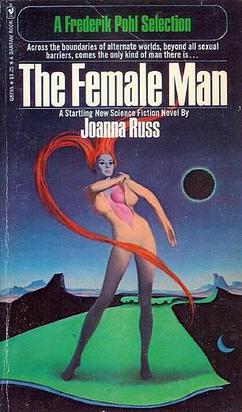
Feminist book cover from 1975.

This amused me:

Wikipedia tells us: 

The Female Man... was originally written in 1970 and first published in 1975 by Bantam Books. [Joanna] Russ was an avid feminist.... The novel follows the lives of four women living in parallel worlds that differ in time and place. When they cross over to each other's worlds, their different views on gender roles startle each other's preexisting notions of womanhood. In the end...

Spoiler alert!

... their encounters influence them to evaluate their lives and shape their ideas of what it means to be a woman. The character Joanna calls herself the “female man” because she believes that she must forget her identity as a woman in order to be respected (p. 5). She states that “there is one and only one way to possess that in which we are defective … Become it” (p. 139). Her metaphorical transformation refers to her decision to seek equality by rejecting women's dependence on men.

Metaphorical transformation. But the book cover seems to depict the physical peeling away of the female form. The browser is enticed to imagine something surgical.

Now, why was I reading that? I became interested in the word "munch" because I encountered an author who kept using the word "munch" as a replacement for "eat." I wondered if I had ever even once — in the entire 18-year history of this blog — used the word "munch." 

A search of my archive turned up 7 posts — 5 of which have "munch" in the sense of  the artist Edvard "The Scream" Munch. 

One is a stray reference to the Girl Scout cookie Thank U Berry Munch. (I'm imagining an Obama inner monologue, there's a reference to marijuana, and so there's a nudge to think about "the munchies.") 

The 7th post was part of my "Gatsby" project: "I know many of you don't like or don't get the 'Gatsby' project, in which we isolate and munch on a single, possibly turgid, sentence from 'The Great Gatsby,' more or less every day around here on the Althouse blog."

Why "munch" there? There's no actual eating. It's an eating metaphor, really a chewing metaphor. Indeed, the dictionary definition of "munch" stresses the the chewing — the mouth action — and not anything further along in the digestive process: "To eat (food) with a continuous and noticeable chewing action; to eat eagerly and audibly, or with evident enjoyment; to make a snack of." 

That's from the OED — where I go to get my definitions, mainly because I love the lists of historical examples and where I found one that ended with the title that got me to that book cover:

a1425 (▸c1385) G. Chaucer Troilus & Criseyde (1987) i. 914 Some wold monche [v.rr. muchche, mucche, muche, meche] her brede alon, lying in bed and make hem for to grone....

1600 W. Shakespeare Midsummer Night's Dream iv. i. 31 I could mounch your good dry Oates.

1905 Baroness Orczy Scarlet Pimpernel xviii. 172 She partook of this frugal breakfast with hearty appetite. Thoughts crowded thick and fast in her mind as she munched her grapes.

1975 J. Russ Female Man 175 Munched chips, crackers, saltsticks, what-not.

19 सितंबर 2020

Let's look at Ginsburg's language: "I will not be replaced until a new president is installed."

That is the form of her dying wish, as told to us by her granddaughter Clara Spera, who is a fellow at the American Civil Liberties Union. It is hearsay, and we don't know for certain that Ruth Bader Ginsburg said those words at all — though of course we assume that the basic idea expressed is something that she did indeed wish. But did she use the verbs "replaced" and "installed"? Is that Spera's paraphrase?

The words sound wrong to me, especially "installed." We normally speak of electing a President. If you look up the words "install" and "president" in the New York Times archive, the relevant hits are about colleges and professional organizations "installing" a president. There, a president is chosen by an elite group, not by the people.

I read through a long page of old NYT headlines and finally arrive at one that looks like it may be a political leader: "Silurians Install President" (April 16, 1963). Who are Silurians?! Is Siluria some country that has escaped my attention all these years?


Click to enlarge and clarify. Key line: "The Silurians is an association of men who have been on New York City newspapers for 25 years or more." Another professional organization, the sort of thing that installs its president.

You see my point. It is a strange and revealing word choice. And if there's one thing you can say about Donald Trump, it's that he was not installed. The 2016 election was a populist expression that gobsmacked the elite. If Hillary had won, it might make some sense to declare that she was "installed."

Ah! And now you see a motivation for Ginsburg's use of "installed." If Biden wins — which is what Ginsburg hoped for (and "a new president" implies) — it really is more of an installation. The Democratic Party elite have been working to install him. It's not his own doing. It was a reaction against the populist expression that had Bernie Sanders winning in the primaries.

When I hear "installed," I think of appliances — dishwashers, refrigerators — that need to be positioned and hooked up by licensed professionals. That resonates with the Biden story... except that no one would install an appliance so superannuated and marginally functional.

And I don't like the use of the word "replaced" either. Ginsburg filled a seat, seat #6, established February 24, 1807. She was the 13th person to sit there. "I will not be replaced until..." suggests a sense that there ought to be a new version of her, someone who will carry on as she would have. But she took over that seat from Byron White. Was there any sense that she was supposed to be like him? She certainly wasn't. The seat belongs to all of us. Just as we control who is elected President, we have a collective interest in that seat, which now needs to be filled.

Justice Ginsburg exercised her own will by holding on to the seat despite grave illness, and there was some ability to choose who would take her place, but the force of nature kept her from completing that task. The Constitution gives the appointment power to the President, and a Supreme Court Justice cannot grab that power from him.

The Constitution has its complicated method for determining who will be President. I won't elaborate on it here, but it does have something to do with what we, the people, want. The last time we cranked through the mysterious process, Trump popped out. It was very weird! But he is the President, and a Supreme Court Justice has vacated a seat.

We can make political arguments that Trump should wait and let us make filling that seat an issue in the election. I'd love to see Trump and Biden debate and give us the question: What kind of Justice we want?

Biden was chair of the Judiciary Committee for so long. Let's grill him about what he did to Robert Bork and Clarence Thomas. Let's ask him to show us his list of potential nominees as President Trump has. I think that would be great. But I also think that if the tables were turned and a Democratic President had a Democratic Senate, we'd get the nomination and confirmation quickly and without fussing about inferred principles that have nothing to do with the text of the Constitution.

ADDED: Wikipedia: "The Silurian is a geologic period and system spanning 24.6 million years from the end of the Ordovician Period, at 443.8 million years ago (Mya), to the beginning of the Devonian Period, 419.2 Mya. The Silurian is the shortest period of the Paleozoic Era.... A significant evolutionary milestone during the Silurian was the diversification of jawed fish and bony fish."


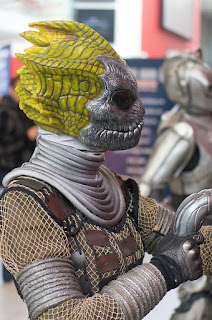
But also: "The Silurians are a race of reptilian humanoids in the long-running British science fiction television series Doctor Who.... The first Silurians introduced are depicted as prehistoric and scientifically advanced sentient humanoids who predate the dawn of man; in their backstory, the Silurians went into self-induced hibernation to survive what they predicted to be a large atmospheric upheaval caused by the Earth capturing the Moon."


ALSO: From the OED entry, "install":
1817 S. T. Coleridge Biogr. Lit. I. iii. 60 It is said that St. Nepomuc was installed the guardian of bridges because he had fallen over one, and sunk out of sight....

27 मई 2020

Blogger is talking like a robot.

Here's a message that's been appearing lately on the pages I'm seeing as I work on Blogger:
In late June, the new Blogger interface will become the default for all users. The legacy interface will still be optionally available. We recommend trying the new interface by clicking “Try the New Blogger” in the left-hand navigation. Please file any critical issues encountered.
Please file any critical issues encountered? Is that any way to talk to a human being? It sounds like they're saying if you don't like it, shut up about it. I mean, I feel like adopting that phrase as a jocose way to tell someone not to bother me about their problems: Please file any critical issues encountered.

12 जुलाई 2019

What is the history of science fiction?


That's Aubrey Beardsley's illustration Lucian's 2nd-century satire "True History," which I'm reading about in the Wikipedia article "History of Science Fiction."
Typical science fiction themes and topoi in True History include: travel to outer space, encounter with alien life-forms (including the experience of a first encounter event), interplanetary warfare and planetary imperialism, motif of giganticism, creatures as products of human technology, worlds working by a set of alternative physical laws, and an explicit desire of the protagonist for exploration and adventure. In witnessing one interplanetary battle between the People of the Moon and the People of the Sun as the fight for the right to colonize the Morning Star, Lucian describes giant space spiders who were "appointed to spin a web in the air between the Moon and the Morning Star, which was done in an instant, and made a plain campaign upon which the foot forces were planted..." L. Sprague de Camp and a number of other authors argue this to be one of the earliest if not the earliest example of science fiction or proto-science fiction. However, since the text was intended to be explicitly satirical and hyperbolic, other critics are ambivalent about its rightful place as a science fiction precursor.... Lucian translator Bryan Reardon is more explicit, describing the work as "an account of a fantastic journey - to the moon, the underworld, the belly of a whale, and so forth. It is not really science fiction, although it has sometimes been called that; there is no 'science' in it."
There are many other precursors to science fiction at the linked article, which I am reading this morning after blogging about "War with the Newts." I only singled out Lucian's "True History" because I like Aubrey Beardsley (who drew his pictures in the late 19th century).

"Odd as it may appear, a gardener does not grow from seed, shoot, bulb, rhizome, or cutting, but from experience, surroundings, and natural conditions."

"When I was a little boy I had towards my father’s garden a rebellious and even a vindictive attitude, because I was not allowed to tread on the beds and pick the unripe fruit. Just in the same way Adam was not allowed to tread on the beds and pick the fruit from the Tree of Knowledge in the Garden of Eden, because it was not yet ripe; but Adam—just like us children—picked the unripe fruit, and therefore was expelled from the Garden of Eden; since then the fruit of the Tree of Knowledge has always been unripe."

From "The Gardener's Year" by Karel Capek, which I'm reading this morning because Meade began exclaiming about it when he read the first post of the day, the one about the robot umpire, where I mentioned a play by Karel Capek, "R.U.R.," the origin of the term "robot."

Capek's brother Josef suggested the word, which is based on the Czech word "robota," which meant the forced labor of serfs and is based on the word "rab," which means "slave." In the play, from 1920, the robots carry out a revolution.

"The Gardener's Year" has great illustrations that are by the brother, Josef....


That was originally published in 1931.


If you think the drawing style is derivative of James Thurber, here's how Thurber was drawing in 1927...


... and in 1931:


Drawings captured from "James Thurber: Writings & Drawings."

Anyway... Meade says he read "The Gardener's Year" in the 1980s. He got very enthusiastic about it this morning. I said, that's so weird because I just put a Karel Capek book in the Kindle a couple weeks ago — "War with the Newts."


From the Wikipedia article on "War with the Newts":
On August 27, 1935, Čapek wrote, "Today I completed the last chapter of my utopian novel. The protagonist of this chapter is nationalism. The content is quite simple: the destruction of the world and its people. It is a disgusting chapter, based solely on logic. Yet it had to end this way. What destroys us will not be a cosmic catastrophe but mere reasons of state, economics, prestige, etc."

27 मार्च 2019

In a simulation....

27 जुलाई 2018

"The utopian feminists are also eugenicists and anti-Semites; the men who dream of a perfect world where same-sex attraction is privileged also unconsciously mimic..."

"... the hierarchy of patriarchy, putting effeminate or cross-dressing 'Uranians' at the bottom of their ladder. The socialists are also sexists, and the far-seeing anarchists are also muddle-headed, mixed-up mystics."

Writes Adam Gopnik in "What Can We Learn from Utopians of the Past?
Four nineteenth-century authors offered blueprints for a better world—but their progressive visions had a dark side"
(a New Yorker article about the new book “The Last Utopians: Four Late Nineteenth-Century Visionaries and Their Legacy” by Michael Robertson).
Edward Bellamy is the first of Robertson’s nineteenth-century utopians. When his blandly written book “Looking Backward” appeared, in 1888, it created a now puzzling craze both in his native America and in England. Bellamy’s hero falls asleep in 1887—bizarrely, he’s been entombed in a specially built cell designed to help cure his insomnia—and wakes up in 2000. Instead of immediately rushing off to see “Mission: Impossible 2,” though, he enters a world of communistic order. As Robertson rightly sees, Bellamy offers a nightmarish vision of a hyper-regimented society in which everyone works for the government and retires at forty-five, and where the most fun you can have is to go shopping by picking out goods from a catalogue, ordering them from big depots via pneumatic tube, and then having them delivered at home. Where Wells’s “The Time Machine,” which came out not long after, gave us pale Eloi and proletarian Morlocks, Bellamy was chiefly prescient about Amazon Prime....

As Bellamy’s book progresses, power, brutality, and the capacity to dominate become all that matters. Rules are made and harshly enforced. Robertson chides Bellamy for being inconsistently feminist, which is true, but what is chilling in Bellamy is how much of the totalitarian imagination is already in place in his work, and how alluring it can seem. It’s the same phenomenon that we find in the Athenian intellectual’s idealization of Sparta: intellectuals always dream of a closed society even though they themselves can exist only in an open one....
Much more at the link. Gopnik complains about Robertson's "too facile identification of utopianism with 'progressive' causes" — "only left-wing utopias are recognized."

By the way, I learned from Gopnik that the word "dystopia" was first used by John Stuart Mill (in 1868). But when did that word catch on? I remember being in a conversation in the mid-80s with professors (and their spouses) where we were talking about science-fiction books and one of the male spouses (mine, actually) used the word "dystopia," and one of the professors (an unusually intelligent person) said he thought that was the condition where male genitalia grew inside the body. What was he thinking of? Ectopia? Or was that some weird humor? If the latter, it's not evidence that the word "dystopia" has caught on only fairly recently. I remember being surprised that this person didn't know the word, but over the years, I've leaned more in the direction of thinking he was pulling our undescended leg.

Here's the John Stuart Mill quote: "It is, perhaps, too complimentary to call them Utopians, they ought rather to be called dys-topians, or caco-topians. What is commonly called Utopian is something too good to be practicable; but what they appear to favour is too bad to be practicable."

To fussily correct the New Yorker — and only because of its longstanding reputation for fact-checking — Mill said "dystopian" (the adjective, not the noun "dystopia"). That's easily checked in the OED, where I learned that "dystopia" is first recorded in 1952:
1952 G. Negley & J. N. Patrick Quest for Utopia xvii. 298 The Mundus Alter et Idem [of Joseph Hall] is..the opposite of eutopia, the ideal society: it is a dystopia, if it is permissible to coin a word.
Mill also said "caco-topians," and the noun form of that was used in 1818 by Jeremy Bentham: "As a match for Utopia (or the imagined seat of the best government), suppose a Cacotopia (or the imagined seat of the worst government) discovered and described."

I'm seeing one and only one appearance of "cacotopia" in the archive at The New Yorker, in "With 'Black Mirror,' Our Dystopia Gets the Television Show It Deserves" by Troy Patterson (January 2018):
Cacotopia is a synonym for dystopia coined, in the eighteenth century, from the Greek kakós, meaning “bad.” It shares that root with kakistocracy, a word that denotes government by the worst persons, and which therefore has gained unprecedented prominence in the past year. Anthony Burgess, discussing “Nineteen Eighty-Four,” favored the term on account of its gagging acrid sound: “I prefer to call Orwell’s imaginary society a cacotopia—on the lines of cacophony or cacodemon. It sounds worse.” Some academics differentiate between dystopian fictions as those that primarily contend with political oppression and cacotopian ones as those that foreground moral decline, and the distinction has its uses.

24 जनवरी 2018

A post on the passing of Ursula K. LeGuin.

There are 2 things about Ursula K. LeGuin that I want to pass along — otherwise I would not choose this obituary to blog about. I don't blog for every famous writer who dies, even when I've read that person's books, and I have read 2 Ursula K. LeGuin books. All I remember of those books is that I forced myself to read them and found them a pleasureless slog. Why did I force myself? I was reading a lot of writing on feminism, circa 1990, and the books of Ursula K. LeGuin seemed to belong to the literature I wanted to know.

So here are the 2 things. First, this:


And then this recent letter to the editor of The Oregonian:
A recent letter in The Oregonian compares a politician's claim to tell "alternative facts" to the inventions of science fiction. The comparison won't work. We fiction writers make up stuff. Some of it clearly impossible, some of it realistic, but none of it real - all invented, imagined -- and we call it fiction because it isn't fact. We may call some of it "alternative history" or "an alternate universe," but make absolutely no pretense that our fictions are "alternative facts."

Facts aren't all that easy to come by. Honest scientists and journalists, among others, spend a lot of time trying to make sure of them. The test of a fact is that it simply is so - it has no "alternative." The sun rises in the east. To pretend the sun can rise in the west is a fiction, to claim that it does so as fact (or "alternative fact") is a lie.

A lie is a non-fact deliberately told as fact. Lies are told in order to reassure oneself, or to fool, or scare, or manipulate others. Santa Claus is a fiction. He's harmless. Lies are seldom completely harmless, and often very dangerous. In most times, most places, by most people, liars are considered contemptible.

Ursula K. Le Guin, Northwest Portland

24 अगस्त 2017

"I don’t agree with those people who think of science fiction as some kind of prediction of the future. I think it’s a metaphor for the human condition."

Said Brian Aldiss, the science fiction writer who has died at the age of 92, quoted in the NYT obituary.
Mr. Aldiss was celebrated largely for his science fiction, most famously the novels “Non-Stop” (1958), “Hothouse” (1962), “Greybeard” (1964), the Helliconia trilogy (1982-85) and “Frankenstein Unbound” (1973), which in 1990 was the basis of the last film directed by Roger Corman.

He collaborated with Stanley Kubrick and then, after Mr. Kubrick’s death in 1999, with Mr. Spielberg in transforming Mr. Aldiss’s short story “Supertoys Last All Summer Long” into the emotionally challenging 2001 fairy tale “A.I.” (the letters stand for “artificial intelligence”), about a bereft mother who consoles herself with a cybernetic son.
The Brian Aldiss book I remember is "Cryptozoic!" — which came out in the U.S. in 1969. In Britain, the title was "An Age." From the Wikipedia plot summary:
The story concerns Edward Bush, an artist searching for inspiration in the past [through the use of a drug that allows him to "mind travel"]. When Bush returns from a long stay in the Jurassic, he finds that his nation (presumably the United Kingdom) has been taken over by a totalitarian government. He is immediately drafted into the military and given the mission to kill the scientist Silverstone.... As Bush mind travels again to fulfill his mission, he learns of Silverstone's new philosophical and scientific discoveries. Bush and Silverstone meet, travel to the Cryptozoic with a few allies, and decide together to usher in a new era of humanity, one enlightened by the realization that [Spoiler alert!] time flows backward. Bush returns to his present time, only to be imprisoned in a mental institution...
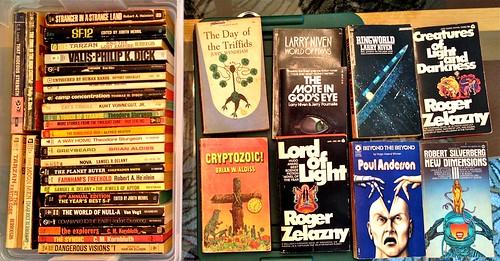
ADDED: Here's a photo I took in 2014 of SF paperbacks I had in a box in the closet:

Untitled

When I originally blogged that — here — I said:
I got the idea of reading all the sci-fi books in that box. They're from an era in the past. They are the selections of my ex-husband, and he left them in the house. Who knows what all I could bullshit about reading all that and riffing however the mood strikes me?

22 अगस्त 2017

Breitbart — now with Bannon — covers Trump's Afghanistan speech.

A screen shot of the front page right now:


Key word: "Flip-flop."

Seemingly ready-made joke that contains a pop-culture reference you might need to be over 40 to get: "…HIS MCMASTER’S VOICE."

Whether you get the reference or not, you might be interested to know that Wikipedia has a page for "His Master's Voice":
His Master's Voice, abbreviated HMV, is a famous trademark in the music and recording industry and was the unofficial name of a major British record label [parent of RCA]. The name was coined in the 1890s as the title of a painting of a dog....


[T]he dog, a terrier named Nipper, had originally belonged to Barraud's brother, Mark. When Mark Barraud died, Francis inherited Nipper, with a cylinder phonograph and recordings of Mark's voice. Francis noted the peculiar interest that the dog took in the recorded voice of his late master emanating from the horn, and conceived the idea of committing the scene to canvas....

In 1968, RCA introduced a modern logo and restricted the use of Nipper to the album covers of Red Seal Records. The Nipper trademark was reinstated to most RCA record labels in the Western Hemisphere beginning in late 1976 and was once again widely used in RCA advertising throughout the late 1970s and 1980s....
"His Master's Voice" is also the title of a sci-fi book by Stanisław Lem:
It is a densely philosophical first contact story about an effort by scientists to decode, translate and understand an extraterrestrial transmission.... [T]he scientists are able to use part of the data to synthesize a substance with unusual properties. Two variations are created: a glutinous liquid nicknamed "Frog Eggs" and a more solid version that looks like a slab of red meat called "Lord of the Flies" (named for its strange agitating effect on insects brought into proximity with it, rather than for the allegorical meaning of the name).... "Frog eggs" seems to enable a teleportation of an atomic blast at the speed of light to a remote location, which would make deterrence impossible....

By the time the project is ended, they are no more sure than they were in the beginning about whether the signal was a message from intelligent beings that humanity failed to decipher, or a poorly understood natural phenomenon.
But back to Breitbart. It's easier to understand than Lem's frog eggs. I'm not going to read all these articles. As a collection of headlines, they make a spicy first page, but I'm just going to use a sampling method by clicking on one. I choose "Flynn: An Old Casino King Doubles Down on a Bad Hand in Afghanistan." Flynn is a Daniel J. Flynn, not Michael Flynn, the general who used to have Trump's ear, and the headline distracted me into thinking Trump's old confidant had taken a swipe at him. No sooner do I succumb to the click than I get the feeling there's nothing here that isn't already understood from the headline, which now looks like a one-liner for a late-night talk-show host.

But Trump himself introduced the idea that he's playing a card game. From the text of the speech:
No one denies that we have inherited a challenging and troubling situation in Afghanistan and South Asia, but we do not have the luxury of going back in time and making different or better decisions. When I became President, I was given a bad and very complex hand, but I fully knew what I was getting into: big and intricate problems. But, one way or another, these problems will be solved -- I'm a problem solver -- and, in the end, we will win.
He didn't say "I was dealt a bad and very complex hand," nor did he say "we will play to win." He didn't stress the card-playing metaphor, and but — by using the word "hand" — Trump played into the hands of comedians and headline writers who easily connect his presidential rhetoric to his old work in the gambling business.

The term "double down" comes from blackjack: "to double the bet after one has seen the initial cards, with the requirement that one and only one additional card be drawn." That's the OED, which explains the extended use: "to engage in risky behaviour, esp. when one is already in a dangerous situation." I'm fascinated by one of the examples, from a 1991 set of essays by Joseph Epstein called "Line Out of a Walk."

Epstein's weird title is easily understood once you learn that the artist Paul Klee described how he draws by saying, "I take a line out for a walk." And if that interests you, remember I have a whole series of blog posts called "How to draw/paint like Paul Klee," including "Approximating biomorphs," which sounds frog-egg-related, and see how this blog post is taking a line out for a walk?

Anyway, Epstein's quote, illustrating how to use "double down," is "Let me double down..and see if I can't win some points for being a racist by asserting that, for some while now, black men have worn hats with more flair than anyone else in America."

And that's where this walk abruptly ends, because Amazon's "look inside" feature excludes the page with that quote and there's no Kindle edition. I'll just assume the venerable essayist is only joking about being a racist, back in 1991 when smart white people were comfortable with the notion that everyone is racist and exposing a detail of one's own particular racism felt like a mark of sophistication. 

12 जुलाई 2017

"After the entire movie had been inserted into the genome, the authors boiled the cells to extract the DNA and then sequenced the regions where they thought the encoded movie frames would be."

"After running the extracted sequences through a computer program, the team found they were able to play back their movie with 90% accuracy.... 'If there was a fitness cost [to the bacteria], you would imagine the information would be lost over time, but it doesn’t seem to cost the cell anything to have it'.... Encoding a short movie into cellular DNA is a neat trick, but Shipman said the work only represents a stepping stone toward his ultimate goal — building tiny biological recorders that can capture and store what is going on in a cell or in its environment. For example, Shipman is interested in learning what causes developing brain cells, which all look the same, to mature into one type of neuron or another. 'There are certain places we can’t go that a cell can go... The brain is locked away inside the skull, and these changes happen rapidly and all at the same time.'"

From "Who needs film when you can store a movie in bacteria DNA?" (in The L.A. Times).

Well, speaking of movies, this would be a good beginning for a science fiction movie. I like the idea of having the gung-ho scientist saying, "There are certain places we can’t go that a cell can go," and the more cautious scientist musing that There are certain places where we are not meant to go. That's all I've got so far, that and an idea for a name for one of the scientists, the female (who should be the gung-ho one): Edna.

5 जून 2017

When the NYT forgets about the Establishment Clause and public education.

I was stunned at something in the article "Climate Science Meets a Stubborn Obstacle: Students," which focuses on an Ohio public school teacher, James Sutter, who's having trouble getting his lesson across to a student named Gwen Beatty, who, we're told, is a straight-A student.
When she insisted that teachers “are supposed to be open to opinions,” however, Mr. Sutter held his ground.

“It’s not about opinions,” he told her. “It’s about the evidence.”

“It’s like you can’t disagree with a scientist or you’re ‘denying science,”’ she sniffed to her friends.

Gwen, 17, could not put her finger on why she found Mr. Sutter, whose biology class she had enjoyed, suddenly so insufferable. Mr. Sutter, sensing that his facts and figures were not helping, was at a loss. And the day she grew so agitated by a documentary he was showing that she bolted out of the school left them both shaken.

“I have a runner,” Mr. Sutter called down to the office, switching off the video.

He had chosen the video, an episode from an Emmy-winning series that featured a Christian climate activist and high production values, as a counterpoint to another of Gwen’s objections, that a belief in climate change does not jibe with Christianity.

“It was just so biased toward saying climate change is real,” she said later, trying to explain her flight. “And that all these people that I pretty much am like are wrong and stupid.”
A public school teacher chose a video for the purpose of presenting an argument based on Christianity?! It's supposed to be a science class. It's not a class about the history of religion or comparative religion. As the NYT presents it, the teacher was introducing religious material for the purpose of bolstering a scientific conclusion.

Here's the video. It's almost an hour long, and I haven't watched it yet.


I don't know how much religion is in the video, and I'm not giving a legal opinion on whether the teacher violated the Establishment Clause. We can discuss that. I just want to call out the New York Times for its inattention to the Establishment Clause, which it usually expects its readers to take very seriously, especially in the context of educating children.

It makes me suspect that those who are demanding that we believe in climate change really are operating in a religion mode and that does not inspire confidence in science.

And, really, why is it so important for Miss Beatty to believe in climate change? She has an active and inquisitive mind. Why not feed it and support it and empower her to go where she sees fit? Bullying her with demands for belief — even without the religion larded in — isn't likely to inspire her to take on a STEM career.

I'd like to read the comments on this NYT article, but — despite the paper's new reliance on comments in lieu of a Public Editor — comments are not enabled for this one.

ADDED: "I have a runner" — that's weird. They have a word for kids like her? "Runner" made me think of "Logan's Run":
In the year 2274, the remnants of human civilization live in a sealed city contained beneath a cluster of geodesic domes... The citizens live a hedonistic life but, to maintain the city, everyone must undergo the ritual of Carousel when they reach the age of 30... [E]ach person is implanted at birth with a "life-clock" crystal in the palm of their hand that changes color as they get older and begins blinking as they approach their "Last Day." Most residents accept this promise of rebirth, but those who do not and attempt to flee the city are known as "Runners." An elite team of policemen known as "Sandmen"... are assigned to pursue and terminate Runners as they try to escape....

RUNNER!

2 जून 2017

"Science fiction gave people more false hope than two thousand years of Bibles... It was all lies!"

"The space program... It was a hollow, vaunting waste of taxpayers’ money. There is no future in space! I love the word— space! That’s what they were all discovering— empty space!... This is the future.... A little motor in a little boat, on a muddy river. When the motor busts, or we run out of gas, we paddle. No spacemen! No fuel, no rocket ships, no glass domes. Just work! Man of the future is going to be a cart horse. There’s nothing on the moon but ruts and pimples, and those of us who have inherited this senile exhausted earth will have nothing but wooden wheels, pushcarts, levers, and pulleys— the crudest high school physics, that they stopped teaching when everyone flunked it and started reading science fiction. No, it’s grow your own or die. No green pills, but plenty of roughage. Hard backbreaking work— simple, but not easy. Get it? No laser beams, no electricity, nothing but muscle power. What we’re doing now! We’re the people of the future, using the technology of the future. We cracked it!"

Paul Theroux, "The Mosquito Coast" (Kindle Locations 4972-4980).

A passage from a book I just finished that sprang to mind when I read this:
Microsoft co-founder Paul Allen has spent the last six years working on a giant aircraft capable of launching rockets to space. It's not quite ready to fly, though. Over the next few days, each of the six fuel tanks will be filled independently to make sure that the tanks are properly sealed and that the fueling mechanisms work. How big is it? On a football field, the wingtips would extend beyond the goalposts by more than 12 feet on each side. Video of the rollout here.
At least he's using his own money. What's the carbon footprint? 6 fuel tanks... not very Paris Accord-y. 

20 मई 2017

The day in disgust.

What's been disgusting people in the last 24 hours? I wondered, after blogging something that disgusted Meade and me and noticing the the new post went on top of yesterday's post about Comey being "just completely disgusted" when Trump subjected him to a handshake.

Here's what I've come up with:

1. The avolatte. "Yes, this is a latte served inside of an avocado. Look at it. It’s sickening."

2. What's that white thing that seems to be growing out of your child's gums? It's not some weird new disease, just some fingernail bitings. One woman — who ultimately tweezed out 27 shreds — made video of her adventure in her son's mouth and posted it on Facebook. The son's name — if this is relevant to analyzing her level of vigilance about health matters — is Kale.

3. "If Trump took a dump on his desk, you would defend it," said Anderson Cooper last night to his guest Jeffrey Lord.

4. In Japan, promoting the movie "Tokyo Ghoul," there's a Tokyo Ghoul café. Here's the website for the café with some pictures from the comic book and the dishes intended to evoke them. (Here's a trailer for the new movie.)

5. I avoided the hoo-ha over the men's romper, but maybe I can catch the wave on the jeado. "Real men wear speedos, but it takes a confident man to wear a jeado."

6. "It's not that Trump isn't or shouldn't be frightening. But it's conspicuous that our media landscape is now a perfect Ailes-ian dystopia, cleaved into camps of captive audiences geeked up on terror and disgust. The more scared and hate-filled we are, the more advertising dollars come pouring in, on both sides."

7. From "'Alien' Is Sci-Fi Horror's Most Feminist Movie Franchise," by Tom Seymour: "The Alien movies visualize the two things so many men look upon with disgust and horror—getting penetrated themselves, and watching a woman giving birth... In the Alien films... moments of rape are always moments of impregnation. They provide a dual, intensified horror."

8. From "As Indians, we take our cotton heritage too lightly": "Remember the outrage last year in the US when an Indian supplier of 'Egyptian cotton' bedsheets to major department stores was found to have used other cotton? The disgust and horror was akin to sturgeon caviar being found to have been diluted with dyed salmon roe or horsemeat being detected in so-called beef products in UK. But how many know that India also produces... an equally wonderful ESL cotton variety, albeit rather unimaginatively named Suvin, the result of a 'marriage' of a local cotton gal 'Sujatha' with a Caribbean cotton lad called St Vincent in the mid-1970s?"

9. "Where do we draw the line on sledging?" I don't know. I had to figure out what "sledging" even is. Fortunately, there's an entire Wikipedia article on this cricket-specific issue: "Sledging is a term used in cricket to describe the practice whereby some players seek to gain an advantage by insulting or verbally intimidating the opposing player.... There is debate in the cricketing world as to whether this constitutes poor sportsmanship or good-humoured banter."

10. "Found this while doing yard work. My brother asked why women would buy baseball themed pads."