That year, he memorably condemned Joseph Stalin on a broadcast and gave a dramatic reading of the burial scene in Shakespeare’s 'Julius Caesar' with the names of prominent Soviet leaders substituting for Caesar and his circle. 'Stalin must one day meet his judgment,' the archbishop intoned. Stalin died after a stroke the next month...."
From "U.S. Archbishop Will Be Beatified, One Step Away From Sainthood/The move involving Archbishop Fulton J. Sheen, who hosted a popular midcentury radio and TV show and died in 1979, ends a six-year delay" (NYT).
"The case for Archbishop Sheen’s canonization had been delayed by two hurdles. Most serious was a request by the diocese of Rochester, N.Y., where Archbishop Sheen served as a bishop for several years in the 1960s, for a review of 'his role in priests’ assignments.' That stemmed from a concern that he may have overlooked sexual abuse by at least one priest in the diocese.... The other obstacle was an unusual dispute over the archbishop’s remains between the archdiocese of New York and the much smaller diocese of Peoria...."
saints लेबल असलेली पोस्ट दाखवित आहे. सर्व पोस्ट्स दर्शवा
saints लेबल असलेली पोस्ट दाखवित आहे. सर्व पोस्ट्स दर्शवा
१० फेब्रुवारी, २०२६


२८ डिसेंबर, २०२५
"Althouse takes boxing day pretty seriously."
Said Old and slow in last night's open thread, "Sunrise — 7:13." It was only the second post of the day. The first, "Tea with Larry," at 9:29 a.m., was also an open thread. It consisted of 2 photographs and the single sentence, "It's a no-news Saturday, the day after the day after Christmas."
It was the day after the day after Christmas. But it was not Boxing Day. Boxing Day is the day after Christmas, and there were 5 posts on Boxing Day. So what was this day after the day after Christmas? Do we call it nothing but the day after the day after Christmas (or, if we say Boxing Day, the day after Boxing Day)?
It is the Feast of St. John the Apostle and Evangelist. Those who have grown weary of the Christmas holiday might turn to the Feast of St. John the Apostle and Evangelist for fresh inspiration.
But now it is December 28th. Is it a back to normal day? Will scanning the headlines in the usual way yield blog posts with the natural flow that is my long custom? If not, is it a day with a name — like Christmas, Boxing Day, and the Feast of St. John the Apostle and Evangelist — a day we might observe with special activities?
It is a special day, but it's a day I wouldn't want to focus on: It is the Feast of the Holy Innocents:
The Feast of the Holy Innocents was one of a series of days known as the Feast of Fools, and the last day of authority for boy bishops. Parents temporarily abdicated authority. In convents and monasteries the youngest nuns and monks were allowed to act as abbess and abbot for the day. These customs, which were thought to mock religion, were condemned by the Council of Basel (1431). In medieval England children were reminded of the mournfulness of the day by being whipped in bed in the morning; this custom survived into the 17th century....
१० नोव्हेंबर, २०२५
"I no longer can bear to be restrained by what judges can say publicly or do outside the courtroom."
Writes Mark L. Wolf, 78, who has been on senior status as a federal judge since 2013. He's stating a downside of being a judge.Wolf's column, in The Atlantic, is called "Why I Am Resigning/A federal judge explains his reasoning for leaving the bench" (gift link). It begins:
In 1985, President Ronald Reagan appointed me as a federal judge. I was 38 years old. At the time, I looked forward to serving for the rest of my life. However, I resigned Friday, relinquishing that lifetime appointment.... When I became a senior judge in 2013, my successor was appointed, so my resignation will not create a vacancy to be filled by the president.
Despite being a Reagan judge at the time of appointment, Wolf handed the power to appoint the next judge to President Obama. Wolf is sloughing off senior status to gain a power for himself, the power to speak freely. And what he wants to talk about is Trump's "assault on the rule of law." He ends the column by quoting RFK Sr. — "Each time a man stands up for an ideal, or acts to improve the lot of others, or strikes out against injustice, he sends forth a tiny ripple of hope" — and the poet Seamus Heaney — the “longed-for tidal wave of justice can rise up, and hope and history rhyme.”
ADDED: For more detail on that Seamus Heaney line, here's Bill Clinton:
२० सप्टेंबर, २०२५
"When I heard the tragic news, I said, ‘I wonder who he was.’ And then all of a sudden, this overwhelming... sense of sorrow and kind of renewal."
"And I thought, I gotta learn about this guy. And the more I learned about him, I thought, this guy's a modern day Saint Paul. He was a missionary, he's an evangelist, he's a hero. He's one, I think, that knew what Jesus meant when he said: The truth will set you free.... Now, I understand he was pretty blunt and he was pretty direct. He didn't try to avoid any controversy. He didn't even try to avoid confrontation. The difference is the way, the mode, the style that he did it, always with respect. And not only was that a gracious... virtuous thing to do, it's effective, 'cuz when your opponents see this guy respects me, we kinda disagree here, but he kinda enjoys me, and he's thanking me for being here, and he's telling me he appreciates the trust I have in him in sharing my views. I thought: This guy can teach us something."
Said Cardinal Dolan:
Said Cardinal Dolan:
I want to relate this to a post I wrote the day after the assassination that some readers objected to but that I defended as "as a serious invitation to contemplate Kirk as a saint."Cardinal Dolan says he spent the past week studying Charlie Kirk’s life, and the more he learned, the more he saw him as a modern-day Saint Paul.
— Benny Johnson (@bennyjohnson) September 19, 2025
A fearless missionary, a passionate evangelist, and a true hero.
“When I heard the tragic news, I said, ‘I wonder who he was.’ And… pic.twitter.com/p77aAPOQGB
I knew at the time this question was complicated for Catholics because of their official procedure for canonization, and I observe that Cardinal Dolan — an excellent speaker — avoids directly declaring Charlie Kirk a "saint." He doesn't say "Saint Charlie," but he does declare Kirk "a modern day Saint Paul" — and "a missionary," "an evangelist," and "a hero." I'm not Catholic, and I don't know where the official line is, but the Cardinal seems to be stepping forthrightly up to the line. I think Cardinal Dolan knows exactly what he's saying and deploys clear language perfectly.
१२ सप्टेंबर, २०२५
"I think what the enemy intended for evil, the Lord will use for good. We will see what the Lord does through it."
Said Jeff Schwarzentraub of the BRAVE Church in Denver, quoted in "Kirk’s Christian Supporters Mourn Him as a Martyr/'Charlie died for what he believed in,' said Jackson Lahmeyer, a pastor in Oklahoma" (NYT).
I'm interested in the concept of Charlie Kirk as a "martyr." I wrote post yesterday inviting people to contemplate Kirk as a "saint." If you're inclined to think that Kirk was too political to fit this religious conception, here he is in his own defense:
I'm interested in the concept of Charlie Kirk as a "martyr." I wrote post yesterday inviting people to contemplate Kirk as a "saint." If you're inclined to think that Kirk was too political to fit this religious conception, here he is in his own defense:
११ सप्टेंबर, २०२५
"Charlie is already in paradise with the angels"/"We take comfort in the knowledge that he is now at peace with God in heaven."
Said RFK Jr. and Donald Trump.
Questions I asked ChatGPT:
1. Were they attesting to Charlie Kirk's sainthood?
2. If you had to argue that Charlie Kirk should be canonized what would you say?
3. Outside of the Catholic Church how is sainthood talked about?
Answers here.
ADDED: Those questions were posed to ChatGPT, not Grok, as I'd written before. Here, I've given Grok a chance.
AND: This post was written as a serious invitation to contemplate Kirk as a saint. He presented his efforts as for his faith. Asked how he would want to be remembered, if he were to die, he said: "I want to be remembered for courage for my faith. That would be the most important thing."
१९ जुलै, २०२५
"The cool thing is, the more you think about the miracle itself, Father Valera lives in the 19th century. He never came to the U.S. We have no knowledge of him coming here. Never came to Rhode Island."
"And yet, because the doctor called out and called upon his name for help in the situation back in ‘07 on behalf of that little baby, he decided to intervene and ask God for a miracle."
Said Reverend Timothy Reilly of the Roman Catholic Diocese of Providence, quoted in "Pope Leo XIV declares a miracle at Rhode Island hospital, crediting prayer with saving baby’s life in 2007" (NY Post).
The baby, Tyquan Hall, was delivered in Rhode Island and expected to die, but the doctor, Juan Sanchez, who was from Huercal-Overa, Spain, prayed for intercession from his region’s patron, Father Valera Parra, who lived in Huercal-Overa from 1816 to 1889.
१५ जुलै, २०२५
"Five Catholic saints are on the list, including Elizabeth Ann Seton.... However, there is not a single female athlete, unless you count sharpshooter Annie Oakley."
१३ ऑक्टोबर, २०२४
Does this NYT illustration intentionally evoke the classical image of the martyrdom of St. Sebastian?
I wouldn't think, in the aftermath of 2 assassination attempts on Donald Trump, that the NYT would want us to make the association, but here is the image:
And here is the Renaissance painting by Andrea Mantegna:

Like Trump in Butler, Pennsylvania, Sebastian did not die from this shooting (though he was soon killed):

११ सप्टेंबर, २०२४
"Maybe you, too, have an unreasonable fear that is leaching the color from your life."
"Maybe you remedy this through walking, meditation or therapy. I recommend picking a saint to help you. The 'saint' doesn’t have to be a literal, official Catholic one — they can be anyone who rejected a life of maximal self-interest in favor of radical service, someone whose commitment to the rigors and contradictions of doing good in this world can show you how to live in it. My saint is Brother Lawrence, a 17th-century soldier turned Carmelite friar. He had a gift for savoring dull chores, like peeling vegetables and washing pots, which he did for most of his time on Earth...."
२ जुलै, २०२४
"The image is saintly."
Announces Washington Post fashion writer Rachel Tashjian, in "Jill Biden is Vogue’s cover star. What timing. The first lady covers Vogue for the third time, positioned by the magazine as a savior of the country’s fate."


Here's the image:

Tashjian proclaims that "a striking, fascinatingly out-of-character image in its storytelling." What's the usual "character"? More smiley? More of a sidekick? I really don't know. Do you? We're told "the religious undertones are startling": "Her pose and visage, not to mention the color of her dress, recall religious paintings of saints communing with their higher power."
IN THE COMMENTS: Rafe — short for Raphael? — says "Which paintings? What a lazy comparison, to paintings which only exist, apparently, in her mind."
I went looking for paintings of saints gazing upward. There's this, by Raphael:
Notice that Catherine's hands do not hang limply at her sides. They are expressive of ecstasy and placed in locations that would seem truly odd on a modern-day politico. Unlike Jill, she's got her weight shifted to one side, and also unlike Jill, she's leaning on what we know to be the device used to torture-murder-martyr her. Jill exists in an empty brown-gray void.
But it's the difference in the eyes that is most striking. Jill's eyes are rotated sideways, and only slightly upward, as if she is gazing fondly at her somewhat tall husband. They're not fixed on Heaven.
Can we find paintings of saints with eyes rotated sideways, which seems mildly coy? Consider the entirely un-Jill-like Saint Lucy:
२७ मार्च, २०२४
"The seventeenth-century friar Joseph of Cupertino flew so often, so extravagantly, so publicly, that he forced everyone around him..."
"... to confront the boundary between the inexplicable and the impossible... Crowds of people came to see the spectacle... So many came to see him that the friars had to remove tiles from the roof so the masses could watch him fly during the liturgy. He levitated constantly, understandably annoying his fellow friars—what with the shrieking, the soaring, the streaming crowds. He eventually annoyed the Inquisition, too, and was charged with feigned sanctity. He levitated on the way to his trial. The examiners gave him a stern warning, and the Inquisition would monitor him for the rest of his life.... Joseph understood his body as his medium. He starved it, whipped it, abused it violently for decades. Did he starve himself into lightness, with his diet of beans and rotting vegetables? According to hagiographers, when he was dying he called his body asino, or 'jackass.' During his final illness: 'The jackass has now begun to climb the mountain.' On the brink of death: 'The jackass has reached the top of the mountain. He can no longer move. He will have to leave his hide here.'..."
Writes Erin Maglaque in "Wings of Desire/A gullible new book raises the question of how we should interpret the history of the supernatural in early modernity" (NYRB). The book under review is "They Flew: A History of the Impossible" by Carlos M.N. Eire.
Writes Erin Maglaque in "Wings of Desire/A gullible new book raises the question of how we should interpret the history of the supernatural in early modernity" (NYRB). The book under review is "They Flew: A History of the Impossible" by Carlos M.N. Eire.
Maglaque continues:
२५ ऑगस्ट, २०२२
"More alienated Latinos are turning to unofficial saints."
La Santa Muerte, a skeleton figure that resembles the Grim Reaper, is the most well-known.... Although originally tied to cartels, devotees now include members of LGBTQ+ communities and the middle class.
११ मार्च, २०२२
"Liz Pickard, an office worker from Denver, was raised Episcopalian, but discovered the story of Brigid on an earlier visit to Ireland."
"She came to Solas Bhride this year for a weeklong stay in its hermitage. 'I was searching for meaning and she gives so much meaning,' Ms. Pickard said. 'Right now, if you go down a certain road with religion, there’s a lot of pain caused by these people, but with Brigid, I think there’s a lot of kindness, and a lot of service and courage.' Two sisters, Georgina O Briain and Caragh Lawlor, sat in the calm of Solas Bhride’s central prayer space on Saint Brigid’s Day, quietly weaving rush crosses... 'Brigid was both Christian and pagan, a mix of the two, and while I’m not very religious, I am very spiritual, and she brings it together for me,' Ms. O Briain said.... Tellingly, Brigid’s Christian nuns maintained a pagan-style fire shrine on the grounds of her abbey, even after the Anglo-Norman invasion of Ireland in the 12th century, in which the English monarchy imposed strict Roman Catholic doctrine on the independent-minded Celtic church of Brigid, Patrick and Columba — Irelands’ trio of patron saints...."
I didn't know the legend: "Around the year 480... a freed slave named Brigid founded a convent under an oak in the east of Ireland. To feed her followers, she asked the King of Leinster, who ruled the area, for a grant of land. When the pagan king refused, she asked him to give her as much land as her cloak would cover. Thinking she was joking, he agreed. But when Brigid threw her cloak on the ground, it spread across 5,000 acres — creating the Curragh plains...."
Here's the Wikipedia article "Curragh." An excerpt:
There has been a permanent military presence in the curragh since 1856... Records of women, known as Wrens of the Curragh, who were paid for sex work by soldiers at the camp, go back to the 1840s. They lived in 'nests' half-hollowed out of banks and ditches, which were covered in furze bushes....
Nowadays, the pagan-curious ex-Episcopalians traveling to commune with St. Brigid might gaze longingly at an "offbeat" Airbnb "nest" — a half-hollowed-out bank covered in furze bushes.
७ मार्च, २०२२
"The relics believed to be of St. Nicholas were brought from present-day Turkey by sailors 1,000 years ago, and his bones have been entombed in Bari ever since...."
"The presence of the relics has long made Bari an unusual linchpin in relations between Italy and Russia and between the Roman Catholic and Russian Orthodox churches.
In 2007, Mr. Putin himself came to Bari and knelt in front of St. Nicholas’s tomb, just as the faithful did during the prayer for peace.... Larisa Dimetruk, 62, from Lutsk in northwestern Ukraine, said she came to beseech St. Nicholas to make the Russians 'stop their president.' 'Only the people can stop him,” she said. 'We didn’t come here to pray together. We came here for a miracle.'... Others simply felt torn and had no interest in talking politics. 'We’ve all run out of tears,' said Olga Sebekina, from St. Petersburg, Russia, who said her grandmother was Ukrainian and that she still had family there. 'Which side of my heart should break more?'"
२४ सप्टेंबर, २०२१
"One night I was at party and was introduced to a woman named Reparata, so..."
"... I mentioned this record and group and she said, 'Yeah; that was me. I'm Reparata.' I thought I'd smoked something funny at the party, but she and I ended up talking about music and it was quite apparent she indeed was Reparata! She was very cool."

From the comments at...
Here's the Wikipedia page for Reparata and the Delrons. "Whenever a Teenager Cries" came out in 1965, and I don't know why it's not familiar to me, since I listened to everything on the radio in the actual year 1965 and have spent many hours listening to the 60s satellite radio channel in the last 20 years.
I stumbled into that song as I was researching the great song from 1960, "Angel Baby," originally by Rosie and the Originals. Looking that up on Spotify, I saw there was a version by Reparata and the Delrons. With a name like that, I thought they were some sort of tribute to or spoof of girl groups, maybe from the 1970s. But no, they were a real 60s group:

That's Mary "Reparata" Aiese on the right.
They asked Mary Aiese to choose a stage name to make the group name more interesting and marketable. She chose Reparata, her confirmation name, which she had taken from one of her favorite teachers at Good Shepherd Catholic grammar school.Reparata sounded vaguely punk to me, but in fact, it is a saint's name:
१७ डिसेंबर, २०२०
"God in his wisdom has provided man with natural forks—his fingers. Therefore it is an insult to him to substitute artificial metal forks for them when eating."
Said a member of the clergy after in Maria Argyropoulina, in 1004, showed up from Greece for her wedding in Venice with forks (according to a post at Culinaria).
Argyropoulina died of the plague 2 years later, and — what do you have to do to be a saint?! — Saint Peter Damian said: “Nor did she deign to touch her food with her fingers, but would command her eunuchs to cut it up into small pieces, which she would impale on a certain golden instrument with two prongs and thus carry to her mouth. . . . this woman’s vanity was hateful to Almighty God; and so, unmistakably, did He take his revenge. For He raised over her the sword of His divine justice, so that her whole body did putrefy and all her limbs began to wither.”
Here's the Wikipedia article on Saint Peter Damian. Highlights: "[H]e introduced a more-severe discipline, including the practice of flagellation... Another innovation was that of the daily siesta...
Peter often condemned philosophy. He claimed that the first grammarian was the Devil, who taught Adam to decline deus in the plural. He argued that monks should not have to study philosophy, because Jesus did not choose philosophers as disciples, and so philosophy is not necessary for salvation."
So with Damian you get to slough off the difficult studies and take naps... but you've got to self-flagellate. Now, that might seem weird, but it's a trade-off of a sort that lots of people would choose to make if given crisply stated options.
११ ऑक्टोबर, २०२०
"He saw that many young people, wanting to be different, really end up being like everyone else... As a result, Carlo said, 'everyone is born as an original, but many people end up dying as photocopies.'"
Said Pope Francis, quoted in "Teen one step from becoming first millennial saint" (France 24). The teen is Carlo Acutis, who died of leukemia at the age of 15 and who made a website about miracles and now has been credited with one miracle.
Should Acutis later be credited with the second miracle necessary for sainthood, supporters have suggested he could become the Patron Saint of the internet -- though there already is one, 7th-century scholar Isidore de Seville.Here's the Wikipedia article on Isidore de Seville. It says: "The Order of St. Isidore of Seville... a chivalric order formed on 1 January 2000. An international organisation... aims to honour Saint Isidore as patron saint of the Internet...." So I wonder if it's true that this man of the 7th century is already the Patron Saint of the Internet. There's a link to this 2002 Wired article:
A group of Vatican elders is angling to give the Internet a patron saint – a holy helper with a dedicated connection to the Divine. The church's leading candidate is a seventh-century Spanish encyclopedist, Saint Isidore of Seville (560-636). A theologian and a scholar, Isidore was best known for his massive, 20-volume Etymologiae, an attempt at compiling all the world's knowledge, covering grammar, medicine, law, geography, agriculture, theology, cooking and all points between....
Discordantly enough, Isidore was "the last scholar of the ancient world," according to the Wikipedia article. Most impressive to me is that he invented 3 punctuation marks: the period, the comma, and the colon! Is that really true? I found this — "The mysterious origins of punctuation" (BBC):
१९ सप्टेंबर, २०२०
Let's look at Ginsburg's language: "I will not be replaced until a new president is installed."
That is the form of her dying wish, as told to us by her granddaughter Clara Spera, who is a fellow at the American Civil Liberties Union. It is hearsay, and we don't know for certain that Ruth Bader Ginsburg said those words at all — though of course we assume that the basic idea expressed is something that she did indeed wish. But did she use the verbs "replaced" and "installed"? Is that Spera's paraphrase?
The words sound wrong to me, especially "installed." We normally speak of electing a President. If you look up the words "install" and "president" in the New York Times archive, the relevant hits are about colleges and professional organizations "installing" a president. There, a president is chosen by an elite group, not by the people.
I read through a long page of old NYT headlines and finally arrive at one that looks like it may be a political leader: "Silurians Install President" (April 16, 1963). Who are Silurians?! Is Siluria some country that has escaped my attention all these years?

Click to enlarge and clarify. Key line: "The Silurians is an association of men who have been on New York City newspapers for 25 years or more." Another professional organization, the sort of thing that installs its president.
You see my point. It is a strange and revealing word choice. And if there's one thing you can say about Donald Trump, it's that he was not installed. The 2016 election was a populist expression that gobsmacked the elite. If Hillary had won, it might make some sense to declare that she was "installed."
Ah! And now you see a motivation for Ginsburg's use of "installed." If Biden wins — which is what Ginsburg hoped for (and "a new president" implies) — it really is more of an installation. The Democratic Party elite have been working to install him. It's not his own doing. It was a reaction against the populist expression that had Bernie Sanders winning in the primaries.
When I hear "installed," I think of appliances — dishwashers, refrigerators — that need to be positioned and hooked up by licensed professionals. That resonates with the Biden story... except that no one would install an appliance so superannuated and marginally functional.
And I don't like the use of the word "replaced" either. Ginsburg filled a seat, seat #6, established February 24, 1807. She was the 13th person to sit there. "I will not be replaced until..." suggests a sense that there ought to be a new version of her, someone who will carry on as she would have. But she took over that seat from Byron White. Was there any sense that she was supposed to be like him? She certainly wasn't. The seat belongs to all of us. Just as we control who is elected President, we have a collective interest in that seat, which now needs to be filled.
Justice Ginsburg exercised her own will by holding on to the seat despite grave illness, and there was some ability to choose who would take her place, but the force of nature kept her from completing that task. The Constitution gives the appointment power to the President, and a Supreme Court Justice cannot grab that power from him.
The Constitution has its complicated method for determining who will be President. I won't elaborate on it here, but it does have something to do with what we, the people, want. The last time we cranked through the mysterious process, Trump popped out. It was very weird! But he is the President, and a Supreme Court Justice has vacated a seat.
We can make political arguments that Trump should wait and let us make filling that seat an issue in the election. I'd love to see Trump and Biden debate and give us the question: What kind of Justice we want?
Biden was chair of the Judiciary Committee for so long. Let's grill him about what he did to Robert Bork and Clarence Thomas. Let's ask him to show us his list of potential nominees as President Trump has. I think that would be great. But I also think that if the tables were turned and a Democratic President had a Democratic Senate, we'd get the nomination and confirmation quickly and without fussing about inferred principles that have nothing to do with the text of the Constitution.
ADDED: Wikipedia: "The Silurian is a geologic period and system spanning 24.6 million years from the end of the Ordovician Period, at 443.8 million years ago (Mya), to the beginning of the Devonian Period, 419.2 Mya. The Silurian is the shortest period of the Paleozoic Era.... A significant evolutionary milestone during the Silurian was the diversification of jawed fish and bony fish."

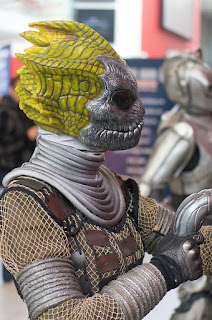
But also: "The Silurians are a race of reptilian humanoids in the long-running British science fiction television series Doctor Who.... The first Silurians introduced are depicted as prehistoric and scientifically advanced sentient humanoids who predate the dawn of man; in their backstory, the Silurians went into self-induced hibernation to survive what they predicted to be a large atmospheric upheaval caused by the Earth capturing the Moon."
ALSO: From the OED entry, "install":
The words sound wrong to me, especially "installed." We normally speak of electing a President. If you look up the words "install" and "president" in the New York Times archive, the relevant hits are about colleges and professional organizations "installing" a president. There, a president is chosen by an elite group, not by the people.
I read through a long page of old NYT headlines and finally arrive at one that looks like it may be a political leader: "Silurians Install President" (April 16, 1963). Who are Silurians?! Is Siluria some country that has escaped my attention all these years?

Click to enlarge and clarify. Key line: "The Silurians is an association of men who have been on New York City newspapers for 25 years or more." Another professional organization, the sort of thing that installs its president.
You see my point. It is a strange and revealing word choice. And if there's one thing you can say about Donald Trump, it's that he was not installed. The 2016 election was a populist expression that gobsmacked the elite. If Hillary had won, it might make some sense to declare that she was "installed."
Ah! And now you see a motivation for Ginsburg's use of "installed." If Biden wins — which is what Ginsburg hoped for (and "a new president" implies) — it really is more of an installation. The Democratic Party elite have been working to install him. It's not his own doing. It was a reaction against the populist expression that had Bernie Sanders winning in the primaries.
When I hear "installed," I think of appliances — dishwashers, refrigerators — that need to be positioned and hooked up by licensed professionals. That resonates with the Biden story... except that no one would install an appliance so superannuated and marginally functional.
And I don't like the use of the word "replaced" either. Ginsburg filled a seat, seat #6, established February 24, 1807. She was the 13th person to sit there. "I will not be replaced until..." suggests a sense that there ought to be a new version of her, someone who will carry on as she would have. But she took over that seat from Byron White. Was there any sense that she was supposed to be like him? She certainly wasn't. The seat belongs to all of us. Just as we control who is elected President, we have a collective interest in that seat, which now needs to be filled.
Justice Ginsburg exercised her own will by holding on to the seat despite grave illness, and there was some ability to choose who would take her place, but the force of nature kept her from completing that task. The Constitution gives the appointment power to the President, and a Supreme Court Justice cannot grab that power from him.
The Constitution has its complicated method for determining who will be President. I won't elaborate on it here, but it does have something to do with what we, the people, want. The last time we cranked through the mysterious process, Trump popped out. It was very weird! But he is the President, and a Supreme Court Justice has vacated a seat.
We can make political arguments that Trump should wait and let us make filling that seat an issue in the election. I'd love to see Trump and Biden debate and give us the question: What kind of Justice we want?
Biden was chair of the Judiciary Committee for so long. Let's grill him about what he did to Robert Bork and Clarence Thomas. Let's ask him to show us his list of potential nominees as President Trump has. I think that would be great. But I also think that if the tables were turned and a Democratic President had a Democratic Senate, we'd get the nomination and confirmation quickly and without fussing about inferred principles that have nothing to do with the text of the Constitution.
ADDED: Wikipedia: "The Silurian is a geologic period and system spanning 24.6 million years from the end of the Ordovician Period, at 443.8 million years ago (Mya), to the beginning of the Devonian Period, 419.2 Mya. The Silurian is the shortest period of the Paleozoic Era.... A significant evolutionary milestone during the Silurian was the diversification of jawed fish and bony fish."

But also: "The Silurians are a race of reptilian humanoids in the long-running British science fiction television series Doctor Who.... The first Silurians introduced are depicted as prehistoric and scientifically advanced sentient humanoids who predate the dawn of man; in their backstory, the Silurians went into self-induced hibernation to survive what they predicted to be a large atmospheric upheaval caused by the Earth capturing the Moon."

ALSO: From the OED entry, "install":
1817 S. T. Coleridge Biogr. Lit. I. iii. 60 It is said that St. Nepomuc was installed the guardian of bridges because he had fallen over one, and sunk out of sight....
२६ डिसेंबर, २०१९
St. Stephen... "stoned to death... the patron saint of deacons, horses, coffin makers & masons."
Today is the Feast of St Stephen, the 1st Chrisatian martyr, stoned to death in Jerusalem. Stephen is the patron saint of deacons, horses, coffin makers & masons. He is represented carrying a pile of rocks or with rocks on his head. Appropriately he is the Saint of headaches too. pic.twitter.com/9fIOtGME5A
— Professor Lloyd Llewellyn-Jones (@LloydLlewJ) December 26, 2019
याची सदस्यत्व घ्या:
पोस्ट (Atom)


 पोस्ट्स


