Shirley Temple లేబుల్‌తో ఉన్న పోస్ట్‌లను చూపుతోంది. అన్ని పోస్ట్‌లు చూపించు

5 ఆగస్టు, 2022

Joe Rogan and Whitney Cummings find the pedophilia in Shirley Temple movies.


I've blogged about that "Baby Burlesque" before. When Temple died in 2014, listing all my earlier blogging of the great child actress, I wrote: 
April 29, 2009, a controversy over a photographic presentation of teenaged Miley Cyrus looking overly sexualized led me to show you this clip of Shirley Temple as a toddler playing a seductress. It's simply astounding by today's standards....

It was interesting to watch Rogan seeing this craziness for the first time. Whitney Cummings did an excellent job with the running commentary.

13 ఫిబ్రవరి, 2019

Kamala Harris is "bluntly putting down markers on nuanced topics to help inoculate her from false critiques with answers that also illuminate how she views her own identity."

That's from Politico, "Why Kamala Harris is glad people are asking if she's black enough/The candidate is looking to head off a problem that dogged Barack Obama" by Christopher Cadelago.

First, I don't believe that Politico knows that Harris is "glad." Also, I wouldn't use the word "dogged" with Barack Obama, given that he was dogged with the question of the literal eating of dogs.

But what I want to do is count the metaphors in the quote I put in the title:

1. bluntly — The adjective leads us to think we'll be referring to something that could be sharpened — like a weapon or a pencil — but in this case is not.

2. putting down markers — "A marker, to a gambler, is an I.O.U. ... The gambler's definition of marker as 'promissory note'' appeared first in 1887, but was popularized in Damon Runyon's 'Guys and Dolls'' in 1932: 'Now I am going to pay my landlady, and take up a few markers here and there, and feed myself up good.' A 1934 film based on a Runyon tale about a little girl used as an I.O.U. was titled 'Little Miss Marker.''' Wrote William Safire, a while back, in the NYT. (Here's the film clip with Shirley Temple as an IOU in human form.)

3. nuanced — "Nuance" comes from words that mean cloud. We're talking about subtlety in shading. How could you in an unsharp way put an IOU on a cloud?

4. inoculate — To inoculate is to engraft or implant. The "ocu" part actually means "eye," because it was a plant eye that was engrafted. We now have to think of the IOU as something that, engrafted into a cloud, is like the germs put into the human body to produce immunity from the disease that would be caused by those germs if the body had encountered them in some other way. The disease in this image is "false critiques," and the immunity is "answers." This is the one metaphor the writer probably thought about consciously. A good writer would notice that this is the central, useful metaphor and edited out any hint of a metaphor that doesn't fit — including "dead metaphors" like "bluntly." (Here's George Orwell on dead metaphors.)

5. illuminate — Now, it's about giving light. The light source is the "answers," but, as we just saw, within the inoculation metaphor, the answers were immunity. Immunity resists disease. That's a good thing. Let the answers be good in that form. Don't change them into something else that you think is good. I like light, but you're annoying me with the task of picturing light along with sharpness, gambling, clouds, and inoculation.

In short, don't mix metaphors. And I miss William Safire. I should read a lot of his old columns and get some ideas about how to write the kinds of things I'd like to be able to just read, but he's not there anymore to write them for me.

26 డిసెంబర్, 2017

"There is darkness in 'Child Star,' of course. The passage that I clung to as a child, like a favored, glamorous nightmare..."

"... was about a woman whose daughter died the hour Shirley [Temple] was born. In 1939, the woman tried to assassinate Shirley while she was singing 'Silent Night' on a live radio show, under the logic that the star had swiped her daughter’s soul and shooting her would unleash it. 'The tale seemed understandable to me,' Temple writes. When I first read 'Child Star,' perched by the cold cuts at one of my sister’s swim meets, I loved the idea that Shirley Temple’s soul was endlessly transferrable, and as sought-after as the Maltese Falcon. I remember eating a slice of ham so ribbony and translucent that you could bird-watch through it, and wondering whether couples across America were timing their childbirths to synch with Temple’s death.... So my sister and I joined the legions of Shirley mimics—like Andy Warhol, who became obsessed with her after seeing 'Poor Little Rich Girl' and... aped her mannerisms 'for the rest of his life…folding his hands in prayer and placing them next to his cheek, or twisting them together and holding them out to the right just below his waist.' This remains Temple’s peculiar feat: she makes children want to be adorable and sickly sweet and dull, to flatten their emotions out. It’s hard to imagine any subsequent child star surviving an assassination attempt and thinking simply, 'The tale seemed understandable to me.' (In 1981, Jodie Foster would respond to the Hinckley incident by sinking into depression, demanding to read all her hate mail, and ironically hanging an enormous photo of Reagan getting shot in her kitchen.)"

From "Shirley Temple's Strange Loot" by Matt Weinstock, which appeared in The New Yorker in April 2013.

There's so much going on in that paragraph. I love the way Andy Warhol shows up... and then Jody Foster. And ham.

That makes me want to quote this one sentence from a David Foster Wallace story I've been reading, because of the way it goes on and on from one thing to another, yet all connected, making sense:
The lone time that Atwater had believed he was seeing his own father smile, it turned out to have been a grimace which presaged the massive infarction that had sent the man forward to lie prone in the sand of the horseshoe pit as the shoe itself sailed over the stake, the half finished apiary, a section of the simulation combat target range, a tire swing’s supporting limb, and the backyard’s pineboard fence, never to be recovered or even ever seen again, while Virgil and his twin brother had stood there wide eyed and red eared, looking back and forth from the sprawled form to the kitchen window’s screen, their inability to move or cry out feeling, in later recall, much like the paralysis of bad dreams.
That's from the story "The Suffering Channel" (which you can find in the collection "Oblivion").

21 అక్టోబర్, 2017

What I did a year ago.

Facebook reminds me of what it calls my "memories," even though they aren't my memories, because I'd forgotten all this:
1. Wrote a lot. 2. Walked 2 miles to Hilldale and bought 2 pairs of glasses with Theo frames. 3. Met Chris and drank a pomegranate martini. 4. Walked 2 miles back home. 5. Watched the 1934 movie "Bright Eyes" on TV and Meade watched it just because it's what I was watching. That was sweet of him. And Shirley was sweet. We laughed at Jane Withers and I was delighted that the actor who played Uncle Ned was the same actor who played Mr. Muckle in "It's a Gift," one of my all time favorite movies. Also the dog that played Rags was the same dog who played Toto 5 years later in "The Wizard of Oz."
The actor is Charles Sellon:


11 ఫిబ్రవరి, 2014

"As long as we have Shirley Temple, we'll be all right," said Franklin Roosevelt.

Quoted at 5:01 in this Screen Actor's Guild presentation from 2006:


Shirley Temple died last night at the age of 85, and here's my longer tribute to her from this morning. I just wanted to put that up too. It's full of incredibly charming things.

Goodbye to Shirley Temple.

Here's the NYT obituary, with some of the details of the life of the greatest child star of all time and perhaps the most loved actress of all time. My mother taught me to love her in the 1950s when I was a child — my mother, who had loved going to the movies when she was a child during The Depression, when Shirley Temple movies were coming out and making people happy.

I watched so many Shirley Temple movies on our big black-and-white TV. They were on all the time — "Captain January," "The Littlest Rebel," "Curly Top," "The Little Princess." So many of the movies I saw as a child were Shirley Temple movies on TV. I was never taken to a movie theater with my parents, so I didn't see a movie in a theater until I was old enough to go without an adult. Movies were part of television, and there was Shirley in her childhood prime. She had a TV show — "Shirley Temple's Storybook" — where we saw her as a lovely adult woman, introducing a filmed fairy tale each week.

I've written many blog posts about Shirley Temple over the years, and I'm going to extend this post with some links to them.

January 29, 2014, blogging about the State of the Union:
"Shirley Temple is there," I said, spotting Debbie Wasserman Schultz, and being unfair to Shirley Temple, whose ringlets — as I do an image search this morning — look artlessly subtle and not at all like Debbie's headful of boing-y springs. Incredible what women can do to themselves and still be taken seriously.
June 20, 2013, blogging about Paula Deen's getting into trouble for the notion of a slave-themed wedding with "a bunch of little n-----s..."  like "in the Shirley Temple days," where "they used to tap dance around":
[O]bviously, there were all sorts of problems with the way black people were depicted in old Hollywood movies, let's at least get it clear in our minds what the movie reference is. There was a 1935 Shirley Temple movie called "The Littlest Rebel," and here's what it looked like when Bill Bojangles Robinson (playing the slave "Uncle Billy") danced. He's not tap dancing "around" — as if slaves dance around while working — he's giving a performance at an elegant affair — as a soloist, not in "a bunch." And he's not in shorts and shirt-sleeves. He's wearing long pants and a vest and a jacket. So Deen's mental image of what went on in the bad old days of Hollywood is itself an embarrassing distortion.
February 6, 2013, "My duck does a wonderful trick. My duck can lay an egg!" A sweet clip of Shirley, presented a propos of the "'Signs that people are tired of thinking about politics,' which highlighted the Washington Post article about the amazing fact that a bird laid an egg. And who better than Shirley Temple to epitomize the desire for distraction from politics?"

August 27, 2012, the topic was the desire for a movie that "helps me be a nicer person, not a sharper arguer":
I'm wracking my brain trying to come up with a movie that oriented me toward greater niceness. I can think of movies that might help you become a better person, but it's usually in the sense of becoming bolder, more independent, more resolutely opposed to evil and oppression. But nicer? Can you think of a movie in which the central character, someone you identify with, is especially polite and the politeness isn't basically something he must overcome in order to succeed.

A-ha! The answer: Every Shirley Temple movie.
April 28, 2012, somehow the top of Obama's gaffe about "clinging to guns and religion" led to Shirley, after some lady reminded somebody of Jane Withers, as Withers' appeared as an adult in the 1960s in ads for Comet scouring powder, and I said:
When my mother saw those Comet ads, she's always exclaim about how mean Jane Withers was to Shirley Temple. She was the child actress who was most emphatically not Shirley Temple....
Withers played the role of a girl who was mean to the most lovable child who ever lived, and therefore she became — in my mothers mind — the mean girl, indelibly, no matter how many sinks she scrubbed clean.

April 29, 2009, a controversy over a photographic presentation of teenaged Miley Cyrus looking overly sexualized led me to show you this clip of Shirley Temple as a toddler playing a seductress. It's simply astounding by today's standards:


April 9, 2007, I have "A profound movie experience... watching one of the first movies I ever saw... Perhaps the second movie I ever saw in my life -- the first was 'The Little Fugitive" -- was the Shirley Temple movie 'Captain January.'"
And speaking of influences, I can see how much this influenced me. Shirley is angrily defiant as she stands up to the prissy female truant officer who doesn't like the feisty attitude she's learning from the men. The truant officer wants to put her in an institution, away from Captain January, the kindly lighthouse keeper who found her after a shipwreck.
You should be taken home and spanked! What kind of man is this Captain January to allow you to run around?
This is some heavy dialogue for a young child to hear. (Shirley has just been looking at a picture she thinks is her dead mother and has tried to sing the song "Asleep in the Deep.")
Helen: How can anyone sleep in the deep?
Capt. January: That's the long last sleep, Star.
Helen: Does everyone have to die?
Capt. January: Yes, everyone does.
Helen: Even you and me?
Capt. January: Yes, when the time comes.
Helen: Do you think we'll make it till Christmas?
Capt. January: Yes, I wouldn't be surprised if we did.
Yes, Shirley reminds you of death, then tries to cheer you back up with Christmas and short term hopes.
April 23, 2004, I write my first (and best) Shirley Temple post, telling the story of "The Hagen Girl" — the movie she made with Ronald Reagan — complete with shot-from-the-TV-screen stills:
It's bad, but awesome. Ronald Reagan comes to town, hears people gossiping about him, and doesn't like it..... The gossip is all about how Mary Hagen, played by Shirley Temple, is an illegitimate child and the father is Reagan. Shirley was the most adorable child ever, but here she is as a gorgeous teenager:


Read the whole story at the link. I'll just tell you that Ronald Reagan rescues the suicidal Shirley from drowning — complete with pictures of Reagan diving into the raging river and Shirley looking "modern and fabulous" while wet — and in the end he tells her — so Reaganesquely — "It's what you are, and where you're going that really matters."


April 24, 2004, the day after that big Shirley-and-Reagan post, I posited a question for which you'll see no answers at the link, because I didn't have the comments on back then. You might find this a particularly interesting question today, what with all the recent talk of Woody Allen's depredations and travails:
So if a teenage girl goes for a year believing an older man is her biological father, but then finds out it was just rumor, is it okay to marry him? I mean in a conventional family-oriented movie. That's what happened in "That Hagen Girl" (discussed... with pictures, yesterday). Ronald Reagan was none too happy with the role of the father figure and begged for a rewrite in which he doesn't end up marrying Shirley Temple.
Reagan's misgivings about the script were borne out when the film had its first preview screening. After he rescues Temple from her suicide attempt, he admits that he loves her. But when he said the words on screen, the preview audience screamed "Oh no!" almost in unison.
So they recut it, so people wouldn't scream in horror! But that only made it an inexplicably sexless marriage.

29 జనవరి, 2014

10 things I might have live-blogged, if I'd blogged the State of the Union Address last night.

1. Most memorable line: "Are you going to have sex with me or do I have to rape you?" That's a paraphrase. Let me get the actual quote from the text. Obama said he had "a set of concrete, practical proposals," and "Some require congressional action, and I’m eager to work with all of you. But America does not stand still, and neither will I. So wherever and whenever I can take steps without legislation... that’s what I’m going to do."

2. The inanity of the congressional dress-up. Is every woman wearing bright red? As Obama squeezes in down the aisle, the backdrop of red looks like an array of military personnel from some European country, but it's just the congresswomen, bulging into the aisles. Of course, military personnel would clear a path, not make it more difficult for The Commander to walk by. The congressmen are less showily dressed. What choice do they have? If a male member wore anything other than a dark, neutral color, you'd think he's lost his mind, but the women seem to think they can't look crazy. "Shirley Temple is there," I said, spotting Debbie Wasserman Schultz, and being unfair to Shirley Temple, whose ringlets — as I do an image search this morning — look artlessly subtle and not at all like Debbie's headful of boing-y springs. Incredible what women can do to themselves and still be taken seriously. Respect the women! You'd better. Or else!

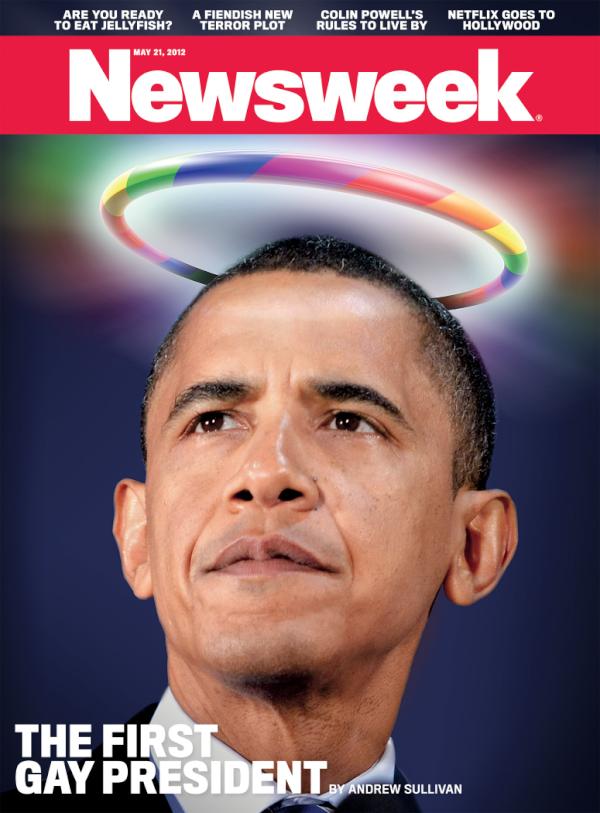
3. Obama kept kissing women. No selfies were taken, but what's with kissing so many women? "He should kiss some men," I said, and not because he's The First Gay President. He should kiss some men to establish that the kissing isn't sexual.

4. Meade announced "He looks high." I glanced up from the iPad game I was playing for the purpose of paying attention — solitaire — and noted the heavily drooping eyelids, then returned to my listen-only mode, with the audio in the room augmented by Meade's intermittent outbursts on the Obama-is-high theme, which fit the text, in ways that perhaps point #5 will make you see. If you're high. And, no, Obama said nothing last night about legalizing marijuana. And, also, Althouse and Meade were not high, not both of us or either of us. We were already talking and laughing as if we were. Artificial enhancement might tip us over into crying and despair.

5. Instead of talking about the government and anything related to his job or Congress's job, Obama begins by telling us about one American character after another, each described with irrelevant specificity. "An entrepreneur flipped on the lights in her tech startup...." Who the hell cares that the light was "flipped" on? Are we supposed to flip on with the excitement of your action verb "flipped"? This is why I don't read pulp novels. Characters continually commit actions that create a picture in your head, but it's always a dumb picture — flicking on light switches — and these details don't matter, don't connect to any meaning the author has to give. It's the opposite of turning on light. I can imagine the speechwriter deluding himself into thinking that this picture would somehow intrigue us, but it makes us feel that our time is being wasted. "An autoworker fine-tuned some of the best, most fuel-efficient cars in the world..." There's zero pretense that anybody checked to see if there really was that guy — "today in America" — doing exactly that. It's detail that is really the absence of detail. We're swimming in bullshit. "A man took the bus home from the graveyard shift, bone-tired" — no one noticed "bone" next to "grave"?! — "but dreaming big dreams for his son" — a deliberate allusion to Obama's autobiography title? I know he's trying to say This Is America. Like that's going to open us up for the paragraphs of policy that we know lie ahead.

6. The characters are more real when they're present in the room, like "Misty DeMars... a mother of two young boys." Okay, they really did find a person to represent this generality, and she's undeniably real. She's right there. But what does it mean that one particular lady got insurance? It's all worthwhile — all the clusterfuck of Obamacare — because Misty DeMars got insurance? And there's Estiven Rodriguez. Something about education happened to him, so that must mean something. I forget what. We got distracted by the way Obama's said "Rodriguez" — close to "Rod Regrets."

7. It's late, and we got tired, and we're on Central Time. I felt a little sorry for all those 50 and 60ish Congressfolk having to act excited that late at night. We were watching the speech on TV, and then I got it streaming on the mini-iPad, and we got in bed, each reading on iPads, while the mini, between us, blabbed on. Do those Congressfolk feel they're enjoying rare privilege, or do they wish they could be in bed too? I notice none of them seem to be wearing glasses, but they must need glasses, which means they are all wearing contact lenses. That must feel awful that late at night.

8. So much clapping. Clapping is quite an annoying noise, and this clapping happens and is going to happen so regularly, so exaggeratedly. The time-wastage is a constant, nagging presence. The speech is literally claptrap. Our legislative branch is trapped into clapping. At least the Democratic side. The judicial branch is represented, but they're trapped into not clapping. I see Roberts, Kennedy, and Kagan. (Kagan glowed red when Obama greeted her at the beginning.) I don't see Scalia, who once called the State of the Union "a juvenile spectacle" and said: "I resent being called upon to give it dignity…. It’s really not appropriate for the justices to be there." I, too, resent being called upon to give it dignity, not that anyone's calling on me, and I wonder if it's "appropriate" for a law professor to blog the SOTU into the indignity it deserves. Am I saying anything properly legal? If you don't think so, reread point #1 and dig the dignity of the lawprof blogger's concision.

9. With all the applause made the absence of applause stunning at the end the last thing he said about Iran. I said: "Wow!" at the time and made a mental note to check the text in the morning. It's: "If Iran’s leaders do not seize this opportunity, then I will be the first to call for more sanctions and stand ready to exercise all options to make sure Iran does not build a nuclear weapon. But if Iran’s leaders do seize the chance — and we’ll know soon enough — then Iran could take an important step to rejoin the community of nations, and we will have resolved one of the leading security challenges of our time without the risks of war."

10. The speech that began with a string of generically specific American characters ends with a long tribute to one character, present in the gallery, an Army Ranger named Cory Remsburg. He's already been on camera numerous times because he's sitting next to Michelle Obama (who, by the way, is wearing something that seems halfway between a 1950s little girl's party dress and an enlarged insect's carapace). There can be no dissent from solemn respect for Cory Remsburg, but are we to be bamboozled into thinking there can be no disrespect for this speech? Why is the President using Cory Remsburg as his shield from criticism, as he creaks to the end of this spectacle? Maybe everyone's so tired and so desirous of an end that we will be swept up into this it-must-be-the-last story — The Story of Cory — after which the applause must be so long and thunderous — because it must be bigger and louder than any of all the previous applauses — that we will have forgotten everything, as we dissolve into Dreams From My President.

But it's morning now, and I have the text. I can read where he bounced off the Army Ranger. Cory embodies the will and strength to fight back. It's not easy. "Sometimes we stumble; we make mistakes; we get frustrated or discouraged." Obama has stumbled and made mistakes, not that he directly admits it. Look there: It's Cory. But Cory didn't stumble and make mistakes. He did his duty, got injured, and kept going, doing what he, individually, needed to do. But he is appropriated to symbolize The People as a Whole. America as an entity moves forward: We have "placed our collective shoulder to the wheel of progress." The dismal old cliché put your shoulder to the wheel gets tricked up with the lefty words "collective" and "progress," and the workmanlike action verb "put" becomes the never-did-a-day-of-manual-labor word "placed." And now, we've gotta get out of this place, back into our individual lives, and I don't want to be in your collective, I'm tired of your "progress," and I've got my own wheels.

20 జూన్, 2013

Racial clowns: What Paula Deen said in the deposition.

"Perhaps most damning for the butter-loving mogul, who recently came out with her own line of spreads at Walmart, the Enquirer claims that Deen wanted to use a 'slave motif' at her brother's 2007 wedding."
Deen said she got the idea from another restaurant at which the couple dined. Said Deen, per the Enquirer: "Well, what I would really like is a bunch of little n-----s to wear long-sleeve white shirts, black shorts, and black bow ties. You know, in the Shirley Temple days, they used to tap dance around."
All right, this is so wrong on so many levels. First, obviously, don't use the n-word. Second, a slave-themed wedding is a terrible idea. But — and I know these are lesser offenses, but I've got to say it — slaves don't wear shorts. Modern American white men wear shorts all too often and look like overgrown boys when the do so. For all of the diminishment of black men over the years — including calling them "boy" — the stereotype did not have them dressed in shorts.

And, obviously, there were all sorts of problems with the way black people were depicted in old Hollywood movies, let's at least get it clear in our minds what the movie reference is. There was a 1935 Shirley Temple movie called "The Littlest Rebel," and here's what it looked like when Bill Bojangles Robinson (playing the slave "Uncle Billy") danced. He's not tap dancing "around" — as if slaves dance around while working — he's giving a performance at an elegant affair — as a soloist, not in "a bunch." And he's not in shorts and shirt-sleeves. He's wearing long pants and a vest and a jacket. So Deen's mental image of what went on in the bad old days of Hollywood is itself an embarrassing distortion.


6 ఫిబ్రవరి, 2013

"My duck does a wonderful trick. My duck can lay an egg!"


Via EDH in the comments to "Signs that people are tired of thinking about politics," which highlighted the Washington Post article about the amazing fact that a bird laid an egg. And who better than Shirley Temple to epitomize the desire for distraction from politics?

27 ఆగస్టు, 2012

"I'd rather see a movie that helps me be a nicer person, not a sharper arguer."

Writes Chip Ahoy (in the comments to the thread about the "Obama's America" movie). I thought this was a nice topic, this topic of niceness.

Is there some movie that could help Chip Ahoy be a nicer person? The answers don't need to be Chip Ahoy specific. I'm wracking my brain trying to come up with a movie that oriented me toward greater niceness. I can think of movies that might help you become a better person, but it's usually in the sense of becoming bolder, more independent, more resolutely opposed to evil and oppression. But nicer? Can you think of a movie in which the central character, someone you identify with, is especially polite and the politeness isn't basically something he must overcome in order to succeed.

A-ha! The answer: Every Shirley Temple movie.

28 ఏప్రిల్, 2010

"Imagine if Obama's gaffe about 'clinging to guns and religion' had been uttered by John McCain, about his own base."

It would look like this...

But, actually, to be fair, that is worse than the hypothetical McCain scenario. British Prime Minister Gordon Brown was caught on tape insulting a particular individual — Gillian Duffy — calling her a "bigot" right after talking to her, and her reaction to hearing about it (and then listening to it) is caught on video.

More of Gillian Duffy's amazing real-time response here. (I like when she gets a cell phone call and the reporters can't believe she'd take a phone call while she's on live TV.) Brown has now given Duffy an in-personal apology, but as you can see in that video she says she doesn't want that. She wants to know why her comments were counted as bigotry.

IN THE COMMENTS: Class factotum said:
Josephine the Plumber has been born.
Hey! Wait a minute! Josephine the Plumber? Jane Withers!


When my mother saw those Comet ads, she's always exclaim about how mean Jane Withers was to Shirley Temple. She was the child actress who was most emphatically not Shirley Temple:


And the actor in the wheelchair is Charles Sellon — or as I insist on calling him, Mr. Muckle. Now, open the door for Mr. Muckle:

5 డిసెంబర్, 2008

Babu Sassi, the man who lives in his crane, at the top of the Burj Dubai, the tallest building, and hasn't been down to the ground for over a year.

BLDGblog is entranced:
Whether or not this is even true – after all, I never think truth is the point in stories like this – 1) the idea of appropriating a construction crane as a new form of domestic space – a kind of parasitic sub-structure attached to the very thing it's helped to construct (perhaps raising the question: what is the ontology of construction cranes?) – is totally awesome; 2) further, the idea that crane operators are subject to these sorts of urban rumors and speculations brings me back to the idea that there might be a burgeoning comparative literature of mega-construction sites taking shape today, with this particular case representing a strong subgenre: mythic construction worker stories, John Henry-esque figures who single-handedly assemble whole floors of Dubai skyscrapers at midnight, with a cigarette in one hand and a hammer in the other (or so the myths go), as a kind of oral history of the global construction trade; and, finally, 3) there should be some kind of TV show – or a book, or a magazine interview series – similar to Dirty Jobs in which you go around visiting people who live in absurd places – like construction cranes atop the Burj Dubai, or extremely distant lighthouses, or remote drawbridge operation rooms on the south Chinese coast, or the janitorial supply chambers of inner London high-rises – in order to capture what could be called the new infrastructural domesticity: people who go to sleep at night, and brush their teeth, and shave, and change clothes, and shower, inside jungle radar towers for the French foreign legion, or up above the train tracks of Grand Central Station because their shift starts at 3am and they have to stay close to the job.
This is, of course, a wonderful subject for movies and books. Perhaps you can help me think of some. I thought first of one of my favorite movies, the one where Shirley Temple lives in a lighthouse. Then I thought of "Bartleby the Scrivener" -- spoiler alert:
Upon more closely examining the place, I surmised that for an indefinite period Bartleby must have ate, dressed, and slept in my office, and that too without plate, mirror, or bed. The cushioned seat of a ricketty old sofa in one corner bore the faint impress of a lean, reclining form. Rolled away under his desk, I found a blanket; under the empty grate, a blacking box and brush; on a chair, a tin basin, with soap and a ragged towel; in a newspaper a few crumbs of ginger-nuts and a morsel of cheese. Yet, thought I, it is evident enough that Bartleby has been making his home here, keeping bachelor’s hall all by himself. Immediately then the thought came sweeping across me, What miserable friendlessness and loneliness are here revealed! His poverty is great; but his solitude, how horrible! Think of it. Of a Sunday, Wall-street is deserted as Petra; and every night of every day it is an emptiness. This building too, which of week-days hums with industry and life, at nightfall echoes with sheer vacancy, and all through Sunday is forlorn. And here Bartleby makes his home; sole spectator of a solitude which he has seen all populous—a sort of innocent and transformed Marius brooding among the ruins of Carthage!

29 ఏప్రిల్, 2008

"I'm sorry that my portrait of Miley has been misinterpreted," said the famous photographer Annie Leibovitz.

"Miley and I looked at fashion photographs together and we discussed the picture in that context before we shot it. The photograph is a simple, classic portrait, shot with very little makeup, and I think it is very beautiful."

Vanity Fair got millions of hits, and Disney says: "A situation was created to deliberately manipulate a 15-year-old" ... whose father was right there the whole time.

Here's the slideshow at Vanity Fair. Judge for yourself. I think the photographs were intended to get the attention they got, but don't actually cross the line into scandalous. The girl is beautiful. Deal with it. Bare shoulders are not nudity. But to say "very little makeup" when there is red lipstick... well, that's disingenuous.

ADDED: Compare this, from another era. Scroll to 2:51 to start.

9 ఏప్రిల్, 2007

A profound movie experience.

I'm watching one of the first movies I ever saw... from back in the days when TV played "The Early Show," "The Late Show," "The Late Late Show," and -- if I'm not mistaken -- "The Late Late Late Show." I only watched "The Early Show" back in the 1950s, when I was a child, and only when my mother called my attention to something. I now realize she was being highly selective. Perhaps the second movie I ever saw in my life -- the first was "The Little Fugitive" -- was the Shirley Temple movie "Captain January."

This dance, with Buddy Ebsen, is supremely charming:


"Come Along and follow me, to the bottom of the sea..." Did that influence Robert Zemeckis in "Back to the Future" to make the prom theme "Enchantment Under the Sea"? There's a scene right after the dance where a bunch of crusty old sailors teach Shirley how to spit. That had to be the source material for the spitting scene in "Titanic."

And speaking of influences, I can see how much this influenced me. Shirley is angrily defiant as she stands up to the prissy female truant officer who doesn't like the feisty attitude she's learning from the men. The truant officer wants to put her in an institution, away from Captain January, the kindly lighthouse keeper who found her after a shipwreck.
You should be taken home and spanked! What kind of man is this Captain January to allow you to run around?
This is some heavy dialogue for a young child to hear. (Shirley has just been looking at a picture she thinks is her dead mother and has tried to sing the song "Asleep in the Deep.")
Helen: How can anyone sleep in the deep?
Capt. January: That's the long last sleep, Star.
Helen: Does everyone have to die?
Capt. January: Yes, everyone does.
Helen: Even you and me?
Capt. January: Yes, when the time comes.
Helen: Do you think we'll make it till Christmas?
Capt. January: Yes, I wouldn't be surprised if we did.
Yes, Shirley reminds you of death, then tries to cheer you back up with Christmas and short term hopes.

ADDED: Want to see more Buddy Ebsen? Here -- "Broadway Melody of 1936"-- he dances with a full size woman (his sister Vilma).

13 జూన్, 2004

Madison-related ramblings.

Tonya's back from Italy, and about to turn right back around and go to South Africa. She's got some cool pictures from Italy (I especially like the dizzying staircase with the convex mirror and the pink umbrella). Strangely yet typically, her interest in photography is Dave Matthews-related.

Elsewhere in Madison, Nina is not able to fully approve of her country's hero Lech Walesa, who recently wrote favorably about Ronald Reagan--and the way of the cowboy ("Cowboys fight for justice, fight against evil, and fight for freedom, both physical and spiritual").

That reminds me: the TiVo--Prof. Yin, don't forget I love my TiVo too--just picked up "The Man Who Shot Liberty Valance." We have Jimmy Stewart on our TiVo "wish list"! That is my favorite Western movie, I think. In an early scene, we see the old, successful Jimmy Stewart about to tell the true story of who John Wayne really is, and he begins his long story with himself at the point of having just graduated from law school. So maybe that's a good one for recent law school graduates. I just checked out the first scene, but I'm going to watch the whole thing and will report back. TiVo also picked up "Fort Apache." That one was because I have Shirley Temple on my wish list. Not John Wayne. (Not John Ford.) Shirley Temple.

Anyway, I love the character names in "Liberty Valance." Not just Liberty Valance (played by Lee Marvin), but Ransom Stoddard (the Stewart character), Marshal Link Appleyard, and Maj. Cassius Starbuckle ...

That reminds me: time to go to a café!

24 ఏప్రిల్, 2004

Marrying the father figure. So if a teenage girl goes for a year believing an older man is her biological father, but then finds out it was just rumor, is it okay to marry him? I mean in a conventional family-oriented movie. That's what happened in "That Hagen Girl" (discussed here, with pictures, yesterday). Ronald Reagan was none too happy with the role of the father figure and begged for a rewrite in which he doesn't end up marrying Shirley Temple.
Reagan's misgivings about the script were borne out when the film had its first preview screening. After he rescues Temple from her suicide attempt, he admits that he loves her. But when he said the words on screen, the preview audience screamed "Oh no!" almost in unison.

So they recut it, so people wouldn't scream in horror! But that only made it an inexplicably sexless marriage.

23 ఏప్రిల్, 2004

Ronald Reagan and Shirley Temple. Today is Shirley Temple's birthday, and TMC is showing a lot of her movies. I love Shirley and have my TiVo programmed to capture her work. Today, it caught "That Hagen Girl," which is only a one-star movie, but it co-stars Ronald Reagan, so--what the hell!--I started watching and made it to the end. It's bad, but awesome. Ronald Reagan comes to town, hears people gossiping about him, and doesn't like it.


He's a lawyer, and he sets up in a law office that has a nice portrait of Lincoln on the wall:


When he mouths off to a pretty young teacher, he apologizes: "I'm sorry I sounded off on you. I'm an attorney and every once in a while I talk to people as if they just belted someone with a meathook." Here's how he looks, delivering that line:


The gossip is all about how Mary Hagen, played by Shirley Temple, is an illegitimate child and the father is Reagan. Shirley was the most adorable child ever, but here she is as a gorgeous teenager:


The small town in this movie is entirely designed for the purpose of torturing Shirley Temple. Here's how to insult people in the town: "Why don't you go somewhere and catch yourself, you foul ball?" What possible solution could there be for poor Shirley? Especially after Ronald Reagan offers to pay her "tuition fees" to go to a university that they'll choose for her after she graduates from junior college. But she hangs around and has conversations like:
I've never done anything wrong ... except getting born.

I know, it seems like an injustice, but...
We remain confused throughout the movie about whether Reagan really is Shirley Temple's father, until the point where he's about to call her on the phone and ask her to marry him. At exactly that point, the townsfolk read in the newsaper that Reagan has received a medal from the President of the United States for his contribution to "the successful launching of atomic warfare." Apparently, Reagan has dropped the atomic bomb on Japan! The townsfolk decide they love Ronald Reagan, and they burst in on him just as he's about to go to Shirley. He tries to leave. They say:
But we haven't accomplished our mission!

Like you boys in the airforce, we believe in Mission Accomplished.
(Hmmm.... there's a phrase!) They invite him to speak at graduation. He suggests the subject of his speech: Mary Hagen! But she's been expelled! For going to the "tavern"! He tells them off. They leave, and immediately an official of some sort arrives and hands him a suicide note from Mary! She's "picked the lagoon," according to the note. Thunder rolls. We see Mary walking in the rain, and, wet, Shirley is modern and fabulous:


It's our dear girl, Shirley, wet and suicidal! She's looking into the water and her whole life flashes in front of her, and her whole life is the mystery of whether Ronald Reagan is her father. I watch the flashback and think: 1. Shirley Temple was so beautiful (I seriously believe Marilyn Monroe derived her vision of female loveliness from Shirley), and 2. Mary Hagen really needs to go to college in some other town! Suddenly, Ronald Reagan runs up, his trenchcoat flapping in the storm: "Mary! Mary!" We see him desperately trying to take off that trenchcoat and then a wide shot of trenchcoat-removing Reagan and the flowing river. Mary has jumped! Reagan, in dress suit and shoes, but sans trenchcoat, dives into the river.


And our man Reagan, finally, after all these years, tells her that isn't important. "It's what you are, and where you're going that really matters."


He tells her she was an ordinary adopted orphan, no connection to him at all. Yay! Reagan can marry her!