"... the openly gay Mr. Singh, 31; Erica Loewy, 26, the creative director; and Anna Wilson, 29, who oversees photography and multimedia.... The summer issue, out now, features an interview with Tarana Burke, the activist who founded the MeToo movement, conducted by Dream Hampton, whose documentary about R. Kelly led to multiple charges against the singer. There is a queer cartoon and a feature on gender-neutral sex toys. The fall issue will feature a photo feature by the artist Marilyn Minter celebrating female pubic hair. 'We have red hair, blond hair, black hair — it’s basically every color of the rainbow,' said Liz Suman, 35, the magazine’s arts editor. She added that elsewhere in the publication, 'I’ve been sneaking in some penises, too.'.... In the office, members of the staff use terms like 'intersectionality,' 'sex positivity,' 'privileging' and 'lived experience' to describe their editorial vision — and tout their feminist credentials. Two editors are former employees of Ms.... 'We talk a lot about what’s the Playboy gaze and how we need to diversify that,' said Rachel Webber, 37, the chief marketing officer.... 'It’s a little like being in a gender studies class,' she added."
From
"Can the Millennials Save Playboy?/The Hefners are gone, and so is the magazine’s short-lived ban on nudity — as well as virtually anyone on the staff over 35" (NYT).
Playboy is just a brand name. You can completely change a product under a name. Will it work? Was there enough value in the old version of the product that it's not good business to repurpose the name? Look at this big NYT article they got out of it!
Remember Cosmopolitan magazine?
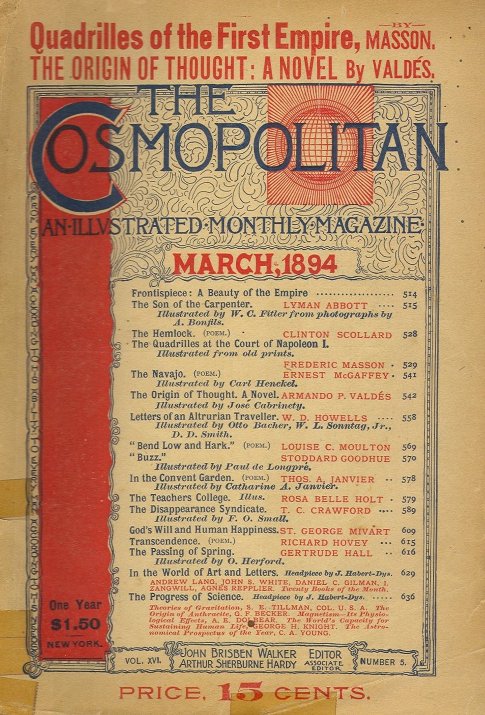 It had been around since 1886 when Helen Gurley Brown took over in 1965
. Originally, it was introduced as a "first-class family magazine" with articles on fashion, interior decoration, childcare, and cooking. In 1905, William Randolph Hearst took over and changed it into a place with articles like "The Growth of Caste in America" and writers including George Bernard Shaw and Upton Sinclair, and Ida Tarbell. By the 1950s, the circulation was way down and it was considered very dull.
Helen Gurley Brown took over and completely changed it into an active promotion of sex for the single woman.
In Brown's early years as editor, the magazine received heavy criticism. In 1968 at the feminist Miss America protest, protestors symbolically threw a number of feminine products into a "Freedom Trash Can." These included copies of Cosmopolitan and Playboy magazines. Cosmopolitan also ran a near-nude centerfold of actor Burt Reynolds in April 1972, causing great controversy and attracting much attention....
Victoria Hearst, a granddaughter of William Randolph Hearst..., has lent her support to a campaign which seeks to classify Cosmopolitan as harmful under the guidelines of "Material Harmful to Minors" laws. Hearst, the founder of an evangelical Colorado church called Praise Him Ministries, states that "the magazine promotes a lifestyle that can be dangerous to women's emotional and physical well being. It should never be sold to anyone under 18."...
ADDED: One nice thing about
the new Playboy website is access to old Playboy interviews. I once
subscribed to Playboy, the website, just because I wanted to read the Allen Ginsberg interview (from 1969). But
here it is now, free: "A poet, a mystic, a homosexual, a psychedelic proselyte, a revolutionary, a bearded prophet of doom for what he considers society's 'sick' values, he is among the most famous and certainly the most controversial of living poets." There was plenty of detail about homosexuality in that interview (which I read when I was 18, in my family home, where Playboy was always openly available):
Would you explain what you mean when you say there's a natural element of homosexuality in every man?
There's homosexuality in every Playboy reader. To say that in a Playboy Interview is interesting because obviously every Playboy reader expects me to say that; so I'll say it and liberate him from his fear that somebody will say it sooner or later.




 संदेश
संदेश


