Patricia J. Williams లేబుల్‌తో ఉన్న పోస్ట్‌లను చూపుతోంది. అన్ని పోస్ట్‌లు చూపించు

6 ఏప్రిల్, 2016

"Jackie" — who told the discredited fraternity gang rape story published in Rolling Stone — is forced to testify in the defamation lawsuit.

The federal judge Glen E.Conrad has rejected the argument — made by "Jackie"'s lawyers — that testimony will "re-victimize" her and psychologically damage her.
The judge’s order stems from a lawsuit brought by UVA associate dean of students Nicole Eramo, who alleges that Rolling Stone’s Nov. 2014 article cast her as the callous villain of its tale and falsely asserted that she discouraged a student identified only as “Jackie” from taking her rape allegations to the police. Rolling Stone, which apologized to readers for the story, strongly denies that it defamed the university official and declined to comment on Tuesday’s ruling....

Ms. Eramo, in court papers, alleges that Jackie is “a serial liar” who fabricated her claims and served as “Rolling Stone’s sole source for the false tale of rape that it recklessly published.” That makes Jackie’s testimony “highly relevant” to the defamation claims, her lawyers say.
IN THE COMMENTS: Ignorance is Bliss said...
re-victimize

Assumes facts not in evidence.
That made me think of what Patricia J. Williams wrote in her book "The Alchemy of Race and Rights" about Tawana Brawley: Brawley "has been the victim of some unspeakable crime. No matter how she got there. No matter who did it to her and even if she did it to herself."

31 అక్టోబర్, 2014

"There is Critical Race Theory scholarship connecting a preference for formality to race," I said in a post speculating about why Clarence Thomas might have said "I like formality."

I was expressing skepticism about the cue in the NYT (from Adam Liptak) to interpret Justice Thomas's statement to mean that "he was content with the way things are." (This was in reference to the way the Supreme Court Justices communicate by paper memo, and not by email or in face-to-face discussions.)

I said:
I could think of some other ways to interpret those 3 words and don't like being told to think of Justice Thomas as complacent and stiff. A person might like formality without being content with the way things are. A preference for formality can arise out of discomfort and mistrust. What kind of person shies away from free-wheeling banter and wants things put in writing?
I dropped a rare footnote: "There is Critical Race Theory scholarship connecting a preference for formality to race. Citation to come." That was 3 days ago, and at least one commenter has signaled he's still waiting. Did I think he'd forget?

I'd known all along what I wanted to cite, the Patricia J. Williams book from 20 years ago called "Alchemy of Race and Rights: Diary of a Law Professor." Unfortunately, that's not on Kindle, so needing to find my hard copy slowed me down.

In Chapter 8, "The Pain of Word Bondage," Williams describes the willingness of her colleague Peter Gabel to rent an apartment with no written agreement, to hand over a $900 cash deposit to strangers without even getting the keys. She, a black, female law professor, could not share his warm feeling for informality:
… I was raised to be acutely conscious of the likelihood that no matter what degree of professional I am, people will greet and dismiss my black femaleness as unreliable, untrustworthy, hostile, angry, powerless, irrational, and probably destitute. Futility and despair are very real parts of my response. So it helps me to clarify boundary; to show that I can speak the language of lease is my way of enhancing trust in me in my business affairs. As black, I have been given by this society a strong sense of myself as already too familiar, personal, subordinate to white people. I am still evolving from being treated as three-fifths of a human, a subpart of the white estate. I grew up in a neighborhood where landlords would not sign leases with their poor black tenants, and demanded that the rent be paid in cash; although superficially resembling Peter's transactions, such informality in most white-on-black situations signals distrust, not trust. Unlike Peter, I am still engaged in the struggle to set up transactions at arm's length, as legitimately commercial, and to portray myself as a bargainer of separate worth, distinct power, sufficient rights to manipulate commerce.

Peter, I speculate, would say that a lease or any other formal mechanism would introduce distrust into his relationships and he would suffer alienation, leading to the commodification of his being and the degradation of his person to property. For me, in contrast, the lack of formal relation to the other would leave me estranged. It would risk figurative isolation from that creative commerce by which I may be recognized as whole, by which I may feed and clothe and shelter myself, by which I may be seen as equal — even if I am a stranger. For me, stranger-stranger relations are better than stranger-chattel.
Now, take that observation and test out whether it could be similar to what Clarence Thomas was thinking when he said "I like formality."

28 అక్టోబర్, 2014

"Justice Clarence Thomas, who has not asked a question from the Supreme Court bench since 2006, was expansive and gregarious."

"Justice Samuel A. Alito Jr., who can appear a little dour during arguments, revealed a lively wit. Justice Sonia Sotomayor said she was working to temper a combative questioning style 'that has held me in bad stead.'"

So begins Adam Liptak's NYT article "Three Supreme Court Justices Return to Yale."
Justice Thomas... He acknowledged being a “cynical and negative” law student, blaming immaturity and the unsettled political climate of the early 1970s. “I cannot say we were thinking straight about a lot of things, even if we were not using illegal substances,” he said. “I wish I came here at a time when I could have been more positive.... There is so much here that I walked right by.”...

The justices were questioned by Kate Stith, a law professor at Yale. She asked Justice Alito what he had been reading. “I have two books that are inspirational,” he responded. “I keep them on a table by my bed, and I try to read a little bit of them every night. It’s ‘My Grandfather’s Son’ and ‘My Beloved World.’ ”
Alito is hilarious. There's also this:
Justice Sotomayor cited two reasons for the court’s reluctance to use technology [to communicate with each other]. One was tradition. “The other,” she said of some of her colleagues, “is they don’t know how.”

And the décor is from another era. “We still have spittoons by our seats,” Justice Alito said.
I assumed that was a punchline from Alito, but Liptak signals that it's literally true that there are spittoons. It's still a humorous line, but less funny — less funny of Alito if there really are spittoons,* even though making the observations at that point is a concise, amusing way to say the Court is old-fashioned. And since it's funny if they have spittoons, the sum total of funniness is at least as good as if Alito made it up.

Liptak continues with a Thomas quote, introduced with a Liptak sentence about how to understand the state of mind it reflects:
Justice Thomas said he was content with the way things are. “I like formality,” he said.
I could think of some other ways to interpret those 3 words and don't like being told to think of Justice Thomas as complacent and stiff. A person might like formality without being content with the way things are. A preference for formality can arise out of discomfort and mistrust.** What kind of person shies away from free-wheeling banter and wants things put in writing?

__________________________________

* There are real spittoons: "Each [Justice] has... a spittoon. The spittoons serve as wastebaskets. The last time a justice used a spittoon for its intended purpose was in the early 20th century."

** There is Critical Race Theory scholarship connecting a preference for formality to race. Citation to come.

ADDED: Here's what I was looking for, Patricia J. Williams, "The Alchemy of Race and Rights," Chapter 8, "The Pain of Word Bondage." Williams describes the willingness of her colleague Peter  to rent an apartment with no written agreement, to hand over a $900 cash deposit to strangers without even getting the keys. She, a black, female law professor, said:
… I was raised to be acutely conscious of the likelihood that no matter what degree of professional I am, people will greet and dismiss my black femaleness as unreliable, untrustworthy, hostile, angry, powerless, irrational, and probably destitute. Futility and despair are very real parts of my response. So it helps me to clarify boundary; to show that I can speak the language of lease is my way of enhancing trust in me in my business affairs. As black, I have been given by this society a strong sense of myself as already too familiar, personal, subordinate to white people. I am still evolving from being treated as three-fifths of a human, a subpart of the white estate. I grew up in a neighborhood where landlords would not sign leases with their poor black tenants, and demanded that the rent be paid in cash; although superficially resembling Peter's transactions, such informality in most white-on-black situations signals distrust, not trust. Unlike Peter, I am still engaged in the struggle to set up transactions at arm's length, as legitimately commercial, and to portray myself as a bargainer of separate worth, distinct power, sufficient rights to manipulate commerce.

Peter, I speculate, would say that a lease or any other formal mechanism would introduce distrust into his relationships and he would suffer alienation, leading to the commodification of his being and the degradation of his person to property. For me, in contrast, the lack of formal relation to the other would leave me estranged. It would risk figurative isolation from that creative commerce by which I may be recognized as whole, by which I may feed and clothe and shelter myself, by which I may be seen as equal — even if I am a stranger. For me, stranger-stranger relations are better than stranger-chattel.

1 జులై, 2011

What if you soul-searched over an event that — you learn later — didn't happen?

Pity France, which self-critiqued over the Strauss-Kahn case that now seems not to have been what it once appeared to be.
His arrest... led to soul-searching about the treatment of women in France and a new assertiveness challenging male behavior. Responses to the latest news seemed to suggest that the debate had become less clear-cut.

“This is a slap in the face of the feminists,” said Marc Marciano, 53, a trader in Neuilly-sur-Seine, a Paris suburb....
What to do with all that insight gained? This reminds me of the old Tawana Brawley story, which led to soul-searching about racial bigotry and then turned out to be a fraud. One solution back then was to claim the insights are still good, even if the news that triggered the soul-searching was false.

In her book "The Alchemy of Race and Rights," lawprof Patricia J. Williams wrote that Brawley "has been the victim of some unspeakable crime. No matter how she got there. No matter who did it to her and even if she did it to herself."

I vividly remember a job talk at my law school in which the candidate described a racially charged incident with the police. He was questioned about whether the incident really happened that way, and his response — delivered quickly and glibly — was that the anecdote worked as an object of study from which to spin off insights whether it was true or not. The job talk was exceedingly well received.

If that seems terribly wrong to you, explain why, when we consume works of overt fiction — novels and movies and so forth — we feel that we derive insights applicable to the real world. I think some fictions resonate. They seem to speak to real life. They are not purely escapist fantasy. If it isn't wrong to use some works of fiction in our efforts to understand the real world, is it necessarily always wrong to use a news story presented as true that later turns out to be false?

UPDATE: "Dominique Strauss-Kahn was released from house arrest on Friday as the sexual assault case against him moved one step closer to dismissal after prosecutors told a Manhattan judge that they had serious problems with the case."

23 మే, 2011

American exceptionalism "is infused with racialized hierarchies — normative whiteness and masculinity still marking the 'worthiest' inheritors of the American dream."

Writes lawprof Patricia J. Williams, in a collection of essays in the NYT responding to a new study indicating that white people think discrimination against white people is more of a problem than discrimination against black people.
Through much of American history, blacks have been viewed as low on the competence index (negative feelings), but warm enough to be pitied (which is usually felt not as a negative but a protective, “pro-black” fuzzy emotion). As blacks have made greater symbolic strides in the last few decades, that ranking seems to have shifted: there is envy, suspicion, resentment — despite numbers, despite empirical documentation to the contrary — that blacks are “taking over” as the recipients not of due process but of undue “favoritism.”

This projected fear is a danger to the nation.
ADDED: Williams is applying this template:
1. Those stereotyped as high competence and high warmth are met with pride and admiration (like most white people).
2. Groups who rank as high warmth and low competence are treated with pity, sympathy, paternalism (like the elderly).
3. Those stereotyped as high competence and low warmth are met with envy (like Jews and Asians).
4. Those perceived as low competence and low warmth are greeted with contempt, anger and resentment (like the homeless).
You've got to admit that's provocative. Think deeply about it before you comment.

10 జనవరి, 2009

The new Solicitor General -- Elena Kagan -- is female, so the question is: What will she wear?

The Solicitor General — up to now, invariably a male — has always worn a "morning coat" — that is to say, tails. So it's a puzzle. Lawprof Patricia J. Williams writes:
The persistence of this sartorial custom beyond its natural lifespan—and in the American justice system of all places—is not merely a quirk of history but testament to the deep and tenaciously clubbish culture that still afflicts the highest levels and most intransigently closed circles of power. Blockquote
Tradition, it's an affliction.

Williams tells the story — "perhaps apocryphal" — of a female deputy solicitor who wore a "'dove-brown' or 'doe-beige' business suit" when she argued a case in the Supreme Court:
According to a friend who, to this day, fears being identified, Chief Justice Rehnquist "went berserk." He chastised her for inappropriate attire, and followed it up with a scathing letter to the Solicitor General himself, requesting that this not occur again. Brown textiles! The scandal!...

In response, the Solicitor General’s office thenceforth recommended that women wear what is popularly known as a "feminized" version of morning attire, and/or a plain black suit.
So, then, the answer is easy: Kagan will wear a nice black skirted suit. Yes, it might have tails, but in my view that would seem oddly costume-y in the absence of an established tradition. Dressing like a man is not a tradition. It's sort of kinky.


IN THE COMMENTS: Sean writes:
There hasn't been a female solicitor general before, but women from the solicitor general's office have argued before the Supreme Court, and they wore business suits.

In fact, my [Appellate Advocacy]professor told us that there was some discussion, when there first started being women in the solicitor general's office, of what was the female analogue of a morning coat. Several answers suggest themselves, based on the situations where morning coats are encountered: bridesmaids' dresses (men still wear morning coats if they are in a wedding party); women's church clothes of the 1950s, featuring knee length dresses and white gloves (men used to wear morning coats at upper class churches into the 1950s); or upper class female street clothes of the Edwardian era, perhaps featuring a bustle (this was the last time that men wore morning coats on a regular basis). None of these female attires seems quite suitable for a lawyer.

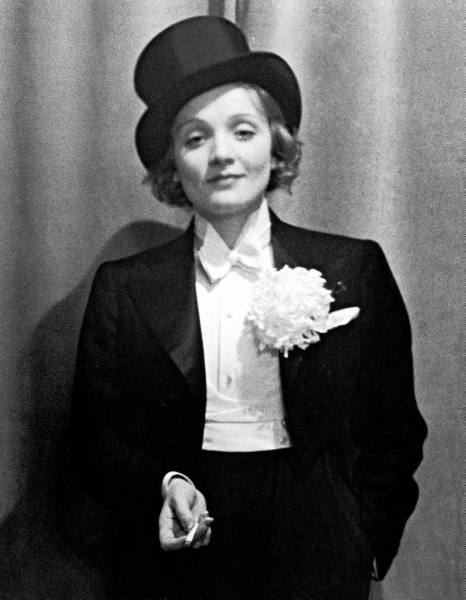
Theo Boehm says: "Forget Dietrich. If that era is any guide to style, the new Solicitor General should try the Louise Brooks look":

14 మార్చి, 2008

Lawprof Patricia Williams is giving a talk called "Moaning in America."

Now, I'm at the feminism conference here at the University of Wisconsin Law School, and Pat Williams is giving the keynote speech. She begins with the image of a "twinning doll" – an image she used in this column in The Nation.

She's looking at "3 narrative models": 1. the "neo-kumbayan moment" (denial, cynicism, Ward Connerly... "just stop talking about it"), 2. the "neo-biologizing moment, through the discourse of DNA," 3. economic choice ("I want to engage with the Law and Economics movement").

She's talking about the Democratic primary, the toxic identity politics. What can we do?

Pat is very interesting and funny talking about multiracial families: Angelina Jolie and her mixed race brood and a woman who is suing because a medical mix-up led to her giving birth to a partially black child.

What would Barack Obama look like if he were a woman? Would he look like Susan Estrich, Geraldine Ferraro, or Oprah Winfrey? When Oprah endorsed him, "race rushed in."

UPDATE, next morning: I have to apologize for not conveying more of what Pat said last night. It is extremely hard to convey the sense of what she says without giving long quotes, which I can't do in real time, because she also speaks very quickly and continually makes surprising connections. She has a beautiful voice and brings in a lot of detailed stories and images. This is mesmerizing, and I enjoyed listening closely, but I could not bring it to you convincingly. I don't want you to think this was because she wasn't saying anything. She was saying too much. This was not, however, an extemporaneous speech. She was reading. So go read some of her columns. I've linked one.

AND: Scroll down on this page and you'll find capsule descriptions and links to many of Pat's columns, some of which were the basis of the talk she gave last night. There is, for example, this one:
The March 22 [2007] New York Post offered a fascinating study in the contradictions of our culture. The top half of the front page was consumed by "a stunning mother-child portrait" of Angelina Jolie with her newest adopted child, or as the Post put it, her "Viet man." The lower half of the page was given over to a more lurid headline ("Baby Bungle: White Folks' Black Child") trumpeting "a Park Avenue fertility clinic's blunder" that "left a family devastated--after a black baby was born to a Hispanic woman and her white husband."

The story about Jolie's magical mothering of her rainbow brood was a fairy tale of happily ever after. The bungled baby story, meanwhile, was considerably less heartwarming: Long Islanders Nancy and Thomas Andrews had trouble conceiving after the birth of their first daughter. They employed in vitro fertilization and baby Jessica was born. Jessica is darker skinned than either of the Andrewses, a condition their obstetrician initially called an "abnormality." She'll "lighten up," said that good doctor. Subsequent paternity tests showed that Nancy's egg was fertilized by sperm other than Tom's. The couple has sued.
That column is old enough that you have to subscribe to The Nation to read the whole thing, but there are many others available in full, and I realize I've been remiss in not reading them and blogging them on a regular basis.

Here's her piece on Oprah and Obama. Excerpt:
[T]heir particular form of raced celebrity enshrines the notion of American mobility at a moment when it is--in reality--sorely vexed. ... Obama radiates a kind of hope that crosses the immigrant epic with a romantic desire for rainbow diversity. Similarly, Oprah is the black, female, Horatio Alger, rags-to-riches story of our day. From her humble beginnings as a traumatized little girl, albeit pluckier even than Orphan Annie (we Americans do love "pluck"), Oprah reinvented herself by sheer will and rose against all odds to the very top of the phantasmagorical bubble machine we call the entertainment industry. There's a general fear of, as well as attraction to, that bubble. Is the celebrity a platform or a dog-and-pony show? Is it serious debate or entertainment? How easy the purchase of cynicism.

But if we're lucky, maybe something enduring comes of artfully imagining our ideals.

So, yes, I've flown out of New York.

And I'm here in Madison. No race-and-feminism conferencing yet for me. I'm too late for the afternoon session. But I will make it to this evening's keynote speech from Columbia lawprof Patricia Williams. It's called "Moaning in America," and I'm expecting multilayered wordplay and... what? Anti-Reaganism? Suffering? Sex?

Meanwhile, I'm resting up — sipping cappuccino in my favorite Madison café.

It's not as if the trip was grueling, though we did spend an extra half hour on the ground. The air traffic was backed up this morning after President Bush flew in through La Guardia to give this talk at the Economic Club. (He said we're going through a "tough time" but we should "bounce back.") The only reason I knew is that my car service driver pointed out the helicopters flying overhead in formation.

The driver seemed pretty interested in politics. He had the news radio on and when the story on Eliot Spitzer elicited a barely audible scoff from me, he struck up a conversation about it. He assured me that all men, given the chance, would do what Spitzer did, and that Spitzer's enemies went after him and brought him down.

"I'm from Egypt," he said and proceeded to tell me about an Egyptian politician who was destroyed by a trumped up charge of rape against his son which tricked the man into trying to bribe the authorities, and so he was caught and destroyed. That is to say: there is human nature, and that is simply a given; the real problem is those people who set out to destroy a political opponent.

But don't you think that once someone is in power, it is his responsibility to refrain from doing those things that will allow his enemies to take him down?

No, all men will do this. This is the way men are.

Even Barack Obama?

I was going to say even Mitt Romney?, but I thought Barack Obama would make a better question, and in fact, he didn't want to say Barack Obama would do the same thing. He went back to stressing that it is the enemies who seek to destroy a man who deserve our scorn.

DSC07854

The plane was tiny and there was hardly anyone on it, but it was a smooth nonstop flight, and I passed the time this way:

1. I did a packet of Brooklyn-themed crosswords that Eric Berlin sent me after I blogged about the movie "Wordplay." (You can get them here for $1.99.) In the movie, they make a big deal about how the annual tournament must — as a matter of long tradition — take place at the Marriott in Stamford, Connecticut, but in fact, this year's tournament was in the Marriott that's 2 blocks away from where I was at Brooklyn Law School. Too bad I missed it! But it was really nice of Eric to notice and to send me the the Brooklyn-themed puzzles he'd constructed for the event.

2. I watched the new episode of "Survivor," the one where — spoiler alert — Jonathan's leg wound swells up and threatens his life and they need to tear him away from the game and the people he loves, and then Chet whines about a boo-boo on his foot that he thinks is getting infected and he insists that the others vote him out — which they do. The Jonathan-Chet contrast is a brilliant case study in masculinity. There was also some hilarious fake-idol-finding by Jason and impressive pole-carrying by James. And then, in the end, I totally fell for the editing that made me think dear, sweet, flexible, swimmy Ozzy was in danger. Surely, if they were blindsiding him, he'd have felt the vibe and played his real immunity idol, but it was nerve-racking there for a second.

3. I read the Peter Bagge comic in the new issue of Reason magazine — the one where he's traveling around New Hampshire, covering the primaries, almost adulating Ron Paul and then facing up to the reality of that racist newsletter. I don't think the comic is linkable yet on line, so pick up the paper copy of the magazine. I've been getting my courtesy copy in the mail ever since this encounter. If only the blogging life had more things like that in it. Not too many more, but a few.

4. With a little more time, I turned the magazine page and read this article about — guess what? — prostitutes!— completely unrelated to the Eliot Spitzer downfall. It's a review of "Sin in the Second City: Madams, Ministers, Playboys, and the Battle for America’s Soul," by Karen Abbott. The review begins with a description of a high class whorehouse, circa 1907:
The Everleigh Club was an ornate mansion. Thirty themed boudoirs (“the Japanese Parlor,” “the Moorish Room,” “the Egyptian Room”) included absurd touches of decadence, such as hidden buttons to ring for champagne and a fountain that fired a jet of perfume. The city’s finest chefs prepared the women’s dinners. They read poetry by the fire with guests, who included the writers Theodore Dreiser and Ring Lardner. Sometimes Minna and Ada let swarms of butterflies fly loose throughout the house.
Then, I got to thinking about that question I'd just posed on the blog before getting onto the plane. I reconsidered, picturing it with themed boudoirs, champagne buttons, perfume fountains, top chefs, famous writer clients, and butterflies.

5. I gazed out at the clouds and the brown-and-white Wisconsin land below and daydreamed.

DSC07852

8 డిసెంబర్, 2007

"The Audacity of Oprah."

I'm always happy to see a new article by my old colleague Patricia Williams — did you know that my office at Wisconsin is her old office? — and here it is linked today on Real Clear Politics. She's been styling her writings as "diary of a mad law professor" for a long time. I can identify with that. So let's dig in:
...I'm intrigued by the brouhaha attending Oprah Winfrey's decision to endorse Barack Obama's candidacy. The Internet is positively foaming at her decision to campaign for him. Celebrities -- from Toby Keith to Sammy Davis Jr., from Barbra Streisand to Jon Bon Jovi -- have always stumped for candidates, but a lot of people seem to feel that Oprah is different. She's not a background singer; she is no mere decorative backdrop. Oprah can turn a book into a bestseller!, fume the blogs. When she lends her magic touch, it's somehow complicated or even unfair. I suspect that some of the controversy comes from those who like Obama and don't relate to Oprah's television persona, or vice versa. But it's interesting to contemplate: what does it mean that some people are so concerned about whether this particular celebrity ought to express herself in the political realm?

In a very straightforward sense, it's no wonder that the Double O's are such an arresting team: one of the world's most influential black men links arms with the world's most powerful black woman, and together they sell out an 18,000-seat arena in Columbia, South Carolina, so fast that the computers crash. It's an unprecedented performance of black power in the heart of the old Confederacy. For someone who lived through the most hateful moments of the civil rights era, it's exhilarating and hopeful -- and vaguely scary in the vertigo it induces.

Ha ha. Read the whole thing.

ADDED: Now, are the blogs fuming? Williams's piece is in The Nation, and she provides no names or links that help us understand if bloggers deserve her criticism. I haven't read much on this subject, and it doesn't bother me if Oprah supports a candidate. I'm not going to spend the morning fishing for blogposts that disapprove of Oprah, but I did see this on Politico:
Talk show hosts who interview politicians — regardless of whether their show is overtly political — typically shy away from getting too involved....

The day the news broke about her campaigning, MSNBC’s Dan Abrams raised the question of whether Winfrey’s jump into the political fray will turn off viewers.

“This could be great for Obama, no question about it, especially as he battles for women’s votes with Hillary Clinton,” Abrams said on the air. “But I think it’s dangerous for Oprah. Part of her appeal is that she is every woman. She appeals to Republicans, Democrats, Hillary or [Dennis] Kucinich supporters, on the coasts or in middle America. The problem is that Oprah is Oprah. But just as the campaign is getting particularly ugly, Oprah’s getting in?”...

Since Winfrey has displayed her allegiance to Obama, she has said publicly that it would be unfair to bring any other candidates on the show....

While that’s a clear disadvantage to her involvement, Winfrey has long been able to shake off any seeming crisis that might prove her to be the Teflon supporter....

That's awfully mild. Just some speculation about the effect on her show.

17 జనవరి, 2007

"We think the ad's authors were right to give voice to the students quoted, whose suffering is real."

Here's the new open letter from various Duke University professors, saying why their original ad -- "This is a social disaster" -- is not something to apologize for:
The ad has been read as a comment on the alleged rape, the team party, or the specific students accused. Worse, it has been read as rendering a judgment in the case. We understand the ad instead as a call to action on important, longstanding issues on and around our campus, an attempt to channel the attention generated by the incident to addressing these. We reject all attempts to try the case outside the courts, and stand firmly by the principle of the presumption of innocence.

As a statement about campus culture, the ad deplores a "Social Disaster," as described in the student statements, which feature racism, segregation, isolation, and sexism as ongoing problems before the scandal broke, exacerbated by the heightened tensions in its immediate aftermath. The disaster is the atmosphere that allows sexism, racism, and sexual violence to be so prevalent on campus. The ad's statement that the problem "won't end with what the police say or the court decides" is as clearly true now as it was then. Whatever its conclusions, the legal process will not resolve these problems.

The ad thanked "the students speaking individually and...the protesters making collective noise." We do not endorse every demonstration that took place at the time. We appreciate the efforts of those who used the attention the incident generated to raise issues of discrimination and violence.

There have been public calls to the authors to retract the ad or apologize for it, as well as calls for action against them and attacks on their character. We reject all of these. We think the ad's authors were right to give voice to the students quoted, whose suffering is real. We also acknowledge the pain that has been generated by what we believe is a misperception that the authors of the ad prejudged the rape case.

We stand by the claim that issues of race and sexual violence on campus are real, and we join the ad's call to all of us at Duke to do something about this. We hope that the Duke community will emerge from this tragedy as a better place for all of us to live, study, and work.
"The disaster is the atmosphere...." -- we're told. The students' perceptions matter and deserve to be "give[n] voice." But the professors don't like how they were perceived by the world outside the university; that was misreading. But if it is perception -- atmosphere -- that matters -- how can you think that you can contribute things to be perceived and avoid responsibility for the effect that you have?

ADDED: La Shawn Barber is scathing.

MORE: I've been thinking a lot about this post -- minimal as it is. There is so much behind this that could be said, so much going back over the 20 years that I've been a law professor. My office for the last decade or so was once occupied by my brilliant colleague Patricia Williams. She wrote something long ago about Tawana Brawley that maybe not everyone remembers, but you should know if you mean to find your way around American academia. I'll put it in context in this 1997 article by Neil A. Lewis (TimesSelect link):
Critical race theorists, who are on the faculty at almost every major law school and are producing an ever-growing body of scholarly work, have drawn from an idea made popular by postmodernist scholars of all races, that there is no objective reality. Instead, the critical race theorists say, there are competing racial versions of reality that may never be reconciled.

Many theorists say that because few whites will ever be able to see things as blacks do, real racial understanding may be beyond the nation's reach....

Some theorists go so far as to say that what really happened in a particular incident may be no more important than what people feel or say happened. For example, some argue that even though Tawana Brawley, then a teen-ager, made up her account that a gang of white men, one with a badge, raped and defiled her in New York in 1987, her story is still valid because it offers truths about the oppression of black women.

In her book "The Alchemy of Race and Rights" (Harvard, 1991), Prof. Patricia Williams of the Columbia University Law School appeared to suggest that it made little difference whether Ms. Brawley had made up her account. The teen-ager, Professor Williams wrote, was the victim of an unspeakable crime "no matter who did it to her -- and even if she did it to herself."

"Her condition was clearly the expression of some crime against her, some tremendous violence, some great violation that challenges comprehension," Professor Williams said. "Tawana's terrible story has every black woman's worst fears and experiences wrapped into it."

Critics of Professor Williams's comments, however, note that a New York State grand jury investigated Ms. Brawley's story and concluded that she had made it up. Professor Williams, Professor [Suzanna] Sherry wrote, seems "unable to distinguish between Brawley's fantasized rape and another woman's real one."

In a recent interview, Professor Williams said she had been misinterpreted. She meant, she said, that the debate about whether Ms. Brawley was telling the truth obscured that she was a troubled minor.

"Her needs were not dealt with, as they should have been with any child," Professor Williams said. Further, Ms. Brawley was transformed into a stereotype of "black women as hard women who can never really suffer any violation," she added.
Misinterpreted. Remember that word. Professors like it. We mean well. We mean to demonstrate empathy and outrage in all the right places. And if you don't credit us with the grand ideals we intended, we will say you don't read well enough. Try again.

MORE: Another brilliant colleague I'm lucky enough to have is Donald Downs -- who wrote this book -- and teaches in the Political Science department here. He emails me this:
The Duke case is symptomatic of the victimhood syndrome has beset too many campuses, and which (as one poster discusses) undermines the agency and vitality of its putative beneficiaries. The case is also symptomatic in another, less recognized sense: members of the economics department published their own dissent to the now infamous "88" and the campus climate that was hostile to due process, and got hundreds of signatures from alumni and other groups. This is precisely what campuses like Duke need: counter-mobilization by faculty who are fed up with this kind of climate and behavior. Perhaps there is hope for Duke, after all, but faculty have to take a stand against the inanity.
Professor Downs, you should know, has done just the thing he recommends and organized the faculty at his home institution.

22 మే, 2005

Joan Didion on Terri Schiavo.

Didion finds many interesting angles to the story. Her focus is not legal, but personal and psychological. She examines not just the motivations of Michael Schiavo and the parents, but also the motivations of all of us:
We do not know how many minutes Theresa Schiavo spent in cardiac arrest. It was later generally reported that this arrest was a "heart attack" caused by a potassium deficiency. The potassium deficiency, it was widely suggested, had been caused by what was sometimes described as "bulimia" and sometimes, more generally, as an "eating disorder."

This suggestion persisted, carrying with it a hint of the disapproval often expressed toward people in unfortunate circumstances who can be suspected to have had bad habits. The "bad habits" serve in such cases to isolate these unfortunate circumstances from our own. Patricia J. Williams, in The Nation, striking this not uncommon note, spoke of
the bizarre events played out in the name of force-feeding Terri Schiavo, a woman whose bulimic aversion to food was extreme enough to induce a massive systemic crisis that left her in what doctors describe as a "persistent vegetative state."

Theresa Schiavo, in this construct, had for whatever reason played a role in her own demise, meaning that what happened to her need not happen to us.

However comforting it may have been to believe this, the suggestion (no diagnosis exists) of an "eating disorder" appears to have been entirely assumptive, based on no evidence beyond the unexceptional facts that she had some years before gained weight, gone on a diet, and lost the weight.

There's much more in the article.