Machiavelli लेबलों वाले संदेश दिखाए जा रहे हैं. सभी संदेश दिखाएं

29 जनवरी 2023

"Flattery (also called adulation or blandishment) is the act of giving excessive compliments..."

"... generally for the purpose of ingratiating oneself with the subject....  Historically, flattery has been used as a standard form of discourse when addressing a king or queen. In the Renaissance, it was a common practice among writers to flatter the reigning monarch, as Edmund Spenser flattered Queen Elizabeth I in The Faerie Queene, William Shakespeare flattered King James I in Macbeth and Niccolò Machiavelli flattered Lorenzo II de' Medici in The Prince.... In the Divine Comedy, Dante depicts flatterers wading in human excrement, stating that their words were the equivalent of excrement, in the second bolgia of 8th Circle of Hell.... Plutarch wrote an essay on ‘How to Tell a Flatterer from a Friend.’ Julius Caesar was notorious for his flattery. In his In Praise of Folly, Erasmus commended flattery because it 'raises downcast spirits, comforts the sad, rouses the apathetic, stirs up the stolid, cheers the sick, restrains the headstrong, brings lovers together and keeps them united.'"

From the Wikipedia article, "Flattery."

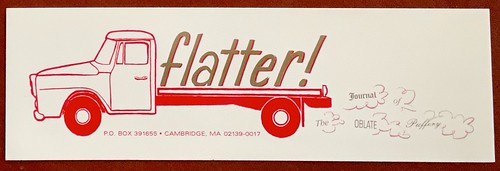
I'm reading that because I was looking up "Flatter!," which I'm doing because I'm getting rid of the piano, and, emptying out the piano bench, I found this:
IMG_4496D

12 फ़रवरी 2020

"In 'Machiavelli: The Art of Teaching People What to Fear,' the French historian Patrick Boucheron joins an estimable list of scholars who have been trying to debunk the crude stereotype of Machiavelli as a fascist enabler and tyrant whisperer."

I'm reading a book review by Jennifer Szalai in the NYT.
The standard reading of “The Prince” views it as Machiavelli’s attempt to ingratiate himself to the returning Medicis by offering them what amounted to a book-length job application: a treatise filled with underhanded tactics for seizing and maintaining power.

“It is much safer to be feared than loved”; “people should either be caressed or crushed”; “the new ruler must determine all the injuries that he will need to inflict,” and “must inflict them once and for all.” This is the Machiavellian Machiavelli: amoral, conniving and cruel, responding to whatever the situation demands...

“Machiavelli is the master of disillusioning,” Boucheron writes. “That’s why, all through history, he’s been a trusted ally in evil times.”... A resurgence of Machiavelli suggests something has gone awfully awry. “If we’re reading him today,” Boucheron writes, “it means we should be worried.”

10 दिसंबर 2013

"What would Machiavelli have thought when President Obama apologized for the fiasco of his health care rollout?"

"Far from earning respect, he would say, all he received was contempt. As one of Machiavelli’s favorite exemplars, Cesare Borgia, grasped, heads must sometimes roll. (Though in Borgia’s case, he meant it quite literally, though he preferred slicing bodies in half and leaving them in a public square.)"

A paragraph from the op-ed titled "Why Machiavelli Still Matters," published in the NYT, marking the 500th anniversary of Machiavelli's letter announcing the existence of his work, "The Prince."

The authors, John Scott and Robert Zaretsky, professors of political science and history, respectively, tweak Americans for their moralistic demands for virtues like honesty and generosity.
The proper aim of a leader is to maintain his state (and, not incidentally, his job)... [even] pursuing what appears to be vice [to achieve] security and well-being.
Even in a constitutional republic? And did Obama receive only contempt because he was honest or because he was dishonest? It seems to me that the contempt arises from our discovery of the dishonesty, not from his punctilious pursuit of virtue. Also, you have to take into account that Obama was elected — he did not seize power — and he was elected because people saw him as a repository of virtue. How does someone who was given power because of his perceived virtue retain power when a lack of virtue becomes apparent? How can he shore up his power by looking even less like the person people thought they had elected?

What would Machiavelli have thought? He'd have to do quite a bit of rethinking to make that Cesare Borgia stuff into advice for an American President.

23 जुलाई 2011

"What we know is that he is right-wing and a Christian fundamentalist."

The police describe Anders Behring Breivik, accused in the Norwegian bombing/shooting that killed at least 91 persons.

The prime minister, Jens Stoltenberg said: “Compared to other countries I wouldn’t say we have a big problem with right-wing extremists in Norway... But we have had some groups, we have followed them before, and our police is aware that there are some right-wing groups.”

He looks like this:


Adjust your stereotypes accordingly.
A Facebook page matching his name and the photo given out by the police was set up just a few days ago. It listed his religion as Christian and his politics as conservative. It said he enjoys hunting, the video games World of Warcraft and Modern Warfare 2, and books including Machiavelli’s “The Prince” and George Orwell’s “1984.”
So, this is the information he wanted you to find. Assuming he set up this page and he is the murderer, these statement could either be precisely true, deliberate misinformation, or something in between.

The man knows about Machiavelli. What would Machiavelli post on Facebook before embarking on a massacre?

ADDED: Of course, disinformation is a big theme in Orwell’s "1984." I'm tempted to say that the cues that his statements are lies are so strong that they suggest paradoxically that he is not lying.