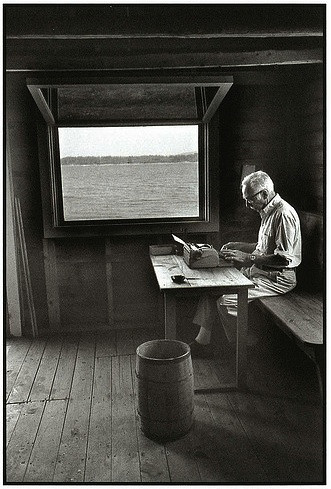
"It is striking that a single psychedelic experience — an intervention that [the neuuroscientist named Robin] Carhart-Harris calls 'shaking the snow globe' — should have the power to alter these patterns in a lasting way."
From
"The Trip Treatment/Research into psychedelics, shut down for decades, is now yielding exciting results," by Michael Pollan. Great article. Read the whole thing.
I've been listening to the podcast version of the article, and the word "hypervigilant" is the one I remembered to search for the quote I wanted to blog. I was interested to see that The New Yorker has only ever used the word
hypervigilant/hyper-vigilant 21 times. (There was a time when The New Yorker was punctilious about consistency and would have stuck to one spelling of a word!) Here's an assortment:
MARCH 17, 2014:
"The band, more New Wave than punk, hadn’t started yet, and the only
thing to look at onstage was the opening band, whose members were
packing up their equipment while
hypervigilant girls in vampire makeup
and torn fish-net stockings washed around them in a human tide that
ebbed and flowed on the waves of music crashing through the speakers."
JUNE 17, 2013: "Caffeine prevents our focus from becoming too diffuse; it instead hones our attention in a
hyper-vigilant fashion."
MARCH 29, 2013: "Following a first scare... some people... pay closer attention to how their body feels.
Hypervigilance leads them to notice more symptoms—is that a new tingle?—and become more alarmed."
OCTOBER 24, 2011: "Carrie [Mathison, the character on 'Homeland'] lives by the cherished motto of the
hypervigilant, 'Just because you’re paranoid doesn’t mean they’re not trying to kill you,' without suspecting for a moment that it’s excessive or the wrong way to look at things."
AUGUST 8, 2011: "'You can only be
hyper-vigilant for so long,' the special-operations officer said. 'Did bin Laden go to sleep every night thinking, The next night they’re coming? Of course not. Maybe for the first year or two. But not now.'"
DECEMBER 13, 2010: "These symptoms he tells me in a matter-of-fact voice. In this way, the husband shifts to the wife the puzzle of what to make of such things, if anything; like certain emotions, too raw to be defined, this kind of information can be transferred only to another, the caring and
hyper-vigilant spouse."
FEBRUARY 2, 2009: "Just as nervous fliers may think they can keep a plane in the air by being
hypervigilant, many of us think we can keep Obama safe by watching him every second; in a way, it was reassuring not to see too much of him on the journey—it meant that he was O.K., that we didn’t have to worry about him."




 పోస్ట్లు