Joyce Carol Oates लेबल असलेली पोस्ट दाखवित आहे. सर्व पोस्ट्‍स दर्शवा

३ फेब्रुवारी, २०२६

Fresh muffins and steaks.

If I'm reading this right, both victims and predators were conceptualized as food to Epstein and whoever Susan Hamblin is.

Many of the commenters over there at X seem to think they are talking about actual food.

Can you think of any examples — beyond this possible one — where a non-metaphor was read as a metaphor? Sex is often talked about using food metaphors, so there could easily be a mixup where talk about food is misread as sex talk. Famous example from 10 years ago: Pizzagate. The words "cheese pizza" were said to mean "child pornography."

Looking up "Pizzagate" this morning, I see what was 10 years old is new again:

१ मे, २०२४

The false narrative.

"interviewer asks Columbia student to comment on the forcible takeover of the university building & the young woman says, 'I think it's a false narrative.' he asks her to comment on custodial staff being held captive by the occupiers of Hamilton Hall & she says, 'I think that's a false narrative.' He asks her if she is saying that the custodian is lying & she says, 'I think that's a false narrative.' He asks about Oct. 7 & she says, 'Get out of my face' & walks away."


At some point, you've got to be able to articulate what you think is true. Otherwise, you're trying to beat something with nothing. But you can always walk away.

ADDED: If the students of today don't know how to think about and articulate what they feel is wrong, the teachers and the parents bear responsibility. Young people feel that something is terribly wrong — to the point where they feel called to act out — and they're not accepting the pushback that says you are anti-Semitic if you don't support whatever Israel decides to do. 

The anti-Israel protesters are finding themselves on the receiving end of the cancel culture methodology they know how to wield. They know how to call you "racist" if you oppose affirmative action or say "All lives matter." They know how to call you "transphobic" is you're horrified by puberty blockers and "sexist" if you question abortion on demand. They've seen how that has worked to control speech and to control minds, and good for them if they decline to take what they've dished out.

Yes, the hypocrisy is glaring and the chaos is painful. And I'm not expressing optimism. I'm just saying I can see an opportunity to move to a higher ground. 

AND: Here's the interview.

११ जानेवारी, २०२४

Joyce Carol Oates casts aspersions on Donald Trump's visualization of his mother-in-law in Heaven.

Here's the relevant "Sopranos" clip:

१७ जुलै, २०२३

"Everything that you think is solid is actually fleeting and ephemeral. The only thing that is quasi-permanent..."

"... would be a book or work of art or photographs or something. Anything you create that transcends time is in some ways more real than the actual reality of your life. If you set your hand on fire right now, it’s ephemeral. It would hurt, but Plato would say it’s not as real as something that transcends time. I am a person who was married, and was very happily married. Yet, that’s all gone now. Where is it?... People are seduced by the beauty of the close-at-hand, and they don’t have the discipline or the predilection or the talent, maybe, to say: 'I’m not going to go out tonight. I’m not going to waste my time on Twitter. I’m going to have five hours and work on my novel.' If you did that every day, you’d have a novel. Many people say, 'I’m going to pet my cat' or 'I’m with my children.' There’s lots of reasons that people have for not doing things. Then the cats are gone, the children move away, the marriage breaks up or somebody dies, and you’re sort of there, like, 'I don’t have anything.'... But if you read Ovid’s 'Metamorphoses,' Ovid writes about how, if you’re reading this, I’m immortal. You see that theme in Shakespeare’s sonnets. You're reading this, so I'm still alive...."

Said Joyce Carol Oates in a NYT interview.

Oates was married from 1961 to 2008 and from 2009 to 2019. Both marriages ended when the husband died.

२५ जून, २०२३

"are there instances of women becoming obsessed with historic events?"

२२ जून, २०२३

True carnivores.

७ मे, २०२३

The old fool asked, "Do we not know that art is art?"

९ ऑक्टोबर, २०२२

"With a libretto written by... first-time opera makers, the show has Rousselle largely mumbling, rather than singing. Her mumbles are then translated..."

"... for the audience using supertitles.... Despite the opera’s central character being named Blake, 'the only reason people are going to see this is because of Kurt Cobain’s celebrity,' [said a Cobain biographer].... The idea for making 'Last Days' also had little to do with Cobain as a person, said [Oliver] Leith, the Royal Opera House’s composer-in-residence.... [Agathe Rousselle, who plays the Cobain character] best known for starring in the horror movie 'Titane' as a woman sexually attracted to cars, said... [s]he was bullied at school and one day one of the school’s popular girls threw a CD of Nirvana’s 'Nevermind' at her, sneering, 'That’s the kind of thing you weirdo would listen to,' Rousselle recalled. When she got home, she immediately played it. 'I lost my mind to it,' she said.... [Rousselle] said the opera was not about Cobain, but bigger issues like how 'becoming a myth will kill you' and 'the absurdity of being famous and wanting to disappear when you’re recognizable to pretty much everyone.' The opera could have been made about Amy Winehouse or Janis Joplin and still made the same points, she added."

From "A Kurt Cobain Opera Examines the Myth, Not the Man/The creators of 'Last Days,' an eagerly anticipated opera about a grunge star’s final days, insist it’s really about how society treats its icons" (NYT).

१ सप्टेंबर, २०२२

"I was surprised. Yeah. I thought we’d colored inside the lines. But I think if you’ve got a bunch of men and women in a boardroom talking about sexual behavior..."

"... maybe the men are going to be worried about what the women think. It’s just a weird time. It’s not like depictions of happy sexuality. It’s depictions of situations that are ambiguous. And Americans are really strange when it comes to sexual behavior, don’t you think? I don’t know why. They make more porn than anyone else in the world."

Said Andrew Dominik, the director of a new movie based on the Joyce Carol Oates novel that is based on the story of Marilyn Monroe. He's quoted in "Ana de Armas Confused by ‘Blonde’ NC-17 Rating: Other Films Are ‘More Explicit’ and ‘Have More Sexual Content’" (Variety).

१४ ऑगस्ट, २०२२

High-level cogitation.

Tribe's link goes to the latest Maureen Dowd column. It's kind of funny to be railing against Trump for making lemonade out of the lemons his enemies foisted on him. Joyce Carol Oates's alternate universe is more amusing, even though comparing what is to what might have been is always a hotbed of delusion.

१६ ऑगस्ट, २०२०

Don't hike in the woods wearing sandals.

That's the central message in "Joyce Carol Oates’ foot photo is freaking everyone out."
“So important to wear proper hiking shoes,” the National Book Award winner tweeted, sharing a graphic close-up of her foot. “Never/ever walk in the woods in sandals. the instep of my left foot this morning--poison ivy? poison oak? must’ve stepped in something...”
Bonus JCO tweet at that link:

१९ ऑक्टोबर, २०१६

"When we first heard this raw, very young, and seemingly untrained voice, frankly nasal, as if sandpaper could sing, the effect was dramatic and electrifying."

"We—my young husband and I—were classical music lovers for whom the arrival each month of chastely spare, black-on-white Musical Heritage Society albums (does anyone now living remember these?) was an exciting event. Bob Dylan seemed to erupt out of nowhere. The genuine power, originality, and heartrending pathos of 'Blowin’ in the Wind,' 'A Hard Rain’s a-Gonna Fall,' 'Masters of War,' 'Don’t Think Twice, It’s All Right' were like nothing we’d encountered before."

Wrote Joyce Carol Oates in 2004. I'm reading that now because it's quoted in the Wikipedia article for the David Bowie song "Song for Bob Dylan," which has the similar line "a voice like sand and glue":
I wrote a song for you
About a strange young man called Dylan
With a voice like sand and glue
Some words had truthful vengeance
That could pin us to the floor
Brought a few more people on
And put the fear in a whole lot more

२३ नोव्हेंबर, २०१५

The perfect response to Joyce Carol Oates.

१० जून, २०१५

What if Joyce Carol Oates told a joke...

... and nobody got it ... even though you had to go to this obvious joke even to see what she was talking about....

९ फेब्रुवारी, २०१५

"The ego, faced with the prospect of its own dissolution, becomes hypervigilant, withdrawing its investment in the world and other people."

"It is striking that a single psychedelic experience — an intervention that [the neuuroscientist named Robin] Carhart-Harris calls 'shaking the snow globe' — should have the power to alter these patterns in a lasting way."

From "The Trip Treatment/Research into psychedelics, shut down for decades, is now yielding exciting results," by Michael Pollan. Great article. Read the whole thing.

I've been listening to the podcast version of the article, and the word "hypervigilant" is the one I remembered to search for the quote I wanted to blog. I was interested to see that The New Yorker has only ever used the word hypervigilant/hyper-vigilant 21 times.  (There was a time when The New Yorker was punctilious about consistency and would have stuck to one spelling of a word!) Here's an assortment:

MARCH 17, 2014: "The band, more New Wave than punk, hadn’t started yet, and the only thing to look at onstage was the opening band, whose members were packing up their equipment while hypervigilant girls in vampire makeup and torn fish-net stockings washed around them in a human tide that ebbed and flowed on the waves of music crashing through the speakers."

JUNE 17, 2013: "Caffeine prevents our focus from becoming too diffuse; it instead hones our attention in a hyper-vigilant fashion."

MARCH 29, 2013: "Following a first scare... some people... pay closer attention to how their body feels. Hypervigilance leads them to notice more symptoms—is that a new tingle?—and become more alarmed."

OCTOBER 24, 2011: "Carrie [Mathison, the character on 'Homeland'] lives by the cherished motto of the hypervigilant, 'Just because you’re paranoid doesn’t mean they’re not trying to kill you,' without suspecting for a moment that it’s excessive or the wrong way to look at things."

AUGUST 8, 2011: "'You can only be hyper-vigilant for so long,' the special-operations officer said. 'Did bin Laden go to sleep every night thinking, The next night they’re coming? Of course not. Maybe for the first year or two. But not now.'"

DECEMBER 13, 2010: "These symptoms he tells me in a matter-of-fact voice. In this way, the husband shifts to the wife the puzzle of what to make of such things, if anything; like certain emotions, too raw to be defined, this kind of information can be transferred only to another, the caring and hyper-vigilant spouse."

FEBRUARY 2, 2009: "Just as nervous fliers may think they can keep a plane in the air by being hypervigilant, many of us think we can keep Obama safe by watching him every second; in a way, it was reassuring not to see too much of him on the journey—it meant that he was O.K., that we didn’t have to worry about him."

२५ जून, २०१३

"In such situations, it is not ever an animal’s 'fault' — it is the dog-owner’s fault, of course."

"Seeing a dog-owner with a massive dog, we are likely to think that the dog-owner is enjoying his spurious power: he can cause extreme suffering, if he wishes to, and so we must be grateful that he is reining in his animal, which would love to bark and rush at us. A dog is an expression of its owner’s fantasy-self—perhaps?"

Says Joyce Carol Oates, explaining her story "Mastiff," which begins:
Earlier, on the trail, they’d seen it. The massive dog. Tugging at its master’s leash, so that the young man’s calves bulged with muscle as he fought to hold the dog back. Grunting what sounded like “Damn, Rob-roy! Damn dog!” in a tone of exasperated affection.
Mastiff... massive... master...

Rob-Roy?
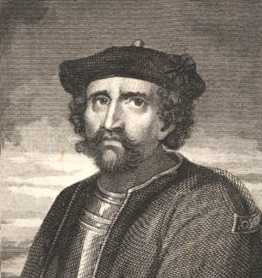
Robert Roy MacGregor (Scottish Gaelic: Raibeart Ruadh MacGriogair; baptised 7 March 1671 – 28 December 1734), usually known simply as Rob Roy or alternately Red MacGregor, was a famous Scottish folk hero and outlaw of the early 18th century, who is sometimes known as the Scottish Robin Hood. Rob Roy is anglicised from the Gaelic Raibeart Ruadh, or Red Robert. (He had red hair, Ruadh being Gaelic for red-haired, though it darkened to auburn in later life.)
Names. What does it mean to name the dog Rob-Roy? Oates's scary mastiff isn't even red. He's black.

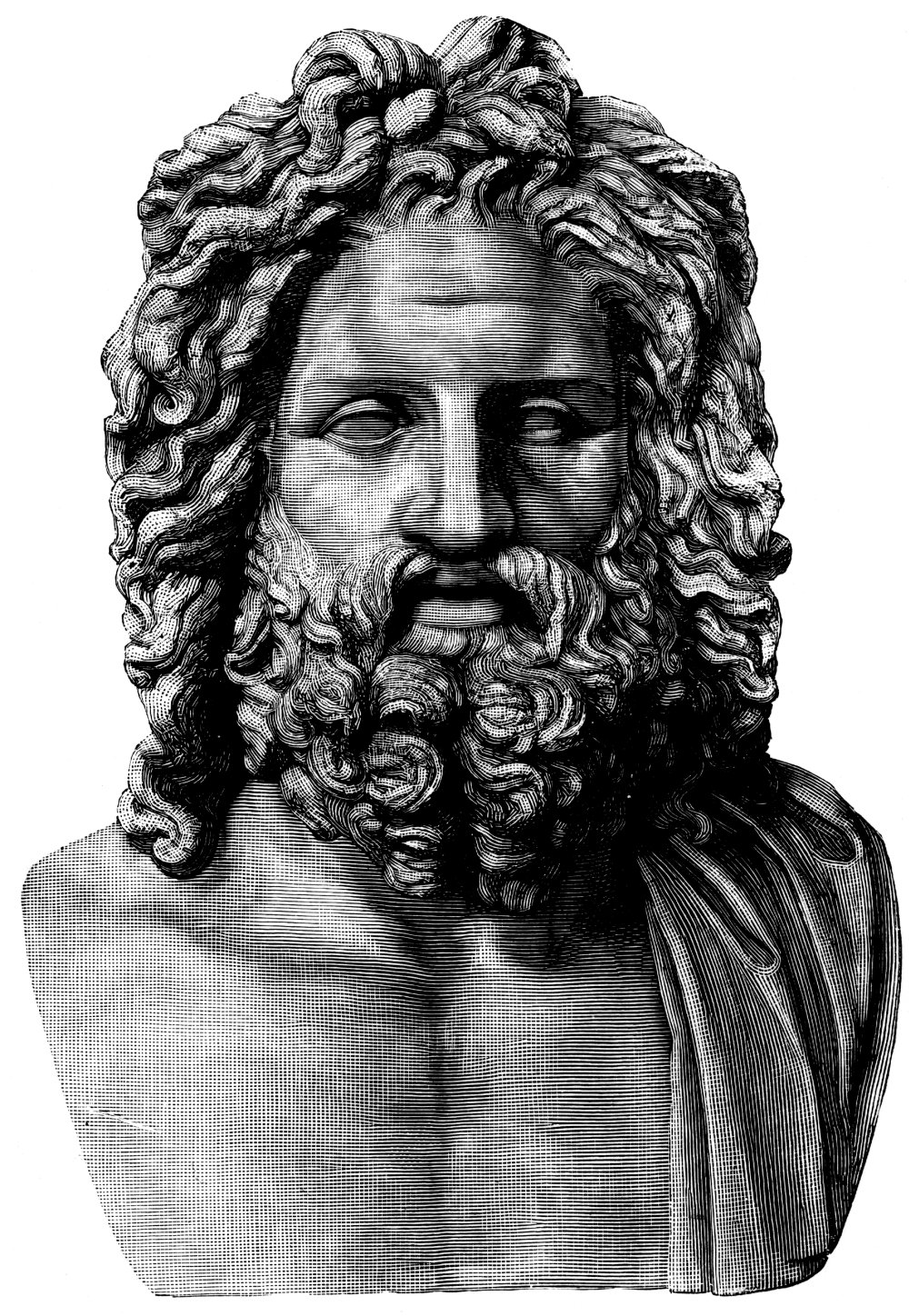
We were out on the north shore of Lake Mendota the other day with our borrowed black dog named Zeus. Along came another black Lab. "What's his name?" we ask, and the man says, "Thor."

Seeing a dog-owner with a massive dog, we are likely to think that the dog-owner is enjoying his spurious power....

I google for an image of the god Thor, and Google autocompletes to Thoreau...

१ फेब्रुवारी, २०१३

"I don’t ask writers about their work habits. I really don’t care."

"Joyce Carol Oates says somewhere that when writers ask each other what time they start working and when they finish and how much time they take for lunch, they’re actually trying to find out 'Is he as crazy as I am?' I don’t need that question answered."

That's a quote from Philip Roth, which I read just now on rereading one of the books I'd be most inclined to keep if I pared my book-books down to the minimum — "The Writer's Desk." I was going to type out the quote, but I tried Googling roth oates habits and found a whole interview surrounding it — from 1984.

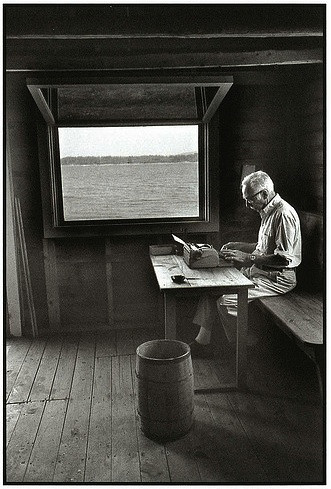
Here's an interview with Jill Krementz, the photographer whose work is collected in the book. My favorite writer-and-desk in the book this one of E.B. White.

८ ऑक्टोबर, २००९

"Will Dylan or Oates get literature Nobel today?"

Oh, how deluded we Americans are! Even to ask that question! The Europeans don't love us, and it's just embarrassing to publicly swoon about their possible love. Bob Dylan isn't going to win the Nobel Prize for Literature:
Before last year's prize announcement, outgoing permanent secretary Horace Engdahl said the United States was too insular and ignorant to challenge Europe as the center of the literary world, setting off an uproar.
Go ahead, Europe. Boost your ego at our expense. It's what you need. It's what we're here for.
However, England struck a different tone, saying that in most language areas "there are authors that really deserve and could get the Nobel Prize and that goes for the United States and the Americas, as well."
Engdahl, England... what difference does it make? Do we care what you think?
The contretemps has made people think there is a better-than-normal chance that an American will receive the prize.

Oates has been called a favorite to win for 25 years.

However, British betting firm Ladbrokes is giving the lowest odds to Israel's Amos Oz and German writer Herta Mueller.
And Herta Mueller it is.
In ... two works, Muller depicts life in a small, German-speaking village and the corruption, intolerance and repression to be found there. The Romanian national press was very critical of these works while, outside of Romania, the German press received them very positively. Because Mueller had publicly criticized the dictatorship in Romania, she was prohibited from publishing in her own country....

The novels Der Fuchs war damals schon der Jaeger (1992), Herztier (1994; The Land of Green Plums, 1996) and Heute war ich mir lieber nicht begegnet (1997; The Appointment, 2001) give, with chiselled details, a portrait of daily life in a stagnated dictatorship.
Well, let's see some sentences. Let's see some lines and passages. Let's see those "chiselled" details.

Meanwhile:
Socialism, hypnotism, patriotism, materialism.
Fools making laws for the breaking of jaws
And the sound of the keys as they clink
But there's no time to think.