It was not Trump but the far more respectable President Obama who secured passage of his signature health reform law in large part by manipulating what Obamacare architect Jonathan Gruber called “the stupidity of the American voter.”...
The problem is not that voters are stupid, or that accurate information is unavailable. Rather, for most voters, political ignorance is actually rational. No matter how well-informed you are, the probability that your vote will change the outcome of an election is tiny... [Most Americans] have an intuitive sense that there is little payoff to carefully studying political issues...
[E]ven when [Trump's] star fades, the political ignorance that fueled his rise will remain, ripe for exploitation by other candidates and interest groups. That, far more than his crude rhetoric, is the truly frightening reality revealed by The Donald.
Jonathan Gruber लेबल असलेली पोस्ट दाखवित आहे. सर्व पोस्ट्स दर्शवा
Jonathan Gruber लेबल असलेली पोस्ट दाखवित आहे. सर्व पोस्ट्स दर्शवा
५ ऑक्टोबर, २०१५
"Exploitation of ignorance was a standard political tool long before Trump decided to run for president."
Writes lawprof Ilya Somin.


२२ जून, २०१५
"MIT Economist Jonathan Gruber Had Bigger Role in Health Law, Emails Show."
Says The Wall Street Journal. (Google some of the text to get a link if you don't have a subscription.)
The White House has described Mr. Gruber as having a limited role in crafting the law. President Barack Obama in 2014 said Mr. Gruber was “some adviser who never worked on our staff.” Mr. Gruber told Congress last year he disagreed with the widespread characterization of his role as the “architect” of Mr. Obama’s health-care plan.
“His proximity to HHS and the White House was a whole lot tighter than they admitted,” said Rep. Jason Chaffetz (R., Utah), chairman of the House oversight committee. “There’s no doubt he was a much more integral part of this than they’ve said. He put up this facade he was an arm’s length away. It was a farce.”
९ डिसेंबर, २०१४
१९ नोव्हेंबर, २०१४
From a 12-year-old NYT article: Jonathan Gruber's "most embarrassing moment in government."
This is from an April 2002 article by David Leonhardt titled "How a Tax On Cigarettes Can Help The Taxed":
Did I catch hell for that. Here, they were all justifying their tax on smokers by blaming these people for forcing all of us to pay for their supposedly monumental hospital bills, and I — big, harsh-truth me — I said do you know anything about lung cancer? These people die, they don't hang around for years, they don't get multiple surgeries, they die. They're dead! And when they're dead they don't run up any more bills and they don't burden us all with endless Social Security payments either. We should be paying people to smoke, not taxing smokers more to try to get them to quit. If your argument is make people pay the true cost of their behavior, we ought to tax people for not smoking. They're the ones who will live up into their 70s and 80s — 90s! — collecting Social Security, and getting medical treatments for all their little, survivable ailments. Oh! You'd have though I was proposing to murder everybody's mom and dad. I was right, of course, but what's the use of an argument that can't be used? It doesn't matter that it's true. Does it work? I had to learn to be more aware of my surroundings. I was in government. Smokers die, and, economically speaking, that's great. Ha ha. You can't say that!
For years, economists would have said that actions speak louder than words. Whatever smokers say about quitting, they are rationally deciding that the pleasure they derive from cigarettes exceeds their cost.So, there was an argument for taxation based on the costs that smokers impose on all of us because of the health problems caused by smoking, and Gruber undercut that argument with a truth. Smokers don't cost more overall because they die earlier. Why was that so embarrassing? Well, "embarrassing" is the reporter's word, not a quote from Gruber. Gruber is a very chatty guy. Maybe he said something like:
Jonathan Gruber was one of these economists when he worked in the Treasury Department in the Clinton administration. Mr. Gruber, a professor at the Massachusetts Institute of Technology, remembers telling other policy makers that economic theory says they should not increase cigarette taxes. People should be allowed to decide for themselves whether they want to smoke, he told his colleagues. Those who smoke may hurt themselves, but they will not drain the country's resources because so many of them will die before running up large Medicare bills.
Mr. Gruber called it his most embarrassing moment in government, and his discomfort with his own argument caused him to begin researching the issue when he returned to academia.....
Did I catch hell for that. Here, they were all justifying their tax on smokers by blaming these people for forcing all of us to pay for their supposedly monumental hospital bills, and I — big, harsh-truth me — I said do you know anything about lung cancer? These people die, they don't hang around for years, they don't get multiple surgeries, they die. They're dead! And when they're dead they don't run up any more bills and they don't burden us all with endless Social Security payments either. We should be paying people to smoke, not taxing smokers more to try to get them to quit. If your argument is make people pay the true cost of their behavior, we ought to tax people for not smoking. They're the ones who will live up into their 70s and 80s — 90s! — collecting Social Security, and getting medical treatments for all their little, survivable ailments. Oh! You'd have though I was proposing to murder everybody's mom and dad. I was right, of course, but what's the use of an argument that can't be used? It doesn't matter that it's true. Does it work? I had to learn to be more aware of my surroundings. I was in government. Smokers die, and, economically speaking, that's great. Ha ha. You can't say that!
Are we too stupid to understand Jonathan Gruber?
Searching the name of the M.I.T. economist who's been talked about so much lately, I ran across a 2006 NYT Magazine article by David Leonhardt titled "What Makes People Give?"
Personally, I think Gruber is a wonderful character. I might be his biggest fan. He seems to feel the urge to say what others won't say, to tell the truth about lying, even lying that he has participated in. The truth about lying — and I'm using "lying" in its broadest sense — is that people lie all the time and it's necessary, interwoven throughout human culture.
Gruber's father seems to have had a humorous style of revealing the ways human beings dissimulate, and Gruber was inspired and has based his work on the influence of his father. I don't know the whole story of Gruber, son and father. Perhaps, Gruber — exiled, now, from politicians who need to continue their lying, deceitful activities — will compose a memoir telling us all about how he formed his intellectual orientation, with many more words from the old man.
I'm think that it is precisely Jonathan Gruber's orientation to open up any human activity and reveal the trickery. So: of course, he wanted to talk about the creation of Obamacare in terms of the rhetoric and the manipulations. He thought people would appreciate his insight into human psychology and the deception and illusion that permeate human culture. What is more fascinating? What could be more enlightening and important than to become conscious of such things — especially if you are a good and empathetic person? Gruber got in trouble for telling us that people are "stupid," and the question is why are we too stupid to see the value of studying the ways in which we are, indeed, stupid?
The answer is that the people who are talking about Gruber are still inside the political game of promoting or attacking Obamacare. They prefer to use Gruber's statements to the extent that they are useful in continuing whatever political prestidigitation they are performing.
Gruber needs to go meta. He can never insinuate his way back into the center of things. Gruber, you've been there, and they used your wisdom until it was too much wisdom, and then they shut you out and said they never knew you. Now that you can't go back, go forward. Tell all. Give us all the truth you've got — the truth about lying.
... Jonathan Gruber, an economist at the Massachusetts Institute of Technology, has conducted a mischievous experiment on the relationship between religious giving and religious observance. His inspiration was a comment his father made after he was elected treasurer of his synagogue in New Jersey. “Good,” Gruber’s father told him, with some amount of irony, “now I don’t have to go.” Somebody thinking purely about the temple might have decided that the treasurer should attend services even more often than an ordinary congregant. After all, he would need to set an example as a community leader. But someone who wanted to attain a certain commitment level — who wanted do enough to feel the warm glow of being involved in the life of the temple — would consider regular attendance and synagogue duties to be substitutes for each other.I'm presenting this to you as interesting on its own, but I also think it sheds light on the mind of Gruber, if that matters — does it? — in the current swirl of excitement around Gruber.
To see how typical his father was, Gruber dug into surveys that ask people about how they spend their money and their time. Sure enough, his dad was typical. When the tax code changed in the early 1990s and made the deduction for charitable giving more valuable, the average churchgoer gave more money — and attended services less often. Gruber called his research paper “Pay or Pray.”
Personally, I think Gruber is a wonderful character. I might be his biggest fan. He seems to feel the urge to say what others won't say, to tell the truth about lying, even lying that he has participated in. The truth about lying — and I'm using "lying" in its broadest sense — is that people lie all the time and it's necessary, interwoven throughout human culture.
Gruber's father seems to have had a humorous style of revealing the ways human beings dissimulate, and Gruber was inspired and has based his work on the influence of his father. I don't know the whole story of Gruber, son and father. Perhaps, Gruber — exiled, now, from politicians who need to continue their lying, deceitful activities — will compose a memoir telling us all about how he formed his intellectual orientation, with many more words from the old man.
I'm think that it is precisely Jonathan Gruber's orientation to open up any human activity and reveal the trickery. So: of course, he wanted to talk about the creation of Obamacare in terms of the rhetoric and the manipulations. He thought people would appreciate his insight into human psychology and the deception and illusion that permeate human culture. What is more fascinating? What could be more enlightening and important than to become conscious of such things — especially if you are a good and empathetic person? Gruber got in trouble for telling us that people are "stupid," and the question is why are we too stupid to see the value of studying the ways in which we are, indeed, stupid?
The answer is that the people who are talking about Gruber are still inside the political game of promoting or attacking Obamacare. They prefer to use Gruber's statements to the extent that they are useful in continuing whatever political prestidigitation they are performing.
Gruber needs to go meta. He can never insinuate his way back into the center of things. Gruber, you've been there, and they used your wisdom until it was too much wisdom, and then they shut you out and said they never knew you. Now that you can't go back, go forward. Tell all. Give us all the truth you've got — the truth about lying.
१८ नोव्हेंबर, २०१४
When the NYT public editor criticized Jonathan Gruber for failure to disclose his interest in a matter he was commenting on.
Back in January 2010, the New York Times public editor Clark Hoyt wrote:
Jonathan Gruber, a prominent M.I.T. health economist, wrote an Op-Ed column and was quoted frequently in other Times columns, news articles and blogs on health care reform before it came to light that he had a contract worth nearly $400,000 to analyze health proposals for the Obama administration....
The ideal expert source is entirely independent, with no stake in an outcome. But in reality, the most informed sources often have involvements, which is why they know what they know. Readers are entitled to disclosure so they can decide if there is a conflict that would affect the credibility of the information....
Gruber, the health care economist, wrote an Op-Ed column in July supporting an excise tax on so-called Cadillac health plans. Not long before, he had signed a contract with the Department of Health and Human Services to analyze the economic impact of various health care proposals in Congress. He did not tell Op-Ed editors, nor was the contract mentioned on at least 12 other occasions when he was quoted in The Times after he was consulting for the administration. After a blogger reported on Gruber’s government contract on the Daily Kos Web site, Gruber did volunteer it to Steven Greenhouse, a Times reporter interviewing him for an article on the excise tax...
Gruber said, “I guess it never occurred to me that the fact that I was doing technical modeling would matter.” He said he has long supported the tax and that the administration opposed it when he wrote his column, so he was hardly bending his views to a government paymaster.
१४ नोव्हेंबर, २०१४
Architect of the Universe.
With all this blabber about Jonathan Gruber as the "Architect of Obamacare," we got to talking about the "architect" metaphor and the idea of God as the "Architect of the Universe."

I got that image from Wikipedia, where there is an entry for "Great Architect of the Universe." Saint Thomas Aquinas wrote: "God, Who is the first principle of all things, may be compared to things created as the architect is to things designed (ut artifex ad artificiata)."And John Calvin repeatedly calls God "the Architect of the Universe." The Masons use the initials "G.A.O.T.U., meaning the Great Architect of the Universe."And the term appears in Hermeticism, Rosicrucianism, and Gnosticism.
I'm calling this to your attention not only because it's interesting on its own, but because it helps us think about the arrogance that oozes from the designation "architect." Gruber is an academic, whose work was useful in whatever way it was, either because he designed plausibly workable structures or because he mobilized the reputation of M.I.T. to be exploited to lull and soothe us. Calling him an "architect" is part of the propaganda. It's a powerful word, and when we become aware of its association with God, we may wake up to the magnitude of the flimflammery.
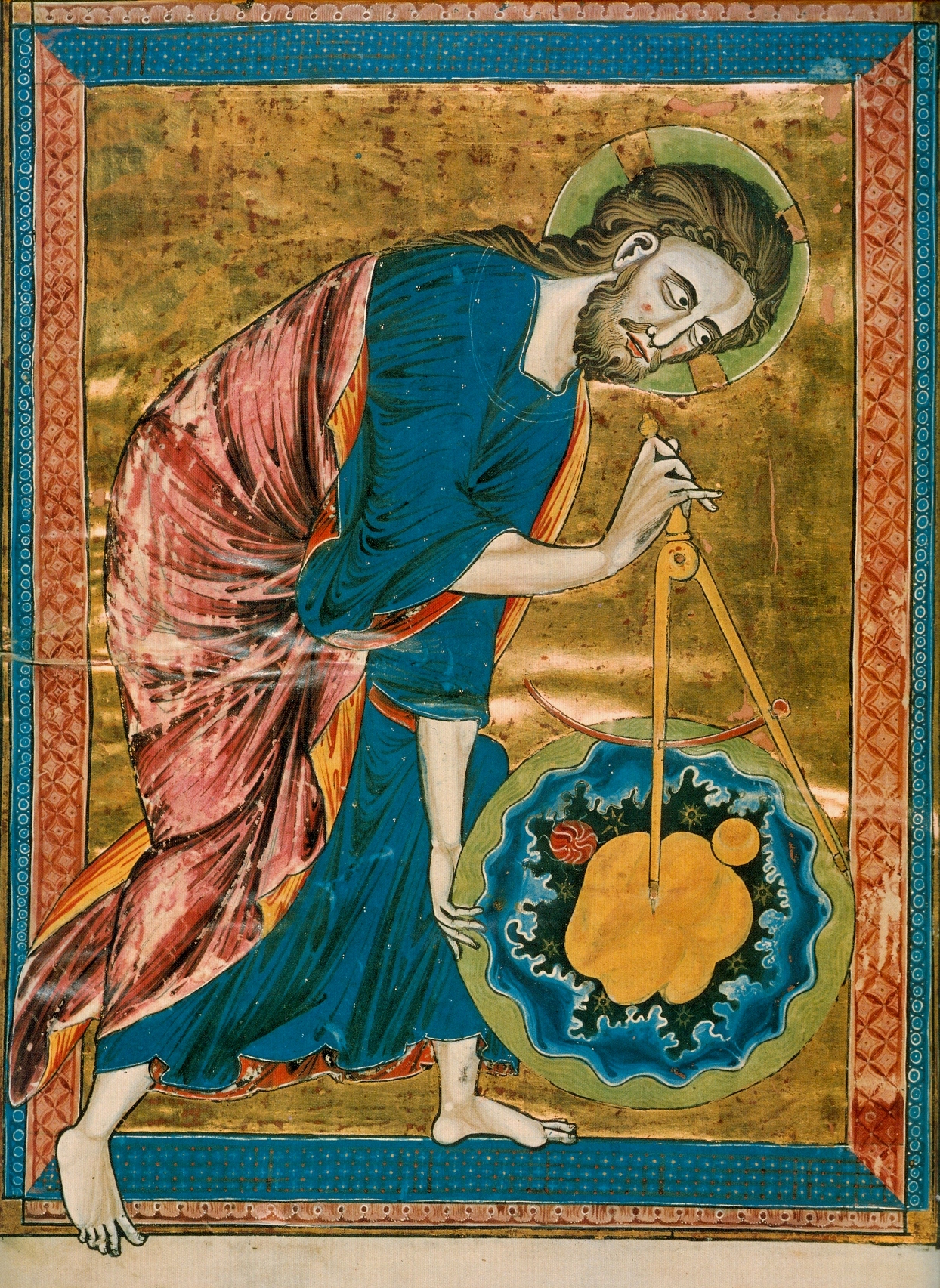
I got that image from Wikipedia, where there is an entry for "Great Architect of the Universe." Saint Thomas Aquinas wrote: "God, Who is the first principle of all things, may be compared to things created as the architect is to things designed (ut artifex ad artificiata)."And John Calvin repeatedly calls God "the Architect of the Universe." The Masons use the initials "G.A.O.T.U., meaning the Great Architect of the Universe."And the term appears in Hermeticism, Rosicrucianism, and Gnosticism.
I'm calling this to your attention not only because it's interesting on its own, but because it helps us think about the arrogance that oozes from the designation "architect." Gruber is an academic, whose work was useful in whatever way it was, either because he designed plausibly workable structures or because he mobilized the reputation of M.I.T. to be exploited to lull and soothe us. Calling him an "architect" is part of the propaganda. It's a powerful word, and when we become aware of its association with God, we may wake up to the magnitude of the flimflammery.
The Nancy Pelosi possibilities: lying, suffering from serious memory loss, or a facade whose power is exercised by unelected others.
"House Minority Leader Nancy Pelosi (D-Calif.) said Thursday that, not only did Jonathan Gruber not play a significant role in drafting Obamacare, but that she doesn't even 'know who he is'":
You have to watch the video. There's a moment at 0:13 to 0:15 where her lips move and no sound emerges that is quite strange, revealing (perhaps) that she's frightened to find herself in the middle of this statement as if she's lost in a mental maze and wondering where's the exit. At 0:21, we see her 5 years ago, in happier times. She does seem unforthcoming there too, and it's quite possible that she had no idea who Jonathan Gruber was even when she was dropping his name as if it proved that the economics of Obamacare had been carefully worked out.
ADDED: A sign of the times: Lefty website FireDogLake attacks: "Trying to pretend Gruber had no part in crafting Obamacare or that you have never heard of him despite considerable evidence to the contrary does sound like someone who is relying on a lack of transparency and the stupidity of the American voter – doesn’t it?"
You have to watch the video. There's a moment at 0:13 to 0:15 where her lips move and no sound emerges that is quite strange, revealing (perhaps) that she's frightened to find herself in the middle of this statement as if she's lost in a mental maze and wondering where's the exit. At 0:21, we see her 5 years ago, in happier times. She does seem unforthcoming there too, and it's quite possible that she had no idea who Jonathan Gruber was even when she was dropping his name as if it proved that the economics of Obamacare had been carefully worked out.
ADDED: A sign of the times: Lefty website FireDogLake attacks: "Trying to pretend Gruber had no part in crafting Obamacare or that you have never heard of him despite considerable evidence to the contrary does sound like someone who is relying on a lack of transparency and the stupidity of the American voter – doesn’t it?"
१३ नोव्हेंबर, २०१४
How does Jonathan Gruber feel?
Contemplate the possibility that he feels good.
He didn't lie. He experienced discomfort with the lying nature of others and his own implication in it. Consider the possibility that he didn't get caught telling the truth: He felt a drive to tell the truth and he is immensely, awesomely satisfied that his truth-telling has burst out and is dominating the American consciousness.
This is just a theory. I don't know how the man really feels, and I acknowledge that my theory may conflict with what I presume is his policy preference — the success of Obamacare. This is simply a line of thought that occurred to me the moment I said: "I wonder how Jonathan Gruber feels."
Sudden fame is an interesting phenomenon. I was just reading this NYT article "Alex From Target: The Other Side of Fame," about a 16-year-old boy who got famous suddenly one day when a picture of him that had been taken without his notice got tweeted by a girl with the one word caption "YOOOOOOOOOOO." It can be surreal and upsetting to get a fame surprise.
But Gruber is not a teenager. And he wasn't just minding his own business. He's a professor who thrust himself into the political policy sphere. He got his work — Architect of Obamacare! — and he had his effect, but he had his outsider observations too, and he felt distanced and above it all, and he wanted to disclose his perspective to others. He spoke openly, in an academic setting, to others who feel distanced and above it all.* And now the whole world is listening in. Gruber didn't say it directly to us, which would have been rude. He confided to like-minded confidantes, and we overheard. The American people are the distanced observers of his sphere of activity — the professors. And I want to suggest that he's energized and alive and joyous to get his message across to the vast classroom that is all of America.
______________________
* I think Barack Obama himself is that sort of person, but he's taken that manner and repurposed it for general consumption. The manner often works for him, perhaps because it plays against a racial stereotype that Americans don't like to believe they harbor. But it doesn't always work, and it must be a very strange experience for Obama, if he has the time and disposition to notice his feelings and reflect upon them. And I think he does. That's the Obama memoir I want to read. And I bet he's writing it, and we will read it some day.
ADDED: And then there's Rich Weinstein, the "nobody... the guy who lives in his mom’s basement wearing a tinfoil hat." How does he feel?
He didn't lie. He experienced discomfort with the lying nature of others and his own implication in it. Consider the possibility that he didn't get caught telling the truth: He felt a drive to tell the truth and he is immensely, awesomely satisfied that his truth-telling has burst out and is dominating the American consciousness.
This is just a theory. I don't know how the man really feels, and I acknowledge that my theory may conflict with what I presume is his policy preference — the success of Obamacare. This is simply a line of thought that occurred to me the moment I said: "I wonder how Jonathan Gruber feels."
Sudden fame is an interesting phenomenon. I was just reading this NYT article "Alex From Target: The Other Side of Fame," about a 16-year-old boy who got famous suddenly one day when a picture of him that had been taken without his notice got tweeted by a girl with the one word caption "YOOOOOOOOOOO." It can be surreal and upsetting to get a fame surprise.
But Gruber is not a teenager. And he wasn't just minding his own business. He's a professor who thrust himself into the political policy sphere. He got his work — Architect of Obamacare! — and he had his effect, but he had his outsider observations too, and he felt distanced and above it all, and he wanted to disclose his perspective to others. He spoke openly, in an academic setting, to others who feel distanced and above it all.* And now the whole world is listening in. Gruber didn't say it directly to us, which would have been rude. He confided to like-minded confidantes, and we overheard. The American people are the distanced observers of his sphere of activity — the professors. And I want to suggest that he's energized and alive and joyous to get his message across to the vast classroom that is all of America.
______________________
* I think Barack Obama himself is that sort of person, but he's taken that manner and repurposed it for general consumption. The manner often works for him, perhaps because it plays against a racial stereotype that Americans don't like to believe they harbor. But it doesn't always work, and it must be a very strange experience for Obama, if he has the time and disposition to notice his feelings and reflect upon them. And I think he does. That's the Obama memoir I want to read. And I bet he's writing it, and we will read it some day.
ADDED: And then there's Rich Weinstein, the "nobody... the guy who lives in his mom’s basement wearing a tinfoil hat." How does he feel?
"It’s terrifying that the guy in his mom’s basement is finding his stuff, and nobody else is," he says. "I really do find this disturbing."
२६ जुलै, २०१४
The NYT finally gets around to those statements of Jonathan Gruber and White House Press Secretary Josh Earnest cagily refrains from lying about lying.
I've updated my post from yesterday that criticized the NYT for not covering the statements the Obamacare architect Jonathan Gruber had made about the consequences for citizens of states that failed to set up insurance exchanges. These statements were the talk of the internet yesterday because they ruined the spin on the purportedly nonsensical D.C. Circuit opinion in Halbig.
What's more likely, that he "made a mistake in some 2012 speeches" or that he's lying now?
The Press Secretary Earnest isn't lying, but if you look closely at each of his remarks, you can see that he seems to know he's making a series of technically true statements that avoid asserting that Gruber is telling the truth now when he calls the 2012 remarks "a mistake." 1. Gruber's "views... are pretty clear." Check. 2. Gruber called his remarks "a mistake." Absolutely true. That's exactly what Gruber said. 3. Gruber's overarching goal has been to get health insurance tax credits to people. Again, Earnest is correct —cagily correct — because lying now about making a mistake back then is exactly what serves that overarching goal, just as saying what he said in 2012 served that goal.
Lying is a means to an end, and one can steadfastly adhere to one's end while changing your statements as needed to serve that end. That's what liars do! To justify their behavior by pointing to their dedication to a single end is only to explain the motivation to lie. Yet that's what Josh Earnest expects us to swallow.
UPDATE: Searching for "Jonathan Gruber" at 9:42 a.m. Saturday morning — about 18 hours after I published this post — I see that the NYT put up an article "13 hours ago," dated July 25, 2014, the same date as this post. The article, written by Robert Pear and Peter Baker is titled "Ex-Obama Aide’s Statements in 2012 Clash With Health Act Stance." Excerpt:The inconsistency between what Gruber said in the friend-of-the-court briefs in the current litigation and what he said in 2012 doesn't persuade me that he "made a mistake" back then. In 2012, the effort was to pressure and frighten the politicians in the various states so that they would set up the exchanges. Now, after so many states resisted that pressure, the effort is to preserve the federal exchanges that were set up. At both points in time, Gruber said what served the goals of the program.
Mr. Gruber backed away from his comments on Friday. But the remarks embarrassed the White House and could help plaintiffs in court cases challenging the payment of subsidies in 36 states that rely on the federal exchange.
“I made a mistake in some 2012 speeches in describing the tax credits,” Mr. Gruber said in an email on Friday. “It is clear from all my writings and modeling that I did over this same time period that tax credits are assumed to be available in all states. This is the only sensible reading of the Affordable Care Act and is corroborated by every single person who helped craft the law.”...
The White House played down the video on Friday, saying that Mr. Gruber had made clear in friend-of-the-court briefs that he supports the administration’s interpretation.
“His views on this are pretty clear,” said Josh Earnest, the White House press secretary. “I think that he described those remarks as a mistake. But I’d refer you to his explanation for why he said them. I think what is clear is that he, like Congress, intended for every eligible American to have access to tax credits that lower their health care costs, regardless of who is operating their marketplace.”
What's more likely, that he "made a mistake in some 2012 speeches" or that he's lying now?
The Press Secretary Earnest isn't lying, but if you look closely at each of his remarks, you can see that he seems to know he's making a series of technically true statements that avoid asserting that Gruber is telling the truth now when he calls the 2012 remarks "a mistake." 1. Gruber's "views... are pretty clear." Check. 2. Gruber called his remarks "a mistake." Absolutely true. That's exactly what Gruber said. 3. Gruber's overarching goal has been to get health insurance tax credits to people. Again, Earnest is correct —cagily correct — because lying now about making a mistake back then is exactly what serves that overarching goal, just as saying what he said in 2012 served that goal.
Lying is a means to an end, and one can steadfastly adhere to one's end while changing your statements as needed to serve that end. That's what liars do! To justify their behavior by pointing to their dedication to a single end is only to explain the motivation to lie. Yet that's what Josh Earnest expects us to swallow.
२५ जुलै, २०१४
Everybody's talking about Jonathan Gruber today, so let's see what The New York Times has.
"Mr. Gruber, 46, hates traveling without his wife and three children, so he is tracking the case from his home in Lexington, Mass. There he crunches numbers and advises other states on health care, in between headbanging at Van Halen concerts with his 15-year-old son and cuddling with the family’s eight parrots. (His wife, Andrea, volunteers at a bird rescue center.)"
Oh... that was back in March 2012, in a piece called "Academic Built Case for Mandate in Health Care Law" or as it comes up in the site search: "Jonathan Gruber, Health Care's Mr. Mandate."
So bang your head and cuddle your parrots... or go somewhere else to find out what's up with Gruber:
Oh... that was back in March 2012, in a piece called "Academic Built Case for Mandate in Health Care Law" or as it comes up in the site search: "Jonathan Gruber, Health Care's Mr. Mandate."
So bang your head and cuddle your parrots... or go somewhere else to find out what's up with Gruber:
"Watch Obamacare Architect Jonathan Gruber Admit in 2012 That Subsidies Were Limited to State-Run Exchanges."
Peter Suderman shows and explains why the D.C. Circuit's opinion in Halbig makes sense (despite efforts of Obamacare supporters to portray it as nonsensical).
Here's what Gruber said (and there's video at the link):
Fix it, courts.

(The illustration is "Fix it, Daddy," by Frank Kelly Freas, a cover for Astounding Science Fiction, October 1953.)
AND: Remember, the original ACA had the states losing all their Medicaid funding if they declined to participate in the Medicaid extension. The mindset was: Make them an offer they can't refuse. (In NFIB v. Sebelius, Chief Justice Roberts limited the incentive to the Medicaid extension so that it wouldn't be coercion, because if it's coercion it's not within the spending power. (Congress may attach conditions to money it offers the states, but the states must have a choice, and Congress lacks constitutional power to simply dictate that states carry out a federal program.))
Here's what Gruber said (and there's video at the link):
What’s important to remember politically about this is if you're a state and you don’t set up an exchange, that means your citizens don't get their tax credits—but your citizens still pay the taxes that support this bill. So you’re essentially saying [to] your citizens you’re going to pay all the taxes to help all the other states in the country. I hope that that's a blatant enough political reality that states will get their act together and realize there are billions of dollars at stake here in setting up these exchanges. But, you know, once again the politics can get ugly around this.The whole point was to coerce the states to set up the exchanges, and the consequences were supposed to be dire. That was the point. Now, the courts are asked to read the statute not to result in those consequences because they're unthinkably harsh. Congress couldn't have meant that.
Fix it, courts.

(The illustration is "Fix it, Daddy," by Frank Kelly Freas, a cover for Astounding Science Fiction, October 1953.)
AND: Remember, the original ACA had the states losing all their Medicaid funding if they declined to participate in the Medicaid extension. The mindset was: Make them an offer they can't refuse. (In NFIB v. Sebelius, Chief Justice Roberts limited the incentive to the Medicaid extension so that it wouldn't be coercion, because if it's coercion it's not within the spending power. (Congress may attach conditions to money it offers the states, but the states must have a choice, and Congress lacks constitutional power to simply dictate that states carry out a federal program.))
याची सदस्यत्व घ्या:
पोस्ट (Atom)


 पोस्ट्स


