લેબલ Helen Gurley Brown સાથે પોસ્ટ્સ બતાવી રહ્યું છે. બધી પોસ્ટ્સ બતાવો

2 ઑગસ્ટ, 2019

"... Playboy was quietly relaunched this year — this time as a thick-stock, matte-paper, ad-free quarterly. It is edited by a millennial triumvirate..."

"... the openly gay Mr. Singh, 31; Erica Loewy, 26, the creative director; and Anna Wilson, 29, who oversees photography and multimedia.... The summer issue, out now, features an interview with Tarana Burke, the activist who founded the MeToo movement, conducted by Dream Hampton, whose documentary about R. Kelly led to multiple charges against the singer. There is a queer cartoon and a feature on gender-neutral sex toys. The fall issue will feature a photo feature by the artist Marilyn Minter celebrating female pubic hair. 'We have red hair, blond hair, black hair — it’s basically every color of the rainbow,' said Liz Suman, 35, the magazine’s arts editor. She added that elsewhere in the publication, 'I’ve been sneaking in some penises, too.'....  In the office, members of the staff use terms like 'intersectionality,' 'sex positivity,' 'privileging' and 'lived experience' to describe their editorial vision — and tout their feminist credentials. Two editors are former employees of Ms.... 'We talk a lot about what’s the Playboy gaze and how we need to diversify that,' said Rachel Webber, 37, the chief marketing officer.... 'It’s a little like being in a gender studies class,' she added."

From "Can the Millennials Save Playboy?/The Hefners are gone, and so is the magazine’s short-lived ban on nudity — as well as virtually anyone on the staff over 35" (NYT).

Playboy is just a brand name. You can completely change a product under a name. Will it work? Was there enough value in the old version of the product that it's not good business to repurpose the name? Look at this big NYT article they got out of it!

Remember Cosmopolitan magazine?
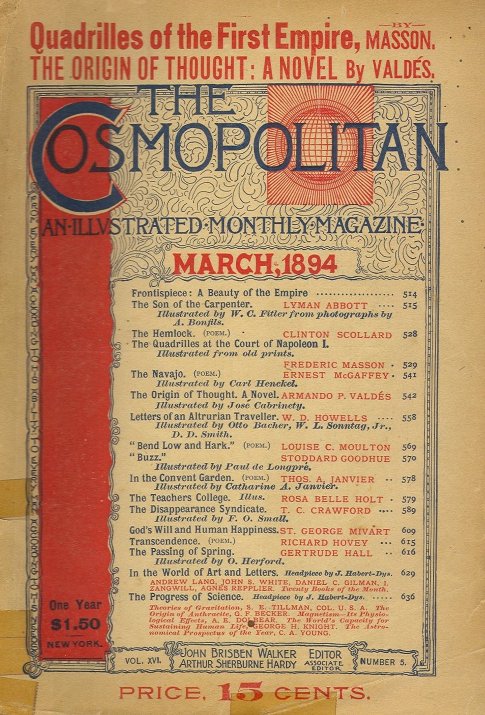


It had been around since 1886 when Helen Gurley Brown took over in 1965. Originally, it was introduced as a "first-class family magazine" with articles on fashion, interior decoration, childcare, and cooking. In 1905, William Randolph Hearst took over and changed it into a place with articles like "The Growth of Caste in America" and writers including George Bernard Shaw and Upton Sinclair, and Ida Tarbell. By the 1950s, the circulation was way down and it was considered very dull.
Helen Gurley Brown took over and completely changed it into an active promotion of sex for the single woman.
In Brown's early years as editor, the magazine received heavy criticism. In 1968 at the feminist Miss America protest, protestors symbolically threw a number of feminine products into a "Freedom Trash Can." These included copies of Cosmopolitan and Playboy magazines. Cosmopolitan also ran a near-nude centerfold of actor Burt Reynolds in April 1972, causing great controversy and attracting much attention....

Victoria Hearst, a granddaughter of William Randolph Hearst..., has lent her support to a campaign which seeks to classify Cosmopolitan as harmful under the guidelines of "Material Harmful to Minors" laws. Hearst, the founder of an evangelical Colorado church called Praise Him Ministries, states that "the magazine promotes a lifestyle that can be dangerous to women's emotional and physical well being. It should never be sold to anyone under 18."... 
ADDED: One nice thing about the new Playboy website is access to old Playboy interviews. I once subscribed to Playboy, the website, just because I wanted to read the Allen Ginsberg interview (from 1969). But here it is now, free: "A poet, a mystic, a homosexual, a psychedelic proselyte, a revolutionary, a bearded prophet of doom for what he considers society's 'sick' values, he is among the most famous and certainly the most controversial of living poets." There was plenty of detail about homosexuality in that interview (which I read when I was 18, in my family home, where Playboy was always openly available):
Would you explain what you mean when you say there's a natural element of homosexuality in every man?

There's homosexuality in every Playboy reader. To say that in a Playboy Interview is interesting because obviously every Playboy reader expects me to say that; so I'll say it and liberate him from his fear that somebody will say it sooner or later.

14 ઑગસ્ટ, 2012

"At her most radical, [Helen Gurley] Brown was a subversive rather than a revolutionary..."

"... a sexual libertarian rather than a liberator; and an unapologetic partisan of free enterprise." 
(She once called Margaret Thatcher a “Cosmo Girl.”) “How could any woman not be a feminist?” she wondered, in 1985, in an interview on her twentieth anniversary at Cosmopolitan. “The girl I’m editing for wants to be known for herself. If that’s not a feminist message, I don’t know what is.”

Feminists come in every bra size, and what feminist would deny or belittle Brown’s achievements? But, whoever her reader was, the dewy model or celebrity who appeared on the cover of her magazine every month for thirty-two years never resembled Mrs. Thatcher, and, indeed, looked suspiciously like a bimbo to the older generation of militants for women’s rights....
Via the Metafilter discussion of Brown's death.

13 ઑગસ્ટ, 2012

Helen Gurley Brown — the magnificent Cosmopolitan editor — has died at the age of 90.

Goodbye to a great lady.
"Helen Gurley Brown was an icon. Her formula for honest and straightforward advice about relationships, career and beauty revolutionized the magazine industry," said Frank A. Bennack, Jr., CEO of Hearst Corporation. "She lived every day of her life to the fullest and will always be remembered as the quintessential 'Cosmo girl.' She will be greatly missed."
I was never the Cosmo girl type, but I respect the media genius, even one who speaks mostly to other people. Though I never bought a copy of Cosmo for myself, I read every issue of the magazine for 2 years in the mid-70s, when I had my pre-law school job in a market research company, analyzing magazines, and Cosmo was one of the magazines.
It was her 17th job, at the advertising agency Foote, Cone, and Belding, that launched her future success. As executive secretary to Don Belding, Gurley Brown's work ethic and witty notes impressed both her boss and his wife, who suggested she try her hand at writing advertising copy. She proved her talent, winning prizes for her copy. By the late 1950s, she had become the highest-paid female copywriter on the West Coast and one of the few to be listed in Who's Who of American Women. (She is also recognized in Who's Who in America, Who's Who in The World, and the World Book of Facts.) 
In 1959, at the age of 37, Gurley Brown married Brown, 43, then a film executive at 20th Century Fox Studios, and later an independent producer. During their marriage, Brown was a partner behind many of Gurley Brown's projects, even writing Cosmo cover lines. It was he who persuaded her to write a book about her life as a single woman. The result, Sex and the Single Girl (1962), took the nation—and then globe—by storm....

The Browns... worked together to keep Helen in the public eye. She wrote a syndicated newspaper advice column and made record albums and radio spots. The pair pitched plays, television shows, more books, and new magazines for single women. One, a magazine called Femme, attracted the interest of Hearst Magazines. But instead of a new title, they agreed to let her try to revive Cosmopolitan magazine.
She was a famously single woman and a brilliantly married woman. There's lots more at the linked article, which ends with the quote:
"Before I wrote my book, the thought was that sex was for men and women only caved in to please men. But I wrote what I knew to be true—that sex is pleasurable for both women and men."
Here's the ultra-famous book. (And here's the movie they made out of it — with Natalie Wood.)

26 જૂન, 2012

Goodbye to Nora Ephron.

She was 71.
In the late 1960s Ms. Ephron turned to magazine journalism, at Esquire and New York mostly. She quickly made a name for herself by writing frank, funny personal essays — about the smallness of her breasts, for example — and tart, sharply observed profiles of people like Ayn Rand, Helen Gurley Brown and the composer and best-selling poet Rod McKuen. Some of these articles were controversial. In one, she criticized Betty Friedan for conducting a “thoroughly irrational” feud with Gloria Steinem; in another, she discharged a withering assessment of Women’s Wear Daily....

Her first screenplay, written with her friend Alice Arlen, was for “Silkwood,” a 1983 film based on the life of Karen Silkwood, who died under suspicious circumstances while investigating abuses at a plutonium plant where she had worked...

Ms. Ephron followed “Silkwood” three years later with a screenplay adaptation of her own novel “Heartburn,” which was also directed by Mr. Nichols. But it was her script for “When Harry Met Sally,” which became a hit Rob Reiner movie in 1989 starring Billy Crystal and Meg Ryan, that established Ms. Ephron’s gift for romantic comedy...

[She wrote] “Sleepless in Seattle” (she shared the screenwriting credits), which brought Tom Hanks and Meg Ryan together so winningly that they were cast again in “You’ve Got Mail.”
A woman of our time. It's sad to lose her. I wish the obit (in the NYT) had a bunch of links to old magazine articles and to movie clips. The article about Ayn Rand is in "Wallflower at the Orgy." There's also: "Scribble Scrabble," "Crazy Salad," "I Feel Bad About My Neck," and "Heartburn," which is the one about the breakup of her marriage to Carl Bernstein, which was made into a movie with Meryl Streep and Jack Nicholson. Here's a little clip of the 2 greatest actors of our time enacting the scenes of Ms. Ephron's marriage:


Let's sing all of the songs we know about babies....

ADDED: I just downloaded "Wallflower at the Orgy" to get the Ayn Rand essay, which begins:
Twenty-five years ago, Howard Roark laughed. Standing naked at the edge of a cliff, his face gaunt, his hair the color of bright orange rind, his body a composition of straight, clean lines and angles, each curve breaking into smooth, clean planes, Howard Roark laughed. It was probably a soundless laugh; most of Ayn Rand’s heroes laugh soundlessly, particularly while making love. It was probably a laugh with head thrown back; most of Ayn Rand’s heroes do things with their heads thrown back, particularly while dealing with the rest of mankind. It was probably a laugh that had a strange kind of simplicity; most of Ayn Rand’s heroes act with a strange kind of simplicity, particularly when what they are doing is of a complex nature.
Beautiful! Twenty-five years ago... that was was written in 1968.... 69 years ago...