Ipinapakita ang mga post na may etiketa na Diane Arbus. Ipakita ang lahat ng mga post

Marso 20, 2026

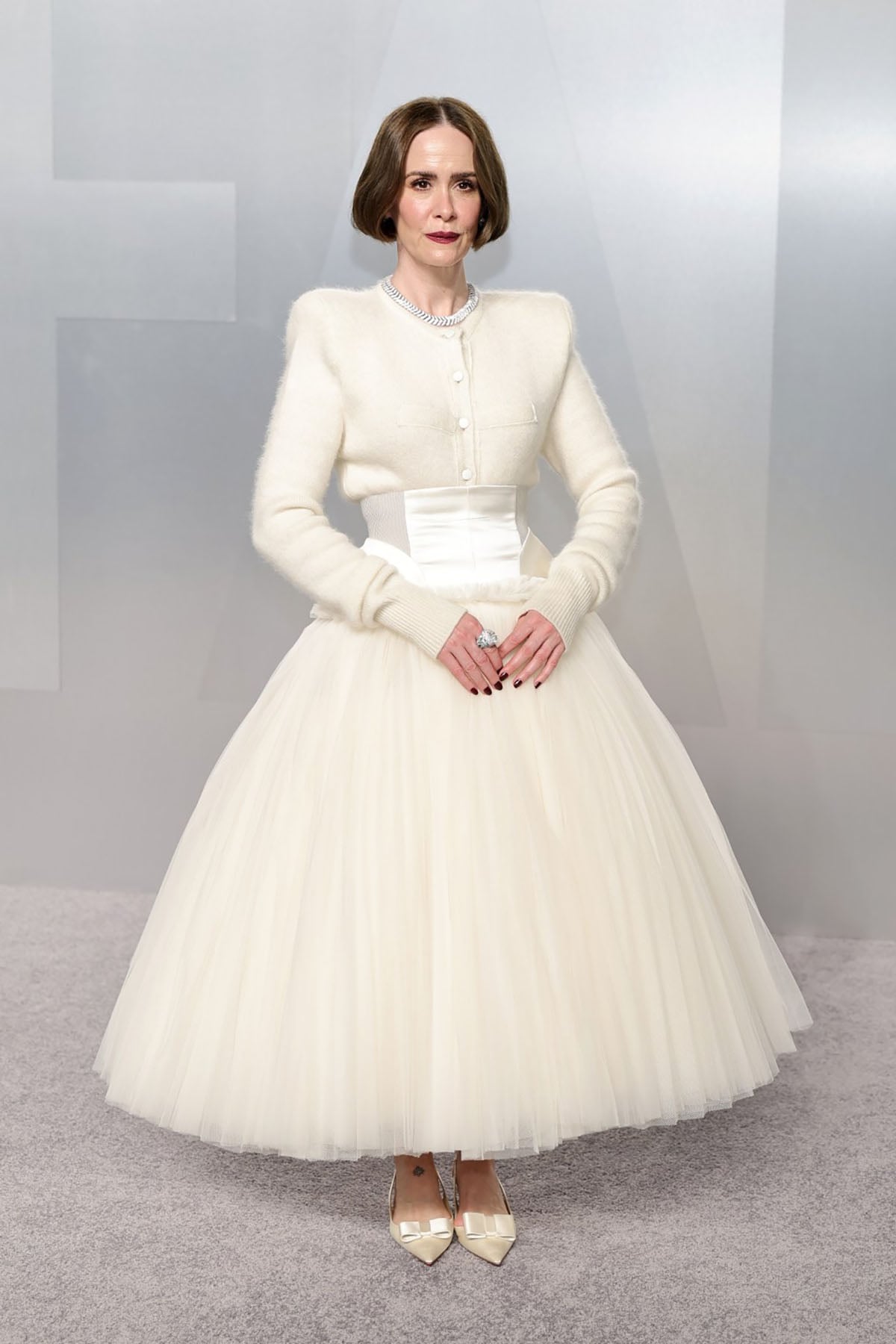
"One poor actress looked like a Diane Arbus character. She was on her phone looking at her pictures and shrieking at her publicist. I heard that she went home and cried herself to sleep. Nobody has heard from her since!"

Said one partygoer, quoted in "Vanity Fair’s Oscar Party Light-Mare Some stars are said to be fuming over the magazine’s red carpet photo fiasco. 'One actress looked like a Diane Arbus character!' snipes a VF insider. 'She went home and cried herself to sleep'" (Hollywood Reporter).

If I had to guess which picture that comment refers to, I'd say this photo of the actress Sarah Paulson.

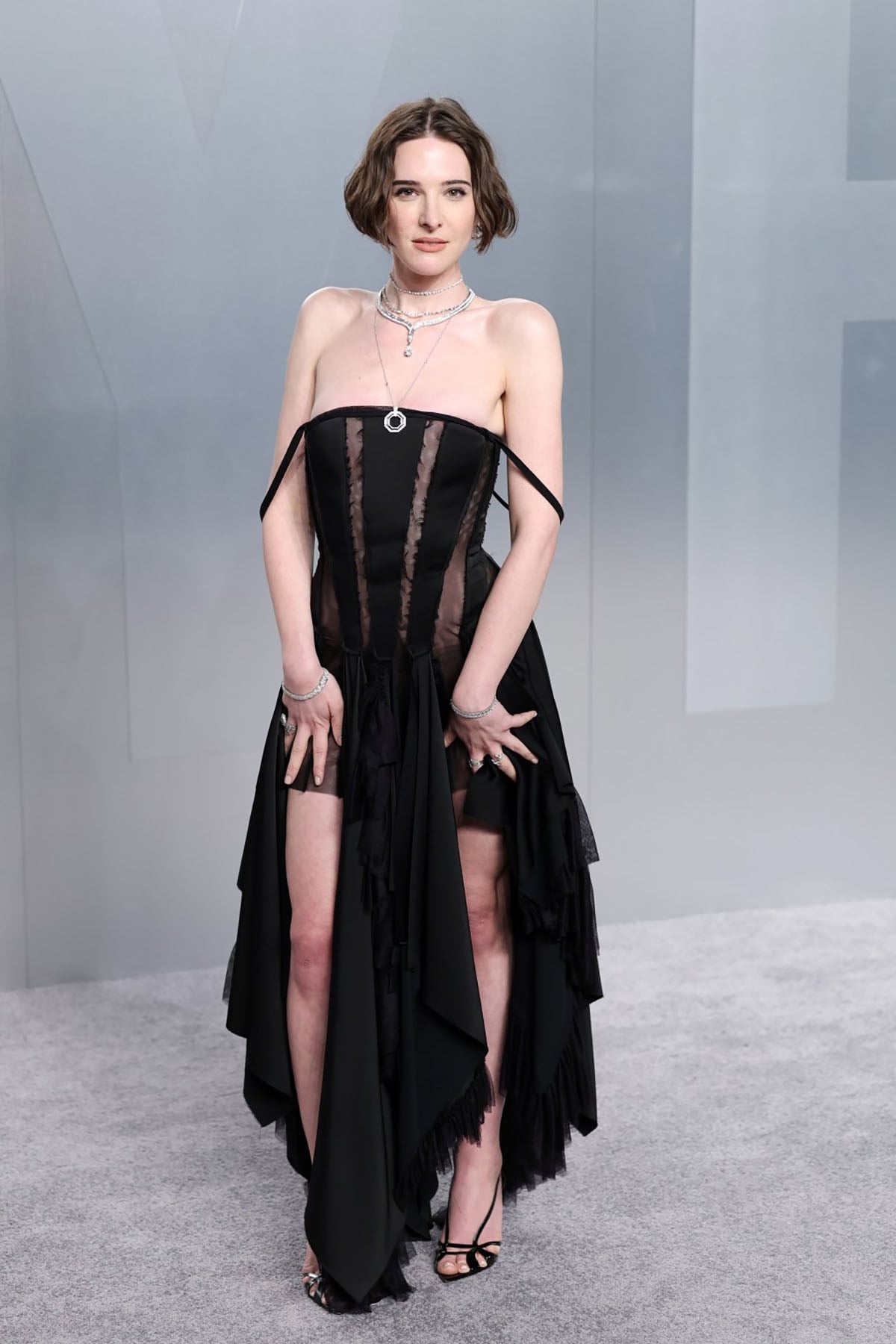
Scroll here to see more of the Vanity Fair Oscar party photos. It's not just that the lighting brings out the worst, it's that the worst is there to be brought out.

More pics and complaints at "A-listers left fuming and in tears over ‘unforgiving’ Vanity Fair Oscar Party lighting" (NY Post). Monitor your thoughts as you scroll. It might be a miraculous cure for envy. That picture of Heidi Klum has the aura of an ordinary woman in a bleak dressing room realizing this dress is doing her no favors.

Here's the Diane Arbus photo "Child with a toy hand grenade in Central Park, N.Y.C., 1962." I thought of it when I saw this photo from the VF party.

Setyembre 26, 2022

"[W]e are like monkeys at a tea party. All of us. What’s more, we are in denial. We finesse and accessorize our self-image..."

"... but those very accessories (in Arbus’s world they may be leopard-skin pillbox hats, strings of pearls, Halloween masks, tight jeans, tattoos, tidy bourgeois interiors, boaters, bow ties or even brazen, dare-you-to-object nakedness) are continually giving away the game. Bob Dylan once mockingly sang that a leopard-skin pillbox hat 'balances on your head just like a mattress balances on a bottle of wine.' But to Arbus, who began as a fashion photographer, the various forms our denial takes were not contemptible. They were strange, riveting, poignant. Arbus was as averse to sentimentality as she was free from disgust or contempt. Her insight was not in itself original. Nonetheless it deepened in her hands in unique ways. That she was a photographer and not a painter or sculptor was crucial to her expression of the 'we’re-all-monkeys-at-a-tea-party' idea."

So writes Sebastian Smee, in "Diane Arbus was accused of exploiting ‘freaks.’ We misunderstood her art. Fifty years on, Arbus’s photographs look very different in this ingenious gallery exhibition" (WaPo). 

A gallery in NYC is recreating the Museum of Modern Art show — "the posthumous retrospective that established the Arbus legend" — that was immensely well attended 50 years ago. I attended. And I, like many others, bought the book of photographs. But I'm not going to quibble with Smee's idea that "we misunderstood" at the time. There was plenty of varied opinion then, and it's patronizing to hear someone who was a newborn baby at the time characterize what we were all saying and thinking back then.

The reason I'm not going to barrel down that conversational highway is I'm getting off at the exit marked "Bob Dylan."

The line "You know it balances on your head/Just like a mattress balances/On a bottle of wine" has been a favorite of mine for well over 50 years. Such a great image, and the funniest part is that it's impossible to picture. You have to picture 2 things — the hat on the head and the mattress on the bottle of wine. It's easy to picture a hat on a head, but just as you begin to do that, you're challenged to picture a balancing that cannot happen — a soft flexible expanse atop a narrow, hollow column (which distracts you into thinking about sex (in a way that you can't really see)) — and then to go back to the hat and try to visualize it balancing like... what? From anyone but Bob, this would be an annoying failure to craft a simile. From Bob... genius!

So, quick aside: Don't try to take your own "Diane Arbus" pictures.

Back to Bob: "Bob Dylan once mockingly sang that a leopard-skin pillbox hat 'balances on your head just like a mattress balances on a bottle of wine.'" Was Bob mocking the "you" in her hat? Read the lyrics. He's crazy about the hat. He's having some problems with the lady, but he's quite enthusiastic about her and even more in love with the hat. Not mocking, I'd say, but being funny, sexually excited, and a bit angry.

Smee suggests that Dylan was expressing contempt for the hat: "But to Arbus, who began as a fashion photographer, the various forms our denial takes were not contemptible." Contempt and denial — denial that we are the monkeys at a tea party that we are. Smee says "Arbus was as averse to sentimentality as she was free from disgust or contempt." But Bob Dylan was averse to sentimentality and free from disgust and... sometimes even from contempt. I don't think Smee meant to take a sideswipe at Bob Dylan, but that was careless. Smee forgot to close the garage door.

Mayo 4, 2021

"The Bidens are GIGANTIC. I had no idea."

ADDED: That picture is mindbending. Fortunately, The Guardian investigated: "Why do the Carters look so tiny alongside Joe Biden and his wife Jill in this picture?/You don’t need special gear to create this optical trickery. If you have an iPhone 11 or 12 you too can loom large over a former US president." 

What amazes me is that the picture was chosen for sharing. It looks like it was the Carter Center that tweeted it. I think that showed poor judgment, but maybe they knew it was hilarious and wanted to amuse us.

PLUS:

FROM THE EMAIL: Nancy links to this famous Diane Arbus photograph and says: 

This was the first image that came to mind when I saw the Tiny Carter’s. (Finally, a name for my new band.) 

Perhaps The Carter Center has a good, slightly twisted sense of humor as this also reminded me of the story of Jimmy battling the giant rabbit.

I see "Jimmy Carter Rabbit Incident" has its own Wikipedia page.

Marso 8, 2018

"Since 1851, The New York Times has published thousands of obituaries: of heads of state, opera singers, the inventor of Stove Top stuffing and the namer of the Slinky."

"The vast majority chronicled the lives of men, mostly white ones; even in the last two years, just over one in five of our subjects were female. Charlotte Brontë wrote 'Jane Eyre'; Emily Warren Roebling oversaw construction of the Brooklyn Bridge when her husband fell ill; Madhubala transfixed Bollywood; Ida B. Wells campaigned against lynching. Yet all of their deaths went unremarked in our pages, until now...."

From "Overlooked/Since 1851, obituaries in The New York Times have been dominated by white men. Now, we're adding the stories of 15 remarkable women." (NYT). Among the omitted are Diane Arbus, who died in 1971. You'd think by 1971, the NYT would have caught up to the idea that women are people. But perhaps the fame of Diane Arbus was slow-developing, mostly post-death.  I was, at first, struck by the failure to do an obituary for Sylvia Plath, but she died in 1963, and I think it's pretty clear in that case that her fame arrived posthumously, perhaps because women's-movement proponents were working to elevate stories about women.

Yes, we the general public got to know Arbus because of a book of her work that came out in 1972 (a year after her death), and Sylvia Plath got big because of "The Bell Jar," which was published in 1971, 8 years after her death. And both Arbus and Plath committed suicide. As the NYT says in its late-arriving obituary for Plath, "Because the death was a suicide, Plath’s family did not much advertise it...." If someone who is not already quite famous commits suicide, I'm guessing, obituaries are rare, even for white men.

As for obituaries like the one for the man who invented Stove Top stuffing and the man who named the Slinky, they don't stand for the proposition that men don't have to do much to get a NYT obituary. They stand for the NYT practice of doing quirky obituaries for people with interestingly specific accomplishments. These are a wonderful sub-genre in the NYT, some of the most fun reading the newspaper offers. Don't diminish these obituaries as evidence of sex discrimination. I love those things, and they're often about women.

Here's an article from last year about a documentary about writing obituaries in the NYT:

Hunyo 13, 2016

"She once said that she had sex with any man who asked for it..."

"... and described a pool party at which she worked through the various men, one after the next, as if they were canapés."

From "In the Picture"/A new biography of Diane Arbus," by Anthony Lane (in The New Yorker).

Also: "Arbus...  confessed to being jealous of her younger sister, Renee, for having been raped as a teen-ager. Diane was said to radiate 'aggressive vulnerability,' and some people were worn down by posing for her, hour upon hour, until they were frazzled and frayed; only then would she get the shot she required."

Nobyembre 21, 2012

"It's not surprising that we're so bitter, and we cling to hand grenades and Anglican religion and we use Va-a-a-a-se-line."

That quote ends the previous post, which you need to absorb — perhaps with a piece of toast — to ready yourself for the following exercise in photo comparison.

We have here 2 famous expressions. The first is "Child with Toy Hand Grenade in Central Park" (in the 1962 Diane Arbus photograph) and the second is President Obama, enjoying the perks of the presidency, doing the "not impressed" pose with McKayla Maroney:


(Click photos to enlarge.)

"Question: What kind of dumbass packs a freaking grenade in his carry-on ... and accidentally tries to take it onto a plane?"

"Answer: Flaming Lips singer Wayne Coyne. And he shut down an Oklahoma City airport in the process."
According to reports, Coyne was flying to LAX to catch a preview of the new Flaming Lips musical "Yoshimi Battles the Pink Robots" -- and told police he was given the dead grenade at a party as a joke.

Shocker, the grenade reportedly resulted in several missed flights ... and lots of wasted money -- but once TSA determined it was harmless, they let Coyne go.
Sorries duly tweeted:

ADDED: To demonstrate The Flaming Lips to Meade, I found "She Don't Use Jelly" in YouTube, where there are over 1500 comments, most of which seem to be new verses for the song — which is the kind of song that you can learn immediately and then make up your own words to off the top of your head in the style of the original. I know a girl who... etc. etc. It's easier than limericks. Try it!

Top comment at YouTube:
I know a King who likes to kill
in front of the public - coz it's such a thrill,
but he don't use nooses
and he don't need the police.
He don't use lions
or any of these.
He uses guuuu-iii-lll-otines
"She Don't Use Jelly" came out in 1993 — which was a fun year for watching TV around here. Wikipedia says:
According to Coyne, "The song came to me very quickly...."
I'll bet it did. Let's all strum a guitar, sing like a child (or is that singing like Neil Young?), and use just about the first silly words that come to mind and rhyme. The song got popular a year after its release when it was mocked on "Beavis and Butt-Head."
"You know the chick who makes you toast? Heh heh. So what?"

"I can make toast. Heh heh."

"Really."

"Uh oh. I think this is college music."...

"You know how you can tell this is college music? They're in a field."

"Yeah. Fields suck."
Fascinating how something supremely mockable, originally seen being mocked, gets to be thoroughly liked, and here is this band, 20 years later, still popular, making a musical, and that dumb, easy song is still their biggest hit. The mystery of American pop culture.

AND: I don't accept Coyne's tweeted apology. I want him to apologize by taking that hand grenade and getting a photograph of himself made in the pose of "Child with Toy Hand Grenade in Central Park" — by Diane Arbus:
Arbus captured this photograph by having the boy stand while moving around him, claiming she was trying to find the right angle. The boy became impatient and told her to "Take the picture already!" His expression conveys his exasperation and impatience with the whole endeavor, as the contact sheet for the shoot reveals. In other pictures, he is seen as a happy child.
But the picture became an icon of what's wrong with America — with its mentally ill attachment to weapons. It's not surprising that we're so bitter, and we cling to hand grenades and Anglican religion and we use Va-a-a-a-se-line.