Ayaan Hirsi Ali लेबल असलेली पोस्ट दाखवित आहे. सर्व पोस्ट्‍स दर्शवा

१५ नोव्हेंबर, २०२३

"Even if belief in invisible watchers has its social uses, if such beings don’t exist it’s a pretty odd thing that societies the world over..."

"... have converged on the belief that we share the cosmos with them. To say nothing of the specific doctrines and miraculous claims associated with that belief: For instance, if Christianity disappeared from everyone’s memory tomorrow, it would be odd indeed for a modern Western thinker seeking meaning amid disillusionment to declare, 'what we need here is the doctrine of the Trinity and a resurrected messiah with some angels at the tomb.'..."

Writes Ross Douthat, in "Where Does Religion Come From?" (NYT). Douthat is contemplating the reaction to Ayaan Hirsi Ali's announcement that she has converted to Christianity. Does she really believe? She said, as Douthat puts it, "that atheist materialism is too weak a base upon which to ground Western liberalism" and "she found 'life without any spiritual solace unendurable.'"

Some critics were Christians who noticed a failure to say that Christianity is true, and some critics were atheists who were sorry she didn't see the truth that is atheism. 

Douthat goes on at great length and quite a bit of it is about UFOs and, more generally, weirdness.

१० मे, २०२१

"But she wasn’t interested in a rational discussion. She interrupted me mid-sentence, launching into a monologue about John Bolton..."

"... the former Ambassador to the United Nations and a fellow at AEI (and subsequently National Security Advisor to President Trump). Bolton, my friend insisted, was a loathsome, hateful, racist, neo-conservative warmonger. The list went on and on until eventually she said that he looked like a walrus with a moustache. You could tell by his physiognomy, she explained, that he was a psychopath. 'But what about the policies?' I responded, trying to redirect the conversation away from personalities. The more she spoke, the more I recognised her broad disposition as something I had experienced earlier in my life. Her attitude was almost entirely tribal. Two things, in particular, stood out: an almost blind hatred of a particular group (Republicans); and secondly, the use of deeply personal attacks on individual researchers to justify that hatred."

From "Tribalism has come to the West/Hostile and polarised, today's America reminds me of my Somalian clan" by Ayaan Hirsi Ali (who worked at AEI at the time of that conversation).

२४ ऑगस्ट, २०१७

"Why Is the Southern Poverty Law Center Targeting Liberals?"

Asks Ayaan Hirsi Ali (in a NYT op-ed).
[T]he S.P.L.C. has the audacity to label me an “extremist,” including my name in a “Field Guide to Anti-Muslim Extremists” that it published on its website last October.

In that guide, the S.P.L.C. claims that I am a “propagandist far outside the political mainstream” and warns journalists to avoid my “damaging misinformation.” These groundless smears are deeply offensive, as I have dedicated much of my adult life to calling out the true extremists: organizations such as Al Qaeda and ISIS....

Who really benefits from [S.P.L.C.] activities? Repeatedly, and for more than a decade, journalists at publications ranging from Harper’s to Politico to The Nation to The Weekly Standard have pointed out that the center’s founders seem more interested in profiting off the anxieties and white guilt of Northern liberals than in upholding the civil rights of poor Southerners, or anyone else. There’s a less cynical explanation, though, which is that liberals are deeply and increasingly uncomfortable with calling out Islamic extremism for fear of being smeared as “Islamophobic,” or worse.

२० मार्च, २०१५

"When I was 9 or 10, in Kenya, the Nancy Drew books showed me a type of empowered girl that I was not used to at all."

"I used to read those in secret with my sister. When I was older, Charles Dickens inspired my sense of justice and fairness. George Orwell criticized liberals for apologizing for Communism; he continues to inspire me to persist in my position that Islam unreformed, when put into practice, leads to a dystopia. Orwell today would tell us that the Islamic State is Islamic and shame those who refuse to acknowledge a truth so plain."

Said Ayaan Hirsi Ali, answering the question "If you had to name one book that made you who you are today, what would it be?" (and rejecting the premise because "It can never be one book; it has to be several books, because as a human being you evolve").

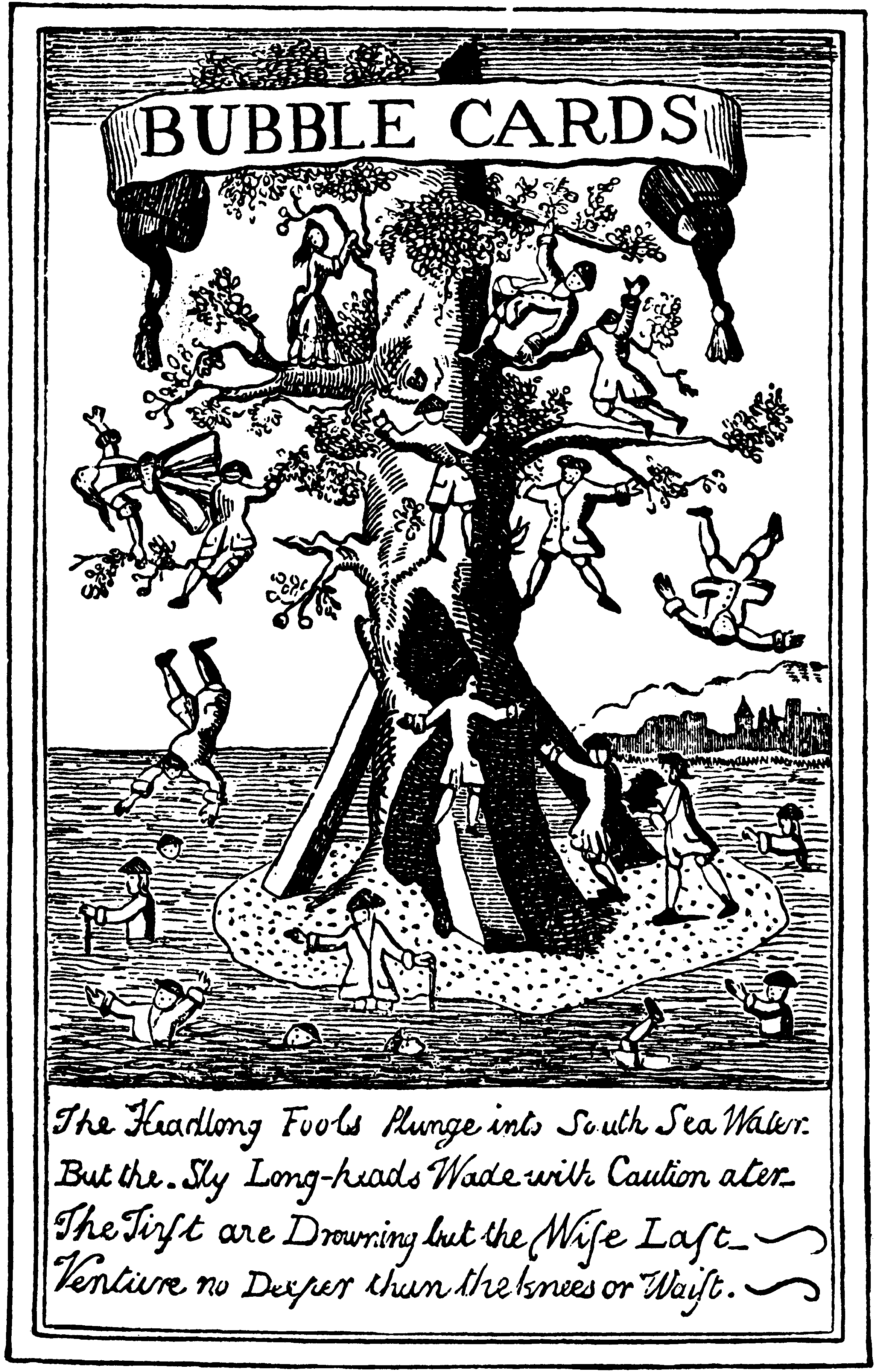
She also recommends 2 books that I just added to my Kindle: "Extraordinary Popular Delusions and the Madness of Crowds," by Charles MacKay, and "The Quran Speaks," by Bahis Sedq (who she says is "the most sophisticated of all the dissidents in the Muslim world... the Muslim Luther, if there were only a way to keep him safe"). The MacKay book was first published in 1841. Here's an illustration from it:

२१ नोव्हेंबर, २०१४

"We must reclaim and retake feminism from our fellow idiotic women."

Said Ayaan Hirsi Ali.
"... I condemn whole-heartedly the trivial bullshit it is to go after a man who makes a scientific breakthrough and all that we as women — organized women — do is to fret about his shirt?"
Was #shirtstorm organized?

ADDED: I have a few problems with Hirsi Ali's statement: 1. She portrays the various individual reactions to Matt Taylor's shirt as the work of an organized collective, but that's not so. 2. There's nothing wrong with taking a shot at a small problem even though there are larger problems. 3. The women who choose to do the kind of culture critique that was aimed at the shirt are not idiots, nor is fretting about the shirt all they do. 4. Those who decided to go after the women who went after Matt Taylor were themselves guilty of taking something small and inflating it beyond all proportion. That said, I do agree that much of feminism seen on the web these days is predictable, safe writing that feels as though it came from a college course on feminism.

९ एप्रिल, २०१४

"Brandeis University withdraws planned honorary degree for Islam critic Ayaan Hirsi Ali."

Fox News reports.
More than 85 of about 350 faculty members at Brandeis signed a letter asking for Ali to be removed from the list of honorary degree recipients. And an online petition created Monday by students at the school of 5,800 had gathered thousands of signatures from inside and outside the university as of Tuesday afternoon.

१९ ऑगस्ट, २०१०

Ayaan Hirsi Ali on the mosque in the Ground Zero zone...

... and on other "religious tolerance" issues in the news lately (such as "the eviction of American missionaries from Morocco earlier this year, the minaret ban in Switzerland last year, and the recent burka ban in France"). She'd like to reframe these issues in terms "of what the late Harvard political scientist Samuel Huntington called the 'Clash of Civilizations.'"
[T]he survival of the West depends on Americans, Europeans and other Westerners reaffirming their shared civilization as unique—and uniting to defend it against challenges from non-Western civilizations....
President Obama, in his own way, is a One Worlder. In his 2009 Cairo speech, he called for a new era of understanding between America and the Muslim world. It would be a world based on "mutual respect, and . . . upon the truth that America and Islam are not exclusive and need not be in competition. Instead, they overlap, and share common principles."

The president's hope was that moderate Muslims would eagerly accept this invitation to be friends. The extremist minority—nonstate actors like al Qaeda—could then be picked off with drones....

The greatest advantage of Huntington's civilizational model of international relations is that it reflects the world as it is—not as we wish it to be. It allows us to distinguish friends from enemies....

Our civilization is not indestructible: It needs to be actively defended. This was perhaps Huntington's most important insight. The first step towards winning this clash of civilizations is to understand how the other side is waging it—and to rid ourselves of the One World illusion.
I question whether either model is really "the world as it is," but I certainly agree that it's crucial to face reality. Nevertheless, our ideals form a part of the reality that exists now and the reality that we are making for the future.  Ali never explains why the "Clash of Civilizations" template works better in the real world than Obama's idea. I'd guess that one needs to check one's perceptions alternately with both templates and that Obama does that and more as he decides what actions to take and what to say in speeches. He may do that badly on many occasions, but it's inconceivable that his aspirations toward mutual respect and shared principles blot out his awareness of the discord and disconnect.

८ फेब्रुवारी, २०१०

Ayaan Hirsi Ali.

Video of her entire speech and Q&A at the University of Wisconsin last week.

IN THE COMMENTS: Chip Ahoy said:
Great reception. She was reading form cards! CARDS! That proves she doesn't know what she's talking about, and LOOK! Now, there's this:

३ फेब्रुवारी, २०१०

Did any newspaper report what Ayaan Hirsi Ali actually said in her lecture at the University of Wisconsin last night?

If I had attended — and I'm sorry I didn't — I would have taken copious notes and reported details of the things she said. I would like to read a report like that, and I certainly can't find anything in the local papers. The stories all report what they reported before she spoke, that she's controversial and various people don't think she should have been invited at all:
The decision to invite Hirsi Ali and pay her $10,000 speaking fee drew criticism from both Muslim student organizations and other groups.

"I see this as people slowly becoming suspicious of Islam, and suspicion leads to hatred and much worse things," said Rashid Dar, president of UW-Madison's Muslim Student Association.

"You shouldn't take Muslims as a subversive fifth column group that is planning to one day take over and start cutting hands off. We're normal people, too."
I think that article has more about what the students think than what the distinguished lecturer thinks. And it's not even what the students thought of what she said in the lecture. It's what they thought all along. And, ironically, what they keep saying is that they are afraid of generalizations and stereotypes. Why don't they pay attention to specific things that she, an individual, said in the particular talk that she gave to them?

ADDED: Isthmus has some detail about the talk:
She said there is a distinction between Muslim believers and the ideology of Islam, the latter of which she finds fault with. But she said that in the West, Islam has attained a special sort of protection, with intellectuals afraid to question or criticize the religion’s beliefs.....
She said that Islam would benefit from scrutiny and criticism and looking at other cultures and belief systems. “The Muslim mind can be opened by looking outside of Islam and then retaining what people find valuable about Islam, like hospitality,” she said. “I don’t think gazing at the Koran for hours and hours can help that.”

And she, added, “The emancipation of the Muslim woman is the key to reforming Islam.”
AND: The Badger Herald embedded the video of the entire lecture, which you can watch here.

ALSO: The Badger Herald has a pretty detailed report.