14 మే, 2022

Sunrise series.

IMG_0492

IMG_0496

IMG_0500

IMG_0503

As you can see in picture #3, I had a lot of company this morning. University students, I presume. There's lots of graduation activity in Madison today. Maybe these kids had been out all night, because they were firmly in place when I arrived at the location at 5:25. I wasn't trying to eavesdrop on them. I had AirPods in and music playing, but I couldn't help picking up that they were snacking on Cinnamon Toast Cheerios and discussing other cereals — specifically Cap'n Crunch and Lucky Charms.

Speaking of lucky and music and the sun, as I write this, I'm listening to...

"Every generation has had an apocalyptic view of their lives... We’re not wired to save.... We’re wired to consume."

"If you have an exciting vision of the future, those are the people who aggressively save for retirement. If you have an apocalyptic vision of the future, why would you save for it? Of course you wouldn’t."

Said Brad Klontz, a financial psychologist, quoted in "The World’s a Mess. So They’ve Stopped Saving for Tomorrow. Many adults under 35 are throwing financial caution to the wind. It’s all about saving less, spending more and pursuing passions" (NYT).

"TikTok has no interest in your friends. Instead, it has developed an artificial intelligence-based recommendation engine that divines your desires..."

"... by interpreting the most subtle of clues. They range from how long you watch a video to whether you share it, and what the content contains.... In 2020, TikTok raced past Facebook and Instagram in terms of how much time users spend on the platform. This year it is set to overtake YouTube.... Mark Zuckerberg this month announced a monumental shift in how the core Facebook and Instagram experiences will function, moving away from the social graph and investing heavily in an AI-powered recommendation engine that will serve up the most viral posts from across its network — just like TikTok.... Zhang Yiming, 39, the son of civil servants, founded ByteDance, TikTok’s parent company, in a Beijing flat ten years ago.... [TikTok is] the first and only company from Communist China to make a dent in the West. Maria Bridge of the ethical campaign group Center for Humane Technology said: 'TikTok is a propagandist’s dream: profile someone’s tastes and opinions, then use an algorithm to subtly nudge them in whatever direction you choose. Point that tech at a generation of teens and it’s terrifying in anyone’s hands.'"

From "How TikTok became the phenomenon you can’t afford to ignore new/The video app is making a billion dollars a month and leaving rivals in its wake — it’s not too late to take it seriously, says Danny Fortson" (London Times).

"'They can’t win,' Ira said. 'They can slaughter us but they can’t win.' Max nodded, calm despite the chaos."

"I’d met him a few weeks before the war when he was working as a translator for another journalist. He had black hair swept off his face, a tattoo under his Adam’s apple that referenced the American poet Walt Whitman and he looked as though he hadn’t slept in days. We were the same age, 31, and I liked him straight away.... Since Berlin had been colonised by tech bros, the centre of gravity for European hedonism had shifted eastwards to the Ukrainian capital.... There were warehouse raves in abandoned buildings, queer-friendly spaces with art installations and a club known only by the mathematical symbol ∄ (meaning “does not exist”), which had a dark room and wipe-down banquettes.... ...Kyiv had come alive through adversity, a fight for freedom against authoritarianism.... Kyiv’s freedom had been hard won, thought Max and his friends, and it shouldn’t be wasted.... Before [the war] the Kyiv party scene had been targeted by far-right, antigay thugs who had broken into nightclubs and beaten up ravers. Now, Max told me, one of his friends had put out a eulogy when the head of one of these groups had been killed in battle. As the Russians rolled closer, the ravers had stepped up. The dark room at Kyrylivska became a bomb shelter.... Max was lyrical with happiness that he had stayed, risking his life for his city again, as he and his friends had done during the Maidan protests...."

From "From hedonism to war: meet the young ravers of Kyiv/Before the Russian invasion Kyiv was the rave capital of Europe. That changed in a single night. Louise Callaghan joins a group of young artists caught in the chaos" (London Times).

"[Hunter S.] Thompson... rightfully looms large for demolishing the idea that covering a campaign has to be objective day to day, or with the winner automatically cast as the hero..."

"... a la Theodore White’s 'The Making of the President' books. Along with unabashed drug taking, hoaxing other reporters, and honing a cultivated but nonetheless genuinely menacing edge, Thompson quickly grasped the fact and advantage of being shunned by press corp heavyweights. 'Thompson’s determined to turn liabilities into assets: 'I’m not gonna do what everyone else is doing. I’m gonna write about what I see, present the unvarnished truth as I understand it'.... That truth still resonates... and is perhaps best summed up in this from Thompson’s 1994 obituary of Richard Nixon in Rolling Stone: 'Some people will say that words like scum and rotten are wrong for Objective journalism — which is true, but they miss the point. It was the built-in blind spots of the Objective rules and dogma that allowed Nixon to slither into the White House in the first place. … You had to get Subjective to see Nixon clearly, and the shock of recognition was often painful.'"

From "The gonzo journalist who forever changed political campaign coverage" by Jason Vest (WaPo). Vest discusses the new book "Savage Journey: Hunter S. Thompson and the Weird Road to Gonzo" (by Peter Richardson).

The notion that "rotten" is an especially bad word called to mind a passage in the delightful old movie "Design for Living": 

"I'm going to jump up and down on your ego. I'm going to criticize you with a baseball bat. I'll tell you every day how bad your stuff is 'til you get something good, and if it's good, I'm going to tell you it's rotten 'til you get something better."

The 2 male artists she's talking to protest and defend their work only to hear her repeat the 1-word criticism "Rotten!" And much later, at the end, after various high jinks that take them apart and get them back together, they ask her "Can you still say 'rotten'?" and she says "Rotten!"

"'Hardness' has not been in our century a quality much admired in women, nor in the past twenty years has it even been in official favor for men."

"When hardness surfaces in the very old we tend to transform it into 'crustiness”' or eccentricity, some tonic pepperiness to be indulged at a distance. On the evidence of her work and what she has said about it, Georgia O’Keeffe is neither 'crusty' nor eccentric. She is simply hard, a straight shooter, a woman clean of received wisdom and open to what she sees. This is a woman who could early on dismiss most of her contemporaries as 'dreamy,' and would later single out one she liked as 'a very poor painter.' (And then add, apparently by way of softening the judgment: 'I guess he wasn’t a painter at all. He had no courage and I believe that to create one’s own world in any of the arts takes courage.')... The men talked about Cezanne, 'long involved remarks about the "plastic quality" of his form and color,' and took one another’s long involved remarks, in the view of this angelic rattlesnake in their midst, altogether too seriously. 'I can paint—one of those dismal-colored paintings like the men,' the woman who regarded herself always as an outsider remembers thinking one day in 1922, and she did: a painting of a shed 'all low-toned and dreary with the tree beside the door.' She called this act of rancor 'The Shanty' and hung it in her next show. 'The men seemed to approve of it,' she reported fifty-four years later, her contempt undimmed. 'They seemed to think that maybe I was beginning to paint. That was my only low-toned dismal-colored painting.'"

From the essay "Georgia O'Keeffe" in Joan Didion's "White Album" (1979).

Sunrise composition.

IMG_0507

That's my composition, but not my bike (so don't come after me for the transgression of the no-bikes rule that prevails at this location).

"Understandably, not everyone can live at home. They’ve moved away for a job, or the home situation is too toxic or overcrowded. But space and sanity willing..."

"... consider the savings young adults could amass if they continued to live in the family home. With inflation at a 40-year-high, it just makes economic sense for adult children to live at home for several years.... I feel for the men who are ridiculed for still living at home — and for the daughters who feel pressured to leave. My husband and I have taken a different tack with our children. We have begged them to live at home. We want them here at least until their 30s.... My husband and I agreed not to charge any of our children rent as long as they are saving, so that when they finally launch they will have a substantial cushion that should keep them from boomeranging back home.... A decade at home starting in their 20s, and saving most of their income rather than paying rent for all those years, could put young adults on the path to homeownership that could end with a smaller mortgage or no mortgage at all. That would be a financial game changer."

From "With higher inflation, living with your parents makes economic sense/Let’s stop joking about young adults living in their parents’ basement/Financial independence doesn’t have to come with a monthly rent payment" by Michelle Singletary (WaPo).

Singletary is a personal finance columnist. She has virtually nothing to say about the social development of young adults, and her son and daughter — in their 20s — seems to be diligently working and squirreling away money. Presumably, they behave within a range that fits the parents' conventions, and the financial boom would be lowered if they did not. But, she says, her son is "lovely" and he walks the dog. There's no adjective like "lovely" attached to the daughter, perhaps because it's presumed that daughters will be docile, perhaps because mom wanted to elbow her toward increased loveliness.

Singletary assures us that kids in this phase are not suffering from "arrested development," but who knows how they'd develop if they lived outside of the surveillance of their parents? But, sure, privacy and independence may pale in comparison to painful economic need. And now I'm picturing devious politicians swarming in the backroom, celebrating these economic hard times.

Sentence of the Day.

This is the last sentence of a NYT T Magazine article by Nick Haramis titled, "What’s Behind Fashion’s Rediscovery of the Bare Midriff? It might be that in exposing the waist, designers are also revealing their hope for a bolder and better future." 

Are you ready to diagram (or at least think about diagramming)?

As much as this procession of bare midriffs was a form of immediate wish fulfillment in a time of isolation, uncertainty and protective layers, it was, too, an invocation for the future — an attempt to manifest, by exposing one of our most defenseless, most provocative zones, a future in which we might once again let our guards down and see our bodies not as vessels for disease or targets for injustice but as sources of power.

It's easy to get started:
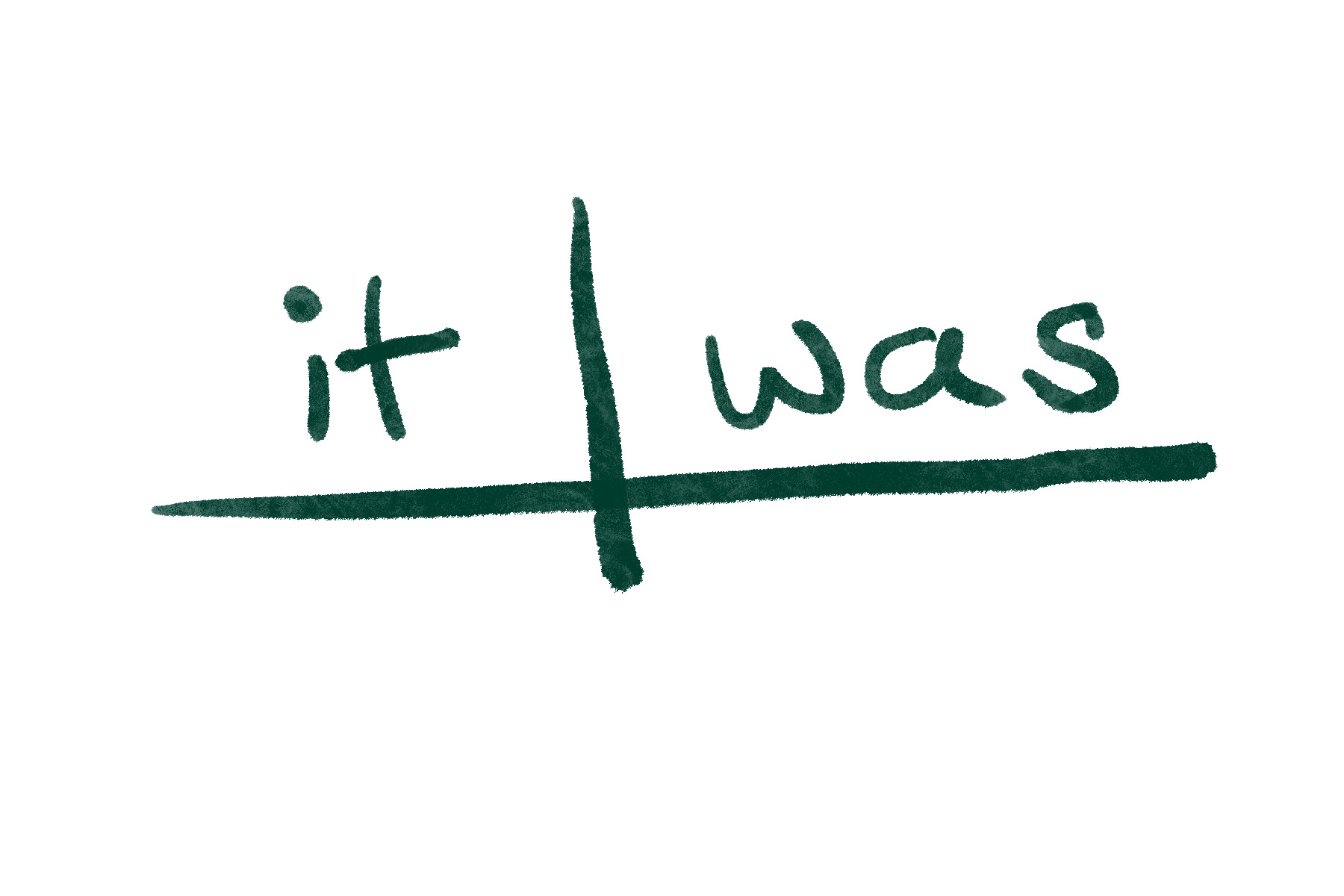
 

It's a lot of work to complete the diagram, but feel free to jump right into the meaning... if you can. I can get you started on that too. Your midriff is defenseless and provocative — though I have not seen your particular midriff, and it may provoke something quite different from what the toned, sleek runway-model midriffs provoke — but it means something different in the future from what it meant in the past, because in the past we had the isolation of the lockdown, and moving into the future, we're trying to reengage with social life. It's one thing to dream about a defenseless and provocative midriff when you're home alone and can't go out, quite another to venture into the world again — it's hard enough with a fully covered torso — with your bare belly exposed. But what if we could take our defenseless and provocative midriff out in public with a better, stronger attitude, as a source of power? Then it might help us get over our dismal feeling that our body is a vessels for disease or a target for injustice. Maybe! It's all in the mind. Expose the space from the bottom of your breasts to the line reached by low-rise pants. Just get it out there. Think: power!! And then maybe you too will have emerged — truly emerged — from the lockdown.

"With particularly dystopian flair, the formula shortage came to a head around the same time that a draft opinion leaked from the Supreme Court that would overturn Roe v. Wade."

"On one hand, women would be forced to birth children. But on the other hand, once those children arrive, there might not be food to feed them. A footnote from Samuel Alito’s draft opinion that gained some traction this week was about adoption. The footnote quoted a 2008 study by the Centers for Disease Control and Prevention, which had noted that the 'domestic supply of infants relinquished at birth or within the first month of life and available to be adopted has become virtually nonexistent.' The inclusion of the study in an opinion that would overturn Roe seemed to suggest that there was no need to have an abortion as there were plenty of American couples who wanted children but not enough American babies for them to adopt.... [W]hat it tells me is: You have no idea. No idea how hard pregnancy is on a body. No idea that don’t worry, you can give it away does not respond to the reasons that many abortion seekers might be seeking abortions to begin with. The opinion’s biggest problem isn’t that it was cruel, it’s that it was incurious. It did not attempt to understand pregnancy or motherhood. It was the 98-page equivalent of, 'Why don’t you just embrace your womanhood and nurture your children?'"

From "A lot of powerful people seem to have no clue what motherhood means/The formula shortage is a reminder of why being a mom — even when it’s a choice — is hard in ways some powerful people don’t seem to get" by Monica Hesse (WaPo).

"Wall Street Journal investigative report this week underlines just how frivolous were the claims in the Steele dossier, and how nonexistent was the attempt..."

"... by Christopher Steele, the vaunted British ex-spy, to verify or even vet them. The sources for many of the Steele allegations consisted of three people 'brought together over a minor corporate-publicity contract,' not one of whom had any inside knowledge of Kremlin politics or the Trump campaign.... To be emphasized with extreme prejudice is Mr. Steele's studious incuriosity about the sourcing of the garbage he passed on to the Clinton campaign, with the only interesting question being how cognizant was the Clinton campaign or did it also not care.... Whatever the Kremlin's own six-figure investment in Facebook and Twitter memes or even its trafficking in stolen Democratic emails, nothing in Vladimir Putin's bag of tricks inflicted one-millionth the damage on American life that the Steele fabrications did.... Mr. Trump may be a compendium of human vices but he will always be the president who withstood the most insidious, organized slur in modern memory. His enemies did that for him, not least among them a largely cretinous media that showed its true colors, which turned out to have nothing to do with fearless and searching concern for the truth...."

Writes Holman W. Jenkins, Jr. in "What Did the Steele Dossier Hoax Cost America? Along with the press, what about the Russia ‘experts’ who played along or failed to oppose the collusion lie?" (Wall Street Journal).

Annoyingly, the WSJ has the wrong link for the investigative report. It goes to a column Jenkins wrote in 2017, something he refers to elsewhere in this new column. But it should go to the May 9th article, "Three Friends Chatting: How the Steele Dossier Was Created/Report that rattled the political world often echoed talk among three acquaintances, including the main investigator and an old schoolmate."

"The highly anticipated decision concerned three separate cases in which men had consumed drugs and then committed violent offenses."

"In one, a man ingested magic mushrooms and then, proclaiming to be doing God’s will, broke into his father’s home, stabbed him to death and grievously wounded his father’s partner. The defendants argued that they had essentially been rendered automatons — incapable of voluntary action or of forming intent to commit the act — and that the law barring such a defense violated their constitutional rights to the presumption of innocence and to life, liberty and security of the person."

From "Suspects can use extreme intoxication as defense, Canadian court says" (WaPo).

"It contravenes virtually all the criminal law principles that the law relies upon to protect the morally innocent,” Justice Nicholas Kasirer wrote for the court. “It enables conviction where the accused acted involuntarily, where the accused did not possess the minimum level of fault required, and where the Crown has not proven beyond a reasonable doubt the essential elements of the offense."

13 మే, 2022

I've got 9 TikTok selections for you tonight. Let me know what you like best!

1. Man painted as a man.

2. A perfect "Immigrant Song."

3. What boys say when asked what girls want, and how does that line up with what girls say they want?

4. A dramatic vocal rendering of an interoffice memo.

5. Exactly how to deal with a catcaller.

6. And what to do when you hear that sound outdoors.

7. The teacher who thinks you have a right to know.

8. Whaddya need a man for?

9. "The hate crime is coming from inside the house."

At the Sunrise Café...

IMG_0443 

... you can talk about whatever you want.

IMG_0452 

IMG_0465  

IMG_0468

"Kindergartners sent home with masturbation assignment."

Reports Libs of TikTok, with an image of what is said to be the worksheet that the school gave to a 4 year old. 

ADDED: I wrote the post the way I did to convey some skepticism, but I want to underscore that by adding the tag "I'm skeptical."

"A ban on 'buy one get one free' deals on unhealthy snacks and a 9pm watershed for junk food advertising have both been ditched..."

"...  as Boris Johnson aims to cut the cost of living and boost growth. The prime minister has delayed the policies for at least a year and may axe them completely as he aims to focus on creating jobs and scrapping 'un-Conservative' ideas. The U-turn was immediately condemned by health campaigners as failing children.... Johnson came to power deriding 'nanny state' measures but underwent a Damascene conversion after his brush with death from Covid, blaming his own weight problem for the virus hitting him so hard."

The London Times reports.

The politics of fat. We got very little of it here in America, despite the Covid connection, because we're ultra-sensitive. About some things. Surely, not all things.

We also rarely say "Damascene conversion," so it struck me. Not enough to change my religion/politics, but enough to make me want to end this post with a graphic depiction of Paul's conversion. There are so many. I'll just pick my favorite: